
I Tested 50+ Mattresses to Find the 9 Most Comfortable Mattresses of 2026

Top Recommendation of 2026: Amerisleep AS3
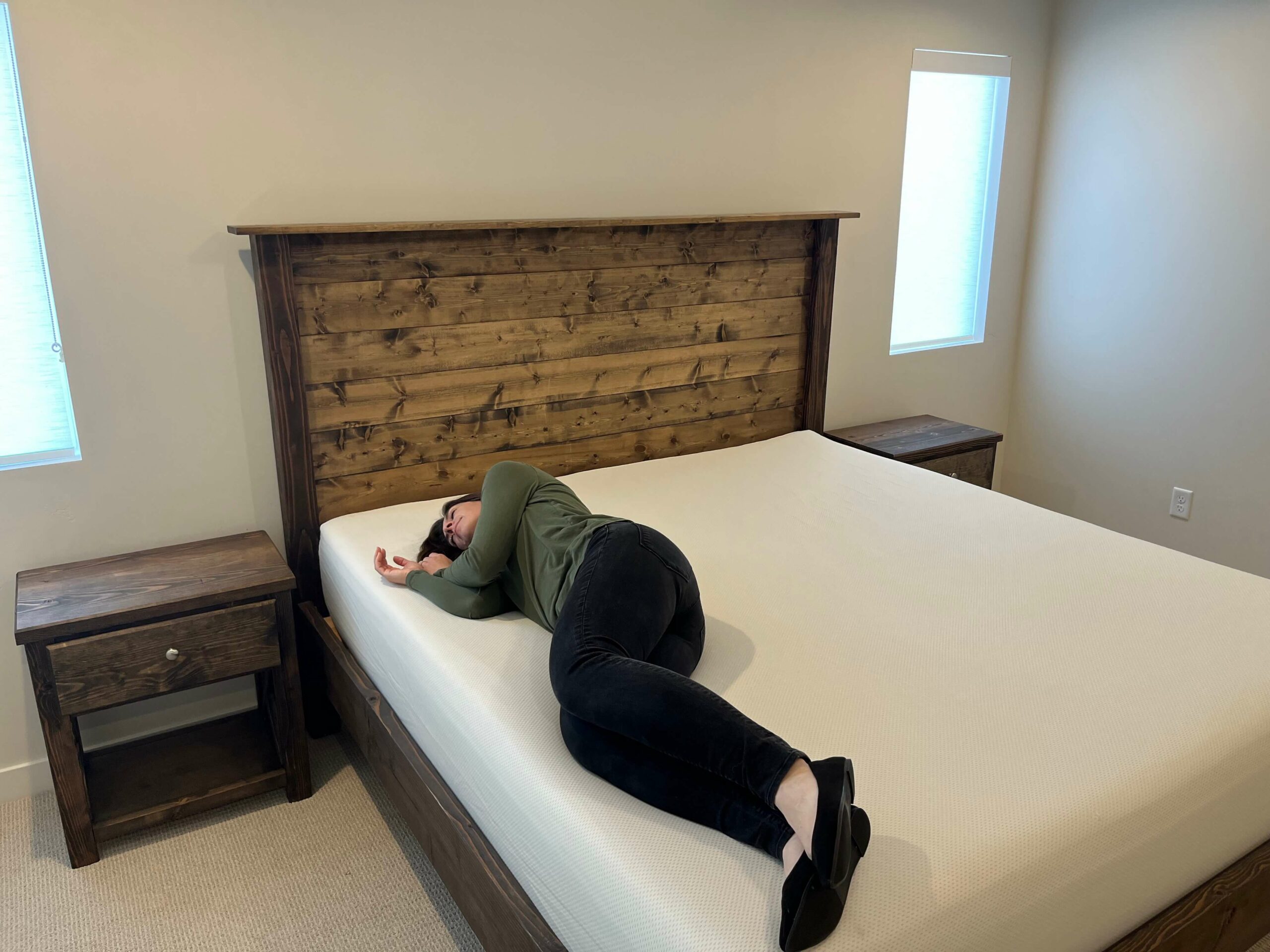
After testing 50+ mattresses for this guide, the Amerisleep AS3 earned the top spot as the most comfortable mattress of 2026 because it was the most consistently comfortable bed across positions, not because it was the best in any one category. During testing, my hips stayed level with my shoulders when I lay on my back, and the Bio-Pur comfort layer cushioned my shoulder on my side without letting it bottom out into the transition layer.
When my partner shifted on the far side of a queen while I lay still, movement on my side barely registered, which is what earned its 10/10 motion transfer score. The AS3 fits side sleepers who want cushioning without a sunken feel, back sleepers who need the lumbar area held level, combination sleepers who reposition often, and couples trying to find one medium feel that works for both. That balance across positions, rather than a standout number in any single dimension, is what made it the most comfortable overall pick in this guide.

Every mattress featured on Sleep Junkie is evaluated using the same testing framework for support, pressure relief, cooling, motion isolation, edge support, responsiveness, and overall value. Learn How We Test Mattresses.
- Most Comfortable Mattress Overall: Amerisleep AS3
- Most Comfortable Purple Alternative: FORM Prime
- Most Comfortable Hybrid Mattress: Zoma Hybrid
- Most Comfortable Mattress for Couples: Helix Midnight Luxe
- Most Comfortable Innerspring Mattress: Saatva Classic
- Most Comfortable Cooling Mattress: Leesa Sapira Chill
- Most Comfortable Pillowtop Mattress: Nolah Evolution 15
- Most Comfortable Budget Mattress: Vaya Mattress
- Most Comfortable Soft Mattress: Amerisleep AS5 Hybrid
The most comfortable mattress for the widest range of sleepers is the Amerisleep AS3, a 12-inch medium memory foam bed that held spinal alignment and cushioned pressure points across more sleeping positions than anything else among the 50+ mattresses I tested for this guide. Comfort is not a single property, though, which is why the nine picks below each answer a different version of the question rather than competing for the same one.
Between them they cover the softest surface I tested, the coolest, the best bed for two people on different schedules, the best coil feel for anyone who dislikes sinking into foam, the tallest pillowtop, and the best build available under a budget. Each one is scored on the same six dimensions you will see in every score box on this page: value, edge support, trial period, response time, motion transfer, and cooling and breathability.
Below the picks, I break down how the main mattress types actually differ in feel, and what to check on your current bed before you replace it.
Most Comfortable Mattress Overall
1. Amerisleep AS3



Warranty
20 Years

Sleep Trial
100 Nights

Shipping
Free
Watch Our Amerisleep AS3 Video Review
The AS3 took the top spot in this guide because it was the bed that asked the fewest sleepers to compromise. During testing, lying on my back, my hips stayed level with my shoulders and my lower back stayed in contact with the surface rather than bridging over a gap. Turning onto my side, the three inches of Bio-Pur took my shoulder down far enough to keep my spine straight without letting it press through to the firmer layer beneath.
The zoned cutouts in the Affinity layer are why the same firmness behaves differently under different parts of the body: the surface gave under my shoulder and pushed back under my hips. That is what let one medium feel work for side and back sleeping in the same session rather than favoring one and tolerating the other.
Amerisleep sells the AS3 in stores and online, and it ships with a 100-night sleep trial and a 20-year warranty. If there is no Amerisleep store near you, the trial is what makes buying it online reasonable: you can try any Amerisleep mattress at home for 100 nights and exchange it for a different model or request a refund if the feel is wrong.
- 9 Value
- 8 Edge Support
- 9 Trial Period
- 9 Response Time
- 10 Motion Transfer
- 10 Cooling & Breathability
The AS3 won the top spot for the least dramatic reason available: it was the bed that stopped being a compromise for the most people. During testing, when I lay on my back, my hips stayed level with my shoulders and the lumbar area stayed in contact with the surface instead of bridging over a gap. Rolling onto my side, the three inches of Bio-Pur took my shoulder down far enough to keep my spine straight without letting it press through to the firmer Affinity layer underneath.
The zoned cutouts in that Affinity layer are the reason the feel changes depending on where you load it. Under my shoulder the surface gave; under my hips it pushed back. That is what let one medium firmness work for side and back sleeping in the same session instead of favoring one.
Motion transfer is where it separated from the rest of the medium foam beds here. When my partner got in and out of bed on the far side of a queen, the surface on my side moved so little that I had to watch to confirm it. That 10/10 score means a light sleeper sharing a bed with someone on a different schedule is unlikely to be woken by it.
Best For:
– Side sleepers who want shoulder and hip cushioning without a sunken, slow feel
– Back sleepers who need the lumbar area supported rather than bridged
– Couples on different schedules, where one person’s movement decides the other’s night
Compare Instead:
– The Amerisleep AS5 Hybrid if the AS3’s medium feel reads as too firm and you want a genuinely soft, deep-cradle surface
– The Saatva Classic if you want coil bounce and a choice of firmness rather than a single foam feel
The AS3 reads as a true medium on contact rather than a soft bed with support underneath it. Lying down, the surface gives about an inch immediately and then slows, so you settle into it rather than onto it, without the slow-motion sink of traditional memory foam. Moving from back to side, the Bio-Pur released my hip within about a second rather than holding the previous position, which is what makes it workable for anyone who changes position through a night.
For couples, the practical detail is that the surface transmits very little across the bed. When my partner shifted on the far side of a queen, my side barely moved, so a light sleeper is unlikely to be woken by a partner on a different schedule. It suits side, back and combination sleepers at average body weight most directly; dedicated stomach sleepers will want more pushback under the hips than a medium foam surface gives.
The three inches of Bio-Pur on top are the reason the shoulder and hip cushioning goes as deep as it does without the surface feeling slow: it releases faster than standard memory foam when you move off it. Directly under it, the Affinity layer carries the HIVE cutouts, and those are what make the firmness change depending on where you load the surface, so the same bed gives under a shoulder and pushes back under hips. That is the mechanism behind the alignment I saw on my back. The seven inches of Bio-Core at the base is what keeps that behavior consistent across the surface rather than dishing in the middle, and it is what the perimeter has to work with, which is why edge support scores an 8 rather than a 10 here: there is no coil rail or foam encasement, just base foam. The cover is CertiPUR-US certified and tested for low VOC emissions.
Pros
- Motion Transfer (10/10): my partner getting in and out of bed on the far side of a queen barely registered on my side
- Cooling and Breathability (10/10): the cover stayed cool to the touch on contact and did not warm as quickly as the denser foam beds I compared
- Zoned Affinity layer gave under my shoulder and pushed back under my hips, which is why one medium firmness held alignment for both side and back sleeping
Cons
- Edge Support (8/10): the perimeter compressed further under me than the coil beds here when I sat on the edge to put on shoes, because there is no coil rail or foam encasement in an all-foam build
- Ships in a single medium firmness, so sleepers who already know they want a distinctly soft or firm surface have no option within this model
Why The Amerisleep AS3 Won
Among the nine most comfortable mattresses I tested for this guide, the AS3 was the one that asked the fewest people to compromise. It held my hips level with my shoulders on my back, cushioned my shoulder without bottoming out on my side, and contained my partner’s movement well enough to score a 10 for motion transfer. It is not the highest-scoring bed on this page, and it does not need to be: comfort across the most positions and the most body types is what this category is asking, and the AS3 answered it better than anything else I tested.
Most Comfortable Purple Alternative
2. FORM Prime
Warranty
Lifetime
Sleep Trial
365 Nights
Shipping
Free
Watch Our FORM Prime Video Review
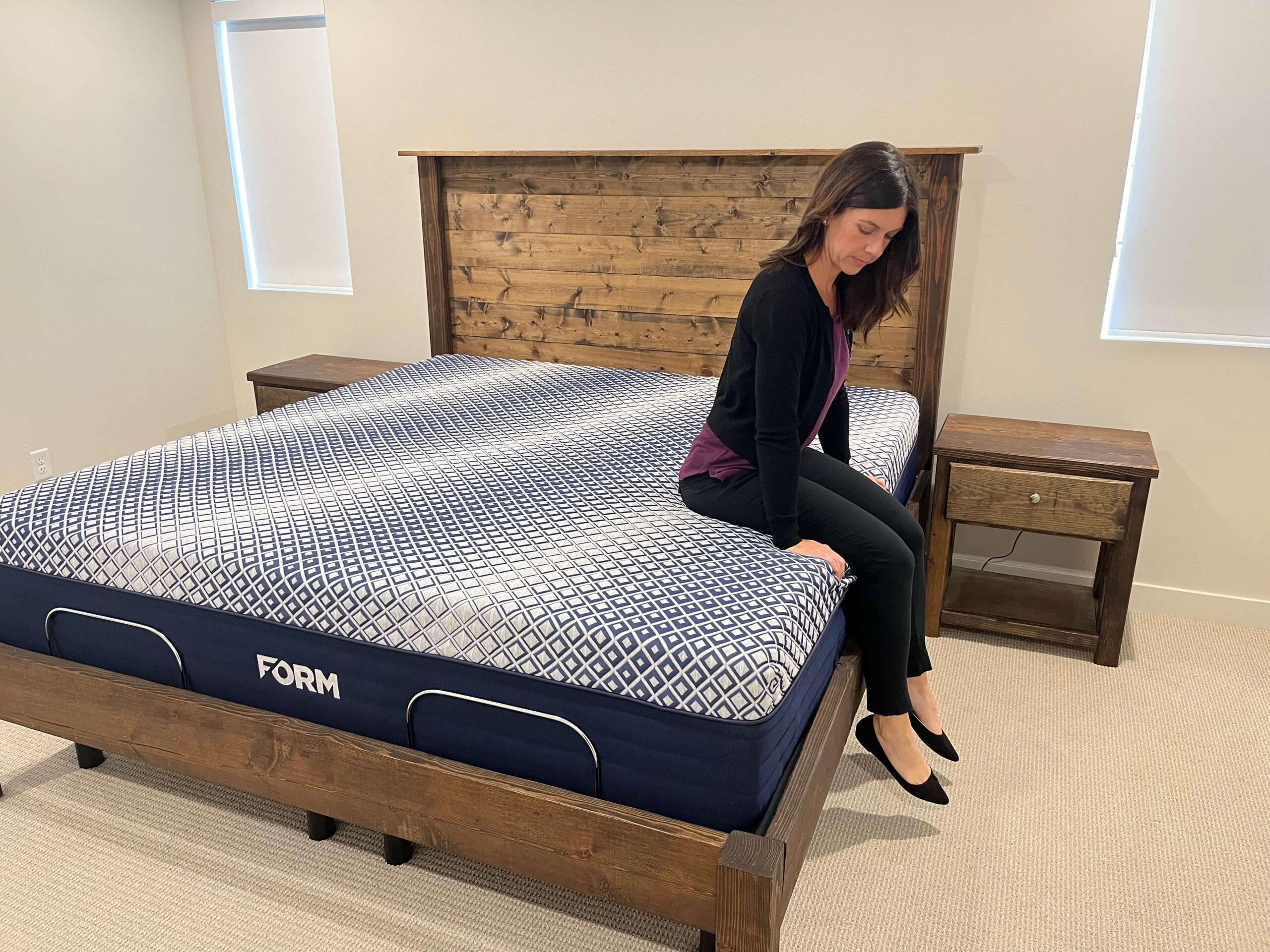
The FORM Prime earns a spot on this comfort list because of how its GelGrid surface handles the shoulder and hip zone. That area runs softer, around 4.5 on the firmness scale, letting the shoulder settle in enough to keep the spine level, without the slower sink of traditional memory foam.
It is a grid mattress rather than a foam-over-coil hybrid, so it moves and responds differently from every other bed on this list. Rolling from side to back during testing, the grid released my shoulder as I moved rather than a beat behind me, which is the practical difference between an open grid surface and a solid foam one. Anyone drawn to a responsive, non-foam feel is looking for exactly that behavior. The 365-night trial, the longest on this page, gives a full year to confirm it, which matters more here because a grid surface is the feel shoppers are least able to predict without sleeping on it.
Side sleepers who run warm will notice the AeroWeave cover and grid construction move air well through passive airflow, though it did not read as cold on contact as the beds here built around active cooling. And at 14 inches tall with a single firmness, it is not the right pick for anyone who wants a low-profile bed or the ability to switch between plush and firm.
- 8 Value
- 10 Edge Support
- 10 Trial Period
- 9 Response Time
- 10 Motion Transfer
- 9 Cooling & Breathability
The Prime is the only bed on this list that does not feel like foam or latex, and that is precisely why it is here. During testing, lying on my side, the shoulder zone of the GelGrid gave way first and let my shoulder drop in, while the section under my hip stayed noticeably firmer and held. The two zones behaving differently under one body is something you feel immediately rather than something you notice over a week.
Response is the other separator. When I rolled from side to back, the grid released my shoulder and returned to level as I moved rather than a beat behind me, so I was not repositioning against a surface still holding the last position. Combination sleepers get more out of that than anyone.
Edge support scored a 10, and it held up when I sat on the perimeter to put shoes on: the grid compressed under me but the coil rail underneath stopped it flat rather than letting it keep rolling away. On a bed shared by two people, that turns the outer six inches back into usable sleeping surface.
The 365-night trial matters more here than it would elsewhere, because a grid surface is the feel people are least able to predict from a showroom.
Best For:
– Side sleepers who want shoulder cushioning without the slow release of memory foam
– Combination sleepers who reposition often and dislike fighting the surface
– Buyers who are unsure about a grid feel and want a full year to decide
Compare Instead:
– The Leesa Sapira Chill if you want a choice of three firmnesses rather than a single feel
– The Amerisleep AS3 if you want traditional contouring memory foam rather than a grid surface
The Prime feels buoyant rather than contouring. On my side, the shoulder zone of the grid buckled and let my shoulder settle in while the section under my hip stayed noticeably firmer and held, and the two zones behaving differently under one body is something you register in the first minute rather than over a week. It is a distinct feel from both foam and latex: there is give, but the surface pushes back against you the whole time rather than accepting you and closing over.
Changing position is where it separates from the foam beds here. The grid returns to level as you move rather than after you have moved, so repositioning does not involve climbing out of the previous shape. That suits side and combination sleepers most directly. Anyone who wants the enveloping, closed-in feel of memory foam will find this the opposite of it.
The GelGrid surface is the whole reason the Prime feels different from everything else here. Because it is an open grid rather than a solid layer, it buckles under concentrated load and stays firm under distributed load, which is why the shoulder zone gave and the hip zone did not on the same body in the same position. The Integra-Mesh reinforcement is what keeps those cells from collapsing permanently over time, which is the durability half of a grid build. ContourFlex foam sits underneath to stop the transition from grid to steel feeling abrupt when you press through the top layer. The ZoneCoil 7-Series core and the BaseFlex foundation are what produced the 10/10 edge support: sitting on the perimeter, the grid compressed but the coil rail underneath stopped it flat rather than letting it keep rolling. The AeroWeave Euro-top cover contributes passive airflow rather than active cooling, which is a real distinction on this page.
Pros
- Edge Support (10/10): the grid compressed when I sat on the perimeter and then stopped flat rather than continuing to roll away
- Trial Period (10/10): 365 nights, the longest on this page, which matters most on a grid surface people cannot predict from a showroom
- The shoulder zone gave measurably more than the hip zone under the same body, so my spine stayed straight on my side at a medium-firm rating
Cons
- Value (8/10): it costs more than most of this list, and the price is carried by the grid and coil build rather than by a firmness or feel choice
- Ships in one firmness, so there is no plush or firm version to move to if the medium-firm feel is close but not right
- At 14 inches it needs deep pocket sheets and sits high on a standard frame
- Cooling is passive airflow through the cover and grid rather than an active cooling treatment, so it did not read as cool on contact as the dedicated cooling picks here
Rolling from side to back on the Prime, the grid released my shoulder as I moved rather than a beat behind me, which is the clearest practical difference between a grid surface and memory foam. It suits side and combination sleepers who reposition often and want shoulder cushioning without a slow release, and who are willing to sleep on a 14-inch bed to get it. Stomach sleepers and anyone who wants to choose their firmness should look elsewhere on this list.
Most Comfortable Hybrid Mattress
3. Zoma Hybrid
Warranty
10 Years
Sleep Trial
100 Nights
Shipping
Free
Watch Our Zoma Hybrid Video Review
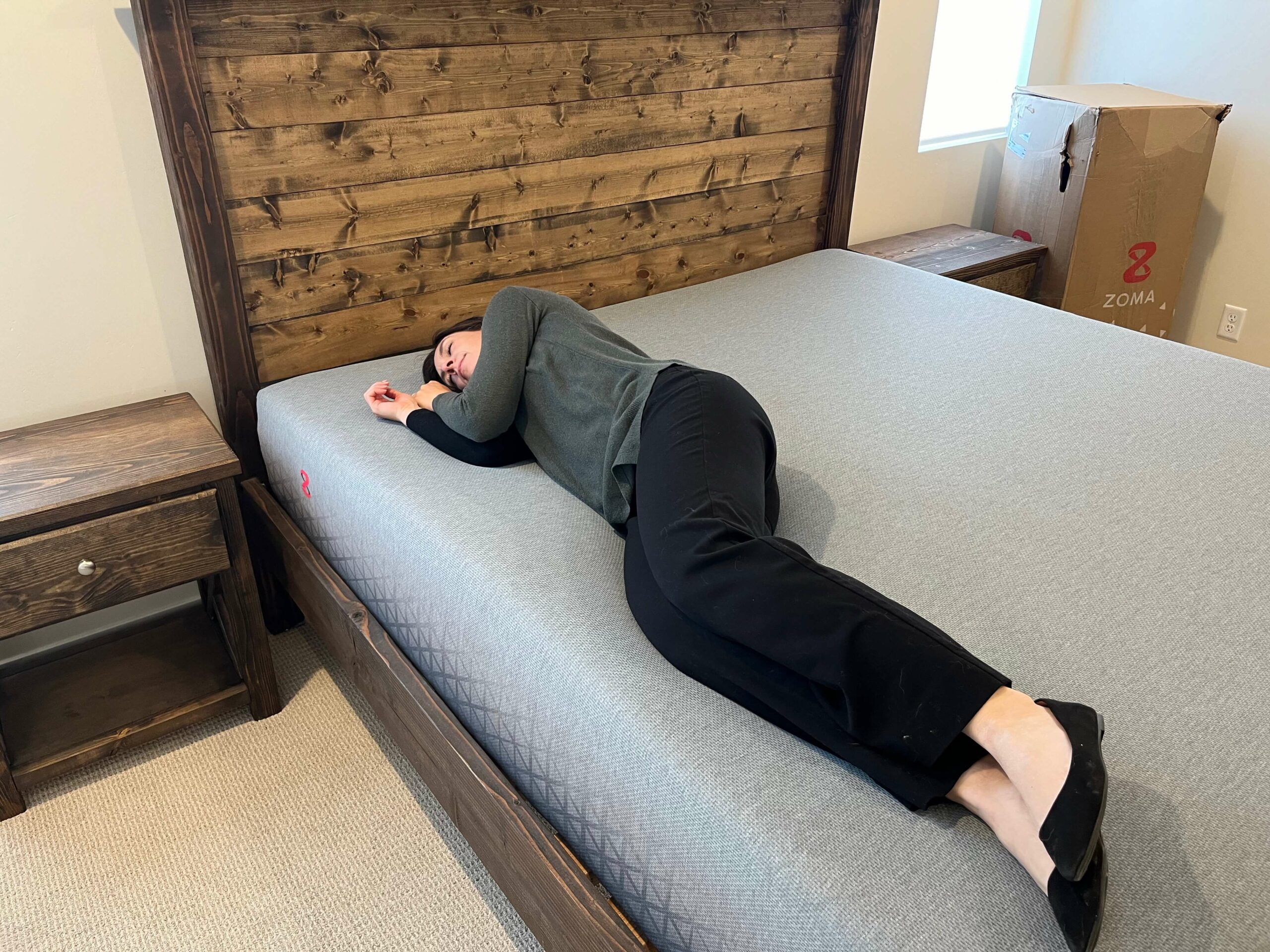
The Zoma Hybrid takes the hybrid slot for what it does when you change position. During testing, the two inches of gel memory foam on top gave enough that my shoulder settled in on my side, but the Reactiv layer directly beneath pushed back fast enough that rolling onto my back took no effort at all. Most memory foam hybrids make you choose between contouring and getting out of the contour. This one puts a fast-recovering layer under a slow one and gets both.
Airflow through the seven-inch pocketed coil core is why the surface did not warm as quickly as the all-foam beds I compared in the same session. Zoma sells it online with free shipping, a 100-night sleep trial and a 10-year warranty, and at a 10 out of 10 for value it is the best performance-per-dollar bed on this page.
- 10 Value
- 9 Edge Support
- 9 Trial Period
- 9 Response Time
- 8 Motion Transfer
- 9 Cooling & Breathability
The Zoma Hybrid earns the hybrid slot for what happens when you change position on it. During testing, the two inches of gel memory foam on top gave enough that my shoulder settled in on my side, but the Reactiv layer directly under it pushed back fast enough that rolling to my back took no effort. Most memory foam hybrids make you choose between contouring and getting out of it. This one splits the difference by putting a fast layer under a slow one.
The triangular cutouts in that top layer are zoned, and you can feel it: the middle third stayed firmer under my hips while the head and foot sections gave more. On my back, that kept my lower back in contact with the surface rather than sinking below my shoulders.
Airflow through the seven-inch pocketed coil core is the reason it did not warm up as quickly as the all-foam beds I compared in the same session. The surface felt cooler to the touch on first contact than the AS3 did, and it stayed that way longer through the early hours.
At a 10/10 Value score, it is also the best performance-per-dollar bed on this page, which matters if the hybrid feel is what you want and the luxury hybrid price is not.
Best For:
– Combination sleepers who want contouring without a slow, sticky release
– Back and side sleepers who run warm on all-foam beds
– Buyers who want a coil core at the lowest price on this list
Compare Instead:
– The Nolah Evolution 15 if you want a taller build with more cooling material and a choice of firmness
– The Vaya Mattress if you would rather spend less and can do without the coil bounce
The Zoma Hybrid feels firmer than the foam beds on this page from the first contact, and the reason is structural rather than surface level: there is only two inches of soft foam before you reach the responsive Reactiv layer. On my back, that meant my hips stopped early and stayed level with my shoulders. On my side, the top layer took my shoulder in but the surface underneath arrived quickly, so it cushions rather than cradles.
The zoning in that top layer is noticeable: the middle third stayed firmer under my hips while the head and foot sections gave more. It suits back and combination sleepers most directly, and side sleepers at average body weight who prefer a supported feel over a deep one. Side sleepers who want a genuinely plush shoulder cradle will find this too firm for that.
The two inches of gel memory foam on top carry Triangulex zoning, triangular cutouts concentrated at the head and foot with the middle third left solid. That is why the surface gave more under my shoulders and stayed firmer under my hips, and it is the reason a single medium firmness held alignment on my back. The two-inch Reactiv layer directly beneath is the responsiveness half: it is a fast-recovering foam sitting under a slow one, which is what let me roll off the contoured spot without waiting for it to release. The seven inches of pocketed coils underneath are doing two jobs, support and airflow, and the airflow is measurable by hand: the surface did not warm as quickly as the all-foam beds compared in the same session. Individually wrapped coils are also what keeps motion contained, though at 8/10 this is the bed’s weakest dimension. The foam base underneath stabilizes the coil layer.
Pros
- Value (10/10): the highest value score on this page, and the only coil build here at this price
- Response Time (9/10): the fast-recovering Reactiv layer under the slow gel foam meant rolling from side to back took no effort
- Airflow through the seven-inch pocketed coil core meant the surface did not warm as quickly as the all-foam beds I compared in the same session
Cons
- Motion Transfer (8/10): my partner’s movement carried further across the surface than on the other hybrids here, which is the tradeoff for the bounce the Reactiv layer adds
- Ships in one medium firmness, so sleepers who want a distinctly plush or firm surface have no option within this model
- At 12 inches it is one of the shorter builds on this page, with less material between you and the coil layer than the luxury hybrids here
On my side, the gel foam took my shoulder in and the Reactiv layer underneath stopped it, so the contouring never turned into a hole I had to climb out of. It is the right pick for back and combination sleepers who want a coil core and run warm on all-foam beds, particularly on a budget where the luxury hybrids on this page are out of reach. Couples sensitive to a partner’s movement should weigh the 8/10 motion transfer against the other hybrids here first.
Most Comfortable Mattress for Couples
4. Helix Midnight Luxe

Warranty
Lifetime
Sleep Trial
120 Nights
Shipping
Free
Watch Our Helix Midnight Luxe Video Review
The couples pick came down to two scores most beds do not hold at the same time: a 10 for motion transfer and a 10 for edge support. During testing, when my partner rolled over and then got out of bed on the far side of a queen, I felt the frame shift before I felt the surface. For two people who go to bed at different hours, that single behavior is most of the decision.
Edge support is the half couples tend to forget. Sitting on the perimeter to put on shoes, the reinforced coils along the side compressed and then stopped rather than continuing to roll away, and lying right along the edge did not feel like lying on a slope. On a queen shared by two adults, that is several inches of usable width per person that most beds give away. It ships with a 120-night sleep trial and a lifetime warranty.
- 7 Value
- 10 Edge Support
- 9 Trial Period
- 9 Response Time
- 10 Motion Transfer
- 9 Cooling & Breathability
The couples pick came down to two numbers that most beds do not hold at the same time: a 10 for motion transfer and a 10 for edge support. During testing, when my partner rolled over and then got out of bed on the far side of a queen, the pillow top absorbed the movement before it reached my side and I felt the mattress frame shift more than the surface. For two people who go to bed at different hours, that is the whole decision.
Edge support is the half couples forget about. When I sat on the perimeter to put on my shoes, the reinforced coils along the side compressed and then stopped rather than continuing to roll away, and lying right at the edge did not feel like lying on a slope. On a queen shared by two adults, that difference is worth several inches of usable width per person.
The zoning is real rather than a spec sheet line. On my side, the surface under my shoulder gave noticeably more than the surface under my hip, which kept my spine straight at a medium firmness that would otherwise have been too firm for side sleeping.
Best For:
– Couples where one person moves, gets up, or goes to bed on a different schedule
– Side sleepers who want zoned shoulder give at a medium feel rather than a soft one
– Two people sharing a queen who need the outer edges to be usable sleeping surface
Compare Instead:
– The Leesa Sapira Chill if you and your partner disagree on firmness and want three feels to choose from
– The Zoma Hybrid if you want a comparable medium hybrid feel at roughly half the price
The Midnight Luxe reads softer on first contact than its medium rating suggests, because the quilted pillow top gives before anything underneath it does. Lying on my side, my shoulder went into the pillow top and then met resistance from the memory foam beneath, so it cushions at the surface and supports about two inches down rather than letting me continue into the bed.
The zoning is what makes a medium firmness work for side sleeping at all. The coils under my shoulder gave measurably more than the coils under my hip, so my spine stayed straight in a position that a flat medium surface would have left kinked. It fits side and combination sleepers at average body weight, and back sleepers who want cushioning at the surface without losing lumbar contact. Stomach sleepers and heavier back sleepers will want more pushback under the hips than a medium feel provides.
The cover comes two ways, standard Tencel or an upgraded GlacioTex, and the difference is felt on first contact rather than over a night: GlacioTex reads cool immediately, Tencel reads neutral and breathable. Under the quilted pillow top, the Memory Plus and gel visco foams are what let the surface cushion a shoulder at a medium firmness, and their density is why the pillow top did not flatten out under sustained load during testing. The polyfoam transition layer stops the descent before it reaches steel. The zoned pocketed coil core is the piece doing the most work: coil firmness varies along the length of the bed, which is why the surface under my shoulder gave more than the surface under my hip at the same firmness rating. Reinforced coils around all four sides produced the 10/10 edge support, and individually wrapping every coil is what contained my partner’s movement for the 10/10 motion transfer score.
Pros
- Motion Transfer (10/10): my partner getting out of bed on the far side of a queen moved the frame more than it moved the surface
- Edge Support (10/10): reinforced coils on all four sides held flat when I sat on the perimeter, which turns the outer edges back into usable sleeping space
- The zoned coil core gave more under my shoulder than under my hip at the same firmness rating, keeping my spine straight on my side
Cons
- Value (7/10): tied for the lowest value score on this page, and it is a luxury hybrid price for a single-firmness bed
- Ships in one medium feel, so couples who disagree sharply on firmness cannot split the difference within this model
- At 13.5 inches and hybrid weight it is awkward to move alone and needs deep pocket sheets
When my partner got out of bed on the far side of a queen, I felt the frame move before I felt the mattress, and sitting on the perimeter to put on shoes it compressed and then held rather than rolling away. That combination is why it is the couples pick: it suits two people sharing a queen on different schedules, especially side sleepers who want zoned shoulder give at a medium feel. It ships in one firmness, so couples who disagree sharply on firmness are better served elsewhere on this list.
Most Comfortable Innerspring Mattress
5. Saatva Classic

Warranty
Lifetime
Sleep Trial
365 Nights
Shipping
Free
Watch Our Saatva Classic Video Review
Innersprings usually lose comfort comparisons to foam, and the Classic wins this one on what it does when you move rather than when you lie still. It scored a 10 for response time during testing and earned it: turning from side to stomach, the coil-on-coil build released and returned to level under me immediately, with none of the lag that makes rolling over on foam a two-step motion. Getting out of bed in the morning takes noticeably less effort than on anything else here.
The three-inch Euro pillow top is what makes it work for side sleeping. On my side, the quilted padding took my shoulder and hip down into cushioning while the coil layer underneath stopped the descent early, so the surface cradled and the structure supported, rather than the two being the same thing. It ships with a 365-night trial and a lifetime warranty, and comes in three firmnesses and two heights.
- 7 Value
- 10 Edge Support
- 10 Trial Period
- 10 Response Time
- 9 Motion Transfer
- 9 Cooling & Breathability
Innersprings usually lose comfort comparisons to foam, and the Classic wins this one on the strength of what it does when you move rather than when you lie still. During testing it scored a 10 for response time, and it earned it: rolling from side to stomach, the coil-on-coil build released and returned to level under me immediately, with none of the lag that makes turning over on foam a two-step process. Getting out of bed in the morning takes noticeably less effort than on anything else on this page.
The Euro pillow top is what makes it work for side sleeping. On my side, the three inches of quilted padding took my shoulder and hip down into cushioning while the coil layer underneath stopped the descent early, so I felt cradled at the surface and supported below it, rather than sunk.
Edge support scored a 10 and it is the strongest on the page. Sitting on the perimeter, the foam-encased rail compressed maybe an inch and then held flat, which is what you want on a bed heavy enough that you will be sitting on the edge to make it.
Best For:
– Combination sleepers who want to change position without fighting the surface
– Back and stomach sleepers who need coil pushback under the hips
– Anyone who wants a choice of three firmnesses rather than one fixed feel
Compare Instead:
– The Nolah Evolution 15 if you want a pillowtop feel over foam and coils rather than coil on coil
– The Amerisleep AS3 if you want contouring memory foam and delivery in a box rather than white glove
The Classic feels bouncy at every firmness, which is the coil-on-coil build showing through the pillow top rather than a quality of the padding. Whichever firmness you order, the surface adapts fast and pushes back, so changing position and getting out of bed both take less effort than on any foam bed on this page.
The reinforced centre section is what you feel on your back: my lower back stayed in contact with the surface instead of bridging over a gap between my shoulders and hips, and the middle of the bed did not dish under sustained weight. It suits combination sleepers who reposition through a night, back and stomach sleepers who need coil pushback under the hips, and heavier sleepers who can order the Firm build rather than settling for an average feel.
The three-inch Euro pillow top is the layer that makes an innerspring work for side sleeping: it takes the shoulder and hip down into cushioning before the coils are involved at all. The Lumbar Zone quilting and the spinal wire in the memory foam beneath it are why my lower back stayed in contact with the surface on my back instead of bridging over a gap between shoulders and hips. Below that, the recycled steel pocketed coil layer is what contains movement across the bed, and the tempered steel coil core underneath is where the 10/10 response time comes from: two coil layers release and return faster than any foam stack on this page, which is what makes turning over and getting out of bed as easy as it is. Dense foam rails around the perimeter produced the 10/10 edge support. The organic cotton cover is certified organic and the memory foam is CertiPUR-US certified.
Pros
- Response Time (10/10): the coil-on-coil build released and returned to level as I turned, with none of the lag of the foam beds on this page
- Edge Support (10/10): the foam-encased perimeter compressed about an inch under me and then held, the strongest edge on this list
- Three firmness options and two heights, so heavier sleepers and stomach sleepers can order actual support rather than settling for the average
Cons
- Value (7/10): tied for the lowest value score here, and the price sits well above the foam and budget hybrid picks on this page
- Arrives by white glove delivery rather than compressed in a box, so setup depends on a scheduled appointment rather than a doorstep drop
- Substantially heavier than every other bed on this list, which makes rotating it a two-person job
Turning from side to stomach on the Classic, the coil-on-coil build released and returned to level under me with no lag at all, which is what earned its 10/10 response time. It fits combination sleepers who change position through a night and back or stomach sleepers who need coil pushback under the hips, and the three firmness options mean heavier sleepers can order the support they actually need. It is heavy and arrives by white glove delivery rather than in a box, which is a real ownership consideration.
Most Comfortable Cooling Mattress
6. Leesa Sapira Chill
Warranty
Lifetime
Sleep Trial
120 Nights
Shipping
Free
Watch Our Leesa Sapira Chill Video Review
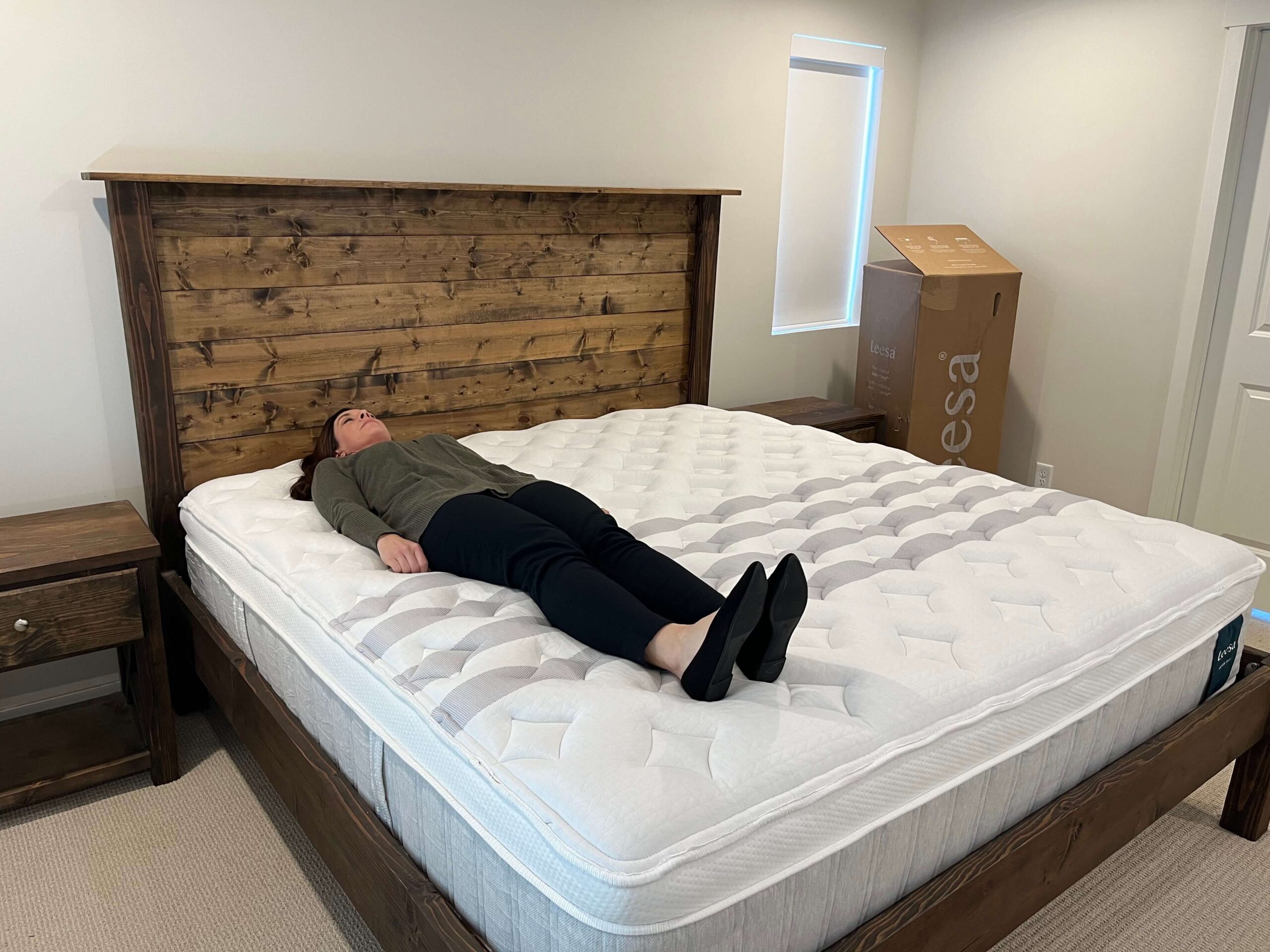
If you tend to sleep warm, cooling is not a luxury on a mattress, it is the whole decision. The Leesa Sapira Chill is my pick for the most comfortable cooling mattress because the temperature performance is built through the whole bed rather than sitting only in the cover.
During testing, the quilted cover felt cool to the touch the moment I lay down, and it did not warm up as quickly as the denser foam beds I compared in the same session. Airflow through the pocketed coil core is doing as much of that work as the cover is, because I did not get the heat build-up around my shoulders and hips that I noticed on the all-foam picks here.
Three firmness options is the second reason it is here, and it is rarer than it sounds on a cooling build. It ships with a 120-night trial and a limited lifetime warranty.
- 8 Value
- 10 Edge Support
- 9 Trial Period
- 10 Response Time
- 9 Motion Transfer
- 10 Cooling & Breathability
The Sapira Chill takes the cooling slot because of what the surface did on contact and how long that lasted relative to the rest of the page. During testing, the quilted cover felt cool to the touch immediately when I lay down, and it did not warm up as quickly as the denser foam beds I compared in the same session. Airflow through the pocketed coil core is doing as much of that work as the cover is: it did not build up the heat around my shoulders and hips that I noticed on the all-foam picks here.
Three firmness options is the other reason it is here, and it is rarer than it sounds on a cooling bed. Most beds built around temperature commit to one feel, which means half the people who need the cooling get the wrong firmness with it. On the Medium-Firm, my hips stayed level with my shoulders on my back; the Plush let my shoulder settle further for side sleeping; the Firm stopped my hips from dropping when I turned onto my stomach.
Edge support scored a 10, and sitting on the perimeter the zoned coils held flat rather than compressing away under me.
Best For:
– Hot sleepers who do not want to accept a firmness that does not suit them to get cooling
– Couples where one person runs warm and the other does not
– Side sleepers who want the Plush option, or stomach sleepers who need the Firm
Compare Instead:
– The Nolah Evolution 15 if you want the deepest pillowtop cushioning on this page and can accept a taller build
– The Zoma Hybrid if you want a cooler-sleeping coil core at a much lower price and can live with one firmness
The Sapira Chill has a hotel feel: plush and cushioned at the surface, with a responsive core arriving underneath sooner than the depth of the pillow top suggests. The quilt cover reads cool the instant you make contact with it, and during testing it stayed less heat-retentive than the denser foam beds I compared through the first hours.
Because it comes in three firmnesses, the feel changes substantially depending on which you order, more than on any other bed here. On the Medium-Firm, my hips stayed level with my shoulders on my back. On the Plush, my shoulder settled noticeably further for side sleeping, and my hips dropped when I turned onto my stomach. On the Firm, the surface stopped my hips early in every position.
Across all three, the zoned coils give a firmer response where the body is heaviest and more give at the shoulders. Order the Plush if you sleep on your side, the Medium-Firm if you sleep on your back or change position, and the Firm if you sleep on your stomach or weigh over 230 pounds.
The quilted cover is the layer responsible for the cool-on-contact reading, and it is doing real work rather than feeling neutral: it drew heat off my palm faster than any other cover on this page. Underneath, four foam layers are stacked deliberately soft-to-firm, which is what avoids the stuck feeling of a single thick memory foam slab while still contouring enough to cushion a shoulder. The zoned pocketed coil core, up to 1,032 coils, is where the firmness differences between the Plush, Medium-Firm and Firm builds actually live, and the zoning concentrates support under the hips, which is why alignment held on my back across all three. That same coil core is the second half of the cooling result, because airflow through wrapped coils is what stopped heat building around my shoulders and hips the way it did on the all-foam picks here. Reinforced perimeter coils produced the 10/10 edge support. Foams are CertiPUR-US certified and the build is fiberglass free.
Pros
- Cooling and Breathability (10/10): the quilt cover read cool on contact and did not warm as fast as the denser foam beds compared in the same session
- Edge Support (10/10): the reinforced zoned coils held flat when I sat on the perimeter
- Three firmness options on a cooling build, which is rare: Plush held my shoulder for side sleeping, Firm stopped my hips dropping on my stomach
Cons
- Value (8/10): it is priced above the other cooling-capable hybrids on this page, and the three-firmness range is part of what you are paying for
- Motion Transfer (9/10): strong, but my partner’s movement carried marginally further than on the Helix Midnight Luxe or Nolah Evolution 15 here
- The Plush build did not give my hips enough pushback when I turned onto my stomach, so firmness selection matters more on this bed than on a single-feel model
The quilt cover read cool the moment I lay down and did not warm up as fast as the denser foam beds I compared in the same session, and airflow through the coil core is doing as much of that as the cover is. It is the pick for hot sleepers who refuse to accept the wrong firmness in exchange for cooling, since it is one of the few cooling builds offering Plush, Medium-Firm and Firm. Side sleepers should order the Plush; stomach sleepers and heavier sleepers should order the Firm.
Most Comfortable Pillowtop Mattress
7. Nolah Evolution 15
Warranty
Lifetime
Sleep Trial
120 Nights
Shipping
Free
Watch Our Nolah Evolution 15 Video Review
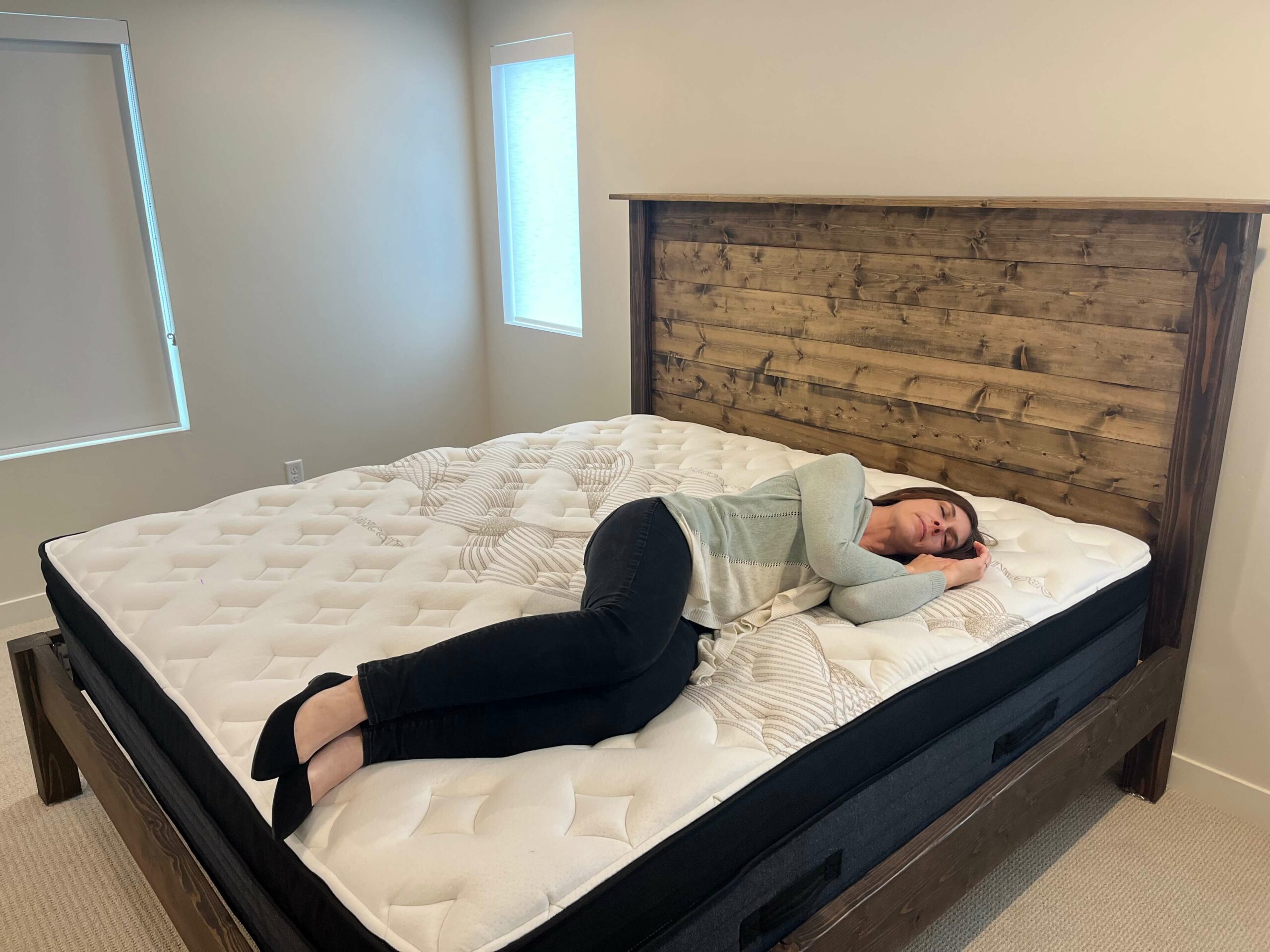
The Evolution 15 carries the highest overall score on this page at 9.5, and it takes the pillowtop award for what its quilted Euro top does that a plain foam surface cannot. During testing, lying on my side, the top inch gave immediately and cushioned my shoulder, and then the AirFoamICE beneath took over and stopped the descent rather than letting me keep going. That two-stage response is the pillowtop distinction, and it is why the surface reads plush without feeling unsupported.
The tri-zone coils are what stop it being merely a soft bed. On my back, the firmer middle section held my hips level with my shoulders while the head and foot sections gave more, so the plushness at the surface never turned into a sag through the middle.
- 10 Value
- 10 Edge Support
- 9 Trial Period
- 9 Response Time
- 10 Motion Transfer
- 9 Cooling & Breathability
The Evolution 15 is the highest-scoring bed on this page at 9.5, and it takes the pillowtop award because of what its quilted Euro top does that a plain foam surface cannot. During testing, lying on my side, the top inch or so gave immediately and cushioned my shoulder, and then the AirFoamICE underneath took over and stopped the descent rather than letting me keep sinking. That two-stage feel is the pillowtop distinction, and it is why the surface reads as plush without feeling soft.
The tri-zone coils are what stop it from being just a soft bed. On my back, the firmer middle section held my hips level with my shoulders while the sections at head and foot gave more, so the plushness at the surface never turned into a sag in the middle.
Motion transfer and edge support both scored a 10. When my partner moved on the far side, the coil zoning contained it rather than passing it across, and sitting on the perimeter the foam rail held flat instead of rolling away.
At 15 inches it is the tallest bed here, and that is a real commitment rather than a footnote.
Best For:
– Side sleepers who want a plush surface with firm support directly underneath it
– Couples who want both strong motion isolation and a usable edge
– Buyers choosing between three firmnesses rather than accepting one
Compare Instead:
– The Helix Midnight Luxe if 15 inches is too tall and you want a lower-profile bed with similar zoning
– The Leesa Sapira Chill if cooling is the priority and the pillowtop depth is not
The Evolution 15 comes in Plush, Luxury Firm and Firm, and most buyers land on the Luxury Firm, which is the build I spent the most time on. It conforms without giving way: lying down, the quilted Euro top gives immediately and then firms up about an inch in, so the initial impression is much softer than the surface actually is once loaded.
That two-stage response is what makes the depth of the bed manageable. At 15 inches with this much foam above the coils, a single-density comfort layer would have felt bottomless. It suits side sleepers who want plush cushioning with support arriving quickly beneath it, and couples who need both motion isolation and a usable edge. Anyone who sleeps on a low platform frame, or who will need to rotate the mattress alone, should account for the height and the weight before ordering.
The ArcticTex cover and the two inches of high thermal conductivity foam beneath it are what made the surface read cool on first contact, and the AirBreath gusset around the border is what keeps air moving through the sides of a 15-inch bed rather than trapping it. The graphite-infused AirFoamICE below that is the layer producing the pillowtop’s two-stage feel: it gives immediately at the surface, then firms up about an inch down, which is what stopped my shoulder from continuing into the bed on my side. High-resilience foam under that is what keeps the plush surface from turning into a sag under the hips. The tri-zone pocketed coil core is the structural reason the middle third held my hips level with my shoulders while the head and foot sections gave more. Foam rails around those coils produced the 10/10 edge support, and the wrapped coils contained my partner’s movement for the 10/10 motion transfer. The base is recycled plant fiber.
Pros
- Value (10/10): the highest score on this page overall at 9.5, and it earns the value number on how much build is in it rather than on being cheap
- Motion Transfer (10/10) and Edge Support (10/10): my partner’s movement stayed contained by the coil zoning, and the foam rail held flat under me at the perimeter
- The quilted Euro top gave immediately and the AirFoamICE beneath stopped the descent about an inch down, which is what makes it read plush without feeling unsupported
Cons
- At 15 inches it is the tallest bed on this page, which means deep pocket sheets, a higher bed height than most frames assume, and a mattress heavy enough that rotating it needs two people
- Response Time (9/10): the deep foam stack releases marginally slower than the coil-on-coil and grid builds here, so dedicated combination sleepers will notice more lag
- Cooling and Breathability (9/10): strong, but the depth of foam above the coils means it did not stay as cool on contact as the Leesa Sapira Chill or the AS5 Hybrid
On my side the quilted Euro top gave immediately and then the AirFoamICE underneath stopped the descent about an inch in, which is the two-stage feel that separates a real pillowtop from a soft foam surface. It suits side sleepers who want plush cushioning with firm support directly beneath it, and couples who need both strong motion isolation and a usable edge. At 15 inches it is the tallest bed on this list, so anyone with a low frame, deep-pocket sheet limits, or nobody around to help move it should size it up first.
Most Comfortable Budget Mattress
8. Vaya Mattress
Warranty
10 Years
Sleep Trial
100 Nights
Shipping
Free
Watch Our Vaya Mattress Video Review
The Vaya is the least complicated bed on this page and the one that most convincingly justifies its price. It is two layers, and during testing that simplicity showed up as speed: the three inches of Vaya Foam contoured under my shoulder on my side and then released the moment I moved off it, with none of the delay that makes budget memory foam frustrating to turn over on. That earned it a 10 out of 10 for response time, matching the Saatva Classic at a fraction of the cost.
On my back, the nine-inch base underneath did the job the comfort layer deliberately does not: my hips stopped level rather than continuing down, and the surface stayed flat under my lower back rather than dishing. Vaya sells online with free shipping, a 100-night sleep trial and a 10-year warranty, which is longer coverage than most beds at this price carry.
- 10 Value
- 9 Edge Support
- 9 Trial Period
- 10 Response Time
- 8 Motion Transfer
- 9 Cooling & Breathability
The Vaya is the least complicated bed on this page and the one that most convincingly justifies its price. It is two layers, and during testing that simplicity showed up as speed: the three inches of Vaya Foam contoured under my shoulder on my side, then released as soon as I moved off it, with none of the delay that makes cheap memory foam frustrating to turn over on. That is what earned its 10/10 response time, which ties it with the Saatva Classic, a bed at several times the price.
On my back, the nine-inch base underneath did the work the comfort layer deliberately does not: my hips stopped level rather than continuing down, and the surface stayed flat under my lower back rather than dishing.
Value scored a 10, and that is the honest reason it is here. It does not have zoning, coils, a cooling cover, or a firmness choice. What it has is a comfort layer that behaves correctly and a base that holds, and on a comfort list those two things are most of the argument.
Best For:
– Combination sleepers on a budget who need the surface to release quickly
– Guest rooms and second bedrooms where the bed needs to work for whoever shows up
– First-time online mattress buyers who want fewer variables to get wrong
Compare Instead:
– The Zoma Hybrid if you can stretch the budget and want coil support and airflow underneath the foam
– The Amerisleep AS3 if you want zoned support and a longer warranty in a similar medium foam feel
The Vaya reads as a straightforward medium with no surprises in it. Vaya Foam sits between memory foam and latex in behaviour: it contours under load like the first and springs back like the second, so you get shape without the delay. Lying on my side, my shoulder settled in about an inch and stopped there; moving to my back, the surface released immediately rather than holding the previous impression.
What it does not do is vary. There is no zoning, so the firmness under your shoulder is the firmness under your hips, and no coil layer, so there is nothing to add bounce or contain a partner’s movement. It suits combination sleepers on a budget and guest rooms where the bed has to work for whoever arrives. Side sleepers who need deep shoulder cushioning, and couples where one person is easily woken, should look at the coil builds on this list first.
Two layers, and both of them are load bearing. The three inches of Vaya Foam on top is a fast-recovering comfort foam rather than traditional memory foam, and that is the specific reason the bed scored a 10 for response time: it contoured under my shoulder and then released as soon as I moved off it, without the delay that makes budget memory foam frustrating to turn over on. Nine inches of high-density base foam underneath is what stopped my hips at level on my back rather than letting them continue down, and it is the layer the 10-year warranty is really about, since sagging is a base-foam failure. There are no coils, no zoning and no cooling treatment in this build, and the breathable cover is the only temperature feature, which is why the surface warmed faster than the coil beds compared in the same session. Both foam layers are CertiPUR-US certified and tested for low VOC emissions.
Pros
- Value (10/10) and Response Time (10/10): it matches the Saatva Classic on response at a fraction of the price, because the comfort foam releases the moment you move off it
- Nine inches of high-density base foam stopped my hips at level on my back rather than letting them keep going down
- Both foam layers are CertiPUR-US certified and tested for low VOC emissions, and the build had noticeably less initial odor than most compressed foam beds
Cons
- Motion Transfer (8/10): my partner’s movement carried further across this surface than on any coil bed here, because there is nothing between the two layers to contain it
- No coils, no zoning and no cooling treatment, so the surface warmed faster than every coil build on this page during the same session
- Ships in one medium firmness with a 10-year warranty rather than the lifetime coverage several picks here carry
The Vaya Foam contoured under my shoulder and then released the moment I moved off it, which is what a 10/10 response time actually feels like and is rare at this price. It is the right pick for combination sleepers on a budget, and for guest rooms where the bed has to work for whoever turns up. There are no coils, no zoning and one firmness, so side sleepers who need deep shoulder cushioning and couples sensitive to movement should compare it against the hybrids on this list first.
Most Comfortable Soft Mattress
9. Amerisleep AS5 Hybrid

Warranty
20 Years
Sleep Trial
100 Nights
Shipping
Free
Watch Our Amerisleep AS5 Hybrid Video Review
The AS5 Hybrid is the softest bed on this page by a clear margin, and it takes the soft award for how it stays supportive at that firmness rather than for how far you sink into it. During testing, lying on my side, my shoulder went further into the Bio-Pur than on any other bed here, far enough that the surface came up around it. The Active Flex layer directly beneath is what stopped that continuing: it pushed back with a latex-like lift about an inch in, so the cradle had a floor.
The pocketed coil core underneath is what reinforces that floor. On my back, even at a 3 out of 10 firmness, my hips stopped level with my shoulders rather than dropping below them, which is not what a soft all-foam bed does at this firmness. It carries Amerisleep’s 20-year warranty and a 100-night sleep trial, the same as the AS3.
- 8 Value
- 9 Edge Support
- 9 Trial Period
- 8 Response Time
- 9 Motion Transfer
- 10 Cooling & Breathability
The AS5 Hybrid is the softest bed on this page by a clear margin, and the soft award is about how it stays supportive at that firmness rather than how far you sink into it. During testing, lying on my side, my shoulder went further into the Bio-Pur than on any other bed here, far enough that the surface came up around it. The Active Flex layer directly beneath is what stopped that from continuing: it pushed back with a latex-like lift about an inch in, so the cradle had a floor.
That floor is what the coil core underneath reinforces. On my back, even at a 3 out of 10 firmness, my hips stopped level with my shoulders rather than dropping below them, which is not what a soft all-foam bed does at this firmness.
Cooling and Breathability scored a 10, the highest on this page. The cover felt cool on first contact and the coil core meant the surface did not build up heat around my shoulders and hips the way the deep foam alone would have.
Best For:
– Side sleepers who want a deep cradle at the shoulder and hip
– Lighter sleepers who do not generate enough weight to engage firmer surfaces
– Anyone who has found every bed they have tried too firm and wants the soft end of the range
Compare Instead:
– The Amerisleep AS3 if this reads as too soft and you want the same foam family at a medium feel
– The Nolah Evolution 15 in Plush if you want a soft surface with a firmer, more zoned support layer underneath
The AS5 Hybrid is genuinely soft rather than medium-soft, and it is the only bed on this page where that is true. Lying down, the surface gives several inches before anything resists, and on my side my shoulder went in far enough that the foam came up around it. The distinction from a cheap soft bed is what happens next: the Active Flex layer arrives about an inch down and pushes back, so the sink stops at a defined point instead of continuing.
Because the coil core is doing the structural work, it stays supportive at a firmness where an all-foam build would have bottomed out. It suits side sleepers who want the deepest shoulder cradle on this list, and lighter sleepers who never generate enough weight to engage a firmer surface. Stomach sleepers and heavier back sleepers will not get enough pushback under the hips here and should choose a firmer pick on this page.
The three inches of Bio-Pur on top is the deepest comfort layer on this page, and it is why the shoulder cradle goes as far as it does on a soft bed. The Active Flex layer directly beneath is the piece that makes the softness workable rather than bottomless: it behaves more like latex than memory foam, pushing back about an inch into the sink, which is what gave the cradle a floor during side sleeping. Under that, the Affinity layer with HIVE cutouts changes firmness zone by zone, giving under the shoulder and resisting under the hips. The pocketed coil support core underneath is what held my hips level with my shoulders on my back at a 3 out of 10 firmness, which is not something a soft all-foam build does, and airflow through those coils is the reason this bed carries the highest cooling score on the page at 10/10 despite its foam depth. Foams are CertiPUR-US certified and tested for low VOC emissions.
Pros
- Cooling and Breathability (10/10): the highest cooling score on this page, and the coil core meant heat did not build around my shoulders and hips the way three inches of foam alone would have allowed
- The Active Flex layer stopped my shoulder about an inch into the sink, so the softest surface here still had a floor under it
- The pocketed coil core held my hips level with my shoulders on my back at a 3 out of 10 firmness, which an all-foam soft build does not do
Cons
- Response Time (8/10): the lowest on this page alongside Value, and it shows when repositioning, because three inches of soft Bio-Pur takes longer to release a hip than the firmer picks here
- Value (8/10): a 20-year warranty and a hybrid build at a price above most of this list
- At a 3 out of 10 it is genuinely soft, and stomach sleepers or heavier back sleepers will not get enough pushback under the hips from it
My shoulder went further into this bed than any other on the list, and the Active Flex layer about an inch down is what stopped it going further, so the cradle had a floor rather than a bottom. It is built for side sleepers who want the softest surface here, and for lighter sleepers who never generate enough weight to engage a firmer bed. Back and stomach sleepers, and heavier sleepers who need pushback under the hips, will be better served by a firmer pick on this list.
The Mattresses We Have Tested
Every mattress below was tested hands-on and on camera by me, Kristina Hindes, our lead tester. Each row links to its written review and filmed test, so you can check our work. For how we score every mattress, see How We Test Mattresses.
See the full list, with review and video links
| Mattress | Review and video |
|---|---|
| Amerisleep AS2 | Review · Video |
| Amerisleep AS3 | Review · Video |
| Amerisleep AS3 Hybrid | Review · Video |
| Amerisleep AS5 | Review (test clips inside) |
| Amerisleep AS5 Hybrid | Review · Video |
| Amerisleep AS6 Black Series | Review · Video |
| Amerisleep Organica | Review · Video |
| Amerisleep Organica Plush | Review · Video |
| Bear Original | Review · Video |
| Birch Natural | Review · Video |
| Brooklyn Bedding Aurora Luxe Hybrid | Review · Video |
| Brooklyn Bedding Plank Firm | Review · Video |
| Casper The One | Review · Video |
| Eco Terra Hybrid Latex | Review · Video |
| FORM Core | Review · Video |
| FORM Core Hybrid | Review · Video |
| FORM Prime | Review · Video |
| FORM Prime X | Review · Video |
| GhostBed Flex | Review · Video |
| Happsy Organic | Review · Video |
| Helix Dawn Luxe | Review · Video |
| Helix Midnight Luxe | Review · Video |
| Helix Sunset Luxe | Review · Video |
| Latex For Less Hybrid | Review · Video |
| Leesa Original | Review · Video |
| Leesa Sapira Chill Hybrid | Review · Video |
| Leesa Sapira Hybrid | Review · Video |
| Naturepedic Concerto | Review · Video |
| Naturepedic EOS Classic Organic | Review · Video |
| Nest Bedding Owl | Review · Video |
| Nest Bedding Puffin Kids | Review · Video |
| Nest Bedding Raven | Review · Video |
| Nest Bedding Sparrow Signature Hybrid | Review · Video |
| Nolah Evolution 15 | Review · Video |
| Nolah Natural 11 | Review · Video |
| Nolah Original Hybrid | Review · Video |
| PlushBeds Botanical Bliss | Review · Video |
| PlushBeds Luxury Bliss | Review · Video |
| PlushBeds Organic Bliss | Review · Video |
| PlushBeds Organic Kids | Review · Video |
| PlushBeds Signature Bliss | Review · Video |
| Saatva Classic | Review · Video |
| SweetNight CoolNest | Review · Video |
| SweetNight Prime | Review · Video |
| Vaya Hybrid | Review · Video |
| Vaya Mattress | Review · Video |
| Westin Heavenly Bed | Review · Video |
| Zoma Boost | Review · Video |
| Zoma Hybrid | Review · Video |
| Zoma Start | Review · Video |
Mattress Types to Consider When Searching the Most Comfortable Mattress
Let’s get started on what you’ll need to know to help you get the best sleep possible. In the next section, we run through the common types of mattresses that can be found in stores or online. We note the good and the bad found in each, as well as what kind of sleeper may find the most comfort.
Memory Foam Mattresses
Best suited to: side sleepers who want deep contouring, light sleepers sharing a bed, and partners on different schedules
Memory foam responds to weight by spreading load across a wider area instead of concentrating it under the shoulder and hip. The foam molds to the sleeper rather than pushing back, which is what lets it keep the spine level while still relieving pressure at the contact points.
THE GOOD: Memory foam absorbs movement, so a partner who tosses and turns moves their own side of the bed and not yours. The contouring is why the best mattresses for side sleepers are usually memory foam: the surface gives at the shoulder and hip rather than holding them up. Foam also comes in a range of densities, so the same material can be built soft or firm depending on the support you need.
THE BAD: Traditional memory foam is heat activated, so it can feel warm to sleepers who already run hot, and its slow recovery can make it harder for older or heavier sleepers to change position or get out of bed. Compressed foam also tends to have a noticeable odour for the first day or two after unboxing. Manufacturers have addressed both to different degrees: some now use partly plant-based foams that recover faster and off-gas less. Amerisleep’s Bio-Pur is one example, and it is CertiPUR-US certified and tested for low VOC emissions.
Latex Mattresses
Best suited to: sleepers who want a bouncy, responsive surface, those prioritising natural materials, and anyone who has found foam beds too heat-retentive
Latex mattresses are constructed from either natural or synthetic rubber. Natural or organic latex mattresses are the most earth-friendly mass-produced mattress. There are two processes by which the latex is created (Dunlop and Talalay) both of which have unique characteristics.
If you decide a latex mattress is right for you, spend some time learning the differences between the two varieties. Dunlop is the most common and uses less energy. Talalay latex requires a few more steps and more energy to make. They both offer a bouncy yet firm feel that is evenly distributed throughout the bed, but there are subtle differences.
THE GOOD: 100% natural latex is made without petroleum-based inputs, which is why it typically produces less initial odour than compressed foam. Latex is also more resistant to dust mites and mildew than most bedding materials. If that matters to you, look for a GOLS or GOTS certification and check its scope, since “natural latex” is used loosely and blended latex is common. Structurally, latex gives resilient support: it spreads load at the shoulder and hip without the slow release of memory foam, so repositioning is easier. Because it is aerated during manufacturing, air moves through it more freely than through dense foam, so a latex bed generally feels less heat-retentive than memory foam of the same thickness.
THE BAD: Latex tends to feel firm, so sleepers who want a plush surface usually need a softer latex layer built over a firmer core. All-latex beds can also be hard to find in stores to test in person, and 100% natural or organic latex generally costs more than comparable foam, though it often carries a longer warranty.
Innerspring Mattresses
Best suited to: budget buyers, shoppers who want to test in store before buying, and anyone who prefers a firm, bouncy surface
Innerspring mattresses are still the most manufactured style and fit almost any budget. If price is your main concern, you do not have to spend a lot to get a usable bed, though quality drops off at the very low end. A coil count between roughly 340 and 390 is a reasonable target; much below that may not support you evenly, and much above it adds little you will feel.
THE GOOD: A high coil count with enough padding above it gives a firm, even surface that spreads load across the neck, shoulders, back, hips and legs rather than concentrating it. An innerspring also makes a good base for a topper, whether memory foam or latex, so it is an easy way to test a feel before committing to a whole mattress in that material.
THE BAD: An innerspring is not usually customisable, and because the coils cannot contour to individual body shape, the surface does not vary between the shoulder and the hip the way a zoned or foam bed does. Coil-only builds also tend to have a shorter service life than foam or hybrid designs, and the padding above the coils compresses before the coils themselves do.
How To Find The Most Comfortable Mattress for You
Comfort is subjective, but in practice most people mean the same three things by it: a surface that holds the spine level, spreads load at the shoulder and hip, and lets you change position without effort. The first step is working out which of those three your current mattress is failing at.
Sleep surfaces do degrade. Foam compresses, coils lose tension, and the padding above a coil layer flattens well before the coils do, so a bed that felt right at purchase can be doing none of those three things eight years later.
Answer the questions below about your mattress and see if you are in need of a new mattress.
Do You Have a Comfortable Mattress?
- Do you sleep without waking, or wake and reposition repeatedly?
- Do you feel stiff for the first twenty minutes after getting up?
- Does one specific area take the pressure when you lie on your side?
- Do your arms or legs go numb in any position?
- Do you wake up warm, or throw off covers during the night?
- Is there a visible dip where you sleep, or does the edge sag when you sit on it?
The list of questions goes on and on, but the point is to take a few minutes to figure out what you want from your mattress and where it is currently falling short… or sinking in some circumstances. This can help you get an idea of your needs and what type of material might be the most comfortable mattress for you. What do you need from a mattress that you aren’t getting?
Are Mattress-in-a-Box Mattresses Comfortable?
When they arrive at your doorstep rolled up in a box, these beds don’t look too appealing. However, once you unroll a mattress-in-a-box, it offers all the same comfort and support a bed you bought in-store would. The only real difference between a mattress-in-a-box and a store-bought mattress is its method of delivery.
Online mattress in a box brands use high-quality machinery crafted to roll-up your mattress without sacrificing its structural integrity. Because there’s a method to their madness, your bed is not at risk of damage from being compressed. However, should you try to roll up your mattress on your own, you’ll likely ruin the bed.
What Is the Most Comfortable Mattress Thickness?
The right thickness for your mattress is an underappreciated shopping consideration. A too-thin mattress can lose support and have its cushioning materials flatten prematurely.
Less importantly but still worth considering is how mattress thickness impacts your overall bed height. A too-tall or too-short mattress can make moving out of bed awkward.
We recommend mattresses at least 10 inches tall for adult sleepers, though many find 12 inch mattresses are even better when it comes to durable support and comfort. They’re still quite affordable and last for years and years.
For the ultimate plush and luxurious experience, we suggest shopping for 14 inch mattresses. These beds typically provide more cushion above the support layer, plus features like zoned coils and pillow tops that need the extra height to work.
Saving on the Most Comfortable Mattresses
It’s worth investing in your comfort, but there are ways to reduce what you expect to spend. One way is to keep an eye out for the year’s big mattress sales:
- Best Presidents Day Mattress Sales
- Best Memorial Day Mattress Sales
- Best 4th of July Mattress Sales
- Best Labor Day Mattress Sales
- Best Black Friday Mattress Sales
- Best Cyber Monday Mattress Sales
Frequently Asked Questions
What is the most comfortable mattress?
There is no single answer that holds for everyone, but across the 50+ mattresses I tested for this guide, the Amerisleep AS3 was comfortable for the widest range of sleepers: a 12-inch medium memory foam bed that held my hips level with my shoulders on my back and cushioned my shoulder on my side without bottoming out. If your definition of comfortable is narrower, the picks split accordingly: the Amerisleep AS5 Hybrid for the softest surface, the Leesa Sapira Chill for the coolest, the Helix Midnight Luxe for two people sharing a bed, and the Vaya Mattress for the best build under a budget.
What is the most comfortable mattress for side sleepers?
Side sleepers need a conforming surface that lets the shoulder and hip settle in while the spine stays straight. Soft to medium feels provide that cushioning without giving up support. Memory foam, latex and hybrid builds all work; traditional innersprings generally do not, because a coil-only surface cannot vary between the shoulder and the hip. On this list, the Amerisleep AS5 Hybrid is the softest option for side sleeping and the Helix Midnight Luxe offers zoned shoulder give at a medium feel.
What firmness is most comfortable for lower back support?
Medium-firm is the most reliable starting point, because it holds the pelvis roughly level with the shoulders rather than letting the hips drop below them or bridging the lower back over a gap. Side sleepers often do better a step softer, since the shoulder needs somewhere to go. On this list, the Amerisleep AS3 held lumbar contact best at a medium feel, and the Saatva Classic in Luxury Firm gave the most coil pushback under the hips.
What is the most comfortable mattress for back sleepers?
Back sleepers usually do best on medium-firm to firm surfaces, which keep the hips from dropping below the shoulders. Some back sleepers still prefer more cushioning than that gives, and a medium feel works for them provided the lower back stays in contact with the surface rather than bridging. On this list, the Amerisleep AS3 is the medium option that held alignment best on my back, and the Saatva Classic in Firm is the option for anyone who needs more pushback.
What is the most comfortable mattress for combination sleepers?
Combination sleepers need a surface that releases quickly when they change position, so they are not repositioning against the previous impression. Response time matters more here than firmness. Hybrids and grid builds generally release faster than memory foam, and the coil layer also limits how far a partner’s movement carries. On this list, the Saatva Classic and the Vaya Mattress both scored a 10 for response time, and the FORM Prime’s grid surface returns to level as you move rather than after you have moved.
What is the most comfortable mattress for stomach sleepers?
Stomach sleeping needs a firm, buoyant surface that keeps the hips from sinking. Stomach sleepers tend to drop into soft mattresses at the pelvis, which takes the lower back out of a neutral position. Firm foam works, but a hybrid usually works better, because the coil layer pushes back faster under the hips. On this list, the Saatva Classic in Firm and the Leesa Sapira Chill in Firm are the two builds I would point a dedicated stomach sleeper toward.
How to Choose Between These Nine
The mattress marketplace is certainly not as simple as it once was. We have so many different types of materials and brands to choose from, each with different benefits. It is important not to feel intimidated by the shopping process or by the idea of trying a new mattress type, especially if your old standby has not delivered.
Finding the most comfortable mattress might involve research and learning, and maybe even some trial and error. Once you’ve researched the field and found the option for you, look for a retailer that offers a return period of at least 30 days. This will give you plenty of time to see if you actually like your mattress before completely committing.
Shop around and don’t buy until you are comfortable. Get all your questions answered. Being a smart shopper and knowing what’s out there will ultimately help you get the most comfortable mattress.
Related Reads
- I Tested 50+ Mattresses to Find the 14 Best Mattresses for Multiple Sclerosis of 2026


- I Tested 50+ Mattresses to Find the 14 Best Mattresses for Menopause of 2026


- I Tested 50+ Mattresses to Find the 14 Best Mattresses for Piriformis Syndrome of 2026
- I Tested 50+ Mattresses to Find the 14 Best Mattresses for Neuropathy of 2026



Comments (35) Leave a reply
I have been through 5 high-end mattresses (CalKing no less) in the last 7 years. I’ve done deep-dive research, read dozens of articles., and polled many friends and colleagues.
I’m still without the right mattress.
Have you done latex? I had a Dunlop latex mattress from bedrooms and more in Seattle for nearly two decades. Since that time I’ve since slept on five others and my back has gotten progressively worse, accompanied by increasing pain. I would give my life savings and cram that bed in this tiny room if I had any idea how to get ahold of another one. It was an expensive mattress, but
No price is worth pain or sleepless nights.. They also have the added benefit of being flip able, adding to its longevity
And being hypo allergenic. Good luck????
I have been through countless and I mean countless mattresses over the past few years. From high end to less expensive models. Each has caused issues to my spine, hips and circulation.
I can not to sleep on memory foam nor latex! I am truly suffering due to the quality of my sleep.
I own a kingsdown bacall that I like a lot. I need a new mattress for our cottage and no store carries them here. We both have sciatica problems, sleep on the side and on the back. I have hot flashes.
What would you recommend… (in canada) thank you
I too would like to know what mattress replace the Kingsdown Bacall?
I am in tears over mattress shopping! I had a beautyrest Cresthill pillowtop mattress for 3 years and absolutely loved it. It was stood up on its side for a week while painting. After that, it was ruined. My boyfriend believed the hype about the Purple mattress so we then purchased the Purple 4. We were both in pain for months until we returned it. Then he all of a sudden loved Tempurpedic. We can’t agree on comfort so we purchased 2 twin XL Tempurpedic Lux Adapt mattresses, one soft and one firm. We have had these for almost 2 weeks and purchased them as clearance mattresses to save money and for the purpose of them being broken in more than when purchased new. He claims to love his firm model and I hate my soft model. I like the cloud feeling I was used to from the pillowtop mattress I had. This Tempurpedic, like many other beds these days is flat as can be. I sink into the mattress instead of floating on top. I purchased a fiberbed topper which is helping not sink in as much but still doesn’t feel like a pillowtop. I DO NOT want to buy a bed in a box or anything I can’t feel in a store first. I tried the Sterns and Foster Luxury Eurotop Firm model at the store and was quite comfortable on it but then read horrible reviews about it’s durability. I am at my wits ends and don’t know what to do now. Please help!!!
Need a mattress that will last and support a 400 lb man and 200 lb woman. Needs to be cool and have an excellent trial and return free. Also excellent warranty.Also need white glove service as we are disabled and unable to pick up heavy mattress. Any suggestions?
Hi Ellen,
Thanks for the question! An important thing to consider when it comes to the mattresses is the warranty. Many name-brand products don’t have a warranty that covers 400 pounds on one side. Because of that, we’d recommend a mattress that specializes in mattresses for heavier weights. A brand you could look into would be WinkBeds; they offer a 120-night sleep trial, lifetime warranty, and White Glove Delivery, and their beds are built to support the weights you mentioned.
I hope this helps!
I like the pillow top feel but I also want it to last. I went to Macy’s and bought a bed. They delivered a much cheaper version of the Sterns and Foster I ordered. Such a shame I felt so taken advantage of!
Thank you for providing so much info on beds in one place!
Our pleasure! Thanks for reading!
Looking for a bed that has a firm setting of 6.5,
I’m a side sleeper and back sleeper so need something to work with that.
I’m an athlete around 200lbs so i sweat a lot and need something cool.
My hips are out of alignment due to a lower spine issue, so need something to comfort that.
I have heard the purple, bear, casper, ghost, and amerisleep.
What is the biggest different from these beds and what i need?
Hi Matt,
That’s a great question. A side/back sleeper, around 200lbs, with a lower spine issue who sweats a lot.
Out of those 5 options, we would suggest you consider Ghostbed (but only their Ghostbed Luxe as it has the height you need, plus cooling properties), Amerisleep’s AS3, and the Purple 3.
Out of those three, the Amerisleep AS3 has the most memory foam, so it may be the best option for pressure relief. Plus, it has that zoned back support which could help with your lower spine issue. However, the Ghostbed Luxe and the Purple 3 should be considered. While the Ghostbed Luxe has less memory foam, it does seem, by all the reviews, to be a very cool mattress.
The Purple 3 is unique because it does not have memory foam at all (instead it has its own Purple material) and it uses coils for support. So it should have no problem with breathability. If you can head to a Mattress Firm they usually carry the Purple line. Give them a try first, to see if you like their unique material. If the material is not for you, then focus on the Ghostbed Luxe or Amerisleep As3. Either of those could really be a benefit to you.
Hope this helps.
I too wondered why, with such a comprehensive, thoughtful report, a Sleep Number type “Air” bed wasn’t included in the comparisons. I’ve thought about an Amerisleep mattress but have also thought about a Sleep Number alternative by “nightairbeds.com”. Any thoughts?
Hi Gary,
Thanks for the question! It’s a good question. Right now we are focusing most of our research on all-foam, hybrid, traditional innerspring, and latex mattresses. Sleep Number does use memory foam in most of their mattresses. That being said, the ability to change the firmness, plus with their unique technology, makes Sleep Number unique and not something we consider ourself experts in. If you google sleep number reviews, you will find a page by Mattress Clarity that is pretty comprehensive.
Hope this helps!
Of the things that you said, what I liked the most was the idea that memory foam mattresses absorb movements and that even if the person I am sleeping next to moves about, I won’t be affected. I sleep with my little brother, and I can say that he is such an active boy even in sleep. It keeps me up though. That is why I think it will be a good idea to consider this type of mattress once we decide to replace the old one.
We we sold a Tempur mem gel mattress based on salesman recommended and my wife needs physical therapy and acupuncture now.
We both wake up like we have been kicked square in the back.
My wife hips and shoulders hurt she only gets 3 hours sleep.
The mattress is very hard but we spent so much, we really don’t know what to do now. Maybe a topper ? But again which one ??
I purchased a foam mattress by Boyd mattress.After a week We started questioning the retwhere.After 2 years of excuses I tried getting in touch with Boyd .No response. I broke my back and can’t afford financially to spend 2 thousand more dollars for a 500 dollar bed.Can you help?
I’m allergic to latex.
Are memory foam mattresses made with latex? How about plant-based memory foam or gel foam?
About saying in this article that latex mattresses are hypoallergenic, many people are allergic to latex. So many that the entire multi-building medical complex and hospital that I live near has banned latex from all of its facilities.
Have you heard of Saatva? They look pretty good. I checked the amerisleep link you provided above and they only have twin XL, We have the base mattress and the frame. It is an adjustable bed, it is two twins pushed together. Do no want anything hot, body hurts all over when I awake. Sleep mostly on my side with my head elevated. Thank you!
Hello,
I have a Saatva and I am ready to get rid of it. I have had it for about 2 years. It was my first on line mattress purchase. My body is sore and stiff when I get up. I am a stomach and side sleeper. I am here researching different brands.
Just asked Saatva for a softer mattress while in the 120 day return time frame. Hoping softer will eliminate me and the hubby hurting upon waking. It’s worth a try. We slept on a Saatva while on vacation and thought it was pretty comfortable and should get rid of our Icomfort. (THAT Mattress was a nightmare!) So far the Saatva hasn’t turned out comfortabe with 30 days in on the luxury firm. Gotta try something softer since I’m a side sleeper and have neck and shoulder pain. Fingers Crossed!
I took delivery of a Sealy Singapore bed 2 weeks ago from Bensons for Beds. This is rated a ‘3’ medium/firm. In the shop I was told the mattress was suitable for my hip pain. I did try it and found it comfortable. However, when new bed arrived I find the mattress a lot firmer than the one I tried in the shop. I went back to the shop and tried the bed on show again. It is indeed less firm and also not as high as the one delivered to me.
Bensons has ignored all e-mails sent to customer services and the CEO. I feel that I have been sent the wrong mattress although the name Singapore appears on the label. I have started having pain all over just after a week of sleeping on this mattress. Bensons has a 4o day guarantee but I do not consider this applies in my case.
I would like to know if anyone has had similar issues and how they dealt with it. What was the outcome.
Many thanks for your reply
I have had same experience. Couldn’t get any result from bed place. Although I complained from couple of days after recieving mattress. They still wouldn’t admit to the one in shop being different to one in I recieved. It was to do with one in shop was a lot softer than the one we have. They sent someone out to test it. He said it was the same without even laying on it.
In the end I went to my credit card people. Always best to pay by credit card. Had phone call yesterday from mattress man to say the credit card people had claimed the money back so they want mattress asap. Haven’t had money back yet but been going on for 4 months. Fingers crossed I get my money soon to get another.
What about the Purple mattress?
Hi, I get way to hot and wake up throughout the night, I also wake up feeling like I’ve been kicked with mainly hip pain as I’m a side sleeper!! I don’t like a mattress with ‘tufts’ as I can feel them beneath me!!! Worried about any kind of ‘foam bed’ for fear of getting way too hot!! CAN YOU HELP ME PLEASE!!?!?!?
Hi there,
Side sleepers generally need a bit more cushioning on a mattress in order to avoid hip and shoulder pressure points and keep the spine straight (at least 3 inches). The materials that consistently rate best at preventing pressure points are natural latex and memory foam. Fiber padding doesn’t offer comparable buoyancy or durability.
One thing to note is that not all foams sleep hot. A Cargill study found plant-based foams to be more breathable than gel-infused foams, and plant-based memory foam brands like Amerisleep tend to have very low complaints when it comes to reviewers mentioning sleeping hot (compared to traditional foam brands). If your existing mattress is in a good shape, a thin memory foam or latex topper could help; if it’s time to replace look into beds with plant-based foams or organic latex.
Hope this helps!
why isn’t the sleep number bed included in the evaluation?
I have a latex mattress. Not that soft. I need a soft bed. Don’t like a hot bed either. I had a temper pediatric knock off it was like sleeping in a furnace..
I would check out Amerisleep’s AS5. – https://amerisleep.com/as5.html It’s the softest and yet most supportive memory foam mattress we have reviewed. It’s plant based, which has been proven to sleep even cooler than gel – https://www.sleepjunkie.com/how-does-plant-based-memory-foam-compare-to-traditional/
Thank you so much for writing this. I was very confused before reading this not knowing which type of bed was best for me. I at least have an idea now and now it’s time to go try them out!
Whether natural latex rubber mattress is good or good quality of white cotton bed is good irrespective of the cost.
I have noticed many people who buy air mattresses make the mistake of pumping too much air into the mattress. Just enough air to keep your body from touching the bottom of the mattress is all it takes. The difference is going from something impossible to even fall asleep on to floating on a cloud.
+Glenn Air-mattress? Really? I thought it was just a go-to for unexpected, temporary guests! Wow, this has been the best tip so far, thanks!!
Pillow top or Tempur pedic/