I Tested 50+ Mattresses to Find the 8 Best Latex Mattresses of 2026

Top Recommendation of 2026: Amerisleep Organica
After testing 50+ mattresses for this guide, the Amerisleep Organica earned our pick as the best latex mattress of 2026 because it paired natural latex with a pocketed coil core better than any other bed I tried here. During testing, lying on my back, my hips stayed level with my shoulders and the coil layer held my lower back without the deep sinkage I felt on the softer all-latex picks. On my side, the Talalay layer gave at my shoulder and hip while lifting me back to the surface, so repositioning stayed easy instead of sluggish, and the surface felt cooler to the touch through the first hours than the denser all-foam beds I compared.
The Organica suits side sleepers who want contouring without a stuck feeling, back sleepers who want a medium latex feel with real lumbar support, and combination sleepers who change positions through the night. Its balance of latex response, coil support, and steady temperature is what made it the top overall recommendation on this list.

Every mattress featured on Sleep Junkie is evaluated using the same testing framework for support, pressure relief, cooling, motion isolation, edge support, responsiveness, and overall value. Learn How We Test Mattresses.
- Best Mattress Overall: Organica
- Best Purple Alternative: FORM Prime X
- Best All Latex Mattress: PlushBeds Botanical Bliss
- Best Budget Mattress: Eco Terra Hybrid Latex
- Best Hybrid Mattress: Nolah Natural
- Best Organic Mattress: Happsy
- Best Luxury Mattress: Organica (Plush)
- Best Mattress For Combination Sleepers: Birch Natural
After testing 50+ mattresses for this guide, my 8 best latex mattresses are led by the Amerisleep Organica, a medium latex hybrid that held my hips level on my back while cushioning my shoulder on my side. Natural latex tends to feel lifted rather than sinking, and in testing the latex beds stayed cooler to the touch through the first hours than the denser all-foam models I compared, which is why they suit sleepers who run warm as well as eco-conscious shoppers. Below I break down each pick by how it performed on pressure relief, support, cooling, motion isolation, edge support, responsiveness, and value.
Watch Our Best Latex Mattresses Video Review
Best Mattress Overall:
1. Amerisleep Organica


Warranty
20 Years

Sleep Trial
100 Nights

Shipping
Free
Watch Our Organica Video Review
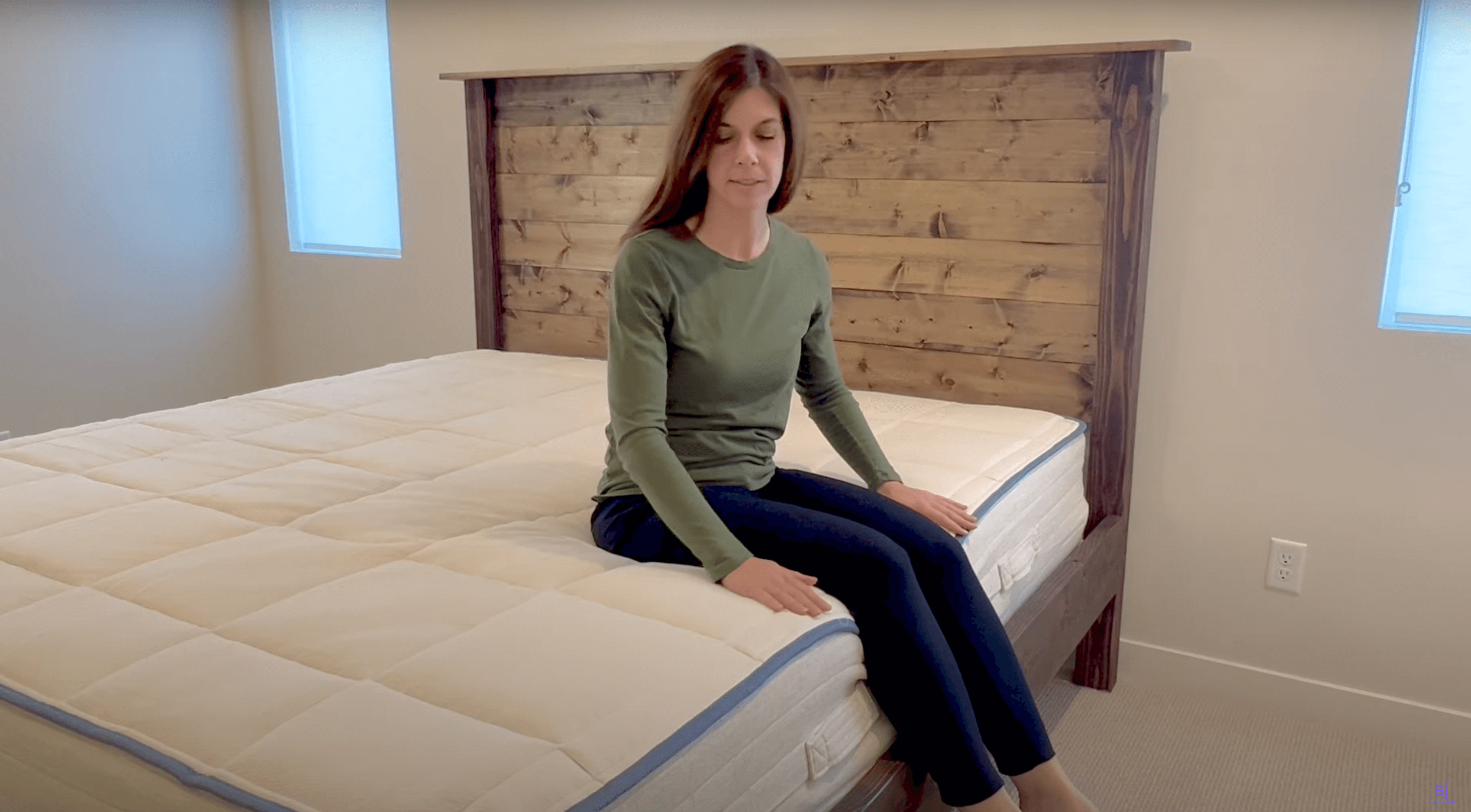
The Amerisleep Organica earned the top spot because it was the most balanced latex bed I tested for this guide, pairing organic Talalay latex with a pocketed coil core in one medium feel. Instead of making me choose between latex response and real support, it gave me both in the same bed.
The organic build is documented, not just described: GOTS-certified cotton and OEKO-TEX-certified wool over natural Talalay latex, for a breathable, hypoallergenic surface. During testing the wool kept the top of the bed from warming quickly, wicking moisture as I moved so I stayed drier through the first hours than on the all-foam beds I compared. The latex adapted under me without feeling stiff, giving at my shoulder and hip on my side, and the reinforced edge coils held steady when I sat on the perimeter to get in and out of bed.
Latex also holds up over time, and across weeks of testing the Organica kept its shape with no softening or dip where I slept. It expanded within minutes of unboxing with no lingering smell. That mix of certified materials, coil-backed support, and durability is why it leads the list, and it fits side sleepers who want contouring without a stuck feeling, back sleepers who want a medium latex feel with lumbar support, and combination sleepers who reposition often.
- 9 Value
- 8 Edge Support
- 9 Trial Period
- 10 Response Time
- 9 Motion Transfer
- 9 Cooling & Breathability
I picked the Organica because it was the most balanced latex bed I tested here, giving me latex response and coil support in one medium feel instead of asking me to choose.
During testing, lying on my back, the Talalay layer contoured my lower back while the pocketed coils kept my hips from sinking, so I never bottomed out the way I did on the softer all-latex picks. On my side, the surface gave at the shoulder and hip and then lifted me back level, which meant changing positions took no real effort, an advantage for anyone who moves around at night. The surface also felt cooler to the touch through the first hours than the denser all-foam beds I compared, which helps a sleeper who runs warm.
Best For:
– Side sleepers who want shoulder and hip contouring without a stuck feeling
– Back sleepers who want a medium latex feel with coil-backed lumbar support
– Combination sleepers who reposition often and want an easy, lifted response
Compare Instead:
– PlushBeds Botanical Bliss if you want an all-latex core and the option to rearrange firmness
– Organica Plush if you want the same materials in a noticeably softer, plusher feel
When I first lay down on the Organica, the natural latex gave a gentle, supportive contour rather than a deep sink. As a side sleeper, that mattered most at my shoulder and hip: the surface let me settle in just enough to take pressure off the joints while holding me level, so I never felt like I was dropping into the bed.
On my back, the latex followed my lower back while the pocketed coils carried my hips, keeping my spine in a straight line with no bottoming out. The support felt even from shoulders to hips rather than propping up one area and letting another dip.
Temperature stayed comfortable for me. I run warm, but the breathable cover and wool kept the surface cooler to the touch through the first hours than the all-foam beds I compared, and I could feel air moving through the layers instead of heat pooling under me.
Repositioning was easy. The latex has a natural bounce, so rolling from side to back took no real effort and I never felt stuck. That easy, lifted response is what makes it work for combination sleepers who change positions through the night.
The GOTS-certified organic cotton cover is the first thing I noticed pressing on the bed: it cushioned slightly and bounced back fast, which is why the surface never felt slack under me. Under it, the OEKO-TEX-certified wool is what kept the top of the bed from warming quickly during testing, so I stayed drier through the first hours than on the all-foam beds I compared. The Talalay latex comfort layer is where the pressure relief came from, giving at my shoulder and hip on my side and then lifting me back level so I did not feel stuck. Beneath it, the pocketed coil core is what held my hips in line on my back without the deep sinkage of an all-latex bed, and the reinforced edge coils are why the perimeter stayed stable when I sat to get in and out of bed. It expanded within minutes of unboxing with no lingering off-gassing smell.
Pros
- Response Time (10/10): the latex lifted me back level fast, so changing positions took no real effort
- Motion Transfer (9/10): my partner’s movement barely reached my side during testing
- On my side the Talalay layer cushioned my shoulder and hip while the coils kept my hips from sinking on my back
- Cooling and Breathability (9/10): felt cooler to the touch through the first hours than the denser all-foam beds I compared
- Certified organic materials: GOTS cotton, OEKO-TEX wool, natural Talalay latex
Cons
- Edge Support (8/10): the perimeter held for getting in and out but compressed a little more than the firmest hybrids here when I sat right on the edge
- Medium feel gives less deep-plush cushioning than a soft build, so sleepers who want a cloud-like surface may prefer a plusher option
- Slight latex scent on unboxing that faded within a few days
Why The Amerisleep Organica Won
Among the latex mattresses I tested for this guide, the Organica stood out for pairing latex response with a pocketed coil core, so it held my hips level on my back while still cushioning my shoulder on my side. It scored well across value, response time, and cooling without a weak spot, and that balance across positions is why it earned the top overall recommendation.
Watch Our FORM Prime X Video Review
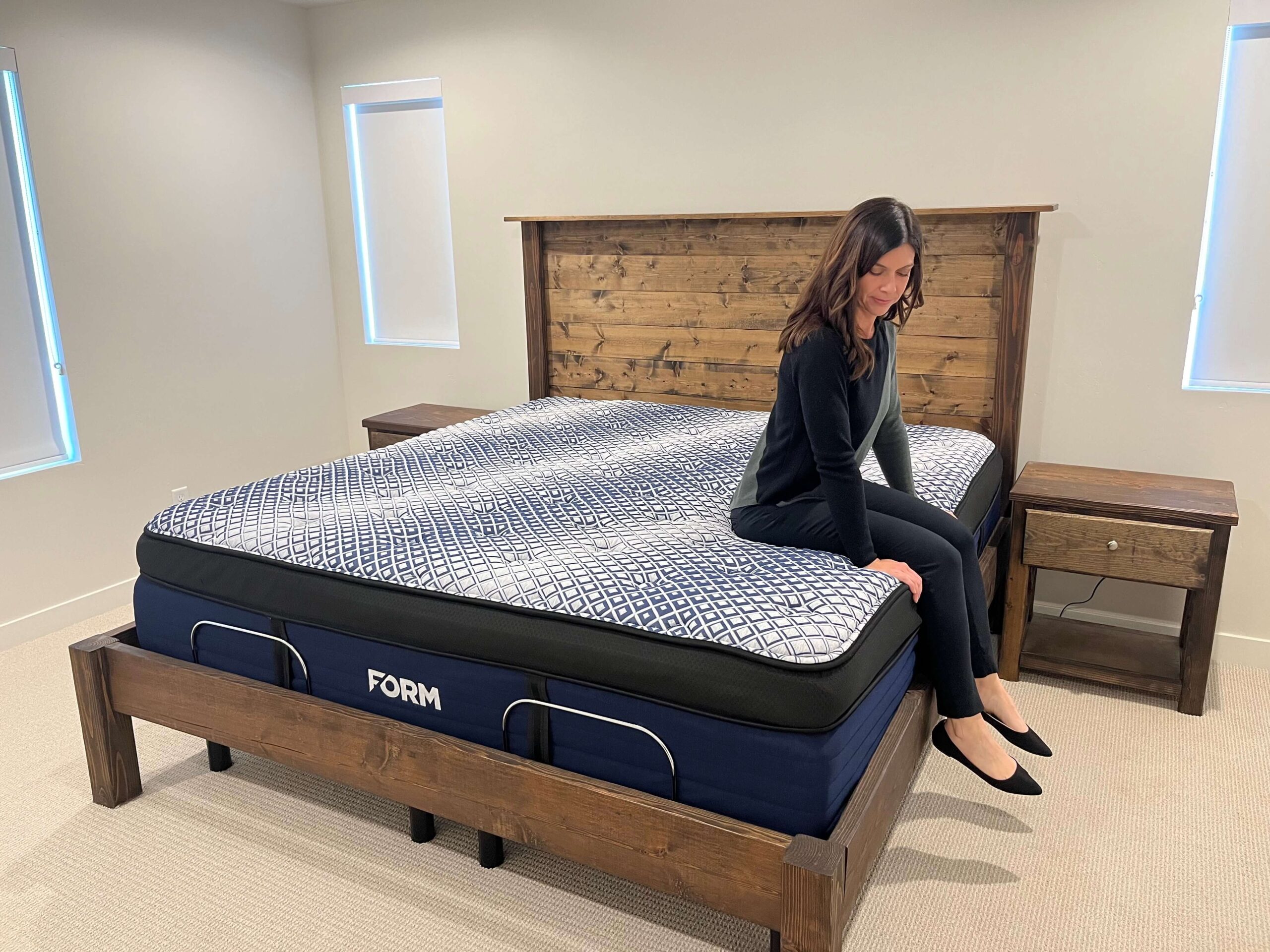
The FORM Prime X was one of the highest-scoring mattresses in our testing. It is a 15-inch luxury hybrid, and while most beds on this list are built around a latex core, the Prime X takes a different route: it uses a Talalay latex layer as one part of a layered grid-and-coil system rather than as the whole bed.
That is the honest way to read its place here. If you came to this page for the responsive, buoyant feel latex is known for, the Prime X delivers that feel through its Talalay layer, but it is a grid hybrid at heart.
Where it earns a spot is the Talalay latex itself. Sitting just below the Euro-top, the latex gives the surface a lifted, springy quality that kept me from sinking too far, the same lively response latex fans look for.
Paired with the GelGrid™ beneath it, the result during testing was quick contouring that adapted to each position change without any lag or stuck feeling. As a side sleeper, I woke without the shoulder soreness that firmer beds can cause.
This mattress suits side and combination sleepers best, along with couples. Motion isolation was excellent, and the reinforced edge held firm when I sat at the perimeter. The soft shoulder zone, around 4 out of 10, cradled my pressure points while the zoned coils kept my spine in line.
Who should look elsewhere: strict stomach sleepers who want a very firm, unyielding surface may find the soft shoulder zone and plush Euro-top too giving, and heavier stomach sleepers especially should test carefully during the trial.
Shoppers set on an all-latex or latex-core bed will also want one of the true latex options on this list, since the Prime X leads with its grid, not its latex.
- 8 Value
- 10 Edge Support
- 10 Trial Period
- 10 Response Time
- 10 Motion Transfer
- 9 Cooling & Breathability
I picked the FORM Prime X because it pairs a genuine Talalay latex layer with the most complete hybrid performance I tested. Here is what stood out.
A Real Latex Layer in a Premium Build: The Talalay latex sits right under the Euro-top and gives the surface that lifted, responsive quality latex sleepers recognize. It is not the whole mattress, but it is real Talalay, and it shapes how the bed feels the moment you lie down.
Response Time That Keeps Up With You: The Prime X scored a perfect 10 for responsiveness. Three responsive materials, the ZoneCoil™ 7-Series, GelGrid™, and Talalay latex, work in the same direction, so I never felt stuck when changing positions.
Motion Isolation for Couples: A mason jar on one side barely moved during vigorous shifting on the other, and in overnight testing I could not feel movement from the other side of the bed.
Edge You Can Use: With BaseFlex™ encasement, Integra-Mesh™, and reinforced side stitching, the Prime X earned a 10 for edge support. Sitting at the perimeter, I barely compressed.
Best For:
– Side and combination sleepers who want quick contouring and an easy position change
– Couples who want strong motion limits and a usable edge
– Shoppers who want a genuine Talalay latex layer inside a premium hybrid build
Compare Instead:
– PlushBeds Botanical Bliss or Nolah Natural if you want a true latex-core bed rather than a grid hybrid
– Birch Natural if you want a firmer medium-firm surface for stomach-leaning combination sleeping
When I first lay down on the FORM Prime X, the two-inch AeroWeave™ Euro-top gave an immediately plush, hotel-quality surface.
Just beneath it, the Talalay latex layer added a buoyant lift that stopped me from sinking too deeply, the springy pushback that sets latex apart from a memory-foam hug.
As a side sleeper, I felt the GelGrid™ adapt to my shoulder and hip at the same time, letting each pressure point settle without pulling my spine out of line.
The Talalay latex above the grid gave a counterforce that felt like personalized contouring rather than uniform compression.
Switching to my back, the ZoneCoil™ 7-Series gave targeted lumbar support, holding my lower back’s curve without letting my midsection dip.
The ContourFlex™ transition layer bridged the grid and coils smoothly, so I never felt individual coils or any sense of bottoming out.
Moving between positions was effortless. The three responsive layers reset almost instantly, so repositioning never took the effort that slower foam beds ask for.
It stayed neutral to the touch across the night, and I did not notice heat building up.
The FORM Prime X is a 15-inch luxury hybrid built in six layers from the bottom up.
ZoneCoil™ 7-Series Foundation: At the base, individually pocketed coils give durable, zoned support across seven body zones, encased in BaseFlex™ foam for edge-to-edge stability.
Titanium-Infused Pressure Relief Foam: A one-inch layer that disperses concentrated pressure at the hips and shoulders before weight reaches the coils.
ContourFlex™ Transition Layer: A one-inch foam bridge between the support system and the comfort layers, so the mattress feels connected top to bottom.
GelGrid™ with Integra-Mesh™: An open-cell grid with thousands of air channels that flex independently to contour the body while releasing heat, reinforced to absorb motion within the grid.
Talalay Latex Layer: The material that earns this bed its place on the page. Sitting above the grid, the Talalay latex adds natural buoyancy and a faster, springier response than foam.
AeroWeave™ Euro-top Cover: A two-inch quilted comfort panel sewn into the construction for a plush surface and steady airflow.
The Prime X is made to order in the USA and is fiberglass-free. Its foams are CertiPUR-US® certified, tested for low VOC emissions and made without formaldehyde, heavy metals, and ozone depleters.
It also holds GREENGUARD Gold and OEKO-TEX® Standard 100 certifications.
Pros
- Genuine Talalay latex comfort layer for a lifted, responsive feel
- Perfect response time from three responsive layers working together
- Outstanding motion isolation for couples
- Reinforced edge support that holds under seated weight
- Plush AeroWeave™ Euro-top with breathable, neutral-feeling airflow
- Fiberglass-free with three certifications
Cons
- Not an all-latex or latex-core bed; latex sleepers set on a true latex feel may prefer another pick on this list
- Strict and heavier stomach sleepers may find the soft shoulder zone and plush Euro-top too accommodating
- At 15 inches, it needs deep-pocket sheets and makes a higher step up into bed
- Made-to-order delivery is not suitable for shoppers who need a mattress immediately
Lying down on the FORM Prime X, the Talalay latex layer gave a buoyant, responsive lift under the plush Euro-top, while the zoned coils kept my spine aligned across side and back sleeping.
Best All Latex Mattress:
3. PlushBeds Botanical Bliss
Warranty
Lifetime
Sleep Trial
100 Nights
Shipping
Free
Watch Our Plushbeds Botanical Bliss Mattress Video Review
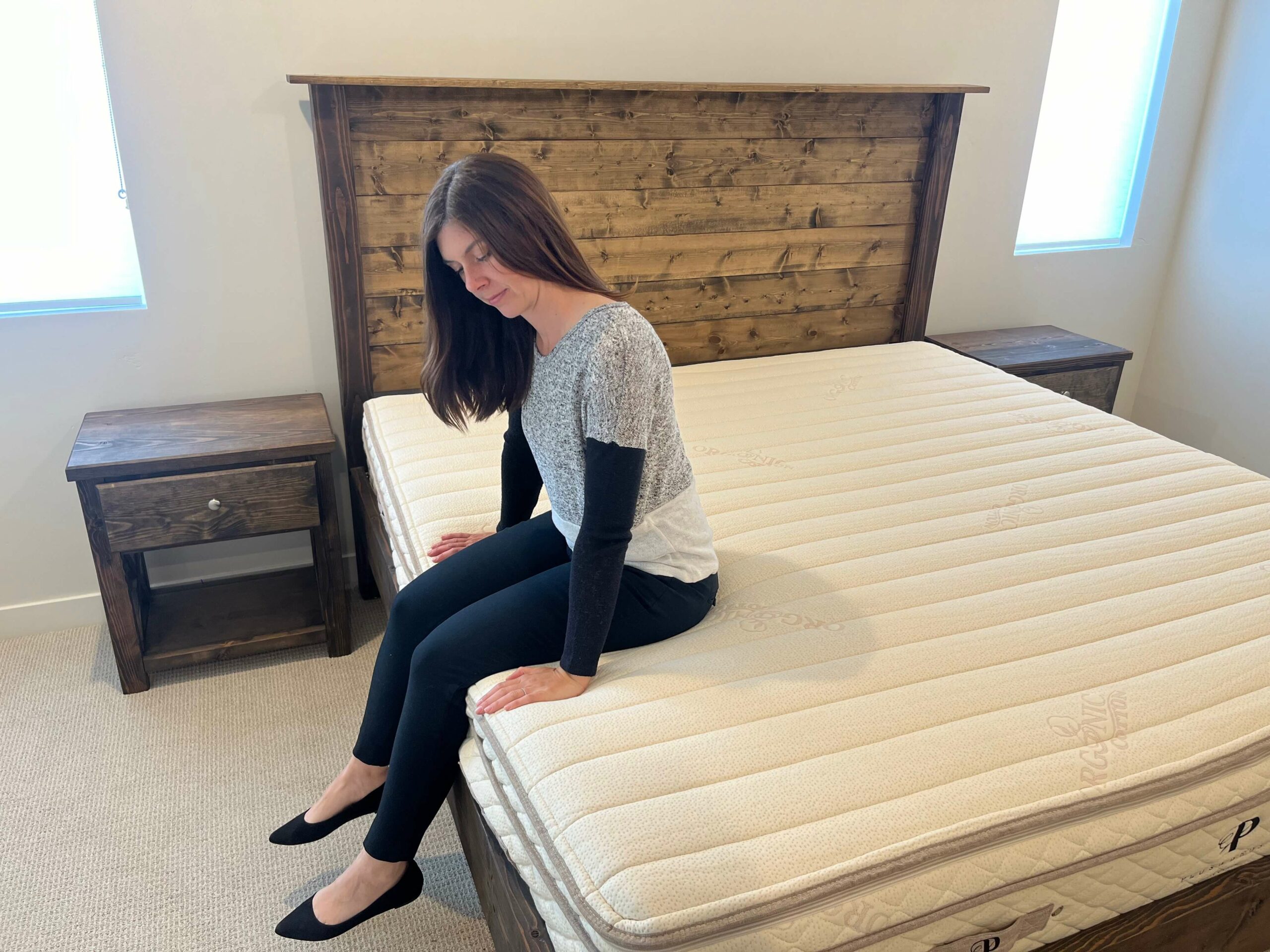
The PlushBeds Botanical Bliss is my top all-latex pick, and what sets it apart is that its organic Dunlop latex core comes in stacked layers you can physically rearrange, so you can change how firm the surface feels without buying a different bed. It is built entirely from certified organic latex, wool, and cotton.
That certification is documented rather than just described: the latex is GOLS certified, the cotton and wool are GOTS certified, and the whole bed carries GREENGUARD Gold for low chemical emissions. During testing the wool wicked moisture and the pin-core perforated latex let air move through, so the surface stayed cooler to the touch through the first hours than the denser foam beds I compared.
Natural latex is also durable, and this bed is built to outlast a synthetic-foam mattress. On the 12-inch build I tested, the soft top layer gave at my shoulders and hips on my side while the firm base kept my spine level. It suits eco-conscious shoppers who want a true all-latex core and sleepers whose firmness preference sits between medium and firm and want to fine-tune it.
- 7 Value
- 8 Edge Support
- 10 Trial Period
- 8 Response Time
- 10 Motion Transfer
- 9 Cooling & Breathability
I picked the Botanical Bliss because it was the most adaptable all-latex bed I tested, and rearranging its layers let me change the feel without buying a different mattress.
During testing on the 12-inch build, the soft top latex gave at my shoulders and hips on my side while the firm base kept my spine level, so I settled in without sinking through. When I swapped the layer order to a firmer top, the same bed held my hips higher on my back, which is why it works for sleepers whose preference sits between medium and firm. Motion Transfer scored a category-leading 10 out of 10, and during testing movement on the far side barely reached me, so it suits a light sleeper sharing the bed. The perforated latex also stayed cooler to the touch through the first hours than the denser foam beds I compared.
Best For:
– Eco-conscious shoppers who want a certified organic all-latex core (GOLS/GOTS/GREENGUARD Gold)
– Sleepers between medium and firm who want to fine-tune feel by rearranging layers
– Couples who prioritize motion isolation
Compare Instead:
– Amerisleep Organica if you want a coil-backed hybrid instead of an all-latex core
– Eco Terra Hybrid Latex if you want a similar natural build at a lower price
The Botanical Bliss responded differently in each position from the moment I lay down. On my side, the soft top latex cushioned my shoulder and hip while the firmer layers underneath held everything in place, so I felt cradled and supported rather than sinking through.
On my back, the medium layer molded to my lower back and gave steady lumbar support without sagging, and the firm base kept my spine in a straight line. On my stomach, with a firmer layer on top, the latex kept my hips from dropping and my midsection stayed level rather than arching.
What stood out most was how easily the bed handled position changes. The latex adapted with each movement, so I could shift from side to back to stomach without losing support and without ever feeling stuck. The perforated latex also kept the surface feeling cool to the touch rather than warming under me.
That adjustable, well-balanced feel is why it works for eco-conscious sleepers between medium and firm who want to tune an all-latex surface to their body.
The GOTS-certified organic cotton cover felt smooth and moved air well, which is why the top of the bed stayed cool to the touch on first contact. Under it, the GOTS-certified wool acted as the natural fire barrier and kept the surface from warming quickly during testing. The organic Dunlop latex core (GOLS certified) is what makes this bed adjustable: on the 12-inch build I tested, the soft 2-inch top gave at my shoulders and hips on my side, the medium 3-inch middle layer is what held my lower back in line on my back, and the firm 6-inch base is why my hips never sank through. Rearranging those layers changed how firm the surface felt without changing the bed, which is the reason it suits sleepers whose preference sits between medium and firm. The latex is perforated with pin-core holes, and that airflow is why it stayed cooler under me than the denser foam beds I compared.
Pros:
- Motion Transfer (10/10): movement on the far side barely reached me during testing
- Rearrangeable latex layers let me shift the feel between medium and firm on the same bed
- On my side the soft top gave at my shoulder and hip while the firm base kept my spine level
- Cooling and Breathability (9/10): the pin-core perforated latex stayed cool to the touch on first contact
- Certified organic build: GOLS latex, GOTS cotton and wool, GREENGUARD Gold
Cons:
- Value (7/10): priced above synthetic-foam and blended-latex options
- Heavier than foam beds and awkward to move or rotate without help
- Response Time (8/10): the all-latex surface recovers a beat slower than the coil-backed picks, so sleepers who want a very soft, quick-sink feel may want a plusher option
On my back, the medium latex layer held my lower back in line while the firm base kept my hips from sinking, and rearranging the layers let me firm the feel up on demand. That makes it a strong pick for eco-conscious sleepers between medium and firm who want to fine-tune an all-latex feel.
Best Budget Mattress:
4. Eco Terra Hybrid Latex

Warranty
15 Years
Sleep Trial
90 Nights
Shipping
Free
Watch Our Eco Terra Hybrid Video Review
The Eco Terra Hybrid Latex is my Best Budget pick because it delivers the natural-latex-and-coil build of the pricier beds on this list at the lowest price, and Value scored a category-leading 10 out of 10. It combines a natural Talalay latex comfort layer with a pocketed coil core, so you get latex cushioning and coil support without paying a premium.
During testing the latex conformed at my shoulder and hip and then handed my weight off to the coils, giving a blend of softness and support that suited side and back sleeping. The coil core also let more air move through the middle of the bed than the all-foam models I compared, so the surface breathed well.
It is built with organic cotton, natural latex, and a wool fire barrier, and it is dust-mite resistant and hypoallergenic, which helps if you have allergies or sensitivities. For anyone who wants a genuine latex hybrid on a budget without giving up comfort or support, the Eco Terra is a practical pick, especially for side, back, and combination sleepers.
- 10 Value
- 8 Edge Support
- 8 Trial Period
- 10 Response Time
- 9 Motion Transfer
- 9 Cooling & Breathability
I picked the Eco Terra because it delivered the natural-latex-and-coil combination of the pricier beds here at the lowest price on the list, which is why it took Best Budget. Value scored a category-leading 10 out of 10.
During testing, the 3-inch Talalay layer gave at my shoulder on my side and then handed me off to the coils, so I felt cushioned at the joint but never sank through to a hard base. On my back, my hips stayed in line with the coil unit rather than dipping. Response Time also scored a 10, and switching from side to back took a single easy roll instead of a slow climb out of the surface, which suits combination sleepers. The coil core let more air move through than the all-foam beds I compared.
Best For:
– Budget shoppers who still want a natural-latex-over-coil hybrid
– Side and back sleepers who want cushioning at the joints with coil support underneath
– Combination sleepers who want a fast, easy position change
Compare Instead:
– Amerisleep Organica if you want a more refined finish and a longer trial
– PlushBeds Botanical Bliss if you want an all-latex core and rearrangeable firmness
The Eco Terra feels like a cushioned medium hybrid across positions. On my side, the 3-inch Talalay layer gave at my shoulder and hip and then passed my weight to the coils, so I felt cushioned at the joints without sinking to a hard base.
On my back, my weight spread evenly and my hips stayed in line with the coil unit rather than dipping, so my lower back felt supported without any sag. On my stomach, the coils kept my hips from dropping too far and held my midsection level, which is more support than a soft all-foam bed gives stomach sleepers.
Responsiveness is where the Eco Terra stood out for the price. Moving from side to back to stomach took a single easy roll, and the surface reset under me each time instead of lagging. That combination of joint cushioning and quick, supportive response makes it a comfortable pick for combination sleepers who want an affordable natural bed.
The organic cotton cover moved air well and kept the surface breathable rather than warm to the touch. The 3-inch natural Talalay latex comfort layer is where the pressure relief came from: on my side it gave at my shoulder and hip, and its open, aerated structure is why it did not trap heat the way denser foam did in the beds I compared. Under it, the fabric-encased pocketed coil core is what held my hips level on my back and let air move through the middle of the bed, so the whole surface breathed better than an all-foam build. Organic wool sits in as the natural fire barrier, meeting the safety standard without added flame chemicals. Together the latex-over-coil build is why a budget bed still felt cushioned at the joints and supported underneath rather than one or the other.
Pros:
- Value (10/10): the lowest-priced natural latex-over-coil hybrid on this list
- Response Time (10/10): switching from side to back took a single easy roll with no lag
- On my side the 3-inch Talalay layer cushioned my shoulder before the coils took over on my back
- Cooling and Breathability (9/10): the coil core let more air move through than the all-foam beds I compared
- Organic cotton, natural Talalay latex, and wool fire barrier
Cons:
- Trial Period (8/10): the 90-night trial is shorter than several picks here, including 100-plus-night options
- Edge Support (8/10): the perimeter compressed a bit more than the firmest hybrids when I sat on it
- Heavier than an all-foam bed, so moving or rotating it is a two-person job
The Talalay layer cushioned my shoulder on my side while the coil core held my hips level on my back, and position changes stayed quick and easy. That combination at this price makes it a smart pick for budget shoppers and combination sleepers who still want a natural latex-over-coil feel.

Watch Our Nolah Natural Video Review
I looked at a lot of hybrids for this list, and the Nolah Natural stood out for how cleanly its 11-inch build separates a cushioning top from a supportive core. It pairs a genuine Talalay latex comfort layer with a 7-inch pocketed coil core under an organic cotton cover.
During testing the Talalay layer molded to my body and relieved pressure at my shoulders and hips on my side, while the coils held my hips in line on my back and stomach. The organic cotton cover felt soft and breathed well, and its materials carry certifications from trusted organizations rather than just a natural label.
The latex-and-coil combination also holds up over time, so it should stay supportive well beyond the first year. That mix of Talalay cushioning, coil support, and a breathable organic cover makes the Nolah Natural a strong medium hybrid for side and combination sleepers who want pressure relief without giving up support.
- 9 Value
- 9 Edge Support
- 9 Trial Period
- 10 Response Time
- 9 Motion Transfer
- 9 Cooling & Breathability
I picked the Nolah Natural as Best Hybrid because its Talalay-over-coil build gave me the cleanest split between cushioning on top and support underneath of the medium hybrids I tested.
During testing on my side, the Talalay comfort layer let my shoulder settle while the high-resilience transition layer stopped it before it reached the 7-inch coil unit, so I got pressure relief without a jarring drop onto the springs. On my back, the coils held my hips level and I did not feel individual springs through the transition foam. The open cotton cover and latex let air move more freely than the memory foam beds I compared, so I did not build up heat as quickly at the shoulders.
Best For:
– Side sleepers who want shoulder and hip relief on a medium feel
– Combination sleepers who want a smooth transition between cushioning and support
– Eco-conscious shoppers who want organic cotton and Talalay latex over coils
Compare Instead:
– Birch Natural if you want a firmer medium-firm surface for combination sleeping
– Amerisleep Organica if you want the same style with a slightly more supportive medium feel
I had a comfortable experience on the Nolah Natural from the first night. The mix of pocketed coils and natural Talalay latex gave it a medium feel that adapted well to how I sleep.
On my back, the surface supported my spine and kept me in a neutral line. On my side, the soft Talalay layer relieved my shoulders and hips while the transition foam kept me from feeling the coils underneath. Even on my stomach, the coil core held my hips up so I did not sink too far.
Breathability held up too. The open cotton cover and latex let air move rather than trapping it, so the surface stayed cooler to the touch through the first hours than the memory foam beds I compared, which helps if you tend to sleep warm.
That balance of pressure relief and steady support across positions is what makes the Nolah Natural a good fit for combination sleepers who shift through the night.
The organic cotton cover breathes well and is why the top of the bed did not warm quickly during testing. Its natural cotton and latex meet the fire-safety standard without a synthetic barrier. The genuine Talalay latex comfort layer is where side-sleeping relief came from, giving at my shoulder and hip and then recovering fast so I never felt trapped. The high-resilience foam transition layer is what kept me from feeling the coils underneath, smoothing the handoff between the soft top and the springs. The 7-inch pocketed coil core is why my hips stayed level on my back and stomach, and the gaps between the wrapped coils are what let air move through the middle of the bed for a more breathable feel than the memory foam beds I compared. A high-density foam base anchors the coil unit so the shape holds over time.
Pros:
- Response Time (10/10): the Talalay layer reset fast, so changing positions took no real effort
- On my side the Talalay layer relieved my shoulder and hip while the transition foam kept me off the coils
- On my back and stomach the 7-inch coil core held my hips level with no felt springs
- Cooling and Breathability (9/10): airflow through the coil core kept the surface cooler to the touch through the first hours than the memory foam beds I compared
- Motion Transfer (9/10): my partner’s movement stayed contained on the far side during testing
Cons:
- Edge Support (9/10): the perimeter held well but compressed a touch more than the firmest-edged hybrids here when I sat right on it
- Medium feel sits firmer than a plush build, so sleepers who want a deep cradle may prefer a softer option
- Heavier latex-and-coil construction makes it a two-person job to move or rotate
On my side the Talalay layer relieved my shoulder and hip while the coils held me level on my back, and the surface reset quickly when I changed positions. Its medium feel makes it a strong fit for side and combination sleepers who want pressure relief without giving up support.
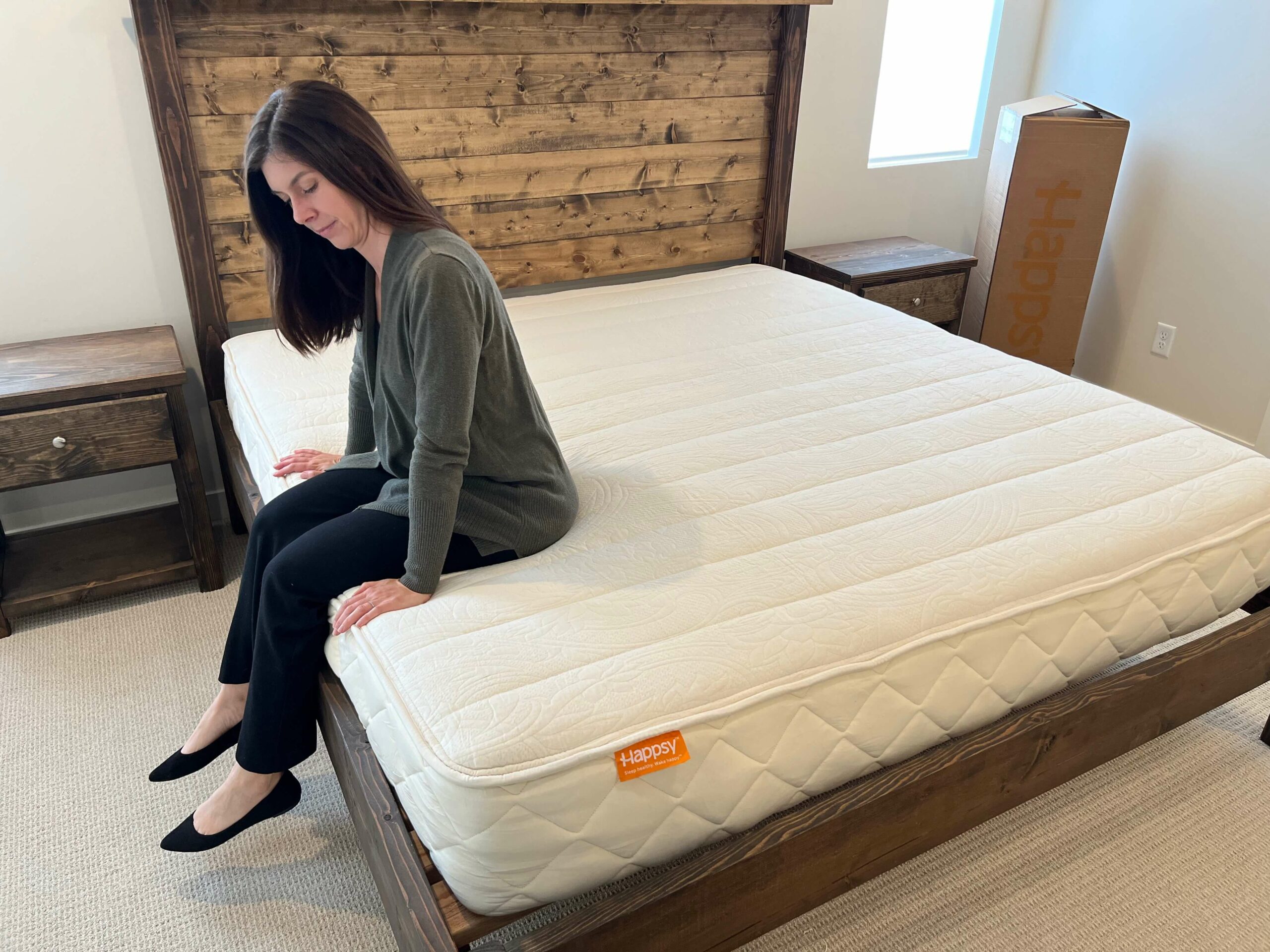
Watch Our Happsy Video Review
The Happsy is my Best Organic pick, built entirely from GOLS-certified organic latex, organic cotton, and organic wool. Its certifications are documented rather than described, which is what eco shoppers are usually after in this category.
What set it apart in testing was the base. A wrapped coil unit sits under the organic latex core, giving it a firmer, more supportive foundation than most all-foam organic beds I tried. On my back the latex and coils held my lower back steady with no midsection dip, and on my side the organic latex gave at my shoulder and hip.
The medium-firm feel works across sleeping positions, and there is an optional organic topper if you want a plusher surface. For shoppers who want a fully certified organic build with real coil-backed support, and for couples who want a firm, usable edge, the Happsy is a strong choice.
- 8 Value
- 10 Edge Support
- 9 Trial Period
- 8 Response Time
- 9 Motion Transfer
- 9 Cooling & Breathability
I picked the Happsy as Best Organic because its GOLS-certified latex core sat over a pocketed coil unit, giving it a more supportive base than most all-organic beds I tested while keeping the fully certified build eco shoppers want.
During testing on my back, the latex core and coils held my lower back steady with no midsection dip. On my side, the organic latex gave at my shoulder and hip, and adding the optional organic topper deepened that cushioning noticeably for a plusher feel. Edge Support scored a category-leading 10 out of 10, and when I sat on the perimeter to put on shoes it compressed very little and stayed stable, so couples can use the full width of the bed.
Best For:
– Eco shoppers who want a fully certified organic latex build
– Couples who want a firm, usable edge and low motion transfer
– Side sleepers open to adding a topper for extra plushness
Compare Instead:
– PlushBeds Botanical Bliss if you want an all-latex core rather than a latex-over-coil hybrid
– Birch Natural if you want a firmer medium-firm feel without a topper
Lying down on the Happsy, I felt supported right away. The organic latex comfort layer settled around my body, and adding the optional organic topper deepened that cushioning for a plusher surface.
As a side sleeper, the latex gave at my shoulder and hip and took pressure off the joints. On my back, the latex core and coil layer held my lower back in a steady line without letting my midsection sink. Moving between positions, the surface responded without making me feel confined.
The edge held up well too. When I sat on the perimeter to put on shoes it compressed very little and stayed stable, so I could use the full width of the bed. The organic cotton and wool kept the surface from feeling warm on contact.
That mix of coil-backed support, a firm edge, and an optional plusher top makes the Happsy a comfortable organic pick for side and back sleepers and for couples sharing the bed.
The organic cotton cover moved air well and kept the surface from feeling warm on contact. A natural wool batting layer sits under it as the fire barrier, meeting the safety standard without added chemicals, and it is also what helped the top of the bed stay dry during testing. The GOLS-certified organic latex core is where the support and side-sleeping relief came from: it gave at my shoulder and hip and then held my lower back in line on my back. Under the latex, the wrapped coil unit is what gave the bed its firmer, more supportive base than an all-foam organic build, and the separation between coils is why my partner’s movement stayed contained and the edge held firm when I sat on it. Adding the optional organic topper is what deepened the plush feel at the surface without changing that coil-backed support.
Pros:
- Edge Support (10/10): the perimeter compressed very little when I sat on it to put on shoes
- On my back the latex core and coils held my lower back steady with no midsection dip
- The optional organic topper deepened the plush feel at the surface during testing
- Motion Transfer (9/10): my partner’s movement stayed contained on the far side
- Fully certified organic build: GOLS latex, organic cotton and wool
Cons:
- Response Time (8/10): the surface recovers a touch slower than the coil-heavy picks here, so frequent repositioners may notice more lag
- Medium-firm feel may not suit sleepers set on a very soft or very firm surface without the topper
- Premium organic price sits above synthetic-foam options
On my back the latex core and coils held my lower back steady, and the perimeter stayed firm when I sat on the edge. That coil-backed support, with an optional topper for extra plushness, makes it a strong fit for eco-conscious side and back sleepers and for couples sharing the bed.
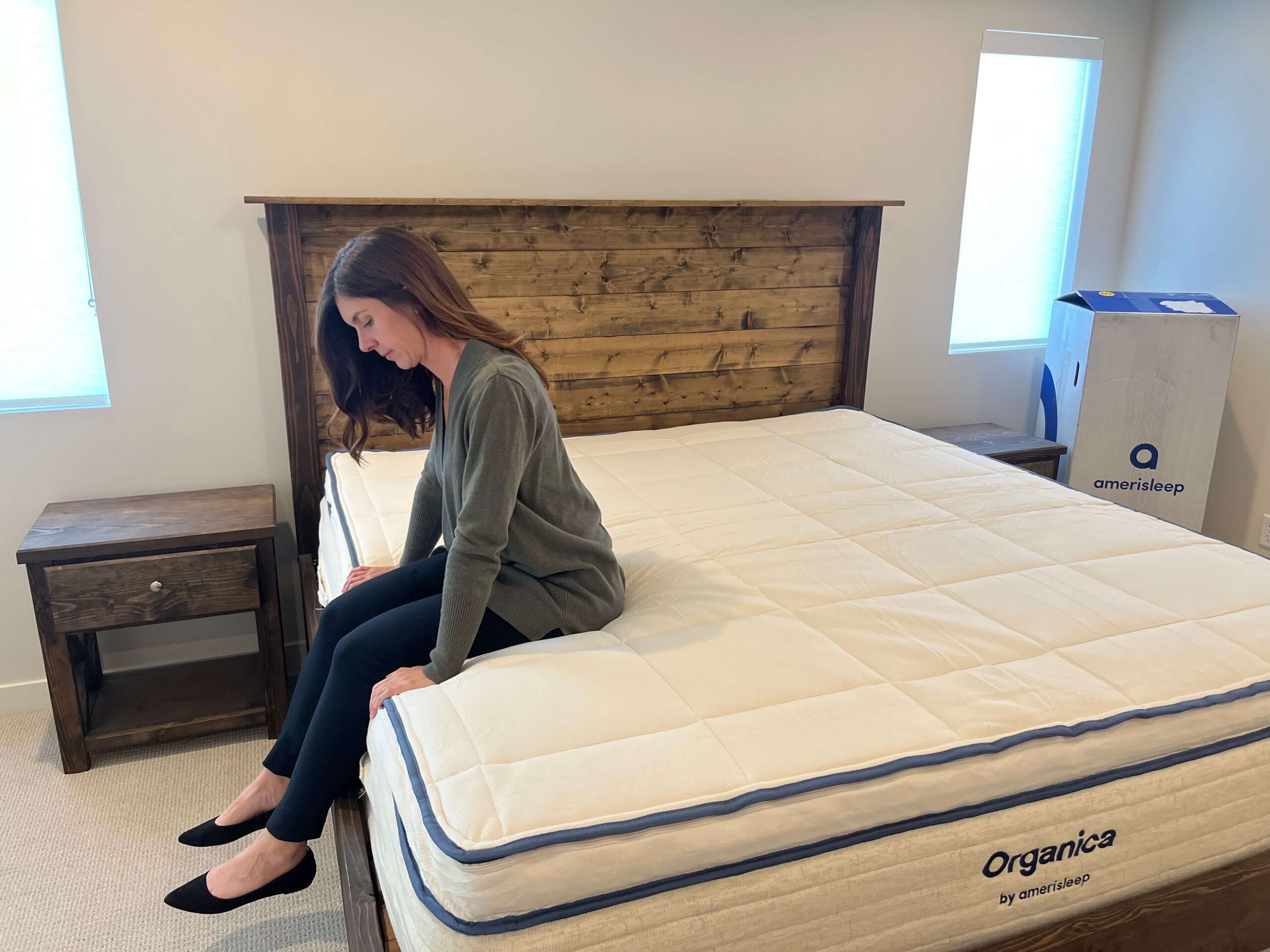
Watch Our Organica Plush Video Review
The Organica Plush is my Best Luxury pick because it takes the Organica’s certified organic latex build and softens the top into a genuinely plush feel without giving up support. It is made from organic latex, wool, and cotton, so the plush surface comes from natural materials rather than a memory-foam pillow top.
During testing the soft top layer let me settle in deeper than the standard Organica, easing pressure at my shoulders and hips, while the firmer latex underneath kept me from sinking too far. The organic cotton and wool kept the surface cool to the touch on first contact rather than warming quickly, and they add a soft, dry hand at the top of the bed.
It is also built to last, holding its shape and support over months of testing rather than breaking down the way some soft beds do. For anyone who wants a plush, cushioning surface but still needs the spine held in line, the Organica Plush is best suited to side sleepers and to anyone who likes a soft feel without losing lumbar support.
- 8 Value
- 10 Edge Support
- 9 Trial Period
- 9 Response Time
- 9 Motion Transfer
- 9 Cooling & Breathability
I picked the Organica Plush as Best Luxury because it took the Organica’s organic latex build and softened the top into a plush feel without losing the coil-backed support underneath.
During testing on my side, I sank into the soft top layer and my shoulder and hip settled deeper than on the standard Organica, while the firmer latex transition layer and core stopped me before I lost spinal support, so it cushions pressure points without letting me collapse into the bed. On my back, the core still held my lower back in line despite the softer surface. The organic cotton and wool over the latex stayed cool to the touch on first contact rather than warming quickly.
Best For:
– Side sleepers who want a genuinely plush, deep-cushioning surface
– Sleepers who like a soft feel but still want coil-backed lumbar support
– Eco-conscious buyers who want the Organica’s certified organic materials in a softer build
Compare Instead:
– Amerisleep Organica if you want the same materials in a firmer medium feel
– Birch Natural if you are a combination or stomach-leaning sleeper who needs more firmness
On my side, the Organica Plush wrapped me in a soft, cushioning surface as soon as I lay down. It eased pressure at my hips and shoulders while the quilted organic cotton cover and latex gave a cool, comfortable first contact.
As a combination sleeper, I found it easy to switch positions on the Plush without any jolt or resistance. Even as a softer build, it stayed cool to the touch through the first hours rather than warming under me.
On my back, the softer top still held my spine in a straight line: the firmer latex underneath gave a stable base without feeling rigid, so my lower back stayed supported even on a plush surface. That is a harder balance to strike on a soft bed, and it is why this one earns the luxury spot.
The responsiveness let me move freely without feeling trapped, which matters for combination sleepers. Its plush-but-supported feel makes it best for side sleepers who want deep cushioning without losing support.
The organic cotton cover breathes and is why the surface felt cool on first contact rather than warming quickly. Under it, a natural wool layer is the fire barrier and adds a soft, dry hand at the top of the bed. The soft organic latex comfort layer is where the plush feel comes from: on my side I sank in deeper than on the standard Organica and my shoulder and hip settled without a hard stop. The firmer latex transition layer is what caught me before I lost support, spreading my weight so the plush top never turned into a sinkhole. Underneath the latex sits the pocketed coil core, the same coil-backed support as the standard Organica, and it is why my lower back stayed in line on my back even with the soft top. The reinforced edge coils are why the perimeter held firm when I sat on it, which is what earned the category-leading 10 out of 10 for edge support.
Pros:
- On my side the soft top latex let my shoulder and hip settle deep while the core kept my spine in line
- Cooling and Breathability (9/10): the cotton and wool over latex stayed cool to the touch on first contact
- Edge Support (10/10): the perimeter held firm when I sat on it
- Response Time (9/10): the latex reset quickly, so position changes stayed easy despite the soft surface
- Certified organic materials: GOTS cotton and wool, GOLS latex
Cons:
- Available in the plush (soft) feel only, so sleepers who want a firmer surface have no firmness choice within this model
- The soft top lets stomach sleepers’ hips dip, so stomach-dominant sleepers may want a firmer surface
- Heavy 15-inch latex build is difficult to move and needs deep-pocket sheets
The soft top latex let my shoulder and hip settle deeper than the standard Organica while the firmer transition layer and core still held my spine in line. That plush-but-supported feel makes it best for side sleepers who want deep cushioning without losing lumbar support.
Best Mattress for Combination Sleepers
8. Birch Natural

Warranty
Lifetime
Sleep Trial
120 Nights
Shipping
Free
Watch Our Birch Natural Video Review
The Birch Natural is my Best pick for Combination Sleepers because it supports every position without holding onto you when you move. It is built from organic cotton, wool, and natural latex over a pocketed coil core.
Those materials are documented rather than just described as natural, which is part of the appeal for shoppers who want a certified organic build, and they also help the surface stay temperature-neutral, so I did not run hot on it. The medium-firm feel gives ample support without feeling harsh: the pocketed coils carry your weight evenly while the natural latex adds gentle give at the joints.
That combination suits combination sleepers who need a balance of support and cushioning. It runs firmer than a plush bed, so if you want a soft cradle you may prefer a softer pick, but for a supportive, eco-friendly hybrid with quick response, the Birch Natural is well worth considering, especially for stomach-leaning and medium-firm sleepers.
- 8 Value
- 9 Edge Support
- 9 Trial Period
- 10 Response Time
- 6 Motion Transfer
- 9 Cooling & Breathability
I picked the Birch Natural as Best for Combination Sleepers because its medium-firm latex-over-coil build let me change positions cleanly without the surface holding onto me. Response Time scored a category-leading 10 out of 10.
During testing, moving from side to back to stomach took a single easy roll, and the surface reset under me instead of lagging, which is what combination sleepers need. On my stomach, the medium-firm latex and coils kept my hips from dropping and held my midsection level. On my side, the latex still gave enough at the shoulder to relieve the joint. The one tradeoff I felt: with a Motion Transfer sub-score of 6 out of 10, my partner’s movement carried across more than it did on the top motion-isolating picks here.
Best For:
– Combination sleepers who want an easy, fast position change on a firmer surface
– Stomach-leaning sleepers who need hip support and midsection lift
– Natural-material shoppers who prefer a medium-firm feel
Compare Instead:
– PlushBeds Botanical Bliss or Amerisleep Organica if you share the bed and want stronger motion isolation
– Organica Plush if you want a much softer, plusher surface instead of medium-firm
The Birch Natural feels medium-firm with a light cushion on top rather than the springy bounce of a classic Talalay hybrid. The wool comfort layer adds a soft hand at the surface, but the coils underneath keep the support firm, so I stayed on top of the bed rather than sinking in.
Despite the softer surface, it stayed responsive thanks to the latex transition layer. I could shift positions without feeling restricted, and moving from side to back to stomach took no real effort. On my stomach the medium-firm build kept my hips from dropping, and on my side the latex still gave enough at the shoulder to relieve the joint.
The one tradeoff I felt was motion isolation: my partner’s movement carried across more than it did on the top motion-isolating picks here, so a light sleeper sharing the bed may notice it.
That quick, supportive, firmer feel is what makes the Birch Natural a strong fit for combination sleepers who want an easy position change and stomach-leaning sleepers who need hip support.
The organic cotton cover breathes and is what kept the surface comfortable rather than warm during testing. Under it, the organic wool layer is why the top of the bed did not build heat, wicking moisture as I moved through positions, and it doubles as the natural fire barrier. The natural latex layer is where the give came from on my side, cushioning my shoulder while keeping enough lift that I did not sink in. The pocketed coil core is the heart of the bed: it is why my hips stayed level on my stomach and back and why position changes reset quickly under me, though the coil unit is also where the middling motion isolation showed up, since my partner’s movement carried across more than on the top motion picks here. An organic cotton base anchors the coils for a stable, lasting shape.
Pros
- Response Time (10/10): moving from side to back to stomach took a single easy roll with no lag
- On my stomach the medium-firm latex and coils kept my hips from dropping and held my midsection level
- Edge Support (9/10): the perimeter stayed stable when I sat on it
- Cooling and Breathability (9/10): the wool and cotton over latex kept the top of the bed from building heat during testing
- Natural materials: organic cotton, wool, and latex over a pocketed coil core
Cons
- Motion Transfer (6/10): the lowest sub-score here; my partner’s movement carried across more than on the top motion-isolating picks, so light sleepers sharing the bed may notice it
- Medium-firm surface may feel too firm for sleepers who want a plush cradle
- Premium natural-material price sits above many hybrids
Moving from side to back to stomach took a single easy roll and the surface reset under me instead of lagging, while the medium-firm latex held my hips level. That makes it a strong fit for combination sleepers who want a firmer surface and quick response.
The Mattresses We Have Tested
Every mattress below was tested hands-on and on camera by me, Kristina Hindes, our lead tester. Each row links to its written review and filmed test, so you can check our work. For how we score every mattress, see How We Test Mattresses.
See the full list, with review and video links
| Mattress | Review and video |
|---|---|
| Amerisleep AS2 | Review · Video |
| Amerisleep AS3 | Review · Video |
| Amerisleep AS3 Hybrid | Review · Video |
| Amerisleep AS5 | Review (test clips inside) |
| Amerisleep AS5 Hybrid | Review · Video |
| Amerisleep AS6 Black Series | Review · Video |
| Amerisleep Organica | Review · Video |
| Amerisleep Organica Plush | Review · Video |
| Bear Original | Review · Video |
| Birch Natural | Review · Video |
| Brooklyn Bedding Aurora Luxe Hybrid | Review · Video |
| Brooklyn Bedding Plank Firm | Review · Video |
| Casper The One | Review · Video |
| Eco Terra Hybrid Latex | Review · Video |
| FORM Core | Review · Video |
| FORM Core Hybrid | Review · Video |
| FORM Prime | Review · Video |
| FORM Prime X | Review · Video |
| GhostBed Flex | Review · Video |
| Happsy Organic | Review · Video |
| Helix Dawn Luxe | Review · Video |
| Helix Midnight Luxe | Review · Video |
| Helix Sunset Luxe | Review · Video |
| Latex For Less Hybrid | Review · Video |
| Leesa Original | Review · Video |
| Leesa Sapira Chill Hybrid | Review · Video |
| Leesa Sapira Hybrid | Review · Video |
| Naturepedic Concerto | Review · Video |
| Naturepedic EOS Classic Organic | Review · Video |
| Nest Bedding Owl | Review · Video |
| Nest Bedding Puffin Kids | Review · Video |
| Nest Bedding Raven | Review · Video |
| Nest Bedding Sparrow Signature Hybrid | Review · Video |
| Nolah Evolution 15 | Review · Video |
| Nolah Natural 11 | Review · Video |
| Nolah Original Hybrid | Review · Video |
| PlushBeds Botanical Bliss | Review · Video |
| PlushBeds Luxury Bliss | Review · Video |
| PlushBeds Organic Bliss | Review · Video |
| PlushBeds Organic Kids | Review · Video |
| PlushBeds Signature Bliss | Review · Video |
| Saatva Classic | Review · Video |
| SweetNight CoolNest | Review · Video |
| SweetNight Prime | Review · Video |
| Vaya Hybrid | Review · Video |
| Vaya Mattress | Review · Video |
| Westin Heavenly Bed | Review · Video |
| Zoma Boost | Review · Video |
| Zoma Hybrid | Review · Video |
| Zoma Start | Review · Video |
Benefits of Latex Beds
All-natural latex is sourced from rubber trees, so it’s more eco-friendly than other materials. Because this latex is sourced from trees and does not require harsh chemicals to manufacture, there’s a smaller chance of these beds off-gassing. They’re also resistant to mold and dust mites while being naturally allergen-free. If you are looking for a “green” or hypoallergenic mattress, natural latex is certainly the way to go.
Another benefit of latex mattresses is how have a “feel” of their own, distinctly different from a bed with a coil system or one made with foam. When you lay down on a latex bed, you’ll feel slight sinking at first as this layer contours to your body but then should begin to feel more “lifted” support. Where traditional memory foam offers a more cradling, “in the bed” feel— latex suspends your body and prevents it from sinking very far.
Latex has a lifted, responsive feel that keeps you from sinking too far, which helps the surface follow the natural curve of your body. Heavier areas like the hips and shoulders press further into the latex than lighter areas, so the surface supports your spine’s line rather than letting your midsection collapse. That balance of give and lift is why many shoppers choose latex.
Lastly, latex is an ultra-breathable material and receives the lowest percentage of heat complaints when compared to other beds. If you’re prone to sleeping hot, latex can help keep you cool at night. It’s also great for couples because it isolates motion well.
Cons of Using Latex
Though latex beds come with a slew of perks, they do have their downfalls, too. First and foremost, their price. All-natural latex beds are some of the more expensive mattresses you can buy. The high cost comes from natural materials and enhanced strength. It’s important to note, latex is a highly durable material and the average latex mattress has a lifespan of 15 years. Though they may have a hefty price tag, they’re built to ensure your investment will be worthwhile. Plus, there are a handful of mattress sales throughout the year— waiting to buy when the bed is at a discounted price could save you a pretty penny.
Another downfall to owning a latex bed is the maintenance that comes with them. Not all latex brands, but a handful of them, recommend periodically flipping or turning your mattress to prevent indentations or premature sagging. Latex is one of the heaviest mattress materials out there, so they aren’t necessarily the easiest to maneuver. If you don’t share your mattress with another person, or feel you’ll have the available help to assist with moving and turning your mattress every so often, this could create an issue for you.
Even though latex mattresses have many redeeming qualities, they’re not as commonly found as memory foam, or even hybrid, mattresses. Still, there are enough on the market to complicate your decision-making process. We recommend consulting our latex mattress buying guide as you shop.
Different Types of Latex
There are three main types of latex: Talalay, Dunlop, and Synthetic. The Editors at Sleep Junkie do not recommend choosing a synthetic latex blend. That said, we’ll still touch upon them so you are well-educated on all of your options.
Talalay and Dunlop latex are not drastically different from one another, the main distinction between the two types is how they’re manufactured. In regards to feel, Dunlop feels springier than Talalay, which is more bouncy. Below, we’ll explain each type.
Dunlop Latex
The Dunlop process is a more efficient way to manufacture latex when compared to its alternative, Talalay. When natural latex is derived from rubber trees it is in liquid form. The Dunlop begins with pouring said liquid latex into a mold. The mold is then sealed up and placed onto a conveyor belt and placed in a vulcanization oven. After the mold has been vulcanized, the latex is removed and thoroughly washed. After the latex has been washed, it’s dried at a high temperature to ensure no moisture is still in the material.
Talalay Latex
Talalay latex is made in a more extensive process, expanding upon the Dunlop method. Similar to Dunlop, this process starts with liquid latex poured into a mold. However, during the Talalay process, liquid latex is only poured into the mold halfway. Once the mold has been partially filled with liquid latex, they use a vacuum to expand the latex until the mold is completely filled. Then, when fully expanded, the mold is frozen. During this freezing process, carbon dioxide is pushed through the latex, causing it to gel. Afterward, the latex is vulcanized, washed, and thoroughly dried.
Synthetic Latex
Synthetic latex is created in a lab and made with a mixture of chemicals. Because this material is made almost exclusively with chemicals, it’s not as healthy to sleep on as all-natural latex beds. There’s also a much higher chance of experiencing bothersome odors with synthetic latex, as chemicals are what create unpleasant off-gassing.
It’s important to note, some latex bedding brands use a combination of natural and synthetic latex, and even some “all-natural” latex beds contain up to $300 synthetic latex. Before you buy, make sure to read the fine print and ask questions about the materials of the layers inside. Again, we do not recommend choosing a synthetic latex bed because of the harsh chemicals used to manufacture the material.
Mattress Types
Not sure which type of mattress is best for you? In this section, we compare different mattress types to help you find your best fit.
Latex vs. Memory Foam
Latex and memory foam mattresses are both considered all-foam beds; however, latex mattresses feature latex layers just as memory foam mattresses include memory foam layers. All-foam beds are ideal for couples, as they minimize motion transfer, noise, and help you get undisturbed sleep. These mattresses are also great for sleepers with aches and pains because they’re more contouring and pressure-relieving than most beds with springs.
The biggest difference between memory foam and latex mattresses is how they feel. Though they’re both all-foam beds, they have distinctly different feels. Memory foam is cradling, and sometimes described as feeling like a “big hug.” One of the biggest complaints with memory foam mattresses is their tendency to trap heat (though more modern memory foam mattresses are now built with cooling technologies for temperature regulation).
Latex mattresses, on the other hand, are more lifting than cradling. These keep you sleeping “on top” of the mattress and don’t allow for much sinkage. Plus, they’re naturally cooling and tend to dissipate heat better than other all-foam mattresses (memory foam or poly-foam beds).
For those seeking an organic or cooling mattress, we suggest choosing a latex bed. It’s also one of the best materials when considering non memory foam mattresses. However, if you’re looking for a bed for pain relief or something that offers a more “cloud-like” feel, choose memory foam.
Latex vs. Hybrid
Hybrid mattresses differ from latex beds in the fact that they contain a coil spring system. By definition, hybrid mattresses are mattresses that contain the materials of two (or more) different mattress types (memory foam and innerspring coils; latex and innerspring coils; memory foam, latex, and innerspring coils; memory foam and latex). While most hybrids contain memory foam and innerspring coils, you can find latex hybrids as well, including several ranked on this page such as the Nolah Natural and Eco Terra Hybrid Latex.
We recommend hybrid mattresses to sleepers who want or need the cushioning comfort of foam layers but still prefer a bouncier mattress.
Latex vs. Innerspring
Latex mattresses are far different from innersprings, as innerspring mattresses contain coil cores and pillow tops, and latex mattresses feature latex layers. Though innerspring mattresses were very popular for years, they’re slowly becoming the least sought-after bed due to the fact that they break down quickly and don’t contain cushioning foam layers for comfort.
We recommend innersprings to those looking for a budget-friendly bed or those seeking a mattress to use for a short period, as these beds typically cost a few hundred dollars and start sagging after 5 or 6 years. However, if you have aches, pains, or are looking to make an investment in better sleep, choose a latex mattress, as they’re far more durable, contouring, and tend to have a lifespan of 15 years.
Factors to Consider When Choosing the Best Latex Mattress
There is no one-size-fits-all latex mattress on the market, to find your best mattress consider your sleep style, preference for firmness, and any recurring aches and pains you may wake up with — these factors will steer you towards the most comfortable mattress for your needs.
Also, don’t forget to consider warranty policies and sleep trials, too, as these help you decipher whether or not your potential new mattress is a good value.
Sleeping Positions and Firmness Levels
While personal preference does have some influence when deciding how firm your mattress should be, the way you sleep is a much better indicator of your new mattress’s ideal firmness.
Side Sleepers
Side sleeping is the most common of all sleeping positions. Sleeping on your side can help eliminate snoring and symptoms of sleep apnea, but sleeping in this position can cause pressure points under the shoulders and hips — that’s why the best mattresses for side sleepers are medium in firmness, as they’re soft enough to relieve pressure under those joints but still firm enough to maintain healthy spinal alignment.
Side sleepers can benefit from latex mattresses because they’re naturally contouring but don’t cradle you as much as memory foam mattresses do, so they’re typically better at keeping you lifted in the mattress and preventing misalignment.
Stomach Sleepers
Stomach sleeping is the unhealthiest due to the strain it puts on your lower back, spine, and abdomen. We advise against stomach sleeping because it can lead to long-term lower back pain, and considering how prevalent back pain already is, we shouldn’t be putting any unnecessary stress on our spines.
We recommend stomach sleepers switch to side or back sleeping if possible. That said, the best mattresses for stomach sleepers are firm to prevent midsection sinkage and lower back strain. Latex mattresses are one of the better options for stomach sleepers since they have more “lifting” support than other mattresses.
Back Sleepers
While stomach sleepers are best suited on firm beds and side sleepers should stick to medium mattresses, the best mattresses for back sleepers can range between medium-firm, medium, and medium-soft.
Back sleepers are at an advantage when it comes to spine health because they lay in a neutral position, allowing the spine to rest in proper alignment. However, it’s important back sleepers find a mattress supportive enough to prevent the hips from sinking down into the mattress, as this would throw you out of alignment and lead to aches and pains.
For back sleepers, choosing the best mattress firmness depends on body weight. Petite sleepers will find most mattresses feel firm, so they’ll likely prefer medium or soft mattresses. On the other hand, plus-size sleepers will sink straight through too-soft mattresses, so they’re usually most comfortable on medium-firm beds. Of course, consider your preference for firmness as well; if you’re a petite sleeper but like the feel of a firm bed, you can certainly get good sleep on a medium or medium-firm mattress.
Sleep Trial
When buying a new bed, it’s always best to look for one with a sleep trial. While trying a mattress in-store can be helpful in choosing your next bed, it’s not nearly as beneficial as sleeping on your potential new mattress in your own home for a few weeks.
Sleep trials are usually at least 90 days, giving you a few months to sleep on your new bed at home and decide if you like it. Most brands offer risk-free sleep trials, meaning they’ll refund you in full should you decide against keeping it. However, we always recommend reading the fine print of the sleep trial to make sure there aren’t any hidden fees.
Return Policies
If your bed doesn’t come with a sleep trial, it may come with a return policy. While return policies don’t offer you months to try your new bed, they do typically span 30-nights and allow you some time on your new mattress. Return policies ultimately prevent you from being stuck with a mattress you find uncomfortable or are unhappy with, as we all know it can be difficult to choose a mattress that’s best for you after a 15-minute mattress test drive in the showroom.
Warranty
Buying a mattress is an investment towards better sleep, and mattress warranties help protect that investment to ensure you get the most for your money. Typically, mattress warranties span 10 years; however, some mattress brands offer 20-year or even lifetime warranties. We recommend reading the fine print of the warranty agreement before purchasing so you’re aware of what’s covered and what fees you’d be responsible for in the event of a warranty claim.
Good mattress warranties usually cover sagging as little as .75 inches; warranties that don’t kick in until your bed has sagged an inch or 1.5 inches are okay, but not preferred— as an inch-deep sag in your mattress can make sleep very uncomfortable. Look for warranties that kick in when the sag is less than an inch deep, as these will cover you before your mattress becomes too uncomfortable.
Frequently Asked Questions
Which latex mattress is best?
In my testing, the Amerisleep Organica was the best latex mattress overall because it paired natural latex with a pocketed coil core, holding my hips level on my back while cushioning my shoulder on my side. For an all-latex core with adjustable firmness I chose the PlushBeds Botanical Bliss, and for the lowest price the Eco Terra Hybrid Latex. The right pick depends on whether you want a hybrid feel, an all-latex core, or a budget option.
What’s the best mattress foundation for a latex mattress?
The best mattress foundations for latex beds are solid and flat. These beds are some of the heaviest mattress types, so they need a sturdy foundation to prevent sagging and damage. Latex mattresses can work on slatted mattress foundations, too, but we recommend the slats are no more than 2 inches apart.
Apart from standard mattress foundations and bed frames, latex mattresses pair well with adjustable bed frames. Adjustable bed frames have a solid, flat surface for your mattress to rest on, but they adjust the angle of your head and feet, allowing you to find the most comfortable position for sleep.
Why is latex the best mattress material?
Whether or not latex is the best mattress material is really a matter of personal preference. Yes, latex offers a handful of sleep-enhancing benefits, but some people like memory foam and others just prefer beds with springs.
Latex is loved by many for its natural cooling, hypoallergenic, and supportive properties. Plus, latex is very durable, and some latex mattresses can last up to 20 years (we suggest replacing them after 10 for hygenic reasons, though).
Is a latex mattress worth it?
If latex appeals to your preferences and you choose a latex mattress with a comfortable firmness, one of these mattresses is certainly worth the investment. Considering how long these mattresses last, you won’t have to worry about having to replace your bed anytime soon.
Can bed bugs live in latex mattresses?
It’s hard for bed bugs to thrive in any foam bed (memory foam, latex foam, poly-foam) because foam is so dense. However, bed bugs can still infest these mattresses, as they burrow into your bed frame and surrounding bedroom furniture. Bed bugs may be a little less likely to ruin foam beds than innersprings, but they’re still something to be cautious of and keep in mind.
How thick should a latex mattress be?
Latex mattresses should be no thinner than 10 inches tall, unless you’re buying a latex mattress for a child, and then we suggest 6 and 8-inch mattresses. Most high-quality mattresses are between 10 and 14 inches thick, a thinner bed is likely to break down sooner.
Did You Find the Best Latex Mattress?
We hope this article has helped you decide whether or not a latex mattress is the best mattress for you. During your search for a new mattress, we encourage you to read other mattress reviews to get honest feedback about different brands and beds. Plus, shop in confidence knowing some of the best brands offer generous sleep-trials.
Related Reads
- I Tested 50+ Mattresses to Find the 14 Best Mattresses for Multiple Sclerosis of 2026


- I Tested 50+ Mattresses to Find the 14 Best Mattresses for Menopause of 2026


- I Tested 50+ Mattresses to Find the 14 Best Mattresses for Piriformis Syndrome of 2026
- I Tested 50+ Mattresses to Find the 14 Best Mattresses for Neuropathy of 2026