I Tested 50+ Mattresses to Find the 9 Best Mattresses Under $1,000 of 2026

Top Recommendation of 2026: Zoma Hybrid
After testing 50+ mattresses for this guide, the Zoma Hybrid earned our pick as the best mattress under $1,000 of 2026 for the strongest balance of support, pressure relief, cooling, and value. During testing, the memory foam layer cradled my shoulders and hips while the pocketed coils kept my lower back supported as I moved from side to back, and each position change felt easy rather than labored. When I sat on the edge to lace my shoes, the coil perimeter compressed very little and stayed stable, so a couple can use the full width of the bed. The surface also felt less heat retentive than the denser all foam beds I compared in the same session. The Zoma Hybrid fits combination sleepers who change positions overnight, couples who want a firm edge, and back and side sleepers who want contouring without a stuck in feeling. That mix of coil support and foam contouring is what made it my top overall pick in this guide.

Every mattress featured on Sleep Junkie is evaluated using the same testing framework for support, pressure relief, cooling, motion isolation, edge support, responsiveness, and overall value. Learn How We Test Mattresses.
- Best Overall: Zoma Hybrid
- Best Budget: Vaya Mattress
- Best Cooling: Amerisleep AS2
- Best Memory Foam: Leesa Original
- Best Value: Zoma Start
- Best Hybrid: Vaya Hybrid
- Best For Back Sleepers: Bear Mattress
- Best Firm: Plank Mattress by Brooklyn Bedding
- Best Latex: Eco Terra Hybrid Latex
The best mattress under $1,000 is the Zoma Hybrid, which led my testing on support, pressure relief, cooling, and value across the nine beds in this guide. I tested each one for spinal alignment on the back and stomach, pressure relief on the side, motion isolation for couples, edge support, responsiveness, and cooling, then ranked them by how they actually performed rather than by price alone. Below are the nine picks, who each one fits, and which sleepers should look at a different bed on this list.
Top-Rated Beds Under $1000

Watch Our Zoma Hybrid Video Review
After testing the Zoma Hybrid against the other beds in this guide, it stood out as a blend of support and comfort that does not break the bank. Its hybrid build pairs foam comfort layers with pocketed coils, and during testing that combination handled both contouring and pushback. On my side the foam cradled my shoulder and hip, and on my back the coils kept my lower back level, so moving between positions stayed easy.
The Zoma Hybrid also ran cooler than I expected. Compared with the denser all foam beds I tested in the same session, the surface felt less heat retentive through the first hours, which helps a sleeper who tends to run warm. The gel infused memory foam and the airflow through the coils are what drove that difference.
Responsiveness was another strong point. Where some all foam beds let me sink in and hold that shape, the coils here gave a light bounce that made repositioning easier without giving up contouring. That is the main reason it felt more agile than the foam only beds I compared.
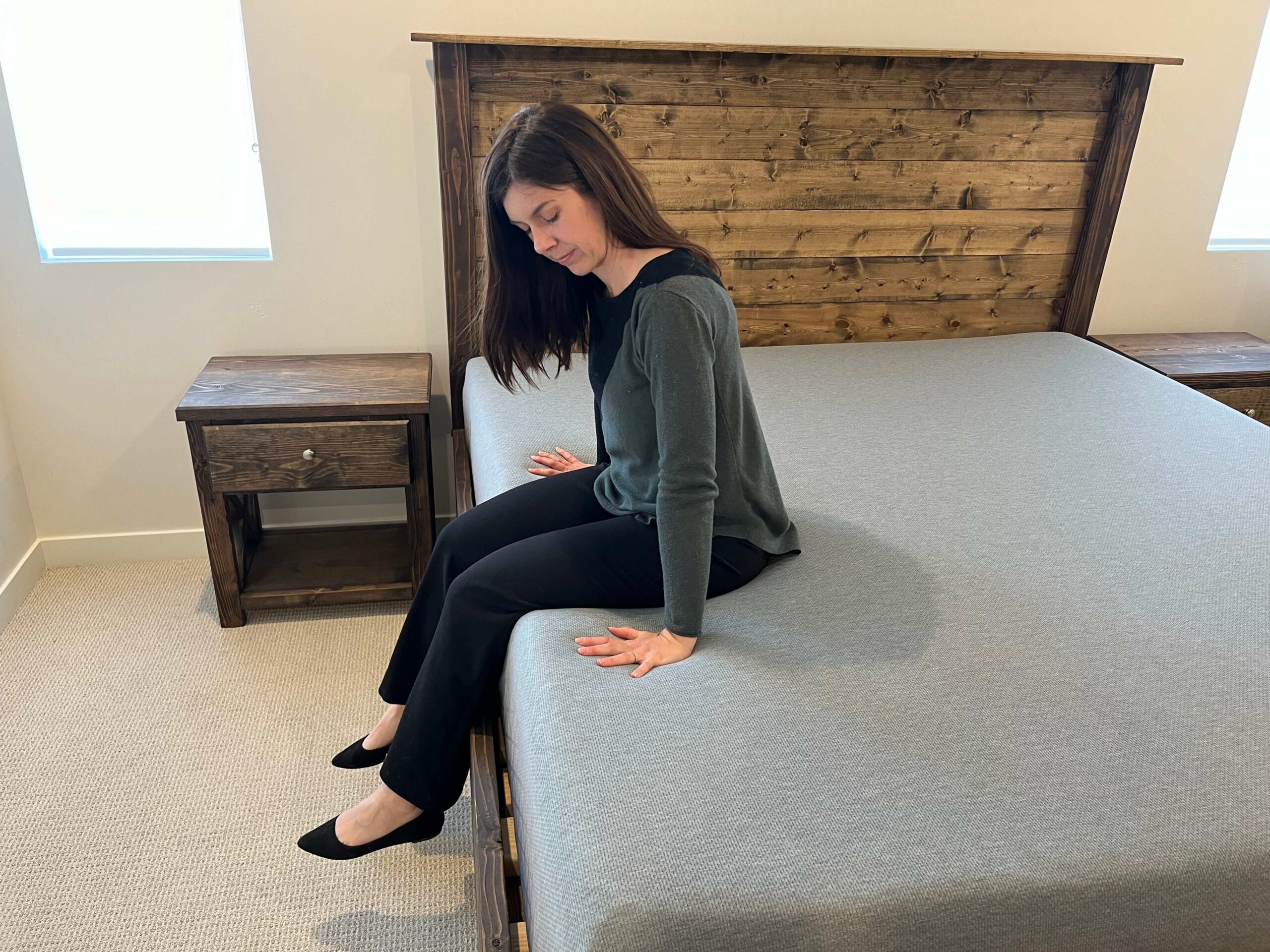
Edge support held up too. Many all foam beds compress at the perimeter, but when I sat on the edge to lace my shoes the coil structure barely gave, so a couple can use the full width of the bed.
The Zoma Hybrid leans medium, which suits most sleepers, though dedicated plush side sleepers may find it a touch firm. For combination sleepers who change positions overnight and couples who want a stable edge, it strikes a balance of cushion and support that is hard to beat under $1,000.
- 10 Value
- 9 Edge Support
- 9 Trial Period
- 9 Response Time
- 8 Motion Transfer
- 9 Cooling & Breathability
The Zoma Hybrid earned Best Overall because it balanced coil support and foam contouring better than anything else I tested near this price. During testing, my hips and shoulders sank into the memory foam while the pocketed coils held my lower back level as I moved from side to back, so repositioning stayed easy. When I sat on the edge to lace my shoes, the perimeter barely compressed, which means a couple can use the full surface without the roll-off feeling. The surface also felt less heat retentive than the denser all foam beds I compared in the same session, which helps two people who share body heat.
Best For:
- Combination sleepers who change positions overnight
- Couples who want a stable edge and low motion transfer
- Back and side sleepers who want contouring with coil support
Compare Instead:
- Vaya Hybrid if you want a taller 14 inch hybrid with an even firmer edge
- Zoma Start if you want a lower priced all foam option with similar motion isolation
The gel infused memory foam on top is what let my shoulders and hips settle in during testing without the surface feeling dense, which is where the pressure relief came from on my side. Under it, the responsive polyfoam transition is why rolling from side to back took no effort instead of feeling like climbing out of a dip. The pocketed coil core is the layer that kept my lower back level on my back and, because each coil moves on its own, kept my side still when my partner shifted, so motion isolation held up for couples. That same coil layer firmed up the perimeter when I sat on the edge, and the high density base kept the whole surface feeling consistent night to night.
During testing, the Zoma Hybrid balanced plush comfort with firm support. Because I move between side and back, I paid attention to how it handled the switch, and the memory foam hugged my shoulders and hips without making me feel stuck while the coils gave enough bounce to reposition easily.
On my back, the pocketed coils kept my lower back level and my hips from dipping, so my spine stayed in a neutral line through the night. That combination of contouring on top and coil support underneath is what made the feel work across positions for me.
Temperature held up too. Even after settling into one position for a stretch, the surface stayed cooler to the touch through the first hours than the denser foam beds I compared, which is the gel infused foam and coil airflow working together.
Pros:
- Edge Support (9/10): the perimeter barely compressed when I sat to lace my shoes, so the full width stayed usable.
- Response Time (9/10): rolling from side to back took no effort during testing.
- Cooling & Breathability (9/10): the surface felt less heat retentive than the denser all foam beds I compared.
Cons:
- Motion Transfer (8/10): solid but a hair behind the all foam picks here, so a very restless partner registers a little more.
- Firmness fit: the medium feel reads a touch firm for dedicated plush side sleepers who want to sink in more.
Why The Zoma Hybrid Won
Among the 50+ mattresses I tested for this guide, the Zoma Hybrid stood out for pairing coil backed support with foam contouring, an edge that held firm when I sat on it, and a surface that ran cooler than the denser all foam beds I compared. It is the bed I point combination sleepers and couples to first, especially those who want contouring without feeling stuck.
Watch Our Vaya Mattress Video Review
When I tested the Vaya Mattress, it stood out quickly as one of the best budget picks in this guide. It is an all foam bed built to balance support and comfort, and it held up across positions better than most beds at its price.
The open cell foam surface was the first thing I noticed. Compared with the denser memory foam I tested, it felt cooler through the first hours and did not build heat as fast after I settled in, which helps a sleeper who runs warm.
Motion isolation was the standout. On different schedules with my partner, I found the Vaya absorbed movement well: when the far side of the bed shifted, I barely felt it on mine. That makes it a strong pick for light sleepers or anyone sharing the bed.
Comfort and support were balanced too. The medium feel gave enough at my shoulder and hip on my side while keeping my back supported, and the foam contoured without the deep sinkage that some budget all foam beds have.
Taken together, the Vaya delivers comfort, cooling, and motion isolation at a price that is hard to match. It fits budget shoppers, side sleepers who want cushioning, and couples who want a low motion foam surface without paying more for it.
- 10 Value
- 9 Edge Support
- 9 Trial Period
- 10 Response Time
- 8 Motion Transfer
- 9 Cooling & Breathability
The Vaya earned Best Budget because it delivered stronger motion isolation than the other budget all foam beds I tested at this price. During testing, when my partner shifted on the far side of a queen, the movement barely reached my side, so a light sleeper sharing the bed is less likely to wake. The open cell foam surface also felt cooler through the first hours than the denser memory foam I compared, and the medium feel gave my hips and shoulders enough give on my side without letting my back sag.
Best For:
- Budget shoppers who want strong motion isolation
- Side sleepers who want cushioning at the hips and shoulders
- Solo sleepers who prefer an all foam, contouring feel
Compare Instead:
- Amerisleep AS2 if you want firmer back and stomach support
- Zoma Hybrid if you want coil bounce and a firmer edge
The open cell Vaya foam comfort layer is the reason the surface felt cooler through the first hours than the denser memory foam I compared, and it is soft enough to cushion a side sleeper’s shoulder without swallowing it. Because that foam settles rather than bounces, it absorbed my partner’s movement on the far side of the bed, which is where the strong motion isolation came from. The high density base underneath is what kept my hips from sagging on my back, so my spine stayed supported through the night. The foams are CertiPUR-US certified and tested for low VOC emissions, which is why off gassing was faint and gone quickly after unboxing.
In testing, the Vaya’s medium feel handled both of my main positions. On my side it gave enough at the shoulder and hip to keep pressure from building, and on my back the high density base kept my hips from sagging so my spine stayed supported.
The surface settled rather than sprang, which is why a partner’s movement on the far side of the bed barely reached me. For a foam bed at this price, that motion isolation was the standout, and it held whether I was falling asleep or shifting during the night.
The open cell foam also stayed cooler to the touch through the first hours than the denser memory foam I compared, so I did not get the warm, sunk in feeling that some budget foam gives.
Taken together, the Vaya fits budget shoppers and couples who want a plush leaning, low motion foam surface, and side sleepers who want cushioning at the hips and shoulders.
Pros:
- Motion Transfer (8/10) plus Response Time (10/10): my partner’s movement barely reached my side while the surface still recovered quickly.
- Value (10/10): the strongest cooling and motion isolation combination among the budget foam beds I tested.
- Cooling & Breathability (9/10): the open cell surface felt cooler through the first hours than the denser memory foam I compared.
Cons:
- Single firmness: one medium option only, so it cannot be tuned for a firmer or plusher preference.
- No coil bounce: the all foam build feels less springy than a hybrid, so shoppers who want a firmer edge and more responsiveness get less of both.
“In testing, the Vaya’s open cell foam settled around my hips and shoulders on my side while a partner’s movement barely reached my half of the bed, which is why it fits budget shoppers and couples who want a plush, low motion foam feel.”

Watch Our Amerisleep AS2 Video Review
In testing, the AS2 balanced support and comfort in a way that is hard to find at this price. Its plant based Bio-Pur foam gives a medium firm feel suited to back and stomach sleepers, and the open cell structure is why the surface felt cooler to the touch through the first hours than the other all foam beds I compared.
Spinal alignment was the standout. The Affinity transition layer with HIVE is zoned firmer under the hips and softer under the shoulders, and on my back that kept my hips from dropping below my shoulders, so my spine stayed level.
The AS2 also pairs that firmness with response. Where some medium firm beds feel rigid, this one gave enough that I never felt stuck when I rolled over, which makes it workable across positions. Side sleeping was supported, though the surface gives less at the shoulder than a plush bed.
Durability held up as well. The high density foam layers kept their shape across the testing period with no early softening or surface wear, which matters for a bed you plan to keep for years.
For hot sleeping back and stomach sleepers who want firmer support and a cooler running foam surface, the AS2 is the pick I would start with in this guide.
- 9 Value
- 8 Edge Support
- 9 Trial Period
- 9 Response Time
- 10 Motion Transfer
- 10 Cooling & Breathability
The AS2 earned Best Cooling because its open cell Bio-Pur surface felt cooler to the touch through the first hours than the other all foam beds I compared in the same session. During testing, lying on my back, the HIVE transition layer kept my hips from sinking below my shoulders, so my spine stayed level, and the surface stayed responsive enough that I never felt stuck when I rolled over. It is a medium firm, all foam bed, which is why it suits back and stomach sleepers more than plush side sleepers.
Best For:
- Hot sleepers who want a cooler running all foam surface
- Back and stomach sleepers who want firmer support
- Sleepers who want responsiveness without coils
Compare Instead:
- Leesa Original if you want more surface give for side sleeping
- Vaya Mattress if you want a similar all foam feel at a lower price
The Bio-Pur comfort foam has an open cell structure, which is why the surface felt cooler to the touch through the first hours than the other all foam beds I compared, and it recovers quickly so I never felt stuck when I rolled over. Below it, the Affinity layer with HIVE is zoned firmer under the hips and softer under the shoulders, and during testing that is what kept my hips from dropping below my shoulders on my back, so my spine stayed level. The high density Bio-Core base is the layer that held that support steady with no sagging across the testing period, which is why the medium firm feel suits back and stomach sleepers.
From the first night on the AS2, the medium firm feel struck a balance between comfort and support. I sleep mostly on my back, and it gave just enough firmness to keep my spine aligned without feeling rigid. The Bio-Pur foam recovered quickly, so I could move without the stuck feeling denser memory foam gives.
After a week, the temperature performance stood out most. Even for a foam bed, the surface stayed cool to the touch through the first hours and did not build heat the way denser foam beds I have tested do. The HIVE zoning also settled in, easing the pressure I feel at my lower back and shoulders on other surfaces.
On my back the zoned support kept my hips level with my shoulders, which is where the neutral spine feel came from. On my side the surface gave enough to cushion my shoulder, though a dedicated side sleeper will notice it is firmer than a plush bed.
Taken together, the AS2 fits hot sleeping back and stomach sleepers who want firmer support and a cooler running foam surface.
Pros:
- Cooling & Breathability (10/10): the Bio-Pur surface felt cool to the touch through the first hours, coolest of the foam beds I compared.
- Motion Transfer (10/10): a partner’s movement barely registered across the surface.
- Spinal alignment: on my back the HIVE zoning kept my hips from dropping below my shoulders.
Cons:
- Edge Support (8/10): the perimeter softened more than the coil hybrids here when I sat on it.
- Side sleeper fit: the medium firm surface gives less at the shoulder than a plush bed, so dedicated side sleepers who want more give may find it firm.
“On my back the AS2 kept my hips from dropping below my shoulders while the surface stayed cool to the touch through the first hours, which is why it suits hot sleeping back and stomach sleepers who want firmer support.”

Watch Our Leesa Original Video Review
One question I kept asking about every mattress was simple: does it justify what it costs? To earn a spot on a best under $1,000 list, a bed needs to deliver performance I would be satisfied with regardless of price, not just performance that is acceptable for what I spent.
The Leesa Original cleared that bar in testing. What stood out most was how it avoided the common pitfall of budget memory foam, that sluggish, heat trapping, stuck in the bed feeling that makes traditional memory foam a deal breaker for many sleepers.
The responsive top layer is what separates the Leesa from cheaper all foam beds. It compresses under weight and springs back quickly, so repositioning felt natural rather than labored from the first night.
Beyond feel, the Leesa brings a limited lifetime warranty and a 120 night trial to a price point where most competitors offer only 10 year coverage and 100 night trials. A limited lifetime warranty at this price signals construction confidence, and in extended durability testing the surface showed no meaningful change in support or firmness.
For combination and back sleepers who want a medium firm foam bed without the stuck feeling, and for couples who want strong motion isolation under $1,000, the Leesa is an easy one to recommend.
- 8 Value
- 7 Edge Support
- 9 Trial Period
- 9 Response Time
- 9 Motion Transfer
- 8 Cooling & Breathability
The Leesa earned Best Memory Foam because its responsive top layer avoided the sluggish, stuck feeling that sinks most budget memory foam. During testing, each time I shifted between back and side the foam released and resettled quickly with no labored repositioning, and it scored 9 out of 10 in my response time testing. On my side the middle memory foam layer cushioned my hip and shoulder, and on my back the medium firm surface kept my lumbar region supported without pressing up.
Best For:
- Combination sleepers who want quick response from foam
- Couples under $1,000 who want strong motion isolation
- Back and side sleepers who want a medium firm foam feel
Compare Instead:
- Amerisleep AS2 if you want firmer, cooler running support
- Vaya Hybrid if you want coil reinforced edges
The responsive comfort foam on top is the layer that separates the Leesa from sluggish budget foam. It compresses under weight and rebounds fast, which is why repositioning felt effortless in testing and why it scored 9 out of 10 for response time. The middle memory foam layer is where the pressure relief came from, softening around my hip and shoulder on my side while spreading the load so no single point built pressure. The high density base is what kept the surface from developing soft spots through extended durability testing, which is what makes the limited lifetime warranty credible at this price. All layers are CertiPUR-US certified and the build is fiberglass free.
From the first night I tested the Leesa Original, the responsive top layer stood out most. As a combination sleeper who shifts between back and side, I have tested plenty of all foam beds that feel fine in one position but make changing positions feel like work. The Leesa did not do that: each time I shifted, the foam released and resettled quickly, with no resistance.
On my back, the surface kept my lumbar region supported without any uncomfortable upward pressure. The medium firm feel was right for back sleeping, holding my spine in a neutral line without feeling rigid.
On my side, the middle memory foam layer cushioned my hip and shoulder, and I did not feel the pressure building at those points the way I do on firmer all foam beds that lack a real comfort layer. When I rolled over, the movement did not carry across the surface, which is the kind of isolation that matters for couples sharing a queen under $1,000.
Off gassing was minimal after unboxing, and the bed was ready to sleep on comfortably the same evening it arrived, consistent with its low VOC CertiPUR-US certification. For a medium firm foam feel that stays easy to move on, the Leesa fits back and combination sleepers best.
Pros:
- Response Time (9/10): the responsive top layer released and resettled quickly on every position change.
- Motion Transfer (9/10): movement did not carry across the surface when one side shifted.
- Trial and warranty: a 120 night trial and a limited lifetime warranty, both a step up from the 100 night, 10 year budget norm.
Cons:
- Edge Support (7/10): the perimeter softens under concentrated weight, typical of all foam without coils.
- Single firmness: one medium firm option, so lighter side sleepers under 130 pounds may find it too firm and cannot size down to a softer feel.
“Each time I changed positions the responsive foam released quickly instead of holding my shape, which is why the Leesa fits combination and back sleepers who want a medium firm foam bed without the stuck feeling.”
Watch Our Zoma Start Video Review
When I tested the Zoma Start, it stood out as an affordable all foam bed that keeps the things that matter: comfort, support, and cooling. Against the other budget foam beds I tested, it ran cooler on the surface and isolated motion better, including better than the Bear later in this guide.
Cooling was the first thing I noticed. The zoned gel foam surface felt cooler to the touch through the first hours than the denser memory foam I compared, and it did not build heat the way plain memory foam does after I settled in.
Motion isolation was the other standout. When a partner shifted or got out of bed, I barely felt the surface move on my side, which makes the Start a strong pick for couples on different schedules.
The all foam build is simple rather than fancy, but it still balances softness and support well. As a side sleeper I felt the zoned foam cradle my hips and shoulders while keeping my lower back supported.
For budget minded side sleepers and couples who also run warm, the Zoma Start delivers cooling, motion isolation, and zoned support at a price well under $1,000.
- 10 Value
- 10 Edge Support
- 9 Trial Period
- 8 Response Time
- 9 Motion Transfer
- 9 Cooling & Breathability
The Zoma Start earned Best Value because it matched the motion isolation of pricier foam beds I tested while costing less. During testing, when a partner got in and out on one side, I barely felt the surface move on the other, which matters for couples on different schedules. As a side sleeper I felt the zoned foam cradle my hips and shoulders while keeping my lower back supported, and the surface felt cooler through the first hours than the denser memory foam I compared.
Best For:
- Budget shoppers who want strong motion isolation
- Side sleepers who want zoned contouring
- Solo or couple sleepers who want a simple all foam build
Compare Instead:
- Vaya Mattress if you want a slightly plusher all foam surface
- Zoma Hybrid if you want coil bounce and a firmer edge
The zoned gel memory foam on top is the layer that cradled my hips and shoulders on my side while staying firmer under my lower back, which is where the pressure relief and support balance came from, and the gel is why the surface felt cooler through the first hours than the denser memory foam I compared. Because that foam settles rather than springs, it soaked up movement when a partner got in and out, which is where the strong motion isolation came from. The high density base is what held the shape steady night to night with no sagging.
From the first night on the Zoma Start, what stood out was the cooling. Unlike denser memory foam beds I have tested that trap heat, the zoned gel foam kept the surface cooler to the touch through the first hours, so I did not get the heat buildup that tends to wake me.
As a side sleeper, I watch for pressure at my shoulders and hips, and the zoned foam cradled both while keeping my lower back supported. I did not feel the surface build the pressure I get on firmer all foam beds.
Motion isolation matched what I saw in testing. When my partner shifted during the night, I barely felt it on my side, which is the main reason the Start works well for couples.
Taken together, the Start fits budget minded side sleepers who want zoned contouring and couples on different schedules who want a low motion, cooler running foam surface.
Pros:
- Value (10/10) plus Edge Support (10/10): budget pricing with a surprisingly stable perimeter for an all foam bed.
- Motion Transfer (9/10): a partner getting in and out barely moved my side.
- Cooling & Breathability (9/10): the zoned gel foam felt cooler through the first hours than the denser memory foam I compared.
Cons:
- Response Time (8/10): recovers a beat slower than the coil picks here, so frequent repositioners feel a touch more lag.
- Firmness fit: the medium feel reads firm for dedicated plush sleepers.
“On my side the zoned foam cradled my hips and shoulders while a partner getting up barely moved my side, which is why the Start fits budget minded side sleepers and couples on different schedules.”
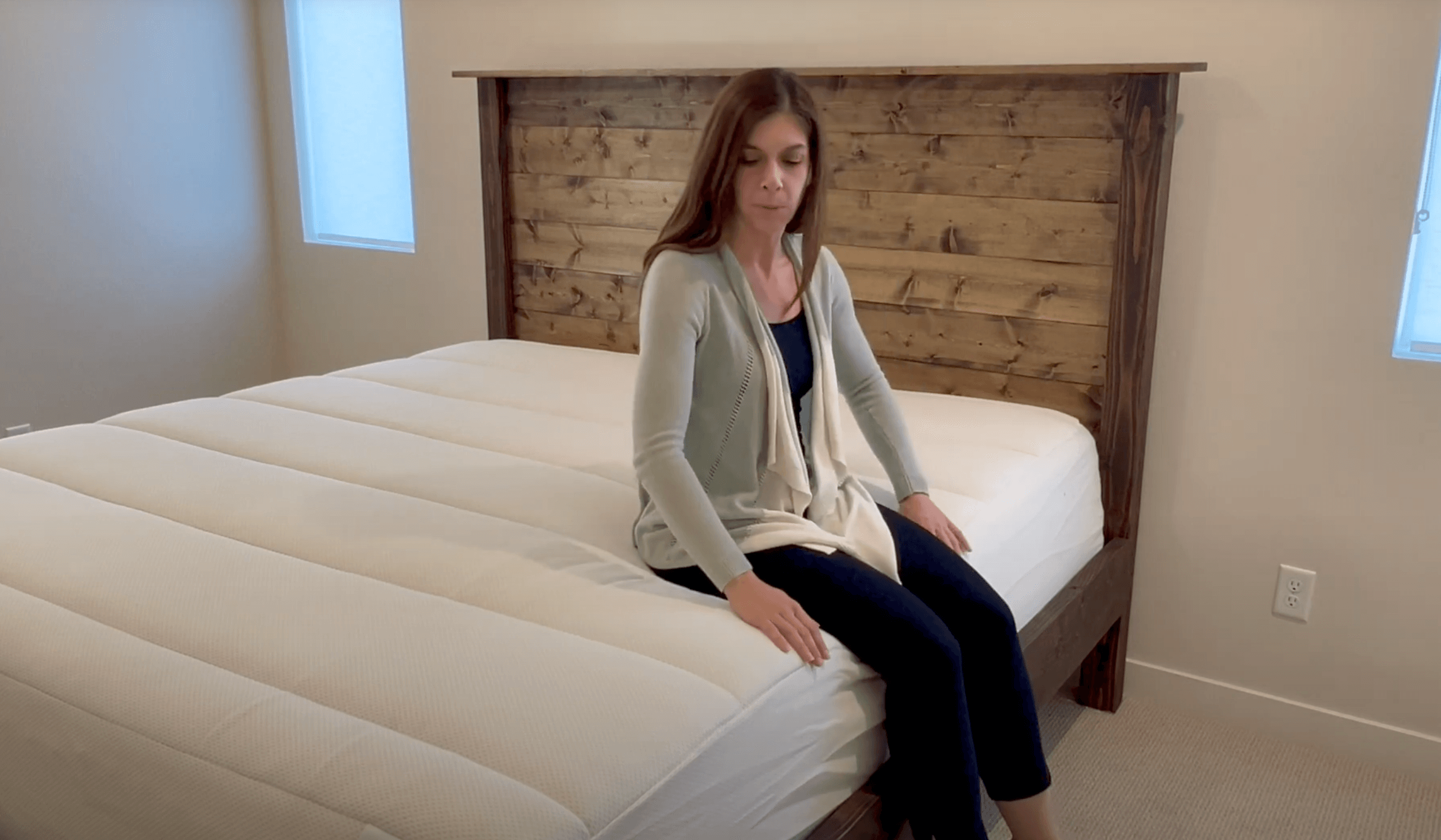
Watch Our Vaya Hybrid Video Review
The Vaya Hybrid stood out among the budget hybrids I tested for pairing a foam comfort layer with coils without cutting the edge. In testing it balanced comfort and support across positions: on my side the foam contoured my shoulder and hip, and on my back the coils kept my hips from sinking.
Breathability was a strength. The Vaya Comfort Foam has an open cell surface, and airflow moved through the coil layer underneath, so the surface felt more breathable than the all foam beds I compared.
Edge support is where the Vaya Hybrid separates itself from many hybrids at this price. When I sat and slept near the perimeter, the reinforced edge held firm instead of collapsing, so a couple can use the full width of the bed.
Its weakest point is motion transfer, which scored 7 out of 10. The coils pass a little more movement than a dense foam core, so a very restless partner is more noticeable here than on the all foam picks. For couples who want a firm, usable edge and back and side sleepers who want coil support with foam contouring, the Vaya Hybrid is one of the best hybrids available under $1,000.
- 10 Value
- 10 Edge Support
- 9 Trial Period
- 10 Response Time
- 7 Motion Transfer
- 9 Cooling & Breathability
The Vaya Hybrid earned Best Hybrid because it paired a foam comfort layer with coils at a price most hybrids beat only by cutting the edge. During testing, when I sat and slept near the perimeter the reinforced edge held firm instead of collapsing, so the full width stayed usable for a couple. On my side the foam contoured my shoulder and hip, and on my back the coils kept my hips from sinking. Its lowest sub score is motion transfer (7/10), so a very restless partner registers more here than on the Zoma Hybrid.
Best For:
- Couples who want a firm, usable edge
- Back and side sleepers who want coil support with foam contouring
- Shoppers who want a taller 14 inch hybrid under $1,000
Compare Instead:
- Zoma Hybrid if you want stronger motion isolation
- Plank if you are a strict stomach sleeper who needs a flatter, firmer surface
The Vaya comfort foam on top is what contoured my shoulder and hip on my side during testing, so a side sleeper gets cushioning without sinking. The individually wrapped coils underneath are the reason my hips stayed up on my back and, just as important, why the reinforced perimeter held firm when I sat and slept near the edge, so the full width stayed usable for a couple. Airflow moved through that coil layer, which is why the surface felt more breathable than the all foam beds I compared. Because the coils transmit a little more movement than a dense foam core, motion transfer (7/10) is the weakest point, so a restless partner registers more here than on the Zoma Hybrid.
Across positions, the Vaya Hybrid balanced comfort and support in testing. As a back sleeper, I found the Vaya Comfort Foam let my hips settle just enough to keep my spine aligned while the pocketed coils held the surface steady with no sagging.
On my side, the foam layer contoured to my shoulder and hip and kept pressure from building at those points. The medium feel gave enough without letting me sink too far.
As a stomach sleeper, I noticed the give was a little much: my hips dipped slightly, which over time could pull my lower back out of line. Strict stomach sleepers and heavier sleepers will want a firmer surface.
Sitting and sleeping near the edge, the reinforced perimeter held firm, which is the feature that sets it apart. For couples and back and side sleepers who want a usable edge on a taller hybrid, the Vaya Hybrid fits well.
Pros:
- Edge Support (10/10): the reinforced perimeter held firm when I sat and slept near the edge.
- Value (10/10) plus Response Time (10/10): coil support and quick recovery at a sub $1,000 price.
- Cooling & Breathability (9/10): airflow through the coil core kept the surface feeling more breathable than the all foam beds I compared.
Cons:
- Motion Transfer (7/10): the coils pass a little more movement than a dense foam core, so a restless partner is more noticeable.
- Stomach sleeper fit: the medium surface let my hips dip slightly face down, so strict stomach sleepers may want a firmer surface.
“Sitting and sleeping near the edge, the reinforced perimeter held firm while the coils kept my hips up on my back, which is why the Vaya Hybrid fits couples and back and side sleepers who want a usable edge on a taller hybrid.”
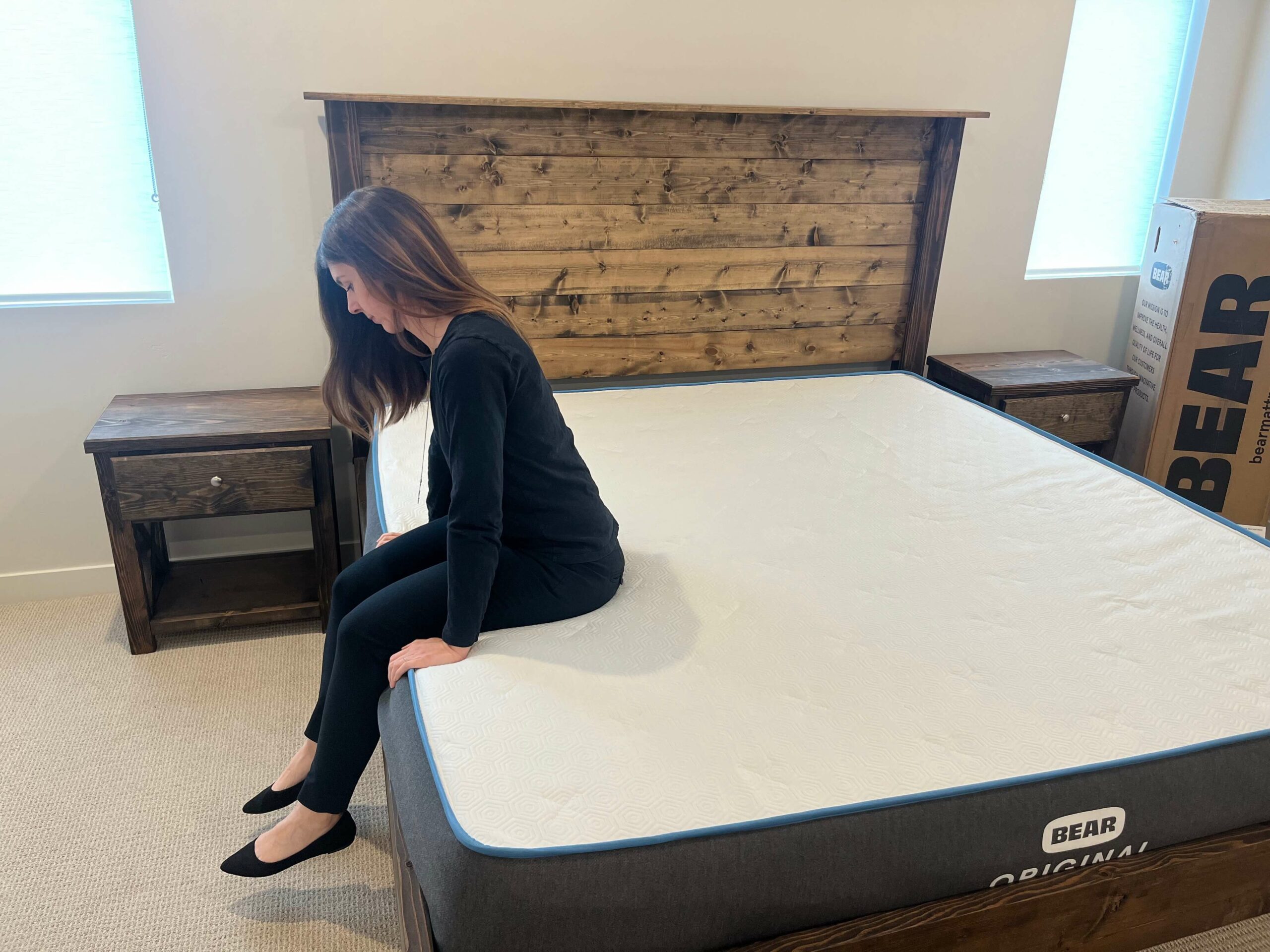
Watch Our Bear Original Mattress Video Review
When I tested the Bear Mattress, I focused on how its firmer foam build handled support and cooling. It is an all foam bed with a graphite infused comfort layer, and across testing it read as a firmer, back sleeper leaning option.
The Celliant cover is soft and breathable to the touch. I am treating it as a cover material only, since any recovery or circulation effect is not something I can observe in testing.
For comfort, the Bear pairs high density foam with a responsive transition layer. It runs firmer than the all foam Vaya earlier in this guide, which is why it suits back and stomach sleepers who want more support. On my back it kept my hips level with my shoulders, and on my side the surface gave less than a plush bed.
Motion isolation held up well. When my partner moved, I felt little on my side, which matters for couples and light sleepers sharing the bed.
Cooling was a clear strength. Compared with the other foam beds I tested, including the Plank later in this guide, the graphite foam surface felt cooler to the touch through the first hours and did not build heat as quickly after I settled in. For back and stomach sleepers who want a firmer, cooler running foam feel, the Bear is the pick I would point to first.
- 10 Value
- 10 Edge Support
- 9 Trial Period
- 9 Response Time
- 8 Motion Transfer
- 9 Cooling & Breathability
The Bear earned Best For Back Sleepers because its medium firm foam kept my hips from dipping when I lay on my back, so my spine stayed level. During testing, the transition layer added enough response that rolling from back to side did not feel like climbing out of a hole, and the graphite foam surface felt cooler through the first hours than the standard memory foam beds I compared. It runs firmer than the all foam Vaya, which is why back and stomach sleepers get on better with it than plush side sleepers.
Best For:
- Back sleepers who want a level, supported surface
- Stomach sleepers who need their hips held up
- Foam sleepers who want a firmer, cooler running feel
Compare Instead:
- Amerisleep AS2 if you want a cooler running medium firm foam bed
- Plank if you want an even firmer, flatter surface
The graphite infused memory foam on top is the layer that felt cooler through the first hours than the standard memory foam beds I compared, and it cushioned my shoulder and hip when I turned onto my side. Below it, the responsive transition foam is why rolling from back to side did not feel like sinking into a hole. The high density base is the layer that kept my hips level on my back and stomach with no sagging across testing, which is what makes the Bear read as a firmer, back sleeper leaning foam bed. The Celliant cover adds a soft, breathable surface layer against the skin.
In testing, the graphite infused memory foam cradled my body without excessive sinkage. I sleep mostly on my back, and the surface kept my lower back in line without feeling overly firm.
On other nights I tested side and stomach positions. On my side the surface cushioned my shoulder and hip while staying firm enough to support me, and on my stomach it held my hips up.
Cooling held across all of them. Compared with the other memory foam beds I have tested, the Bear kept a cooler surface to the touch through the first hours, which helped on warmer nights.
Taken together, the Bear fits back and stomach sleepers who want a firmer, cooler running foam feel, while dedicated plush side sleepers may want more cushion.
Pros:
- Cooling & Breathability (9/10): the graphite foam surface felt cooler to the touch through the first hours than the standard memory foam beds I compared.
- Edge Support (10/10): the perimeter stayed stable when I sat and slept near it.
- Support: on my back the medium firm foam kept my hips level with my shoulders with no dipping.
Cons:
- Motion Transfer (8/10): a partner’s movement carried a little more than on the top foam picks here, so a restless partner is more noticeable.
- Side sleeper fit: the medium firm surface gives less at the shoulder and hip, so lighter side sleepers may want more cushion.
“On my back the Bear held my hips level and ran cooler to the touch than the standard foam beds I compared, which is why it fits back and stomach sleepers who want a firmer, cooler running foam feel.”
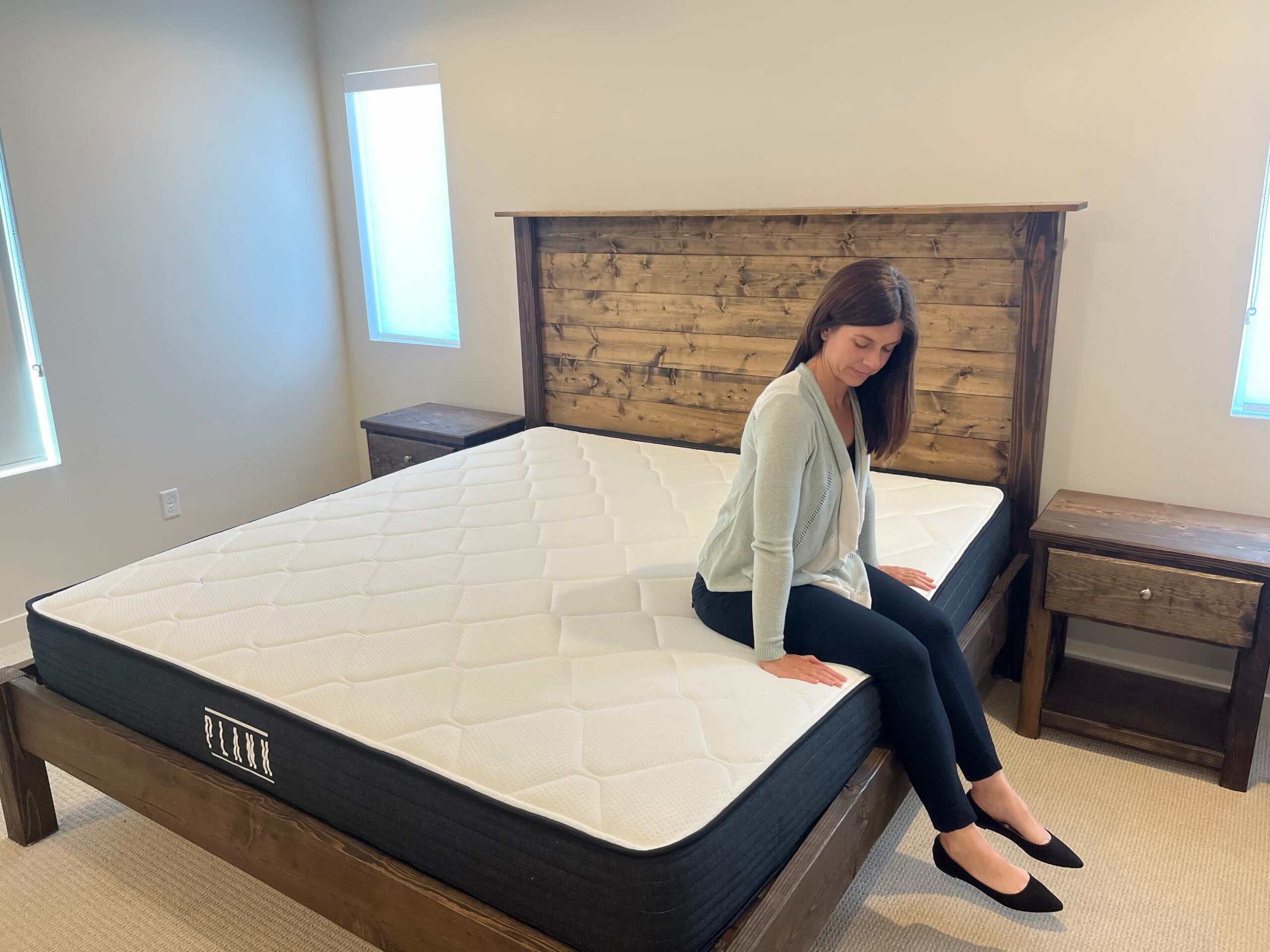
Watch Our Brooklyn Bedding Plank Mattress Video Review
When I tested the Plank Mattress, I wanted to see how it performed for sleepers who find most beds too soft. It is a rare find: a genuinely firm, customizable bed for people who know they want a hard, supportive surface.
Its standout feature is the dual firmness design. One side is ultra firm and the other is just firm, so you can choose your support level by flipping the bed. In testing, the ultra firm side gave a flat, uniform surface that kept my hips level with my shoulders on my back and stomach, while the firm side offered slightly more cushion.
Spinal alignment is where the Plank shines. The ultra firm side is almost flat, so my hips did not sink under pressure, which is what back and stomach sleepers look for in a firm bed.
Firm beds often get a reputation for sleeping warm, but the Plank held up better than I expected. The quilted top on both sides felt cooler to the touch than most dense foam, though its airflow still trails the coil hybrids here, which shows in its Cooling score of 8 out of 10.
Durability was strong too. The high density foam kept its shape with minimal sagging across weeks of testing. For back and stomach sleepers who want a very firm, flat surface, and for heavier sleepers who want a bed that does not sink, the Plank is worth a close look.
- 9 Value
- 10 Edge Support
- 9 Trial Period
- 9 Response Time
- 8 Motion Transfer
- 8 Cooling & Breathability
The Plank earned Best Firm because its ultra firm side gave the flattest, most level surface of anything I tested, with almost no give under my hips. During testing on my back and stomach, my hips stayed in line with my shoulders and I felt no sinking, and the flippable firm side offered slightly more cushion when I wanted it. The quilted top felt cooler than I expected for a dense foam bed, though it still trails the coil hybrids here on airflow (Cooling 8/10).
Best For:
- Back and stomach sleepers who want a very firm, flat surface
- Sleepers who find most beds too soft
- Shoppers who want two firmness levels in one bed
Compare Instead:
- Amerisleep AS2 if extra firm feels too rigid and you want medium firm
- Bear if you want firm support with a little more surface give
The quilted top on both sides is what took the initial sharpness off the surface and felt cooler than I expected for a dense foam bed, though airflow still trails the coil hybrids here (Cooling 8/10). Under it, the high density comfort polyfoam is thin on the ultra firm side, which is why that side felt almost flat and kept my hips level with my shoulders on my back and stomach, and slightly thicker on the firm side for a touch more give. The support core is the layer that resisted sagging across testing and is why the flat, firm feel held steady, so the Plank stays a true firm option flip to flip.
From the first night on the Plank, the ultra firm side felt unlike any other bed in this guide, almost like sleeping on a flat, sturdy surface. As a back sleeper, I noticed how well it kept my spine aligned with no sinking or sagging, and after a single night my back felt supported rather than stiff.
After a full week, that impression held. The ultra firm side kept my hips level with my shoulders on my back and stomach, and a few nights on the firm side gave slightly more cushion while staying supportive. Having two firmness levels in one bed let me match the feel to how my body felt each night.
The quilted top also kept the surface cooler to the touch than I expected for a dense foam bed, which helped since I tend to sleep warm.
For back and stomach sleepers who find most beds too soft and want a flat, firm surface, the Plank fits, while side sleepers who need shoulder and hip cushioning will find it too firm.
Pros:
- Edge Support (10/10): the perimeter stayed stable and flat under concentrated weight.
- Spinal alignment: on my back and stomach the ultra firm side kept my hips level with my shoulders with almost no give.
- Dual firmness: two firmness levels in one flippable bed.
Cons:
- Cooling & Breathability (8/10): the quilted top runs cooler than expected for dense foam but trails the coil hybrids here.
- Side sleeper fit: too firm for side sleepers who need shoulder and hip cushioning at the pressure points.
“The ultra firm side kept my hips level with my shoulders on my back and stomach with almost no give, which is why the Plank fits back and stomach sleepers who find most beds too soft.”
Best Latex Mattress:
9. Eco Terra Hybrid Latex


Warranty
15 Years

Sleep Trial
90 Nights

Shipping
Free
Watch Our Eco Terra Hybrid Video Review
After hands on testing, the Eco Terra Hybrid Latex stood out for combining natural materials, support, and value. It pairs organic latex with a wrapped coil system, which gives a balanced feel that leans responsive rather than plush.
The latex is the defining layer. Instead of the sunk in feeling of memory foam, it lifted me on top of the bed and gave a slight bounce, so changing positions took no effort. It adapted well across positions: on my back the coils held my lumbar steady, and on my side the latex gave gentle pressure relief at my shoulder and hip.
Temperature was a strength. The natural latex and the airflow through the coil core kept the surface feeling cooler than the all foam beds I compared, so I did not get the heat buildup memory foam can cause.
Motion isolation was strong for a hybrid. The individually wrapped coils move on their own, so when my partner shifted I barely felt it, which makes the Eco Terra a good pick for couples.
Its materials are a genuine draw: GOTS certified organic cotton and natural latex rather than synthetic foams. For sleepers who want latex bounce, coil supported balance, and natural materials, the Eco Terra is a standout under $1,000, though its edge support and 90 night trial trail the strongest picks here.
- 10 Value
- 8 Edge Support
- 8 Trial Period
- 10 Response Time
- 9 Motion Transfer
- 9 Cooling & Breathability
The Eco Terra earned Best Latex because its natural latex layer gave a buoyant, responsive surface that memory foam cannot match. During testing, the latex lifted me on top of the bed instead of letting me sink, so changing positions took no effort, and the individually wrapped coils held my lower back steady on my back and cushioned my shoulder on my side. Airflow through the coil core kept the surface feeling cooler than the all foam beds I compared. Its lower sub scores are edge support (8/10) and trial length (8/10, 90 nights).
Best For:
- Sleepers who want latex bounce and responsiveness
- Shoppers who prioritize natural cotton, wool, and latex materials
- Back and side sleepers who want coil supported balance
Compare Instead:
- Vaya Hybrid if you want a lower priced hybrid with a firmer edge
- Zoma Hybrid if you prefer memory foam contouring over latex bounce
The natural latex comfort layer is what lifted me on top of the bed rather than letting me sink, which is where the buoyant, responsive feel came from and why changing positions took no effort. Under it, the individually wrapped coils are the reason my lower back stayed supported on my back while my shoulder still got room on my side, and because each coil moves on its own, movement stayed contained when my partner shifted. Airflow through that coil core is why the surface felt cooler than the all foam beds I compared. The GOTS certified organic cotton cover and wool layer add a breathable, moisture managing surface on top of the latex.
From the first night, the Eco Terra felt different from the other hybrids in testing. Settling in, the latex gave a gentle buoyancy: enough give to feel comfortable without going soft, and a light, responsive surface that made changing positions effortless rather than the sunk in feeling memory foam gives.
After a week, the wrapped coils kept my back, shoulders, and hips supported evenly, so my spine stayed in line without the pressure I feel building on firmer beds. I felt cradled without ever feeling trapped.
Cooling stayed consistent too. The latex and coil airflow kept the surface feeling cooler than the foam beds I compared, so it did not warm up the way an all foam bed can.
For sleepers who want a responsive, coil supported latex feel, and who also run warm, the Eco Terra fits across a broad range of body types and positions.
Pros:
- Response Time (10/10): the latex lifted me on top of the bed so position changes took no effort.
- Motion Transfer (9/10): the wrapped coils kept a partner’s movement from carrying across the surface.
- Cooling & Breathability (9/10): airflow through the coil core kept the surface cooler than the all foam beds I compared.
Cons:
- Edge Support (8/10): stable overall but the perimeter gave more than the strongest hybrids here.
- Trial Period (8/10): the 90 night trial is shorter than the 120 night trials elsewhere in this guide.
“The latex lifted me on top of the bed so position changes took no effort while the coils held my back steady, which is why the Eco Terra fits sleepers who want a responsive, coil supported latex feel.”
The Mattresses We Have Tested
Every mattress below was tested hands-on and on camera by me, Kristina Hindes, our lead tester. Each row links to its written review and filmed test, so you can check our work. For how we score every mattress, see How We Test Mattresses.
See the full list, with review and video links
| Mattress | Review and video |
|---|---|
| Amerisleep AS2 | Review · Video |
| Amerisleep AS3 | Review · Video |
| Amerisleep AS3 Hybrid | Review · Video |
| Amerisleep AS5 | Review (test clips inside) |
| Amerisleep AS5 Hybrid | Review · Video |
| Amerisleep AS6 Black Series | Review · Video |
| Amerisleep Organica | Review · Video |
| Amerisleep Organica Plush | Review · Video |
| Bear Original | Review · Video |
| Birch Natural | Review · Video |
| Brooklyn Bedding Aurora Luxe Hybrid | Review · Video |
| Brooklyn Bedding Plank Firm | Review · Video |
| Casper The One | Review · Video |
| Eco Terra Hybrid Latex | Review · Video |
| FORM Core | Review · Video |
| FORM Core Hybrid | Review · Video |
| FORM Prime | Review · Video |
| FORM Prime X | Review · Video |
| GhostBed Flex | Review · Video |
| Happsy Organic | Review · Video |
| Helix Dawn Luxe | Review · Video |
| Helix Midnight Luxe | Review · Video |
| Helix Sunset Luxe | Review · Video |
| Latex For Less Hybrid | Review · Video |
| Leesa Original | Review · Video |
| Leesa Sapira Chill Hybrid | Review · Video |
| Leesa Sapira Hybrid | Review · Video |
| Naturepedic Concerto | Review · Video |
| Naturepedic EOS Classic Organic | Review · Video |
| Nest Bedding Owl | Review · Video |
| Nest Bedding Puffin Kids | Review · Video |
| Nest Bedding Raven | Review · Video |
| Nest Bedding Sparrow Signature Hybrid | Review · Video |
| Nolah Evolution 15 | Review · Video |
| Nolah Natural 11 | Review · Video |
| Nolah Original Hybrid | Review · Video |
| PlushBeds Botanical Bliss | Review · Video |
| PlushBeds Luxury Bliss | Review · Video |
| PlushBeds Organic Bliss | Review · Video |
| PlushBeds Organic Kids | Review · Video |
| PlushBeds Signature Bliss | Review · Video |
| Saatva Classic | Review · Video |
| SweetNight CoolNest | Review · Video |
| SweetNight Prime | Review · Video |
| Vaya Hybrid | Review · Video |
| Vaya Mattress | Review · Video |
| Westin Heavenly Bed | Review · Video |
| Zoma Boost | Review · Video |
| Zoma Hybrid | Review · Video |
| Zoma Start | Review · Video |
5 Things to Consider Before Making a Purchase
Before you start researching online or heading to mattress stores, take a step back and consider these five things: who the mattress is for, the quality of the materials, the sleep trial it comes with, its warranty, and lastly, mattresses sold by home decor stores such as IKEA or At Home.
1. Sleeping Positions
When choosing a mattress, consider your sleep style and any recurring morning stiffness.
Back and stomach sleepers usually find firmer beds more comfortable because they offer enough support to foster a healthy spine. Whereas the best mattresses for side sleepers are medium in firmness because they allow for the shoulders and hips to sink into the bed, relieving pressure and tension.
If you tend to wake up stiff or sore, it’s an indicator the firmness of your current mattress isn’t a fit for you. Knowing what doesn’t work for you can help steer you towards a more compatible fit.
Lastly, consider how firm you want your bed to be. Do you like a softer, hugging feel from your mattress; or do you prefer to feel as if you’re sleeping on a stone? Your personal preferences may lead you towards different options than if you were to be considering your sleep style alone.
2. Different Mattress Types
Before you choose which bed is best for you, it’s best to educate yourself on the different types of mattresses sold today. There are four main types of mattresses: memory foam, latex, hybrid, and innerspring.
Memory foam mattresses are best known for being contouring and cradling. Because memory foam molds to your body, it distributes weight across the surface and cushions pressure points at the hips and shoulders, which is why side sleepers often favor it.
Latex is bouncy and responsive; when you lie on these mattresses, the latex cushions you while keeping you lifted on top of the bed. Natural latex is naturally hypoallergenic and popular with shoppers who prioritize natural materials, and many natural latex beds carry certifications such as GOLS for the latex and GOTS for cotton covers.
Hybrid mattresses combine an innerspring coil system with layers of foam to offer sleepers the best of both worlds. These beds feel more bouncy and responsive than their foam counterparts, but because they still incorporate foam layers, are cushioning, too. Hybrids are usually the most expensive kind of mattress you can buy because they incorporate a number of high-quality materials.
Innerspring mattresses are characterized by an innerspring coil system. These beds feel firmer and bouncier than any other type of mattress. Innersprings cannot cushion or conform to your body like other beds, but they’re perfect for people looking for a firm, “on the bed” mattress feel.
3. What are the Quality of the Materials?
The price of a mattress is usually a good indicator of the quality of materials used to make the bed, but not always. Different mattresses are made from different materials; all-foam beds can be a combination of poly-foam or memory foam. Latex beds can be a mixture of Dunlop latex, Talalay latex, or synthetic latex.
Whereas hybrid mattresses and innerspring mattresses contain coil systems that can be made from a variety of different materials, but usually thin, non-tempered steel.
When judging the quality of foam beds, look at the density. Is it a high-density foam or a low-density foam? Density doesn’t correlate to the firmness of the mattress, but rather how well the foam will support you. Higher-density foams offer more support, while lower-density foams provide less support.
A quality bed will often have their most dense layer on top because that’s where it can absorb the majority of your weight and offer the most support. Layers below usually have lower densities because they are taking on less body weight and serve to support mostly the layers above.

If you’re interested in a latex bed, choose one made from natural latex instead of synthetic blends. Natural latex has an average lifespan of around 15 years, while it can be hard to predict how long various synthetic blends are expected to last.
In hybrid mattresses, take note of what the comfort layers are made from, whether it be poly-foam, memory foam, or latex. Next, look at the coils. Are they steel continuous coils or are they pocketed coils?
Pocketed coils are steel coils independently encased in fabric or foam pockets to move independently of one another, preventing motion transfer and increasing zoned support. If you want a bouncy innerspring or hybrid bed, choose a mattress with a pocketed coil system, which is thought to last longer than alternative coil systems.
4. What is the Sleep Trial?
Everybody knows laying on a bed for 10 minutes in a store is not the best way to tell if a mattress is right for you. Mattress retailers understand that, too. To help consumers feel more confident about their purchase, many mattress stores and online mattress brands offer a complimentary sleep trial with their beds.
During a sleep trial, you have the chance to test your new mattress in the comfort of your home (or on the road, if you choose an RV mattress).
Most brands offer sleep trials anywhere between 90-120 days, giving you a few months to decide if it’s a good fit for you. If you feel your purchase is the most comfortable mattress for your needs, then you’re set! However, if you’re dissatisfied, you have the option to return for a full refund or, with some brands, exchange your bed for a different model.
Always be sure to read the fine print about the sleep trial before you buy. Most brands offer risk-free sleep trials, meaning, returns are free. While other brands will charge hidden fees such as return transportation fees and restocking fees. Sometimes restocking fees can total up to a couple of hundred dollars, making a return quite expensive.
5. What are the Details of the Warranty?
The warranty your bed comes with is one of the biggest things to consider before buying. A warranty can protect you from having to buy another mattress years down the road and can prolong your investment.
Most brands offer 10-year limited warranties, and with the average mattress lifespan being about a decade, this warranty should be sufficient. However, other brands will offer more extensive warranties, such as 20-years, 25-years, and even lifetime.
Check to see what the warning covers, and have a thorough understanding of what is considered a defect. Some mattress brands will cover sagging only after it’s sagged at least an inch and a half. Other brands will replace your mattress if it’s showing indentations of only ¾ inch.
Choose a warranty that covers indentations of at least ¾ inch because allowing your bed to sag an inch and a half before replacing it can be uncomfortable and unhealthy for your spine.
Frequently Asked Questions
What’s the best mattress under $1,000?
The Zoma Hybrid is our top pick. The best mattress under $1,000 will depend on your exact sleep needs. Hot sleepers are often better off with cooling features such as added air channels and heat-wicking gel infusions. Side sleepers need a mattress with a thick, pressure-relieving cushion, while back and stomach sleepers need a firmer surface for spine support.
What types of mattresses are available under $1,000?
Sleepers should be able to find quality memory foam, innerspring, and hybrid mattresses for less than $1,000. Shoppers may also find natural latex mattresses in smaller sizes, but it’s unlikely they’ll find a queen or king latex mattress that costs less than $1,000. This high price tag is because natural latex is a costly material to produce, and many companies also pay third-party certification fees to show that their latex is organically produced.
What’s the best king size mattress under $1,000?
King mattresses under $1,000 are harder to find than queens, but a few on this list ship in king. Memory foam and hybrid kings are the most available at this price. From my testing, the Vaya Mattress is the value pick in king for motion isolation, while the Zoma Hybrid is the pick if you want coil support and a firmer edge. A king size natural latex bed is the hardest to find under $1,000 because latex costs more to produce.
Is a mattress under $1,000 good quality?
Yes, many mattresses under $1,000 offer excellent comfort and durability, especially when they use well-designed foam or hybrid constructions. Budget mattresses today often include features such as pressure-relieving foam layers, breathable covers, and supportive coil systems.
The key is focusing on material quality and construction rather than price alone. High-density foams, pocketed coils, and durable support cores can help a mattress maintain its shape and comfort for years. Even with a limited budget, shoppers can still find memory foam, hybrid, and innerspring mattresses that deliver solid performance and long-term value.
Do mattresses under $1,000 have a warranty?
Yes, any decent mattress under $1,000 should come with a warranty. While a budget mattress might not have a sleep trial or even a 30-day return policy and still provide a decent night’s rest, we can’t recommend a mattress that doesn’t come with a warranty.
A mattress’s warranty signifies the company’s faith in their product by demonstrating what they will do in the event of a defect. If the company doesn’t offer a warranty, it may be because they don’t have faith in their product’s quality and durability. Even mattresses in the lower end of the $300 to $500 price range should come with a warranty.
What type of mattress is best under $1,000?
Several mattress types can fall under the $1,000 price range, but the most common options are memory foam, hybrid, and innerspring mattresses. Each type offers different benefits depending on your sleep style.
Memory foam mattresses provide pressure relief and body contouring.
Hybrid mattresses combine foam layers with pocketed coils for support and airflow.
Innerspring mattresses tend to feel firmer and more responsive.
Many sleepers find that hybrid or foam mattresses offer the best balance of comfort, support, and value in the under-$1,000 price category.
Does a mattress under $1,000 require a box spring?
Most mattresses under $1,000 don’t need a box spring. Modern beds like memory foam mattresses aren’t supported by box springs because the interior coils are too spread out to provide consistent support and prevent premature sagging. Only traditional innerspring mattresses are made more comfortable and supportive by a box spring.
Which mattress under $1,000 sleeps coolest?
In my testing the Amerisleep AS2 ran coolest among the foam beds, with an open cell surface that felt cool to the touch through the first hours. If you want airflow from coils, the Zoma Hybrid and Eco Terra Hybrid Latex felt more breathable than the all foam picks. Hot sleepers who want a foam feel should start with the AS2; those who want coil airflow should look at the two hybrids.
Did You Find the Best Affordable Mattress for You?
We hope this guide has provided insight on what to think about before investing in your next bed. Though mattresses can be quite expensive, a high-quality mattress can make a world of a difference when it comes to how well you sleep.
A mattress that supports your body and keeps your spine in a neutral line can make a real difference in how rested you feel. Your quality of sleep is not something to sacrifice to save money, and knowing how to find a high quality, affordable bed can help you save hundreds.
Related Reads
- I Tested 50+ Mattresses to Find the 14 Best Mattresses for Multiple Sclerosis of 2026


- I Tested 50+ Mattresses to Find the 14 Best Mattresses for Menopause of 2026


- I Tested 50+ Mattresses to Find the 14 Best Mattresses for Piriformis Syndrome of 2026
- I Tested 50+ Mattresses to Find the 14 Best Mattresses for Neuropathy of 2026