I Tested 50+ Mattresses to Find the 10 Best Mattresses Without Springs of 2026

Top Recommendation of 2026: Amerisleep AS3
After testing 50+ mattresses for this guide, the Amerisleep AS3 earned our pick as the Best Mattress Without Springs of 2026 because it delivered the most balanced combination of support, pressure relief, responsiveness, and cooling without a single coil in the build. During testing, the plant-based Bio-Pur comfort layer released as soon as I changed positions instead of holding the previous shape the way slower memory foam does, and the surface felt cooler to the touch through the first hours than the denser all-foam beds I compared in the same session. The zoned transition layer kept my lower back supported while still softening at the hip and shoulder, which is why the AS3 suits combination sleepers who reposition often, back sleepers who want moderate lumbar support, and hot sleepers who have been burned by heat-trapping foam. Its even, do-most-things-well feel is what made it the strongest all-around recommendation in this spring-free guide.

Every mattress featured on Sleep Junkie is evaluated using the same testing framework for support, pressure relief, cooling, motion isolation, edge support, responsiveness, and overall value. Learn How We Test Mattresses.
- Best Mattress Without Springs Overall: Amerisleep AS3
- Best Purple Mattress Alternative Without Springs: FORM Core
- Best Cooling Mattress Without Springs: Zoma Start
- Best Value Mattress Without Springs: Vaya Mattress
- Best Foam Mattress Without Springs: Leesa Original
- Best Mattress Without Springs for Athletes: Bear Original Mattress
- Best Firm Mattress Without Springs: Brooklyn Bedding Plank
- Best Latex Mattress Without Springs: PlushBeds Botanical Bliss
- Best Mattress For Kids Without Springs: Nest Bedding Puffin
- Best Medium/Firm Mattress Without Springs: Casper “The One”
We tested 50+ mattresses for this guide, scoring each on support, pressure relief, cooling, motion isolation, edge support, responsiveness, and value, and narrowed the field to 10 covering foam and latex designs across every firmness, budget, and sleeper, including kids.
Best Mattress without Springs Overall:
1. Amerisleep AS3



Warranty
20 Years

Sleep Trial
100 Nights

Shipping
Free
Watch Our Amerisleep AS3 Video Review
Potentially the best mattress without springs on the market right now, the Amerisleep AS3 is so versatile that it can work for just about everyone. Its medium feel and plant-based memory foam offer something for almost every type of sleeper. And this is why we rate this jack-of-all-trades mattress as the best overall.
All Amerisleep mattresses ship free and come with a 100-night sleep trial and a 20-year warranty.
- 9 Value
- 8 Edge Support
- 9 Trial Period
- 9 Response Time
- 10 Motion Transfer
- 10 Cooling & Breathability
The AS3 earned the overall spot because it does the most jobs well in a fully spring-free build. During testing, the Bio-Pur top layer released as soon as I shifted instead of clinging the way traditional memory foam does, and the surface felt cooler to the touch through the first hours than the denser all-foam beds I compared. On my back the zoned transition layer kept my lower back from dropping while still softening at the hip and shoulder, so a single mattress covered more than one sleep style.
Best For:
- Combination sleepers who change positions often
- Back sleepers wanting moderate lumbar support
- Hot sleepers who have struggled with heat-trapping foam
Compare Instead:
- PlushBeds Botanical Bliss if you want a natural latex feel instead of foam
- Leesa Original if you want a slightly firmer, more responsive top
- Brooklyn Bedding Plank if you need a firmer surface for stomach sleeping
The AS3 offers the contouring and flexibility of memory foam and the springiness and breathability of latex. It is able to accomplish all of this because of its unique plant-based memory foam comfort layer.
This layer contours to the body the way memory foam does, but during testing it felt cooler on contact than the denser foam beds I compared and released as soon as I changed positions instead of holding the previous shape.
The plant-based Bio-Pur foam on top is what let the surface release as I changed positions instead of holding a dent, and it felt cooler to the touch through the first hours than the denser foam beds I compared, which is why it works for sleepers who run warm. Beneath it, the zoned HIVE transition layer is the reason my lower back stayed lifted while the hip and shoulder still got pressure relief, so the same bed handled more than one sleep position. The high-density Bio-Core base kept me on top of the surface rather than sinking through, which is what gives the medium feel its spinal support and its long-term durability.
Pros
- Motion Transfer (10/10): partner movement barely registered on the opposite side during testing
- Cooling and Breathability (10/10): plant-based Bio-Pur felt cooler on contact than the denser foam beds compared
- Zoned transition layer kept the lower back lifted while still softening at the hip and shoulder
Cons
- Edge Support (8/10): stable but compresses more than firmer beds; sitting on the very edge dips slightly
- Single firmness (medium): stomach sleepers needing a firmer surface should consider the Brooklyn Bedding Plank
- All-foam build is not all-natural; sleepers wanting certified-organic materials should consider the PlushBeds Botanical Bliss
Why The Amerisleep AS3 Won
Among the spring-free mattresses I tested for this guide, the AS3 stood out for doing the most jobs well: it released cleanly when I changed positions, kept my lower back supported through the zoned layer, and felt cooler on contact than the denser foam beds I compared. It is the bed I would point a combination sleeper or a warm-running back sleeper to first when they want a coil-free feel without a single weak category.
Best Purple Mattress Alternative Without Springs:
2. FORM Core

Warranty
Lifetime
Sleep Trial
365 Nights
Shipping
Free
Watch Our FORM Core Video Review
The FORM Core is an all-foam mattress built around a gel grid comfort layer rather than traditional memory foam, and that distinction is what earns it a spot on this list.
There are no coils anywhere in its construction. The GelGrid layer at the top flexes under pressure and recovers almost immediately when that pressure lifts, which gives it the responsiveness that most spring-free foam beds cannot match.
For shoppers comparing alternatives to a Purple mattress, the FORM Core uses the same core idea of an open-cell gel grid as the primary comfort layer, but adds Integra-Mesh reinforcement woven through the grid that contained the surface wobble and motion transfer competing grid designs can produce.
In our testing it earned a 10 out of 10 for both response time and motion isolation, which is an unusual combination for any spring-free mattress.
FORM mattresses ship free and come with a 365-night sleep trial and a lifetime warranty
- 8 Value
- 9 Edge Support
- 10 Trial Period
- 9 Response Time
- 10 Motion Transfer
- 9 Cooling & Breathability
The FORM Core won the spring-free Purple-alternative spot because its gel grid behaves the way a coil can without any coils involved. During testing the grid rebounded the instant I lifted off instead of slowly recovering, and when my partner rolled over the opposite side barely registered the movement. The surface flexed at the hip and shoulder without swallowing them, so side sleepers got contouring without the stuck-in-place feel, and it stayed cooler under sustained contact than the standard foam beds I compared.
Best For:
- Hot sleepers wanting passive cooling
- Couples who wake each other easily
- Combination sleepers who reposition through the night
Compare Instead:
- Amerisleep AS3 if you prefer traditional foam contouring over a grid feel
- Leesa Original if you want responsive foam without the grid surface
- PlushBeds Botanical Bliss if you want natural latex breathability
Lying down on the FORM Core, the first thing you notice is how different it feels from standard memory foam.
Rather than slowly softening around you, the GelGrid responds the moment pressure lands and rebounds almost immediately when you shift.
The surface flexes at the hip and shoulder without swallowing them, so side sleepers get contouring without the stuck-in-place sensation that turns many people off spring-free foam beds.
On your back, the grid provides consistent contact along the lumbar region, pushing back proportionally rather than simply giving way.
Combination sleepers will find position changes feel natural, as the surface releases cleanly rather than holding onto the previous shape.
The AeroWeave cover is cool to the touch and the open-cell grid structure below maintains that airflow under sustained body weight.
For a spring-free all-foam bed, the thermal performance is meaningfully above what standard foam construction delivers at this profile.

Comfort Layers
The FORM Core starts with the AeroWeave cover, a knit fabric with an open weave structure that promotes airflow from the surface down.
Beneath it sits the GelGrid comfort layer, a hyper-elastic gel polymer grid with thousands of open cells that flex under concentrated pressure and return almost immediately.
The Integra-Mesh reinforcement is woven directly into the grid to stabilize the surface laterally, eliminating the wobble common in competing grid designs without closing the cells or reducing their flex.

Transition Layers
Below the GelGrid sits the ContourFlex transition layer, which bridges the responsive comfort layer above and the firm foundation below.
It distributes pressure gradually so the transition from soft to firm through the mattress profile feels smooth rather than abrupt.
This layer contributes meaningfully to pressure relief at the hip and shoulder for side sleepers.

Support Layers
The base of the FORM Core is the StableCore high-density support foam. This layer maintains the mattress’s geometry year after year and gives the comfort layers above a stable platform to perform consistently over the life of the mattress.
All foam components carry CertiPUR-US certification, independently tested for low VOC emissions and made without formaldehyde and certain other regulated substances.
The mattress also holds GREENGUARD Gold and OEKO-TEX Standard 100 certifications. Fiberglass-free. Made in the USA.
Pros
- Response Time (9/10) and Motion Transfer (10/10): the gel grid recovered the instant pressure lifted and contained partner movement locally
- Cooling and Breathability (9/10): ran less heat-retentive than the standard spring-free foam beds compared
- Fiberglass-free with CertiPUR-US, GREENGUARD Gold, and OEKO-TEX Standard 100 certified foams; 365-night trial and lifetime warranty
Cons
- The grid feel is distinct from memory foam; sleepers wanting slow, enveloping contouring should consider the Amerisleep AS3
- Value (8/10): trails the budget picks; the Vaya Mattress costs less for medium foam
- Single firmness: dedicated stomach sleepers over ~180 lb may want the firmer Brooklyn Bedding Plank
The grid rebounded the instant I lifted off and, when my partner moved, the opposite side barely registered it, which is the rare combination this spring-free category usually cannot deliver. It is the one I would hand to a hot sleeper or a light-sleeping couple who want a coil-free feel without slow-recovery foam.
Best Cooling Mattress Without Springs:
3. Zoma Start

Warranty
10 Years
Sleep Trial
100 Nights
Shipping
Free
Watch Our Zoma Start Video Review
Sleepers who want a cooler, firmer-leaning foam bed without springs should check out the Zoma Start. During testing the surface felt cooler on contact than the plainer foam beds I compared and pushed back under my lower back rather than letting my hips settle in, which is what lands it at a supportive medium-firm.
Zoma mattresses include free delivery, a 100-night sleep trial, and a 10-year warranty.
- 10 Value
- 10 Edge Support
- 9 Trial Period
- 8 Response Time
- 9 Motion Transfer
- 9 Cooling & Breathability
The Zoma Start took the cooling spot among spring-free beds because the gel memory foam and ventilated cover kept the surface feeling cooler on contact than the plainer foam beds I compared, while still landing at a supportive medium-firm. During testing the surface pushed back under my lower back rather than letting my hips settle in, and the bouncier transition layer recovered faster than a typical memory foam comfort layer when I changed positions.
Best For:
- Back and combination sleepers wanting a firmer medium feel
- Hot sleepers who want foam that does not warm up quickly
- Sleepers who want support without a stiff surface
Compare Instead:
- Amerisleep AS3 if you want a softer, more contouring medium
- Vaya Mattress if budget is the priority
- Bear Original if you need a firmer surface for stomach sleeping
Lying down on the Start, one of the first things you will notice is it is very responsive for a mattress without springs. This is all thanks to its bouncy transition layer, which we’ll talk about below. You’ll also notice this mattress has a surprisingly cool sleep surface for a memory foam mattress. This is due to its gel memory foam comfort layer.
The gel-infused memory foam comfort layer and the ventilated cover are what kept the surface feeling cooler on contact than the plainer foam beds I compared, which matters most for sleepers who run hot. The responsive transition layer underneath is the reason the surface recovered faster when I moved instead of leaving a lingering impression, so combination sleepers are not fighting the foam to reposition. The high-density base kept my hips from settling in and held my spine level on my back, which is what lands the Start at a supportive medium-firm.
Pros
- Value (10/10) and Edge Support (10/10): the perimeter held firm when sitting on the edge, at a low price
- Cooling and Breathability (9/10): the gel foam and ventilated cover kept the surface cooler on contact than plainer foam beds compared
- Medium-firm support kept the hips from settling in on the back
Cons
- Response Time (8/10): recovers a touch slower than the bouncier foam picks; the Vaya Mattress feels more responsive
- Single firmness: side sleepers wanting more give should consider the more contouring Amerisleep AS3
- No active cooling hardware; very hot sleepers may prefer the FORM Core’s open-cell grid
Zoma Start
The surface pushed back under my lower back rather than letting my hips settle in, and it felt cooler on contact than the plainer foam beds I compared. That medium-firm support makes it a fit for a back or combination sleeper who runs warm and wants a coil-free bed that does not soften into a sink.
Best Value Mattress Without Springs:
4. Vaya Mattress

Warranty
10 Years
Sleep Trial
100 Nights
Shipping
Free
Watch Our Vaya Mattress Video Review
If you’re shopping on a budget, you may think that a high-quality mattress is out of reach. However, with its sleek and simple design, the Vaya Mattress is able to offer quality and affordability all at the same time.
Vaya mattresses ship free and come with a 100-night sleep trial and a 10-year warranty.
- 10 Value
- 9 Edge Support
- 9 Trial Period
- 10 Response Time
- 8 Motion Transfer
- 9 Cooling & Breathability
The Vaya took the value spot because it delivered more contouring than its price suggests. During testing the comfort foam gave noticeably at the hip and shoulder for a medium feel, so side sleepers got cushioning without sinking through to the base, and the surface stayed cooler than the denser foam beds I compared in the same session. The base foam held me up well enough that the feel never turned into a hammock.
Best For:
- Budget shoppers who do not want to give up contouring
- Side and combination sleepers
- Hot sleepers shopping at the low end
Compare Instead:
- Amerisleep AS3 if you want stronger edge support and a more premium feel
- Leesa Original if a couple needs stronger motion isolation
- Casper The One if you want a firmer medium-firm foam feel
Lying down on the Vaya Mattress, you will notice it offers a lot of pressure relief for a medium mattress. This is all thanks to its highly contouring type of memory foam. This memory foam is even more contouring than regular memory foam, which increases the pressure relief of the mattress and makes it an ideal choice for many side sleepers who don’t want to sacrifice support for cradling.
The Vaya Comfort Foam on top is what gave at the hip and shoulder enough to relieve pressure for a medium feel, and its open structure helped the surface stay cooler than the denser foam beds I compared. The high-density base foam underneath is the reason I stayed on top of the surface instead of sinking into a hammock, which keeps the spine supported and is the practical basis for the durability behind its 10-year warranty.
Pros
- Value (10/10) and Response Time (10/10): the most responsive budget foam bed here, with quick recovery on repositioning
- Comfort foam gave at the hip and shoulder more than its price suggests, easing side-sleeping pressure
- Edge Support (9/10): perimeter held steadier than most foam beds in this price range
Cons
- Motion Transfer (8/10): the lowest motion score among the foam leaders; a restless partner is more noticeable, so couples should consider the Leesa Original or FORM Core
- Single firmness (medium): stomach sleepers needing more lift should consider the Bear Original
- Simple two-layer build lacks the zoned support of the Amerisleep AS3
The comfort foam gave at the hip and shoulder more than its price suggests, so side pressure eased without sinking through to the base. For a budget shopper who sleeps on their side or switches positions, it is the value pick I would point to first on this list.
Best Foam Mattress Without Springs
5. Leesa Original

Warranty
Lifetime
Sleep Trial
120 Nights
Shipping
Free
Watch Our Leesa Original Video Review
When it comes to spring-free mattresses, the biggest challenge most foam beds face is delivering genuine responsiveness alongside real pressure relief, without the coil system that usually provides one or the other.
The Leesa Original solves that problem with a three-layer construction that lets its foam layers do two different jobs at once, and the result is one of the most well-rounded spring-free mattresses available today.
What sets it apart from other foam beds on this list is how it handles the classic memory foam trade-off. Traditional memory foam contours beautifully but responds slowly and retains heat.
The Leesa Original’s top layer is a responsive comfort foam, not standard memory foam, that springs back quickly after pressure is removed.
Below it, a genuine memory foam recovery layer handles the pressure relief work. Together, these two layers give you the contouring benefits of memory foam and the faster response time that memory foam is usually unable to deliver.
All Leesa Original mattresses ship free and come with a 120-night sleep trial and a limited lifetime warranty.
- 8 Value
- 7 Edge Support
- 9 Trial Period
- 9 Response Time
- 9 Motion Transfer
- 8 Cooling & Breathability
The Leesa Original took the all-foam spot because its two top layers split the work that usually forces a tradeoff. During testing the responsive comfort foam sprang back quickly when I moved instead of holding a dent, while the memory foam layer underneath did the contouring at my hip, shoulder, and lower back. When my partner shifted, movement on my side stayed contained, which is why it reads as one of the stronger spring-free picks for couples.
Best For:
- Back and combination sleepers wanting a balanced medium-firm
- Couples who need strong motion isolation
- Shoppers wanting a well-rounded foam bed without a premium price
Compare Instead:
- Amerisleep AS3 if you want zoned lumbar support
- FORM Core if you want a cooler, more responsive grid surface
- PlushBeds Botanical Bliss if you want a natural, more responsive latex feel
Lying down on the Leesa Original, the first thing you notice is how approachable the feel is.
It doesn’t grab you and slowly compress the way traditional memory foam does, and it doesn’t feel like a block of rigid foam either.
It sits at a medium-firm and it responds to your weight in a way that feels natural rather than engineered.
On your back, the responsive top layer accommodates the natural curve of the lumbar region without letting the hips drop through.
On your side, the memory foam recovery layer does real work at the hip and shoulder, diffusing pressure at those contact points and letting the muscles around them relax.
Combination sleepers will appreciate how easily the mattress releases when you shift positions, no peeling yourself off the surface or working against slow-recovering foam.
Motion isolation is a genuine strength here, too. For couples sharing a spring-free bed, that level of motion absorption means one partner’s movements stay contained to their side.
One of the most compelling advantages spring-free foam beds have over spring-based alternatives.
The top layer is Leesa’s responsive comfort foam, which is engineered to compress and recover faster than standard memory foam.
This is what gives the Leesa Original its above-average response time score and its easy-to-move-on feel.
It’s CertiPUR-US certified and free of fiberglass, keeping the spring-free construction safe and verifiable.
Below the responsive top sits the memory foam recovery layer. This is where the pressure relief happens.
The foam softens around the hips, shoulders, and lower back to distribute weight away from joints.
It’s thick enough to provide genuine contouring without being so dominant that it overwhelms the faster-recovering layer above it.
The foundation of the Leesa Original is a high-density support foam that anchors the whole system.
Dense base foam is what separates a spring-free mattress that holds up for a decade from one that starts sagging after a year or two.
This layer is why the lifetime warranty is a credible promise rather than a marketing claim.
Pros
- Motion Transfer (9/10): a partner’s movement stayed contained to their side during testing
- Response Time (9/10): the responsive top sprang back quickly while the memory foam below handled contouring
- CertiPUR-US certified, fiberglass-free foams; made in the USA; lifetime warranty
Cons
- Edge Support (7/10): the lowest edge score on the page; the perimeter softens under concentrated weight, so the Zoma Start or Bear Original holds the edge better
- Cooling and Breathability (8/10): all-foam, so very hot sleepers may want the FORM Core or PlushBeds Botanical Bliss
- Single firmness (medium-firm): no soft or firm variant
The responsive top sprang back when I moved while the memory foam below did the contouring at my hip and shoulder, and a partner’s movement stayed contained to their side. That balance makes it a strong fit for a back or combination sleeper sharing the bed who wants well-rounded foam without a premium price.
Best Mattress Without Springs for Athletes:
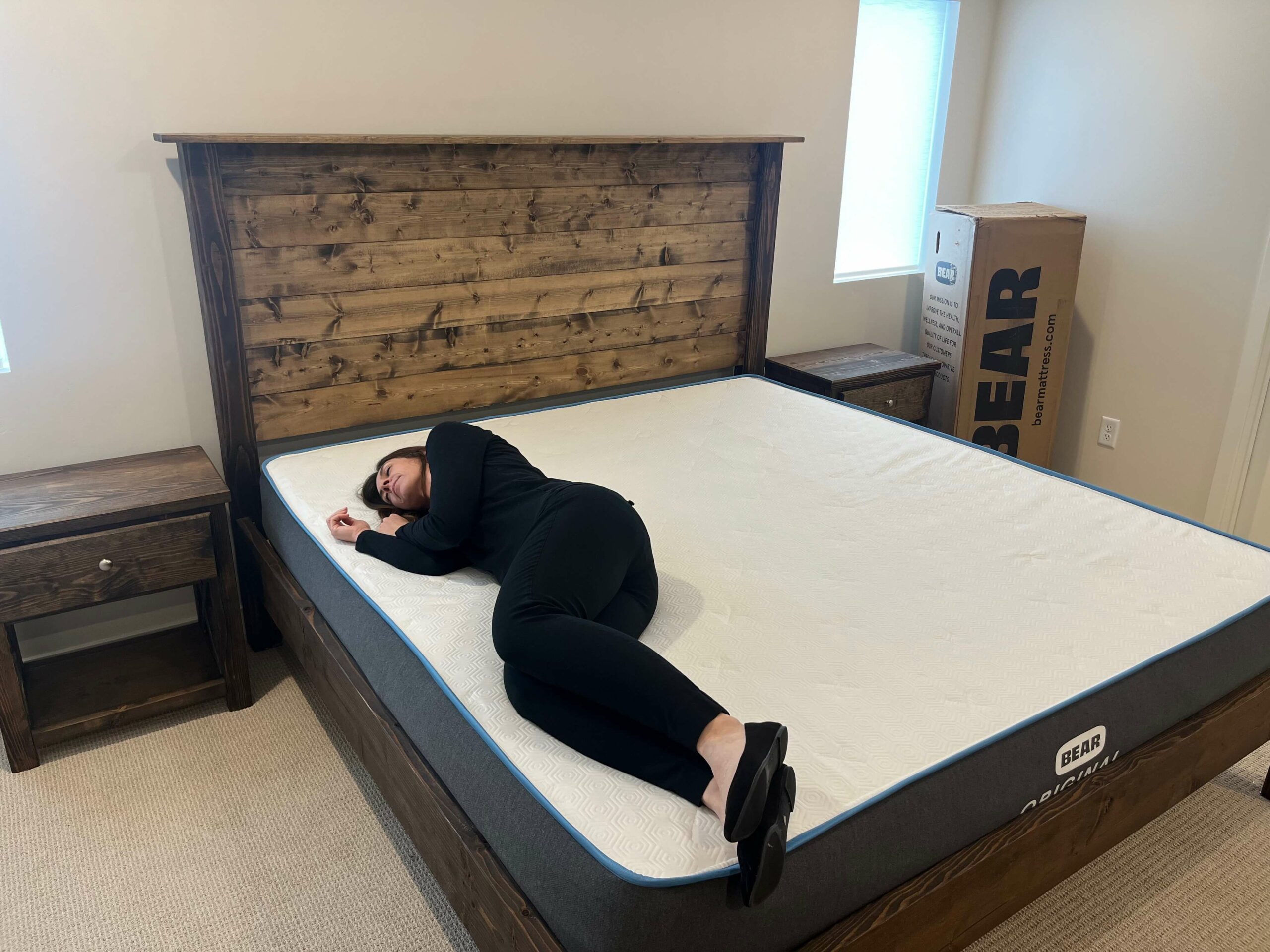
6. Bear Original Mattress
Warranty
Lifetime
Sleep Trial
120 Nights
Shipping
Free
Watch Our Bear Original Video Review
Best Mattress Without Springs for Athletes: Bear Mattress Overview
If you’re looking for the most bang for your buck, check out the original Bear Mattress. The Bear Mattress goes above and beyond the bare minimum to offer you layers of comfort at a competitive price.
- 10 Value
- 10 Edge Support
- 9 Trial Period
- 9 Response Time
- 8 Motion Transfer
- 9 Cooling & Breathability
The Bear earned the athlete-oriented spot because it pairs a firmer, supportive surface with a gel comfort layer that felt cooler on contact than plain memory foam. During testing the medium-firm surface kept my hips lifted in line with my shoulders when I lay on my stomach, and the perimeter held steady when I sat on the edge, so the usable surface stayed wide.
Best For:
- Stomach sleepers who need their hips kept up
- Back sleepers wanting firmer support
- Heavier sleepers who need lift rather than sink
Compare Instead:
- Brooklyn Bedding Plank if you want a firmer, true firm-to-extra-firm surface
- Amerisleep AS3 if you want a softer medium feel
- Casper The One if you want a medium-firm foam feel at a lower price
The Bear is a gently firm mattress, so it offers lots of support and less pressure relief. This makes it a great option for heavier sleepers, stomach sleepers, and others who need lots of lift to keep their spines aligned.
The gel memory foam comfort layer is what kept the surface feeling cooler on contact than plain memory foam while still contouring lightly at the shoulder. The Bear Dynamic transition foam beneath it is the reason the medium-firm surface pushed back under deeper compression rather than letting me sink, which kept my hips lifted in line with my spine when I lay on my stomach. The high-density base is what holds that firmer feel steady and supports the edge when sitting on the perimeter.
Pros
- Value (10/10) and Edge Support (10/10): the perimeter held firm when sitting on the edge, at a competitive price
- Medium-firm surface kept the hips lifted in line with the spine for stomach and back sleeping
- Cooling and Breathability (9/10): the gel comfort layer felt cooler on contact than plain memory foam
Cons
- Motion Transfer (8/10): the lowest sub-score here; a restless partner is more noticeable than on the Leesa Original or AS3
- Firmer feel: too firm for most side and petite sleepers, who should consider the Amerisleep AS3
- Single firmness: no softer option in the lineup
Best Firm Mattress Without Springs:
7. Brooklyn Bedding Plank

Warranty
10 Years
Sleep Trial
120 Nights
Shipping
Free
Watch Our Brooklyn Bedding Plank Video Review
Brooklyn Bedding Plank Firm Overview
Those who want the firmest of the firm mattresses should check out the Plank Firm by Brooklyn Bedding. This firmer mattress offers tons of support without sacrificing all its pressure relief. It’s also flippable, so you can get an extra-firm or even an ultra-firm feel.
- 9 Value
- 10 Edge Support
- 9 Trial Period
- 9 Response Time
- 8 Motion Transfer
- 8 Cooling & Breathability
The Plank took the firm spot because almost nothing else spring-free goes this firm. During testing the firm side kept me fully on top of the surface with no hip dip when I lay on my stomach, and flipping to the extra-firm side removed even the thin top cushion for a flatter, more rigid feel. The perimeter stayed solid when I sat on the edge.
Best For:
- Stomach sleepers who need maximum lift
- Heavier sleepers wanting a firm, supportive surface
- Back sleepers who specifically prefer a firm feel
Compare Instead:
- Bear Original if firm-and-extra-firm is more than you want
- Casper The One if you want a medium-firm rather than a true firm
- Amerisleep AS3 if you want a true medium
With a mattress that has the word “firm” right in its name, the Plank Firm lives up to its moniker. This is an extra-firm mattress, so it’s not suitable for everyone. Those who are heavier and those who sleep on their stomachs will do best on this mattress.
The Plank is flippable, so the build is bookended by two quilted tops over a shared high-density core. On the firmer side, the thin quilted top means almost no cushion sits between you and the base, which is why I stayed fully on top of the surface with no hip dip when I lay on my stomach. Flipping to the extra-firm side removes even that thin layer for a flatter, more rigid feel. The thick high-density base under both sides is what holds the firm support steady and keeps the perimeter solid when sitting on the edge.
Pros
- Edge Support (10/10): the perimeter stayed solid when sitting on the edge
- Flippable firm and extra-firm sides kept the hips fully on top of the surface for stomach sleeping
- Value (9/10): one of the few true firm spring-free beds at this price
Cons
- Too firm for most sleepers: side and average-weight back sleepers should consider the Bear Original or Casper The One
- Cooling and Breathability (8/10) and Motion Transfer (8/10): trail the foam leaders; the optional GlacioTex cover helps cooling but adds cost
- Minimal pressure relief by design; not for sleepers who want cushioning
Best Latex Mattress Without Springs:
8. PlushBeds Botanical Bliss

Warranty
Lifetime
Sleep Trial
100 Nights
Shipping
Free
Watch Our PlushBeds Botanical Bliss Video Review
The PlushBeds Botanical Bliss is the only all-latex, fully spring-free bed in this guide, and it earns the latex spot by delivering the buoyant, breathable feel that foam cannot. There are no coils and no polyfoam comfort layers in it, just certified-organic latex over a latex core.
During testing the Talalay comfort layer pushed back the instant I changed positions rather than holding a shape, so I never felt stuck the way slow memory foam can feel. The organic cotton cover and the breathable latex kept the surface cooler on contact than the foam beds I compared in the same session, which is why latex tends to suit sleepers who run warm.
It comes in medium (6) and medium-firm (7), and the split-king and split-queen sizes let two people choose a different feel on each side. The 6-inch GOLS-certified Dunlop core kept my hips from sinking and held my spine level, while the lighter contouring at the shoulder is gentler than a deep memory-foam hug.
PlushBeds Botanical Bliss mattresses ship free and come with a 100-night sleep trial and a lifetime warranty.
- 7 Value
- 8 Edge Support
- 10 Trial Period
- 8 Response Time
- 10 Motion Transfer
- 9 Cooling & Breathability
The Botanical Bliss took the latex spot because it is the only all-latex, fully spring-free bed in this lineup, and it delivers the buoyant, breathable feel foam cannot. During testing the Talalay comfort layer pushed back the instant I changed positions instead of holding a shape, and the surface stayed cooler on contact than the foam beds I compared because the latex and organic cotton breathe rather than trap heat. When my partner moved, the opposite side stayed quiet, which is why it scored at the top for motion isolation.
Best For:
- Sleepers who want certified-organic natural materials
- Back and combination sleepers who like a responsive, buoyant feel
- Couples (split-firmness sizes let each side pick medium or medium-firm)
Compare Instead:
- Amerisleep AS3 if you want foam contouring instead of latex bounce
- FORM Core if you want strong cooling without the latex price
- Vaya Mattress if you want a budget spring-free bed
Lying down on the Botanical Bliss, the first thing I noticed was the springy, buoyant push of natural latex rather than the slow sink of memory foam. On my back the latex pushed up under my lower back and kept my hips from dropping, and on my side it cushioned the shoulder lightly without swallowing it. The surface released cleanly when I changed positions, and it breathed enough that it never felt like it was holding heat. The medium feel reads softer for side sleepers, while the medium-firm reads sturdier for back and stomach sleeping.
The GOTS-certified organic cotton cover and organic wool layer sit closest to the skin and breathe well, which is part of why the surface stayed cooler on contact than the foam beds I compared. Below them, the natural Talalay latex comfort layer is what gave the surface its quick push-back when I changed positions and its light contouring at the shoulder. Underneath, the 6-inch GOLS-certified organic Dunlop latex core is the dense, durable layer that kept my hips from sinking and held my spine level, and it is the reason the lifetime warranty is credible. The latex layers carry GOLS certification and the cover carries GOTS certification, with GREENGUARD Gold and OEKO-TEX Standard 100 on the finished mattress; it is fiberglass-free and handcrafted in California.
Pros
- Motion Transfer (10/10): a partner’s movement stayed quiet on the opposite side during testing, strong for a latex bed
- Cooling and Breathability (9/10): the latex and organic cotton breathed and stayed cooler on contact than the foam beds compared
- Certified-organic build: GOLS organic latex, GOTS organic cotton and wool, GREENGUARD Gold and OEKO-TEX certified, fiberglass-free; lifetime warranty
Cons
- Value (7/10): the premium-priced pick here; budget shoppers should consider the Vaya Mattress
- Latex contours less than memory foam: deep-contour fans and some side sleepers should consider the Amerisleep AS3
- Not for sleepers with latex allergies
Best Mattress For Kids Without Springs:
9. Nest Bedding Puffin
Warranty
Lifetime
Sleep Trial
30 Nights
Shipping
Free
Watch Our Nest Bedding Puffin Video Review
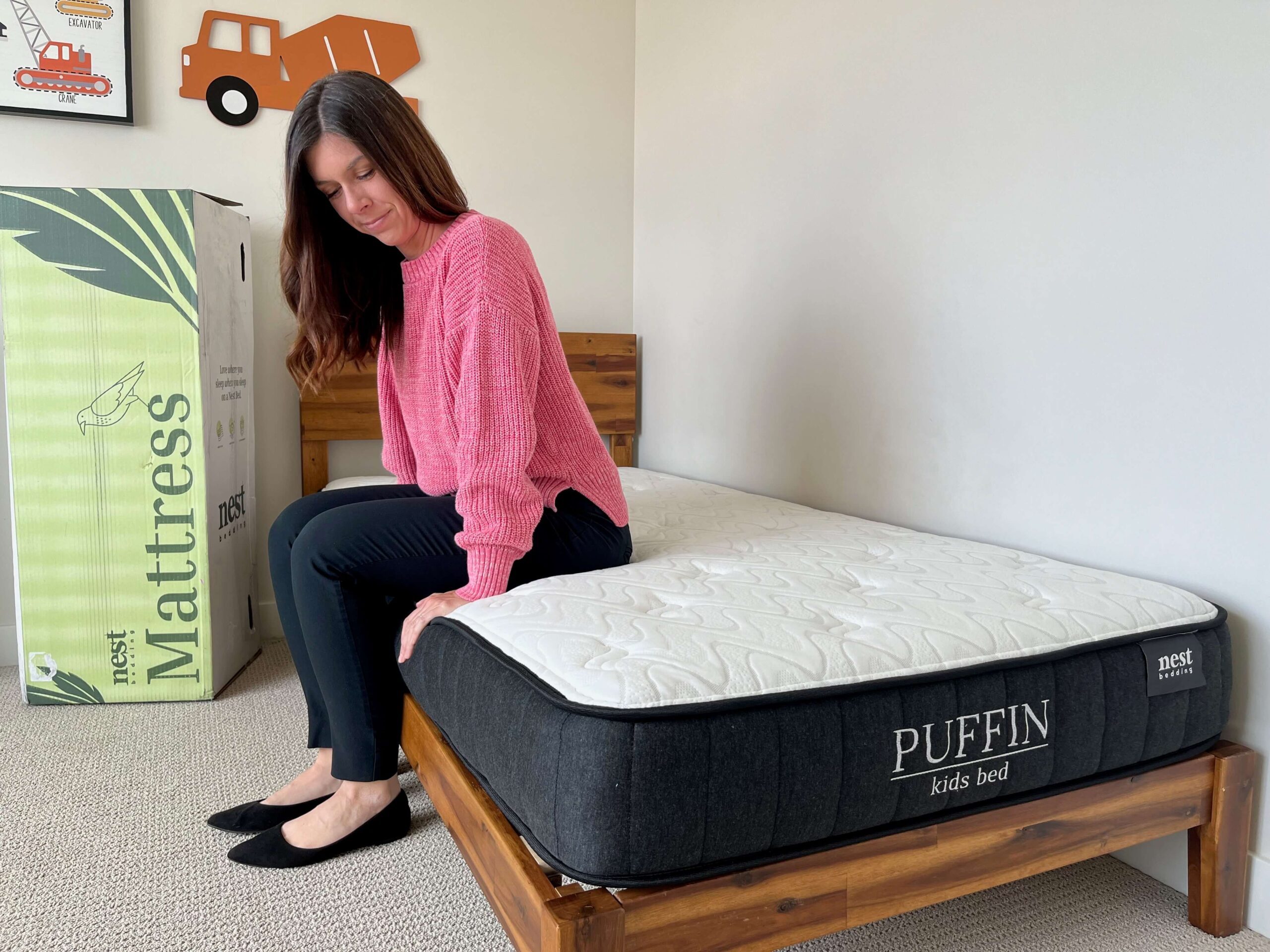
The Nest Bedding Puffin is built specifically for growing kids under 110 pounds, which is what earns it the kids spot among spring-free beds. It is an all-foam mattress with no coils, designed around a firm, supportive surface that keeps a child’s spine aligned as they grow.
During testing the Energex comfort layer sprang back the instant pressure lifted, so a restless child can roll and reposition without fighting slow-recovering foam. The dense support base kept the perimeter firm when I pressed on the edge, which matters because kids tend to sleep and sit near the edge, and the reinforced feel makes rolling off less likely.
At 7 inches tall, the Puffin clears most bunk-bed safety rails and works on trundles and standard frames. Its firm (7 to 8) feel suits back and stomach-sleeping kids best; a dedicated side-sleeping child may want a touch more give as they get older.
The Puffin uses CertiPUR-US certified foams and a non-chemical fire barrier, is fiberglass-free, and is made in the USA. It ships free and comes with a 30-night trial and a lifetime warranty.
- 10 Value
- 9 Edge Support
- 5 Trial Period
- 9 Response Time
- 8 Motion Transfer
- 8 Cooling & Breathability
The Puffin took the kids spot because it is built specifically for growing bodies under 110 pounds, with a firm, supportive surface that keeps a child’s spine aligned. During testing the Energex comfort layer sprang back the instant pressure lifted, so a restless child can change positions without working against slow foam, and the dense base kept the perimeter firm when I pressed on the edge, which keeps an active kid from rolling off. Its slim 7-inch profile also clears most bunk-bed safety rails.
Best For:
- Children and younger teens under 110 pounds
- Bunk beds and trundles needing a slim profile
- Active kids who change positions often
Compare Instead:
- PlushBeds Botanical Bliss if you want a natural-material bed for an older child or teen
- Vaya Mattress if a teen has outgrown a kids bed and needs an affordable adult medium
- Casper The One if a teen near the weight limit needs a full adult mattress
For a kids bed, the Puffin feels firm and stable rather than plush. The Energex comfort layer gives a little at the shoulder and hip but springs back fast, so a child sits more on top of the surface than in it, which is the right call for growing spines. The reinforced edge held steady when I pressed near the perimeter, and the surface stayed neutral in temperature rather than warming up. Lighter kids will feel the firmness most; as a child approaches the 110-pound limit the surface reads a little softer.
The quilted cover carries a phase-change cooling fabric and a thin polyfoam layer that adds a touch of give at the surface, which is why it felt cool to the touch rather than warm. Below it, the 2-inch Energex comfort layer is what gave the surface its quick spring-back when pressure lifted, so a restless child can move without sinking in. The 5-inch high-density open-cell base is the firm, durable layer that kept the perimeter solid under pressure and holds the mattress’s shape over years of use, which is why it suits a growing child. The foams are CertiPUR-US certified, the fire barrier is non-chemical, and the bed is fiberglass-free and made in the USA.
Pros
- Edge Support (9/10): the dense base kept the perimeter firm under pressure, so an active kid is less likely to roll off
- Response Time (9/10): the Energex layer sprang back the instant pressure lifted, easy for a restless child to move on
- Value (10/10): built with adult-grade CertiPUR-US foams at a kids price; 7-inch profile fits most bunk beds
Cons
- Trial Period (5/10): the 30-night trial is the shortest on the page, well under the 100-night-to-lifetime trials elsewhere
- 110-pound weight limit: older or heavier teens should size up to the PlushBeds Botanical Bliss or Casper The One
- Firm (7 to 8) feel: better for back and stomach-sleeping kids than dedicated side-sleeping kids
Best Medium/Firm Mattress Without Springs:
10. Casper "The One"
Warranty
10 Years
Sleep Trial
100 Nights
Shipping
Free
Watch Our Casper “The One” Video Review
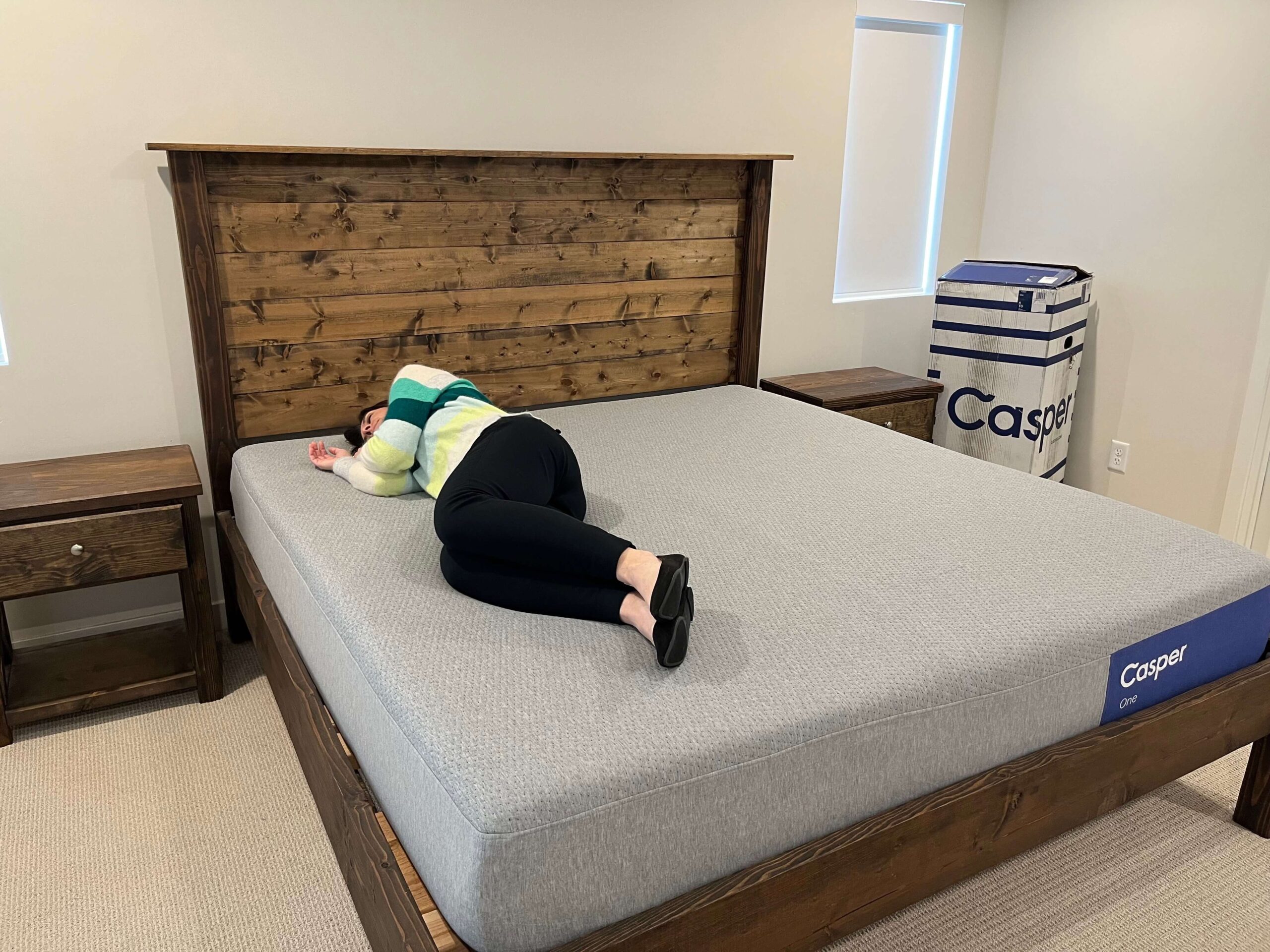
Casper The One is an all-foam, fully spring-free mattress built on four layers, and it earns the medium-firm spot for landing a supportive feel most back and stomach sleepers can settle into. There are no coils, just a ventilated cover over foam layers tuned for support first.
During testing the Align memory foam relieved pressure at my shoulder while the high-density Casper Core base kept my hips from sinking, so my spine stayed level on my back. When my partner moved, the opposite side barely registered the movement, which is why it scored at the top for motion isolation. The Breathe Flex open-cell layer kept the surface from warming up as fast as the denser foam beds I compared.
The feel reads firmer than a true medium, so it suits sleepers roughly 130 to 230 pounds who want a supportive surface. Lighter side sleepers may find it firm at the shoulder and hip, and combination sleepers will notice a slight lag in how quickly the foam recovers.
Casper The One is CertiPUR-US certified and fiberglass-free. It ships free with a 100-night trial and a 10-year warranty.
- 8 Value
- 7 Edge Support
- 9 Trial Period
- 7 Response Time
- 10 Motion Transfer
- 8 Cooling & Breathability
Casper The One took the medium-firm spot because its four-layer foam build lands a supportive medium-firm that most back and stomach sleepers can settle into. During testing the Align memory foam relieved pressure at the shoulder while the high-density Casper Core base kept my hips from sinking, so my spine stayed level on my back, and when my partner moved the opposite side barely registered. The Breathe Flex open-cell layer kept the surface from warming up as fast as denser foam.
Best For:
- Back and stomach sleepers between roughly 130 and 230 pounds
- Couples who want strong motion isolation in a foam bed
- Sleepers who want a firmer, well-supported medium-firm feel
Compare Instead:
- Amerisleep AS3 if you want a softer, more contouring foam
- Vaya Mattress if you want a softer medium or better value
- Brooklyn Bedding Plank if you want a genuinely firm surface
Lying down on Casper The One, the surface reads firm and supportive rather than plush, with only light give before the support layers take over. On my back the foam relieved pressure at the shoulder while keeping my hips lifted and my spine level, and on my stomach the firmer support kept my midsection from bowing. There is a slight pause as the foam recovers when I change positions, so combination sleepers will notice it is not a fast, springy surface. It feels firmest for lighter sleepers and settles into a true medium-firm for average-weight back and stomach sleepers.
The knit Cozy Cover and the Breathe Flex open-cell layer beneath it are what kept the surface from warming up as fast as denser foam, which helps sleepers who run a little warm. Below that, the Align memory foam is the layer that relieved pressure at my shoulder and hip, while the high-density Casper Core base is what kept my hips from sinking and held my spine level on my back, which is what gives the bed its medium-firm support and its durability. The foams are CertiPUR-US certified and the build is fiberglass-free.
Pros
- Motion Transfer (10/10): partner movement barely registered on the opposite side during testing
- Cooling and Breathability (8/10): the Breathe Flex open-cell layer kept the surface from warming up as fast as denser foam
- Align memory foam relieved shoulder pressure while the high-density Casper Core kept the hips from sinking; CertiPUR-US certified, fiberglass-free
Cons
- Edge Support (7/10): the perimeter compresses noticeably when seated, so the Zoma Start or Bear Original holds the edge better
- Response Time (7/10): a slight lag combination sleepers will notice; the Vaya Mattress or FORM Core recover faster
- Single firmness (medium-firm) and best for 130 to 230 lb: lighter side sleepers may find it firm, so consider the Amerisleep AS3
The Mattresses We Have Tested
Every mattress below was tested hands-on and on camera by me, Kristina Hindes, our lead tester. Each row links to its written review and filmed test, so you can check our work. For how we score every mattress, see How We Test Mattresses.
See the full list, with review and video links
| Mattress | Review and video |
|---|---|
| Amerisleep AS2 | Review · Video |
| Amerisleep AS3 | Review · Video |
| Amerisleep AS3 Hybrid | Review · Video |
| Amerisleep AS5 | Review (test clips inside) |
| Amerisleep AS5 Hybrid | Review · Video |
| Amerisleep AS6 Black Series | Review · Video |
| Amerisleep Organica | Review · Video |
| Amerisleep Organica Plush | Review · Video |
| Bear Original | Review · Video |
| Birch Natural | Review · Video |
| Brooklyn Bedding Aurora Luxe Hybrid | Review · Video |
| Brooklyn Bedding Plank Firm | Review · Video |
| Casper The One | Review · Video |
| Eco Terra Hybrid Latex | Review · Video |
| FORM Core | Review · Video |
| FORM Core Hybrid | Review · Video |
| FORM Prime | Review · Video |
| FORM Prime X | Review · Video |
| GhostBed Flex | Review · Video |
| Happsy Organic | Review · Video |
| Helix Dawn Luxe | Review · Video |
| Helix Midnight Luxe | Review · Video |
| Helix Sunset Luxe | Review · Video |
| Latex For Less Hybrid | Review · Video |
| Leesa Original | Review · Video |
| Leesa Sapira Chill Hybrid | Review · Video |
| Leesa Sapira Hybrid | Review · Video |
| Naturepedic Concerto | Review · Video |
| Naturepedic EOS Classic Organic | Review · Video |
| Nest Bedding Owl | Review · Video |
| Nest Bedding Puffin Kids | Review · Video |
| Nest Bedding Raven | Review · Video |
| Nest Bedding Sparrow Signature Hybrid | Review · Video |
| Nolah Evolution 15 | Review · Video |
| Nolah Natural 11 | Review · Video |
| Nolah Original Hybrid | Review · Video |
| PlushBeds Botanical Bliss | Review · Video |
| PlushBeds Luxury Bliss | Review · Video |
| PlushBeds Organic Bliss | Review · Video |
| PlushBeds Organic Kids | Review · Video |
| PlushBeds Signature Bliss | Review · Video |
| Saatva Classic | Review · Video |
| SweetNight CoolNest | Review · Video |
| SweetNight Prime | Review · Video |
| Vaya Hybrid | Review · Video |
| Vaya Mattress | Review · Video |
| Westin Heavenly Bed | Review · Video |
| Zoma Boost | Review · Video |
| Zoma Hybrid | Review · Video |
| Zoma Start | Review · Video |
How to Choose the Best Mattress Without Springs
Even if you have already decided that you do not want a spring mattress, whether an innerspring or hybrid mattress, you still have a lot of other decisions to make. You need to choose which material is best for your needs. You need to choose a firmness level. And you’ll need to find all this at a price that fits your budget.
Don’t let this search for the best mattress for your needs seem daunting. We have already outlined all you need to know below about non-spring mattresses.
Ideal Mattress Materials Without Springs
If you’re looking for a mattress with no springs, the overwhelming majority of these mattresses will be made of foam. You will find some foam alternatives, which we will discuss below, but foam beds make up the lion’s share of the coil-free mattresses on the market today.
This may not always be the case, as sleep technology and mattress types are always evolving. The type of mattresses available today may not be the same in five or 10 years.
Right now, you have one of two options when it comes to foam mattresses: memory foam and natural latex. Each of these foam types has its own strengths and weaknesses, and your sleep needs will most impact which type of all-foam mattress you should purchase.
Memory Foam
Memory foam mattresses have a lot going for them. These flexible mattresses feature polyurethane foam to make them the most adaptable on the market.
Most memory foam mattresses can contour in a way that no other mattress type can. They follow the curve of your body to take your shape no matter what position you adopt during sleep. This can go a long way to keeping your spine aligned and your body free from pressure that can cause pain.
Memory foam is also one of the most affordable materials on the market, coming in at barely over a thousand dollars for a queen size memory foam mattress. Despite its affordability, memory foam is also quite durable. It is not the most durable material available, but it is among them. You can expect it to last at least a decade, up to two decades.
Memory foam mattresses are also some of the easiest mattresses to move. They are lighter than latex mattresses and can easily flex and move during transport. It’s also possible to compress memory foam mattresses at home with relative ease. This can be great for people who switch apartments or houses a lot, and it is something to consider.
The main problems with memory foam mattresses are their inferior ability to shed heat and their slow response time. Memory foam is a synthetic foam, and that means it is not as breathable as natural foam and fibers. It tends to retain heat much more than these materials.
This may not be a big issue for those who don’t sleep hot, but if you are a hot sleeper, it can be a problem for you. The good news is that there are several modifications now on the market to make memory foam mattresses much cooler. You can find a copper or graphite infused mattress with memory foam cushion, for example.
Also, memory foam has a hard time bouncing back under you when you move. This means it is more prone to body impressions than latex, though high-density memory foam is less prone to this. Most people probably won’t notice this, but if you like to toss and turn at night, you might. However, memory foam can also establish some of the best mattresses for motion isolation, which many couples love.
Gel Memory Foam
To make gel memory foam different from memory foam, manufacturers add infusions of thermally conductive gel into the liquid foam to make it better at shedding heat. Most of this gel is either thermal gel that stays cool to the touch or phase-changing gel that changes from solid to liquid in response to heat. Both of these types of gel keep the sleep surface cool by drawing heat away from your body.
You can find a variety of gel memory foam mattresses. Some types feature swirls of gel in the foam. Some have gel microbeads to increase breathability as well as thermal conductivity. Some even have a pure gel layer on top of the foam to create a pleasantly chilly effect.
Mineral-Infused Memory Foam
Some memory foam mattresses use minerals such as graphite or copper to increase their cooling power. In addition to being thermally conductive, mineral infusions have an extra benefit: they’re hypoallergenic.
Not only do they draw heat away from your body. Copper and graphite also create a hostile environment for a wide variety of microbes, like mold, mildew, bacteria, and dust mites. This means minerals can establish better mold-resistant mattresses and keep your bed free from odors and pests as well as cool to the touch.
Plant-Based Memory Foam
A newer sleep technology, plant-based memory foam trades some of the petroleum-based ingredients in traditional memory foam for plant-based ones. This keeps the mattress cool by making it more breathable rather than more thermally conductive. It also has the added benefit of making the sleep surface more responsive – closer to latex than regular memory foam.
Plant-based memory foam mattresses are also better for the environment because they are more sustainable to make and produce less toxic waste than traditional memory foam manufacturing.
Latex Foam
Natural latex comes from the sap of the rubber tree. The liquid sap is purified and whipped into a foam that is baked to solidify it into one of the best mattress materials on the planet. Latex is everything that memory foam is not.
Where memory foam has a hard time shedding heat, natural latex breathes throughout the night. Where memory foam is slow to respond, a latex mattress bounces back as soon as you move. Where memory foam is synthetic, made entirely of petroleum ingredients, latex is made entirely of plant materials and can even be certified organic.
Latex also establishes some of the most durable mattresses in existence. It will outlast every mattress with or without springs because you can expect an average all-latex mattress to take no fewer than 20 years to break down. Many natural latex mattresses last even longer.
There is a price to be paid for all this comfort and durability – and you’ll pay it upfront. Latex costs more than any other mattress type on average. Its durability means it becomes less expensive over time, as one of the benefits of latex is its long-lasting value, but it will hurt your wallet when you first purchase it.
Certain sleepers who need extra pressure relief should also be aware that latex gets its springiness and buoyancy from its tendency to retain its shape. While it can contour well, it cannot contour as well as memory foam. This means side sleepers and petite sleepers should take this into account when selecting the firmness of their latex mattresses and considering mattresses for pressure points.
Dunlop Latex
There are two types of latex foam: Dunlop and Talalay. Of the two, Dunlop is the most durable, the most eco-friendly, the most affordable, and the densest. This is all thanks to the simpler manufacturing process that only has a few steps and does not require a lot of energy and resources.
Dunlop latex has a wonderful feel for those who want tons of buoyancy. This latex type is the most supportive, and it can keep you lifted onto the sleep surface regardless of its firmness.
This means if you want a soft mattress that can fight sinkage, Dunlop latex may be the best option for you. Dunlop is also an amazing option for those who do not want to replace their mattresses very often, as it is the most durable of the latex types.
If you want an organic mattress, Dunlap latex is also your only option. Talalay latex has several steps that prevent it from becoming certified organic. Since Dunlop does not undergo these steps during the manufacturing process, it can be a certified organic latex mattress.
Talalay Latex
Talalay latex is for those who want a mattress with the responsiveness and breathability of latex and the contouring of memory foam. This type of latex is not as dense as Dunlop. This makes it more contouring and more pressure relieving, closer to the feel of memory foam. But a Talalay latex mattress retains the springiness and breathability of natural latex.
This type of latex is a good alternative for side sleepers and petite sleepers who need the pressure relief of memory foam but also want a mattress that can bounce back underneath them and breathe better than any memory foam mattress can. It is the lightest, springiest, and most breathable type of mattress foam.
Foam Alternatives
While the overwhelming majority of the mattresses without springs on the market are foam, there are some alternatives to foam that can work if you want to avoid both memory foam and natural latex. However, you need to be aware that you will have much more limited options when seeking mattresses without memory foam or latex.
Many of the common options are simpler floor mattresses that are mat-like futons, which may not be the most comfortable mattress for your needs. You will also potentially be paying much more for a high-quality fiber or air mattress.
Air Chambers
When you hear the words “air mattress,” you probably think of the low-quality, unsupportive air bed you blow up when you go camping or bring out for guests staying a few nights. However, modern air beds that are designed to be slept on every night have a lot more structural support and function than your average camping bed or RV mattress.
Most of the time, you purchase an air mattress for one feature: adjustable firmness. Most mattresses that feature adjustable firmness use vulcanized air chambers that have an attached pump that can push air in and pull it out. This can change the mix of support and pressure relief of the sleep surface at the touch of a button.
If you are interested in the ability to change your mattress’s feel from one night to the next, a modern air mattress may be right for you. And many models do not need a base, establishing comfortable floor mattresses.
Woven Fibers
When it comes to fiber mattresses, you have a few options. Of course, these might be a little unconventional in this day and age, although they would have been much more common before the industrial revolution. Things like cotton, wool, and feathers are still used to make alternative mattresses today.
You will just need to ensure you have adequate support underneath the mattress because these natural fibers tend to have a lot of pressure relief and not a lot of support. This means you will want to use a bunkie board with a platform bed frame or mattress foundation for solid support underneath your plush fiber mattress.
A brand-new offering that has only been available for a few years is airfiber. Airfiber is a unique proprietary Airweave mattress design that uses interwoven fibers to create a highly supportive and extremely breathable sleep surface.
This is a newer sleep technology, so the jury is still out as to whether it will overtake foam in popularity. As of now, it is much more expensive than foam, but that may not always be the case.
Ideal Mattress Firmness Without Springs
Even if you have decided to get a mattress without coils, you’ll still need to choose a firmness. You should decide your mattress firmness level based on your sleep position and body type, not your personal preferences alone.
All mattresses measure their firmness on a scale of one to ten, with one being the softest. Most mattress firmness levels fall between a three and an eight on this firmness scale because there is no market for mattresses with no support or no pressure relief.
This means if you need a soft mattress, you will be getting a three, and if you need a firm or extra-firm mattress, that will come in around a seven or an eight.
Sleep Position
Your sleep position is the main factor that decides the mattress firmness that you need. The position you adopt during sleep decides how your body contacts the bed, where your pressure points are, and how much support you need to keep your spine aligned.
This means you should choose your firmness baseline by the way you sleep. Your body weight may or may not be a factor, but you will go up or down from the baseline you chose to match your sleep style.
Back Sleepers
Back sleepers tend to have a couple of different problems when they sleep on the wrong mattress firmness level. When you sleep on your back, you need a mattress that can fight sinkage to keep you lifted on top of the sleep surface. At the same time, mattresses for back sleepers must follow the curve of your back to ensure your spine stays in neutral alignment.
If you get a mattress that’s too firm, it will not follow the curve of your spine and can let your lumbar region collapse onto the sleep surface. On the flip side, mattresses that are overly soft can allow your body to sink, bending you forward and letting you sleep in a hunched position. Either of these issues can cause back pain, so the best mattresses for back sleeping must establish a balanced feel.
For all these reasons, back sleepers need mattresses that come in at around a six on the firmness scale, which would be medium-firm. Medium-firm mattresses provide the right balance of support and pressure relief to keep back sleepers’ spines aligned.
Combo Sleepers
Combination sleepers don’t have a strong preference for any single sleep position. Instead, they may adopt any sleeping position at any point during the night. This can make finding the ideal mattress for combination sleeping a little tricky. Combo sleepers need mattresses that can accommodate every sleep position.
Medium mattresses (5 of 10) are the most versatile mattresses and are typically best for combination sleepers. They offer an even balance between support and pressure relief, and they can adequately accommodate all sleep positions. This, incidentally, makes medium beds fantastic mattresses for guest rooms as well as combination sleepers.
Side Sleepers
Side sleepers tend to have problems with inadequate pressure relief. This is because sleeping on your side causes your body weight to press your hip and shoulder joints into the sleep surface. A firmer sleep surface will push back, and this pressure can lead to pain in your pressure points. This is why softer mattresses for side sleeping are needed.
For most side sleepers, a medium-soft mattress (4 of 10) offers sufficient pressure relief without sacrificing too much support, though many may prefer a medium or a true soft feel. That way, you can enjoy cushioning and cradling in a proper mattress for side sleeping without having to deal with sinkage.
Stomach Sleepers
Stomach sleepers need the firmest mattresses of all. When you sleep on your stomach, it causes your pelvis to sink into the sleep surface. This can overarch your spine and leave you with pain in your lower back. The best way to combat this issue is by getting a mattress for stomach sleeping that can keep your pelvis lifted and in line with the rest of your body.
Firm mattresses (7 of 10) fit this bill the best. These mattresses for stomach sleeping offer lots of lift to ensure that you stay on top of your mattress and do not sink down. This can help keep your back pain-free even though you sleep in a position that is harder on your spine.
Body Type
Though your sleep style is the main determinant of your firmness needs, your body weight may factor in as well. If you fall outside what the mattress industry has deemed the average human weight range (130 to 230 pounds), you may have to go up or down from the firmness level that matches your sleep style.
If you fall into this weight range, however, you don’t need to do anything. Just pick a non-spring mattress with the firmness level that corresponds to your preferred sleeping position.
Petite Sleepers
Petite sleepers weigh less than 130 pounds. When you are lighter weight, you tend to have problems with inadequate pressure relief. This means that, in most cases, you should go down a firmness level from the one that corresponds to your sleep position when looking for mattresses for lightweight sleepers. For example, a petite stomach sleeper would likely need a medium-firm mattress rather than a truly firm one.
Plus-Size Sleepers
Plus-size sleepers tend to have the opposite problem as petite sleepers. If you weigh more than 230 pounds, you tend to have problems with sinkage and inadequate support. This means the best thing you can do is go one firmness level up from the one that matches your sleep position.
Going up a level when browsing mattresses for heavy sleepers will give you enough support to ensure you don’t sink into your sleep surface and lose spinal alignment.
Do I Need a Spring Mattress for Edge Support?
It’s true that spring mattresses typically offer better edge support compared to most coil-free mattresses, such as foam or latex mattresses. The coils in a spring mattress provide a firm and supportive edge, allowing you to sit or sleep comfortably near the edges without feeling like you might roll off.
If you tend to sit or sleep near the edge of the bed frequently, a spring mattress can provide the necessary support and prevent sagging or sinking. Or if you need a mattress for seniors, edge support can make it easier for people with mobility issues to move out of bed. In these cases, a high-quality spring mattress can offer better stability and make it easier for you to maneuver.
However, it’s important to note that advancements in mattress technology have led to the development of foam mattresses with enhanced edge support features. Some foam mattresses now include reinforced edges or specialized foam layers that provide better edge support, even comparable to traditional spring mattresses.
Saving on New Mattresses
- MLK Day Mattress Sales
- Sleep Awareness Week Mattress Sales
- Presidents Day Mattress Sales
- Memorial Day Mattress Sales
- 4th of July Mattress Sales
- Labor Day Mattress Sales
- Columbus Day Mattress Sales
- Black Friday Mattress Sales
- Cyber Monday Mattress Sales
FAQs
What is the best mattress without springs?
In our testing, the Amerisleep AS3 was the strongest spring-free pick overall for its balance of support, pressure relief, responsiveness, and cooling in a coil-free build. Hot sleepers who want passive cooling did best on the FORM Core, budget shoppers on the Vaya Mattress, sleepers who want natural materials on the PlushBeds Botanical Bliss, and kids on the Nest Bedding Puffin.
How much should I pay for a mattress without springs?
You can pay anywhere from a few hundred to several thousand dollars for a mattress without springs, depending on the type of mattress you get. Most mattresses without springs are made of foam, and even foam has a wide range of prices.
Memory foam mattresses are by far the most affordable option when it comes to mattresses without springs. Memory foam mattresses are, on average, around $1,100 for a queen. This is a highly affordable mattress when you consider that memory foam will last anywhere between one and two decades.
If you want a natural latex foam mattress, you will be paying a lot more. Natural latex is about $2100 for a queen, on average. However, when you consider the fact that a natural latex mattress will last at least 20 years, if not longer, it’s easy to see that it will recoup some of its affordability over time despite its high initial price.
Which is better, memory foam or latex foam?
It’s hard to say which material is better because different people require different attributes. If you want breathability and lots of responsiveness, then natural latex is probably the best fit for you. Latex is highly breathable and can keep you cool. It can also spring back into place as soon as you move. This makes it the perfect option for active sleepers and hot sleepers.
Sleepers who do not move around and don’t sleep hot could consider memory foam. Memory foam is not as responsive or cooling as latex, but it is much more affordable and much more contouring. This means if you are shopping on a budget or need extra pressure relief, memory foam may be a much better option for you.
Are spring mattresses unhealthy?
There are healthy and unhealthy spring mattresses out there, depending on their design. The best spring mattresses on the market are hybrids. Hybrid mattresses feature pocketed coils in their support layers, unlike the open coils of traditional innerspring mattresses.
This means they feature individually wrapped coils in foam or fabric cases, which makes hybrid support cores much more contouring and motion-isolating. This can offer you the support you need to keep your spine aligned and your body free from pain. Hybrid mattresses are very healthy as a general rule.
The weakest spring mattress type is the open-coil innerspring. These traditional mattresses use coils networked together with steel cables, which transfer motion and do little to contour to the body. They tend to score lower on spinal alignment and durability than pocketed-coil hybrids or foam beds, which is why most of our top picks are spring-free designs.
What are the advantages of mattresses without springs?
There are many advantages to mattresses without springs. Potentially the biggest advantage is that these mattresses are almost universally more durable, no matter their material. Springs lose tension and break down much faster than foam and textiles. While pocketed coils last a lot longer than open coils, no coil support layer will last as long as base foam.
Motion isolation is another big bonus with spring-free mattresses. Open coils, especially, transfer motion. But base foam is almost never prone to motion transfer. This makes foam mattresses and other mattresses without springs better options for couples who tend to wake each other up at night.
How do I know if a mattress without springs is right for me?
If you want a highly durable mattress, an affordable mattress, a natural mattress, or even a mattress that is better at motion transfer control, a spring-free mattress could be for you.
Mattresses without springs have a lot to offer those who are shopping on tighter budgets or don’t want to replace their mattresses very often. With all the options on the current market, mattresses without springs can be perfect for just about anyone!
Bottom Line
Mattresses without springs can be wonderful options for those looking for affordability, durability, and an all-around amazing feel. Just make sure you’re doing a little research so that you can get the type of foam or fiber that fits your needs best. That way you can choose the right mattress and rest easy every night!
Related Reads
- I Tested 50+ Mattresses to Find the 14 Best Mattresses for Piriformis Syndrome of 2026

- I Tested 50+ Mattresses to Find the 14 Best Mattresses for Neuropathy of 2026

- I Tested 50+ Mattresses to Find the 14 Best Mattresses for Kyphosis of 2026

- I Tested 50+ Mattresses to Find the 14 Best Mattresses for Anterior Pelvic Tilt of 2026