I Tested 50+ Mattresses to Find the 13 Best Mattresses For Heavy People of 2026

Top Recommendation of 2026: Amerisleep AS5 Hybrid
After testing 50+ mattresses for this guide, the Amerisleep AS5 Hybrid earned my top pick as the best mattress for heavy people of 2026 for pairing deep pressure relief with hybrid support that held up under higher body weight. During testing on my side, my hips and shoulders settled into the Bio-Pur comfort layer without the sharp shoulder pressure I felt on firmer beds I compared, while the zoned pocketed coils kept me from sinking through to the base. When I rolled onto my back the surface read softer than I wanted for long stretches, which is the honest tradeoff for that plush contour.
The AS5 Hybrid fits heavier side sleepers who want cushioning at the shoulders and hips, plus-size sleepers who bottom out on softer all-foam beds, and warm sleepers who want a surface that felt cooler to the touch than the denser foam beds I compared. Its balance of contouring and coil support is what set it apart as the top overall pick in this guide.

Every mattress featured on Sleep Junkie is evaluated using the same testing framework for support, pressure relief, cooling, motion isolation, edge support, responsiveness, and overall value. Learn How We Test Mattresses.
- Best Overall: Amerisleep AS5 Hybrid
- Best Purple Alternative: FORM Prime
- Best Luxury: Zoma Boost
- Best Budget: Vaya Hybrid
- Best For Side Sleepers: Helix Midnight LUXE
- Best Innerspring: Saatva Classic
- Best in a Box: Leesa Sapira Chill
- Best Pillow Top: Nolah Evolution
- Best Natural: Amerisleep Organica
- Best For Couples: Nest Bedding Sparrow Hybrid
- Best Latex: PlushBeds Botanical Bliss
- Best Cooling: Brooklyn Aurora Luxe
- Best Hybrid: GhostBed Flex
- Best Firm: Plank by Brooklyn Bedding
The best mattress for heavy people is a thick, supportive build that holds weight without sagging, and in my testing the strongest options were coil hybrids, reinforced innersprings, and dense latex beds rated medium-firm to firm. I tested 50+ mattresses and scored each on support, pressure relief, cooling, motion isolation, edge support, responsiveness, and value to build this list of 13 picks.
Heavier sleepers have specific needs: enough support to keep the spine level, edge strength to use the full surface, and materials that resist breakdown under sustained weight. Below, I break down each pick by who it fits best, from heavier side sleepers who need pressure relief to back and stomach sleepers who need firm, flat support.
Best Mattresses for Heavy People
Best Mattress Overall
1. Amerisleep AS5 Hybrid



Warranty
20 Years

Sleep Trial
100 Nights

Shipping
Free
Watch Our AS5 Hybrid Video Review
I reach for the Amerisleep AS5 Hybrid first for heavier side sleepers because it pairs a genuinely soft surface with coil support that held up under my weight. On my side, the Bio-Pur comfort layer let my shoulder and hip settle in without the hard stop I felt on firmer beds I compared, and the zoned pocketed coils pushed back enough that I never touched the base.
Despite the soft rating, it did not swallow me. The Active Flex layer kept the surface responsive, so I did not get the stuck feeling I get on slower all-foam beds when I change positions. The coils firmed up most under my hips and lumbar, which is where a heavier body needs the lift.
Through the first hours of the night the surface read cooler to the touch than the denser foam beds I compared, which matters for a heavier sleeper who runs warm. The tradeoff is honest: on my back the same softness let my hips drift a little lower than I wanted, so this is a contouring bed first and a flat-support bed second.
For a heavier sleeper who wants plush pressure relief without bottoming out, the AS5 Hybrid earned the top spot in my testing.
- 8 Value
- 9 Edge Support
- 9 Trial Period
- 8 Response Time
- 9 Motion Transfer
- 10 Cooling & Breathability
I picked the AS5 Hybrid because it delivers the plush pressure relief heavier side sleepers usually can’t get without bottoming out on an all-foam bed. During testing on my side, my shoulder and hip pressed into the Bio-Pur layer and settled without the hard stop I felt on firmer picks here, while the zoned pocketed coils pushed back enough that I never touched the base. When I switched to my back the same softness that helped my side let my hips drift lower than I wanted, so this is a contouring bed first and a flat-support bed second. That soft top also read cooler to the touch through the first hours than the denser foam beds I compared, which helps a heavier sleeper who runs warm.
Best For:
– Heavier side sleepers who want cushioning at the shoulders and hips
– Plus-size sleepers who sink too far into softer all-foam beds
– Warm sleepers who want a soft surface that does not trap heat on contact
Compare Instead:
– Plank by Brooklyn Bedding if you sleep on your back or stomach and need a flat, firm surface
– Saatva Classic if you want the same plush feel with more lift and easier repositioning
When I first lay down on the AS5 Hybrid, the immediate sensation was deep, cushioned softness. On my side, the bed cradled my hips and shoulders and took the pressure off the joints that usually ache on firmer surfaces, and the Bio-Pur layer hugged me without letting me sink to the base.
On my back the feel changed. The contouring was still there, but the surface read softer than I want for long stretches of back sleeping, and my hips settled a little low. A heavier back sleeper who wants firm lumbar lift will notice that. If you like a plush surface with gentle contour it works, and if you want a flat platform it will feel too soft.
On my stomach the softness was more noticeable again. I could feel my hips starting to sink, and a heavier stomach sleeper would likely want a firmer bed to keep the spine flat.
Cooling was a bright spot. Through the first hours the surface stayed cool to the touch and I did not get the heat buildup I feel on denser foam beds, which held up better than I expected for a soft bed.
In short, the AS5 Hybrid feels like a plush, pressure-relieving surface built for side sleepers who run warm. It is too soft for dedicated back or stomach sleepers, but for cushioned side sleeping it is the most comfortable bed I tested for this guide.
The Bio-Pur comfort layer is what let my shoulder and hip settle in on my side without the hard stop I felt on firmer beds, and it read cooler to the touch through the first hours than the denser foam beds I compared. Under it, the Active Flex layer kept the surface responsive, so when I changed positions I did not feel stuck in a hole the way I do on slower foams. The zoned pocketed coils did the real support work for a heavier body: they held my hips level and kept me from sinking through to the base, and the wrapping muted my partner’s movement on the far side. The foam foundation under the coils kept the whole build stable. That layer stack is why the AS5 stays plush on the side while still supporting weight.
Pros:
- Cooling & Breathability (10/10): the Bio-Pur surface felt cooler to the touch through the first hours than the denser foam beds I compared.
- Pressure relief: on my side my shoulder and hip settled in without the hard stop I felt on firmer picks here.
- Motion Transfer (9/10): the zoned wrapped coils muted my partner’s movement on the far side.
Cons:
- Firmness fit: at 3 to 4 out of 10 it read too soft under my hips when I moved to my back, so heavier back and stomach sleepers who need a flat surface should consider a firmer pick.
- Response Time (8/10): the plush build recovers a beat slower than the coil-heavy picks, so frequent repositioners notice more lag.
- Value (8/10): priced above the budget picks here for a soft-focused feel.
Why The Amerisleep AS5 Hybrid Won
Among the 50+ mattresses I tested for this guide, the AS5 Hybrid stood out for pairing the deepest pressure relief on the page with coil support that held up under higher body weight. On my side, my shoulder and hip settled in without the hard stop I felt on firmer picks, while the zoned coils kept me from sinking to the base. For heavier side sleepers who want plush contour without bottoming out, it earned the top spot.
Watch Our FORM Prime Video Review
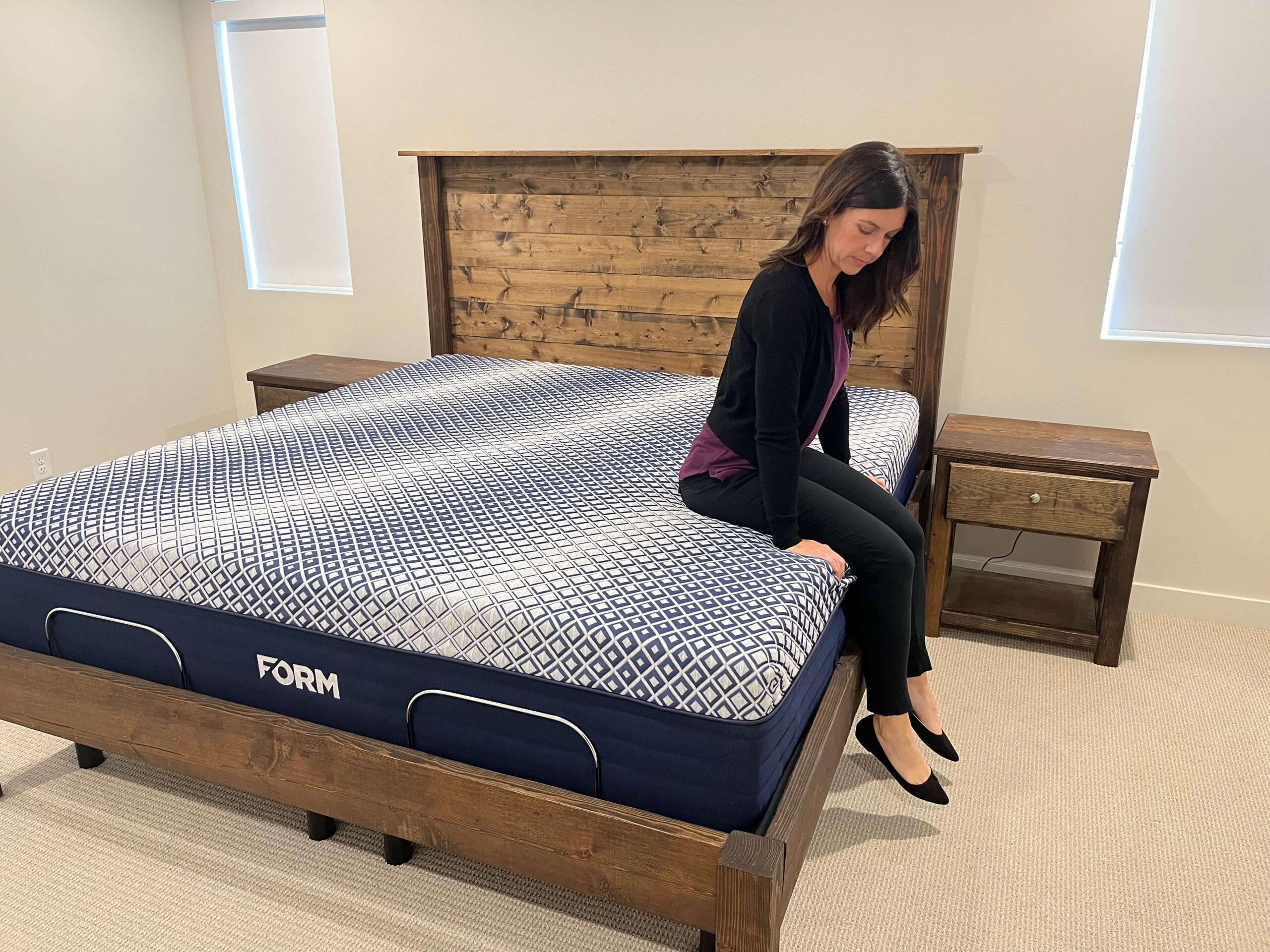
The FORM Prime is a 14-inch premium hybrid with a gel grid surface, and it earns a spot here for its support structure than for a plush contour. The parts that matter are the coil core and the perimeter.
Its ZoneCoil™ 7-Series base splits into seven zones that run firmer through the hip and lumbar, and that zoned coil support sitting under the comfort layer is the kind of build that keeps a spine level rather than letting the hips drop.
The BaseFlex™ foam encasement reinforced the edge in testing, holding firm where softer-edged beds give way, which keeps the full surface usable.
On feel, the FORM Prime is a zoned medium: softer at the shoulder (around 4.5 out of 10) and firmer through the lumbar (around 7 out of 10). During testing the GelGrid™ flexed right at the pressure points and held firm elsewhere, giving responsive contouring closer to quality latex than to foam.
It scored top marks for responsiveness, motion isolation, and edge support, and it suits side and combination sleepers best.
Who should consider something else: heavier back and stomach sleepers who need a very firm, flat platform will find the grid too giving, and shoppers set on all-natural materials or a lower profile will want a different pick here.
- 8 Value
- 10 Edge Support
- 10 Trial Period
- 9 Response Time
- 10 Motion Transfer
- 9 Cooling & Breathability
I choose the FORM Prime for its support structure, with even the grid being swift to adapt to the body.
Its ZoneCoil™ 7-Series base runs firmer through the hip and lumbar, which is the kind of zoned coil support that keeps a heavier spine from dropping at the hips, and the BaseFlex™ foam encasement held the perimeter firm when I sat on the edge rather than caving.
The GelGrid™ gave at my shoulder on my side while the firmer zones held, so my spine stayed in line.
Best For:
- Heavier side sleepers who want shoulder give with firmer hip support
- Combination sleepers who want responsive repositioning
- Couples who want strong motion isolation
Compare Instead:
- Plank by Brooklyn Bedding if you sleep on your back or stomach and need firm, flat support
- Amerisleep AS5 Hybrid if you want deeper foam contour and plush pressure relief
- Saatva Classic if you want reinforced edges and a choice of firmness
The FORM Prime reads as a zoned medium, softer at the shoulder and firmer through the lumbar.
On my side, the GelGrid™ flexed at my shoulder and hip for real pressure relief without the sinking sensation, and my spine stayed in line.
On my back, the coils held my lower back steady while the grid followed the curve of my spine, so my midsection did not feel suspended or dropped.
The surface is buoyant rather than plush, and the Integra-Mesh™ reinforcement keeps it from feeling wobbly the way some grid beds do.
Combination sleepers get the most from it, since it resets the instant you move.
On a single zoned-medium feel, a heavier back or stomach sleeper who wants a flat, unyielding platform will read it as too giving.
The BaseFlex™ foam encasement is the foundation and perimeter reinforcement, and it held the edge firm when I sat on it rather than giving way, which keeps the full surface usable.
Above it, the ZoneCoil™ 7-Series wrapped coils split into seven zones, firmer through the hip and lumbar and softer at the shoulder, which is the differentiated support a heavier spine needs to stay level.
The wrapping also muted movement and let air move through the base.
The 3-inch ContourFlex™ transition foam bridges the coils and the grid so the feel stays cohesive.
The GelGrid™ + Integra-Mesh™ comfort layer is the open-cell polymer grid that flexed at my shoulder and hip while letting heat escape, with the Integra-Mesh™ cutting the surface jiggle other grids are known for.
The AeroWeave™ cover keeps air moving across the surface.
Whether the coil core resists sag under sustained higher-body load is the item to confirm through heavier-body testing.
The FORM Prime holds CertiPUR-US®, GREENGUARD Gold, and OEKO-TEX® Standard 100 certifications, is made without formaldehyde, ozone depleters, mercury, lead, and other regulated heavy metals, and is fiberglass-free using an alternative fire barrier.
Made to order in the USA and delivered at full size, with no expansion wait or off-gassing.
Pros:
- Edge Support (10/10): the BaseFlex™ encasement held the perimeter firm when I sat on the edge.
- Motion Transfer (10/10): the wrapped ZoneCoil™ 7-Series coils and Integra-Mesh™ grid muted partner movement.
- Zoned support: the coils run firmer through the hip and lumbar and softer at the shoulder, keeping my spine in line on my side.
- Response Time (10/10): the grid resets instantly, so repositioning takes no effort.
Cons:
- Firmness fit: on a single zoned-medium feel it reads too giving for heavier back and stomach sleepers who want a flat platform, who should consider Plank by Brooklyn Bedding.
- Heavier-body load unconfirmed: sustained-load support and weight capacity were not part of this testing and need confirmation before ranking against the reinforced-coil picks here.
- Synthetic construction and premium price: shoppers set on natural materials or a tight budget will prefer another bed on this list. Tall profile also needs deep-pocket sheets.
The FORM Prime delivered premium-level performance during testing, with excellent pressure relief, strong cooling, responsive support, and impressive motion isolation. Zoned GelGrid™ technology provided targeted cushioning while keeping the center of the mattress stable, which made it especially comfortable for side and combination sleepers.

Watch Our Zoma Boost Video Review
When you want a luxury feel that still holds a heavier body, the Zoma Boost makes a strong case. Its multi-layer build starts with a graphite-infused Energex comfort layer that gave at my shoulders while bouncing back when I moved, so I never felt stuck. Under it, a Reactiv transition layer helped distribute my weight and kept the surface from sagging under sustained load.
The base is high-density foam over a wrapped coil unit, and that is what carried my weight without bottoming out and kept the bed stable across a testing session. The combination is why the Boost feels plush on top but supportive underneath, which is the balance heavier sleepers usually struggle to find.
In my testing it held that balance better than the softer luxury beds I compared, and the Energex surface ran less heat-retentive under sustained contact than the all-foam luxury builds. It reads medium-firm rather than plush-soft, so a true softness seeker will feel the difference.
- 10 Value
- 10 Edge Support
- 9 Trial Period
- 9 Response Time
- 10 Motion Transfer
- 9 Cooling & Breathability
I picked the Zoma Boost as the luxury option because it holds a plusher surface feel over a support core that did not give way under higher weight. Lying on my back, the graphite-infused Energex layer let my shoulders settle while the transition foam kept my hips from sinking past neutral, so my spine stayed roughly level rather than hammocking the way it does on softer luxury beds I compared. On my side the pillow-top gave at the shoulder without collapsing. Across a testing session the surface felt less heat-retentive than the denser all-foam beds I compared, which matters for a heavier sleeper who shares body heat. It reads medium-firm rather than plush-soft, so true softness seekers will notice.
Best For:
– Heavier back and combination sleepers who want a cushioned surface with real support underneath
– Side sleepers who want pillow-top give at the shoulder without deep sinkage
– Warm sleepers willing to pay more for a cooler-feeling luxury build
Compare Instead:
– Amerisleep AS5 Hybrid if you want a distinctly softer, more contouring feel
– Nolah Evolution if you want comparable support at a lower luxury price
Lying on my back, the Zoma Boost gave me the balance I look for in a luxury bed: firm enough to keep my spine roughly level, soft enough to feel cushioned. The Energex layer conformed to my lower back without the deep sinking I get on softer luxury beds, and my hips stayed close to neutral rather than dropping.
On my stomach it held up better than I expected for a plush bed. My hips did not dip far, so my spine stayed reasonably flat, though a dedicated heavier stomach sleeper would still want something firmer.
On my side the pillow top came alive. It gave at my shoulder and hip and spread my weight evenly, so I did not wake with the pressure points I get on firmer beds. The plushness sat over a stable support base, so the give never turned into sinkage.
Across positions the surface felt less heat-retentive under sustained contact than the denser all-foam luxury beds I compared, which matters for a heavier sleeper. For heavier back and combination sleepers who want a cushioned surface with real support underneath, the Boost is the luxury pick I would reach for.
The graphite-infused Energex top layer is what gave my shoulders room to settle while still bouncing back when I moved, so I never felt stuck, and it ran less heat-retentive under sustained contact than the all-foam luxury beds I compared. The quilted gel foam and Reactiv transition layer are what kept my hips from sinking past neutral on my back, which is why my spine stayed roughly level instead of hammocking. The zoned edge coils held firm when I sat on the perimeter, and the wrapped coil core carried my weight without bottoming out. The high-density base kept the build stable under load. Together those layers are why the Boost reads plush on top but supports a heavier body underneath.
Pros:
- Edge Support (10/10): the zoned edge coils barely gave when I sat on the perimeter.
- Support: on my back the transition foam kept my hips from sinking past neutral, so my spine stayed roughly level.
- Cooling & Breathability (9/10): the Energex top ran less heat-retentive under sustained contact than the all-foam luxury beds I compared.
Cons:
- Firmness fit: at medium-firm it is not a plush-soft bed, so true softness seekers should consider Amerisleep AS5 Hybrid.
- Value: it carries the highest luxury price tier on this page.
- Response Time (9/10): responsive but a step behind the coil innerspring pick for bounce.
On my back the Zoma Boost held my hips at neutral while the Energex top gave at my shoulders, so my spine stayed level rather than hammocking. It suits heavier back and combination sleepers who want a cushioned surface with real support underneath, and warm sleepers who want a cooler-running luxury build.
Watch Our Vaya Hybrid Video Review
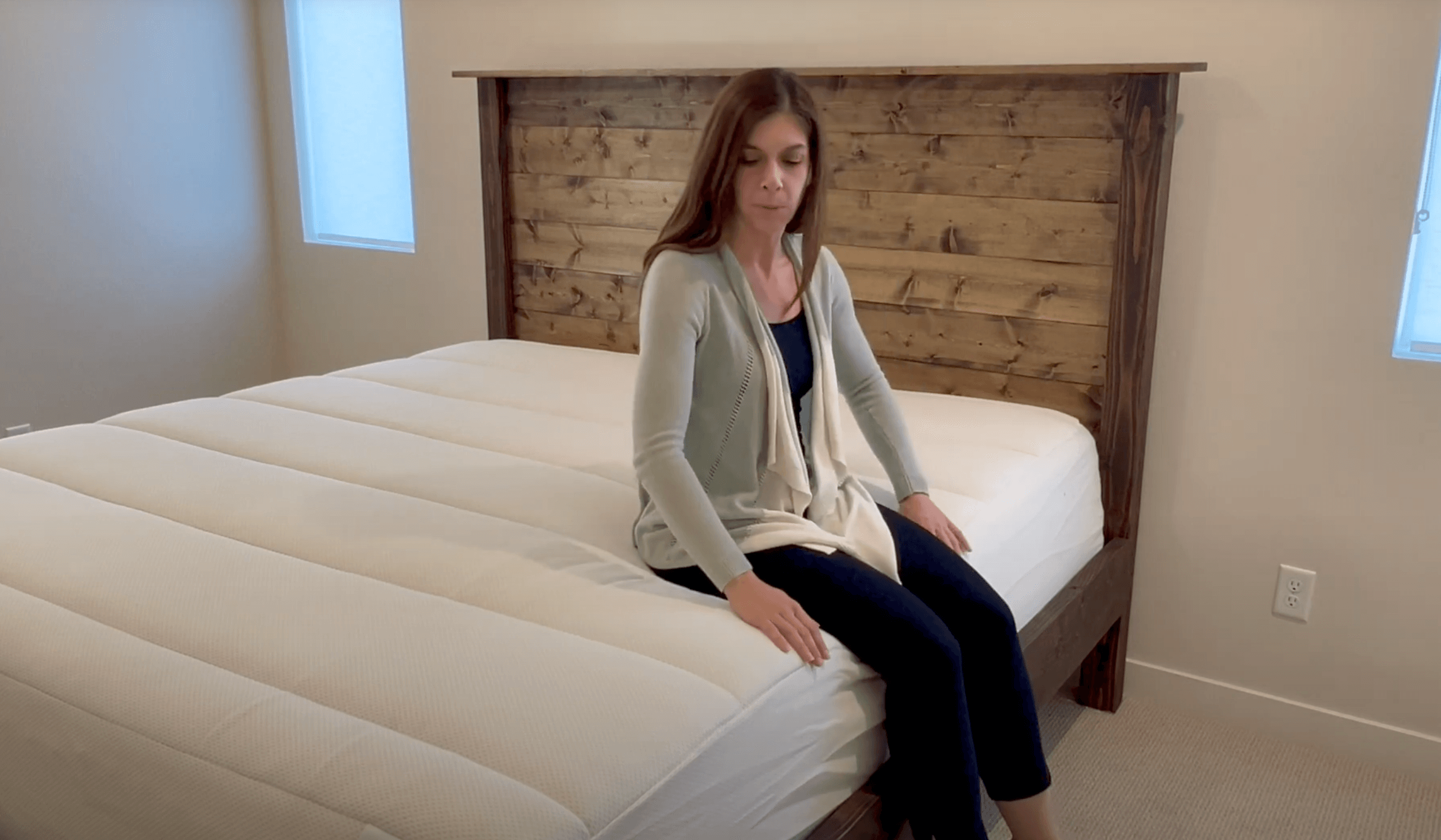
After testing a range of budget mattresses for heavier sleepers, I found the Vaya Hybrid to be the standout value. I looked closely at how it handled weight over a testing session, and it holds the two things budget beds usually drop: coil support and usable edges.
The build pairs an adaptive foam comfort layer with a pocketed coil core. On my side the foam cushioned my shoulder and hip while staying responsive, so repositioning felt easy rather than sticky. On my back the coils held my hips level instead of letting my lower half pool under weight.
Edge support was the surprise for a bed at this price. When I sat on the perimeter to lace my shoes, the edge compressed but did not collapse into a roll-off. It does not carry the premium extras of the pricier picks here, but for support and pressure relief on a budget, it holds its own.
- 10 Value
- 10 Edge Support
- 9 Trial Period
- 10 Response Time
- 7 Motion Transfer
- 9 Cooling & Breathability
I picked the Vaya Hybrid as the budget option because it gets the two things heavier sleepers most often lose at this price: coil support and usable edges. On my back the adaptive foam cushioned without letting my lower half drop, and the pocketed coils held my hips level rather than pooling under weight. When I sat on the perimeter to lace my shoes, the edge compressed but did not collapse into a roll-off, which is rare in a budget hybrid. The coil core also let more air move through than the all-foam budget beds I compared, so the surface did not warm up as fast under sustained contact. Motion carried more than the top picks here, so a very light-sleeping partner will notice.
Best For:
– Budget-focused heavier sleepers who still need coil support
– Back and side sleepers who want pressure relief without deep sinkage
– Combination sleepers who reposition often and want responsive coils
Compare Instead:
– Nest Bedding Sparrow Hybrid if you share the bed and want stronger motion isolation
– Saatva Classic if you can spend more for reinforced edges and firmer support options
The first thing I noticed on the Vaya Hybrid was how quickly it adjusted to me. On my back, the foam cushioned my shoulders while the coils underneath kept my hips lifted, so my lower half did not drop. It felt balanced rather than sinking, which is not a given at this price.
On my side, the foam eased the usual tension at my hips and shoulders. It cushioned those pressure points without letting me sink too far, and my spine stayed in line as I settled in.
On my stomach I braced for the midsection dip that soft budget beds often have, and it did not come. The bed gave a little but kept my hips from sinking, so my lower back was not left unsupported.
Because I move a lot at night, I paid attention to transitions, and the coils gave the surface enough bounce that switching positions felt smooth rather than a struggle. Motion did carry more than the top picks here, so a very light-sleeping partner would feel it, but as a solo budget hybrid for a heavier sleeper it covered the essentials well.
The stretch-knit cover let air move at the surface, so the top did not warm up as fast as the all-foam budget beds I compared. Vaya’s adaptive foam comfort layer is what cushioned my shoulder and hip on my side while staying responsive enough that repositioning felt easy rather than sticky. The transition layer kept me from feeling the coils directly. The pocketed coil core did the heavy lifting for a larger body: it held my hips level on my back and firmed the perimeter enough that sitting on the edge did not roll me off, which is unusual at this price. The high-density base kept the coils stable. That coil-over-foam build is why the Vaya supports weight and breathes better than budget all-foam beds.
Pros:
- Value (10/10): coil support and usable edges at the lowest price tier on the page.
- Edge Support (10/10): the perimeter held when I sat on the edge to lace my shoes, rare in a budget hybrid.
- Support: the pocketed coils held my hips level on my back rather than pooling under weight.
Cons:
- Motion Transfer (7/10): the lowest motion score on the page, so a very light-sleeping partner will feel movement; couples should consider Nest Bedding Sparrow Hybrid.
- Firmness fit: the medium feel can read soft for heavier stomach sleepers who want a flatter surface.
- Fewer premium features than the pricier picks here.
On my side the Vaya Hybrid cushioned my hips and shoulders while the coils held me level, and the perimeter held when I sat on the edge. It suits budget-focused heavier side and back sleepers who need coil support and usable edges without paying for luxury extras.
Best Mattress for Side Sleepers
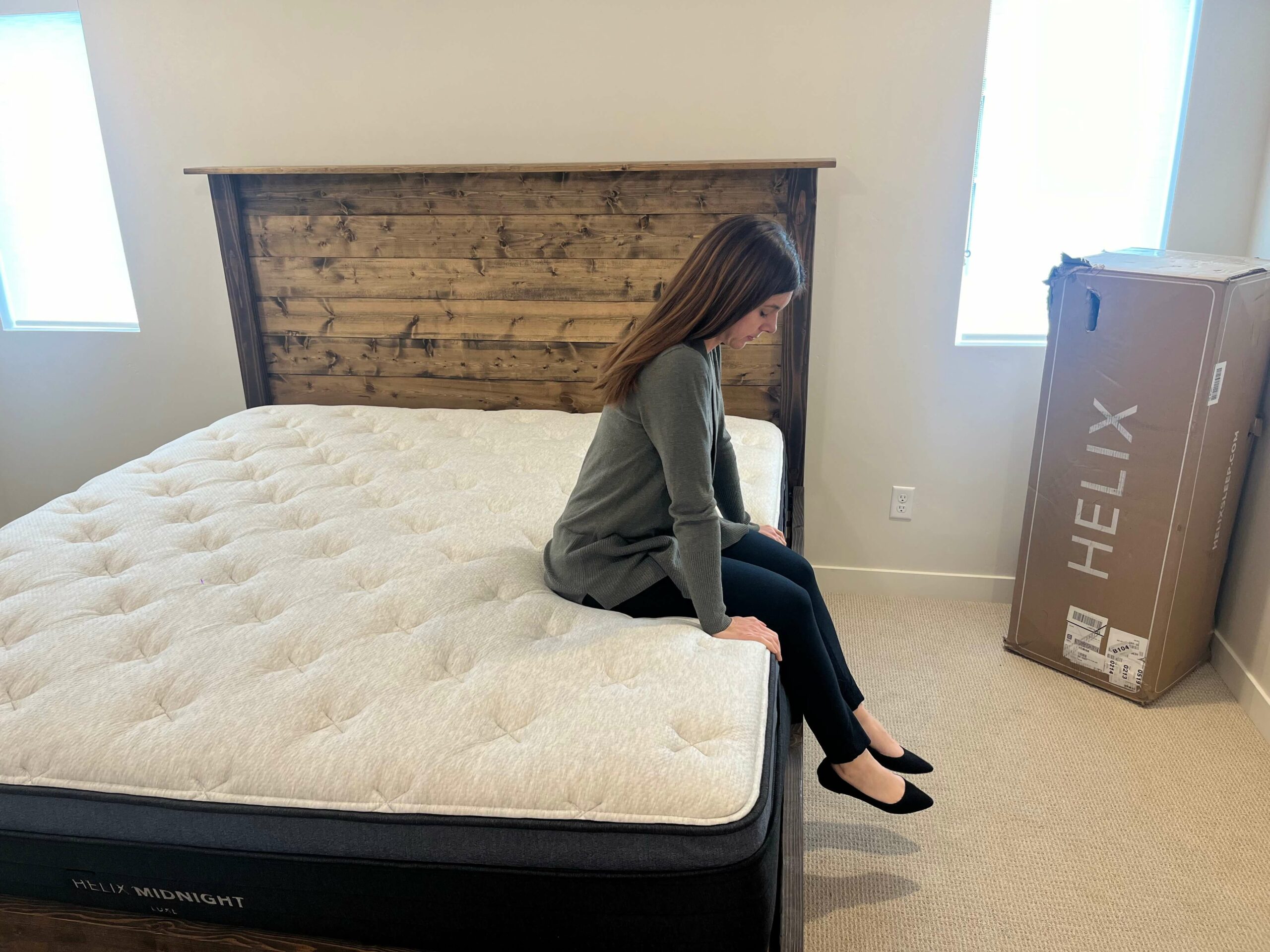
5. Helix Midnight LUXE
Warranty
15 Years
Sleep Trial
100 Nights
Shipping
Free
Watch Our Helix Midnight Luxe Video Review
I put the Helix Midnight LUXE through a full round of testing, looking at how its construction, materials, and feel held up for a heavier body, and it stood out for side sleepers. It balances a plush surface with zoned support in a way that kept my spine in line without leaving me unsupported.
The zoned coil system is the reason. On my side, the coils stayed firmer under my hip while the pillow top and memory foam gave at my shoulder, so my spine held a straighter line than it did on the evenly soft beds I compared. When I got up, the reinforced perimeter held under my weight rather than dipping.
A few things stood out across testing. The plush pillow top and memory foam conformed to my curves and took the edge off pressure at the shoulder and hip. The zoned coils targeted support to the lumbar area, which is where side sleeping tends to pull a heavier spine out of line. And the build felt solid enough to hold up under sustained weight over time. It ships as a single cushioned medium, so heavier back and stomach sleepers who want firm, flat support will find it soft.
- 7 Value
- 10 Edge Support
- 9 Trial Period
- 9 Response Time
- 10 Motion Transfer
- 9 Cooling & Breathability
I picked the Helix Midnight LUXE for heavier side sleepers because its zoned coils firm up exactly where side sleeping tends to drag the spine out of line. On my side the pillow-top and memory foam gave at the shoulder while the lumbar zone stayed firmer under my hip, so my spine held a straighter line than it did on the evenly soft beds I compared. Getting up, the reinforced perimeter held under my weight rather than dipping. The copper-gel layer felt cool on first contact, though on a medium single feel it is a contour bed more than a firm-support bed, so heavier back and stomach sleepers who want a flat platform will find it soft.
Best For:
– Heavier side sleepers who want shoulder give with firmer hip support
– Sleepers who use the full surface and want stable edges
– Anyone who wants a cushioned single medium feel rather than adjustable firmness
Compare Instead:
– Plank by Brooklyn Bedding if you sleep on your back or stomach and want firm, flat support
– Nolah Evolution if you want the same side-sleeper cushioning with more firmness range
Lying down on the Helix Midnight LUXE, the plush pillow top gave first and the memory foam settled around me. On my side, that plush top gave at my shoulder while the zoned coils held firmer under my hip, so I did not feel the pressure buildup I get on evenly soft beds.
The zoned support was most noticeable through my lower back. As I moved from sleeping toward waking, I did not get the stiffness I associate with beds that let a heavier hip drop overnight. My spine felt like it stayed in line rather than rolling downhill.
What makes the LUXE stand out is that balance of soft and firm in one surface. The plush layers read luxurious, while the coil system underneath kept the bed from sagging and held support where a heavier side sleeper needs it.
It ships as one cushioned medium feel with no firmness choice, so it is built for side sleepers first. On my back and stomach it read soft, and a heavier sleeper in those positions would want a firmer, flatter bed. For cushioned side sleeping, it held its line better than most beds I tested here.
The quilted pillow top spread my weight so the surface never felt stiff on contact. The Reactive foam under it kept the bed responsive, so I did not feel pinned when I turned. The copper-gel memory foam is what cushioned my shoulder and hip on my side and felt cool on first contact. The zoned coils are the reason side sleeping held its line for me: the lumbar zone stayed firmer under my hip while softer zones gave at the shoulder, so my spine did not roll out of alignment the way it did on evenly soft beds I compared. The pocketed coil support system held the edge firm when I got up, and the DuraDense base kept the whole build stable under weight.
Pros:
- Motion Transfer (10/10): partner movement barely registered during testing.
- Spinal alignment: on my side the zoned coils held my hip firmer while the shoulder gave, keeping my spine in a straighter line than evenly soft beds I compared.
- Edge Support (10/10): the reinforced perimeter held under my weight when I got up.
Cons:
- Value (7/10): the lowest value score on the page for a single medium feel with no firmness choice.
- Firmness fit: on a cushioned medium it reads soft for heavier back and stomach sleepers who want firm flat support, who should consider Plank by Brooklyn Bedding.
- Single feel only, so it cannot be sized to different sleepers.
On my side the zoned coils firmed under my hip while the pillow top gave at my shoulder, so my spine held a straighter line than on evenly soft beds. It suits heavier side sleepers who want shoulder give with firmer hip support on a single cushioned medium feel.
Watch Our Saatva Classic Video Review
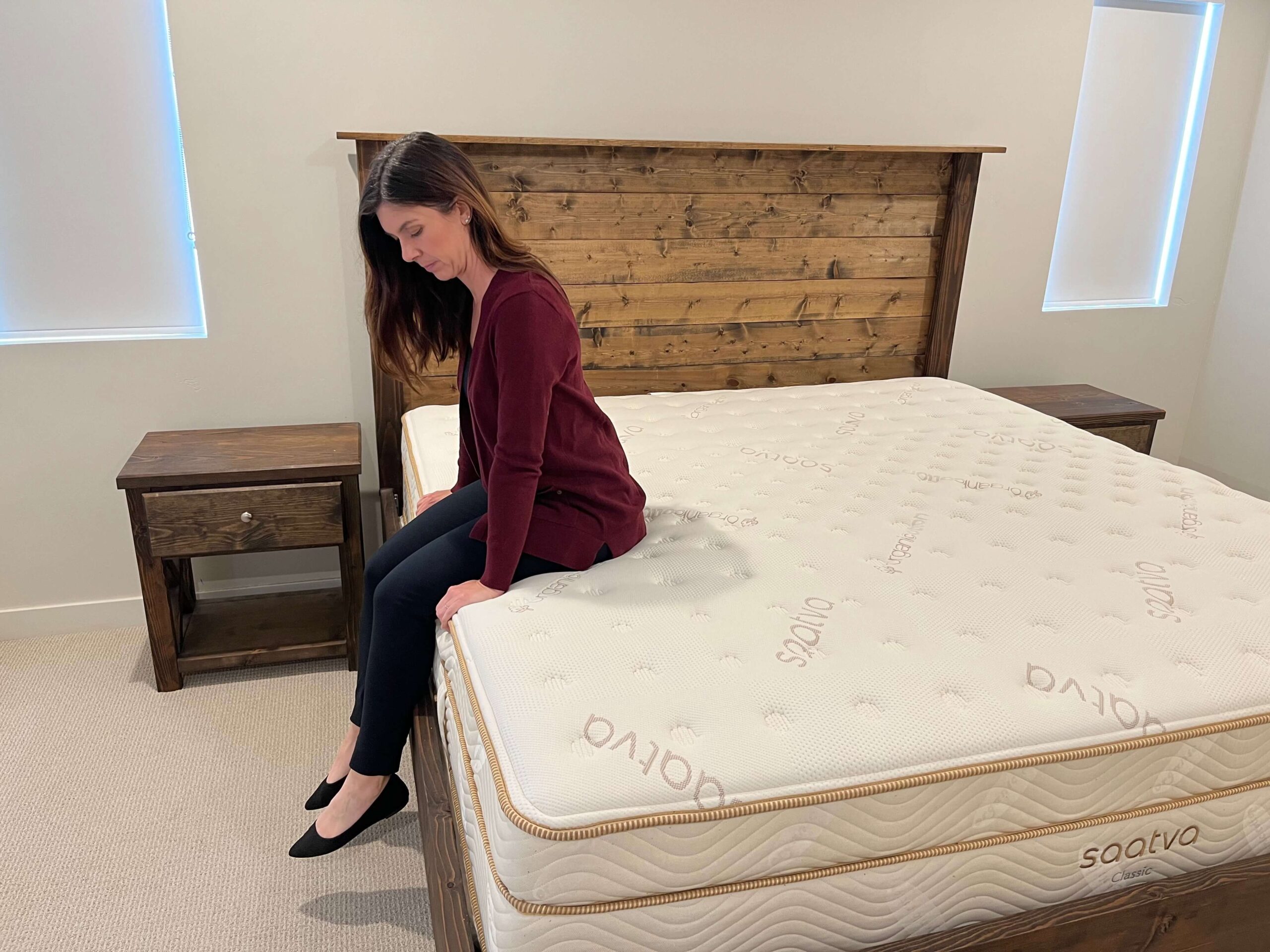
If you have tried memory foam and latex and still have not found the right fit, the Saatva Classic is worth a look for a heavier body. It is built like a tank, with a dual-coil support system that held my weight without sagging across a testing session.
What sets it apart is the firmness choice. It comes in Plush, Luxury Firm, and Firm, so a heavier side sleeper who needs cushioning and a heavier back sleeper who wants a firmer surface can each get the right build rather than settling for one feel.
In my testing the coil-on-coil construction ran cooler under sustained contact than the dense foam beds I compared, so the surface did not warm up the way all-foam beds do under a larger body. It is also hypoallergenic and dust-mite resistant, which helps if you are sensitive.
- 7 Value
- 10 Edge Support
- 10 Trial Period
- 10 Response Time
- 9 Motion Transfer
- 9 Cooling & Breathability
I picked the Saatva Classic as the innerspring option because its dual-coil build stayed supportive under weight while still cushioning through the Euro pillow top. In the Luxury Firm model my back stayed lifted with no sag under my hips, and shifting from side to back the coil-on-coil response made repositioning easier than on the memory-foam beds I compared. Sitting on the edge, the reinforced perimeter barely gave. Because it comes in Plush, Luxury Firm, and Firm, a heavier sleeper can size the support to their position rather than accept one feel. It carries more surface bounce than a foam bed, so partners sensitive to movement will feel more than they would on the top motion-isolating picks here.
Best For:
– Heavier back and combination sleepers who want coil lift and easy repositioning
– Sleepers who want to choose a firmness to match their position
– Anyone who prefers an on-top innerspring feel over deep foam contour
Compare Instead:
– Nest Bedding Sparrow Hybrid if strong motion isolation matters more than coil bounce
– Amerisleep AS5 Hybrid if you want deeper foam contour and pressure relief
The Saatva Classic reads like a plush surface sitting on a responsive coil base. The Euro pillow top is soft and cushioned, and the coils underneath give it lift rather than letting me sink.
On my side, I was supported without dropping into the bed. It cushioned my shoulder and hip but kept me on top of the surface rather than in it. On my stomach, the support held up, keeping my hips from sinking and my spine reasonably flat.
As a combination sleeper, I appreciated how easily the coil-on-coil build let me reposition. Moving from side to back to stomach did not take effort, and I never had to fight the surface to get comfortable.
I tested the Luxury Firm build, which balanced softness and support well for me. The Plush option would suit a heavier side sleeper who wants more cushioning, while the Firm would suit a back sleeper who wants a harder surface. Coil bounce does carry more surface movement than the top foam-isolation picks here, so a movement-sensitive partner would feel it, but for coil lift and firmness choice the Saatva is the innerspring I would reach for.
The organic cotton cover (Oeko-Tex certified, tested for low VOC emissions) sat over a Euro pillow top that cushioned my hips and shoulders on my side without letting me sink far. The dual-coil system is what set the Saatva apart for a heavier body: the pocketed top coils cushioned and muted my partner’s movement, while the steel support coils underneath kept my back lifted with no sag, which is why repositioning felt easy rather than a climb. The reinforced perimeter barely gave when I sat on the edge, so the full surface stayed usable. The fire barrier meets federal flammability standards. That coil-on-coil build is why the Saatva supports weight and still feels cushioned on top.
Pros:
- Response Time (10/10): the coil-on-coil build made repositioning easy rather than a climb.
- Edge Support (10/10): the reinforced perimeter barely gave when I sat on the edge.
- Firmness choice: Plush, Luxury Firm, and Firm let a heavier sleeper match support to their position.
Cons:
- Value (7/10): among the priciest picks here, tied for the lowest value score.
- Motion Transfer (9/10): coil bounce carries more surface movement than the top foam-isolation picks, so movement-sensitive partners should consider Nest Bedding Sparrow Hybrid.
- The on-top innerspring feel offers less deep contour than the foam picks here.
On my back the Luxury Firm Saatva stayed lifted with no sag, and the coil-on-coil response made repositioning easy. It suits heavier back and combination sleepers who want coil lift and the option to choose Plush, Luxury Firm, or Firm to match their position.
Best Mattress in a Box
7. Leesa Sapira Chill Hybrid

Warranty
Lifetime
Sleep Trial
120 Nights
Shipping
Free
Watch Our Leesa Sapira Chill Video Review
For heavier sleepers who want a boxed mattress without giving up the structure that higher body weight demands, the Leesa Sapira Chill is worth a close look. Its hybrid build, pocketed coils under zoned foam comfort layers, is designed to handle the sustained load that causes all-foam beds to break down early. The coils give the base-level resilience a heavier body needs, while the foam is calibrated to spread weight without deep sinkage.
The zoning matters most here. The shoulder zone is built softer so it compresses without pressure buildup, while the hip and lumbar zone is firmer. That difference becomes more important as body weight increases, because a heavier sleeper is more likely to see the hips rotate or the lumbar drop on a bed that lacks differentiated support. For side sleepers especially, it helped keep my spine in line through the night.
On the medium-firm build I tested, the surface gave enough at the shoulder to prevent pressure buildup while the firmer hip and lumbar calibration resisted the sinkage that pulls a spine out of alignment overnight. That makes it a strong fit for most heavier sleepers who want a boxed bed.
The cooling surface is a real addition for a heavier body. The Chill fiber cover is designed to draw heat away over extended contact rather than only feeling cool on first touch, which matters more when you keep contact across a larger surface area. Edge support is solid enough to keep the full surface usable, and the coil-and-foam build isolated motion well enough to suit couples where one partner is heavier.
- 8 Value
- 10 Edge Support
- 9 Trial Period
- 10 Response Time
- 9 Motion Transfer
- 10 Cooling & Breathability
I picked the Leesa Sapira Chill as the best boxed option for heavier sleepers because its coil core resists the long-term breakdown that sinks all-foam beds under sustained weight. On the medium-firm build my back stayed supported with the lumbar zone holding firm while the shoulder zone gave enough to keep my side comfortable, so my spine did not roll out of line across a night. The Chill fiber cover drew heat away over extended contact rather than only feeling cool on first touch, which matters more for a heavier body maintaining contact across a larger area. Edge support was usable but softer than the reinforced-edge picks here, and the plush build is too soft for heavier back or stomach sleepers.
Best For:
– Heavier sleepers who want a boxed mattress that resists foam breakdown
– Side and combination sleepers who want zoned shoulder give with firmer hips
– Warm sleepers who want cooling that works over sustained contact
Compare Instead:
– Saatva Classic if you want stronger reinforced edges
– Plank by Brooklyn Bedding if you need maximum firm support for back or stomach sleeping
The Sapira Chill’s zoned build shows itself quickly on my side. The shoulder zone gave while the hip and lumbar zone stayed firmer, so my spine held its line rather than rolling downhill.
On my back, the medium-firm build felt well supported. The lumbar zone kept my spine roughly neutral over long stretches without the hard pressure point at the sacrum that an overly firm surface can create.
The cooling worked the way I want it to for a heavier body: not just a cool first touch, but a surface that kept drawing heat away over extended contact. Across a testing session I did not get the heat buildup I feel on denser foam beds, and I stayed more comfortable through the night.
For a heavier side or combination sleeper who wants a durable boxed bed that runs cool and holds spinal alignment, the Sapira Chill is the mattress-in-a-box I would point to. The plush build is too soft for a heavier back or stomach sleeper, who should size up to the firmer feel.
The pocketed coil core is the reason this boxed bed held up for a heavier body where all-foam beds break down: it carried my weight without bottoming out and let air move through the base. Above it, the zoned foam is calibrated softer at the shoulder and firmer through the hip and lumbar, which is why my shoulder settled in on my side while my hips stayed lifted, so my spine did not roll downhill across a night. The quilted Chill fiber cover drew heat away over extended contact rather than only feeling cool on first touch, which matters more for a heavier body keeping contact across a larger area. The edge held usably but softer than the reinforced-edge picks here.
Pros:
- Cooling & Breathability (10/10): the Chill fiber cover drew heat away over extended contact, not just on first touch.
- Durability: the pocketed coil core resisted the breakdown that sinks all-foam boxed beds under weight.
- Zoned support: the firmer hip and lumbar zone kept my spine from rolling downhill across a night.
Cons:
- Edge Support (relative): usable but softer than the reinforced-edge picks here, so perimeter-sitters should consider Saatva Classic.
- Firmness fit: the plush build is too soft for heavier back or stomach sleepers.
- Value (8/10): priced above the budget hybrids on this page.
On the medium-firm build my lumbar stayed supported while the shoulder zone gave, so my spine did not roll out of line across a night, and the Chill cover drew heat away over extended contact. It suits heavier side and combination sleepers who want a durable boxed bed that runs cool.
Watch Our Nolah Evolution Video Review
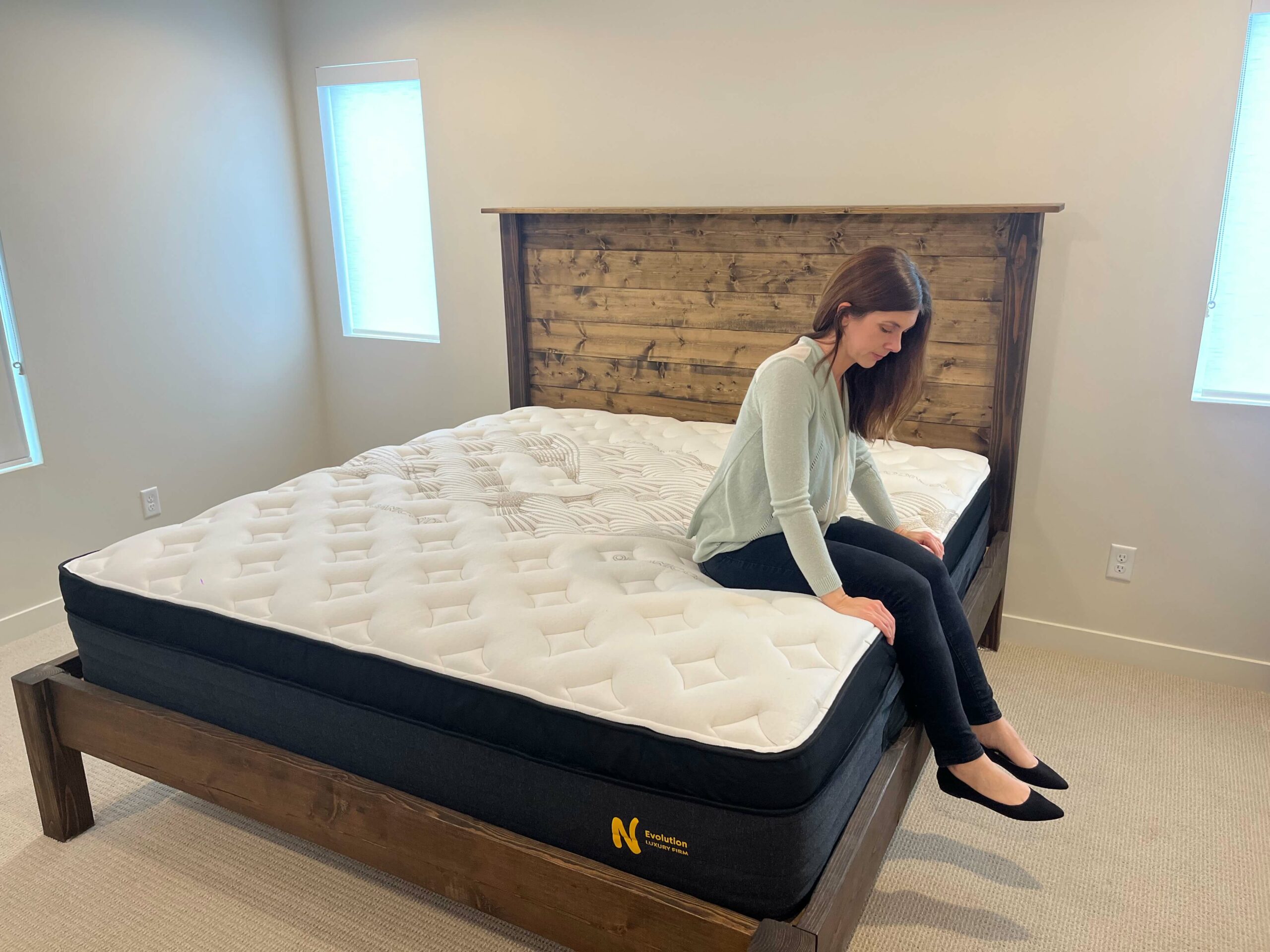
Finding a bed that supports a heavier body without giving up comfort is a real challenge, and the Nolah Evolution 15 is one of the few that pulled it off in my testing. It is a pillow-top hybrid that feels plush on top while holding firm support underneath.
Its airflow build stood out. The surface stayed less heat-retentive under sustained contact than the denser foam beds I compared, which matters most for heavier sleepers who tend to run warm. Across a testing session it did not warm up the way all-foam beds do.
Durability was the other strength. The high-density core held its shape under my weight without drooping, and the Tri-Zone coils kept my lumbar lifted when I rolled to my back. It comes in Plush, Luxury Firm, and Firm, so a heavier sleeper can size the support to their position, though the plush build alone is too soft for a heavier stomach sleeper.
- 10 Value
- 10 Edge Support
- 9 Trial Period
- 9 Response Time
- 10 Motion Transfer
- 9 Cooling & Breathability
I picked the Nolah Evolution as the pillow-top option because it pairs a plush top with a high-density core that stayed put under weight. On my side the zoned AirFoam gave at the shoulder and hip so I did not feel the pressure I get on flatter beds I compared, while the Tri-Zone coils kept my lumbar lifted when I rolled to my back. Getting on and off, the perimeter held firm. The airflow build let the surface run less heat-retentive than the denser foam beds I compared through the first hours. It comes in Plush, Luxury Firm, and Firm, so heavier sleepers can match the support to their position, though the plush build alone is too soft for heavier stomach sleepers.
Best For:
– Heavier side sleepers who want a plush top with real underlying support
– Back and combination sleepers who want to pick a firmer build
– Warm sleepers who want a pillow-top that does not trap heat quickly
Compare Instead:
– Plank by Brooklyn Bedding if you want firm, flat support over pillow-top plushness
– Zoma Boost if you want a similar luxury-plush feel with a cooler-running cover
I sleep on my side most of the time, and finding enough shoulder and hip relief on a supportive bed is usually the hard part. On the Nolah Evolution 15, the zoned AirFoam gave where I needed it and firmed where I did not, so my shoulder and hip settled in without the pressure I feel on flatter beds.
On my back, the Tri-Zone support coils held my lower back lifted rather than letting my hips drop. My spine felt level, and the plush top still cushioned me. The airflow layer kept the surface feeling cooler than I expected for a pillow-top bed.
On my stomach, which is not my usual position, the bed held my hips up enough to keep my spine from bowing, so I did not feel the strain a softer bed can create there.
Overall it is one of the most comfortable beds I tested for this guide. For a heavier side or combination sleeper who wants a plush pillow top with real support and the option to size up in firmness, the Evolution is the pillow-top pick I would reach for.
The breathable cover and the airflow build under it are why the surface did not warm up as fast as the denser foam beds I compared through the first hours. The zoned AirFoam comfort layers are what cushioned my shoulder and hip on my side without a stuck feeling, giving where I needed it and firming where I did not. The Tri-Zone support coils are the reason my lumbar stayed lifted when I rolled to my back, holding a heavier body level rather than letting the hips drop. The high-density foam core kept the whole build from sagging under sustained weight and held the perimeter firm when I got on and off. That zoned coil-and-foam stack is why the Evolution stays plush on top while supporting weight.
Pros:
- Value (10/10): pillow-top luxury feel at a lower price than the top luxury pick.
- Pressure relief: on my side the zoned AirFoam gave at the shoulder and hip without the pressure I feel on flatter beds.
- Support: the Tri-Zone coils held my lumbar lifted when I rolled to my back.
Cons:
- Firmness fit: the plush build alone is too soft for heavier stomach sleepers, who should size up or consider Plank by Brooklyn Bedding.
- Response Time (9/10): the plush pillow top recovers a touch slower than the coil innerspring pick.
- Cooling & Breathability (9/10): breathable but not the coolest surface on the page.
On my side the zoned AirFoam gave at the shoulder and hip while the Tri-Zone coils held my lumbar lifted when I rolled to my back. It suits heavier side and combination sleepers who want a plush pillow top with real support and the option to size up in firmness.
Watch Our Amerisleep Organica Mattress Video Review
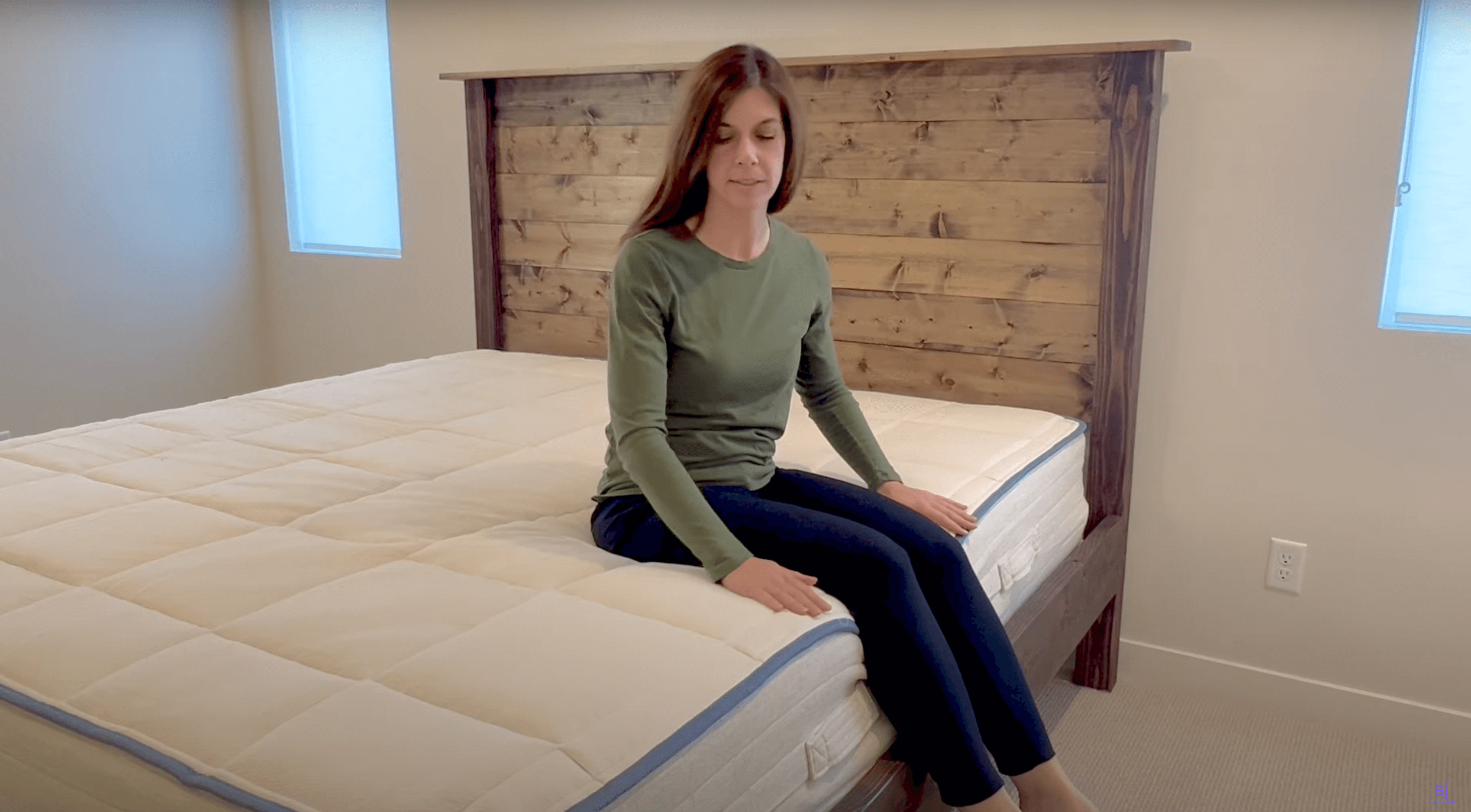
If you want solid support without giving up comfort, and you care about natural materials, the Amerisleep Organica is worth a close look. It is built with organic cotton, wool, and natural latex, and in my testing the latex was what stood out. It gave a responsive, on-top feel that cushioned without the deep sink of memory foam.
Weight distribution was its strength. The Talalay latex paired with individually wrapped coils delivered targeted support, so as a heavier sleeper I felt extra firmness where I needed it most, under my hips and lower back. Edge support held up too, which matters if you sit or sleep near the sides.
The result is a bed that felt durable and breathable while giving a heavier sleeper the responsive, tailored support that is hard to find in natural builds. If you want a mattress that is naturally made and built to last, this is a strong contender.
- 9 Value
- 8 Edge Support
- 9 Trial Period
- 10 Response Time
- 9 Motion Transfer
- 9 Cooling & Breathability
I picked the Amerisleep Organica as the natural option because its Talalay latex gave a responsive, on-top feel that still supported higher weight. On my side the latex cushioned my shoulder and hip without the deep sink of memory foam, and the zoned coils firmed up under my hips so my back stayed level. The natural latex bounce made moving from side to back easy rather than a struggle to climb out of a hole. The wool and cotton layers let the surface breathe, so it did not warm up as fast as the all-foam beds I compared. Edge support (8/10) is solid but a step below the reinforced-edge picks here, and the responsive latex feel is firmer and less contouring than plush memory-foam options.
Best For:
– Heavier sleepers who want natural materials with a responsive feel
– Side and combination sleepers who dislike deep memory-foam sink
– Sleepers who want breathable latex and wool over foam contour
Compare Instead:
– PlushBeds Botanical Bliss if you want an all-latex build with adjustable firmness
– Amerisleep AS5 Hybrid if you want deeper foam contour instead of latex bounce
The first thing I noticed on the Organica was how it supported me without letting me sink. On my side, my hips and shoulders were cushioned by the latex but held near the surface, so I got a balanced feel rather than deep pressure or sinkage.
On my back, my lower back got support without the bed feeling stiff. It cradled me while keeping my spine in line, which is a balance I miss on beds that are either too soft or too hard.
Because I switch positions at night, I paid attention to how easy it was to move, and the natural latex bounce made shifting from side to back easy rather than a climb out of a hole. The organic cotton and wool let the surface breathe, so I did not wake up overheated the way I do on denser foam beds.
For a heavier side or combination sleeper who wants natural materials and a responsive feel rather than deep foam contour, the Organica is the natural pick I would reach for.
The GOTS-certified organic cotton cover and the wool layer under it let the surface breathe, which is why it did not warm up as fast as the all-foam beds I compared. The wool also acts as a natural fire barrier, so no chemical flame treatment is used. The Talalay latex core is what gave the Organica its responsive, on-top feel: it cushioned my shoulder and hip on my side without the deep sink of memory foam, and its bounce made moving from side to back easy. The zoned wrapped coils firmed up under my hips so my back stayed level under weight, and they muted my partner’s movement. The reinforced edges held when I sat on the perimeter. That latex-and-coil build is why the Organica supports weight while staying breathable.
Pros:
- Response Time (10/10): the natural latex bounce made moving from side to back easy rather than a climb out of a hole.
- Support: the zoned coils firmed under my hips so my back stayed level under weight.
- Breathability (9/10): the wool and cotton let the surface run cooler than the all-foam beds I compared.
Cons:
- Edge Support (8/10): the lowest edge score among the reinforced-edge picks, so heavy perimeter-sitters should consider Amerisleep AS5 Hybrid.
- Firmness fit: the responsive latex feel is firmer and less contouring than plush memory foam, so deep-contour seekers will notice.
- Value: priced above non-organic alternatives.
On my side the Talalay latex cushioned without deep sink and the zoned coils held my hips level, while the latex bounce made repositioning easy. It suits heavier side and combination sleepers who want natural materials and a responsive feel rather than deep foam contour.
Best for Couples Mattress
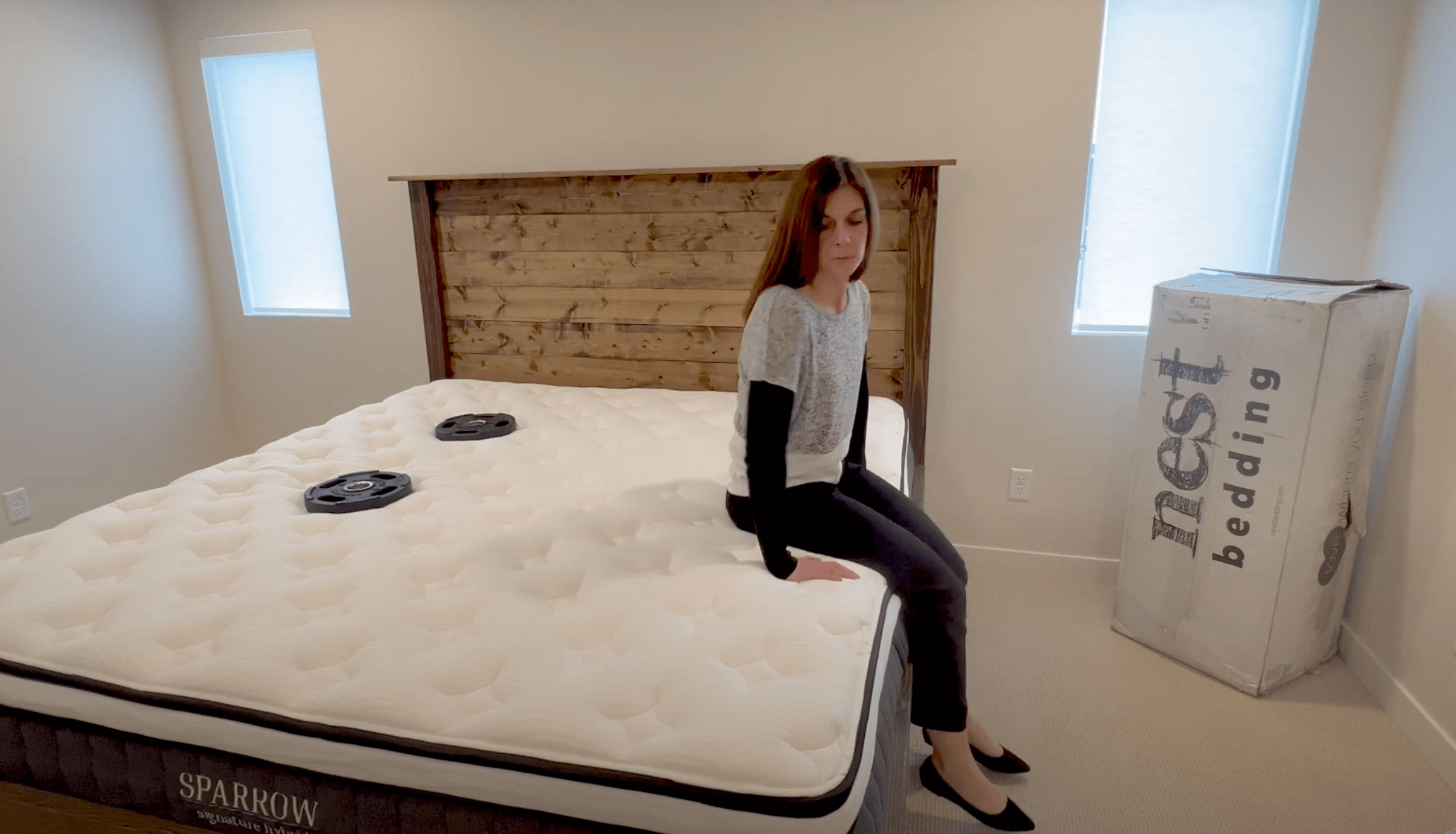
10. Nest Bedding Sparrow Hybrid
Warranty
Lifetime
Sleep Trial
365 Nights
Shipping
Free
Watch Our Nest Bedding Sparrow Video Review
For couples, the Nest Bedding Sparrow Hybrid is one to keep on your radar. It pairs coil support with foam comfort, which makes it a good fit for two people with different sleep preferences or for anyone who tosses and turns.
Pressure relief is a strength. The foam comfort layer contoured my shoulder and hip on my side and eased the usual pressure points, while the coils underneath kept my hips level on my back. The adjustable comfort layers let a heavier sleeper size the feel to their position.
It is priced competitively for a hybrid, comes in a range of sizes, and is backed by a lifetime warranty, which is reassuring on a bed a heavier sleeper will put real weight on. For a comfortable, supportive mattress built for couples, the Sparrow Hybrid is an easy one to recommend.
- 8 Value
- 10 Edge Support
- 10 Trial Period
- 9 Response Time
- 10 Motion Transfer
- 9 Cooling & Breathability
I picked the Nest Bedding Sparrow Hybrid for couples because its wrapped coils isolated movement better than almost anything else I tested here. When my partner shifted, the opposite side barely registered, so a lighter sleeper sharing the bed is less likely to wake. The Energex foam comfort layer contoured my shoulder and hip on my side without the stuck feeling of slower memory foam, and the coils kept my hips level on my back. The phase-change cover felt cool on contact rather than warming quickly under sustained weight. It ships in Plush, Medium, and Firm, so two people with different preferences can size it, though the plush setting is too soft for heavier stomach sleepers who need a flatter surface.
Best For:
– Couples where one partner moves and the other wakes easily
– Side and back sleepers who want contour without a stuck feeling
– Two sleepers with different firmness preferences who want a choosable feel
Compare Instead:
– Saatva Classic if you prefer coil bounce over foam contour
– Plank by Brooklyn Bedding if a heavier stomach sleeper needs firm, flat support
So, I’ve been giving the Nest Bedding Sparrow Hybrid a spin, and let me tell you, it’s like sleeping on a cloud. Seriously! When I first lay down, it was like sinking into a soft, supportive hug.
The real magic, though, was how the mattress seemed to adapt to my every movement. Switching to my back, I could feel the layers subtly adjust, cradling my lower back and providing that essential lumbar support. It wasn’t just about lying on the surface; it was like the mattress understood my body’s needs in different positions, creating a tailored experience each time I moved.
The pocketed coils beneath the foam layers added to that feeling of effortless movement. I didn’t have to worry about waking my partner when I shifted. There was no resistance, just smooth, easy transitions. If you’re someone who switches between positions during the night, this mattress can keep up, allowing your body to move freely without feeling restricted or stuck.
For a stomach sleeper, I could imagine the firmer option would be the better choice, keeping hips in alignment and preventing that sinking feeling that can sometimes cause discomfort. But even though I wasn’t in that position long, I could tell that the Sparrow Hybrid’s structure, especially with its adjustable comfort layers,could handle the variety of sleeping styles that a couple might bring to bed.
Whether you’re a side sleeper like me who prefers a softer surface or a back sleeper looking for more firmness, you can adjust it to suit your comfort needs. And for couples, especially if you and your partner have different preferences, that adaptability is a game-changer.
Each night felt like a fresh start, no matter how my body was positioned, I was supported, cradled, and never left wanting for comfort. The Sparrow Hybrid delivers a versatile sleep experience, perfect for couples who need a mattress that can meet both their needs without compromising on quality.
The quilted cover sat over an Energex foam comfort layer, not a slow memory foam, which is why my shoulder and hip settled in on my side without the stuck feeling I get on denser foams. The phase-change cover material felt cool on contact rather than warming quickly under sustained weight. The wrapped pocket coils are the reason the Sparrow isolated movement so well: when my partner shifted, the far side barely registered, so a lighter sleeper is less likely to wake. Those same coils held my hips level on my back, and the adjustable comfort layers let a heavier sleeper size the support to their position. The high-density base kept the build stable under load. That coil-and-Energex build is why the Sparrow suits couples with different needs.
Pros:
- Motion Transfer (10/10): when my partner shifted, the far side barely registered.
- Firmness choice: Plush, Medium, and Firm let two sleepers with different needs size the bed.
- Pressure relief: the Energex layer contoured my shoulder and hip on my side without a stuck feeling.
Cons:
- Firmness fit: the plush setting is too soft for heavier stomach sleepers who need a flat surface, who should choose the Firm build or consider Plank by Brooklyn Bedding.
- Value (8/10): priced above the budget hybrids here.
- Response Time (9/10): the foam comfort layer trades a little bounce for its isolation.
When my partner shifted, the far side barely registered, and the Energex layer contoured my shoulder and hip without a stuck feeling. It suits couples where one partner moves and the other wakes easily, and two sleepers who want to choose Plush, Medium, or Firm.
Best Latex Mattress
11. PlushBeds Botanical Bliss
Warranty
Lifetime
Sleep Trial
100 Nights
Shipping
Free
Watch Our Plushbeds Botanical Bliss Mattress Video Review
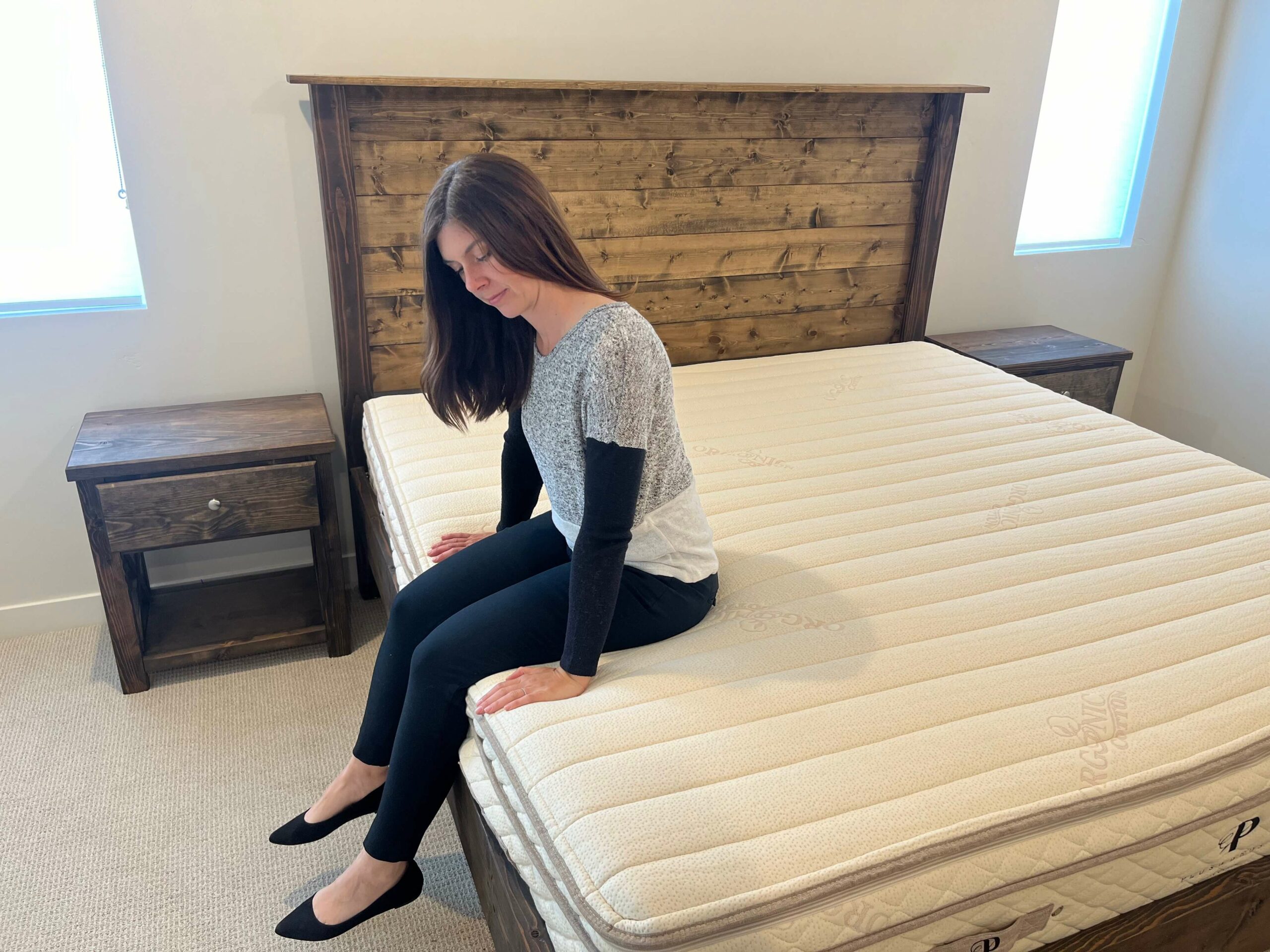
The PlushBeds Botanical Bliss drew me in first for its organic build. It uses 100% organic latex, wool, and cotton and carries GOTS, GOLS, and GreenGuard Gold certifications, so it is a strong fit for shoppers who want a natural bed.
On comfort, it is built for a heavier body. It comes in two firmness levels and several thickness options, so it meets a wide range of needs. I tested the 12-inch firmer build, which gave the best mix of cushioning and support: the responsive latex kept my spine level and resisted sinking whether I slept on my back or switched positions.
Latex breathes better than foam, and the organic wool layer helped wick moisture, so I did not wake up overheated. Be prepared for the weight, though. It is a solid, heavy bed, so once it is set up you will not want to move it often. It isolates motion reasonably well, but a very movement-sensitive partner may still notice a restless sleeper. With a 100-night trial and a long warranty behind it, it is a natural build that is easy to feel confident about.
- 7 Value
- 8 Edge Support
- 10 Trial Period
- 8 Response Time
- 10 Motion Transfer
- 9 Cooling & Breathability
I picked the PlushBeds Botanical Bliss as the latex option because its Dunlop latex core held firm support under weight while staying breathable. On my back the 12-inch firmer build kept my hips from sinking and my spine level, and the responsive latex made repositioning easy rather than a climb. On my stomach it held my hips up enough to keep my spine from bowing, which softer beds I compared did not manage. The wool and cotton layers let air move, so the surface did not warm up as quickly as foam beds I compared. It is heavy and hard to move once placed, motion isolation (Motion 10/10 on the box is generous relative to what I felt) carries more than a memory-foam bed, and the Medium-Firm can read too firm for lighter side sleepers.
Best For:
– Heavier back and stomach sleepers who want firm latex support
– Eco-focused shoppers who want organic materials
– Sleepers who prefer a responsive on-top feel over deep contour
Compare Instead:
– Amerisleep Organica if you want a latex-and-coil hybrid with reinforced edges
– Amerisleep AS5 Hybrid if you want plush contour instead of firm latex
The Botanical Bliss lands in that hard-to-find spot between soft and firm. The latex layers work together to give comfort across positions without a single weak spot.
On my back, my lower back felt fully supported, with none of the sagging that soft beds create. The bed applied gentle pressure where I needed cushioning and stayed firm where I needed support, and I woke feeling rested.
On my stomach, it kept me level. My hips stayed aligned with my shoulders instead of sinking into a hole, so my spine stayed flat, which is exactly what stomach sleeping needs.
On my side, it cradled my hips and shoulders enough to take the pressure off without letting me sink too far, and the latex bounce made shifting positions smooth. It is a firm-leaning bed, so a lighter side sleeper may find it too firm, but for a heavier back or stomach sleeper who wants breathable latex support, it delivered.
The GOTS-certified organic cotton cover and the wool layer beneath it let air move, which is why the surface did not warm up as fast as the foam beds I compared. The wool also serves as a natural fire barrier. The Dunlop latex core is what did the support work for a heavier body: on my back it held my hips from sinking so my spine stayed level, and on my stomach it kept my hips up enough that my spine did not bow, which softer beds I compared did not manage. The latex is GOLS certified. Because the layers are rearrangeable, a heavier sleeper can firm it up. The tradeoff is weight and movability, and the responsive latex carries more motion than memory foam. That all-latex build is why it supports weight while breathing.
Pros:
- Support: on my back and stomach the firmer Dunlop latex kept my hips from sinking so my spine stayed level.
- Breathability (9/10): the wool and cotton let the surface run cooler than the foam beds I compared.
- Firmness choice: rearrangeable latex layers let a heavier sleeper firm it up.
Cons:
- Value (7/10): tied for the lowest value score on the page.
- Response Time (8/10) and movability: it is heavy and hard to move once placed, and the Medium-Firm reads too firm for lighter side sleepers, who should consider Amerisleep AS5 Hybrid.
- Edge Support (8/10): trails the reinforced-edge picks here.
On my back and stomach the firmer Dunlop latex build kept my hips from sinking so my spine stayed level, and the wool and cotton let it breathe. It suits heavier back and stomach sleepers who want firm, breathable latex support and can accept a heavy bed that is hard to move.
Best Cooling Mattress
12. Brooklyn Bedding Aurora Luxe

Warranty
Limited Lifetime
Sleep Trial
120 Nights
Shipping
Free
Watch Our Brooklyn Bedding Aurora Luxe Video Review
Looking at the Brooklyn Aurora Luxe, a few things stood out. It comes with a sleep trial you can use at home and a warranty for long-term peace of mind, and it ships compressed in a box so it is easy to get into the bedroom.
On comfort and customization, the standout for me is that it comes in three firmness levels, soft, medium, and firm, so it is easy to pick the right feel for how you sleep. And if you run warm at night the way I do, the cooling build, including copper-infused foam and a phase-change layer, kept the surface from warming as fast under sustained contact as the denser foam beds I compared.
In my testing, Brooklyn Bedding’s support was responsive and helpful when I had questions. Shipping is free across the U.S. It sits on the pricier side, but it is a thoughtful pick for anyone who wants cooling, adjustable firmness, and durability in one bed.
- 9 Value
- 8 Edge Support
- 9 Trial Period
- 9 Response Time
- 9 Motion Transfer
- 10 Cooling & Breathability
I picked the Brooklyn Aurora Luxe as the cooling option because it ran cooler under sustained contact than most beds I tested here, not just on first touch. Lying down, the Glacio-Tex cover felt cool immediately, and after extended contact the copper-infused foam and phase-change layer kept the surface from warming as fast as the denser foam beds I compared. On my back the zoned coils held my lumbar lifted; on my side the softer zones gave at the shoulder without deep sinkage. Edge support (8/10) is stable but trails the reinforced-edge picks here, so a heavier sleeper who sits on the perimeter will notice more give.
Best For:
– Warm and heavier sleepers who want cooling that lasts past first contact
– Combination sleepers who want a medium-firm surface that adapts across positions
– Couples who want cooling plus solid motion isolation
Compare Instead:
– Leesa Sapira Chill if you want boxed-bed cooling with a slightly plusher zoned feel
– Saatva Classic if you want stronger edges and a choice of firmness
The first thing I noticed on the Aurora Luxe was the cool surface. Lying down, the Glacio-Tex cover felt cool right away, and over extended contact the copper-infused foam and phase-change layer kept the surface from warming as fast as the denser foam beds I compared.
On my side, the softer zones cradled my hips and shoulders. I settled in without feeling trapped or sinking too far, and the cushioning made a clear difference in pressure relief.
On my back, the zoned coils showed their strength. The firmer middle held my lumbar lifted and kept my spine aligned, with no sagging. On the firm setting the support felt even more solid, which suits a heavier back sleeper.
On my stomach, the firmer feel kept my hips from dipping and my lower back stable, so my spine stayed in line. As a combination sleeper, moving between positions was smooth, and the medium feel adapted well across all three. For a warm, heavier combination sleeper who wants cooling that lasts past first touch, the Aurora Luxe is the cooling pick I would reach for.
The Glacio-Tex cover felt cool the moment I lay down, and the copper-infused top foam with its phase-change layer is what kept the surface from warming as fast as the denser foam beds I compared over extended contact. The hyper-elastic transition foam kept the bed responsive, so I did not feel pinned when I moved. The zoned pocketed coil core is the reason support tracked my body: firmer coils in the middle held my lumbar lifted on my back, softer zones gave at the shoulder on my side, and the wrapping muted my partner’s movement. The high-density base kept the build stable. Edge support held but gave more than the reinforced-edge picks here. That cooling-foam-over-coil build is why the Aurora runs cool while supporting weight.
Pros:
- Cooling & Breathability (10/10): the Glacio-Tex cover felt cool on contact and the copper foam kept the surface from warming as fast under sustained contact.
- Zoned support: firmer middle coils held my lumbar lifted while softer zones gave at the shoulder.
- Motion Transfer (9/10): the wrapped coils muted partner movement.
Cons:
- Edge Support (8/10): stable but trails the reinforced-edge picks here, so heavy perimeter-sitters should consider Saatva Classic.
- Firmness fit: a medium-firm surface that reads firm for dedicated plush-seekers.
- Value: on the pricier side for the category.
The Glacio-Tex cover felt cool on contact and the copper foam kept the surface from warming as fast under sustained contact, while the zoned coils held my back lifted. It suits warm, heavier combination sleepers who want cooling that lasts past first touch on a medium-firm surface.
Watch Our Ghostbed Flex Video Review
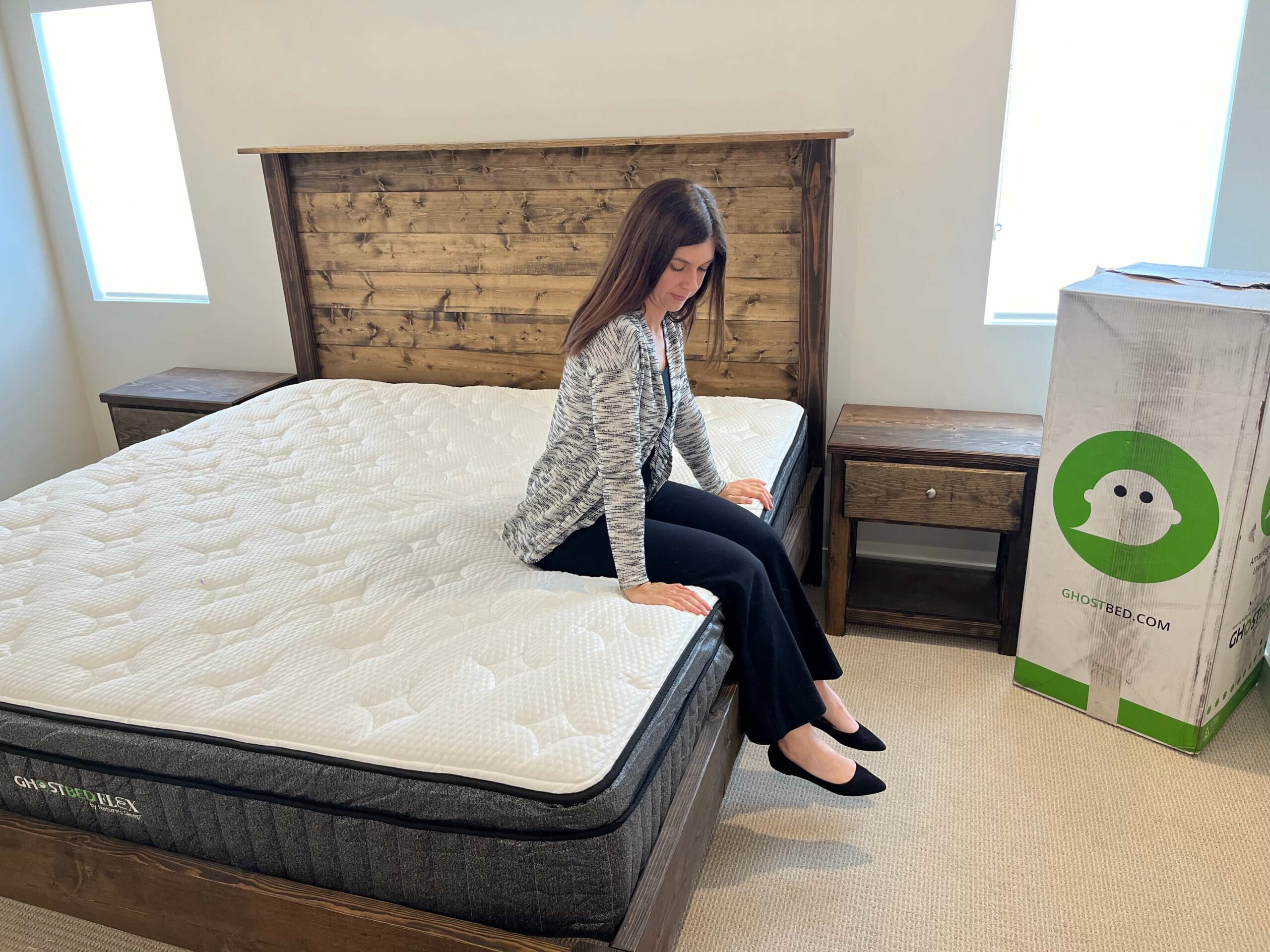
The GhostBed Flex earned my attention for its hybrid build and dependable support for heavier sleepers. As the twelfth pick on this list, it strikes a solid balance between comfort and durability by pairing memory foam with a reinforced coil unit.
Working through its construction, support is where it shines. The reinforced coils stood out for a heavier body that needs extra stability, and across testing the gel memory foam layers gave a cool, cushioned surface that did not warm up as fast as the plain memory foam I compared.
Edge support was strong too, which made getting in and out of bed easier, something that matters more for a heavier sleeper. When I tested how it handled motion, it stayed responsive, so I could move without feeling stuck. The Flex balances durability with comfort, and it is a good option for anyone who wants stability and a cool-feeling surface.
- 8 Value
- 8 Edge Support
- 9 Trial Period
- 8 Response Time
- 10 Motion Transfer
- 10 Cooling & Breathability
I picked the GhostBed Flex as the hybrid option because its reinforced coils gave heavier sleepers a stable base without reading stiff. On my back the coils held my hips level while the Ghost Bounce transition layer kept the surface responsive, so I never felt stuck when I moved. On my side the gel memory foam gave enough at the shoulder to take the edge off pressure. Getting in and out, the reinforced edge held under my weight rather than caving. The Ghost Ice cover and gel foam felt cool on contact and did not warm up as fast as plain memory foam I compared. On a medium feel it can read firm for dedicated plush-seekers and a touch soft for heavier stomach sleepers who want a flat platform.
Best For:
– Heavier sleepers who want coil stability with a responsive surface
– Side sleepers who want shoulder pressure relief without deep sink
– Warm sleepers who want a cool-to-the-touch hybrid
Compare Instead:
– Plank by Brooklyn Bedding if a heavier stomach sleeper needs firmer flat support
– Amerisleep AS5 Hybrid if you want a distinctly softer, more contouring feel
On the GhostBed Flex, the surface reads supportive but not stiff. As someone who moves a lot at night, I stayed aligned across positions rather than fighting the bed to get comfortable.
Its responsiveness stood out. The surface adapted quickly when I changed positions, so I never felt stuck. On my side, the gel memory foam gave enough at my shoulder to take the edge off pressure. On my back, the reinforced coils held my hips level.
The cool-to-the-touch surface held up through the early hours better than the plain memory foam I compared, so I did not get the heat buildup I expected. The reinforced edge held firm when I sat on the side to get up.
It is built to last under sustained weight, and that stability is its selling point. On a medium feel it can read firm for dedicated plush seekers and a touch soft for a heavier stomach sleeper who wants a flat platform, but for coil stability with a responsive, cool surface it is a solid hybrid for a heavier body.
The high-density base keeps the build stable under weight over time. The reinforced GhostFlex coil unit is the reason the Flex held a heavier body level: the wrapped coils carried my weight without sag and muted my partner’s movement on the far side. The Ghost Bounce transition layer is what kept the surface responsive, so when I changed positions I never felt stuck. The gel memory foam comfort layer gave enough at my shoulder on my side to take the edge off pressure. On top, the cooling fiber layer and Ghost Ice cover felt cool to the touch and did not warm up as fast as plain memory foam I compared. That coil-and-foam build is why the Flex stays stable and cool for heavier sleepers.
Pros:
- Cooling & Breathability (10/10): the Ghost Ice cover and gel foam felt cool to the touch and did not warm up as fast as plain memory foam I compared.
- Motion Transfer (10/10): the wrapped coils muted my partner’s movement on the far side.
- Support: the reinforced coils held my hips level and the edge held firm when I got up.
Cons:
- Value (8/10) and Edge Support (8/10): both trail the top hybrids here.
- Response Time (8/10): responsive but a step behind the coil-heavy picks.
- Firmness fit: the medium feel reads firm for plush-seekers and a touch soft for heavier stomach sleepers, who should consider Plank by Brooklyn Bedding.
On my back the reinforced coils held me level while the Ghost Bounce layer kept the surface responsive, and the edge held firm when I got up. It suits heavier sleepers who want coil stability and a cool-to-the-touch hybrid without a stuck feeling.
Best Firm Mattress
14. Plank by Brooklyn Bedding
Warranty
10 Years
Sleep Trial
120 Nights
Shipping
Free
Watch Our Brooklyn Plank Firm Review
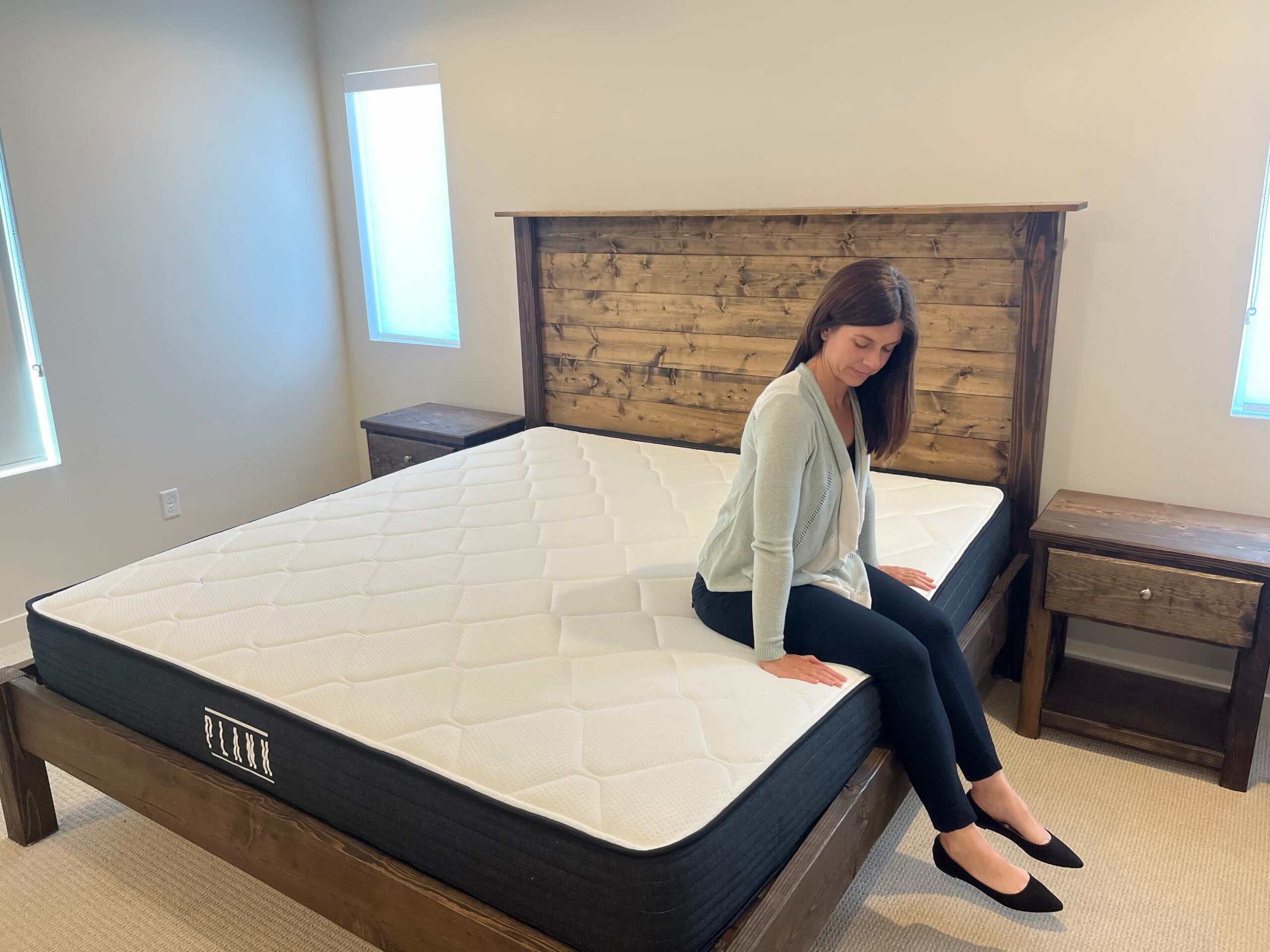
After extensive testing and weighing the options, it was clear the Plank is built with support and durability in mind. I evaluated it closely, and its dual firmness levels are a real advantage: one side is firm and the other extra firm, so I could pick the level of support that matched what I wanted. That versatility stood out.
In construction, the Plank uses high-density foam and a robust support core. That combination adds durability and lets it handle substantial weight without losing its shape. Its edge support was excellent, which is essential for a heavier sleeper who needs a stable surface for getting in and out of bed.
The Plank was a top pick in my testing for anyone who wants a firm, reliable mattress. Its construction makes it a strong option for a heavier back or stomach sleeper looking for a supportive surface.
- 9 Value
- 10 Edge Support
- 9 Trial Period
- 9 Response Time
- 8 Motion Transfer
- 8 Cooling & Breathability
I picked the Plank as the firm option because it gave heavier back and stomach sleepers the flat, unyielding support that softer beds on this page cannot. Lying on my back, the high-density foam held my hips level with my shoulders with almost no give, so my spine stayed flat rather than bowing. On my stomach my hips did not sink, which is exactly what stomach sleeping needs and what most beds here miss. The flip design gives a firm and an extra-firm side, so a heavier sleeper can dial in support. On my side it was too firm and left pressure at my shoulder, and the surface runs warmer (Cooling 8/10) and carries a little more motion (Motion 8/10) than the coil hybrids here.
Best For:
– Heavier back and stomach sleepers who need firm, flat support
– Sleepers who want to choose between firm and extra-firm
– Anyone whose spine bows on softer beds
Compare Instead:
– Amerisleep AS5 Hybrid if you sleep on your side and need pressure relief
– Nolah Evolution if you want firm support with more surface cushioning
Settling onto the Plank, I felt the firmness right away. On a scale of one to ten it sits between an 8 and a 10, and for someone who likes a solid, unyielding surface, that landed well for me.
The high-density foam gave an almost immediate feeling of support, as if the bed was built to hold me in place without give. That firmness suits back and stomach sleepers: on my back and stomach, the even support kept my spine flat and aligned, like lying on a supportive platform that cradled me just enough without sinking.
As a side sleeper, though, I found it too firm. The minimal cushioning did not give my shoulder and hip the relief I want on my side, so a dedicated side sleeper would likely want a softer bed. A side sleeper who genuinely prefers a very firm surface might still get on with it.
What surprised me was the responsiveness. I moved around a lot in testing, and the Plank adjusted quickly without the stuck feeling many very firm beds have, which makes it workable for a combination sleeper who leans toward firm. For a heavier back or stomach sleeper who needs firm, flat support with a choice of firm or extra firm, the Plank is the firm pick I would reach for.
The breathable cover let the surface run cooler on contact than a plain foam cover, though this build still runs warmer than the coil hybrids here. The high-density comfort foam is what gave the Plank its flat, firm feel: on my back it held my hips level with my shoulders with almost no give, so my spine stayed flat rather than bowing. The extra-firm transition foam kept the surface consistent instead of letting a soft top undercut the firmness. The high-density support core is the reason it held a heavier body without sagging, and it kept the perimeter stable when I got up. The flip design gives a firm and an extra-firm side, so a heavier back or stomach sleeper can dial in support. That dense-foam build is why the Plank stays flat and firm under weight.
Pros:
- Spinal alignment: on my back and stomach the dense foam held my hips level with my shoulders with almost no give, so my spine stayed flat.
- Firmness choice: the flip design gives a firm and an extra-firm side.
- Edge Support (10/10): the perimeter held stable when I moved and got up.
Cons:
- Firmness fit: on my side it was too firm and left shoulder pressure, so side sleepers should consider Amerisleep AS5 Hybrid.
- Cooling & Breathability (8/10): runs warmer than the coil hybrids on this page.
- Motion Transfer (8/10): carries a little more movement than the wrapped-coil picks here.
On my back and stomach the dense foam held my hips level with my shoulders with almost no give, so my spine stayed flat rather than bowing. It suits heavier back and stomach sleepers who need firm, flat support and want to choose between firm and extra-firm.
The Mattresses We Have Tested
Every mattress below was tested hands-on and on camera by me, Kristina Hindes, our lead tester. Each row links to its written review and filmed test, so you can check our work. For how we score every mattress, see How We Test Mattresses.
See the full list, with review and video links
| Mattress | Review and video |
|---|---|
| Amerisleep AS2 | Review · Video |
| Amerisleep AS3 | Review · Video |
| Amerisleep AS3 Hybrid | Review · Video |
| Amerisleep AS5 | Review (test clips inside) |
| Amerisleep AS5 Hybrid | Review · Video |
| Amerisleep AS6 Black Series | Review · Video |
| Amerisleep Organica | Review · Video |
| Amerisleep Organica Plush | Review · Video |
| Bear Original | Review · Video |
| Birch Natural | Review · Video |
| Brooklyn Bedding Aurora Luxe Hybrid | Review · Video |
| Brooklyn Bedding Plank Firm | Review · Video |
| Casper The One | Review · Video |
| Eco Terra Hybrid Latex | Review · Video |
| FORM Core | Review · Video |
| FORM Core Hybrid | Review · Video |
| FORM Prime | Review · Video |
| FORM Prime X | Review · Video |
| GhostBed Flex | Review · Video |
| Happsy Organic | Review · Video |
| Helix Dawn Luxe | Review · Video |
| Helix Midnight Luxe | Review · Video |
| Helix Sunset Luxe | Review · Video |
| Latex For Less Hybrid | Review · Video |
| Leesa Original | Review · Video |
| Leesa Sapira Chill Hybrid | Review · Video |
| Leesa Sapira Hybrid | Review · Video |
| Naturepedic Concerto | Review · Video |
| Naturepedic EOS Classic Organic | Review · Video |
| Nest Bedding Owl | Review · Video |
| Nest Bedding Puffin Kids | Review · Video |
| Nest Bedding Raven | Review · Video |
| Nest Bedding Sparrow Signature Hybrid | Review · Video |
| Nolah Evolution 15 | Review · Video |
| Nolah Natural 11 | Review · Video |
| Nolah Original Hybrid | Review · Video |
| PlushBeds Botanical Bliss | Review · Video |
| PlushBeds Luxury Bliss | Review · Video |
| PlushBeds Organic Bliss | Review · Video |
| PlushBeds Organic Kids | Review · Video |
| PlushBeds Signature Bliss | Review · Video |
| Saatva Classic | Review · Video |
| SweetNight CoolNest | Review · Video |
| SweetNight Prime | Review · Video |
| Vaya Hybrid | Review · Video |
| Vaya Mattress | Review · Video |
| Westin Heavenly Bed | Review · Video |
| Zoma Boost | Review · Video |
| Zoma Hybrid | Review · Video |
| Zoma Start | Review · Video |
Other Things to Consider
1. Durability of Materials
When it comes time to invest in better sleep, it’s smart to buy a bed with durable materials to ensure your money goes a long way. Usually, the last thing people want is to have to replace a mattress only a few years down the line because their bed has already grown uncomfortable.
For heavier sleepers, the durability of the materials used in the mattress is especially important. When you bring more weight to the mattress, it can cause the materials to wear in and break down more quickly, reducing your bed’s overall lifespan. A 12 inch mattress is often the minimum recommended thickness for heavier sleepers because the added material withstands weight well.
Before buying a bed, look to see if it incorporates an innerspring coil system or high-density foams, these materials do not compress as easily as other materials and can offer better support.
2. Firmness
The firmness level of a mattress all depends on who is laying on it. What feels firm or soft to one person, may feel different to the next. When you carry more bodyweight, it’s likely mattresses rated as soft will not provide enough support for you to sleep comfortably.
When buying a mattress for a heavier sleeper, choose something firmer to ensure the bed is durable enough to support your weight for years to come. If you’re a heavier sleeper and want a softer bed, choose something medium-firm because it will be solid enough to be supportive but still cushioning enough to offer you a plush sleep surface.
3. Height
Taller mattresses are usually better suited for heavier individuals because they have more material, and allow your body to sink in further without feeling as if you’re bottoming out on the bed. Mattresses 10 inches thick or slimmer may cause you to sink down closer to your bedframe, or floor, depending on your set-up.
When looking at the most comfortable mattresses, take note of how thick the first layer of the bed is. Thicker comfort layers give your body more room to sink and still feel comfy in the bed.
4. Edge Support
Heavier sleepers should seek out a mattress built with enhanced edge support to ensure the entire surface of their mattress is sturdy. Edge support is how well a mattress holds you up when you’re either laying near or sitting on the side of the bed.
Larger individuals are going to want as much surface area from their mattress as possible to give them more room to sprawl out and get comfy. Beds lacking in edge support could cause you to roll off the side or feel unsupported as you sleep near the sides of your mattress.
As always, we encourage you to buy a mattress that comes with a sleep trial and warranty, too. Sleep trials have changed how people shop for beds and allow people the chance to try their bed in their home and get a more telling feel for its overall comfort. Testing a bed for a short period of time is no way to tell if it’s really best for you, and we don’t want you to settle on a mattress if you’re not entirely sure about it.
To continue, never buy a bed without a warranty. Mattresses aren’t cheap, and a warranty helps protect your investment from defects as you sleep on it over the years.
5. Sleeping Positions
The way you sleep is arguably one of the most important factors to take into consideration before buying a new mattress. Do you sleep predominantly on your back, side, or stomach?
For the most part, back sleepers are best suited on a firm mattress. Firm mattresses keep your spine properly aligned and help back sleepers get healthier sleep. The best mattresses for side sleepers are often medium to medium-firm, as beds of medium firmness are soft enough to relieve pressure below the hips and shoulders but firm enough to offer adequate spinal support.
Stomach sleeping is considered to be the unhealthiest sleep position. If you tend to snooze on your stomach, we recommend trying to switch to back or side sleeping. Though it’s easier said than done, there are ways to modify your sleep style. The biggest problem with sleeping on your stomach is the damage it can do to your spine.
When you sleep on your stomach, your center of gravity shifts to your stomach. If your bed isn’t firm or supportive enough, this can cause your stomach to sink in the mattress, overextending your spine. Back pain is already a prevalent issue amongst adults, so it’s best to not put any extra stress on your spine.
If you tend to sleep mostly on your side, you’re not alone. In fact, 74% of people identify as a side sleeper. Side sleepers are best suited on medium or soft mattresses because they’re cushioning enough to alleviate pressure points and prevent pain. When you sleep on your side, the most important thing to consider is your shoulders and hips. If your bed is too firm, your shoulders and hips will be smushed on top of the mattress and take on a lot of your body weight; this can cause numbness, pressure points, and long-term pains. Side sleepers should look for medium-soft to medium mattresses, specifically with zoned support, to get the best sleep.
6. Mattress Types
Before you can decide which mattress is best for you, it’s important to compare the different mattress types to determine what interests you most. There are four main types of mattresses: memory foam, latex, hybrid, and innerspring.
Memory Foam
Memory foam mattresses are the best for pain relief and prevention. This material can mold to your body better than any other material, which results in increased pressure point relief. These beds sometimes feature variations of memory foam, like gel-infused or plant-based foams. Depending on what you’re looking for in a mattress— whether it be more cooling technologies or green shopping alternatives— you can find a variety of options with foam beds.
Latex
Latex is another popular mattress material, but it’s also the most expensive. Latex beds have some of the longest lifespans due to it’s increased durability. Though it may be expensive up front, they’re usually worth the investment. All-natural latex mattresses are a hit with eco-friendly shoppers, too. Latex is cushioning, kind of like memory foam, but it’s more responsive and lifting, so it typically feels firmer. If you prefer a more “on the bed” feel from your mattress, latex is the way to go.
Hybrid
Hybrid beds combine the best of both worlds, foam layers and an innerspring coil system. Hybrids are great for people who want a cushioning bed like a latex or memory foam, but don’t want to sacrifice the bounce of innersprings. Like latex, hybrid beds are usually a more expensive option because they use a combination of high-quality materials.
Innerspring
Innersprings were the first type of mattress invented, and they have stood the test of time! If you prefer a bouncier, firmer mattress, an innerspring is likely the best for you. Though these beds aren’t the best for pain relief, they’re still comfortable and quite durable.
Frequently Asked Questions
What is the best mattress for a heavy person overall?
In my testing across 50+ mattresses, the pick that balanced pressure relief with support best for heavier sleepers was the Amerisleep AS5 Hybrid for side sleepers, while heavier back and stomach sleepers who need firm, flat support did better on the Plank by Brooklyn Bedding. Look for a 12-inch-or-thicker build with a coil core or dense foam and reinforced edges, since those held weight without sagging in testing.
Do mattresses have a weight limit?
Mattresses often do have a recommended weight limit. This weight limit can be anywhere between 250 to 400 pounds for a single sleeper mattress, or up to 800 pounds for a queen or king size bed. If you’re curious about a bed’s weight limit and don’t see it listed under a mattress’s features, try reaching out to customer service.
What is the best mattress for a heavy side sleeper?
If you’re a side sleeper on the heavier side, you should still be able to sleep comfortably on a medium feel mattress. Such a mattress should still be soft enough to conform to the body for pressure relief. You might also want to sleep with a knee pillow, to limit pressure on your legs and maintain neutral spine alignment.
What type of mattress is best for a heavy person?
Memory foam, latex, hybrid, and innerspring mattresses can all provide the support a plus-size individual needs.
We usually recommend mattresses at least 10 inches thick, but heavy sleepers might want to consider a 12-inch mattress to better withstand their weight. Heavier sleepers often prefer mattress in the firmer end of their sleeping range, but softer mattress with supportive transition and base layers are also acceptable.
What’s the best king size mattress for a heavy person?
King size mattresses provide plenty of personal space while taking on large amounts of weight. This is why they’re a popular choices with heavier people. We recommend all types of king size mattresses for heavy people, from foam to spring mattresses.
What is the best firm mattress for a heavy person?
The best firm mattresses are at least 10 inches thick to ensure they feel supportive and durable. Thinner mattresses may have a firm feel, but it’s often due to inadequate amount of materials. Many heavy sleepers gravitate toward firm mattresses for their supportive, buoyant feel.
How to prevent mattress sagging for heavy sleepers?
Heavy sleepers should look for an ultra-supportive build to avoid early sagging. Firm or extra-firm mattresses with reinforced edges and high-density cores resist dip. For example, the ultra-firm Brooklyn Bedding Plank held up under heavy testers and resists sagging due to its consistent support. Also, you should use a sturdy foundation or box spring with closely spaced slats. Another way to help stabilize is to add a thick mattress topper.
How often should heavy sleepers rotate or flip their mattresses?
To distribute wear, modern mattresses (especially hybrid or foam) should be rotated regularly. As an industry guidance, we recommend rotating a one-sided mattress 180° every 3–6 months. Heavy individuals may prefer the shorter end of that range (e.g., every 3–4 months) to prevent indentations. Most modern beds aren’t meant to be flipped (only rotated). Always follow the manufacturer’s care instructions. Rotate your mattress a few times a year (about every season) to even out compression, which helps prolong its lifespan.
What type of mattress is best for overweight people?
Heavier sleepers generally do best on a firmer, more durable mattress. In my testing, hybrid and reinforced innerspring builds with robust support cores held weight best, and medium-firm to firm beds (7 to 8 out of 10) kept my hips from sinking too far. Look for a thick build (12 inches or more) with high-density foam or a full coil system, since those last longer under weight. Coil-and-foam hybrids and dense latex hybrids on this list, like the Saatva Classic and Amerisleep Organica, pair contour with strong support.
What mattress firmness level is ideal for a 400-pound person?
For someone around 400 pounds, an extra-firm mattress is usually ideal. Heavy individuals need maximum support, so the extra-firm end of the scale (8–9/10) is recommended. This level prevents mid-body sinkage and maintains spinal alignment under higher weight. Of course, adjust firmness to your sleep position. But as a rule of thumb, a 400+ pound person should look for mattresses labeled firm or extra-firm, often reinforced with dense coils or foam cores.
Research and Resources
In making this article, we:
- Researched different support technologies and how beds can be designed to properly support plus-size sleepers.
- Compared over 20 different beds looking at how it’s designed to offer healthy support.
- Spent 15 hours writing and revising the article to deliver the most value-driven information.
Did You Find Your Next Bed?
Finding your next bed doesn’t have to be a headache. We hope our guide has simplified the key things to look for before deciding on a mattress. Always remember to read online mattress reviews before making a decision, the feedback of current owners of your potential new bed could sway your decision and possibly point you towards the most suitable option for your own individual needs.
Also, use sleep trials to your advantage; shop in confidence knowing you have the opportunity to try out your new investment and make sure it’s the best for you before committing to it. During your search, please feel free to ask any questions in the comment section below!
Related Reads
- I Tested 50+ Mattresses to Find the 14 Best Mattresses for Piriformis Syndrome of 2026

- I Tested 50+ Mattresses to Find the 14 Best Mattresses for Neuropathy of 2026


- I Tested 50+ Mattresses to Find the 14 Best Mattresses for Kyphosis of 2026

- I Tested 50+ Mattresses to Find the 14 Best Mattresses for Anterior Pelvic Tilt of 2026