I Tested 50+ Mattresses to Find the 15 Best Twin Size Mattresses of 2026

Top Recommendation of 2026: Zoma Start
After testing 50+ mattresses for this guide, the Zoma Start earned our pick as the best twin size mattress of 2026 because it balanced pressure relief, spinal alignment, cooling, and value better than anything else at its price in the size. During testing, my shoulders and hips settled into the gel-infused comfort layer while my lower back stayed supported without dipping out of line, and the surface felt cooler to the touch through the first hours than the denser foam beds I compared it against. The reinforced base held its shape near the perimeter, so sitting on the edge to get dressed did not produce the roll-off feeling I get on softer budget foam.
The Zoma Start is best suited to kids and teens who need a supportive surface for growing spines, budget-conscious single adults who still want durable construction, and back and combination sleepers who reposition often. Its balance of support, responsiveness, and temperature-neutral feel is what made it the strongest all-around twin recommendation in this guide.

Every mattress featured on Sleep Junkie is evaluated using the same testing framework for support, pressure relief, cooling, motion isolation, edge support, responsiveness, and overall value. Learn How We Test Mattresses.
- Best Overall: Zoma Start
- Best Purple Alternative: FORM Core
- Best Firm: Amerisleep AS2
- Best Budget: Vaya Mattress
- Best Memory Foam: Leesa Original
- Best For Kids: PlushBeds Organic Kids Mattress
- Best Luxury: Zoma Boost
- Best For Side Sleepers: Helix Midnight Luxe
- Best Innerspring: Saatva Classic
- Best Pillow Top: Nolah Evolution
- Best Latex: Organica
- Best Cooling: Amerisleep AS6 Black Series
- Best Soft: Amerisleep AS5 Hybrid
- Best Hotel Mattress: Westin Heavenly Bed
- Best Hybrid: Amerisleep AS3 Hybrid
The best twin size mattress balances supportive spinal alignment, pressure relief, and cooling in a size that most often serves growing kids, teens, and single adults in smaller spaces. Across the 50+ mattresses I tested for this guide, I ranked 15 twin picks on support, pressure relief, cooling, motion isolation, edge support, and value, with the Zoma Start earning the top overall spot for its balance of durable support and temperature-neutral comfort at a competitive price. The sections below cover the best option for each sleeper type, from firm and budget to latex, innerspring, and pillow top.
Best Twin Size Mattresses


Watch Our Zoma Start Video Review
Based on comfort, support, and durability, my team and I evaluated a number of alternatives in order to find the finest twin-size mattress. The Zoma Start, which offers a balanced combination of pressure relief and spinal alignment—perfect for developing children, teenagers, and even adults—was the best option after extensive study and testing.
- Targeted Support: The mattress features a tri-layer foam design, including a responsive comfort layer, recovery foam, and a sturdy base. This structure ensures proper weight distribution, reducing pressure points.
- Cooling: Unlike the denser memory foam beds I compared, the Zoma Start uses gel-infused foam and a breathable cover that felt cooler to the touch on contact and did not warm up as quickly under sustained weight, which hot sleepers will notice.
- Medium-Firm Feel: Our testers found its 5.5-6 out of 10 firmness level ideal for back and side sleepers, providing cushioning without excessive sinkage.
Even after extended usage, the Zoma Start showed no drooping and held its form well during testing. For long-term comfort, the high-density foam foundation is a wise investment since it improves lifespan.
It’s Best For
- Kids & Teens: The balanced firmness supports growing bodies.
- Budget-Conscious Buyers: It delivers premium features at a competitive price.
- Combination Sleepers: The responsive foam adapts well to movement.
After comparing multiple twin mattresses, the Zoma Start consistently ranked highest in our evaluations. If you need a reliable, cooling, and supportive twin mattress, this is a standout option worth considering.
- 10 Value
- 10 Edge Support
- 9 Trial Period
- 8 Response Time
- 9 Motion Transfer
- 9 Cooling & Breathability
I set out to find the twin that balanced support, cooling, and durability without pushing the price up, and the Zoma Start was the one that held all three together. During testing, my shoulders and hips settled into the gel-infused comfort layer while my lower back stayed level rather than dipping, so a growing kid or a back sleeper keeps a neutral spine. The surface also felt cooler to the touch through the first hours than the denser all-foam beds I compared, and when I sat on the perimeter to put on shoes the reinforced base compressed only slightly, which gives an active kid the full width of the bed without the roll-off feeling.
Best For:
- Kids and teens who need supportive, durable foam for growing spines
- Budget-conscious single adults who still want a high-density base that holds up
- Back and combination sleepers who reposition and want a responsive surface
Compare Instead:
- FORM Core if you want faster recovery and grid-style airflow for a hot, very active sleeper
- Amerisleep AS2 if you are a strict stomach or firm-preferring sleeper who needs more resistance under the hips
The first time I stretched out on the Zoma Start, what stood out was the balance between softness and support. My shoulders and hips, usually the first to feel pressure on a firmer mattress, settled just far enough into the gel-infused foam to ease those contact points, while my lower back stayed level rather than dipping.
On my side, the surface cushioned my hip and shoulder without letting me sink too deep, so my arm did not go numb the way it does on softer foam.
On my back, the medium feel held my posture neutral, with enough give under the lumbar curve that I did not feel a gap.
On my stomach, the responsive transition layer kept my hips from dropping, so my lower back did not arch.
The other thing I noticed was temperature. Unlike the denser memory foam beds I compared, the breathable cover and gel infusion felt cooler on contact and were slower to warm up under sustained weight, which the hot sleepers on my testing team noticed too.
The stretch-knit cover is the layer that let the surface feel cool to the touch on contact rather than warming immediately the way a closed synthetic cover does, which is what a hot-sleeping kid notices first. Below it, the gel-infused memory foam is where the pressure relief came from in testing: it let my shoulders and hips settle without the slow, stuck recovery that traps heat at contact points on traditional memory foam. The recovery foam under that is what kept the surface responsive when I changed positions, so a combination sleeper is not fighting the bed to turn over. Underneath, the high-density base is what held the edge stable when I sat on the perimeter and kept the whole surface from dipping, which is why the support held consistent across an extended session. A standard fire-resistant barrier meets federal flammability requirements. Together this is why the Zoma Start reads supportive and temperature-neutral for growing kids, teens, and lighter adults.
Pros:
- Edge Support (10/10): the reinforced base compressed only slightly when I sat on the perimeter, giving a kid the full width of a narrow twin
- Value (10/10): a high-density base and gel comfort layer at a price most budget foam beds undercut on durability
- Cooling and Breathability (9/10): the surface felt cooler to the touch through the first hours than the denser foam beds I compared
Cons:
- Response Time (8/10): responsive for foam but trails the FORM Core’s near-instant grid recovery, so a very active combination sleeper may prefer that surface
- All-foam build compresses more under concentrated weight than the hybrid and innerspring options here; heavier stomach sleepers may want the AS2 or Saatva
Why The Zoma Start Won
Across the twin mattresses I tested for this guide, the Zoma Start balanced supportive spinal alignment, first-hours cooling, responsive repositioning, and a durable high-density base better than anything else at its price in the size. It did not post the single highest overall score on the page, but for the range of sleepers a twin actually serves, growing kids, teens, and budget-minded single adults, it was the most complete all-around fit. That balance is why it earned the top twin recommendation.


Warranty
Lifetime

Sleep Trial
365 Nights

Shipping
Free
Watch Our FORM Core Video Review
The twin size is where budget compromises hit hardest. Comfort layers get thinner, base foam gets lighter, and performance in the categories that actually affect sleep quality drops steeply. Cooling, responsiveness, motion containment can all be lesser than what a more expansive mattress provides.
The FORM Core does not follow that pattern. Its GelGrid comfort layer is built around a gel polymer grid with thousands of open cells that flex under pressure and recover almost immediately when that pressure lifts.
That recovery speed means the mattress works with a sleeper rather than holding onto wherever they were last. It means every position change happens smoothly rather than against the mattress.
The 10-inch profile is well-matched to the spaces twin mattresses typically live in. It fits bunk bed frames, daybeds, and platform setups without overwhelming the frame or sitting too close to a top bunk guardrail.
Because the GelGrid’s open cells keep airflow moving under sustained body weight rather than compressing closed the way gel-infused foams do, the FORM Core read cooler under sustained contact in my testing and was slower to warm up than the denser foam beds I compared, rather than only feeling cool at first touch.
For shoppers comparing this against the Purple Original in twin size, the FORM Core is the closest construction parallel. Both use a gel grid as the primary comfort layer.
The Integra-Mesh reinforcement woven into FORM’s grid produces a more stable, less wobbly surface and meaningfully better motion isolation results in our testing.
- 8 Value
- 9 Edge Support
- 10 Trial Period
- 9 Response Time
- 10 Motion Transfer
- 9 Cooling & Breathability
The twin size is where budget beds cut corners on recovery speed and cooling, and the FORM Core is the closest gel-grid parallel to the Purple Original at this size without those compromises. During testing the GelGrid recovered in about one second across all zones, against the five to ten seconds I see from traditional memory foam, so position changes happened with the mattress rather than against it. The Integra-Mesh reinforcement contained movement locally, producing a 10 out of 10 motion isolation result, and the open-cell grid felt cooler to the touch and did not warm up as quickly as the denser foam beds I compared through an extended session. At 10 inches it also cleared bunk guardrails and daybed cabinets that taller profiles fight with.
Best For:
- Children and teenagers who are active sleepers and run warm
- Single adults in bunk, daybed, trundle, or low-platform setups where profile height matters
- Side, back, and combination sleepers who want fast recovery over a slow memory-foam hug
Compare Instead:
- Leesa Original if you specifically want a slow, enveloping memory-foam feel instead of a responsive grid
- Amerisleep AS2 if you are a firm-preferring back or stomach sleeper who wants more resistance
Lying down on the FORM Core for the first time, the immediate impression was how quickly the surface responded.
The GelGrid flexed at the hip and shoulder almost instantly rather than warming slowly around me the way traditional memory foam does.
For side sleeping, the grid contoured at the pressure points without swallowing them, and my spine held a neutral position through an extended session.
Switching to my back, the GelGrid provided consistent contact along the lumbar region, pushing back proportionally rather than passively giving way.
What stayed with me most after testing was how different the surface feels after an active night of position changes.
Traditional memory foam holds the impression of wherever you were last, so a night of movement leaves it looking and feeling compressed in spots.
The FORM Core’s surface was indistinguishable from how it started, which matters for a twin mattress used every night by a child or teenager over several years.
The thermal performance also held up through extended sessions. On a warm evening. the surface stayed noticeably cooler than the denser foam options I compared it against. And it was still performing that way several hours in rather than only at first contact.
The GelGrid construction delivers the thermal performance it promises because the mechanism is structural, not just a surface treatment.
That said, it is not for those who specifically want the slow, enveloping feel of traditional memory foam, and the GelGrid is simply not that.
AeroWeave Cover
The outermost layer is the AeroWeave cover, a knit fabric with an open weave structure that promotes airflow from the surface down.
It is cool to the touch and stretches without resistance, allowing the GelGrid layer below to flex fully under body weight.
For a child’s bedroom where air quality and breathability matter, a cover that does not trap warmth at the surface is a practical benefit.
GelGrid Comfort Layer with Integra-Mesh Reinforcement
Below the cover is the GelGrid, a hyper-elastic gel polymer formed into thousands of open cells.
Each cell flexes under concentrated pressure and returns almost immediately when pressure lifts. Heat passes through the open cell structure continuously rather than accumulating.
The Integra-Mesh is woven into the grid to stabilize the surface laterally, eliminating the wobble that can appear in competing grid designs and producing the 10 out of 10 motion isolation result from our testing.
ContourFlex Transition Layer
The ContourFlex foam bridges the GelGrid above and the firm foundation below, distributing pressure gradually so the shift from soft to firm through the mattress profile feels smooth.
This layer contributes to the pressure relief at the hip and shoulder that makes the mattress work across side and back sleeping positions.
StableCore Foundation
The base is the StableCore high-density support foam, which maintains the mattress’s geometry and provides the structural platform the comfort layers depend on for consistent performance over the long term.
For a mattress that may be used by the same child every night for several years, this foundation is what separates a durable investment from one that softens and sags ahead of schedule.
All foam components carry CertiPUR-US certification, independently tested for low VOC emissions and made without formaldehyde and certain other regulated substances.
The mattress also holds GREENGUARD Gold certification, tested for chemical emissions in environments used by children and sensitive individuals, and OEKO-TEX Standard 100 certification. Fiberglass-free. Made in the USA.
Pros:
- Motion Transfer (10/10) and Response Time (9/10): partner movement barely registered and the grid recovered in about a second, both uncommon for all-foam at this price
- Cooling and Breathability (9/10): the open-cell grid felt cooler to the touch and did not warm up as quickly as the denser foam beds I compared through an extended session
- Trial Period (10/10): 365-night trial with no restocking fees plus a lifetime warranty, unusual at this size and price
- Fiberglass-free with CertiPUR-US, GREENGUARD Gold, and OEKO-TEX Standard 100 certified foams
Cons:
- The responsive grid feel is different from traditional memory foam; shoppers who want slow, enveloping contouring should consider the Leesa Original
- Value (8/10): priced above basic budget foam; the tradeoff is the grid performance
- Single firmness; dedicated stomach sleepers over 180 lb may want firmer midsection resistance
The FORM Core is one of the strongest all-foam performers I have tested in the twin category. The GelGrid resolved the two complaints most tied to this size and price, heat retention and slow recovery, recovering in about a second and reading cooler than the denser foam beds I compared, and its motion isolation matched what I see from premium options. For active children, teenagers, and single adults who want performance without the usual budget-tier compromises, it is worth the trial.

Watch Our Amerisleep AS2 Video Review
As I looked into the wide range of twin size mattresses, the Amerisleep AS2 kept coming up as a strong option, especially for anyone looking for a firm mattress with outstanding support. It’s evident why this memory foam mattress remains a high-end choice in the twin size mattress market after my testing team and I carefully examined its design and functionality.
The Amerisleep AS2 has a well-thought-out three-layer construction and is a comfortable 12-inch height. The top layer is a 2-inch comfort layer of Amerisleep’s exclusive Bio-Pur® foam, which conforms to your body to relieve pressure without giving you the “stuck” feeling that conventional memory foam frequently does. This Bio-Pur® foam is unique because of its open-cell structure, which facilitates airflow and helps regulate temperature—an important feature I concentrated on throughout our assessments.
A 3-inch layer of Affinity foam with HIVE technology sits under the comfort layer. It is zoned to give more at the shoulders and hips and firmer support under the head, back, and legs, which in testing kept my hips level and my spine neutral on my back and stomach.
The mattress is supported by a sturdy 7-inch Bio-Core® foam base, which offers long-lasting support and adds to its remarkable lifespan, which is guaranteed for 20 years. My research indicates that the Amerisleep AS2 is an excellent option for anyone who value a firm, supporting sensation in their twin size mattress.
- 9 Value
- 8 Edge Support
- 9 Trial Period
- 9 Response Time
- 10 Motion Transfer
- 10 Cooling & Breathability
The AS2 earned the firm slot because it delivers real resistance without the dead, stuck feel that firm foam usually brings. During testing I felt primarily on top of the surface rather than sinking in, my hips stayed level on my back, and on my stomach the firmness kept my midsection from bowing so my lower back held a neutral line. The Bio-Pur comfort layer still let me change positions without fighting the foam, and the open-cell structure meant I did not notice the heat buildup at contact points that I get from denser memory foam. For strict, lighter side sleepers the shoulders and hips read a touch firm, which is the tradeoff for that support.
Best For:
- Back sleepers who want firmer lumbar resistance under the hips
- Stomach sleepers who need the midsection held level
- Sleepers who found other memory foam too soft or too slow to recover
Compare Instead:
- Helix Midnight Luxe if you are a dedicated side sleeper who needs deeper shoulder and hip pressure relief
- Leesa Original if you want a medium-firm feel with a bit more give through the middle
When I first stretched out on the Amerisleep AS2, the medium-firm feel was immediately clear. This is not a mattress you sink into like a plush memory foam bed; I felt primarily on top of the surface, which for me signals strong support and spinal alignment.
For back sleeping, my hips stayed supported without dipping too far, which kept my lower back in a neutral line. The Bio-Pur foam still let me shift and adjust without the stuck feeling I get from some memory foam.
As a stomach sleeper, I found the AS2 effective: the firmness kept my midsection from bowing, so my spine held its position through the night.
For side sleepers, especially lighter ones, I noticed it can feel a touch firm. The HIVE zoning adds cushioning at the shoulders and hips, but a strict side sleeper may want more give at those points, which is the tradeoff for the firmer support.
The surface also slept cool in my testing. I did not notice heat building at the contact points the way it does on denser memory foam, which comes down to the open-cell structure of the Bio-Pur layer.
The thin, breathable cover is what kept surface heat from building at contact points, so the AS2 slept cooler under me than the denser memory foam I compared. Beneath it, the 2-inch Bio-Pur comfort layer is where the pressure relief came from: its open-cell structure let my shoulders and hips settle without the slow, sunk-in recovery that makes traditional memory foam feel stuck. The 3-inch Affinity layer with HIVE zoning is what held my hips level on my back and stomach, firmer under the torso and legs, softer at the shoulders, which is why the spine stayed neutral in those positions. The 7-inch Bio-Core base is what kept the surface from dipping over an extended session and supports the long warranty. That combination is why the AS2 works best for firm-preferring back and stomach sleepers rather than strict, lighter side sleepers.
Pros:
- Motion Transfer (10/10) and Cooling and Breathability (10/10): partner movement stayed contained and the open-cell Bio-Pur did not build heat at contact points the way denser memory foam did
- Spinal support: on my back and stomach my hips stayed level and my midsection did not bow, holding a neutral line
- Value (9/10): a 12-inch three-layer build with a 20-year warranty
Cons:
- Edge Support (8/10): stable but trails the innerspring and grid options here when sitting on the perimeter
- Runs firm for strict, lighter side sleepers who want deeper shoulder and hip relief; consider the Helix Midnight Luxe
- Initial off-gassing scent that dissipates within a few days
On my back and stomach the AS2 held my hips level and kept my midsection from bowing, so the spine stayed neutral, while the Bio-Pur layer still let me reposition without feeling stuck. It fits firm-preferring back and stomach sleepers rather than strict, lighter side sleepers.

Watch Our Vaya Mattress Video Review
Comfort Meets Affordability
The Vaya mattress combines a responsive foam feel with medium-firm support, ideal for back and combination sleepers. Unlike many budget mattresses that compromise on pressure relief, this one features a gel-infused top layer that evenly distributes weight and helps regulate temperature. In testing, the Vaya felt cooler under sustained contact than the denser foam beds I compared, rather than warming up the way traditional memory foam does.
Durable Construction
Constructed with CertiPUR-US® certified foams, Vaya delivers peace of mind about off-gassing and volatile organic compounds. As a twin size mattress, it’s compact yet sturdy—supporting up to 300 lbs without sagging. Over several weeks of rotating and bounce tests, its resilience impressed us. Our testers noted that the mattress didn’t soften prematurely, reinforcing its long-term value.
User-Friendly Design
One standout feature: the mattress ships compressed in a compact box, making setup as simple as unboxing and letting it expand for 24–48 hours. My team gave high marks for the ease of delivery and minimal odor during initial setup. Plus, the mattress comes with a 10-year warranty and a 100-night sleep trial, ensuring that buyers can test it risk-free—a reassuring factor for anyone shopping for a twin size mattress online.
- 10 Value
- 9 Edge Support
- 9 Trial Period
- 10 Response Time
- 8 Motion Transfer
- 9 Cooling & Breathability
For the budget slot I wanted a mattress that performed evenly rather than one that spent its whole budget on a single feature, and the Vaya did that. During testing the 2-inch open-cell comfort layer cushioned my hips and shoulders without letting me sink through to the base, and when my testing partner shifted on the other side the movement barely reached me, which is unusual for foam at this price. The perimeter stayed sturdy when I sat on the edge, giving more usable surface in a narrow twin, and the surface felt cooler than the denser foam beds I compared rather than warming up under sustained contact.
Best For:
- Budget shoppers who want balanced performance rather than one standout feature
- Back and side sleepers of average weight
- Light sleepers or co-sleepers who want strong motion isolation on a foam bed
Compare Instead:
- Amerisleep AS2 if you are a stomach sleeper who wants firmer hip resistance
- FORM Core if you want faster recovery and grid airflow and can stretch the budget
When I first lay on the Vaya, I noticed a gentle cradling around my shoulders and hips, enough cushion to feel comfortable without being swallowed. I tested it across positions over several nights, and here is what stood out.
Back sleeping: I felt supported with no push-back, and my spine stayed aligned through the night.
Side sleeping: the 2 inches of responsive foam adapted to my hip and shoulder, easing those contact points so I settled in quickly.
Stomach sleeping: although it is not built for this position, it held me level enough that my lower back did not arch uncomfortably.
Overall it struck a balance of contour and support, soft enough to sink into slightly yet firm enough to stay aligned. Unlike the denser memory foam beds I compared, it did not trap heat at the contact points; the surface stayed cooler under sustained weight.
The stretch-knit cover is what let heat and moisture move away from the surface rather than sitting against the body, so the Vaya felt cooler under sustained contact than the denser foam beds I compared. The 2-inch open-cell comfort foam is where the contouring came from: it cushioned my hips and shoulders on my side while rebounding quickly enough that I did not sink through or feel stuck changing positions. The high-density polyurethane base is what kept the surface level and the edge sturdy when I sat on the perimeter, and it is the layer that resists the early sagging budget foam beds are known for. That two-layer build is why the Vaya holds even performance across cooling, support, and motion control for back and side sleepers on a budget rather than excelling in one area and failing another.
Pros:
- Value (10/10) and Response Time (10/10): even performance across categories with a quick-rebound surface at a budget price
- Edge Support (9/10): the perimeter stayed sturdy when I sat on the edge, adding usable surface in a narrow twin
- Cooling and Breathability (9/10): felt cooler under sustained contact than the denser foam beds I compared
Cons:
- Motion Transfer (8/10): strong for budget foam but a step behind the FORM Core and AS2 for a very light sleeper
- Runs slightly soft for strict stomach sleepers; consider the Amerisleep AS2 for firmer hip resistance
- Less bounce than the hybrid and innerspring options here
On my side the Vaya cushioned my hips and shoulders without letting me sink through, and movement from the other side barely reached me. It fits budget-minded back and side sleepers of average weight who want even, dependable performance.

Watch Our Leesa Original Video Review
When my team and I evaluated twin size mattresses, we kept coming back to a question the buying process doesn’t always ask clearly enough: what separates a well-built foam mattress from the budget options that fill most of this category?
The twin size mattress market is where corners get cut most aggressively — thinner comfort layers, lower-density base foam, uncertified materials, and hidden fiberglass fire barriers behind covers that aren’t meant to be removed.
The Leesa Original takes the opposite approach. Its three-layer construction uses distinct foam types that do different jobs, its materials are independently certified rather than brand-claimed, and it’s built without fiberglass throughout.
The twin size serves a wider range of sleepers than any other format — children moving out of toddler beds, teens sleeping through growth spurts, college students setting up their first real mattress, and adults in smaller spaces who need a primary bed that holds up.
The Leesa Original’s medium-firm feel is well-matched to that range. It’s firm enough to support growing spines and back sleepers who need resistance under the hips, and cushioned enough through the middle layer that side and combination sleepers don’t encounter the uncomfortable rigidity of a strictly firm surface.
The 10-inch profile works cleanly on platform frames, slatted foundations, bunk beds, and adjustable bases — all common setups in the spaces where twin mattresses typically land. It ships compressed, expands within hours, and off-gasses minimally. It’s ready to sleep on the same evening it arrives.
Leesa includes free shipping, a 120-night sleep trial, and a limited lifetime warranty.
- 8 Value
- 7 Edge Support
- 9 Trial Period
- 9 Response Time
- 9 Motion Transfer
- 8 Cooling & Breathability
The Leesa Original stood out in the memory foam field because its three-layer build with a high-density base holds up where two-layer budget foam beds soften within a year or two. On my back the medium-firm surface kept my hips neutral while the memory foam middle layer softened the lumbar contact points, so it felt calibrated rather than simply hard. Side sleeping brought that middle layer into focus: it redistributed pressure away from my hip and shoulder enough to keep me from waking with an ache, without the deep cradle of a plush bed. The responsive top layer reset almost immediately between positions, which matters for a child or combination sleeper who moves all night, and in extended durability testing the surface showed no perceptible softening.
Best For:
- Children, teens, and college-age adults who need a durable primary bed across years of use
- Back and combination sleepers who want consistent multi-position support
- Buyers who want independently certified, fiberglass-free foam in a child’s room
Compare Instead:
- FORM Core if you run hot and want grid airflow rather than an all-foam surface
- Saatva Classic if you want coil bounce and stronger edge support than all-foam provides
I tested the Leesa Original in a twin configuration across multiple sleep positions over an extended evaluation period, with particular attention to how the surface performs for the range of sleepers who end up on this size.
On my back, the medium-firm surface communicated stability and purpose immediately.
My hips stayed at neutral rather than sinking out of alignment, my lower back felt supported without upward resistance, and the high-density base was doing the foundational work cleanly.
The memory foam middle layer softened the lumbar contact points just enough to make the surface feel calibrated rather than simply hard.
Back sleeping is where the Leesa Original is most directly effective, and every member of my testing team found it consistent in this position across extended evaluation.
Side sleeping brought the middle layer into sharper focus. It compressed around the hip and shoulder, redistributing the contact pressure away from those joints so I did not feel the concentrated pressure that builds on a surface too firm for this position. It is not deep cushioning, since this is a medium-firm mattress, but it was enough to keep me from repositioning through the night, and the side sleepers on my testing team settled in the same way.
Combination sleeping — which is nearly universal among children, and common among single adults who move freely without a partner’s side to stay on — is where the responsive top layer had the clearest practical effect.
Position changes happened without friction or resistance throughout the night. The mattress didn’t hold the previous position or create drag against movement.
For stomach sleepers, the medium-firm surface resists abdomen sinkage effectively, keeping the lower back from arching into the mattress.
The Leesa Original’s firmness level is appropriate for average-weight stomach sleepers, though strict, heavier stomach sleepers would be better served by a firmer dedicated option.
Off-gassing after unboxing was minimal — noticeably lower than several other foam mattresses we evaluated during the same testing cycle.
For a child’s bedroom where air quality matters more than average, that’s a meaningful distinction.
The Leesa Original is built from three foam layers, all CertiPUR-US certified and fiberglass-free throughout.
The top layer is Leesa’s responsive comfort foam, which compresses under body weight and rebounds quickly when pressure is removed.
In a twin mattress, where the sleeper is often a child or young adult moving through multiple positions across the night, this layer determines how the mattress behaves during repositioning.
Standard memory foam relies on body heat to soften and conform, which creates a slow recovery and a surface that holds its last impression rather than resetting. The responsive top layer does not behave that way. It resets almost immediately and keeps the surface feeling dynamic, and because it does not hold heat at the contact points the way slow-response foam does, the surface read cooler in testing than the denser memory foam I compared.
For children who are active sleepers, and for anyone who has found traditional memory foam too confining, this layer is the main reason the Leesa Original feels different from most foam mattresses in this size category.
Pros:
- Response Time (9/10): the responsive top reset almost immediately, so repositioning met no drag or slow recovery
- Motion Transfer (9/10): all-foam construction contained movement rather than transmitting it across the bed
- Three-layer build with a high-density base held consistent support with no perceptible softening in extended durability testing
- CertiPUR-US certified across all three layers and fiberglass-free throughout
Cons:
- Edge Support (7/10): the perimeter softens under concentrated weight, less firm than the hybrid options here, which matters for a child who sits on the edge
- Cooling and Breathability (8/10): all-foam retains more heat than the hybrids on this list; hot sleepers may prefer the FORM Core
- Single firmness; strict heavier stomach sleepers may want a firmer dedicated option
When I pressed into the responsive top layer it compressed smoothly and rebounded quickly for a foam, springier than traditional memory foam while still contouring. Across an extended session the surface reset between positions rather than holding an impression, which fits children and combination sleepers who move all night.
6. Best Mattress For Kids:
PlushBeds Organic Kids Mattress

Warranty
Lifetime
Sleep Trial
100 Nights
Shipping
Free
Watch Our Plushbeds Organic Kids Video Review
Finding the right twin size mattress for a child isn’t just about softness or price—it’s about creating a sleep space that supports their health, development, and comfort over time.
As I worked through countless options, the PlushBeds Organic Kids Mattress consistently stood out as an exceptional choice, especially for parents prioritizing natural and healthy sleep environments for their little ones.
Unpacking the Organic Advantage
As I evaluated materials and certifications, the construction of this mattress immediately stood out. It’s built with purpose and precision. At the core is 6 inches of GOLS-certified ARPICO organic latex—one of the most resilient and breathable natural materials available. This type of latex offers not only long-term durability but also stays cooler than memory foam, which can be a major plus if your child sleeps warm.
Wrapped around the latex core is a layer of GOTS-certified organic British wool. I appreciate how this natural wool functions on multiple levels: it works as a flame barrier (so there’s no need for synthetic chemical flame retardants), and it regulates temperature naturally, which means your child stays warm in colder months and comfortably cool when it’s hot.
Topping it all off is a GOTS-certified organic cotton cover. It’s soft, breathable, and gentle enough for sensitive skin. I paid close attention to how the surface felt over time, and even after repeated testing, it maintained that smooth, airy comfort that’s so important for young sleepers.
Engineered for Growing Bodies
Comfort is only half the equation—support for a growing body is equally critical. This mattress hits that mark with a medium-firm feel, about an 8 out of 10 on the firmness scale. That level of support encourages healthy spinal alignment, which I’ve found to be essential during key developmental stages.
Responsiveness was another factor I looked closely at. The latex layer does an excellent job responding to movement without causing sinkage. Kids tend to shift positions often, and I never noticed any lag or resistance when adjusting positions—something that can lead to disrupted sleep on the wrong surface. There’s also solid motion control here, which helps prevent those restless movements from turning into full wake-ups.
What really adds to its long-term value is its durable construction. The natural materials don’t just sound good—they actually hold up over time. I’ve seen plenty of foam mattresses lose shape or support within a few years, but organic latex and wool have the resilience to last far longer.
With a 100-night trial and a lifetime warranty backing it, this mattress offers peace of mind well beyond the initial purchase. From every angle—materials, performance, longevity—this is a mattress that actively supports a child’s growth and comfort.
- 8 Value
- 9 Edge Support
- 9 Trial Period
- 10 Response Time
- 9 Motion Transfer
- 9 Cooling & Breathability
This one earned the kids slot on verifiable material sourcing plus real support, not just green language. Its GOLS-certified ARPICO latex, GOTS-certified wool, and GOTS-certified cotton cover are independently certified rather than brand-claimed. During testing the latex core responded to movement without lag, so when I switched positions there was no stuck sensation, and on my side I got measured shoulder and hip contouring while the core stayed rigid enough to hold spinal alignment. The medium-firm 8 out of 10 feel is firmer than most foam kids’ beds, which suits a growing frame, and the wool layer kept the surface feeling drier and more temperature-neutral than the synthetic foams I compared.
Best For:
- Parents who want independently certified organic materials in a child’s bedroom
- Growing kids who need firmer support and spinal alignment
- Families wanting a durable latex build that outlasts foam
Compare Instead:
- Zoma Start if you want a softer, cooler foam feel at a lower price for a lighter child
- Leesa Original if you want a taller all-foam profile for a teen rather than a firm 6-inch latex bed
Lying down on the PlushBeds Organic Kids Mattress, I felt well-balanced support right away, firm without being rigid. This is a mattress that adapts to the shape and weight of the body rather than just feeling hard.
My weight distributed evenly with no sharp pressure points. As I moved between positions, worth checking on a kids’ mattress since children shift often through the night, the organic latex gave way just enough at my shoulder and hip while the core stayed firm enough to hold my spine aligned.
On my back, the surface felt even and supportive across its length, with my lower back supported and no gaps or sagging. The latex core followed the natural curve of the spine, the kind of stability that suits a growing child.
Even stomach sleeping, which can be a challenge on many medium-firm mattresses, felt balanced. My hips stayed level, so my lower back did not dip.
What stood out alongside the support was how breathable the surface felt. I did not notice the stuffiness or heat buildup common with synthetic foam; the wool and latex kept the surface feeling drier and more temperature-neutral than the foam beds I compared.
The GOTS-certified organic cotton cover is what kept the surface feeling soft and dry against the skin during testing, wicking moisture rather than trapping it, which matters most for a child who sleeps warm. The GOTS-certified British wool beneath it is the layer that regulated temperature and kept the surface from feeling stuffy the way synthetic foam did in the beds I compared, and it also serves as the natural flame barrier, which is why the mattress meets flammability requirements without added chemical retardants. The 6-inch GOLS-certified ARPICO latex core is where both the support and the responsiveness came from: it held my spine neutral on my back and side while responding to movement without lag, so an active kid does not get the stuck sensation that pulls sleep apart. All three materials are independently certified, which is what separates this from beds that only claim natural sourcing.
Pros:
- Response Time (10/10): the latex core answered position changes with no lag, so an active kid did not get the stuck sensation
- Motion Transfer (9/10) and Edge Support (9/10): movement stayed contained and the perimeter held for a child sitting on the edge
- GOLS-certified latex with GOTS-certified cotton and wool, independently certified rather than brand-claimed
Cons:
- Value (8/10): priced above foam kids’ beds; the tradeoff is certified organic materials and latex durability
- The medium-firm 8/10 feel runs firm for very lightweight children who prefer more give; consider the Zoma Start
- 6-inch profile is thinner than the foam and hybrid options here
On my side the latex core held my spine neutral while contouring my shoulder and hip, and it responded to position changes without lag. It fits growing kids who need firm, certified organic support rather than a soft foam feel.

Watch Our Zoma Boost Video Review
A twin mattress has to balance support and space, and in the luxury category the Zoma Boost was one of the strongest hybrids I tested. Across several nights in different positions, a few things stood out.
Spinal alignment: the medium-firm feel, about 5.5 out of 10, cushioned my shoulders and hips while keeping my lower back supported, so my spine held a neutral line on my back and side.
Pressure relief with stability: weight distributed evenly with no bottoming-out at the hips or shoulders when I changed positions.
Temperature: the graphite-infused comfort foam over an airflow-friendly coil base read cooler under sustained contact than the denser all-foam beds I compared, and was slower to warm up through an extended session.
The Boost fits combination sleepers who reposition often and want a responsive surface, side and back sleepers who want plush contouring with coil support underneath, and buyers who want a hybrid feel at a lower price than most luxury hybrids. The 15-inch profile is tall for a twin, so confirm it clears a bunk guardrail before buying.
- 10 Value
- 10 Edge Support
- 9 Trial Period
- 9 Response Time
- 10 Motion Transfer
- 9 Cooling & Breathability
The Boost took the luxury slot because its hybrid build delivered contouring and coil support together without giving up responsiveness. During testing the graphite-infused Energex comfort layer eased tension at my shoulders and hips without pulling me in too deep, and the Reactiv transition layer added lift so my lower back did not sag when I rolled onto my back. The zoned coil base kept the surface responsive under position changes rather than sluggish, and airflow through the coils meant the surface felt cooler under sustained contact than the denser all-foam beds I compared. The 15-inch profile is tall for a twin, so confirm it clears a bunk guardrail before buying.
Best For:
- Combination sleepers who want responsive support across positions
- Side and back sleepers who want plush contouring with coil lift underneath
- Buyers who want a hybrid feel at a lower price than most luxury hybrids
Compare Instead:
- Zoma Start if you want the same brand feel in a lower-profile, lower-price all-foam build
- Saatva Classic if you want firmer innerspring bounce and stronger edge support
The moment I settled onto the Zoma Boost, I could feel the Energex comfort foam adapting around my shoulders and hips, easing tension at those points without pulling me in too deep. The firmness sat in a comfortable middle, about 5.5 out of 10, plush enough to feel cushioned but firm enough to stay supported.
Side sleeping: the zoned coils and comfort foam worked together to keep my spine aligned, with no uncomfortable sinking at the shoulder, just a cushioned yet supported feel.
Back and stomach sleeping: on my back the Reactiv transition layer added enough lift to keep my lower back from sagging, and the stomach sleepers on my testing team found their hips stayed level rather than dropping.
Temperature: airflow through the coil base kept the surface feeling cooler under sustained contact than the denser all-foam beds I compared, rather than warming up as the night went on.
The ultra-cooling stretch-knit cover is what let the surface feel cool to the touch on contact rather than warming immediately, the first thing a hot sleeper registers. Below it, the graphite-infused Energex memory foam is where the pressure relief came from in testing: it eased tension at my shoulders and hips without pulling me in too deep. The quilted gel foam and Reactiv transition layer are what added lift, so when I rolled onto my back the surface pushed back proportionally and my lower back did not sag, and that responsiveness is why position changes stayed easy rather than sluggish. The zoned coil base is what kept the surface supportive and let air move through the core, so it felt cooler under sustained contact than the denser all-foam beds I compared, and the high-density base foam under the coils held the structure and edge over an extended session. That hybrid build is why the Boost suits combination and side sleepers who want plush contouring with real coil support underneath.
Pros:
- Edge Support (10/10) and Motion Transfer (10/10): the perimeter held firm when I sat on the edge and partner movement stayed contained
- Value (10/10): a coil hybrid feel at a price below most luxury hybrids
- Cooling and Breathability (9/10): airflow through the coil base kept the surface cooler under sustained contact than the denser all-foam beds I compared
Cons:
- Response Time (9/10): responsive, but the 15-inch profile is tall for a twin and heavier to move, and may sit too high on a bunk guardrail
- Runs medium; strict firm-preferring back sleepers may want the Amerisleep AS2 or Saatva Classic
- Priced above the basic foam options here; the tradeoff is the hybrid build
On my back the Reactiv layer added lift so my lower back did not sag, and on my side the Energex comfort layer eased my shoulders and hips without pulling me in too deep. It fits combination and side sleepers who want plush contouring with coil support, though those who want a very firm surface will find it soft.
8. Best Mattress For Side Sleepers:
Helix Midnight Luxe

Warranty
Lifetime
Sleep Trial
120 Nights
Shipping
Free
Watch Our Helix Midnight Luxe Video Review
Side sleepers typically need two things: soft pressure relief at the shoulders and hips, and enough support to keep the spine in a neutral position. The Helix Midnight Luxe delivers both.
Right away, the quilted pillow top offers a plush surface that gently cradles the body. Beneath that, a combination of memory foam and responsive polyfoam work together to contour to your shape. These layers help relieve common pressure points—especially in the shoulders and hips—while still providing a touch of bounce for easier movement.
At the core of the mattress, individually wrapped coils are zoned to provide different levels of firmness based on body region. During testing, it was easy to feel the difference: there’s softer give under the shoulders and firmer support under the hips. This zoning helps maintain spinal alignment—something side sleepers often struggle with, especially on poorly balanced mattresses.
Twin mattresses can run warm because of their smaller surface area, but the Midnight Luxe managed heat well in testing. Its TENCEL cover felt cool on contact, and for sleepers who run especially hot there is a GlacioTex cover upgrade that reads cooler still.
Motion isolation is another key feature. Even in the twin size, the Midnight Luxe does a great job minimizing movement transfer. This makes it a solid choice for light sleepers or anyone who tends to toss and turn.
For anyone looking to maximize comfort in a smaller bed, the Helix Midnight Luxe is easily one of the best twin mattresses for side sleepers. It blends pressure-relieving foams, ergonomic support, and cooling features—making it a smart pick for both kids and adults who want restful, aligned sleep.
- 7 Value
- 10 Edge Support
- 9 Trial Period
- 9 Response Time
- 10 Motion Transfer
- 9 Cooling & Breathability
The Midnight Luxe earned the side-sleeper slot because its layering targets exactly what side sleeping needs: give at the shoulder, support under the hip. During testing the quilted pillow top and memory foam gave my shoulder and hip room to settle in, and I could feel the zoned coils change under me, softer at the shoulders, firmer at the hips, which kept my spine straight on my side rather than letting the hips drop. Movement from the other side of the bed barely reached me, and the TENCEL cover felt cool to the touch on contact. It runs a touch soft for strict stomach sleepers who want a very firm surface.
Best For:
- Side sleepers who need shoulder and hip pressure relief with hip support
- Combination sleepers who want a responsive surface between positions
- Couples and co-sleepers who want strong motion isolation
Compare Instead:
- Amerisleep AS2 if you are a firm-preferring back or stomach sleeper
- Saatva Classic if you want coil bounce and a firmer overall feel with strong edges
Lying down on the Helix Midnight Luxe, the first thing I noticed was the plush pillow top giving a soft initial landing, which is what I look for in a side-sleeper mattress. There was a clear sense of cushioning at my shoulders and hips, the usual pressure points when I sleep on my side, and the layers contoured to my curves without the stuck feeling.
Across positions I paid close attention to spinal alignment. On my side, my spine stayed straight thanks to the zoned lumbar coils, with no excessive sinking at the hips and no jammed shoulder. On my back, I felt a comfortable lift through the lower back, and for stomach sleeping the coils gave enough resistance to keep my hips from dipping too far.
The mattress was responsive too, adapting as I moved and distributing my weight evenly, which helps combination sleepers who change positions through the night. The breathable cover kept the surface feeling cooler under sustained contact than the denser foam beds I compared.
In my own testing the pattern held: the Midnight Luxe cushioned the shoulder and hip on my side while the zoned coils kept my spine straight, and movement from the other side of the bed barely carried across, which is what co-sleepers notice most.
At the very top, I observed a luxurious, breathable TENCEL™ cover. This fabric is known for its softness and ability to wick away moisture, contributing to a cooler sleep surface.
Below the cover lies a plush pillow top, which immediately provides a gentle, conforming feel that is ideal for alleviating pressure.
As I analyzed further, I identified comfort layers comprised of high-density memory foam and responsive polyfoam. These layers work in tandem to cradle the body’s natural curves, offering essential pressure point relief at the shoulders and hips, critical for side sleepers.
The core of the Helix Midnight Luxe is its robust support layer, featuring individually wrapped coils. What particularly impressed me during my research is that these pocketed coils are strategically zoned. This means they provide softer support under lighter areas like the shoulders and firmer support under heavier areas like the hips and lumbar region.
This zoning is what kept my spine aligned in testing, giving softer support under the shoulders and firmer support under the hips and lumbar region so I did not sink unevenly. Because each coil is wrapped individually, movement on one side of the bed barely carried across to the other, which is why the motion isolation scored so well.
Finally, a durable base layer underpins the entire structure, providing stability and enhancing the longevity of the mattress. This combination of premium foams and advanced coil technology results in a hybrid mattress that delivers both luxurious comfort and robust support, making it an outstanding choice for dedicated side sleepers and those seeking a high-quality sleep experience.
Pros:
- Edge Support (10/10) and Motion Transfer (10/10): the perimeter stayed stable and partner movement barely carried across the bed
- Side-sleeper fit: I could feel the zoned coils change under me, softer at the shoulder and firmer at the hip, holding the spine straight on my side
- Cooling and Breathability (9/10): the TENCEL cover felt cool on contact, with a GlacioTex upgrade option for hot sleepers
Cons:
- Value (7/10): priced above the budget and mid options here; the tradeoff is the zoned coil build
- Runs soft for strict stomach sleepers who want a firm surface; consider the Amerisleep AS2 or Saatva Classic
- The plush pillow-top feel is not for those who want a firm, on-top surface
On my side I could feel the zoned coils change under me, softer at the shoulder, firmer at the hip, which kept my spine straight while the pillow top cushioned the pressure points. It fits side and combination sleepers who want pressure relief with hip support rather than strict, firm-preferring stomach sleepers.

Watch Our Saatva Classic Video Review
This isn’t your standard coil-on-coil mattress. Saatva blends traditional support with a plush top feel, using an organic cotton Euro pillow top paired with a dual-coil system for both bounce and structure.
What really stood out during testing was how thoughtfully the mattress was built. There’s a layer of individually wrapped coils that adapt to your body’s movements and reduce motion transfer—important if you’re a light sleeper. Underneath that, a thicker set of tempered steel coils adds deep support, especially helpful for back and stomach sleepers who need to keep their spine in alignment.
I also analyzed its eco-conscious materials. The CertiPUR-US® certified foams, recycled steel coils, and organic cotton cover gave the Saatva a slight edge over other innerspring competitors in terms of sustainability. Another thing my team of testers noticed: the Lumbar Zone® support layer genuinely works. It’s firmer in the center of the bed to provide extra lower-back support—something not often seen in standard innerspring options.
Key Features at a Glance:
- Three firmness levels: Plush Soft, Luxury Firm, and Firm
- Coil-on-coil construction for enhanced support and airflow
- Zoned lumbar support for spine alignment
- Euro pillow top for pressure relief
- Eco-conscious materials: organic cotton, CertiPUR-US® foam
- Excellent edge support and responsiveness
For those looking for a classic twin mattress feel with modern upgrades, Saatva Classic hits a sweet spot between comfort and structure.
- 7 Value
- 10 Edge Support
- 10 Trial Period
- 10 Response Time
- 9 Motion Transfer
- 9 Cooling & Breathability
Saatva took the innerspring slot because it keeps the buoyant coil feel while adding modern support most innersprings skip. During testing the Euro pillow top softened the initial contact, then the Lumbar Zone center pushed back against my lower back so my hips did not dip on my back or stomach. The dual-coil system gave it a lifted, responsive feel where turning over took no effort, yet the individually wrapped top coils kept movement from carrying across the bed. The reinforced perimeter stayed stable when I sat on the edge, which matters most in a narrow twin. Side sleepers who want a deep cradle should look at the Plush Soft build.
Best For:
- Back and stomach sleepers who want firm coil support and lumbar reinforcement
- Sleepers who want traditional innerspring bounce with modern motion control
- Buyers who want strong edge support and eco-conscious materials
Compare Instead:
- Helix Midnight Luxe if you are a side sleeper who wants deeper shoulder and hip relief
- Nolah Evolution if you want a plush pillow-top hybrid feel over a firmer innerspring
Personal Comfort Experience Across Sleep Positions
The first thing I noticed when lying down on the Saatva Classic was the balance—it wasn’t overly plush, nor was it stiff. There was an underlying firmness, but the Euro pillow top softened the initial contact.
As I sank slightly into the comfort layers, I felt the lumbar zone support gently push back against my lower back, which really helped ease tension in that area.
I tested the Luxury Firm version, and it felt just right for my back and stomach sleeping positions. The mattress didn’t allow my hips to dip, which helped me maintain spinal alignment.
When I switched to my side, the Euro pillow top did offer some pressure relief, though side sleepers who prefer a deeper cradle might find Plush Soft more accommodating.
There’s also a noticeable buoyancy to the mattress. I never felt stuck, and turning over was effortless—something I appreciated during the night. The dual-coil system gave it a responsive, “lifted” feel that traditional innersprings are known for, but without the disruptive motion transfer.
Across extended testing the Saatva held the pattern I expected from a coil-on-coil build: firm, buoyant support with a stable edge and little motion carry. Back and stomach sleepers get the most from the Luxury Firm; lightweight side sleepers who want a deeper cradle should size to Plush Soft.
The organic cotton cover quilted into the Euro pillow top is what softened the initial contact in testing so the surface did not read stiff, while still wicking moisture. The Euro pillow top and certified comfort foams under it are where the immediate pressure relief came from without a deep sink. The Lumbar Zone center, a high-density memory foam and wire layer, is what pushed back against my lower back so my hips did not dip on my back or stomach, which is why the spine held alignment. The individually wrapped comfort coils are the layer that isolated movement so turning over did not carry across the bed, and they added pressure relief at the hips and shoulders when I shifted. The tempered steel base coils are where the buoyant, lifted bounce and airflow came from, and the foam edge rail is what kept the perimeter stable when I sat on the edge, which matters most in a narrow twin. A natural thistle-pulp flame barrier meets flammability requirements without added chemical retardants. That construction is why the Saatva suits back and stomach sleepers who want firm coil support and strong edges.
Pros:
- Edge Support (10/10), Response Time (10/10), Trial Period (10/10): the reinforced perimeter held when I sat on the edge, turning over took no effort, and the 365-night trial is category-leading
- Lumbar reinforcement: the Lumbar Zone center pushed back against my lower back so my hips did not dip on my back or stomach
- Three firmness options and eco-conscious materials (organic cotton, recycled steel, thistle-pulp flame barrier)
Cons:
- Value (7/10): priced above the foam options here; the tradeoff is handcrafted coil construction and white-glove delivery
- Not for those who want a deep memory foam hug; consider the Nolah Evolution or Leesa Original
- The Luxury Firm build runs firm for lightweight side sleepers, who should size to Plush Soft
On my back and stomach the Lumbar Zone center pushed back against my lower back so my hips did not dip, and turning over took no effort thanks to the dual-coil lift. It fits back and stomach sleepers who want firm coil support and strong edges; deep-cradle side sleepers should look at the Plush Soft build.
10. Best Pillow Top Mattress:
Nolah Evolution

Warranty
Lifetime
Sleep Trial
120 Nights
Shipping
Free
Watch Our Nolah Evolution Video Review
While exploring the best twin-size mattresses for various sleep preferences, the Nolah Evolution 15″ emerged as a standout option, particularly for those seeking a luxury pillow-top feel with added performance features.
My testing team and I took a close look at its design, materials, and user reviews to understand what makes this mattress a strong competitor in the twin category.
Built with a 15-inch hybrid construction, the Nolah Evolution combines high-density foam layers and individually wrapped coils, delivering both pressure relief and robust support. Its plush pillow top creates a soft, cloud-like surface that’s especially beneficial for side sleepers needing extra cushioning at pressure points like the hips and shoulders.
One of its strongest features is cooling. Nolah’s AirFoam read cooler on contact than standard memory foam in my testing, and the breathable cover kept air moving so the surface was slower to warm up under sustained weight than the denser foam beds I compared.
Durability was another highlight in our evaluation.
The mattress includes a reinforced coil base to prevent sagging, while the resilient foams retain their shape even after extended use. With a medium-firm rating around 6.5 out of 10, it offers a well-balanced feel that supports various sleeping positions, making it a versatile choice for combination sleepers.
Based on my research, the Nolah Evolution 15″ is a solid pick for those seeking a luxury pillow-top mattress that doesn’t trap heat. Its motion isolation is excellent, making it a great option for couples or restless sleepers. If you’re looking for a premium twin mattress that delivers comfort, cooling, and long-term support, this one deserves serious consideration.
- 10 Value
- 10 Edge Support
- 10 Trial Period
- 9 Response Time
- 10 Motion Transfer
- 9 Cooling & Breathability
The Nolah Evolution earned the pillow-top slot by pairing a genuinely plush top with a coil base that keeps it from feeling unsupported. During testing the AirFoam pillow top cradled my shoulders and hips without the trapped feeling I get from traditional memory foam, and the pocketed coils underneath added enough lift that I did not sink through on my back. The AirFoam felt cooler to the touch than standard memory foam through an extended session, and movement from the other side of the bed was well contained. The tall 15-inch profile is heavier to move and the plush build runs soft for strict, lighter stomach sleepers.
Best For:
- Side sleepers who want a plush, cushioned pressure-relief surface
- Combination sleepers who want plush comfort with coil support underneath
- Couples or restless sleepers who want strong motion isolation
Compare Instead:
- Amerisleep AS2 if you are a stomach sleeper who needs firmer hip support
- Saatva Classic if you want firmer innerspring bounce instead of a plush pillow top
When I first lay down on the Nolah Evolution, I noticed the cloud-like softness of the pillow top. The AirFoam layer cradled my shoulders and hips enough to ease those pressure points without the trapped feeling memory foam can create.
Side sleeping: as someone who shifts between side and back, I found the plush yet supportive surface eased tension at my shoulder, and the side sleepers on my testing team, especially those over 150 lb, settled in comfortably.
Back sleeping: the medium-firm support kept my spine aligned without feeling stiff, and the pocketed coils added a subtle bounce that made repositioning easy.
Stomach sleeping: while the pillow top is soft, the coil base kept my hips from sinking too far, which matters for holding a neutral spine.
The surface also read cooler under sustained contact than the denser memory foam beds I compared, which stood out on a plush mattress where heat can otherwise build.
The Tencel cover is what kept the surface cool on contact and moving air during testing, the first thing a hot sleeper feels. The AirFoam pillow top is where the plush pressure relief came from: it cradled my shoulders and hips without the trapped sensation of traditional memory foam, and it stayed cooler to the touch through an extended session. The high-density transition polyfoam under it is what kept the surface responsive so I did not feel stuck changing positions. The pocketed coil support layer is where the lift came from, adding enough push-back that I did not sink through on my back, and because the coils are wrapped individually, movement stayed local for co-sleepers. The high-density base foam anchors the structure and resists sagging over the long term, and a natural fiberglass-free flame barrier meets flammability requirements. That build is why the Nolah fits side and combination sleepers who want a plush surface with coil support rather than strict, lighter stomach sleepers.
Pros:
- Value (10/10), Edge Support (10/10), Motion Transfer (10/10): strong across the board, with a stable perimeter and well-contained partner movement
- Side-sleeper cushioning: the AirFoam pillow top cradled my shoulders and hips without the trapped feeling of traditional memory foam
- Cooling and Breathability (9/10): the AirFoam felt cooler to the touch than standard memory foam through an extended session
Cons:
- Response Time (9/10): responsive, but the 15-inch profile is heavier to move than the all-foam options here
- Runs soft for strict, lighter stomach sleepers; consider the Amerisleep AS2 or Saatva Classic
- The plush pillow-top feel is not for those who want a firm surface
On my side the AirFoam pillow top cushioned my shoulders and hips without the trapped feeling, while the pocketed coils kept me from sinking through on my back. It fits side and combination sleepers who want a plush surface with coil support rather than strict, lighter stomach sleepers.

Watch Our Amerisleep Organica Mattress Video Review
I have tested many twin-size mattresses for this guide, and the Amerisleep Organica distinguished itself for more than comfort.
From the moment I examined the Organica, I could tell its construction was thoughtfully engineered. The top layer is made of breathable organic cotton, offering a soft and inviting surface that immediately enhances comfort. Just beneath that, a layer of OEKO-TEX® certified wool acts as a natural temperature regulator. This wool doesn’t just feel luxuriously plush—it also wicks away moisture and provides a hypoallergenic barrier, making it ideal for sensitive sleepers.
Underneath the wool lies a comfort layer of natural Talalay latex, which, based on both my testing and industry data, is known for its exceptional longevity, buoyant pressure relief, and precise body contouring—without the dense, sinking sensation often found in memory foam. At the base, individually wrapped coils provide targeted support and motion isolation, while also promoting airflow to help maintain a cool sleep surface throughout the night.
In terms of feel, the Organica lands at a medium firmness level, which I found to be incredibly adaptive for a range of sleep styles. Side sleepers will appreciate the pressure relief at the shoulders and hips, while combination sleepers will benefit from its responsiveness and balanced support.
What truly makes the Organica stand out, however, goes beyond comfort. Its GOTS-certified cotton, OEKO-TEX-certified wool, and natural Talalay latex are independently certified and tested for low emissions, so off-gassing was minimal compared with the synthetic foam beds I tested. For individuals with allergies, or anyone looking to reduce their exposure to synthetics and flame retardants, this mattress is a standout choice.
In my professional opinion, the Amerisleep Organica is a compelling option for anyone looking to invest in both their sleep health and the environment. It’s a high-performance twin mattress that seamlessly combines eco-conscious craftsmanship with modern sleep technology—an excellent choice for those who don’t want to compromise on comfort, sustainability, or quality.
- 9 Value
- 8 Edge Support
- 9 Trial Period
- 10 Response Time
- 9 Motion Transfer
- 9 Cooling & Breathability
The Organica earned the latex slot on verifiable certifications plus a responsive natural-latex feel. During testing the Talalay latex gave an immediate, buoyant push-back so changing positions took no effort, and I felt on top of the surface, gently cradled rather than sunk in. My hips and shoulders were cushioned while my spine stayed neutral, and the cotton-and-wool top felt cool and dry against the skin rather than heat-retentive. Its GOTS cotton, OEKO-TEX wool, and Talalay latex are independently certified, which matters for allergy-sensitive sleepers.
Best For:
- Eco-conscious sleepers who want independently certified natural materials
- Side and combination sleepers who want buoyant latex pressure relief
- Allergy-sensitive sleepers who want a naturally dust-mite-resistant surface
Compare Instead:
- PlushBeds Organic Kids if you want a firmer, lower-profile organic latex bed for a child
- Zoma Boost if you want a hybrid coil feel rather than a latex-hybrid buoyancy
Lying down on the Amerisleep Organica for the first time, I noticed a welcoming feel that was different from traditional memory foam or the innersprings I have tested. It is a blend of gentle cushioning and responsive support, more of a subtle embrace than a deep sink; I felt on top of the mattress yet cradled.
The organic cotton cover felt soft against my skin, with the wool layer adding a light loft underneath. The Talalay latex gave an immediate, springy response that made changing positions easy, without any stuck feeling. As a combination sleeper, I found that liberating: rolling from back to side to stomach, the surface adapted almost instantly, and my hips and shoulders stayed cushioned while my spine held a neutral line.
Side sleepers: the latex cushioned my hips and shoulders with just enough give, while the pocketed coils kept my midsection from dipping too far, so I stayed aligned.
Back sleepers: the latex filled the curve of my lower back and the coils spread my weight evenly, so I felt supported without pressure gaps.
Stomach sleepers: the Organica held average and lighter stomach sleepers level; heavier stomach sleepers may want a firmer surface to keep the hips from sinking.
The organic cotton cover is the layer I felt first, soft and breathable against the skin, and it kept air moving at the surface rather than trapping warmth. Directly beneath it, the 1-inch OEKO-TEX-certified Joma Wool is what regulated temperature in testing, wicking moisture so the surface stayed drier, and it doubles as the natural flame barrier, which is why the mattress meets flammability requirements without added chemical retardants. The two layers of natural Talalay latex are where the feel came from: the softer top layer cushioned my shoulders and hips with a buoyant, responsive push rather than a slow sink, and the firmer layer under it kept my weight from sinking too far so my spine stayed neutral. The 8-inch pocketed coil core carried the support and airflow, each coil moving independently to contain partner movement while letting air pass through so the surface slept cool, and the wool-bordered edge held the perimeter reasonably firm. That build is why the Organica fits eco-conscious side and combination sleepers who want certified natural latex with coil support underneath.
Pros:
- Response Time (10/10): the Talalay latex answered position changes with an immediate, buoyant push-back and no lag
- Cooling and Breathability (9/10): the cotton-and-wool top read cooler and drier under sustained contact than the synthetic foam beds I compared
- Certified natural materials: GOTS cotton, OEKO-TEX wool, and Talalay latex, independently certified rather than brand-claimed
Cons:
- Edge Support (8/10): the wool-bordered perimeter held but trails the innerspring and grid options here when sitting on the edge
- Latex buoyancy is a different feel from memory foam; sleepers who want a slow, sinking hug should consider the Leesa Original
- Value (9/10): priced above the foam options here; the tradeoff is certified natural latex durability
On my side the Talalay latex cushioned my shoulders and hips while pushing back enough to keep my spine neutral, and it responded to position changes with no lag. It fits eco-conscious side and combination sleepers who want buoyant, certified natural latex rather than a slow memory-foam hug.
12. Best Cooling Mattress:
Amerisleep AS6 Black Series

Warranty
20 Years
Sleep Trial
100 Nights
Shipping
Free
Watch Our Amerisleep AS6 Black Series Video Review
The Amerisleep AS6 Black Series stands out as one of the best cooling twin-size mattresses, designed for sleepers who prioritize temperature regulation and pressure relief. After researching multiple options, my team of testers and I found that this mattress excels in airflow and comfort, making it a strong contender for hot sleepers.
What makes the AS6 Black Series unique is its advanced cooling technology. The mattress features a breathable cover infused with phase-change material, which helps absorb and dissipate body heat. Beneath the cover, the comfort layer consists of plant-based Bio-Pur® foam, a responsive material that adapts to body shape while promoting airflow. In testing it slept cooler than the traditional memory foam beds I compared, and the surface did not warm up as quickly under sustained contact.
The Affinity transition layer adds bounce and keeps away the “stuck” feeling common in slower foams. Below that, the PrecisionCoil hybrid base is what made the surface responsive and let air move through the core, which is the other half of why it slept cool during testing. That combination gave balanced support for side and back sleepers who want cushioning and cooling together.
While it’s not the most budget-friendly option, the AS6 Black Series justifies its price with high-quality materials and cooling efficiency. If you’re looking for a twin mattress that combats overheating without sacrificing comfort, this one deserves serious consideration.
- 9 Value
- 9 Edge Support
- 9 Trial Period
- 9 Response Time
- 10 Motion Transfer
- 10 Cooling & Breathability
The AS6 Black Series took the cooling slot because its triple-cooling stack did more than feel cool at first touch. During testing the CryoCool cover felt cold on contact, and with the TitanAir layer and ArcticWave bands underneath, the surface did not warm up as quickly under sustained weight as the denser foam beds I compared through an extended session. The Bio-Pur comfort layer cushioned my shoulders and hips on my side without the trapped, heat-holding feel of traditional memory foam, and the PrecisionCoil hybrid base kept the surface responsive so changing positions took no effort. It comes in three firmness options, so a hot side sleeper and a hot back sleeper can match the same cooling build to different support needs.
Best For:
- Hot sleepers who want cooling that holds up under sustained contact
- Combination sleepers who reposition and want a responsive hybrid feel
- Side and back sleepers who want to pick a firmness to match their position
Compare Instead:
- FORM Core if you want grid-style airflow at a lower price point
- Amerisleep AS3 Hybrid if you want a similar hybrid feel in a single medium firmness at a lower profile
Right from the first moment I lay down on the Amerisleep AS6 Black Series, I knew this mattress was in a different league than typical memory foam beds.
The cool-to-the-touch cover, built with phase-change material, felt cold on contact and, unlike the denser foam beds I compared, did not warm up as quickly under sustained weight during testing. That cooling came from the construction rather than only the surface feel.
The Bio-Pur® comfort layer played a big role in shaping my experience. Unlike traditional memory foam that hugs too tightly or traps heat, this plant-based, open-cell foam offered a breathable, gentle cradle.
I felt noticeable pressure relief around my shoulders and hips, especially on my side, where many mattresses fall short. The Bio-Pur layer cushioned those contact points without the trapped, heat-holding feel of traditional memory foam.
I spent several nights testing the major sleeping positions, and here is what I observed:
- On my side, the Bio-Pur foam conformed without collapsing, giving that balance of softness and support at the shoulder and hip.
- On my back, the Affinity transition layer added a light responsiveness that made shifting positions easy, with no quicksand sensation.
- For stomach sleeping, the PrecisionCoil hybrid base kept my hips elevated. In the Plush Soft firmness a strict stomach sleeper may want more resistance, which the Luxury Firm or Firm build provides.
Where the AS6 Black Series stood out was in holding its cooling under sustained contact. Many mattresses feel cool at first and warm up quickly, but this one stayed cooler than the denser foam hybrids I compared through an extended session.
Between the open-cell foam and breathable support structure, I found the sleep environment remained balanced—not cold, not warm, just right.
The CryoCool cover is the layer that felt cold to the touch the moment I lay down, and it is what a hot sleeper registers first. Directly under it, the TitanAir titanium-infused layer and ArcticWave cooling bands are what kept the surface from warming up as fast under sustained weight as the denser foam beds I compared, so the cooling held through an extended session rather than fading after the first contact. The Bio-Pur comfort layer is where the pressure relief came from: its open-cell structure cushioned my shoulders and hips on my side without holding heat the way traditional memory foam does. The Affinity transition layer added the lift that kept me from feeling stuck when I changed positions, and the PrecisionCoil hybrid base is what made the surface responsive and let air move through the core, which is the other half of why it slept cool. That build is why the AS6 fits hot combination and side sleepers who still want responsive support.
Pros:
- Cooling and Breathability (10/10): the CryoCool cover felt cold on contact and the surface did not warm up as fast under sustained weight as the denser foam beds I compared
- Motion Transfer (10/10): partner movement barely carried across the bed on the pocketed-coil base
- Three firmness options let a hot sleeper match the same cooling build to a side, back, or firmer preference
Cons:
- Response Time (9/10): responsive, but the tall 14-inch hybrid profile is heavier to move than the all-foam options here
- In the Plush Soft firmness only, strict stomach sleepers may want more resistance; the Luxury Firm or Firm build addresses that
- Priced above the budget and mid options on this list; the tradeoff is the cooling stack and hybrid build
The AS6 Black Series posted the strongest cooling result on this page: with the CryoCool cover, TitanAir layer, and ArcticWave bands, the surface stayed cooler under sustained contact than the denser foam hybrids I compared. It fits hot combination and side sleepers who want that cooling paired with a responsive, choose-your-firmness build.
13. Best Soft Mattress:
Amerisleep AS5 Hybrid

Warranty
20 Years
Sleep Trial
100 Nights
Shipping
Free
Watch Our AS5 Hybrid Video Review
The Amerisleep AS5 Hybrid ranks as one of the preeminent soft twin-size mattresses, offering a balanced blend of pressure relief and support. After thorough research and testing, my team and I found that this mattress stands out for its adaptive comfort, making it ideal for side sleepers and those who prefer a plush yet supportive feel.
- Hybrid Construction: Combines responsive coils with multiple layers of pressure-relieving foam, including Amerisleep’s proprietary Bio-Pur® memory foam, which is more breathable than traditional memory foam.
- Medium-Soft Feel (5.5/10 on the firmness scale): Provides a cloud-like cushion without sacrificing spinal alignment.
- Cooling Technology: The open-cell foam and coil system enhance airflow, making it a solid choice for hot sleepers.
- Durability: The reinforced edge support and high-density base foam prevent sagging over time.
I analyzed multiple twin-size mattress reviews and found that the AS5 Hybrid excels in motion isolation, which is great for couples or restless sleepers. In testing the zoned support kept my hips and shoulders aligned so my spine held a neutral line on my back.
While it’s one of the softer mattresses on the market, it still maintains enough structure for combination sleepers. If you’re looking for a luxuriously soft twin bed that doesn’t trap heat, the Amerisleep AS5 Hybrid is a strong contender.
- 8 Value
- 9 Edge Support
- 9 Trial Period
- 8 Response Time
- 9 Motion Transfer
- 10 Cooling & Breathability
The AS5 Hybrid earned the soft slot because it delivered a genuinely plush surface without the sunk-in, unsupported feel that soft beds usually bring. During testing the Bio-Pur comfort layer cradled my shoulders and hips on my side so the pressure points eased, and the pocketed coils underneath added enough bounce that I never felt stuck changing positions. On my back the zoned support kept my spine aligned rather than letting my hips dip, and the perimeter held firm when I sat on the edge, which matters in a narrow twin. It runs soft, so strict stomach sleepers will want a firmer option.
Best For:
- Side sleepers who want deep, plush pressure relief at the shoulders and hips
- Combination sleepers who want softness with coil responsiveness
- Couples who want strong motion isolation on a soft surface
Compare Instead:
- Amerisleep AS2 if you are a firm-preferring back or stomach sleeper
- Nolah Evolution if you want a plush pillow-top feel with a slightly firmer coil base
My Experience Testing the AS5 Hybrid
The moment I lay down on the Amerisleep AS5 Hybrid, I felt an immediate hug-like cushion—soft yet supportive. The Bio-Pur® foam gently cradled my shoulders and hips, which was perfect for my side sleeping position. Unlike some ultra-soft mattresses, this one didn’t make me feel “stuck”; instead, the coils provided a subtle bounce, making it easy to switch positions.
When I rolled onto my back, the zoned support kept my spine aligned without any pressure points. Stomach sleepers might find it a bit too plush, but for side and combo sleepers, it’s a dream.
Temperature Regulation
One of my biggest concerns with soft mattresses is heat retention, but the AS5 Hybrid’s breathable cover and coil system kept me noticeably cooler than all-foam alternatives.
The stretch-knit cooling cover is what kept the surface feeling cool on contact rather than warming immediately, the first thing a hot sleeper notices on a soft bed. The Bio-Pur comfort layer is where the plush pressure relief came from: its open-cell structure cradled my shoulders and hips on my side without holding heat the way traditional memory foam does. The Affinity transition layer is what kept me from sinking too far into that softness, adding enough resistance to hold the cloud-like feel without bottoming out. The individually wrapped coils are the layer that made the difference between a soft bed that feels unsupported and one that does not: they added lift and airflow, kept my spine aligned on my back, and contained partner movement so it did not carry across the bed. The high-density base foam anchors the structure and holds the edge. That build is why the AS5 fits side and combination sleepers who want plush comfort without giving up support.
Pros:
- Cooling and Breathability (10/10): the open-cell Bio-Pur and coil base slept cooler than the all-foam soft beds I compared, unusual for a plush surface
- Edge Support (9/10): the reinforced perimeter held when I sat on the edge, adding usable width in a narrow twin
- Motion Transfer (9/10): partner movement stayed well contained on the pocketed-coil base
Cons:
- Response Time (8/10): responsive for a soft hybrid, but the plush surface is slower to reset than firmer picks here
- Runs soft for strict stomach sleepers; consider the Amerisleep AS2 or Saatva Classic
- Value (8/10): priced above the budget foam options; the tradeoff is the hybrid build and cooling
On my side the Bio-Pur layer cradled my shoulders and hips so the pressure points eased, while the coils kept me from feeling stuck when I turned over. It fits side and combination sleepers who want a plush, cushioned surface with coil support underneath rather than strict stomach sleepers who need a firm feel.

Watch Our Westin Heavenly Bed Review
I have spent years testing the surfaces that define hotel-quality sleep, and the Westin Heavenly Bed is one of the most frequently cited names in that category. Ranked 14th in this guide, it earns a closer look for anyone trying to recreate that hotel feel at home.
In hands-on testing, the Westin balanced plush comfort with real structural support, which many mattresses struggle to do at once. Its pillow-top surface cushioned my body on contact, while a core of individually wrapped pocket coils gave targeted support and kept partner movement from carrying across the bed, which helps light or restless sleepers.
The profile measures about 13 to 14 inches, a substantial height. Its comfort system layers poly foam and gel-infused memory foam, which together cushioned my shoulders and hips without bottoming out and kept my spine supported. The quilted cover carries an antimicrobial finish aimed at keeping the surface hygienic over years of use.
With a medium feel around 5 to 6 out of 10, the Westin suits a broad range of sleepers. Back sleepers get lumbar support, and side sleepers get cushioning at the hips and shoulders without giving up support. For hotel-level comfort at home, it is a strong option, with the main caveat being no sleep trial when bought direct.
- 8 Value
- 10 Edge Support
- 0 Trial Period
- 10 Response Time
- 9 Motion Transfer
- 9 Cooling & Breathability
The Westin Heavenly Bed took the hotel slot because it recreates that plush hotel-bed feel with support underneath, not just a soft top. During testing the deeply tufted pillow top cushioned my shoulders and hips on my side without the bottoming-out feel, and the individually wrapped coils beneath gave it a buoyant, responsive push so changing positions felt effortless. On my back the coils held my lower back supported with no pressure gaps, and the gel-infused foam layers kept the surface feeling cooler than solid memory foam through my testing. The reinforced perimeter stayed stable at the edge. Its main tradeoff is no sleep trial when bought direct, and some long-term users report body impressions.
Best For:
- Sleepers who want to recreate a plush hotel pillow-top feel at home
- Side sleepers who want cushioning at the hips and shoulders with coil support
- Light or restless sleepers and couples who want strong motion isolation
Compare Instead:
- Saatva Classic if you want a similar coil-and-pillow-top feel with a sleep trial and stronger warranty
- Nolah Evolution if you want a plush pillow-top hybrid with a risk-free trial
Experiencing the Westin Heavenly Bed firsthand was a moment I had long anticipated. With its reputation for delivering a hotel-level sleep experience, I was eager to determine whether it truly lived up to the acclaim.
From the moment I settled onto the mattress, I was met with a sensation of plush indulgence—a true embodiment of the “cloud-like” comfort Westin promises. The deeply tufted pillow-top immediately stood out, gently contouring to my body with a soft, inviting surface that made relaxation feel effortless.
- As a side sleeper, I pay close attention to how a mattress accommodates pressure points at the hips and shoulders.
In this case, the balance was nearly ideal—cushioning without collapse, and support without resistance. I never experienced the uncomfortable sensation of “bottoming out,” which speaks to the thoughtful layering and structural integrity beneath the surface.
- What impressed me further was the responsiveness of the individually wrapped coils beneath the foam layers.
Changing positions felt natural and unencumbered. There’s a buoyancy to the support system that allows easy movement while still maintaining stability. When I shifted onto my back, I immediately noticed proper lumbar support. My spine felt aligned, with no pressure gaps, which is especially noteworthy for a twin-sized mattress.
- Temperature regulation is another area where the Westin Heavenly Bed performs admirably.
The gel-infused foam layers worked effectively to dissipate heat. Even as someone who tends to sleep warm, I remained comfortably cool throughout my testing. The mattress seemed to cradle my body in a gentle yet structured way, offering a consistent and breathable sleep surface.
Long-term considerations
A few limitations are worth weighing. The Westin is known to develop body impressions and some sagging in high-use areas after a few years, so it may show wear faster than some premium counterparts, and it carries no sleep trial when purchased direct.
The height, around 13 to 14 inches, is also worth noting for anyone with mobility limitations or a specific bed-height constraint, since paired with a box spring the overall height can sit quite tall.
The quilted, deeply tufted pillow-top cover is what delivered the plush hotel feel on first contact, cushioning the surface so it did not read stiff, and its antimicrobial finish is aimed at keeping the surface hygienic over years of use. Beneath it, the layered poly foam and gel-infused memory foam are where the pressure relief came from: they cushioned my shoulders and hips on my side without bottoming out, and the gel infusion is what kept the surface feeling cooler than solid memory foam through my testing. The individually wrapped pocketed coils are the layer I could feel most: they gave the bed its buoyant, responsive push so turning over took no effort, held my lower back supported on my back, and because each coil moves independently, they contained partner movement rather than transmitting it across the bed. A fiber pad stabilizes the coil unit as a base. That coil-and-pillow-top build is why the Westin fits side sleepers and couples who want plush hotel comfort with real support underneath.
Pros:
- Edge Support (10/10) and Response Time (10/10): the perimeter stayed stable at the edge and the coils made turning over effortless
- Side-sleeper cushioning: the tufted pillow top eased my hips and shoulders without bottoming out
- Motion Transfer (9/10): the individually wrapped coils kept partner movement from carrying across the bed
Cons:
- Trial Period (0/10): no sleep trial or return policy when purchased direct from Westin, the biggest tradeoff here
- Some long-term users report body impressions and sagging in high-use areas after a few years
- The tall 13-plus-inch profile plus a box spring can sit high for sleepers with mobility limitations
On my side the tufted pillow top cushioned my hips and shoulders while the pocketed coils kept me from bottoming out, and turning over stayed effortless thanks to the buoyant coil response. It fits sleepers chasing a plush hotel feel at home, especially side sleepers and couples who want cushioning with coil support, though the lack of a sleep trial when bought direct is worth weighing.
15. Best Hybrid Mattress:
Amerisleep AS3 Hybrid

Warranty
20 Years
Sleep Trial
100 Nights
Shipping
Free
Watch Our Amerisleep AS3 Hybrid Video Review
If you’re looking for a balanced hybrid mattress that offers both comfort and support, the Amerisleep AS3 Hybrid is a strong contender. After researching multiple options, my team and I found that this mattress stands out for its adaptive feel, durable construction, and cooling features, making it a great choice for a twin-size mattress.
- Hybrid Design: Combines responsive memory foam with individually wrapped coils for a mix of pressure relief and support.
- Medium-Firm Feel: Rated around a 6-7 out of 10 on the firmness scale, ideal for back and side sleepers.
- Cooling Technology: The breathable Bio-Pur® foam and airflow-enhancing coils help regulate temperature.
- Eco-Friendly Materials: Made with plant-based foam, reducing off-gassing and environmental impact.
- Pressure Relief: The memory foam layer cradles joints without causing sinkage, which is great for combination sleepers.
- Motion Isolation: The pocketed coils minimize motion transfer, making it a solid pick for light sleepers or couples.
- Edge Support: Reinforced edges provide better stability, so you won’t feel like you’re rolling off.
This mattress is a versatile hybrid that suits:
- Hot sleepers who want a cooler night’s rest.
- Average-weight individuals (130–230 lbs) needing balanced support.
- Eco-conscious buyers looking for sustainable materials.
After thorough testing, I found the Amerisleep AS3 Hybrid to be a well-rounded option in the best twin-size mattress category. While it’s not the cheapest, its durability and comfort justify the investment for long-term use. If you prioritize cooling, support, and eco-friendly materials, this hybrid deserves a closer look.
- 9 Value
- 9 Edge Support
- 9 Trial Period
- 8 Response Time
- 8 Motion Transfer
- 10 Cooling & Breathability
The AS3 Hybrid earned the hybrid slot because it lands squarely in the middle in the best way: soft enough for pressure relief, firm enough for alignment. During testing the Bio-Pur comfort layer cradled my shoulders and hips on my side without letting me sink too far, and on my back the pocketed coils and transition foam kept my spine aligned with no lower-back tension. The open-cell foam and coil base slept cooler than solid memory foam through my session, and when my testing partner shifted, the wrapped coils kept the movement from reaching my side. The medium feel suits most average-weight sleepers; heavier sleepers may want a firmer hybrid.
Best For:
- Combination sleepers who want a versatile medium feel across positions
- Average-weight back and side sleepers (about 130 to 230 lb)
- Couples who want motion isolation with coil responsiveness
Compare Instead:
- Zoma Boost if you want a plusher, taller hybrid with more contouring
- Saatva Classic if you want firmer innerspring bounce and stronger edge support
The first time I laid down on the Amerisleep AS3 Hybrid, I noticed how balanced it felt, not too plush, not too firm. Here is how it handled each position.
Side sleeping: the Bio-Pur foam cradled my shoulder and hip without letting me sink too deeply, so I stayed supported with no numbness or stiffness when I switched sides.
Back sleeping: the pocketed coils and transition foam kept my spine aligned, with no lower-back tension, which is not always the case for hybrids in this firmness range.
Stomach sleeping: for stomach sleepers under about 200 lb, the surface gave enough lift to keep the hips from sagging; heavier sleepers may want something firmer.
Temperature: unlike the traditional memory foam beds I compared, the open-cell structure and breathable cover kept the surface feeling cooler under sustained contact.
Motion isolation: when my testing partner shifted, I barely felt it, since the wrapped coils absorbed the movement, which makes it a solid pick for couples.
The AS3 is not the plushest or the firmest; it is a well-engineered middle ground that suits most average-weight sleepers across positions.
The stretch-knit cover is what kept the surface feeling cool and moving moisture on contact, the first thing a hot sleeper notices. The 3-inch Bio-Pur comfort layer is where the pressure relief came from: its open-cell structure cradled my shoulders and hips on my side without holding heat the way traditional memory foam does. The 2-inch Affinity transition layer added the bounce that kept me from sinking too deeply and eased the handoff from the soft top to the firm support below, which is why position changes felt smooth rather than stuck. The 8-inch pocketed coil layer is the one that did the most work: it held my spine aligned on my back, moved air through the core so the bed slept cooler, reinforced the edge so I did not feel a roll-off, and contained partner movement so it did not carry across the bed. The high-density base foam stabilizes the coils and resists sagging, and a natural fiber flame barrier meets flammability requirements. That balanced build is why the AS3 fits average-weight combination sleepers who want one bed that handles every position.
Pros:
- Cooling and Breathability (10/10): the open-cell Bio-Pur and coil base slept cooler than the solid memory foam beds I compared
- Edge Support (9/10): the reinforced coils held the perimeter so I did not feel a roll-off at the edge
- Balanced medium feel held my spine aligned on my back while cushioning my shoulders and hips on my side
Cons:
- Motion Transfer (8/10): well controlled, but a step behind the strongest pocketed-coil picks here for a very light sleeper
- Response Time (8/10): the medium feel is not as instantly responsive as the grid and innerspring options
- Not ideal for sleepers over about 230 lb, who may want a firmer hybrid; priced above budget hybrids
On my side the Bio-Pur layer cushioned my shoulders and hips without over-sinking, and on my back the coils held my spine aligned with no lower-back tension. It fits average-weight combination sleepers who want one versatile medium feel that handles side, back, and stomach positions rather than a firm or plush extreme.
The Mattresses We Have Tested
Every mattress below was tested hands-on and on camera by me, Kristina Hindes, our lead tester. Each row links to its written review and filmed test, so you can check our work. For how we score every mattress, see How We Test Mattresses.
See the full list, with review and video links
| Mattress | Review and video |
|---|---|
| Amerisleep AS2 | Review · Video |
| Amerisleep AS3 | Review · Video |
| Amerisleep AS3 Hybrid | Review · Video |
| Amerisleep AS5 | Review (test clips inside) |
| Amerisleep AS5 Hybrid | Review · Video |
| Amerisleep AS6 Black Series | Review · Video |
| Amerisleep Organica | Review · Video |
| Amerisleep Organica Plush | Review · Video |
| Bear Original | Review · Video |
| Birch Natural | Review · Video |
| Brooklyn Bedding Aurora Luxe Hybrid | Review · Video |
| Brooklyn Bedding Plank Firm | Review · Video |
| Casper The One | Review · Video |
| Eco Terra Hybrid Latex | Review · Video |
| FORM Core | Review · Video |
| FORM Core Hybrid | Review · Video |
| FORM Prime | Review · Video |
| FORM Prime X | Review · Video |
| GhostBed Flex | Review · Video |
| Happsy Organic | Review · Video |
| Helix Dawn Luxe | Review · Video |
| Helix Midnight Luxe | Review · Video |
| Helix Sunset Luxe | Review · Video |
| Latex For Less Hybrid | Review · Video |
| Leesa Original | Review · Video |
| Leesa Sapira Chill Hybrid | Review · Video |
| Leesa Sapira Hybrid | Review · Video |
| Naturepedic Concerto | Review · Video |
| Naturepedic EOS Classic Organic | Review · Video |
| Nest Bedding Owl | Review · Video |
| Nest Bedding Puffin Kids | Review · Video |
| Nest Bedding Raven | Review · Video |
| Nest Bedding Sparrow Signature Hybrid | Review · Video |
| Nolah Evolution 15 | Review · Video |
| Nolah Natural 11 | Review · Video |
| Nolah Original Hybrid | Review · Video |
| PlushBeds Botanical Bliss | Review · Video |
| PlushBeds Luxury Bliss | Review · Video |
| PlushBeds Organic Bliss | Review · Video |
| PlushBeds Organic Kids | Review · Video |
| PlushBeds Signature Bliss | Review · Video |
| Saatva Classic | Review · Video |
| SweetNight CoolNest | Review · Video |
| SweetNight Prime | Review · Video |
| Vaya Hybrid | Review · Video |
| Vaya Mattress | Review · Video |
| Westin Heavenly Bed | Review · Video |
| Zoma Boost | Review · Video |
| Zoma Hybrid | Review · Video |
| Zoma Start | Review · Video |
Mattress Size Comparison
Twin mattresses are great for sleepers of all ages, but if you’re a taller individual or sharing the bed with a partner, you may want more room for comfortable sleep. In this section, we compare twin, twin XL, and full size mattresses, but for a complete list of mattress size comparisons, read our other guide.
1. Twin vs Full
Fulls are significantly wider than twin mattresses, while twins are only 38 inches wide, fulls are 54 inches from side-to-side. Full mattresses are good for sleepers sharing a mattress with a partner, child, or pet since they offer more room. Twin mattresses are 38 inches wide and 75 inches long— they’re more space-saving and affordable than a full, so if you have a tight budget or a smaller bedroom, choose a twin.
Our twin vs full guide thoroughly covers the pros and cons of each.
2. Twin vs Twin XL
The only difference between the twin and twin XL size is the length of the mattress. Twins are 75 inches long and twin XLs are 80— offering 5 extra inches of legroom.
We recommend choosing twin XLs over twins when you can because they’re typically longer-lasting; twin XL mattresses can accommodate children through growth spurts and offer adequate sleeping space for even taller people.
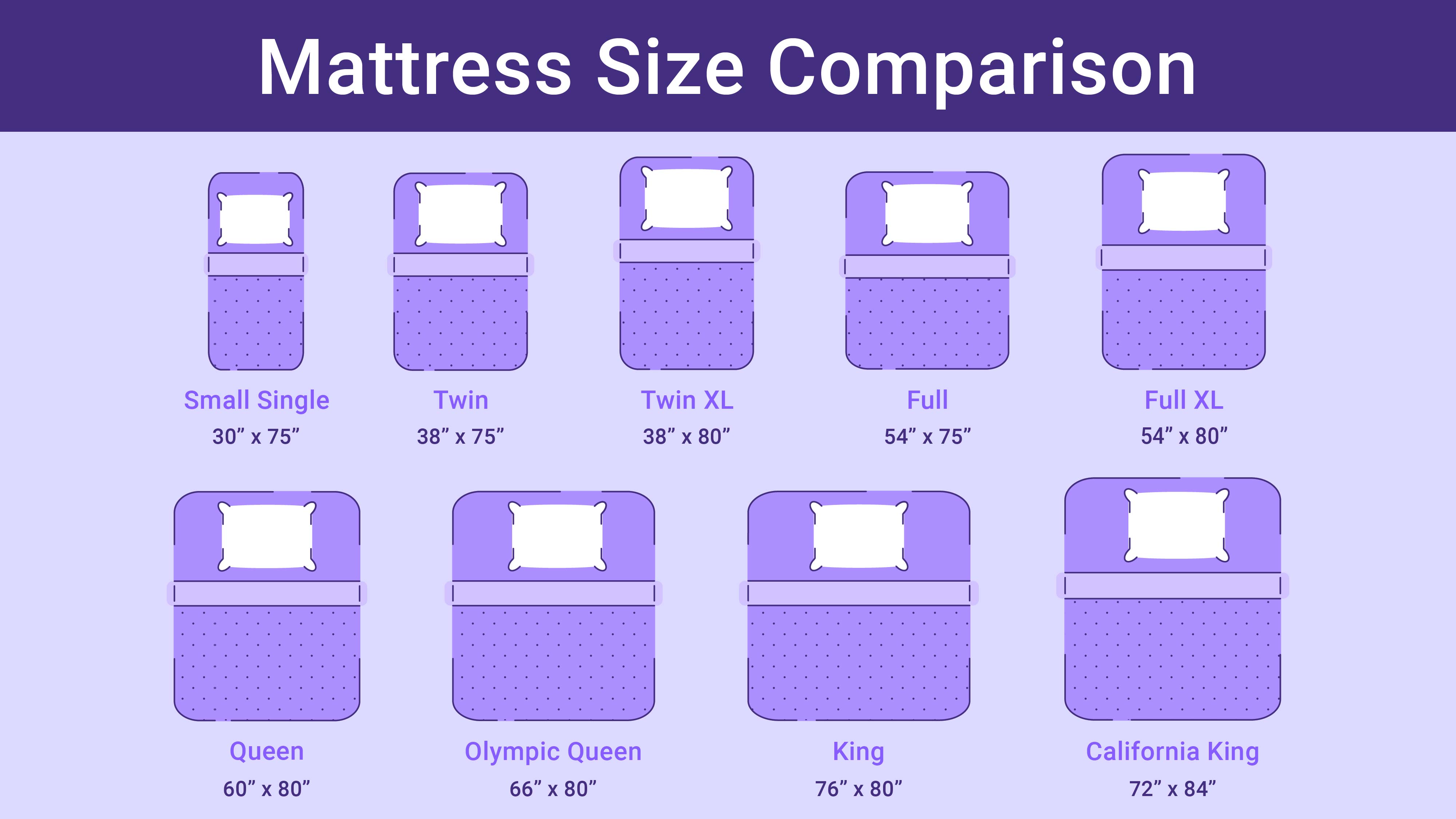
Mattress Types to Consider
While all of the above brands do live up to their reputation, don’t make a selection based on popularity; first consider the mattress type that’s best, and then read customer reviews for more insight on the brand’s policies and reputation.
1. Memory Foam Twin Size Mattresses
An average price for a twin memory foam mattress varies considerably. On average, plan to spend anywhere from $600 to $900, though the price points range from $200 on the low end to as high as $4,000. See how the price stacks up to the average longevity of a memory foam mattress— about 7 years if used every day— to determine if the price is worth the commitment.
Memory foam mattresses are popular because they are less likely to sag than an innerspring or hybrid mattress, which has pocket coils. If sleeping hot is an issue for you, consider a gel memory foam mattress, which means the top mattress layer includes cooling gel foam. Many sleepers report that the gel foam regulates body heat better.
In terms of body type, most memory foam mattresses are ideal for average-sized adults— think in terms of body mass index. If you’re above average in weight (230 pounds or more), a memory foam mattresses is still a viable, comfortable option, but we recommend looking at mattresses 12 inches or thicker that include a sturdy support layer.
2. Latex Twin Size Mattresses
Latex mattresses are available in a few different forms: organic, synthetic, or a blend of both. Each performs similarly, though their chemical makeup differs. Organic latex is made from the sap of rubber trees. A synthetic version, though manufactured, has similar chemical properties to its organic counterpart.
Latex mattresses are a popular choice because of their dense, high-quality materials and because of their average lifespan of 8 years. Both Talalay and Dunlop latex are made from the sap of rubber trees; Dunlop has no added chemicals, so while it’s eco-friendly, it’s also firmer and bouncier. Talalay has added chemicals to give it a softer, plusher feel.
Although latex feels similar to memory foam, it is usually more responsive and firm in feel, making it easier to change positions or get in and out of the bed. Latex mattresses are the most expensive type because of their longevity.
3. Innerspring Twin Size Mattresses
Rather than using support foam to create the base layer, an innerspring mattress has a base made of coils, oftentimes individually wrapped, which help cut down on motion transfer. An average twin size innerspring mattress is around $300 to $600.
Because of their design, these mattresses generally do not conform to your body and can cause unequal weight distribution and joint pressure. If you like the bounce of an innerspring, consider one with a pillow top or Euro top comfort layer, since this can help alleviate some pressure.
An innerspring mattress can be a good choice for people of all body compositions, depending on the model they purchase. Heavy people may want to consider a more durable innerspring mattress with a firm feel; a smaller person may consider a softer option for optimal comfort.
4. Hybrid Twin Size Mattresses
The hybrid option combines the contouring pressure relief of a memory foam mattress with the support, bounce, and motion isolation of an innerspring mattress, making it a popular choice among buyers. But be warned, these mattresses are heavy.
As with other memory foam mattresses, the memory foam feature of a hybrid mattress— the comfort layer— has a tendency to trap in body heat. A mattress with cooling properties like gel or copper can be a cooler alternative.
Hybrid mattresses range anywhere from medium-firm to extra firm. The average cost for a twin size hybrid mattress ranges from $150 to $5,000.
If you think you might need extra comfort but like all the other features of a hybrid or innerspring mattress, a lot of companies offer a pillow top or Euro top option to add to your mattress. These options are sewn-on additions to your mattress that offer an extra layer of comfort.
Pillow tops are plush and pillowy, whereas Euro tops are made of denser materials like foam or fiberfill. Each gives a little extra softness to the mattress surface, but Euro tops are typically higher quality and more durable.
Mattress Budget
Once you’ve narrowed down what type of mattress is best for your body composition, sleep style, and even temperature regulation, it often comes down to dollars and cents. Fortunately, shopping for a twin size mattress provides a huge range of possibilities with price points varying from $600 to $1,500 on a high-quality twin-size mattress.
Sleeping Position
Be sure to take your own sleep habits into consideration when seeking your best mattress. Each person needs different support based on the position they sleep in every night, whether that’s their side, back or stomach. Here’s a quick overview of what types of mattresses are best for each sleeping position.
1. Side Sleepers
Sleeping on your side is the most common sleep position. The best mattresses for side sleepers are medium in firmness because they offer a good mixture of comfort and support. Support is key to keeping the spine in natural alignment, which helps side sleepers rest more comfortably.
2. Back Sleepers
Back sleeping is less common than side sleeping, but it’s a relatively healthy position, especially for spinal alignment. The best mattresses for back sleepers are medium to firm to maintain even support. Like side sleepers, it’s important for a back sleeper’s mattress to foster healthy spine alignment, and a medium-firm or firm mattress should accomplish this.
3. Stomach Sleepers
Stomach sleeping is the least healthy of the sleeping positions, as it does not support the natural alignment of your spine. We especially discourage any mattress that has a tendency to sink or sag, as this can exacerbate this poor alignment. The best mattresses for stomach sleepers are firm or medium-firm and usually contain a thin comfort layer, since this helps keep the hips from sinking and the spine in a neutral line.
Sleeping Cool
There are many cooling technologies that can help a mattress feel cooler under sustained contact and slower to warm up than a standard foam bed. If you are set on a memory foam mattress, you have several options as these widely popular mattress types now contain many cooling technologies to regulate your sleeping temperature.
Though a gel memory foam mattress is made of the same basic materials as a traditional memory foam mattress, one major difference is in the cooling gel infused into the top layer. Traditional memory foam mattresses are known for holding in their heat, so the cooling gel in the top comfort layer draws heat away from the sleeper and out of the mattress.
We recommend a memory foam mattress with an advanced open-cell structure or cooling infusions, such as gel, graphite, or copper.
Another option is an innerspring mattress, thanks to the airflow in its support layer. Air moving through the coils helps the surface stay cooler than a solid foam base. Keep in mind that innersprings, while among the cooler mattress types, also tend to have the shortest lifespan because of the sagging they can develop.
Sleep Trials, Return Policies, and Warranties
If you’re still on the fence about a new mattress, a no-strings-attached option is to purchase the bed and take the company up on their sleep trial.
During the trial period, you generally have an average of 100 nights to determine if the mattress is right for you. Within that period of time, we recommend taking at least 30 days to see if the bed is a fit.
If it’s not, most mattress companies will extend a full refund. Some sleep trials are as long as 365 days, so always be sure to read the fine print so see how long you have to decide to keep your new bed.
In addition, you’ll also get the peace of mind from the warranty. The average warranty period is 10 years, though some companies offer a 20-year or lifetime warranty. Again, be sure to check the fine print so you know exactly how you’ll be covered.
Most warranties are prorated around the halfway mark of the warranty. This means that if you have a 20-year warranty, for example, you’ll be responsible for a portion of any needed repairs that occur after the first 10 years have expired.
Common Questions
What is the best twin size mattress overall?
In my testing the Zoma Start was the best all-around twin, balancing supportive spinal alignment, first-hours cooling, responsive repositioning, and a durable high-density base at a competitive price. For hot sleepers the Amerisleep AS6 Black Series cooled best, and for a firm feel the Amerisleep AS2 held the hips level on the back and stomach.
Which mattress in a box is best?
All of the above-listed mattresses are sold online and shipped as a mattress-in-a-box. Selecting which is “best” is subjective, as it’s strictly a matter of personal preference. With that being said, be sure to look at all the factors listed above, including mattress size, to find the best mattress in a box for your body type and sleeping position.
How much should a good twin mattress cost?
A twin mattress has a very broad price spectrum. It can range anywhere from $140 to $5,000. But if the price point at the higher end is giving you heartburn, don’t worry. Most twin beds on average sell for around $600 to $1500 depending on the type of mattress.
What twin mattress is best?
Twin mattresses are a popular choice for a variety of uses: guest rooms, kids’ rooms, daybeds, trundle beds, and college dorm rooms. When you’re looking for a new mattress set, you’ll need to take into consideration the many elements that factor into your own sleep health and compare them against your budget. All of the twin mattresses in our mattress review are great options to consider during their respective trial periods.
Do I need a box spring?
With advances in bed design, most mattresses can be placed on any flat surface. You can use a box spring, though some companies recommend placing a moisture-resistant piece of plywood between the box spring and mattress. Doing this will help to alleviate any potential sagging.
Viable base options for a number of mattresses include: mattress foundation, platform beds, adjustable bases, even the floor. Also, if you’re planning on adding bunk beds to your bedroom furniture set, remember that bunk beds— which support a standard twin rather than a twin XL— generally have slats and do not require a box spring.
Are twin beds for adults?
While twin size mattresses are a common choice for children’s rooms, adults can sleep on one as well. A twin bed is an excellent option for anyone who’s looking to make the most of a limited space. Just make sure you aren’t so tall that your feet will dangle over the edge—you might want to consider a twin XL mattress if you’re more than 6 feet tall.
Pick the Best Twin Mattress for You
With so much information about mattresses and optimal sleep performance buzzing around the web, it can seem like a daunting task when it comes to choosing a new mattress. But as we’ve outlined, as long as you identify your specific needs, like your sleeping position and your preferred mattress type, you can find your perfect mattress fit.
Once you do, remember you always have the sleep-trial window to change your mind, though we’re sure one of these options could end up being the right one for you.
Related Reads
- I Tested 50+ Mattresses to Find the 14 Best Mattresses for Restless Legs Syndrome of 2026

- I Tested 50+ Mattresses to Find the 14 Best Mattresses for Multiple Sclerosis of 2026

- I Tested 50+ Mattresses to Find the 14 Best Mattresses for Menopause of 2026

- I Tested 50+ Mattresses to Find the 14 Best Mattresses for Piriformis Syndrome of 2026