I Tested 50+ Mattresses to Find the 14 Best Mattresses for Neck Pain of 2026
Dr. Jennifer Miller, PT, DPT: Doctor of Physical Therapy
Dr. Jennifer Miller is a compassionate and skilled outpatient physical therapist with nine years of experience in the field. She earned her Doctor of Physical Therapy from Elon University and holds a Bachelor of Science in Health Science from Minnesota State University-Mankato. Dr. Miller specializes in Neurological, Geriatric, and Vestibular Physical Therapy and serves as […]

Top Recommendation of 2026: Amerisleep AS3
After testing 50+ mattresses for this guide, the Amerisleep AS3 earned the top spot for the best mattress for neck pain of 2026 because it kept my head and shoulders level with my spine across the widest range of sleeping positions. During testing, lying on my side, my shoulder sank into the HIVE zoned layer far enough that my head stayed level rather than tipping up toward the ceiling, and I did not have to stack a second pillow to close the gap under my neck. On my back, the surface held my upper back steady without letting my head drop backward into the foam.
The AS3 suits side sleepers who need the shoulder to sink while the head stays level, back sleepers who want cushioning that stops short of sinkage, and couples where one partner wakes easily, since movement from the other side barely registered and the bed scores 10 out of 10 on Motion Transfer. That combination of level shoulder positioning, steady back support, and low motion transfer is what made it the top overall recommendation in this guide.

Every mattress featured on Sleep Junkie is evaluated using the same testing framework for support, pressure relief, cooling, motion isolation, edge support, responsiveness, and overall value. Learn How We Test Mattresses.
- Best Overall Mattress: Amerisleep AS3
- Best Purple Alternative: FORM Prime
- Best Luxury Mattress: Zoma Boost
- Best Budget Mattress: Vaya Hybrid
- Best Mattress For Side Sleepers: Helix Midnight Luxe
- Best Innerspring Mattress: Saatva Classic
- Best Hybrid Mattress: Leesa Sapira Chill Hybrid
- Best Pillow Top Mattress: Nolah Evolution
- Best Latex Mattress: Amerisleep Organica
- Best Cooling Mattress: Amerisleep AS6 Black Series
- Best Organic Mattress: PlushBeds Signature Bliss
- Best Soft Mattress: Amerisleep AS5 Hybrid
- Best Hotel Mattress: Westin Heavenly Bed
- Best Mattress in a Box: Zoma Start
The best mattress for neck pain is one that lets the shoulder sink while the head stays level with the spine, and after testing 50+ mattresses I found the Amerisleep AS3 did that most consistently across sleeping positions. This guide covers 14 picks, each scored on support, pressure relief, cooling, motion isolation, edge support, responsiveness, and value, with firmness options running from 3 out of 10 up to 8 out of 10 so the recommendation matches your sleeping position rather than an average sleeper.
A mattress is not a treatment. What it does control is the angle your neck holds for seven or eight hours, and that angle is set by how far your shoulder drops into the surface relative to your head. Below I break down what each of the 14 picks did in testing, who it fits, and where it falls short.
Best Mattress for Neck Pain

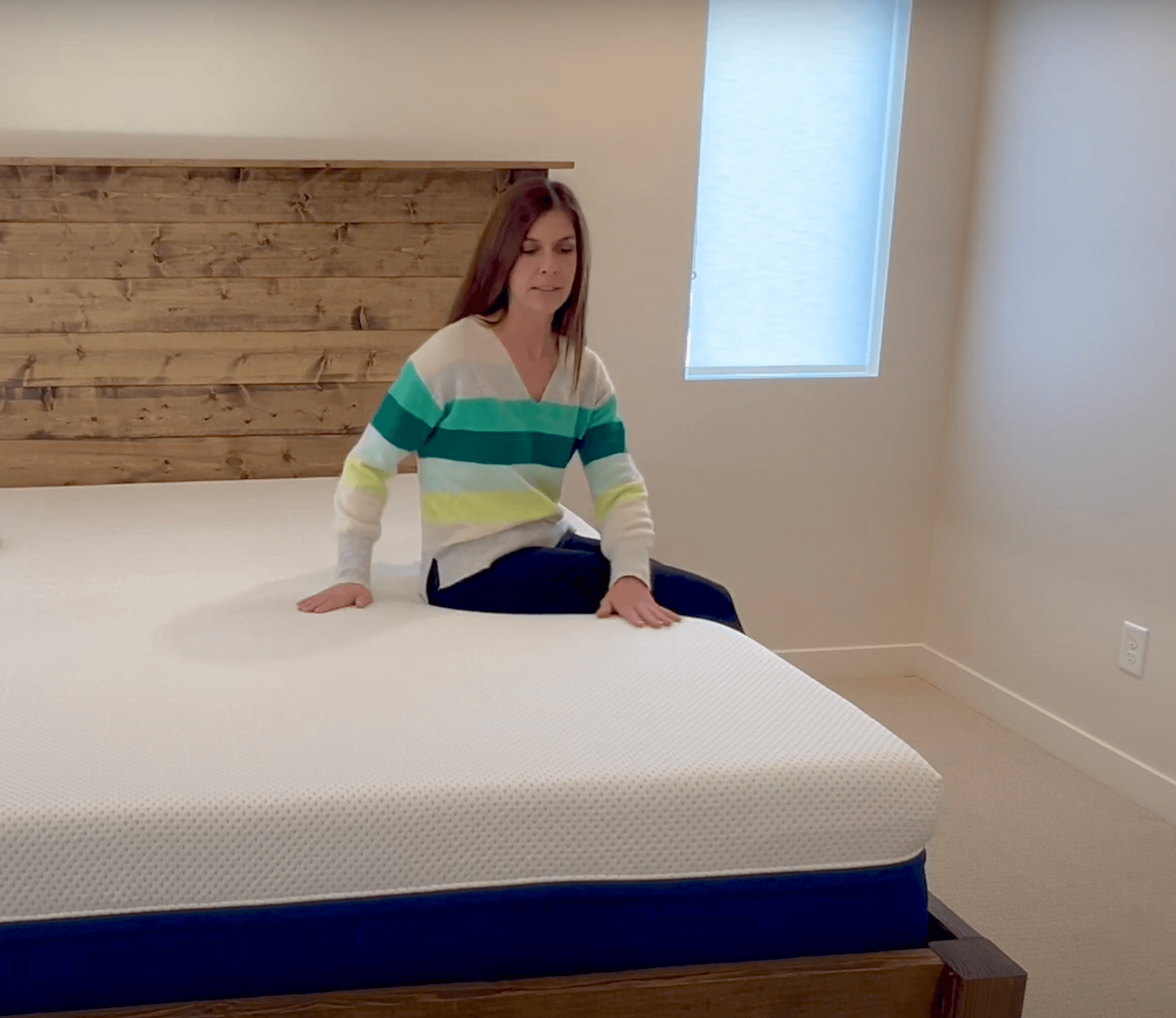
Watch Our Amerisleep AS3 Video Review
What separated the Amerisleep AS3 from the rest of this list showed up in the first two minutes on my side. My shoulder sank into the surface far enough that my head stayed level with my spine, and the pillow I was already using suddenly felt like the right height instead of too flat. That gap under the neck is the thing a shopper on this page is actually trying to close, and the AS3 closed it without a second pillow.
The Bio-Pur comfort layer is why. It gave under my shoulder without the slow, gluey lag of traditional memory foam, so when I rolled from my side to my back the surface released me instead of holding the shape of my last position. Combination sleepers get the benefit of that: repositioning does not drag the neck through a divot on the way out.
On my back, the HIVE zoned transition layer stayed firmer under my hips and softer under my shoulders. My head did not drop backward into the foam, and my lower back never lost contact with the surface. The AS3 felt less heat retentive than the denser all foam beds I compared in the same session, and the cover was cool on first contact rather than warm.
There are limits. At 5 to 6 out of 10 this is a medium, so a stomach sleeper or a heavier sleeper who wants a firm surface underfoot will read it as soft. Edge Support scored 8 out of 10, and when I sat on the perimeter to put my shoes on, it compressed more than the coil beds further down this page.
The AS3 is the pick for a side or back sleeper who needs the shoulder to sink while the head stays level, who runs warm, and who shares a bed with someone who moves at night.
- 9 Value
- 8 Edge Support
- 9 Trial Period
- 9 Response Time
- 10 Motion Transfer
- 10 Cooling & Breathability
I tested 50+ mattresses for this guide and ranked the Amerisleep AS3 first on what happened at the shoulder line, not on its spec sheet.
Shoulder positioning. During testing, lying on my side, my shoulder pressed into the HIVE zoned transition layer far enough that my head stayed level with my spine instead of tipping up toward the ceiling. I did not have to stack a second pillow to correct it. For a side sleeper, that means the pillow you already own is more likely to be the right height.
Back support. On my back, the medium surface held my upper back steady while the zoned layer stayed firmer under my hips, so my head did not drop backward into the foam. My lower back stayed in contact with the surface rather than bridging over a gap.
Responsiveness and motion. Rolling from side to back, the Bio-Pur foam released quickly rather than holding my last shape. When my partner got in and out of bed, movement on my side barely registered, which lines up with its 10 out of 10 Motion Transfer score, so a light sleeper sharing the bed is less likely to be pulled awake mid position change.
Best For:
- Side sleepers who need the shoulder to sink while the head stays level
- Back sleepers who want cushioning that stops short of sinkage
- Couples where one partner wakes easily
Compare Instead:
- Amerisleep AS5 Hybrid if you want a noticeably softer surface with deeper shoulder sinkage
- Saatva Classic if you want to choose a firmer feel or want coil bounce underneath
- Vaya Hybrid if budget is the deciding factor
Side sleeping is where the AS3 makes its case. My shoulder settled into the comfort layer and my head stayed level, so I was not fighting my pillow to close the gap under my neck. Pressure at the shoulder eased within a minute or two rather than building.
On my back, the surface held my upper back steady and my head did not tip backward. There was cushioning under the shoulder blades, but it stopped short of sinkage, and my lower back never lost contact with the mattress.
Rolling between positions, the foam released quickly. I did not have the sensation of climbing out of a divot, which is what makes it usable for a combination sleeper rather than a strict side sleeper.
On temperature, the cover felt cool on first contact and the surface did not warm up as quickly as the denser all foam beds I compared in the same session. It is a medium, so a stomach sleeper will feel the hips settle lower than they want, and a heavier sleeper who prefers a firm surface should look at the coil picks further down this page.
The 3 inches of Bio-Pur foam at the top is what let my shoulder drop while my head stayed level in side sleeping. It gives under a concentrated load and then releases quickly, which is why rolling from side to back did not feel like climbing out of a divot, and it is also the reason the surface did not warm up as fast as the denser all foam beds I compared in the same session.
Under it, the 2 inch Affinity transition layer with HIVE is why my back sleeping held. It stays firmer under the hips and softer under the shoulders, so the heaviest part of the body does not sink further than the lightest part and the head is not left to tip back.
The 7 inch Bio-Core base is why the surface felt the same at the end of a testing week as it did on night one. It is also why the perimeter compressed rather than collapsed when I sat on it, though at 8 out of 10 the edge still gives more than the coil beds on this page.
Pros:
- Motion Transfer (10/10): when my partner got in and out of bed, movement on my side barely registered
- Cooling and Breathability (10/10): the cover was cool on first contact and the surface did not warm up as quickly as the denser all foam beds I compared in the same session
- Side sleeping alignment: my shoulder sank into the HIVE zoned layer while my head stayed level with my spine, with no second pillow needed
- Response Time (9/10): the Bio-Pur foam released quickly when I rolled from side to back rather than holding my previous shape
Cons:
- Edge Support (8/10): sitting on the perimeter to put my shoes on, it compressed more than the coil beds on this page
- At 5 to 6 out of 10 it is a medium, so stomach sleepers and heavier sleepers who want a firm surface underfoot will find it yields more than they want
- All foam construction, so there is no coil bounce to push off when repositioning
Why The Amerisleep AS3 Won
Across the 14 mattresses I tested for this guide, the AS3 was the one that kept my head level with my spine in side sleeping without a second pillow, and held my upper back steady on my back without letting my head drop. It scored 10 out of 10 on both Motion Transfer and Cooling and Breathability, and its only real give was an 8 out of 10 edge. For a side or back sleeper who runs warm and shares a bed with a restless partner, it is the pick.
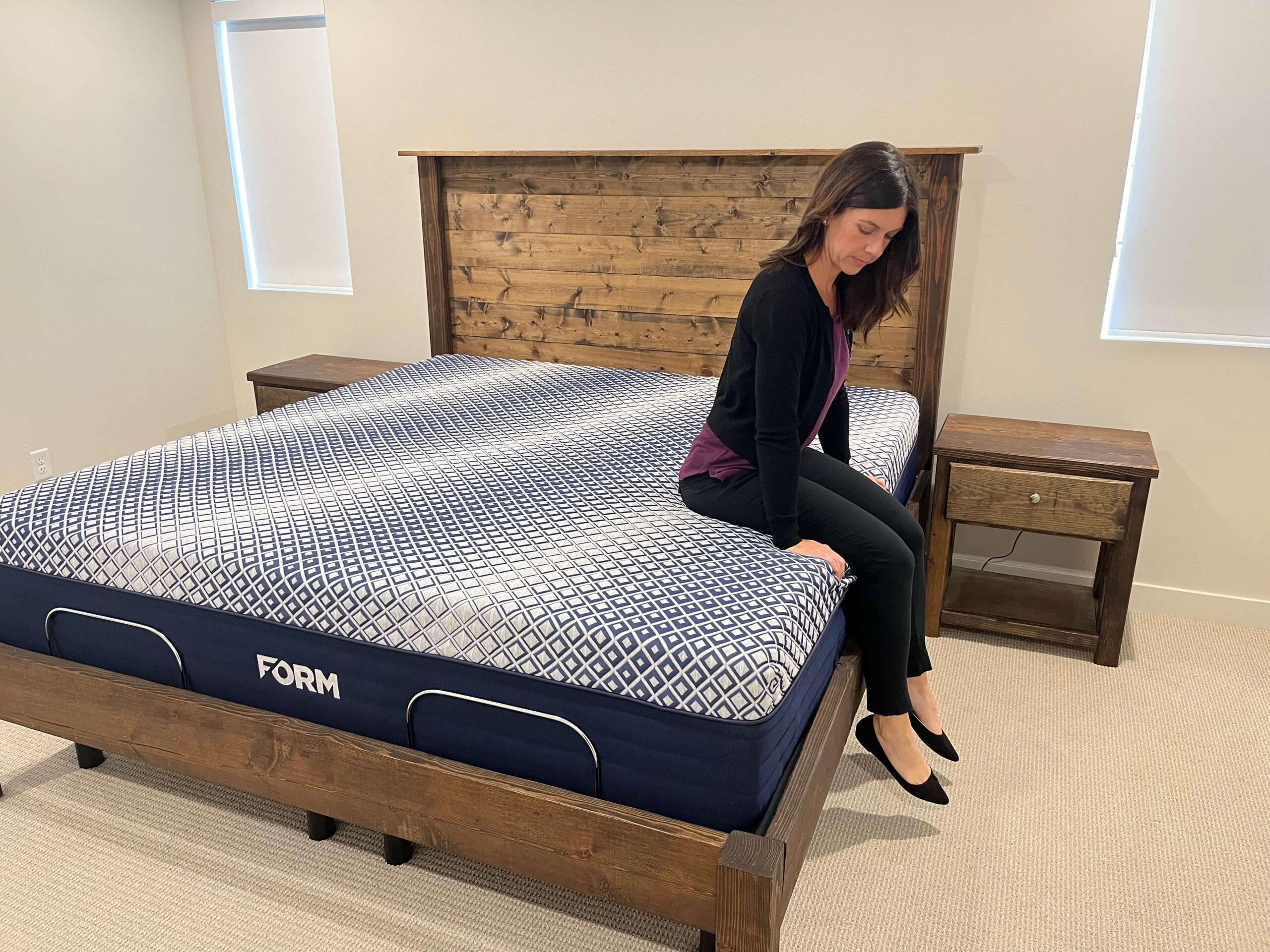
Watch Our FORM Prime Video Review
When I tested the FORM Prime, what stood out first was the grid surface. Instead of slowly sinking in, you settle onto something that gives where you press and springs back the moment you move.
It has a buoyant feel, somewhere between foam and latex, and the reinforcement woven through the grid keeps it from feeling wobbly the way some grid beds can.
For a neck-pain page, the reason it fits comes down to how it keeps the body in line. The zoned coil base is firmer under the lower back and softer under the shoulders, so during testing my spine settled into a fairly neutral line and my head and shoulders stayed level with the rest of my body rather than propping up or dropping.
A surface that holds that neutral position, and that works with a supportive pillow rather than against it, is the kind of thing this list looks for, and the medium feel delivers it without a hard, rigid surface.
I found it best suited to side and back sleepers, along with combination sleepers who move around. The shoulder zone gives enough to cradle the joint without letting the hip fall out of line, which helps keep the neck and spine aligned in either position.
The cover felt cool to the touch on first contact and did not warm up as quickly as the foam beds I compared in the same session, because the grid is full of open channels and heat moved out through the surface rather than pooling underneath.
It is not the right fit for everyone. Dedicated stomach sleepers and heavier back sleepers who want a very firm surface may find the medium feel too soft, and those who prefer the deep, cushioned hug of memory foam will not find it here since the grid stays responsive rather than sinking.
It also comes in a single firmness, and anyone set on natural materials will want to look elsewhere on this list.
- 8 Value
- 10 Edge Support
- 10 Trial Period
- 9 Response Time
- 10 Motion Transfer
- 9 Cooling & Breathability
The FORM Prime took the Purple alternative slot because it delivers the grid feel without the instability that usually comes with it.
The grid, reinforced. During testing on my side, the GelGrid surface gave where my shoulder pressed and sprang back the moment I moved, which is the feel a shopper looking at Purple is after. What is different here is the Integra-Mesh reinforcement woven through the grid: it cut the surface jiggle I get on grid beds, so the bed responded at the contact point without the whole surface moving with me.
Zoned coils under the grid. The ZoneCoil 7-Series core is firmer under the lumbar and softer under the shoulder. On my side, my shoulder settled into the softer zone while the firmer zone held my hip up, so my head stayed level rather than propping up or dropping. On my back, the lumbar zone held and my head and shoulders stayed in line. A grid on its own does not do that. A grid over a zoned coil core does.
Edge and motion. The BaseFlex encasement kept the perimeter stable, and when I sat on the side to put my shoes on it held its shape rather than rolling away, matching the 10 out of 10 Edge Support score. Sharing the bed, I barely noticed movement from the other side even when one of us shifted, matching the 10 out of 10 Motion Transfer score. For a couple, that pair of numbers is the argument.
Best For:
- Side and back sleepers who want the shoulder cushioned without the hip dropping out of line
- Combination sleepers who reposition often and do not want to sink in
- Sleepers considering a Purple mattress who want a grid feel with zoned coil support underneath
Compare Instead:
- Amerisleep AS3 if you prefer the enveloping contour of memory foam over a responsive grid feel
- Amerisleep AS5 Hybrid if you want a much softer, plush surface
- Vaya Hybrid if budget is your main concern
Side sleeping: my shoulder settled into the softer shoulder zone of the grid and stopped there, and my head stayed level rather than kinking up toward the ceiling or down toward the surface. The give is immediate rather than gradual. There is none of the slow settling of memory foam, and none of the flat push of a plain coil bed either.
Back sleeping: the firmer lumbar zone held my lower back, my hips stayed up, and my head and shoulders stayed in line rather than tilting backward. The medium feel gave enough at the shoulder blades without letting the midsection drop.
Position changes: this is the FORM Prime’s strongest quality and the reason it is the Purple alternative. The grid springs back the moment you lift off, so rolling between my back and my side never meant escaping a divot. I never felt locked into one spot. The handoff from the grid into the coils underneath felt like one surface rather than two beds stacked on top of each other.
Temperature: the cover felt cool on first contact and the surface stayed less heat retentive than the foam beds I compared in the same session, because the grid is full of open channels and heat moved out through the surface rather than pooling under me.
Motion: sharing the bed, I barely noticed movement from the other side even when one of us shifted, which matches the 10 out of 10 Motion Transfer score.
The GelGrid comfort layer is a polymer grid of open cells rather than a foam slab, and that is why it gave under my shoulder and sprang back the instant I lifted off instead of holding the shape of where I had been. It is also why the surface did not warm up as quickly as the foam beds I compared in the same session: the cells are open channels, so heat moved out through the surface rather than pooling underneath my body.
The Integra-Mesh reinforcement woven through that grid is the reason the FORM Prime does not wobble. On other grid beds I have tested, pressing down in one spot moves the surface several inches away. Here the grid flexed where I loaded it and stayed put everywhere else, so the cushioning at the shoulder did not come with a trampoline underneath it.
The 3 inch ContourFlex transition layer is why the bed feels like one surface rather than two. Without it you get the grid’s snap on top and the coils’ push underneath as separate sensations. With it, the handoff was seamless, and I never felt myself passing through a boundary as I settled.
The ZoneCoil 7-Series core is what does the alignment work. Split into seven zones, it is softer under the shoulder and firmer under the lumbar, and that split is exactly what I felt: on my side, my shoulder settled while my hip stayed up, so my head stayed level. Individually wrapped, those coils are also why my partner’s movement barely registered on my side, earning the 10 out of 10 Motion Transfer score.
The BaseFlex foundation reinforces the perimeter from beneath, which is why the edge held its shape when I sat on it to put my shoes on rather than rolling away, and why Edge Support scores 10 out of 10. Above everything, the AeroWeave cover has airflow built into the stitching, and it felt cool to the touch on first contact. The build is fiberglass free, which matters if you have ever had to strip a cover and worry about what came out with it.
Pros:
- Edge Support (10/10): when I sat on the side, the perimeter held its shape rather than rolling away, so a couple can use the full width of the bed
- Motion Transfer (10/10): sharing the bed, I barely noticed movement from the other side even when one of us shifted
- Trial Period (10/10): 365 nights, the joint longest trial on this page
- Zoned coil support: the softer shoulder zone let my shoulder settle while the firmer lumbar zone kept my hips up, so my head and shoulders stayed level rather than propping up or dropping
Cons:
- Value (8/10): the lowest sub-score on the product, and the price sits well above the budget picks on this page
- Single firmness option, so a sleeper who wants a noticeably softer or firmer version has no way to get one
- Dedicated stomach sleepers and heavier back sleepers may find the medium feel yields more than they want
- The grid stays responsive rather than sinking, so a sleeper who wants a deep memory foam hug will not get one here
On my side, the softer shoulder zone let my shoulder settle in while my head stayed level, and on my back the firmer lumbar coils held my hips up so my head and shoulders did not tilt. The grid springs back the moment you move rather than holding your last shape. It is the pick for a side or combination sleeper who runs warm, wants a responsive surface rather than a memory foam hug, and shares the bed.

Watch Our Zoma Boost Video Review
The Zoma Boost is the tallest bed on this page at 15 inches, and the first thing I noticed was that the height does not translate into sink. The quilted gel foam under the cover and the graphite-infused Energex memory foam beneath it gave under my shoulder, but the Reactiv transition layer stopped the descent before my hip followed. On my side, that meant my shoulder dropped and my head stayed level, without the slow settling I get on a deep all foam bed.
On my back, the zoned coil core is what held the line. My hips stayed up, my upper back stayed in contact with the surface, and my head did not tip backward. This is a Medium-Firm, about 5.5 out of 10, so it pushes back more than the AS3 does. If you want to be enveloped, this is not that.
The graphite-infused top layer meant the surface did not warm up as quickly as the denser all foam beds I compared in the same session, and the cover felt cool on first contact. The zoned edge coils held their shape when I sat on the perimeter, matching its 10 out of 10 Edge Support score, and when my partner rolled over the movement on my side barely registered.
Where it gives: at 15 inches it needs deep pocket sheets, and it carries a 10 year warranty where several picks on this page carry a lifetime one. Its Response Time and Cooling scores both sit at 9 out of 10 rather than 10, and that reads as a beat of lag when you push off to reposition.
The Zoma Boost is the pick for a side or back sleeper who wants a firmer, taller luxury build than the AS3, runs warm, and shares the bed with someone who moves.
- 10 Value
- 10 Edge Support
- 9 Trial Period
- 9 Response Time
- 10 Motion Transfer
- 9 Cooling & Breathability
The Zoma Boost took the luxury slot because it delivers a firmer, taller build without letting the extra height turn into sinkage.
Depth without sink. During testing, the quilted gel foam and graphite-infused Energex memory foam gave under my shoulder, but the Reactiv transition layer caught the descent before my hip followed it down. On my side, my shoulder dropped and my head stayed level. On a 15 inch bed that is not automatic.
Zoned coil support. On my back, the zoned coil core held my hips up while my upper back stayed in contact with the surface, so my head did not tip backward into the pillow. At Medium-Firm, about 5.5 out of 10, it pushes back noticeably more than the medium picks on this page.
Edge and motion. When I sat on the perimeter, the zoned edge coils held their shape rather than rolling away, matching the 10 out of 10 Edge Support score, so a couple can sleep to the very edge of a queen without either person feeling pushed off. When my partner rolled over, movement on my side barely registered.
Best For:
- Side and back sleepers who want a firmer luxury feel than a medium memory foam bed
- Couples who sleep close to the edges of the bed
- Sleepers who run warm and want a hybrid rather than an all foam build
Compare Instead:
- Amerisleep AS3 if you want a softer medium feel and a deeper memory foam contour
- Nolah Evolution if you want the same 15 inch scale but with a choice of three firmness levels
- Vaya Hybrid if you want a hybrid at a fraction of the price
Back Sleeping
The zoned coil core did the work here. My hips stayed up rather than settling into the foam, my upper back stayed in contact with the surface, and my head did not tip backward. The quilted gel foam at the top gives just enough that the shoulder blades are cushioned, but it stops well short of a hug.
Side Sleeping
My shoulder pressed into the graphite-infused Energex layer and dropped, but the Reactiv transition foam underneath caught it before my hip followed, so my head stayed level rather than tipping up. At Medium-Firm this is a firmer landing than the AS3 gives, and lighter side sleepers may find the shoulder does not sink as far as they want.
Stomach Sleeping
This is the position the Boost handles best of the luxury picks here. The firmness kept my hips from dropping below my shoulders, so my lower back did not arch. The cushioning under my chest is forgiving without letting the midsection dip.
Temperature and motion
The cover felt cool on first contact and the surface did not warm up as quickly as the denser all foam beds I compared in the same session. When my partner rolled over, the movement on my side barely registered.
The graphite-infused Energex memory foam at the top is the reason the surface did not warm up as quickly as the denser all foam beds I compared in the same session. Graphite conducts heat away from the contact point, and the quilted gel foam under the ultra-cooling cover is what made it feel cool on first touch rather than warm.
The Reactiv transition foam is why 15 inches of bed does not become 15 inches of sink. It catches the shoulder before the hip follows it down, which is what kept my head level in side sleeping and let me push off and reposition without waiting for the foam to release.
The zoned edge coils are why the perimeter held its shape when I sat on it, and why my partner rolling over on the far side barely registered on mine. The durable base foam under the coils is the reason the surface felt the same at the end of a testing week as it did on night one.
Pros:
- Value (10/10) and Edge Support (10/10): the joint highest value score on this page paired with a perimeter that held its shape when I sat on it
- Motion Transfer (10/10): when my partner rolled over, movement on my side barely registered
- Depth without sink: the Reactiv transition layer caught my shoulder before my hip followed, so my head stayed level on a 15 inch bed
- Cools on contact: the cover felt cool on first touch and the surface did not warm up as quickly as the denser all foam beds I compared
Cons:
- Response Time (9/10): pushing off to reposition, the surface recovers a beat slower than the coil heavy picks here, so combination sleepers who move often will notice the lag
- At 15 inches it is the tallest bed on this page and needs deep pocket sheets, and it is heavy enough that moving it is a two person job
- The 10 year warranty is shorter than the lifetime coverage several picks here carry
- At Medium-Firm, about 5.5 out of 10, lighter side sleepers may find the shoulder does not sink as far as they want
On my back, the zoned coil core held my hips up and my head did not tip backward, and on my side the Reactiv layer caught my shoulder before my hip followed it down. Fifteen inches of bed, and none of it turned into sink. It is the pick for a side or back sleeper who wants a firmer, taller luxury build than a medium memory foam bed gives, runs warm, and sleeps close to the edge with a partner.
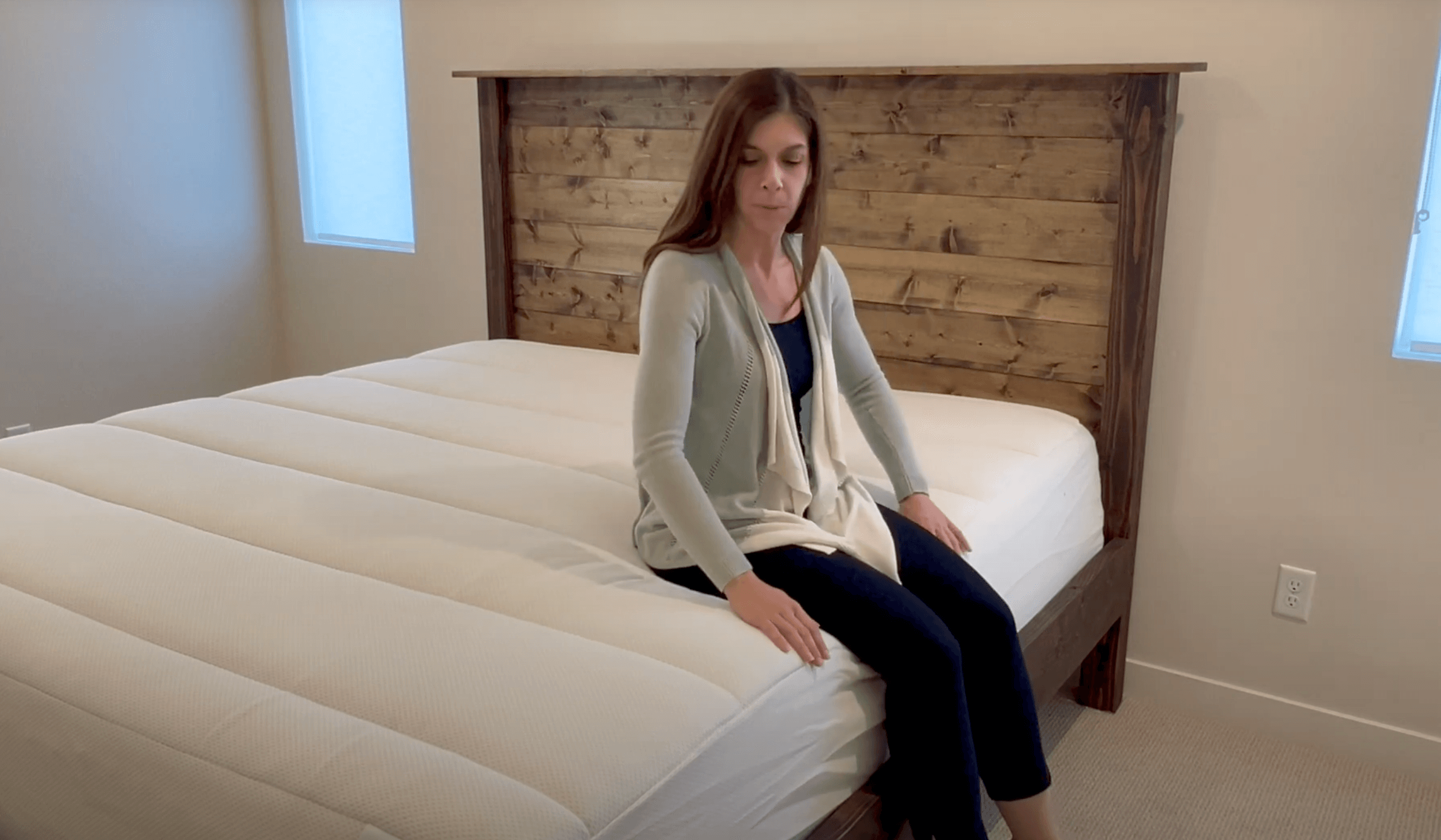
Watch Our Vaya Hybrid Video Review
The Vaya Hybrid is the least expensive bed on this page, and the interesting thing about testing it is what it does not do. It does not have a zoned comfort layer, it does not have a cooling cover, and it does not try to. What it has is a Vaya Comfort Foam top over a pocketed coil base, and in side sleeping that was enough to let my shoulder drop while my head stayed level.
Lying on my side for a stretch, I did not get the tingling in my arm that a too firm surface gives me. My hips and shoulders sank into the foam and my spine stayed level, without the deep settling of a thicker memory foam bed. On my back, my lower back stayed in contact with the surface with no gap under the lumbar curve. On my stomach, my hips settled lower than I wanted, and I would not recommend it as a dedicated stomach sleeper bed.
The foam is open cell rather than dense memory foam, so it did not cling to warmth the way the denser all foam beds I compared in the same session did, and the coil core moved air underneath. It felt less heat retentive, not cold.
The honest limitation is motion. Vaya scores 7 out of 10 on Motion Transfer, the lowest sub-score on the product and the lowest of any bed on this page. When my partner shifted, I felt it. Not a jolt, but enough that a light sleeper sharing a queen will notice it, and the coil core is why.
The Vaya Hybrid is the pick for a side or back sleeper on a budget who wants a coil bed rather than a slab of foam, and who either sleeps alone or shares with someone who does not move much.
- 10 Value
- 10 Edge Support
- 9 Trial Period
- 10 Response Time
- 7 Motion Transfer
- 9 Cooling & Breathability
The Vaya Hybrid took the budget slot because it gets the one thing right that matters most on this page, and is honest about what it gives up to do it.
Shoulder drop at a budget price. Lying on my side for an extended stretch, my shoulder sank into the Vaya Comfort Foam and my head stayed level with my spine. I did not get the tingling in my arm that I get on a surface too firm to let the shoulder in. It scores 10 out of 10 on Value, and this is why.
Coils, not a foam slab. On my back, the pocketed coil base held my hips up and my lower back stayed in contact with the surface rather than bridging over a gap. Most beds at this price are a foam slab with a firmer foam base underneath. The coil core is what a budget shopper is actually gaining here.
Where it gives. It scores 7 out of 10 on Motion Transfer, the lowest sub-score on any product on this page. When my partner shifted, I felt it. There is also no zoned comfort layer, so the surface treats the shoulder and the hip the same way rather than softening under one and firming under the other.
Best For:
- Side and back sleepers who want a coil bed on a budget
- Solo sleepers, or couples where the other person does not move much at night
- Sleepers who want a straightforward build rather than cooling covers and zoned layers
Compare Instead:
- Amerisleep AS3 if you want zoned support and 10 out of 10 motion isolation and can stretch the budget
- Zoma Start if you want the lowest profile and price and do not need a coil core
- Zoma Boost if you want the same hybrid idea built to a luxury standard
Side sleeping: my shoulder and hip sank into the foam and my spine stayed level. Lying there for an extended stretch, I did not get the tingling or numbness in my arm that a surface too firm for the shoulder gives me.
Back sleeping: my lower back stayed in contact with the surface with no gap under the lumbar curve, and the coil core held my hips up rather than letting them settle.
Stomach sleeping: my hips settled lower than my shoulders. There is enough resistance that it is not a disaster, but this is not a dedicated stomach sleeper bed and I would not buy it as one.
Temperature: the open cell foam did not cling to warmth the way the denser all foam beds I compared in the same session did, and the coil core moved air underneath. It felt less heat retentive, not cold.
Motion: this is where it gives. Vaya scores 7 out of 10 on Motion Transfer, the lowest on this page. When my partner shifted position, I felt it through the coils. Not a jolt, but enough that a light sleeper sharing a queen will notice it.
There are only two layers here, and that is the point. The Vaya Comfort Foam on top is an open cell foam rather than dense memory foam, which is why my shoulder sank in during side sleeping without the slow settling I get on a thicker foam bed, and why the surface did not cling to warmth the way the denser all foam beds I compared in the same session did.
The pocketed coil base is what a budget shopper is actually buying. It is why my hips stayed up on my back and my lower back stayed in contact with the surface instead of bridging over a gap, and it is why the perimeter held when I sat on it, matching the 10 out of 10 Edge Support score.
Those same coils are also why Motion Transfer sits at 7 out of 10. Individually wrapped coils are quieter than a connected innerspring, but with only 2 inches of foam above them there is not enough material to absorb a partner’s movement before it reaches you. That is the honest tradeoff of a two layer build at this price.
Pros:
- Value (10/10) and Edge Support (10/10): the joint highest value score on this page, with a perimeter that held when I sat on it
- Response Time (10/10): the foam released immediately when I rolled, so changing position never meant climbing out of a divot
- Side sleeping pressure relief: lying on my side for an extended stretch, my shoulder sank in and my head stayed level, with no tingling or numbness in my arm
- A real pocketed coil core at a price where most beds are a foam slab
Cons:
- Motion Transfer (7/10): the lowest sub-score on this page. With only a thin comfort layer over the coils, I felt my partner shift position. A light sleeper sharing a queen will notice it
- No zoned comfort layer, so the surface treats the shoulder and the hip the same way rather than softening under one and firming under the other
- At 5 to 6 out of 10 it is a medium, so hips settle lower than shoulders in stomach sleeping and it is not a dedicated stomach sleeper bed
On my side, my shoulder sank into the comfort foam and my head stayed level, with no tingling in my arm after an extended stretch. On my back, the coil core held my hips up and my lower back stayed in contact with the surface. It is the pick for a side or back sleeper on a budget who wants a coil bed rather than a foam slab, and who sleeps alone or with a partner who does not move much, because at 7 out of 10 motion transfer is where this bed gives.
5. Best Mattress for Side Sleepers:
Helix Midnight Luxe

Warranty
Limited Lifetime

Sleep Trial
120 Nights

Shipping
Free
Watch Our Helix Midnight Luxe Video Review
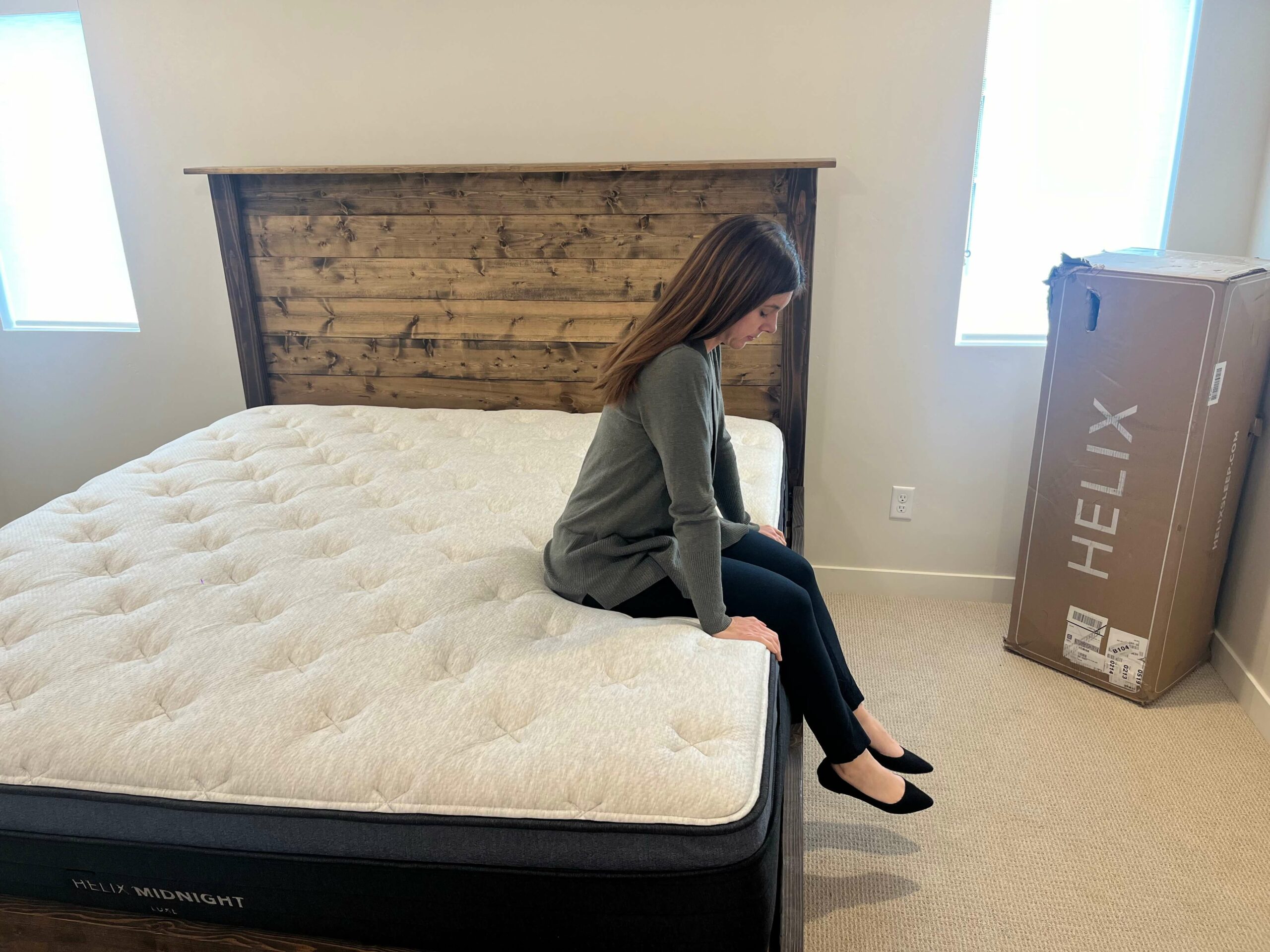
The Helix Midnight Luxe took the side sleeper slot because of what its zoned coil layer does at the shoulder. During testing, lying on my side, the softer coils under my shoulder let it drop into the memory foam while the firmer coils under my lumbar held my hips up. My head stayed level rather than tipping toward the mattress, which is the specific failure a side sleeper is trying to avoid.
The memory foam layers above the coils are plush, but they stop short of the deep settle I get on an all foam bed. Rolling onto my back, the surface held me without letting my head drop backward, though the transition took a beat longer than it does on the more responsive picks on this page. That is the tradeoff of a genuinely plush pillow top.
Edge support is the standout number here. It scores 10 out of 10, and sitting on the perimeter to put my shoes on, it held its shape rather than rolling away. For a couple sharing a queen who each sleep near their own edge, that is usable width rather than decorative width.
The surface felt cooler on first contact than the denser all foam beds I compared in the same session, and it did not warm up as quickly. When my partner shifted, movement on my side barely registered, which matches its 10 out of 10 Motion Transfer score.
Where it gives: Value scores 7 out of 10, the lowest sub-score on the product and the joint lowest on this page. This is an expensive bed. It also ships in a single medium feel, so if you want a firmer or softer version of the same build, there is not one.
The Helix Midnight Luxe is the pick for a side sleeper who wants a plush pillow top with zoned coil support underneath, sleeps near the edge of a shared bed, and is willing to pay for it.
- 7 Value
- 10 Edge Support
- 9 Trial Period
- 9 Response Time
- 10 Motion Transfer
- 9 Cooling & Breathability
The Helix Midnight Luxe is the side sleeper pick on this page, and the zoned coil layer is the reason.
The shoulder zone. During testing, lying on my side, the softer coils under my shoulder let it drop into the memory foam above while the firmer coils under my lumbar held my hips up. My head stayed level rather than tipping down toward the surface. A side sleeper who has been stacking two pillows to close that gap will feel the difference on night one.
Plush without the deep settle. The memory foam layers cushion the shoulder and hip, but the coils underneath stop the descent. On my back the surface held me without letting my head drop backward, although the transition between positions took a beat longer than on the more responsive picks here.
Edge and motion. When I sat on the perimeter, it held its shape rather than rolling away, matching the 10 out of 10 Edge Support score. When my partner shifted, movement on my side barely registered, matching the 10 out of 10 Motion Transfer score. For a couple who each sleep near their own edge of a queen, that combination is the whole argument.
Best For:
- Side sleepers who need the shoulder to drop while the head stays level
- Couples who sleep near the edges of a shared bed
- Sleepers who want a plush pillow top without sinking into an all foam bed
Compare Instead:
- Amerisleep AS3 if you want the same alignment result at a much lower price
- Amerisleep AS5 Hybrid if you want an even softer, plusher surface
- Nolah Evolution if you want a choice of three firmness levels instead of a single medium
On my side, the softer shoulder coils let my shoulder drop into the memory foam while my head stayed level with my spine. The hug is real, but the coils underneath stop it before it becomes a sink, so I never had the sensation of being held in one position.
On my back, the firmer lumbar coils lifted my hips and my lower back stayed in contact with the surface. My head did not drop backward into the pillow top.
Switching between the two took a beat longer than on the more responsive picks on this page. The memory foam has to release before the coils can reset you, and on a plush pillow top that handoff is not instant. A combination sleeper who changes position frequently will feel that lag.
On temperature, the surface felt cooler on first contact than the denser all foam beds I compared in the same session, and it did not warm up as quickly under sustained contact.
The three zone pocketed coil core is the reason this is the side sleeper pick and not a generic plush hybrid. Softer coils sit under the shoulder and firmer coils under the lumbar, and that is exactly what I felt in side sleeping: the shoulder dropped, the hips stayed up, and my head stayed level rather than tipping toward the surface.
The memory foam above those coils is what made the drop comfortable rather than abrupt, and the high density foam between the memory foam and the coils is why the drop stopped where it did instead of becoming a sink. That same stack of foam is also why the surface takes a beat longer to release you when you change position than the coil forward picks on this page do.
The cooling pillow top cover is why the surface felt cool on first contact and did not warm up as fast as the denser all foam beds I compared in the same session.
The reinforced perimeter is why the edge held its shape when I sat on it, which is what earns the 10 out of 10 Edge Support score and what makes the full width of a queen usable for a couple.
Pros:
- Edge Support (10/10): sitting on the perimeter to put my shoes on, it held its shape rather than rolling away, so a couple can use the full width of a queen
- Motion Transfer (10/10): when my partner shifted, movement on my side barely registered
- Side sleeping alignment: the softer shoulder coils let my shoulder drop while the firmer lumbar coils held my hips up, so my head stayed level rather than tipping toward the surface
Cons:
- Value (7/10): the lowest sub-score on the product and the joint lowest on this page. This is an expensive bed for what it does
- Single medium feel, so a sleeper who wants a firmer or softer version of the same build has no way to get one
- Response Time (9/10): changing position takes a beat longer than on the coil forward picks here, because the memory foam has to release before the coils can reset you. A combination sleeper who moves often will feel it
- At 5 to 6 out of 10 it is a medium, so stomach sleepers will find their hips settle lower than their shoulders
On my side, the softer shoulder coils let my shoulder drop into the memory foam while the firmer lumbar coils held my hips up, so my head stayed level. Sitting on the perimeter, the edge held rather than rolling away. It is the pick for a side sleeper who wants a plush pillow top with zoned coil support underneath, sleeps near the edge of a shared bed, and can absorb the price, because at 7 out of 10 value is where this bed gives.
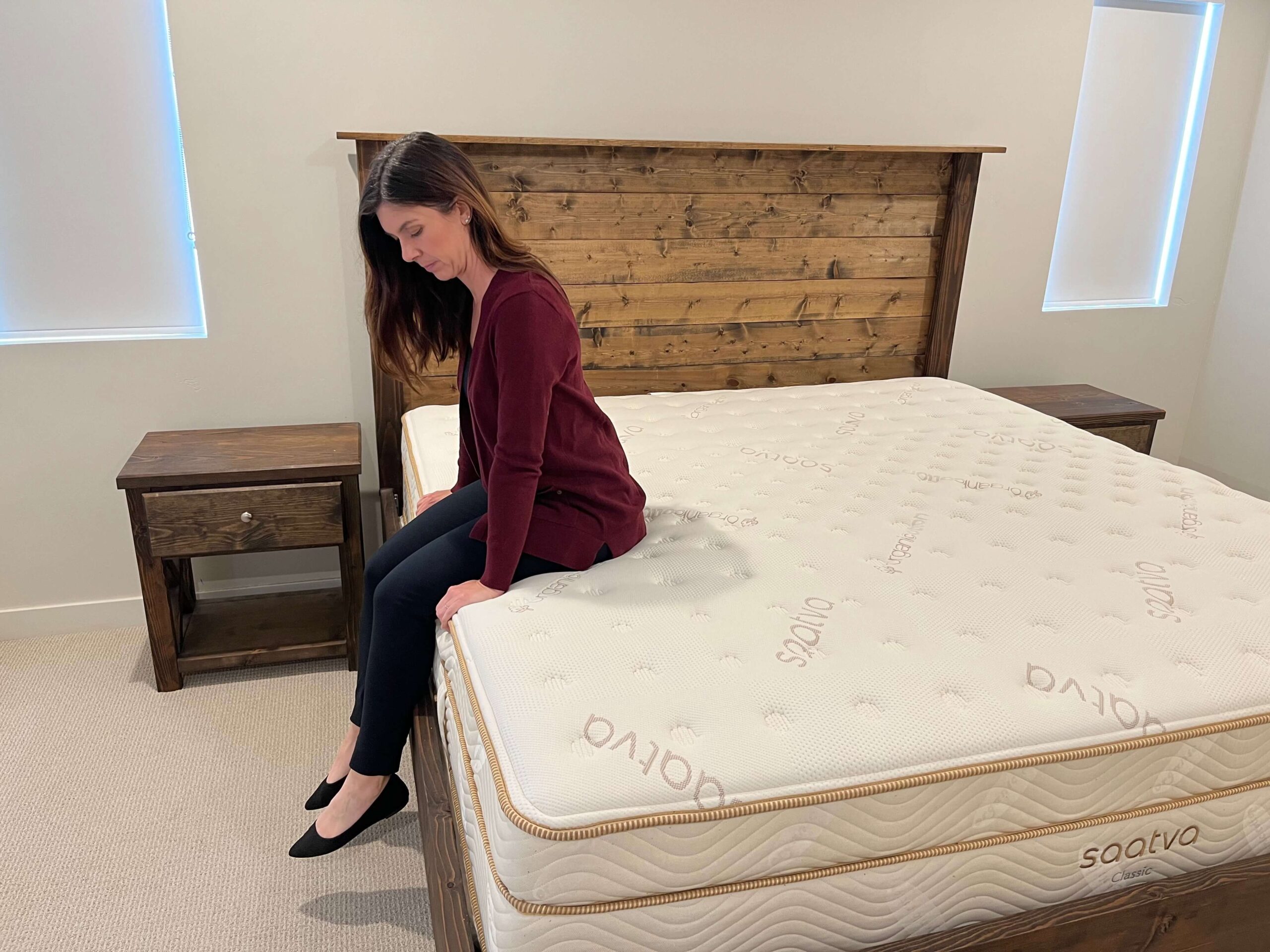
Watch Our Saatva Classic Video Review
The Saatva Classic is the only true coil on coil bed on this page, and that is what it is here to do. Underneath the Euro pillow top there are pocketed coils, and underneath those there is a second layer of steel support coils. In testing, what that produced was a bed that pushed back rather than gave way.
On my back in the Luxury Firm, my hips stayed up and my lower back stayed in contact with the surface with no gap, and my head did not drop backward. This is the position the Saatva is built for. On my side, the Euro pillow top gave enough at the shoulder that my head stayed roughly level, but the coils underneath push back sooner than the memory foam picks on this page do, and a lighter side sleeper will feel that as a slightly high shoulder.
Response Time scores 10 out of 10 and it earns it. Pushing off to change position, the surface answered immediately rather than making me wait for foam to release. If you are a combination sleeper who has been fighting a memory foam bed, that is the feeling you are missing.
The coil on coil core moves air, so the surface did not warm up the way the denser all foam beds I compared in the same session did. Sitting on the perimeter, the foam encasement held its shape, matching the 10 out of 10 Edge Support score.
Where it gives: Value scores 7 out of 10, the joint lowest on this page. The coils also transmit more of a partner’s movement than the foam picks here, which is why Motion Transfer sits at 9 rather than 10. And it is genuinely heavy, delivered in one piece rather than compressed into a box.
The Saatva Classic is the pick for a back or combination sleeper who wants a responsive coil surface rather than a foam hug, who wants to choose a firmness rather than accept a medium, and who does not mind a bed that answers back.
- 7 Value
- 10 Edge Support
- 10 Trial Period
- 10 Response Time
- 9 Motion Transfer
- 9 Cooling & Breathability
The Saatva Classic earned the innerspring slot because it is the only bed here that answers back instead of giving way.
Coil on coil support. During testing on my back in the Luxury Firm, my hips stayed up and my lower back stayed in contact with the surface with no gap under the lumbar curve. The pocketed coils above the steel support coils meant the pushback came from the whole bed rather than from a foam base at the bottom of a foam sandwich.
Immediate response. Pushing off to change position, the surface answered right away rather than making me wait for foam to release. It scores 10 out of 10 on Response Time. For a combination sleeper who has been fighting a memory foam bed, that is the specific thing that has been missing.
Three real firmness levels. Plush Soft, Luxury Firm, and Firm are genuinely different beds rather than marketing tiers. That matters on this page more than most, because the firmness that keeps your head level is set by how much your shoulder needs to sink, and that is a function of your body, not an average.
Best For:
- Back sleepers who want firm lumbar support and a coil surface
- Combination sleepers who want an immediate response when they reposition
- Sleepers who want to choose their firmness rather than accept a single medium
Compare Instead:
- Nolah Evolution if you want three firmness levels with a plusher pillow top and stronger motion isolation
- Amerisleep AS3 if you want the same alignment result on a memory foam surface at a much lower price
- Amerisleep AS6 Black Series if you want a coil core with a genuinely cold surface
The Euro pillow top gives, but not far. It cushions the shoulder and the hip without the slow settling of memory foam, so the coils underneath start doing their job almost immediately rather than after you have sunk through an inch of foam.
On my back in the Luxury Firm, my hips stayed up, my lower back stayed in contact with the surface, and my head did not drop backward. This is the position the bed is built for.
On my side, the shoulder does drop, but the coils push back sooner than the memory foam picks on this page do. My head stayed roughly level, but a lighter side sleeper who needs the shoulder to sink further will feel it sitting slightly high, and the Plush Soft is the version to look at rather than the Luxury Firm.
Pushing off to change position, the surface answered immediately. There is no waiting for foam to release, which is why Response Time scores 10 out of 10.
On temperature, the coil on coil core moves air, and the surface did not warm up the way the denser all foam beds I compared in the same session did. It is also a bouncier bed than anything else here, which is worth knowing if you share it. Motion Transfer sits at 9 out of 10 rather than 10, and the coils are why.
The coil on coil core is the whole argument. The pocketed coils above the steel support coils are why the pushback in back sleeping came from the entire bed rather than from a foam base at the bottom, and why my hips stayed up and my lower back stayed in contact with the surface with no gap. Two coil layers also move a great deal of air, which is why the surface did not warm up the way the denser all foam beds I compared in the same session did.
Those same coils are why Response Time scores 10 out of 10. There is no foam to wait on, so pushing off to reposition, the surface answered immediately. They are also why Motion Transfer sits at 9 rather than 10: coils transmit more of a partner’s movement than a thick foam comfort layer absorbs.
The quilted Euro pillow top is what stops the coils from feeling hard. It gives at the shoulder and the hip without the slow settling of memory foam, so the coils start working almost immediately rather than after an inch of sink. It also means a lighter side sleeper may find the shoulder does not drop as far as they need, which is what the Plush Soft version exists to solve.
The high density foam encasement around the perimeter is why the edge held its shape when I sat on it, earning the 10 out of 10 Edge Support score.
Pros:
- Response Time (10/10): pushing off to reposition, the coil on coil core answered immediately rather than making me wait for foam to release
- Edge Support (10/10): sitting on the perimeter, the foam encasement held its shape rather than rolling away
- Trial Period (10/10): 365 nights, the joint longest trial on this page
- Three genuinely different firmness levels, so the shoulder drop can be matched to your body rather than to an average
Cons:
- Value (7/10): the joint lowest sub-score on this page. This is an expensive bed
- Motion Transfer (9/10): coils transmit more of a partner’s movement than the foam picks here absorb. A light sleeper sharing the bed will feel a shift
- Delivered in one piece rather than compressed in a box, and it is heavy enough that getting it up a narrow staircase is a real consideration
- On my side, the coils push back sooner than the memory foam picks here do, so a lighter side sleeper may find the shoulder sits slightly high in the Luxury Firm
On my back in the Luxury Firm, my hips stayed up and my lower back stayed in contact with the surface with no gap, and pushing off to reposition, the coil on coil core answered immediately rather than making me wait for foam to release. It is the pick for a back or combination sleeper who wants a responsive coil surface rather than a foam hug, and who wants to choose a firmness rather than accept a single medium.
7. Best Hybrid Mattress:
Leesa Sapira Chill Hybrid
Warranty
Lifetime
Sleep Trial
120 Nights
Shipping
Free
Watch Our Leesa Sapira Chill Video Review
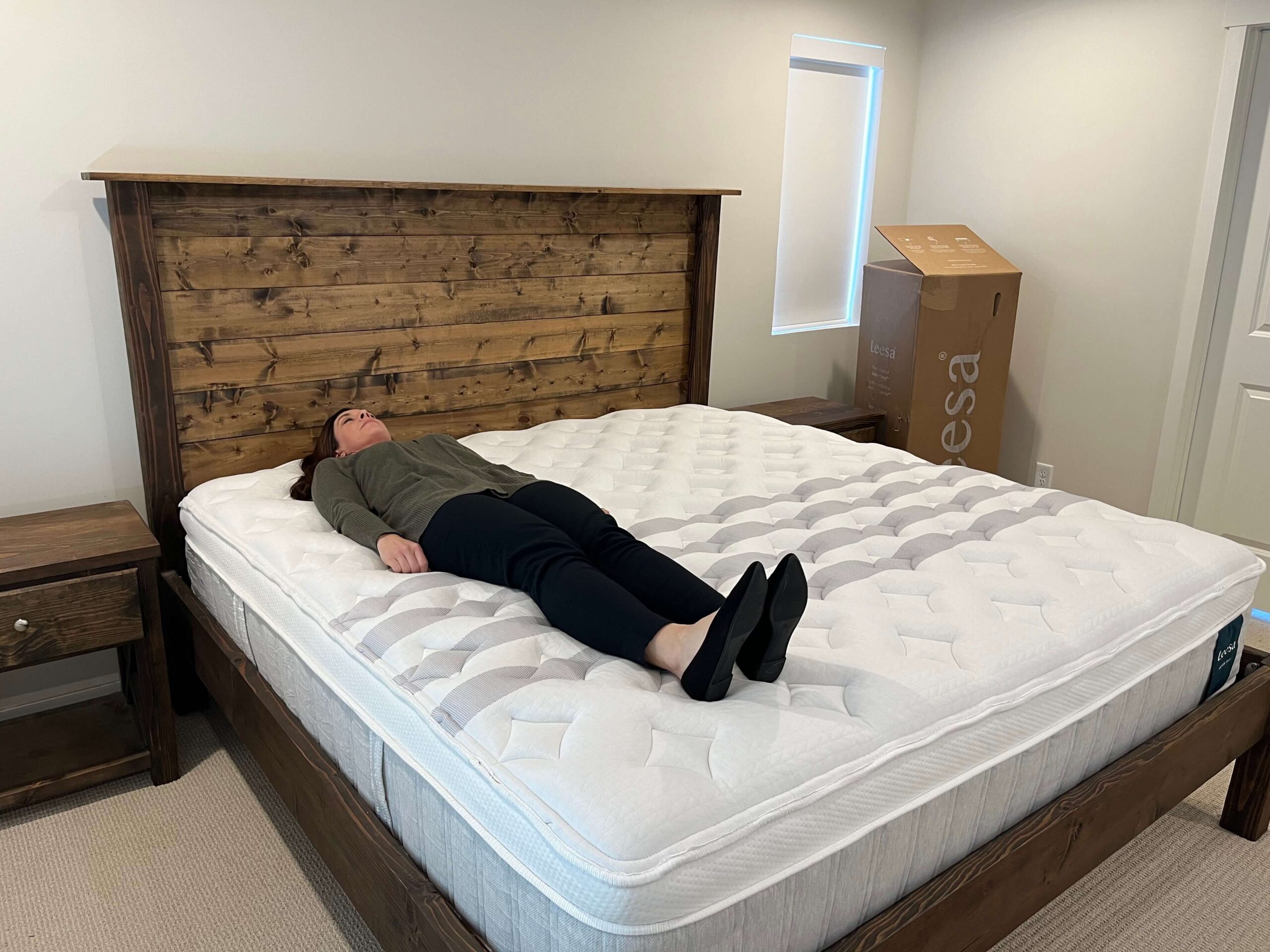
The Leesa Sapira Chill Hybrid is the hybrid pick because of what the zoned spring system does at two points on the body at once, and because it is the only bed on this page that lets a couple choose different firmness levels of the same build.
During testing on my side, the softer springs under my shoulder let it compress in while the firmer springs under my hip and lumbar held that side of my body up. The result is that my shoulder went down and my hip did not follow it, so my head stayed level rather than tipping toward the mattress or propping up off it. On a bed with uniform springs, the hip sinks alongside the shoulder and the whole line goes with it.
On my back, the firmer lumbar springs held and my lower back stayed in contact with the surface. Rolling between the two, the transition foam layers reset quickly rather than holding the shape of my previous position, which is what makes it workable for a combination sleeper rather than a strict side sleeper.
The quilt cover felt cool to the touch on first contact and stayed less heat retentive than the foam beds I compared in the same session. It scores 10 out of 10 on Cooling and Breathability, the joint highest on this page.
Where it gives: Value scores 8 out of 10, the lowest sub-score on the product. The pillow top also adds height, so the loft of your pillow needs to be set against the finished surface rather than the mattress spec, and that is worth ten minutes of fiddling on night one.
The Sapira Chill is the pick for a side or back sleeper who runs warm, and specifically for a couple where one partner wants a softer feel than the other, because it is the only bed here that ships in three genuinely different firmnesses.
- 8 Value
- 10 Edge Support
- 9 Trial Period
- 10 Response Time
- 9 Motion Transfer
- 10 Cooling & Breathability
The Sapira Chill took the hybrid slot for one structural reason and one practical one.
The zoned spring system. During testing on my side, the softer springs under my shoulder let it compress in while the firmer springs under my hip and lumbar held that side of my body up. My shoulder went down. My hip did not follow it. My head stayed level. On a bed with uniform springs, both go down together and the line goes with them, and that is the whole difference here.
The transition foams. Rolling between my side and my back, the layers under the quilt reset quickly rather than holding the shape of my previous position. A combination sleeper does not want a surface that remembers where they were five minutes ago.
Three firmness levels. The Soft gives the deepest shoulder compression, which is what a lighter side sleeper needs. The Medium is the broadest fit for back and combination sleepers. The Firm gives the most lumbar resistance, which is what a heavier back sleeper needs to keep the hips from settling. This is the only bed on this page where two people sharing a mattress can each get the feel they want from the same build.
Cooling. The quilt cover felt cool to the touch on first contact and stayed less heat retentive than the foam beds I compared in the same session. It scores 10 out of 10 on Cooling and Breathability, the joint highest here.
Best For:
- Side and back sleepers who want the shoulder to compress without the hip following it
- Combination sleepers who reposition often and do not want the bed to hold their last shape
- Couples where each partner wants a different firmness of the same build
Compare Instead:
- Amerisleep AS3 if you want the same zoned idea on a memory foam surface at a lower price
- Nolah Evolution if you want three firmness levels with a plusher Euro top
- Saatva Classic if you want a coil on coil bed rather than foam over springs
The quilt cover felt cool on first contact, and unlike most pillow top hybrids I compared in the same session, it did not warm up quickly under sustained contact.
Side sleeping: my shoulder compressed into the foam layers within a minute rather than gradually settling, and the softer springs beneath let it keep going while the firmer springs under my hip held that side of my body up. My head stayed level rather than propping up off the surface.
Back sleeping: the firmer lumbar springs held and my lower back stayed in contact with the surface. My head did not tip backward, and I did not feel my chin lifting off my chest the way I do on a bed that lets the hips settle.
Position changes: the transition foams reset quickly. Rolling from my side to my back did not mean dragging myself out of a divot, and I did not feel the surface holding the shape of where I had just been.
The Medium handled the full range of positions well. The Soft is the version for a lighter side sleeper who needs more shoulder compression, and the Firm is the version for a heavier back sleeper who needs more lumbar resistance.
The zoned spring unit is the reason this bed is here. Individually wrapped coils are calibrated firmer under the hip and lumbar and softer under the shoulder, and that split is exactly what I felt in side sleeping: the shoulder compressed in while the hip stayed up, so my head stayed level instead of tipping. On a bed with uniform springs, the hip goes down with the shoulder and the line goes with it. That is the whole mechanism.
The four foam layers are what make the compression comfortable rather than abrupt. The soft surface layer cushions the shoulder and hip. The two transition layers underneath are why rolling from my side to my back did not mean climbing out of a divot: they reset quickly rather than holding my previous shape. The dense base is why the surface felt the same at the end of a testing week as it did on night one.
The cooling fibers in the quilt cover are why the surface felt cool on first contact and did not warm up as quickly as the foam beds I compared in the same session. That earns the 10 out of 10 Cooling and Breathability score, the joint highest on this page.
Pros:
- Cooling and Breathability (10/10): the quilt cover felt cool on first contact and did not warm up as quickly as the foam beds I compared in the same session
- Response Time (10/10): rolling from my side to my back, the transition foams reset rather than holding my previous shape
- Edge Support (10/10): the perimeter held its shape when I sat on it
- Zoned springs: on my side, my shoulder compressed in while my hip stayed up, so my head stayed level rather than tipping toward the surface
- Three genuinely different firmness levels, so two people sharing a bed can each get the feel they want from the same build
Cons:
- Value (8/10): the lowest sub-score on the product, and the price sits well above the medium picks on this page
- Motion Transfer (9/10): a partner’s shift registered more than it did on the 10 out of 10 picks here
- The pillow top adds height, so pillow loft needs to be set against the finished surface rather than the mattress spec
- The Soft option lets the hips settle further than a heavier back sleeper will want, so the firmness choice matters more on this bed than on a single firmness pick
On my side, the softer springs under my shoulder let it compress in while the firmer springs under my hip held that side up, so my head stayed level rather than tipping. The quilt cover felt cool on first contact and stayed that way longer than the foam beds I compared in the same session. It is the pick for a side or back sleeper who runs warm, and above all for a couple where one partner wants a softer feel than the other, because it is the only bed here that ships in three genuinely different firmnesses.
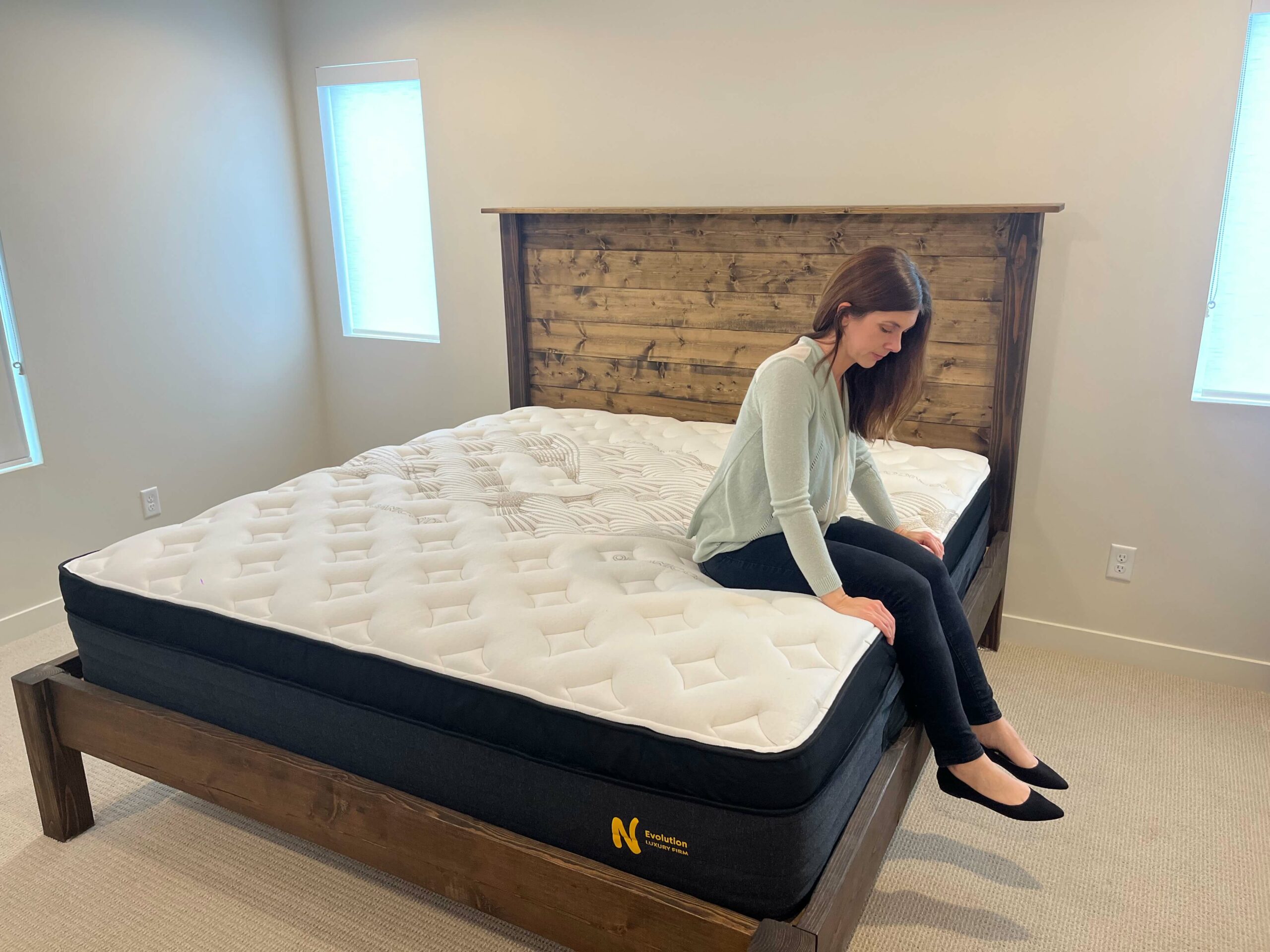
Watch Our Nolah Evolution 15 Video Review
The Nolah Evolution is the pillow top pick because it is the only bed here that gives you a genuinely plush Euro top and still lets you choose how firm the bed underneath it is. Three levels, Plush, Luxury Firm, and Firm, and they are meaningfully different beds rather than marketing tiers.
Testing the Luxury Firm on my side, the Euro top gave at the shoulder and the AirFoamICE layer beneath it kept giving, but the HDMax Tri-Zone coils under the lumbar held my hips up. My shoulder dropped, my hip did not follow, and my head stayed level. What surprised me was that a top this plush did not produce the deep settle I expected: the foam contours but it does not swallow.
On my back, the firmer middle zone of the coils held my hips and my lower back stayed in contact with the surface. Pushing off to reposition, the high resilience transition layer gave enough bounce that I was not climbing out of anything.
The ArcticTex cover felt cool to the touch on first contact and the surface did not warm up as quickly as the denser all foam beds I compared in the same session. Sitting on the perimeter, the reinforced coils held their shape, matching the 10 out of 10 Edge Support score. When my partner shifted, movement on my side barely registered, matching the 10 out of 10 Motion Transfer score.
Where it gives: at 15 inches it is one of the two tallest beds on this page. It needs deep pocket sheets, it is heavy enough that positioning it on a frame is a two person job, and if you have a tall bed frame already, the finished height may put the top of the mattress higher than you want it.
The Nolah Evolution is the pick for a side or back sleeper who wants a plush Euro top without the sink, who runs warm, and who wants to choose the firmness underneath rather than accept a single medium.
- 10 Value
- 10 Edge Support
- 9 Trial Period
- 9 Response Time
- 10 Motion Transfer
- 9 Cooling & Breathability
The Nolah Evolution earned the pillow top slot because it is the only bed here that pairs a genuinely plush Euro top with a choice of three firmness levels underneath it.
Plush without the sink. During testing on my side in the Luxury Firm, the Euro top gave at the shoulder and the AirFoamICE layer kept giving, but the descent stopped where the HDMax Tri-Zone coils took over. My shoulder dropped, my hip did not follow, and my head stayed level. A top this plush usually swallows you. This one contours and stops.
Response on a plush bed. Pushing off to reposition, the high resilience transition layer under the AirFoamICE gave enough bounce that I was not dragging myself out of a divot. That combination, deep cushion plus a quick reset, is unusual and is what a combination sleeper who wants a soft surface has been unable to find.
Edge and motion. Sitting on the perimeter, the reinforced coils held their shape, matching the 10 out of 10 Edge Support score. When my partner shifted, movement on my side barely registered, matching the 10 out of 10 Motion Transfer score. For a couple on a queen, both numbers matter.
Best For:
Side and back sleepers who want a plush Euro top without sinking into it
Combination sleepers who want cushion and a quick reset in the same bed
Couples who each sleep near their own edge of a shared bed
Compare Instead:
Zoma Boost if you want the same 15 inch scale in a firmer, single firmness build
Amerisleep AS5 Hybrid if you want an even softer surface and a deeper shoulder drop
Saatva Classic if you want three firmness levels on a coil on coil bed rather than foam over coils
Side sleeping
The Euro top gave at my shoulder and the AirFoamICE layer beneath it kept giving, but the descent stopped where the Tri-Zone coils took over. My shoulder dropped, my hip stayed up, and my head stayed level rather than tipping toward the mattress. For a top this plush, the absence of deep settle is the surprise.
Back sleeping
The reinforced middle zone of the coils held my hips, and my lower back stayed in contact with the surface rather than bridging over a gap. The Euro top cushioned my shoulder blades without letting my head drop backward. In the Luxury Firm this was the most comfortable back sleeping position of any of the plush picks here.
Stomach sleeping
There is enough resistance in the midsection that my hips did not drop below my shoulders, which is more than I can say for most pillow tops. It is still not a dedicated stomach sleeper bed, and the Firm is the version to look at if that is your primary position.
Response and temperature
Pushing off to reposition, the high resilience transition layer gave enough bounce that I was not climbing out of a divot. The ArcticTex cover felt cool on first contact and the surface did not warm up as quickly as the denser all foam beds I compared in the same session.
The HDMax Tri-Zone coil core is why a bed this plush does not swallow you. Firmer coils sit under the lumbar and softer coils under the shoulder, and that is exactly where the shoulder drop stopped in side sleeping: the Euro top and the AirFoamICE gave, and then the coils took over and held the hip up so the head stayed level.
The AirFoamICE layer is why the drop was comfortable rather than abrupt, and the high resilience transition layer beneath it is why I could push off and reposition without dragging myself out of a divot. On most plush pillow tops that reset is slow. Here it is not.
The ArcticTex cover is why the surface felt cool on first contact and did not warm up as quickly as the denser all foam beds I compared in the same session.
The reinforced perimeter coils are why the edge held its shape when I sat on it, earning the 10 out of 10 Edge Support score, and the individually wrapped coils are why my partner’s movement barely registered on my side, earning the 10 out of 10 Motion Transfer score.
Pros:
- Edge Support (10/10): sitting on the perimeter, the reinforced coils held their shape rather than rolling away
- Motion Transfer (10/10): when my partner shifted, movement on my side barely registered
- Value (10/10): the joint highest value score on this page for a 15 inch three firmness hybrid
- Plush without the sink: the Euro top and AirFoamICE gave at my shoulder, then the Tri-Zone coils stopped the descent so my hip stayed up and my head stayed level
Cons:
- Response Time (9/10): the surface resets faster than most plush pillow tops but still a beat slower than the coil forward picks here, so combination sleepers who move constantly will notice it
- At 15 inches it is one of the two tallest beds on this page, needs deep pocket sheets, and is heavy enough that positioning it on a frame is a two person job
- The finished height sits high, so on an already tall bed frame the top of the mattress may end up higher than you want
- The Plush option lets the hips settle further than a heavier back sleeper will want, so the firmness choice matters here
On my side, the Euro top and the AirFoamICE layer gave at my shoulder and then the Tri-Zone coils stopped the descent, so my hip stayed up and my head stayed level. A pillow top this plush usually swallows you. This one contours and stops. It is the pick for a side or back sleeper who wants a genuinely plush surface without the sink, runs warm, and wants to choose the firmness underneath rather than accept a single medium.
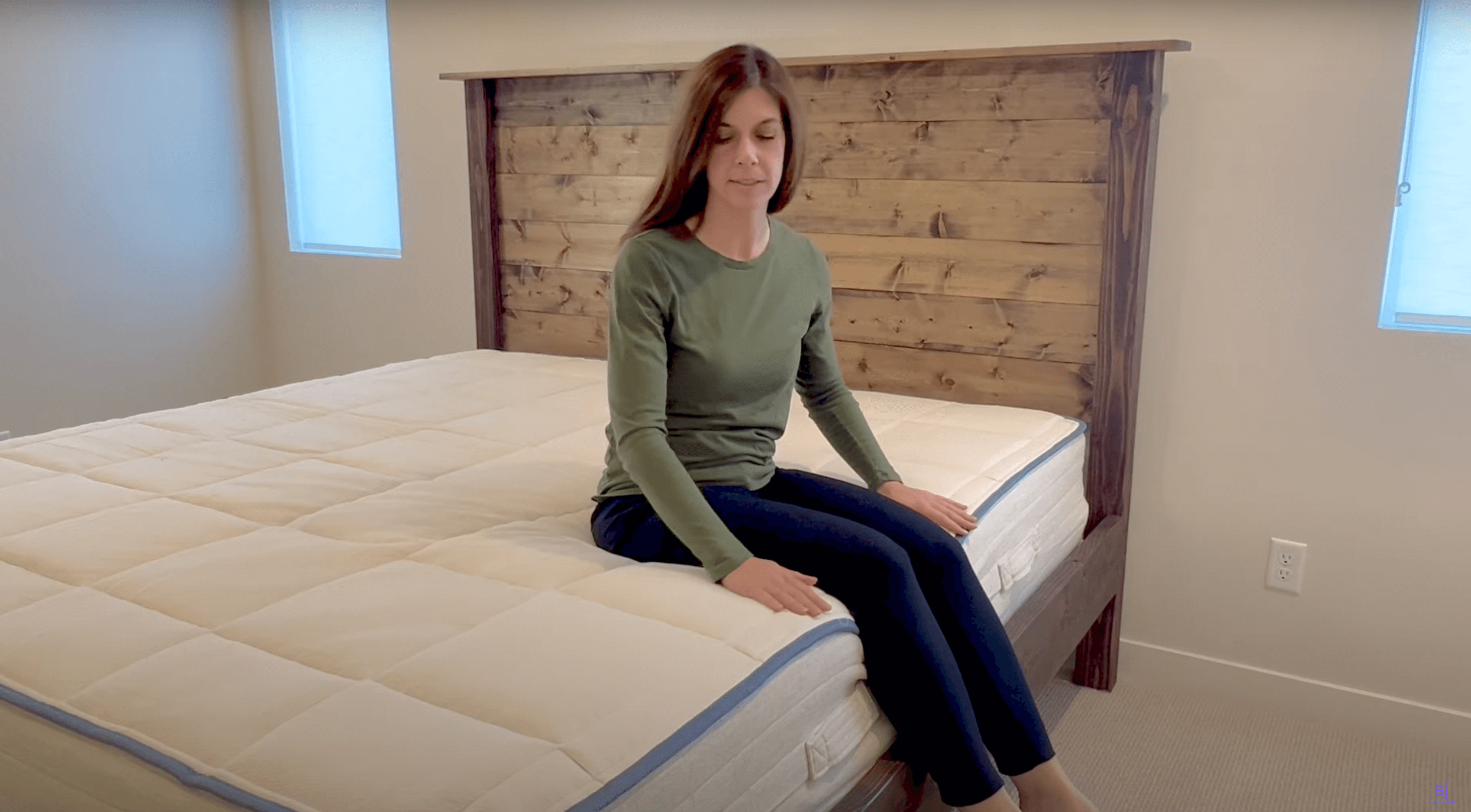
Watch Our Amerisleep Organica Video Review
Latex behaves differently from memory foam, and the Organica is the bed on this page that shows you the difference. Talalay latex pushes back. It contours, but it does not hold you, and the moment you lift off, it is already back to shape.
During testing on my side, the 3 inch Talalay layer gave at my shoulder and the 8 inch pocketed coil core underneath held my hip up, so my head stayed level with my spine. What is different is what happens next: on a memory foam bed the surface keeps giving for another minute after you settle. Here it stopped immediately and stayed. My shoulder found its depth in seconds rather than drifting toward it.
That responsiveness is the Organica’s headline number. It scores 10 out of 10 on Response Time, the joint highest on this page. Rolling from side to back, there was no divot to climb out of, because the latex had already recovered before I moved.
On my back, my lower back stayed in contact with the surface and my hips stayed up. Latex is naturally more breathable than dense memory foam, and the surface did not warm up the way the all foam beds I compared in the same session did. The cover is GOTS-certified organic cotton over a Joma wool layer that serves as the fire barrier.
Where it gives: Edge Support scores 8 out of 10, and sitting on the perimeter, it compressed more than the coil forward picks on this page. Latex also has a distinct buoyant push that some people simply do not like, and there is no way to know which camp you are in until you lie on one.
The Organica is the pick for a side or back sleeper who wants natural materials and a responsive surface, hates the stuck feeling of memory foam, and repositions often enough that an instant recovery matters more than a deep hug.
- 9 Value
- 8 Edge Support
- 9 Trial Period
- 10 Response Time
- 9 Motion Transfer
- 9 Cooling & Breathability
The Organica took the latex slot because it is the only bed here that gives you a shoulder drop and an instant recovery in the same surface.
Immediate depth, immediate recovery. During testing on my side, the 3 inch Talalay latex layer gave at my shoulder and then stopped. On a memory foam bed the surface keeps giving for another minute after you settle. Here my shoulder found its depth in seconds and stayed there, and the coils below held my hip up so my head stayed level. It scores 10 out of 10 on Response Time, the joint highest on this page.
No divot to climb out of. Rolling from my side to my back, there was nothing to escape. The latex had already recovered before I finished moving. If you have ever felt like your mattress is arguing with you when you turn over at 3am, this is the surface that does not.
Breathability without a cooling cover. Latex is open celled by nature. The surface did not warm up the way the denser all foam beds I compared in the same session did, and the Organica achieves that with an organic cotton cover and a Joma wool layer rather than with phase change fabric.
Best For:
- Side and back sleepers who want natural materials
- Combination sleepers who reposition often and hate the stuck feeling of memory foam
- Sleepers who want breathability without a cooling cover
Compare Instead:
- Amerisleep AS3 if you want a memory foam contour rather than a latex push
- PlushBeds Signature Bliss if you want a fully organic build with a plusher pillow top
- FORM Prime if you want a responsive, buoyant surface but not in latex
Certifications: the cover is GOTS-certified organic cotton, and the Joma wool layer serves as the fire barrier in place of a chemical flame retardant.
Side sleeping: my shoulder pressed into the Talalay latex and found its depth in seconds, then stopped. There is no drift, no slow settling. The coils below held my hip up so my head stayed level with my spine.
Back sleeping: my lower back stayed in contact with the surface with no gap, and my hips stayed up rather than sinking into the latex. The comfort layer cushioned my shoulder blades without letting my head tip backward.
Stomach sleeping: the responsive latex kept my midsection from dropping below my shoulders, which is more than most medium beds manage. Not a dedicated stomach sleeper bed, but it holds up better than the memory foam picks here.
Response: this is the standout. Rolling from side to side, the latex had already recovered before I finished moving. There is no divot to escape. It scores 10 out of 10 on Response Time.
Motion: I expected latex over coils to be bouncy and it is, but the individually wrapped coils kept a partner’s movement from carrying across. When my partner shifted, I felt it less than I expected from a bed this springy.
Edge: this is where it gives. Sitting on the perimeter to put my shoes on, it compressed more than the coil forward picks on this page, which is why Edge Support sits at 8 out of 10.
The 3 inch Talalay latex comfort layer is the reason this bed feels unlike anything else on this page. Latex is open celled and elastic, so it gave at my shoulder in seconds and then stopped rather than continuing to settle, and it had recovered its shape before I finished rolling over. That is the whole 10 out of 10 Response Time score in one sentence.
That same open cell structure is why the surface did not warm up the way the denser all foam beds I compared in the same session did, without needing a phase change cover to do it.
The 8 inch pocketed coil core is why my hip stayed up while my shoulder went down, so my head stayed level in side sleeping. Individually wrapped coils are also why a bed this springy did not carry a partner’s movement across, and the 1 inch Dunlop latex base beneath them is why the surface felt identical at the end of a testing week and on night one.
Certifications and materials: the cover is GOTS-certified organic cotton. The Joma wool layer beneath it serves as the fire barrier in place of a chemical flame retardant.
The coils are not edge reinforced, and that is the one place the construction gives. Sitting on the perimeter to put my shoes on, it compressed more than the coil forward picks on this page, which is why Edge Support sits at 8 out of 10 rather than the 10 the reinforced-perimeter beds here earn.
Pros:
- Response Time (10/10): rolling from side to side, the latex had already recovered before I finished moving. There is no divot to climb out of
- Side sleeping alignment: my shoulder found its depth in the Talalay layer in seconds and stopped, while the coils held my hip up so my head stayed level
- GOTS-certified organic cotton cover, with a Joma wool fire barrier in place of a chemical flame retardant
- Value (9/10): a coil core, natural latex, and certified organic cotton at a price below the organic pick on this page
Cons:
- Edge Support (8/10): the coils are not edge reinforced, and sitting on the perimeter to put my shoes on it compressed more than the coil forward picks here
- Latex has a buoyant push that some sleepers simply dislike, and there is no way to know which camp you are in without lying on one
- Single medium firmness at 5 to 6 out of 10, so a sleeper who wants a noticeably firmer or softer version has no way to get one
On my side, the Talalay latex gave at my shoulder and found its depth in seconds rather than drifting toward it, and by the time I had rolled onto my back it had already recovered its shape. There is no divot to escape here. It is the pick for a side or combination sleeper who wants natural materials, repositions often, and would rather have a responsive push than a memory foam hug.
10. Best Cooling Mattress:
Amerisleep AS6 Black Series

Warranty
20 Years
Sleep Trial
100 Nights
Shipping
Free
Watch Our Amerisleep AS6 Black Series Video Review
The AS6 Black Series is the coldest surface I put a hand on across this whole guide, and it is not close. The CryoCool cover was cold to the touch on first contact, not cool, and it stayed noticeably less heat retentive than every other bed I compared in the same session, including the other hybrids here.
The reason is a three part stack rather than a single cooling cover. The CryoCool cover handles first contact, the TitanAir titanium-infused layer sits under the Bio-Pur foam and moves heat sideways, and the ArcticWave cooling bands run through the build to pull heat away from where your body actually loads the mattress. It scores 10 out of 10 on Cooling and Breathability.
On alignment, the interesting thing about the AS6 is that it does not have one feel. It ships in three: Plush Soft at 3 to 4, Luxury Firm at 5 to 7, and Firm at 8. Testing the Luxury Firm on my side, the Bio-Pur layer gave at my shoulder while the PrecisionCoil core held my hip up, so my head stayed level. On my back, the Affinity transition layer kept my lumbar supported and my head did not tip backward. The firmness you pick is the alignment you get, and on this bed that is a real choice rather than a marketing tier.
When my partner shifted, movement on my side barely registered, matching its 10 out of 10 Motion Transfer score.
Where it gives: this is the most expensive Amerisleep bed on this page and Value sits at 9 out of 10 rather than 10. The PrecisionCoil core also gives it more bounce than the AS3, which is a plus if you reposition and a minus if you want a quiet, dead surface.
The AS6 Black Series is the pick for a sleeper who runs genuinely hot, who wants to choose a firmness rather than accept a medium, and who shares the bed with someone who moves.
- 9 Value
- 9 Edge Support
- 9 Trial Period
- 9 Response Time
- 10 Motion Transfer
- 10 Cooling & Breathability
The AS6 Black Series is the cooling pick because it is the coldest surface in this guide by a clear margin, and because it lets you choose the firmness that goes underneath it.
The cover is cold, not cool. During testing, the CryoCool cover was cold to the touch on first contact and stayed less heat retentive under sustained contact than every other bed I compared in the same session. This is not a “breathable cover” claim. It is the difference between a surface that starts neutral and one that starts cold, and if you are the person who flips the pillow at 2am, that is the difference you are buying.
Three cooling components, not one. The CryoCool cover handles the surface, the TitanAir titanium-infused layer under the Bio-Pur foam moves heat sideways, and the ArcticWave cooling bands pull it away from the loaded areas of the bed. It scores 10 out of 10 on Cooling and Breathability.
Three firmness levels. Plush Soft at 3 to 4, Luxury Firm at 5 to 7, and Firm at 8. Testing the Luxury Firm on my side, the Bio-Pur layer gave at my shoulder while the PrecisionCoil core held my hip up and my head stayed level. Pick the firmness that matches how far your shoulder needs to travel, not an average.
Best For:
- Sleepers who run genuinely hot and want a cold surface rather than a neutral one
- Sleepers who want to choose a firmness rather than accept a single medium
- Couples, since movement on the opposite side barely registered
Compare Instead:
- Amerisleep AS3 if you want the same zoned foam idea at a much lower price and do not need a coil core
- Leesa Sapira Chill Hybrid if you want three firmness levels with a cooling quilt top rather than a cold cover
- Zoma Boost if you want a cooling hybrid in a single firmer feel
The CryoCool cover is cold on first contact. Not cool, cold, and it is the first thing you notice before any of the support registers. That coldness fades as you warm the surface, but it faded more slowly than on any other bed I compared in the same session.
Side sleeping in the Luxury Firm: the Bio-Pur foam gave at my shoulder and the PrecisionCoil core held my hip up, so my head stayed level with my spine. The comfort layer is plush, but the coils stop the descent before it becomes a sink.
Back sleeping: the Affinity transition layer kept my lumbar supported and my lower back stayed in contact with the surface. My head did not tip backward.
Stomach sleeping: more stable than I expected from a bed with this much comfort foam, because the coil core is what carries the load rather than the foam. Still not a dedicated stomach sleeper bed unless you take the Firm.
Response: rolling between positions, I was not fighting the foam to get out. The PrecisionCoil core gives it more push than an all foam bed, which is what a combination sleeper wants, and less quiet than an all foam bed, which is worth knowing.
Three separate components do the cooling here, and that is why the AS6 outperformed every other bed I compared in the same session rather than merely matching them. The CryoCool cover is what made the surface cold on first contact. The TitanAir titanium-infused layer sits under the Bio-Pur foam and moves heat sideways rather than letting it pool where your body is loading the bed. The ArcticWave cooling bands run through the build and pull that heat further away. One cooling cover gets you a cool first touch. This stack is why the coldness faded more slowly than on anything else here.
The Bio-Pur foam is why my shoulder dropped in side sleeping without the stuck feeling of dense memory foam, and the Affinity transition layer beneath it is why my lumbar stayed supported on my back rather than settling.
The PrecisionCoil core is what carries the load, which is why stomach sleeping felt more stable than a bed with this much comfort foam has any right to. Individually wrapped, it is also why my partner’s movement barely registered on my side, earning the 10 out of 10 Motion Transfer score. It gives the bed more push than an all foam build, which helps when you reposition and is worth knowing if you wanted a quiet, dead surface.
Pros:
- Cooling and Breathability (10/10): the CryoCool cover was cold to the touch on first contact and stayed less heat retentive under sustained contact than every other bed I compared in the same session
- Motion Transfer (10/10): when my partner shifted, movement on my side barely registered
- Three genuinely different firmness levels: Plush Soft at 3 to 4, Luxury Firm at 5 to 7, and Firm at 8
- Side sleeping alignment in the Luxury Firm: the Bio-Pur layer gave at my shoulder while the PrecisionCoil core held my hip up, so my head stayed level
Cons:
- Value (9/10), Edge Support (9/10), and Response Time (9/10) all sit a point below the best on this page. Nothing here is weak, but nothing outside cooling and motion is category leading either
- This is the most expensive Amerisleep bed on this page, and the cooling stack is what you are paying the premium for
- The PrecisionCoil core gives it more bounce than an all foam bed, which is a plus if you reposition often and a minus if you want a quiet, dead surface
- In the Plush Soft option only, at 3 to 4 out of 10, a heavier back or stomach sleeper will find the hips settle further than they want. This does not apply to the Luxury Firm or Firm
The CryoCool cover was cold to the touch on first contact, not cool, and that coldness faded more slowly under sustained contact than on any other bed I compared in the same session. Underneath it, testing the Luxury Firm on my side, the Bio-Pur layer gave at my shoulder while the PrecisionCoil core held my hip up and my head stayed level. It is the pick for a sleeper who runs genuinely hot, wants to choose a firmness rather than accept a medium, and shares the bed with someone who moves.
11. Best Organic Mattress
PlushBeds Signature Bliss

Warranty
Lifetime
Sleep Trial
100 Nights
Shipping
Free
Watch Our Plushbeds Signature Bliss Video Review
The Signature Bliss is the organic pick on this page, and the useful thing about testing it against the Amerisleep Organica is that they take the same idea in two different directions. Both are latex over pocketed coils. The Organica uses Talalay latex and pushes back. The Signature Bliss uses Dunlop latex under an organic cotton and wool pillow top, and Dunlop is denser and quieter than Talalay.
That difference is what you feel. Testing on my side, the pillow top gave first and then the 3 inch Dunlop layer took over, and the descent was slower and softer than on the Organica. My shoulder still dropped and the 8 inch coil core still held my hip up, so my head stayed level, but the route there was cushioned rather than springy. If you want a natural build and you have been put off by how buoyant latex feels, this is the one.
On my back, my lower back stayed in contact with the surface and my hips stayed up. Rolling between positions, the surface recovered quickly rather than holding my shape, which is why it scores 10 out of 10 on Response Time despite the pillow top.
Sitting on the perimeter, it held its shape rather than rolling away, matching the 10 out of 10 Edge Support score. The organic cotton and wool cover felt breathable rather than cool, and the surface did not warm up the way the denser all foam beds I compared in the same session did, though it is not a cold bed.
Where it gives: this is a genuinely heavy mattress. Getting it onto a frame is a two person job and moving house with it is a real consideration. It ships in Medium or Medium-Firm only, so there is no soft option for a lighter side sleeper.
Certifications: the cover is GOTS-certified organic cotton with organic English wool serving as the fire barrier. The comfort layer is organic Dunlop latex. Trial is 100 nights and the warranty is lifetime.
The Signature Bliss is the pick for a side or back sleeper who wants a certified organic build with a plusher, quieter feel than Talalay latex gives, and who is not going to be moving it around.
- 9 Value
- 10 Edge Support
- 10 Trial Period
- 10 Response Time
- 9 Motion Transfer
- 9 Cooling & Breathability
The Signature Bliss took the organic slot because it is a certified organic build that does not feel like one.
Dunlop, not Talalay. During testing on my side, the organic cotton and wool pillow top gave first and then the 3 inch Dunlop latex layer took over. Dunlop is denser and quieter than the Talalay in the Organica, so the descent was slower and softer rather than springy. My shoulder dropped, the coil core held my hip up, and my head stayed level, but the route there felt cushioned. For a shopper who wants natural materials and has been put off by how buoyant latex usually feels, that is the whole pitch.
Response despite the pillow top. Rolling between my side and my back, the surface recovered rather than holding my shape. Plush tops usually cost you response time. This one scores 10 out of 10 on Response Time anyway, which is unusual for a bed with this much cushion at the surface.
Edge. Sitting on the perimeter, it held rather than rolling away, matching the 10 out of 10 Edge Support score.
Certifications, scoped: the cover is GOTS-certified organic cotton, the wool layer serves as the fire barrier in place of a chemical flame retardant, and the comfort layer is organic Dunlop latex.
Best For:
- Side and back sleepers who want a certified organic build with a plush surface
- Sleepers who want natural materials but dislike the buoyant push of Talalay latex
- Couples who each sleep near their own edge of a shared bed
Compare Instead:
- Amerisleep Organica if you want the same latex over coils idea with a springier Talalay feel at a lower price
- Leesa Sapira Chill Hybrid if you want three firmness options rather than two
- Nolah Evolution if the organic certification does not matter to you and you want a plusher Euro top
Side sleeping: the organic cotton and wool pillow top gave first, and then the Dunlop latex took over. The descent was slower and softer than on the Talalay bed I compared it against in the same session. My shoulder dropped, the coil core held my hip up, and my head stayed level, but the route there felt cushioned rather than springy.
Back sleeping: my lower back stayed in contact with the surface and my hips stayed up. The pillow top cushioned my shoulder blades without letting my head tip backward.
Response: rolling between positions, the surface recovered rather than holding my shape. Plush pillow tops usually cost you response time and this one does not, which is why it scores 10 out of 10 on Response Time.
Edge: sitting on the perimeter to put my shoes on, it held its shape rather than rolling away.
Temperature: the organic cotton and wool cover felt breathable rather than cool on first contact, and the surface did not warm up the way the denser all foam beds I compared in the same session did. This is not a cold bed and it does not try to be. If you want cold, take the AS6.
The choice of Dunlop rather than Talalay latex is the single decision that defines how this bed feels. Dunlop is the denser, quieter of the two, and it is why the descent at my shoulder in side sleeping was slow and cushioned rather than springy, unlike the Talalay bed I compared it against in the same session. If buoyant latex has ever put you off, this is the construction reason it will not here.
The organic cotton and wool pillow top above it is what gives first. It is a genuinely plush surface, and yet the bed still scores 10 out of 10 on Response Time, which is unusual. The reason is that Dunlop latex recovers on its own rather than relying on the coils to push it back, so the plush layer never becomes a divot to climb out of.
The 8 inch pocketed coil core is what held my hip up while my shoulder went down, which is why my head stayed level. Its reinforced perimeter is why the edge held its shape when I sat on it, earning the 10 out of 10 Edge Support score.
Certifications, scoped: GOTS-certified organic cotton cover, organic English wool serving as the fire barrier in place of a chemical flame retardant, organic Dunlop latex comfort layer.
The honest cost of all this natural material is weight. This is a heavy mattress, and getting it onto a frame is a two person job.
Pros:
- Response Time (10/10): rolling between positions, the surface recovered rather than holding my shape, which is unusual for a bed with this much cushion at the top
- Edge Support (10/10): sitting on the perimeter, it held its shape rather than rolling away
- GOTS-certified organic cotton cover, organic English wool fire barrier in place of a chemical flame retardant, organic Dunlop latex comfort layer
- Side sleeping alignment: the pillow top and Dunlop latex gave at my shoulder while the coil core held my hip up, so my head stayed level, with a cushioned descent rather than a springy one
Cons:
- At 14 inches and built from latex, wool, and coils, this is a genuinely heavy mattress. Getting it onto a frame is a two person job and moving house with it is a real consideration
- Two firmness options only, Medium and Medium-Firm, so a lighter side sleeper who needs a soft surface has no option here
- Value (9/10): a point below the best on this page, and the organic certification is what you are paying the premium for
- The cover felt breathable rather than cool on first contact. This is not a cold bed and a sleeper who runs genuinely hot should look at the cooling pick instead
On my side, the organic cotton and wool pillow top gave first and the Dunlop latex took over, and the descent was slower and softer than on the Talalay bed I compared it against in the same session. My shoulder dropped, my hip stayed up, my head stayed level. It is the pick for a side or back sleeper who wants a certified organic build with a plush, quiet feel rather than a springy one, and who is not planning to move it.
12. Best Soft Mattress:
Amerisleep AS5 Hybrid

Warranty
20 Years
Sleep Trial
100 Nights
Shipping
Free
Watch Our AS5 Hybrid Video Review
The AS5 Hybrid is the softest bed on this page at 3 out of 10, and it is here for one specific person: the side sleeper whose shoulder is broad enough that a medium mattress will not let it drop far enough.
That is a real problem and it is under-served. If your shoulder cannot sink, your head sits high and your neck holds an angle for seven or eight hours, and no pillow fixes it, because the pillow is not the part that is wrong. During testing on my side, the Bio-Pur comfort layer let my shoulder travel further into the surface than any other bed here, and the Active Flex transition layer under it kept the descent from becoming a fall. My head stayed level with my spine.
The Refresh cover felt cool on first contact and the surface did not warm up as quickly as the denser all foam beds I compared in the same session. It scores 10 out of 10 on Cooling and Breathability, which is genuinely unusual on a bed this soft.
Here is the honest part. This is a 3 out of 10. On my back, my hips settled lower than I wanted, and the pocketed coils were doing more work than I was comfortable relying on. On my stomach, it was not usable. Its Response Time scores 8 out of 10 and its overall score of 8.8 is the lowest on this page, and both of those numbers are telling you the same thing: softness has a cost.
The AS5 Hybrid is the pick for a lighter to average weight side sleeper whose shoulder needs to sink further than a medium allows, who runs warm, and who does not sleep on their back or stomach. Anyone else on this page has a better option.
- 8 Value
- 9 Edge Support
- 9 Trial Period
- 8 Response Time
- 9 Motion Transfer
- 10 Cooling & Breathability
The AS5 Hybrid earned the soft slot because it solves a specific problem that a medium mattress cannot.
Shoulder travel. During testing on my side, the Bio-Pur comfort layer let my shoulder sink further into the surface than any other bed on this page did. That matters for a broad shouldered side sleeper, because if the shoulder cannot drop, the head sits high and the neck holds an angle for the whole night. At 3 out of 10 this is the only bed here that gives that shoulder somewhere to go.
The descent stops. The Active Flex transition layer under the Bio-Pur is what keeps the softness from becoming a fall. My shoulder went deep and then it stopped, and the pocketed coils below held the rest of me. Without that layer, a 3 out of 10 would be a hammock.
Cold, on a soft bed. The Refresh cover felt cool on first contact and the surface did not warm up as quickly as the denser all foam beds I compared in the same session. It scores 10 out of 10 on Cooling and Breathability, which soft beds usually do not.
Best For:
- Lighter to average weight side sleepers whose shoulder needs to sink further than a medium allows
- Sleepers who run warm and want a plush surface without the heat
- Sleepers who have tried a medium bed and still wake with the neck held at an angle
Compare Instead:
- Amerisleep AS3 if you want the same zoned foam family in a medium that works for back sleeping too
- Helix Midnight Luxe if you want a plush side sleeper bed with a coil core underneath
- Amerisleep AS6 Black Series in the Plush Soft option if you want a soft surface with a colder cover and a coil core
Side sleeping is the whole reason this bed is on the page. My shoulder sank further into the Bio-Pur layer than on any other mattress here, and then the Active Flex transition layer caught it. My head stayed level with my spine rather than sitting high. If you have a broad shoulder and you have been fighting a medium mattress with a taller pillow, this is the surface that removes the fight.
Back sleeping: my hips settled lower than I wanted. The pocketed coils are carrying the load rather than the foam, and I could feel that. It is workable, but it is not what this bed is for.
Stomach sleeping: no. At 3 out of 10 the hips drop below the shoulders and the lower back arches. Do not buy this as a stomach sleeper bed.
Response: rolling between positions, the surface recovers, but it takes a beat. Response Time scores 8 out of 10, the lowest response score on this page, and on a bed this soft that is expected rather than surprising.
Temperature: the Refresh cover felt cool on first contact and the surface did not warm up as quickly as the denser all foam beds I compared in the same session. A soft bed that does not turn into a heat trap is unusual, and that is the AS5’s second real strength after the shoulder.
The Active Flex transition layer is the layer that makes this bed possible, and it is the one nobody talks about. Under a 3 out of 10 comfort layer, you need something that stops the descent, or the bed is a hammock. During testing, my shoulder sank deep into the Bio-Pur foam and then stopped, and Active Flex is what stopped it. Without that layer this would not be a mattress you could recommend for alignment at all.
The Bio-Pur comfort layer is why the shoulder travels further here than on any other bed on this page. It is open celled rather than dense memory foam, which is also why the surface did not warm up as quickly as the denser all foam beds I compared in the same session, and why a 3 out of 10 can score 10 out of 10 on cooling.
The pocketed coils are what carry the load once the foam has given, which is why back sleeping is workable at all on a bed this soft, though I could feel the coils doing that work rather than the foam. The double density coils around the perimeter are why the edge held reasonably when I sat on it, at 9 out of 10.
The tradeoff of this much soft foam above a coil core is response. At 8 out of 10, the surface takes a beat longer to reset than the firmer picks on this page, and the Bio-Pur layer is why.
Pros:
- Cooling and Breathability (10/10): the Refresh cover felt cool on first contact and the surface did not warm up as quickly as the denser all foam beds I compared. A soft bed that does not become a heat trap is unusual
- Shoulder travel: at 3 out of 10, my shoulder sank further into the Bio-Pur layer than on any other bed on this page, and the Active Flex transition layer caught it before the descent became a fall
- Edge Support (9/10): double density coils around the perimeter held reasonably when I sat on it, which soft beds usually do not
Cons:
- Response Time (8/10): the lowest response score on this page. Rolling between positions, the surface takes a beat to reset, and on a 3 out of 10 that is the direct cost of the softness
- Overall score of 8.8, the lowest on this page. Nothing here is broken, but the softness costs it points everywhere except cooling
- At 3 out of 10, back sleepers will feel their hips settle lower than they want, and it is not usable for stomach sleeping at all
- Heavier sleepers will sink further into the comfort layer than the Active Flex layer can catch, so this is a bed for lighter to average weight sleepers
On my side, my shoulder sank further into the Bio-Pur layer than on any other bed on this page, and then the Active Flex transition layer caught it so my head stayed level rather than sitting high. That is the one thing this bed does that nothing else here can. It is the pick for a lighter to average weight side sleeper with a broad shoulder that a medium mattress will not let drop, who runs warm, and who does not sleep on their back or stomach.

Watch Our Westin Heavenly Bed Review
The Westin Heavenly Bed is on this page for one reason: people sleep on it in a hotel, love it, and want to know if they should buy it. So the honest job here is to tell you what it does and what it costs you.
What it does: the plush pillow top over individually wrapped coils produces the bounce you remember from the hotel room. Pressing down on it, the coils answer immediately. During testing on my back, my hips stayed up and my lower back stayed in contact with the surface with no gap. It scores 10 out of 10 on Response Time and 10 out of 10 on Edge Support, and sitting on the perimeter, it held its shape rather than rolling away.
On my side, the pillow top gave at my shoulder but the coils underneath pushed back sooner than the memory foam picks on this page do. My head stayed roughly level, but a broad shouldered side sleeper will find the shoulder sits higher than it does on the AS3 or the AS5.
What it costs you, and this is the part the hotel room does not tell you. There is **no sleep trial**. It scores 0 out of 10 on Trial Period, because you cannot return it after sleeping on it. Shipping is **$285**, not free, on a page where twelve of the fourteen picks ship free. The warranty is 10 years. Its overall score of 7.7 is the lowest on this page by more than a full point, and those three numbers are why.
The gel infused foam layers meant the surface did not warm up as quickly as the denser all foam beds I compared in the same session, and the silver fiber woven into the cover is an antimicrobial treatment.
The Westin Heavenly Bed is the pick for a back or combination sleeper who has slept on this exact bed in a Westin, knows they like it, and is buying a known quantity rather than taking a risk, because with no sleep trial that is the only way to buy it safely.
- 8 Value
- 10 Edge Support
- 0 Trial Period
- 10 Response Time
- 9 Motion Transfer
- 9 Cooling & Breathability
The Westin Heavenly Bed is on this page because people ask about it, not because it out-tested the field. Here is what it earned and what it did not.
What it earned. Response Time scores 10 out of 10, and it shows: pressing into the pillow top, the individually wrapped coils answered immediately rather than making me wait for foam to release. Edge Support scores 10 out of 10, and sitting on the perimeter it held rather than rolling away. On my back, my hips stayed up and my lower back stayed in contact with the surface.
What it did not. Trial Period scores 0 out of 10, because there is no sleep trial. You cannot return it after sleeping on it. Shipping is $285. The overall score of 7.7 is the lowest on this page by more than a full point, and it is not because the bed is bad. It is because of what you have to accept to own it.
Who it is actually for. If you have slept on this exact bed at a Westin and know you like it, the lack of a trial does not hurt you, because you already ran the trial. If you have not, the risk sits entirely with you, and that is a real reason to buy something else on this page instead.
Best For:
- Back and combination sleepers who want an immediate coil response rather than a foam hug
- Sleepers who have already slept on this bed at a hotel and know they like it
- Sleepers who sit or sleep near the edge of the bed
Compare Instead:
- Saatva Classic if you want a coil on coil hotel-grade bed with a 365 night trial and free shipping
- Nolah Evolution if you want a plusher Euro top with three firmness levels and free shipping
- Helix Midnight Luxe if you want the plush hotel feel with better side sleeping alignment
Back sleeping: the pillow top cushions and the coils underneath push back almost immediately. My hips stayed up, my lower back stayed in contact with the surface, and my head did not tip backward. This is the position the bed is built for and it is the position it does best.
Side sleeping: the pillow top gave at my shoulder, but the coils pushed back sooner than the memory foam picks on this page do. My head stayed roughly level, but a broad shouldered side sleeper will find the shoulder sits higher here than it does on a bed with a deeper comfort layer.
Response: pushing off to change position, the surface answered right away. Response Time scores 10 out of 10 and it earns it. Nothing here holds the shape of where you just were.
Edge: sitting on the perimeter to put my shoes on, it held rather than rolling away. Edge Support scores 10 out of 10.
Temperature: the gel infused foam layers meant the surface did not warm up as quickly as the denser all foam beds I compared in the same session. It is not a cold bed and it does not claim to be.
The individually wrapped coils are why this bed feels the way you remember it feeling in the hotel room. They answer immediately rather than compressing slowly, which is why Response Time scores 10 out of 10 and why pushing off to reposition never meant waiting for foam to release. They are also why side sleeping is the weaker position here: the coils push back before the shoulder has travelled as far as a broad shouldered side sleeper needs it to.
The deep tufting through the pillow top is not decorative. It anchors the comfort layers so they do not migrate, which is why the surface felt consistent from the middle of the bed to the edge, and it is part of why Edge Support scores 10 out of 10.
The gel infused foam layers are why the surface did not warm up as quickly as the denser all foam beds I compared in the same session. Gel infusion moves heat away from the contact point. It is a mild effect, not a cold cover, and this is not a cold bed.
The silver fiber woven into the cover is an antimicrobial treatment.
Pros:
- Response Time (10/10): pushing off to reposition, the coils answered immediately rather than making me wait for foam to release
- Edge Support (10/10): sitting on the perimeter to put my shoes on, it held its shape rather than rolling away
- Back sleeping alignment: my hips stayed up and my lower back stayed in contact with the surface with no gap
- Deep tufting anchors the comfort layers, so the surface felt consistent from the middle of the bed to the edge
Cons:
- Trial Period (0/10): there is no sleep trial. You cannot return it after sleeping on it, which is the only zero on this page
- Shipping costs $285, where twelve of the fourteen picks on this page ship free
- Overall score of 7.7, the lowest on this page by more than a full point, and the trial and shipping are the reason
- On my side, the coils push back before the shoulder has travelled as far as a broad shouldered side sleeper needs, so the head sits higher than it does on the foam picks here
- Single medium feel and a 10 year warranty, both shorter than the norm on this page
On my back, the coils answered immediately and my hips stayed up with my lower back in full contact with the surface. That instant response is the thing you remember from the hotel room and it is real. What is also real is that there is no sleep trial and shipping is $285. It is the pick for a back or combination sleeper who has already slept on this exact bed at a Westin and is buying a known quantity, because with no trial that is the only safe way to buy it.
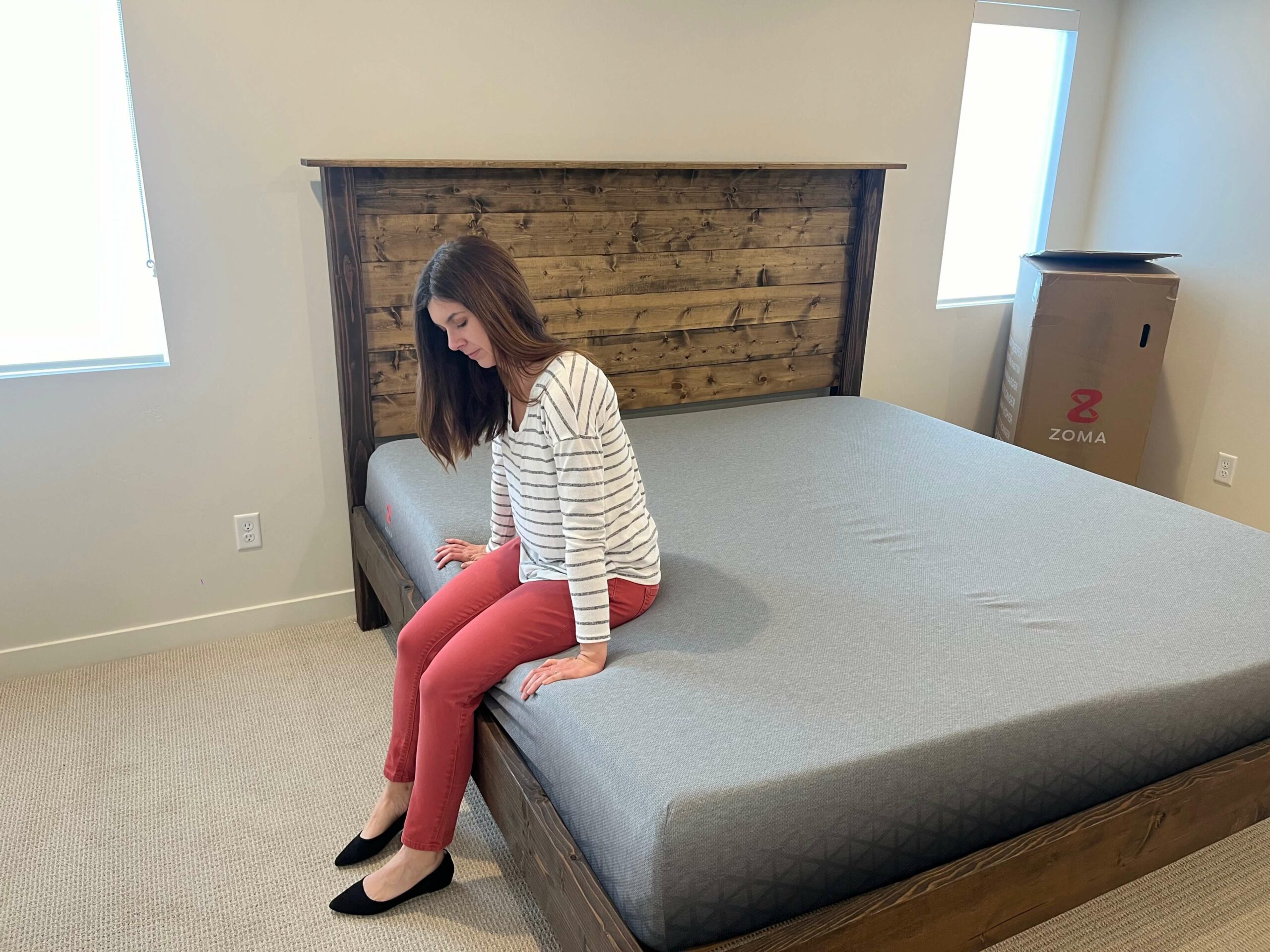
Watch Our Zoma Start Video Review
The Zoma Start is the simplest bed on this page and the only all-foam pick besides the AS3. Ten inches, three foam layers, no coils. That is the whole mattress, and the interesting question is what you actually give up.
Unboxing, it expanded within a couple of hours and there was very little of the off gassing smell I get from most compressed foam beds. That is a small thing until you are the one sleeping in the room on night one.
Testing on my side, the gel-infused memory foam top gave at my shoulder and the Reactiv transition layer underneath stopped the descent, so my head stayed level with my spine. At 10 inches there is not much bed to work with, and the Reactiv layer is doing the job that a coil core does on the hybrids here. It manages it, but at a lighter body weight. On my back, my lower back stayed in contact with the surface and my hips stayed up.
The AirCloth cover felt cool on first contact and the gel-infused top did not warm up as quickly as the denser all foam beds I compared in the same session.
Where it gives, and this matters. Response Time scores 8 out of 10, the joint lowest response score on this page. Rolling between positions, the memory foam top takes a beat to release before you can move cleanly. And at 10 inches, a sleeper over about 250 pounds will compress through the comfort and transition layers to the base foam. That is not a criticism of the bed, it is a description of what 10 inches of foam can do.
The Zoma Start is the pick for a lighter to average weight side or back sleeper on the tightest budget who wants a low profile all-foam bed, and who is not a heavy sleeper or a constant repositioner.
- 10 Value
- 10 Edge Support
- 9 Trial Period
- 8 Response Time
- 9 Motion Transfer
- 9 Cooling & Breathability
The Zoma Start took the mattress in a box slot because it does the essentials in three foam layers and 10 inches, and because it is honest about what that costs.
The Reactiv layer is doing the coil core’s job. During testing on my side, the gel-infused memory foam top gave at my shoulder and the Reactiv transition layer stopped the descent, so my head stayed level with my spine. On every hybrid on this page a coil core does that. Here a single foam layer does it, and at a lighter to average body weight it manages.
Cool on contact, without a cooling cover. The AirCloth cover felt cool on first contact and the gel-infused top did not warm up as quickly as the denser all foam beds I compared in the same session. This is a bed with no phase change fabric and no coil airflow, so that result was not a given.
Where it gives. Response Time scores 8 out of 10, the joint lowest on this page. The memory foam top needs a beat to release before you can move cleanly, and a constant repositioner will feel it. At 10 inches, a heavier sleeper will compress through both the comfort and transition layers to the base foam. Both of these are structural, not fixable, and worth knowing before you buy.
Best For:
- Lighter to average weight side and back sleepers on the tightest budget
- Sleepers who want a low profile bed, whether for a bunk, a platform, or a guest room
- Sleepers who want an all-foam bed with no coil bounce
Compare Instead:
- Vaya Hybrid if you want a real coil core and can stretch the budget slightly
- Amerisleep AS3 if you want the same all-foam idea with zoned support and a 12 inch profile
- Amerisleep AS5 Hybrid if you are a side sleeper who needs a deeper shoulder drop than 10 inches allows
Side sleeping: the gel-infused memory foam top gave at my shoulder and the Reactiv layer beneath it stopped the descent, so my head stayed level with my spine. I did not get the tingling in my arm that a surface too firm for the shoulder gives me. At 10 inches there is not a lot of bed here, and a heavier sleeper will feel the base foam through the comfort layers.
Back sleeping: my lower back stayed in contact with the surface and my hips stayed up rather than settling. The Reactiv layer is what holds that line, and it does the work a coil core does on the hybrids here.
Stomach sleeping: workable rather than good. The cushioning under my chest is light and my hips did not drop far, but at a medium feel on a 10 inch profile, this is not a bed I would recommend for dedicated stomach sleeping.
Response: the memory foam top needs a beat to release before you can move cleanly. Response Time scores 8 out of 10, the joint lowest on this page, and a constant repositioner will feel it.
Motion: it absorbs a partner’s movement less than the thicker foam and hybrid picks on this page do. It is an all-foam bed, so it is quieter than a coil bed, but with only 10 inches of material there is not much to absorb a shift before it reaches you.
There are three foam layers here and no coils, and the Reactiv transition layer is the one carrying the whole bed. On every hybrid on this page a coil core stops the shoulder from sinking through and holds the hips up. Here, that is Reactiv’s job. During testing on my side, the gel-infused memory foam gave and Reactiv is what caught it, so my head stayed level. At a lighter to average body weight it manages. Over roughly 250 pounds, you compress through both layers and reach the Support+ base, and that is the structural ceiling of a 10 inch all-foam bed.
The gel-infused memory foam top is why my shoulder found depth at all, and the gel infusion is why the surface did not warm up as quickly as the denser all foam beds I compared in the same session. It is also why Response Time sits at 8 out of 10: memory foam needs a beat to release before you can move cleanly, and there is no coil bounce underneath to help it along.
The AirCloth cover is why the surface felt cool on first contact. On a bed with no phase change fabric and no coil airflow, that result was not a given.
The Support+ base is why the surface felt the same at the end of a testing week as it did on night one.
Pros:
- Value (10/10): the joint highest value score on this page. It is the least you can spend here and still get a bed with a real transition layer
- Cools without a cooling cover: the AirCloth cover felt cool on first contact and the gel-infused top did not warm up as quickly as the denser all foam beds I compared, which is unusual for a bed with no phase change fabric and no coil airflow
- Side sleeping alignment: the memory foam top gave at my shoulder and the Reactiv layer stopped the descent, so my head stayed level. I did not get the tingling in my arm that a too firm surface gives me
- Very little off gassing. It expanded within a couple of hours and I could sleep in the room the same night
Cons:
- Response Time (8/10): the joint lowest on this page. The memory foam top needs a beat to release before you can move cleanly, and there is no coil bounce underneath to help. A constant repositioner will feel it
- At 10 inches with three foam layers, a sleeper over roughly 250 pounds will compress through the comfort and transition layers to the base foam
- It absorbs a partner’s movement less than the thicker foam and hybrid picks here, because there is not much material to absorb a shift before it reaches you
- The 10 inch profile sits low on a standard frame, which is worth checking if getting in and out of bed easily matters to you
On my side, the gel-infused memory foam gave at my shoulder and the Reactiv layer caught it, so my head stayed level. There are no coils here. That single foam layer is doing the job a coil core does on every hybrid on this page, and at a lighter to average body weight it manages. It is the pick for a lighter to average weight side or back sleeper on the tightest budget who wants a low profile all-foam bed and is not a constant repositioner.
The Mattresses We Have Tested
Every mattress below was tested hands-on and on camera by me, Kristina Hindes, our lead tester. Each row links to its written review and filmed test, so you can check our work. For how we score every mattress, see How We Test Mattresses.
See the full list, with review and video links
| Mattress | Review and video |
|---|---|
| Amerisleep AS2 | Review · Video |
| Amerisleep AS3 | Review · Video |
| Amerisleep AS3 Hybrid | Review · Video |
| Amerisleep AS5 | Review (test clips inside) |
| Amerisleep AS5 Hybrid | Review · Video |
| Amerisleep AS6 Black Series | Review · Video |
| Amerisleep Organica | Review · Video |
| Amerisleep Organica Plush | Review · Video |
| Bear Original | Review · Video |
| Birch Natural | Review · Video |
| Brooklyn Bedding Aurora Luxe Hybrid | Review · Video |
| Brooklyn Bedding Plank Firm | Review · Video |
| Casper The One | Review · Video |
| Eco Terra Hybrid Latex | Review · Video |
| FORM Core | Review · Video |
| FORM Core Hybrid | Review · Video |
| FORM Prime | Review · Video |
| FORM Prime X | Review · Video |
| GhostBed Flex | Review · Video |
| Happsy Organic | Review · Video |
| Helix Dawn Luxe | Review · Video |
| Helix Midnight Luxe | Review · Video |
| Helix Sunset Luxe | Review · Video |
| Latex For Less Hybrid | Review · Video |
| Leesa Original | Review · Video |
| Leesa Sapira Chill Hybrid | Review · Video |
| Leesa Sapira Hybrid | Review · Video |
| Naturepedic Concerto | Review · Video |
| Naturepedic EOS Classic Organic | Review · Video |
| Nest Bedding Owl | Review · Video |
| Nest Bedding Puffin Kids | Review · Video |
| Nest Bedding Raven | Review · Video |
| Nest Bedding Sparrow Signature Hybrid | Review · Video |
| Nolah Evolution 15 | Review · Video |
| Nolah Natural 11 | Review · Video |
| Nolah Original Hybrid | Review · Video |
| PlushBeds Botanical Bliss | Review · Video |
| PlushBeds Luxury Bliss | Review · Video |
| PlushBeds Organic Bliss | Review · Video |
| PlushBeds Organic Kids | Review · Video |
| PlushBeds Signature Bliss | Review · Video |
| Saatva Classic | Review · Video |
| SweetNight CoolNest | Review · Video |
| SweetNight Prime | Review · Video |
| Vaya Hybrid | Review · Video |
| Vaya Mattress | Review · Video |
| Westin Heavenly Bed | Review · Video |
| Zoma Boost | Review · Video |
| Zoma Hybrid | Review · Video |
| Zoma Start | Review · Video |
Types of Mattresses For Neck Pain
The type of mattress you choose sets how far your shoulder can travel into the surface and how quickly the bed pushes back, and those two things are what determine the angle your neck ends up holding. The four types you will see on this page are memory foam, latex, innerspring, and hybrid.
Memory Foam
Memory foam conforms under load, which means the shoulder can travel further into the surface than it can on a firmer material. That is what makes it relevant here: if the shoulder cannot drop, the head sits high and the neck holds an angle. On this page, the Amerisleep AS3 and the Zoma Start are the all-foam picks.
Beneath the memory foam comfort layers sits a poly-foam base. Memory foam makes the better cushion and poly-foam makes the better structure, and the base is what stops the comfort layer from bottoming out. The tradeoff of an all-foam build is response: memory foam needs a beat to release before you can move cleanly, which is why the all-foam picks on this page score lower on Response Time than the coil picks do.
Latex
Latex is a natural foam produced from the sap of rubber trees, and it behaves differently from memory foam in a way you feel immediately. It contours, but it pushes back, and it recovers its shape the moment you lift off. Latex does not conform as deeply as memory foam, so the shoulder does not travel as far, but there is no divot to climb out of when you change position. On this page, the Amerisleep Organica uses Talalay latex, which is springier, and the PlushBeds Signature Bliss uses Dunlop, which is denser and quieter.
Some latex beds blend in synthetic materials, which are less durable than natural latex. If the material matters to you, look for the certification and its scope rather than the word “natural” on the label.
Innerspring
An innerspring mattress carries its support in a steel coil unit, which is why it answers back immediately when you push off rather than making you wait for foam to release. The tradeoff on this page is cushioning. Coils push back sooner than a comfort layer gives, so the shoulder does not travel as far, and a side sleeper can end up with the head sitting slightly high even on a well-built innerspring.
Innerspring beds usually carry a pillow top or Euro top made from cotton, wool, or foam, which does not cushion the shoulder as deeply as a memory foam or latex comfort layer does. Older connected-coil innerspring designs can also develop squeaks and lose support faster than pocketed coil builds. On this page the Saatva Classic is the innerspring pick, and it uses two layers of coils rather than one, with pocketed coils on top, which is why it does not behave like a traditional innerspring.
Hybrid
A hybrid mattress puts a foam or latex comfort layer over a pocketed coil core, which is the combination that matters most on this page. The comfort layer is what lets the shoulder drop. The coil core is what stops the hip from dropping with it. When both happen, the head stays level rather than tipping toward the mattress or propping up off it, and that is the whole mechanism this guide is testing for.
Unlike a traditional innerspring, the coils in a hybrid are individually wrapped, so they compress independently rather than as a connected unit. That is what lets a hybrid be zoned: softer coils can sit under the shoulder and firmer coils under the lumbar, which is exactly what I felt on the Helix Midnight Luxe, the Leesa Sapira Chill, and the Nolah Evolution. Independent coils also absorb a partner’s movement better than a connected innerspring does, and they are quieter over time.
The tradeoff is that a coil core pushes back sooner than a deep foam layer does. On my side, the hybrids on this page stopped my shoulder earlier than the all-foam picks did, which is what a heavier sleeper wants and what a lighter, broader-shouldered side sleeper may not. Nine of the fourteen picks here are hybrids.
Causes of Neck Pain at Night
Neck pain can be the result of many different factors. However, the most common causes of neck pain at night include using a bad mattress or pillow, injuries, health conditions, and poor posture.

1. The Wrong Mattress or Pillow
A mattress and pillow do not treat anything. What they control is the angle your neck holds while you sleep, and that angle is a mechanical result of two things: how far your shoulder drops into the surface, and how high your head sits above it.
A worn mattress that sags, or a mattress that is simply the wrong firmness for your body, changes that angle. If the surface is too firm for your shoulder, the shoulder cannot drop and the head sits high. If the surface is too soft for your hips, the hips settle and the whole line goes with them. A pillow that is too thick or too thin moves the head end of the same equation. In both cases the neck is held out of line for seven or eight hours, and that is the thing a mattress is actually able to change.
Which firmness gets you there depends on your sleeping position and your body weight, not on an average. That is why this guide covers fourteen picks running from 3 out of 10 up to 8 out of 10 rather than naming a single best mattress and stopping.
2. Injuries or Health Conditions
Neck pain may be the result of numerous different health conditions or injuries. Some of these health conditions include:
- Rheumatoid arthritis
- Osteoporosis
- Pinched nerves
- Strained ligaments
- Herniated discs
- Strenuous exercise or improper lifting
- Pregnancy
Neck pain with a medical cause is a question for a clinician, not a mattress. A bed can stop the neck from being held at a bad angle for seven or eight hours, which is worth doing regardless, but it is a supporting decision alongside treatment rather than a replacement for it.
3. Poor Posture
Posture holds the neck at an angle during the day in much the same way a mattress holds it at an angle at night. Hunching at a desk, looking down at a phone, standing with a slumped back, and twisting the torso in bed all put the head forward of the shoulders, and the muscles at the back of the neck carry that load for as long as the position is held.
Most people do not notice they are doing it until they straighten up. Dr. Jennifer Miller, PT, DPT says, “A quick posture check can help reduce pain, so I often encourage my patients to take breaks throughout the day to assess and correct their posture, especially if they work at a computer desk. I also suggest they check at their posture whenever they pass a mirror and correct it if they notice hunched shoulders or forward head posture.”
How Neck Pain Affects Your Sleep?
Pain and sleep run in both directions. Discomfort makes it harder to settle into a position and stay in it, and short or broken sleep tends to make discomfort more noticeable the next day. Research on chronic pain populations consistently finds the two tracking together rather than one simply causing the other.
What that means practically is that a mattress is one input, not the input. It does not treat a herniated disc, a pinched nerve, or arthritis. What it controls is the angle your neck is held at for seven or eight hours, and whether you spend that time repositioning to escape a pressure point or lying still.
If your neck pain has a medical cause, the mattress is a supporting decision alongside care from a clinician, not a substitute for it. If it does not, and you are simply waking with a stiff neck on a bed that is the wrong firmness for your shoulder, the mattress is the whole problem and it is a solvable one.
Sleeping Positions And Neck Pain
Your sleeping position sets how far your shoulder has to travel into the mattress, and that is what determines which firmness keeps your head level. It is the single most useful thing to know before you look at any of the fourteen picks above.
a. Back Sleeping
On your back, the shoulder is not carrying the load, the hips are. What goes wrong here is not the shoulder failing to sink, it is the hips sinking too far, which drops the pelvis below the ribcage, tips the head backward into the pillow, and leaves the chin lifting off the chest.
That is why I found medium-firm and firm surfaces held back sleeping best across this guide. On the Saatva Classic in the Luxury Firm and on the Zoma Boost at 5.5, my hips stayed up and my lower back stayed in contact with the surface with no gap under the lumbar curve. On the AS5 Hybrid at 3 out of 10, they did not.
For pillow height, a mid-loft pillow of roughly 3 to 5 inches is where most back sleepers land, because the head only needs to be lifted as far as the small gap between the back of the skull and the mattress. Anything taller pushes the chin toward the chest.
b. Side Sleeping
Side sleeping is where the mattress does the most work, because the shoulder is now the widest point of your body and it has to go somewhere. If the surface will not let it drop, the head sits high and the neck holds an angle for the whole time you are lying there, and no pillow corrects that, because the pillow is not the part that is wrong.
Medium and medium-soft surfaces gave the shoulder the most room in testing. On the Amerisleep AS3 my shoulder sank into the HIVE zoned layer far enough that my head stayed level without a second pillow. On the AS5 Hybrid at 3 out of 10, it traveled further than on any other bed here, which is the answer if a medium has already failed you and your shoulder is broad.
A side sleeper generally needs a taller pillow than a back sleeper, roughly 5 to 7 inches, because the gap between the head and the mattress is now the width of your shoulder. Dr. Miller notes, “Using a body pillow between your knees and ‘hugging’ it with your top arm can also help maintain neutral spine posture while sleeping.”
c. Stomach Sleeping
Stomach sleeping is the hardest position to keep the neck neutral in, for a reason that has nothing to do with the mattress: your head has to be turned to one side for you to breathe. No surface fixes that.
What the mattress can do is stop it from getting worse. On a soft bed, the hips drop below the shoulders, the lower back arches, and the head is now turned at the top of a curve rather than a straight line. Medium-firm and firm surfaces kept my hips level with my shoulders across this guide, and the Zoma Boost handled it best of the luxury picks. A thin pillow of 3 inches or less, or no pillow at all, keeps the head from being lifted on top of the turn.
d. Combination Sleeping
If you change position through the night, the number to look at is Response Time, not firmness. A surface that holds the shape of your last position means every roll starts by climbing out of a divot, and the neck is what leads that movement.
Medium to medium-firm surfaces with a fast reset served combination sleepers best here. The Amerisleep Organica scored 10 out of 10 on Response Time and had already recovered its shape before I finished rolling over. The Saatva Classic and the Westin Heavenly Bed both answered immediately because coils do not need to release the way foam does. At the other end, the AS5 Hybrid and the Zoma Start both sit at 8 out of 10, and on those two I could feel the beat of lag every time I moved.
A pillow that flexes rather than holding one shape helps for the same reason the mattress does: it has to be right in more than one position.
FAQs
What is the best mattress for neck pain?
After testing 50+ mattresses for this guide, the Amerisleep AS3 is the pick for most people. During testing, lying on my side, my shoulder sank into its HIVE zoned layer far enough that my head stayed level with my spine without needing a second pillow, and on my back the surface held my upper back steady without letting my head drop. The right answer depends on your shoulder, though. If a medium bed still leaves your head sitting high, the Amerisleep AS5 Hybrid at 3 out of 10 gives the shoulder further to travel. If you want a firmer surface and coil bounce, the Saatva Classic is the pick.
What is the best mattress for neck and shoulder pain?
Neck and shoulder pain is most commonly associated with side sleeping. Side sleepers are at the highest risk of pressure build-up around the shoulders and spinal misalignment around the neck.
Medium-soft to medium mattresses tend to work best, because the shoulder needs somewhere to go. On this page, the Amerisleep AS3 is the pick for most side sleepers: my shoulder sank into its zoned layer while my head stayed level. If your shoulder is broad enough that a medium still leaves your head sitting high, the Amerisleep AS5 Hybrid at 3 out of 10 gives it further to travel.
Is a hybrid mattress good for neck pain?
A hybrid gives you a foam or latex comfort layer over a pocketed coil core, and that combination is well suited to the mechanical problem here: the comfort layer lets the shoulder drop, and the coils stop the hip from dropping with it, so the head stays level. Nine of the fourteen picks on this page are hybrids for that reason.
The type does not do it on its own, though. A hybrid that is too firm for your shoulder leaves the head sitting high, and one that is too soft for your hips lets the whole line settle. The zoned hybrids here are the ones that handled it most reliably, because softer coils under the shoulder and firmer coils under the lumbar treat the two ends of the body differently rather than the same. The Helix Midnight Luxe, the Leesa Sapira Chill, and the Nolah Evolution all do this.
Is a memory foam mattress good for neck pain?
Memory foam conforms under load, which lets the shoulder travel further into the surface than a firmer material allows. That matters because if the shoulder cannot drop, the head sits high and the neck holds an angle for seven or eight hours. On this page, the Amerisleep AS3 is the memory foam pick.
The firmness still has to match your body and your sleeping position. A memory foam bed that is too firm for your shoulder will leave you in exactly the position you were trying to avoid, and one that is too soft will let the hips settle and take the whole line with them.
Why do I get neck pain after sleeping?
Neck pain after sleeping is usually a result of an awkward sleeping position or the wrong mattress or pillow. If your mattress is the wrong firmness for your sleeping position, it’ll misalign your spine and lead to neck pain.
Similarly, if you sleep with your neck twisted to the side, leaving your neck in an awkward position for hours will leave it stiff and sore. This is particularly common for side and stomach sleepers but is still a possibility for back sleepers.
If your pillow is flat and unsupportive, it can cause your neck to curve unnaturally, resulting in neck pain when you wake up.
How long does neck pain from sleeping wrong last?
A stiff neck from a single bad night usually resolves on its own within a day or two, and most sources put the outer edge at about a week. If it is lasting longer than that, recurring, or radiating into the shoulder or arm, it is worth having it looked at rather than waiting it out.
Common at-home measures include over-the-counter pain medication and hot or cold compresses. If you use heat or ice, keep a few layers of fabric between the compress and your skin and limit each application to under 15 minutes. None of that is a substitute for a clinician’s advice, and this page is not offering one.
Can my mattress be causing me to have neck pain?
It can, and there is a fairly reliable way to tell. If you wake with a stiff neck that loosens up within an hour or two of getting out of bed, and the stiffness is worse on the mornings after a full night than after a short one, the mattress is a likely contributor, because the longer you lie on it the longer the neck is held at whatever angle it sets.
If the pain is present regardless of how you slept, does not ease after you are up and moving, or radiates down an arm, that is not a mattress problem and a new mattress will not resolve it. That is worth a conversation with a clinician before it is worth a purchase.
Conclusion
Neck pain is not only painful throughout the day, but it makes it harder to perform daily tasks and get to sleep. Even if you do manage to sleep, you’ll likely struggle to stay asleep and will wake up still feeling exhausted.
A mattress is not a treatment, and this page does not pretend otherwise. What a mattress controls is the angle your neck holds for seven or eight hours, and that angle is set by how far your shoulder drops into the surface relative to your head. The right pick is the one that matches your shoulder, your sleeping position, and your body weight, which is why there are 14 of them here rather than one.
If you are a side sleeper and unsure where to start, the Amerisleep AS3 is the one I would try first. If a medium has already failed you, take the AS5 Hybrid. If you want coils, take the Saatva Classic.
Related Reads
- I Tested 50+ Mattresses to Find the 14 Best Mattresses for Piriformis Syndrome of 2026

- I Tested 50+ Mattresses to Find the 14 Best Mattresses for Neuropathy of 2026


- I Tested 50+ Mattresses to Find the 14 Best Mattresses for Kyphosis of 2026

- I Tested 50+ Mattresses to Find the 14 Best Mattresses for Anterior Pelvic Tilt of 2026