I Tested 50+ Mattresses to Find the 14 Most Durable Mattresses of 2026

Top Recommendation of 2026: Amerisleep AS3
After testing 50+ mattresses for this guide, the Amerisleep AS3 earned the top spot as the most durable mattress of 2026 because it changed less over the testing window than anything else I slept on. During testing my hips stayed level with my shoulders when I lay on my back, and the surface pressed back the same way in the final week as it did the first night, with no hollow where I had been sleeping. When I rolled from my side onto my back the Bio-Pur foam released right away instead of holding the shape of my shoulder, which is the first thing to go on memory foam that is starting to break down.
The AS3 suits combination sleepers who reposition often, side sleepers who want their shoulders and hips to sink without bottoming out, and anyone buying a medium feel they expect to still be medium in five years. That consistency, rather than any single layer or material, is what made it the most durable recommendation in this guide.

Every mattress featured on Sleep Junkie is evaluated using the same testing framework for support, pressure relief, cooling, motion isolation, edge support, responsiveness, and overall value. Learn How We Test Mattresses.
- Best Overall: Amerisleep AS3
- Best Purple Alternative: FORM Prime
- Best Luxury: Zoma Boost
- Best Budget: Vaya Hybrid
- Best For Side Sleepers: Helix Midnight Luxe
- Best Innerspring: Saatva Classic
- Best Hybrid: Leesa Sapira Chill
- Best Pillow Top: Nolah Evolution
- Best Latex: Amerisleep Organica
- Best Cooling: Amerisleep AS6 Black Series
- Best Organic: PlushBeds Signature Bliss
- Best Soft: Amerisleep AS5 Hybrid
- Best Hotel Mattress: Westin Heavenly Bed
- Best Value Memory Foam: Zoma Start
The most durable mattress I tested is the Amerisleep AS3, an all foam bed that held a true medium feel from the first week of testing to the last with no hollow where I had been sleeping. I tested 50+ mattresses for this guide and kept 14 that showed the least change in support, surface recovery and edge strength across weeks of nightly use rather than the first few nights.
Durability is the one thing you cannot judge on night one, which is why most mattress guides skip it. A bed that feels excellent out of the box can begin to sag or develop a body impression by month six, and the components that go first are predictable: the perimeter, the comfort layer’s ability to recover, and the point at which the base stops compressing. Those are the three things I tracked on every bed here.
The 14 picks below cover every major construction type, because durability works differently in each one, and it is the main thing to weigh when choosing a mattress you want to keep. Latex resists impressions better than any foam. Wrapped coils fatigue more slowly than open coil systems. High density foam bases hold a compression point that cheaper polyfoam does not. Prices run from budget to premium, warranties from 10 years to lifetime, and every pick carries a stated limitation and a named alternative from this same list.
Most Durable Mattress in 2026

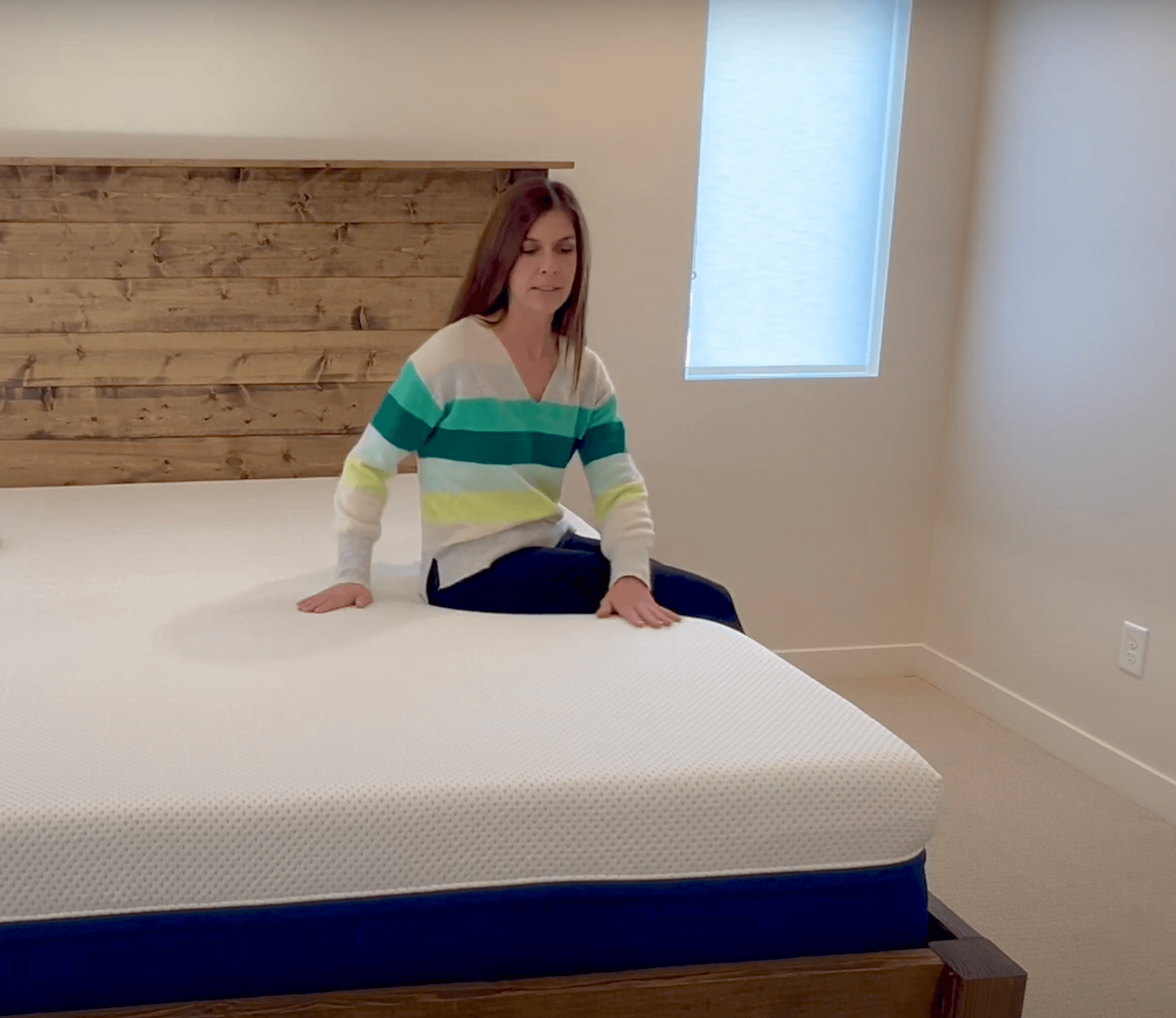
Watch Our Amerisleep AS3 Video Review
The Amerisleep AS3 is the most durable mattress in this guide, and it earned that as an all foam bed on a list where eight of the fourteen picks have coils holding them up. That is the harder version of the test. Foam has nothing structural underneath it, so when a foam bed keeps its shape it is telling you something about the density of what is in it rather than about the springs.
I slept on the AS3 across weeks rather than nights, rotated it, and checked the sleep surface each time for the shallow dish that memory foam develops where the shoulders and hips land. It never appeared. Stripping the bed and looking at it flat at the end of testing, the surface sat level, and the compression point when I pressed hard through the middle was in the same place it had been at the start.
Two picks on this page carry higher overall scores. Neither had to produce that result without a coil unit. Against the other all foam bed here, the AS3 has more material between the sleeper and the base and a longer warranty term behind it, and against the hybrids it gives up perimeter strength in exchange for a surface that contours further. For a combination or side sleeper buying a medium bed they need to still be medium in several years, that is the trade worth making.
- 9 Value
- 8 Edge Support
- 9 Trial Period
- 9 Response Time
- 10 Motion Transfer
- 10 Cooling & Breathability
The AS3 held a true medium feel from the first week of testing to the last, and on an all foam build that is a harder result than it sounds.
During testing my hips stayed level with my shoulders when I lay on my back, and the lower back stayed supported without the slow settle that memory foam usually develops once the top layer starts to tire. When I rolled from my side onto my back, the Bio-Pur released almost immediately rather than holding the outline of my shoulder, which means a combination sleeper is not fighting the bed every time they move.
The zoned transition layer is the reason side sleeping worked. My shoulder and hip sank into the softer hexagonal sections while my waist stayed lifted, so my spine ran straight rather than bowing, and I did not wake up with the shoulder ache I get on flatter foam.
The one place it gives ground is the perimeter. Edge Support scores 8, tied with the Organica for the lowest on this page, and when I sat on the side to put my shoes on I felt the edge give more than on the reinforced perimeters here.
Best For:
- Combination sleepers who reposition through the night and want the surface to let go quickly
- Side sleepers who want shoulder and hip sinkage without bottoming out
- Anyone buying a medium feel they need to still be medium in several years
Compare Instead:
- Vaya Hybrid if you sit on the edge of the bed often, since its perimeter holds where the AS3 gives
- Amerisleep AS5 Hybrid if a medium feel is firmer than you want and you sleep on your side almost exclusively
- Zoma Start if you want the same kind of foam consistency in a thinner, lower profile build
The AS3 sits at 5 to 6 out of 10, a true medium, and it reads that way under you rather than drifting soft or firm depending on position.
On my side, my shoulder and hip sank into the surface until the transition layer caught them, and my waist stayed lifted rather than dropping with the rest of me. My spine ran straight. I did not get the shoulder ache that flatter foam gives me by the third night.
On my back, the lower spine stayed in contact with the surface rather than bridging, and my hips sat level with my shoulders instead of settling lower. I often woke in the position I had fallen asleep in, which on a foam bed usually means the surface is not fighting you.
Changing positions is where the Bio-Pur earns its place. Rolling from my side onto my back, the foam released almost immediately instead of holding the outline of my shoulder, so there was no pushing out of a hollow. That matters more for a combination sleeper than any single comfort measure on this page.
On temperature, the cover sat cool on first contact and the surface stayed cooler than the denser foam beds I compared in the same session, without warming up under extended contact the way conventional memory foam does. It ties the top cooling score on this page.
If you sit on the edge of the bed to dress, this is the AS3’s weak spot: it ties for the lowest edge support score on this page.
Three things in this build explain what I felt. The Bio-Pur comfort layer is why the surface let go of my shoulder almost immediately when I rolled onto my back, rather than holding the outline the way denser memory foam does, and that fast release is what makes it workable for a combination sleeper. The Affinity transition layer underneath it is cut into zones, and that is what kept my waist lifted while my shoulder and hip dropped on my side, so my spine ran straight instead of bowing. Beneath both sits a 7 inch Bio-Core base, which is more than half the bed’s total height, and it is the reason the compression stopped at a fixed point every time I pressed into the middle rather than continuing to give. The one thing the build does not do is reinforce the perimeter, which is why it ties for the lowest edge support score on this page.
Pros
- Motion Transfer (10/10): my partner shifting on the far side of a queen barely registered on mine.
- Cooling and Breathability (10/10): ties the top cooling score on this page, and the surface stayed cooler than the denser foam beds I compared in the same session.
- The zoned transition layer kept my waist lifted while my shoulder and hip dropped on my side, so my spine stayed straight rather than bowing.
- The medium feel measured the same at the end of testing as at the start, with no hollow where I had been sleeping.
Cons
- Edge Support (8/10): ties for the lowest on this page, and the perimeter gave noticeably when I sat on the side to put my shoes on.
- Single firmness at 5 to 6 out of 10, so there is no adjusting if medium turns out to be softer or firmer than you want.
- All foam construction means a dedicated stomach sleeper will feel their hips settle further than a coil build would allow.
Why The Amerisleep AS3 Won
Among the 50+ mattresses I tested for this guide, the AS3 changed the least between the first week and the last. It held a true medium feel with no hollow where I slept, released my shoulder as quickly at the end as at the start, and kept my hips level with my shoulders on my back throughout. Two picks here carry higher overall scores, but neither had to hold that consistency on an all foam build, and that is the harder test for durability. For a combination or side sleeper buying a medium bed they need to still be medium in several years, the AS3 is the one I would buy.
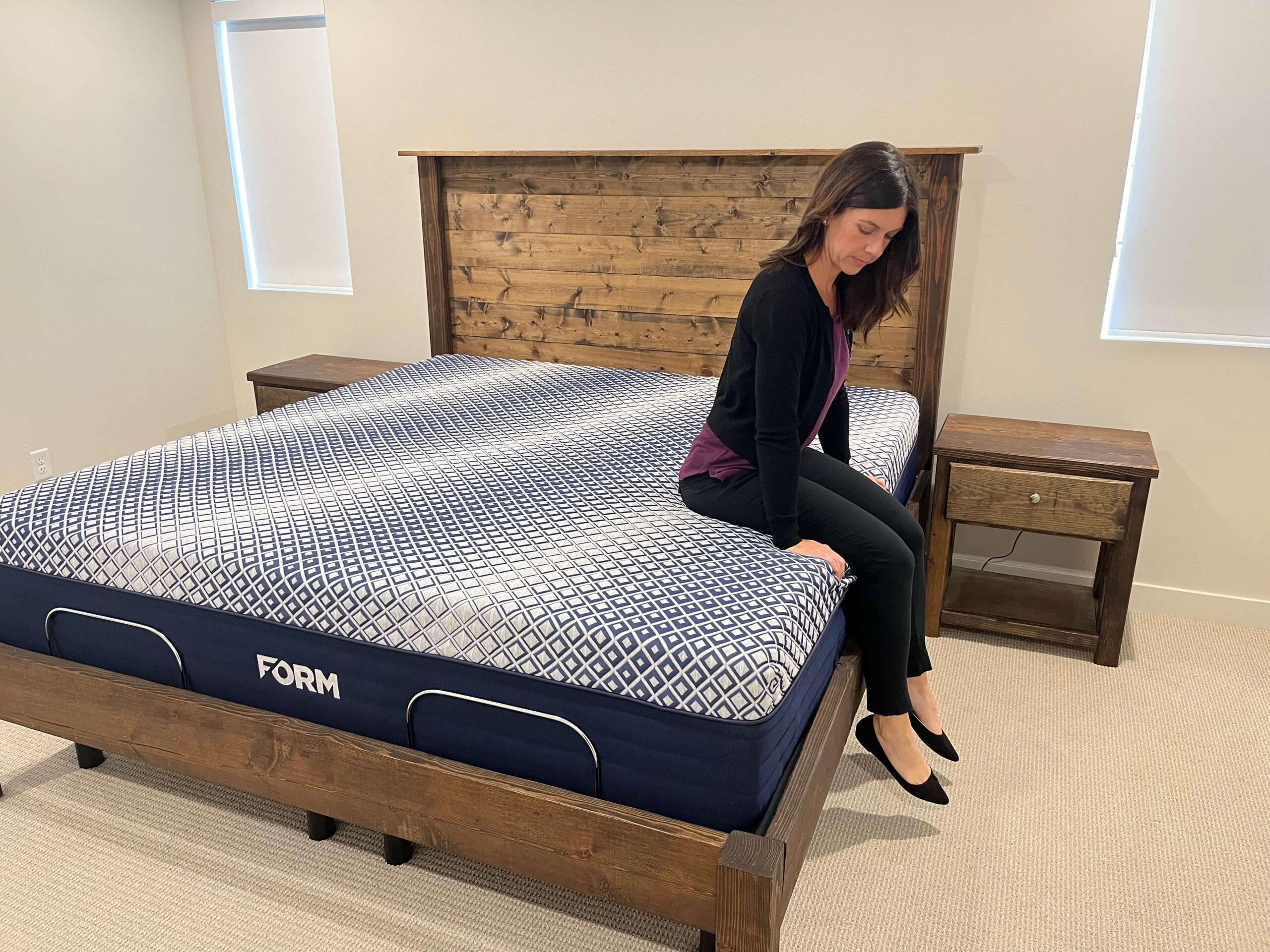
Watch Our FORM Prime Video Review
The FORM Prime was the most structurally consistent hybrid I tested for this guide, and it is the pick for anyone who has looked at a grid mattress and wondered whether the grid holds up.
That question has an answer here, and it is the reason this bed ranks where it does. Polymer grids are known for softening into a sway as the cells fatigue, which is a different failure mode from foam going flat or coils going quiet. The Integra-Mesh woven through the GelGrid is FORM’s response to it, and across weeks of testing the surface stayed flat and immediate under me with none of that sway.
It ties the Saatva Classic for the strongest guarantee combination on this page: 365 nights and a lifetime warranty. On a durability guide that is worth more than it looks, because a structural problem rarely shows inside the first month, and this is one of only two picks that gives you a full year to find one.
Against the other hybrids on this list it gives up nothing on the perimeter and matches the best of them on motion. What it gives up is feel range: it ships in one zoned medium, where four picks here let you choose a firmness. It is the pick for a couple who want the full width of a queen usable in year five and are happy with a zoned medium surface.
- 8 Value
- 10 Edge Support
- 10 Trial Period
- 9 Response Time
- 10 Motion Transfer
- 9 Cooling & Breathability
The FORM Prime was the most structurally consistent hybrid in this guide, and the perimeter is where that showed most clearly.
When I sat on the full length of the edge with my weight forward, the BaseFlex encasement compressed and stopped rather than folding under me, and it did the same thing weeks later. That is the failure point on most hybrids, and it holding means a couple can use the whole width of a queen instead of the middle two thirds.
The GelGrid is the layer I watched hardest, because polymer grids are known for developing a wobble as the cells fatigue. Through the testing window it stayed flat and responsive, with none of the surface sway that shows up when a grid starts to loosen. Rolling from back to side, the grid reset under me immediately rather than rocking.
On my side, the grid collapsed right at the shoulder and hip and stayed firm through the waist, so I woke without the shoulder tension I get on beds that flex uniformly.
The limitation is the feel rather than the build. The grid flexes by design, so a dedicated stomach sleeper who wants an unyielding surface will feel their hips settle further than they want.
Best For:
- Couples who sleep close to the edges and want the full surface usable years in
- Side and combination sleepers who want pressure relief without a sinking sensation
- Shoppers who want a full year to test a durability claim before committing
Compare Instead:
- Zoma Boost if you want the same coil structure with a foam surface rather than a grid
- Vaya Hybrid if the FORM Prime is above your budget and edge strength is the main thing you are buying
The FORM Prime has a zoned medium feel, softer at the shoulder and firmer through the lumbar region, and the two zones stay distinguishable from each other rather than blending as the bed settles.
On my side, the grid flexed right at my shoulder and hip and gave real pressure relief without a sinking sensation, which is the specific thing a grid does that foam does not. My spine stayed neutral, and after several nights I woke without the shoulder tension firmer surfaces give me.
On my back, the ZoneCoil system held my lower back firmly while the grid conformed to the curve of my spine, so my midsection never felt suspended or dropped.
Changing position is where it is most obviously a grid rather than a foam bed. Rolling from back to side to stomach took no effort and the surface adjusted right away each time, with no lag and nothing to climb out of.
What set it apart over weeks of testing was how little the feel changed. Many mattresses soften or develop a shallow crater where you sleep most, and the Prime felt the same in week three as on the first night.
Stomach sleepers who need a very firm, unyielding surface are the one group I would tell to use the trial carefully, since the grid flexes by design and your hips will settle further than they would on a flat firm surface.
The perimeter result came from the BaseFlex encasement. It wraps the coil unit in dense foam, and that is why sitting on the full length of the edge compressed to a stop rather than folding, weeks in as well as on day one. Inside it, the ZoneCoil 7-Series springs are individually wrapped, which is what kept my partner’s movement from crossing the bed and also why the shoulders and lumbar behaved differently from each other rather than as one surface. The GelGrid is the layer that decides whether this bed ages well, and the Integra-Mesh woven through it is the reason it stayed flat and immediate under me instead of developing the sway that loosening grids get. The ContourFlex foam between the grid and the coils is what stopped the transition feeling like two separate beds when I rolled across it. The AeroWeave cover and its open stitching kept the surface from warming under extended contact.
Pros
- Edge Support (10/10): the BaseFlex encasement compressed to a stop rather than folding when I sat on the full length of the edge, weeks in as well as on day one.
- Trial Period (10/10): 365 nights, tied for the longest on this page, which matters most on a durability purchase.
- Motion Transfer (10/10): individually wrapped coils kept my partner’s movement from crossing the bed.
- The Integra-Mesh reinforcement kept the grid flat and immediate under me instead of developing the sway loosening grids get.
Cons
- The grid flexes by design, so a dedicated stomach sleeper who wants an unyielding surface will feel their hips settle further than they want.
- Built entirely from synthetic materials, so it is not an option if certified natural or organic layers are what you are shopping for.
- At 14 inches it needs deep pocket sheets and makes a higher step up into bed.
The FORM Prime’s perimeter is what separated it from the other hybrids I tested for this guide. Sitting on the full length of the edge compressed it to a stop rather than folding under me, and it did the same thing at the end of testing as at the start. On my side the grid gave right at the shoulder and hip and stayed firm through the waist, so my spine ran straight and I woke without the shoulder tension firmer surfaces give me. It is the pick for a couple who sleep close to the edges and want the full width of a queen still usable years in.
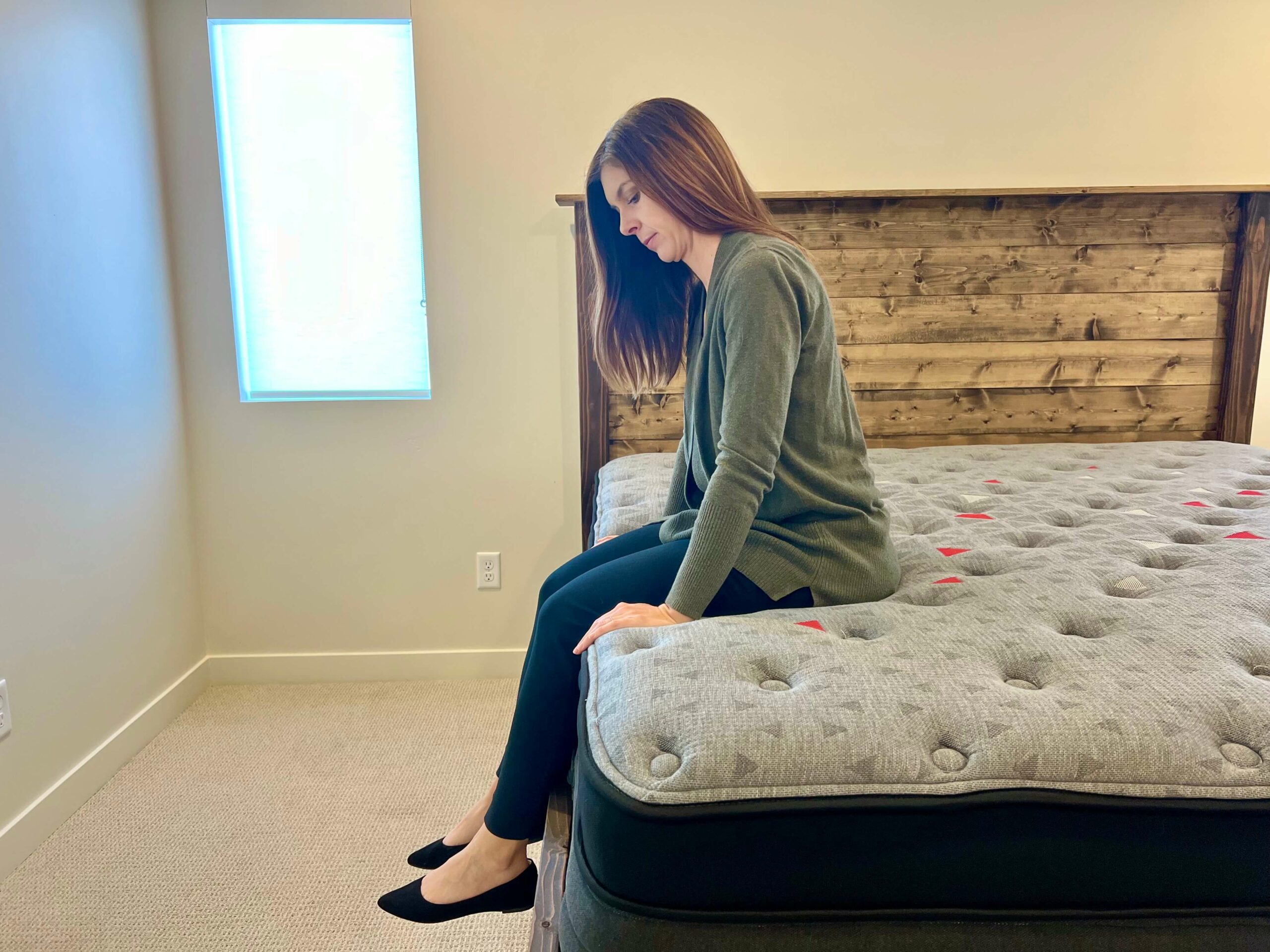
Watch Our Zoma Boost Video Review
The Zoma Boost carries the joint highest overall score on this page, and it is the pick for someone who wants a 15 inch hybrid that also ties the top value score on this page.
What put it at the top of the score column is that it does not have a weak dimension. It scores a 10 on value, edge support and motion, and a 9 on the other three, and across weeks of testing none of those numbers would have moved. The perimeter I sat on every morning held the same way at the end as at the start. The surface I rolled across came back up immediately every time rather than developing the lag that signals a comfort layer starting to tire.
It ranks third rather than first because durability on a tall hybrid with a dense coil unit underneath is a lower bar than durability on an all foam bed, not because anything about it disappointed. Against the other 15 inch pick on this page it ties on value and carries a 10 year warranty rather than a lifetime one; against the budget hybrid here it isolates motion far better.
At 15 inches and a real weight it is a two-person setup, and it ships in one medium-firm feel. It is the pick for a combination sleeper who moves through the night and wants the surface to be there again by the time they land.
- 10 Value
- 10 Edge Support
- 9 Trial Period
- 9 Response Time
- 10 Motion Transfer
- 9 Cooling & Breathability
The Zoma Boost carries the joint highest overall score on this page, and it earned it on structure rather than on any one comfort feature.
During testing the perimeter held under my full weight when I sat on it to get up, and it held the same way after weeks of doing that every morning, which is the pattern I look for rather than the first-day result. The zoned edge coils are the reason: the outer rows are firmer than the interior, so the side of the bed is doing structural work rather than just being there.
The Reactiv transition layer is what kept it from feeling like a memory foam bed as it aged. When I shifted from my back to my side the surface came back up under me instead of leaving a shallow trough, and after several weeks that recovery was still immediate. A combination sleeper who moves ten times a night notices that difference more than any single-position sleeper will.
The graphite layer sat cooler to the touch than the denser foam beds I compared in the same session, though it does not match the least heat-retentive picks on this page.
At 15 inches it ties for the tallest bed here, which is a real ownership tradeoff at setup and at sheet-buying time.
Best For:
- Combination sleepers who want a bed to recover instantly every time they move
- Couples who use the outer thirds of the mattress
- Shoppers who want a taller hybrid build without a top-tier price
Compare Instead:
- Nolah Evolution if you want the same 15 inch build with a plusher pillow top and a firmness choice
- Vaya Hybrid if you want similar coil structure in a lower profile and can accept weaker motion isolation
- FORM Prime if you want a longer trial and warranty to sit behind the durability claim
The Zoma Boost sits at about 5.5 out of 10, a medium-firm, and the coil unit is close enough to the surface that you feel it working rather than only feeling foam.
On my back, the surface cradled my hips and shoulders while the coils held my lower spine level, so my midsection did not drop. It is firmer under the lumbar region than through the shoulders, and that difference is noticeable rather than theoretical.
On my side, the graphite memory foam cushioned my shoulder until it reached the Reactiv layer, which caught it rather than letting it keep going. My hip did the same. There is give, but it stops at a defined depth instead of continuing.
I gave stomach sleeping a fair test. The bed kept my hips high enough that my lower back did not arch, though a dedicated face-down sleeper will still want a firmer surface than this.
Sharing the bed, my partner turning over and getting up on the far side of a queen barely registered on mine, which is what a 10 out of 10 motion score feels like in practice.
Changing position is the standout. Rolling between back, side and stomach, there was no stage of pushing out of a hollow, because the Reactiv layer brings the surface back up as fast as you move off it. Weeks in, that recovery was still immediate, which is the earliest signal I have that a comfort layer has not started to fatigue.
The zoned edge coils are the reason the perimeter did structural work. The outer rows are firmer than the interior, so sitting on the side to get up compressed the edge and then stopped, and it stopped in the same place at the end of testing. Above them the Reactiv transition layer is what kept this from behaving like a memory foam bed as it aged: when I shifted position the surface came back up under me immediately rather than leaving a shallow trough, which is what a combination sleeper actually feels. The graphite infused memory foam above that is what gave the surface its cool first contact against the denser foam beds I compared in the same session, and the quilted gel layer over it is where the initial give at the shoulder comes from. The base foam under the coils is why the bed sat flat on the frame rather than dishing toward the middle.
Pros
- Value (10/10) and Edge Support (10/10): the zoned edge coils held under my full weight every morning for weeks without developing a soft lip, on a build that ties the top value score on this page.
- Motion Transfer (10/10): my partner moving on the far side of a queen barely registered.
- The Reactiv layer brought the surface back up under me immediately each time I changed position, with no shallow trough left behind.
Cons
- Cooling and Breathability (9/10): the graphite layer sat cooler than the denser foam beds I compared, but not as cool as the top tier on this page.
- At 15 inches and a substantial weight it ties for the tallest bed here, so setup and rotation are a two-person job and it needs deep pocket sheets.
- Single medium-firm feel at about 5.5 out of 10, so there is no softer or firmer option if that is not your feel.
Nothing about the Zoma Boost’s structure moved across the testing window. The zoned edge coils meant sitting on the side every morning never produced the soft lip most hybrids develop, and the Reactiv layer brought the surface back up under me immediately every time I changed position rather than leaving a shallow trough. On my back the medium-firm surface kept my hips level without the mushy stage in between. It is the pick for a combination sleeper who moves through the night and wants a taller hybrid build without a top-tier price.
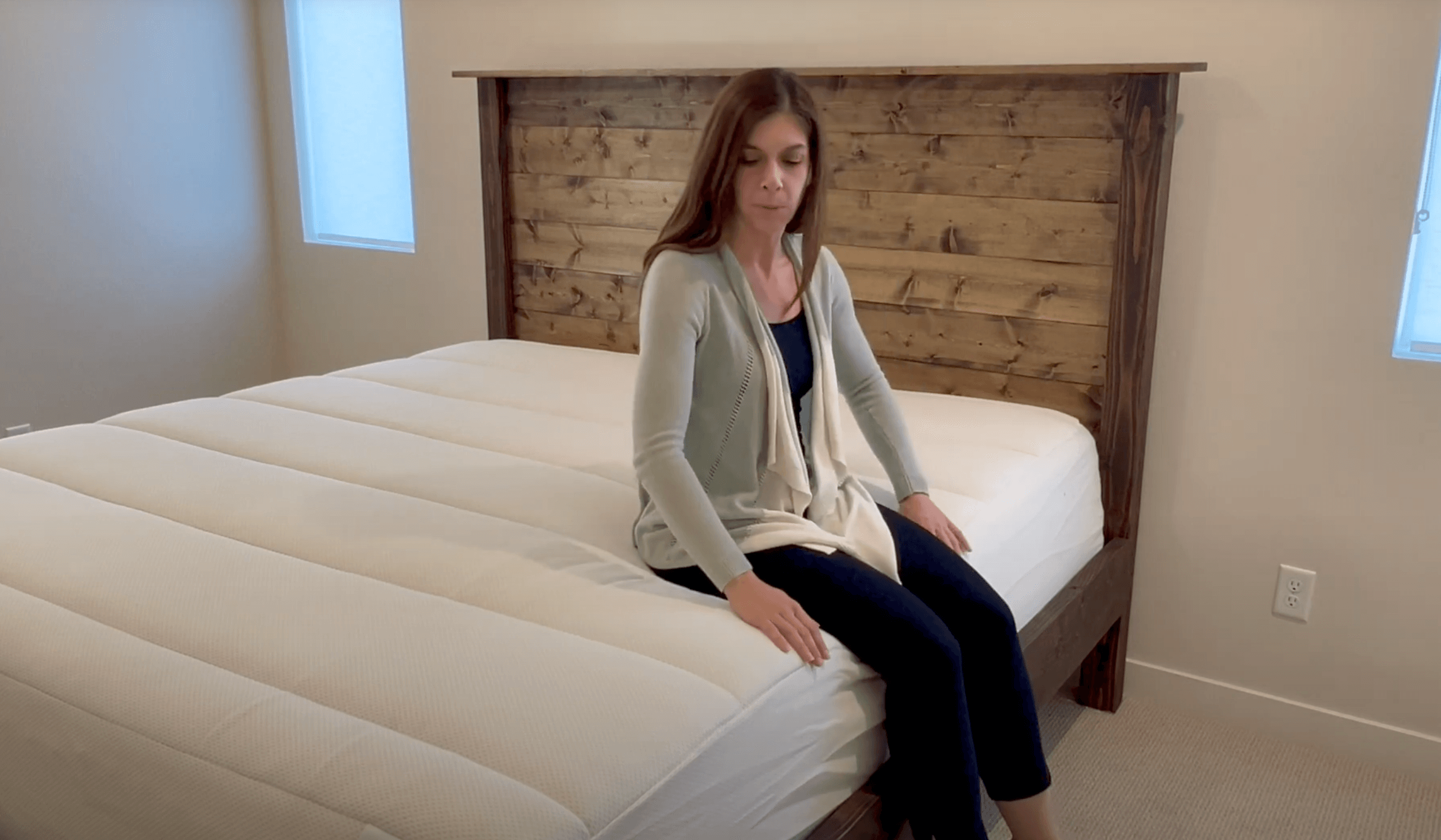
Watch Our Vaya Hybrid Video Review
The Vaya Hybrid is the best structural value on this page, and it is the pick that surprised me most, because budget hybrids are where durability normally goes to die.
The usual failure pattern is specific: the perimeter softens into a lip within months, and the base foam keeps compressing a little further each time you press into it. Neither happened here. The compression point through the middle of the bed was in the same place at the end of testing as at the start, and the edge I sat on every morning for weeks never developed the give that budget coil beds grow at the sides first.
It scores a 10 on value, edge support and response time, and it is the only pick on this page that scores 10 on all three of them.
Where it gives ground is motion. It carries the lowest motion score on this list, and the reason is structural rather than a flaw: there is less foam between the springs and the sleeper than the premium hybrids here put in, which is also part of why it costs what it costs.
It is the pick for a solo combination sleeper, a guest room, or a second bedroom that has to survive years of irregular use. A light sleeper sharing a queen with a restless partner should look at the picks above it instead.
- 10 Value
- 10 Edge Support
- 9 Trial Period
- 10 Response Time
- 7 Motion Transfer
- 9 Cooling & Breathability
The Vaya Hybrid is the best structural value on this page, and the perimeter is the reason.
I sat on the edge, lay along it, and got in and out from the side every morning for weeks, and it never rolled me off or developed the soft lip that budget hybrids usually grow. It ties the top edge support score on this page, and that is not a first-week result. It was still true at the end.
The high density base is doing the work you cannot see. When I pressed down hard through the middle of the bed the compression stopped at a definite point rather than continuing to give, and the same press weeks later stopped in the same place. On a budget bed that is the single most predictive durability signal I have.
Response time was the other standout. Rolling from side to back the surface released instantly, with no lag and no shallow crater left behind, so a combination sleeper is not repositioning twice.
Its real weakness is motion. Motion Transfer scores 7, the lowest motion score on this page, and when my partner got out of bed on the far side of a queen I felt it clearly.
Best For:
- Shoppers who want long term structure without a premium price
- Combination sleepers who want a fast recovering surface
- Guest rooms and second bedrooms that need to survive years of irregular use
Compare Instead:
- Zoma Boost if you share the bed with a restless partner and motion is what you are buying against
- Zoma Start if you prefer an all foam feel and a thinner profile at a similar price
- FORM Prime if you want the same edge strength with a much longer trial and warranty behind it
The Vaya Hybrid sits at 5 to 6 out of 10 and reads as a cushioned surface over an obviously springy base, rather than as one continuous feel.
On my side, the quilted top gave at my shoulder and hip and then the coils caught me, so there is initial softness followed by a definite stop rather than a long slow sink. My spine stayed straight without the bed having to hold it there.
On my back, the coils pushed back under my lumbar region and my hips stayed level with my shoulders. It is more supportive than plush in this position, which is what a medium hybrid at this price should be.
On my stomach, my hips stayed high enough not to arch my lower back, though the top layers are soft enough that a dedicated face-down sleeper will want firmer.
Changing position is where it is strongest. Rolling from side to back the surface released immediately with nothing to climb out of, which is what its 10 out of 10 response score reflects, and that speed did not change across weeks of testing.
Sharing the bed is the honest limitation. When my partner got out of bed on the far side of a queen, I felt it clearly, and that is consistent with the lowest motion score on this page.
The high density base is the layer doing the durability work here. It is why pressing hard through the middle of the bed stopped at a fixed point rather than continuing to give, and why the same press weeks later stopped in the same place. Above it the pocketed coils are individually wrapped, which is what produced the immediate release when I rolled from side to back and why response scored a 10, and their reinforced outer rows are why sitting on the edge every morning never developed the soft lip that budget hybrids grow. The proprietary comfort foam above the coils recovers faster than standard memory foam, so it cushioned my shoulder without holding the shape of it. Wrapped coils are also where the one weakness comes from: there is less foam between the springs and the sleeper than the premium hybrids here put in, and that is why motion crossed the bed more than on any other pick.
Pros
- Edge Support (10/10): I sat on the edge, lay along it and got in and out from the side every morning for weeks, and it never rolled me or softened at the lip.
- Response Time (10/10): rolling from my side to my back the surface released immediately with no crater left behind.
- Value (10/10): the high density base held its compression point across the full testing window at a price well below the rest of this list.
Cons
- Motion Transfer (7/10): the lowest motion score on this page, and my partner getting out of bed on the far side of a queen registered clearly.
- Single medium feel at 5 to 6 out of 10, so a sleeper who wants a noticeably firmer or softer surface has no option within the model.
- At 14 inches it needs deep pocket sheets.
The Vaya Hybrid earned its place on structure rather than on feel. I sat on the edge, lay along it and got in and out from the side every morning for weeks, and it never rolled me or softened at the lip, which ties its perimeter with the strongest edges on this page. Rolling from my side to my back the surface released immediately with no crater left behind. The tradeoff is motion: my partner getting out of bed on the far side of a queen registered clearly. It is the pick for a solo combination sleeper who wants long term structure at the lowest sensible price.
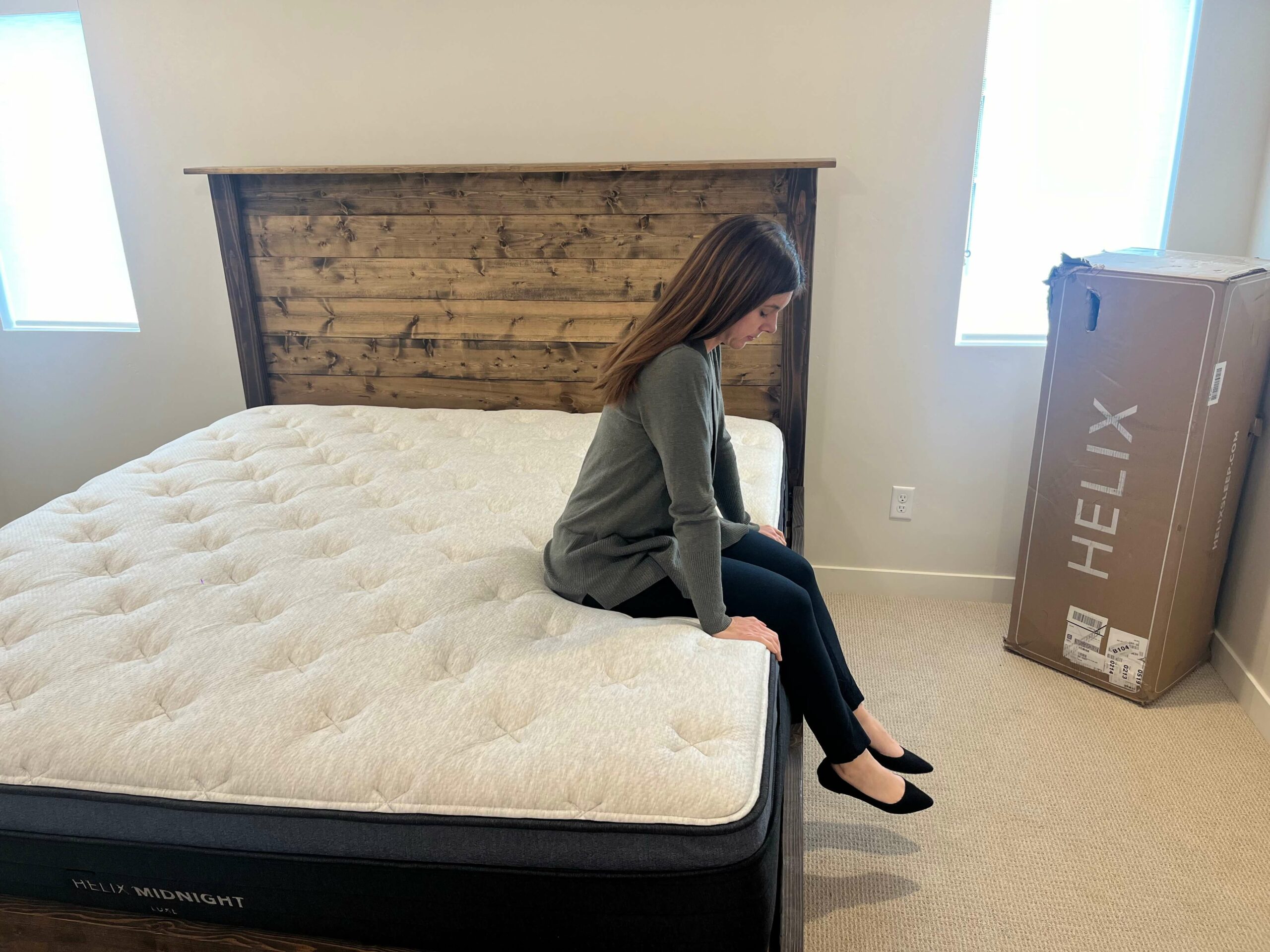
5. Best Mattress For Side Sleepers:
Helix Midnight Luxe

Warranty
15 Years

Sleep Trial
100 Nights

Shipping
Free
Watch Our Helix Midnight Luxe Video Review
The Helix Midnight Luxe is the side sleeper pick on this page, and the reason it belongs on a durability guide rather than only a comfort one is that side sleeper cushioning is the hardest kind to keep.
A bed built for shoulders and hips has to be soft in exactly the two places that take the most concentrated load, night after night, in the same spot. That is why plush side sleeper beds so often develop a shallow dish within a year. Weeks into testing, the area where my shoulder had been landing every night gave the same distance as the rest of the surface rather than more.
The zoned coil unit is what makes that possible. The springs under the waist are firmer than the springs under the shoulders, so the load is spread across the zones instead of concentrating in the soft one.
Against the rest of this list it matches the strongest picks on edge support and motion and gives up ground on price, carrying the joint lowest value score here. It also ships in one medium feel, where four picks on this page let you choose.
It is the pick for a side sleeper who wants shoulder and hip cushioning that is still cushioning in year three, and who is not shopping primarily on price.
- 7 Value
- 10 Edge Support
- 9 Trial Period
- 9 Response Time
- 10 Motion Transfer
- 9 Cooling & Breathability
The Midnight Luxe is the pick here for a side sleeper who wants cushioning that does not flatten into a permanent dent.
On my side, the memory foam layer let my shoulder drop while the zoned lumbar coils stayed firm under my waist, so my spine held a straight line rather than sagging in the middle. What mattered for this guide is that the same test weeks later produced the same result, with no shallow hollow where my shoulder had been landing every night.
The perimeter matched it. Sitting on the edge, the encased coils compressed a couple of inches and then stopped, and lying right along the edge did not tip me toward the floor, which is what lets a couple actually use a queen rather than negotiate over the middle.
When my partner turned over on the far side, movement on my side barely registered, so a light sleeper sharing the bed is less likely to be woken by it.
The bed ships in one medium feel with no firmness choice, so there is no adjusting it if medium turns out not to be your feel, and Value scores 7, tied with the Saatva Classic for the lowest on this page.
Best For:
- Side sleepers who want lasting shoulder and hip cushioning rather than a soft first month
- Couples who want both motion isolation and a usable edge
- Sleepers who want a premium hybrid and are not chasing the lowest price
Compare Instead:
- Amerisleep AS5 Hybrid if medium is firmer than you want and you sleep on your side almost exclusively
- Leesa Sapira Chill if you want a firmness choice rather than a single medium feel
- Vaya Hybrid if you want comparable edge strength for considerably less
The Midnight Luxe reads as medium, with plush memory foam over responsive coils, and the two are blended well enough that it feels like one surface rather than a soft layer sitting on a firm one.
On my side, my shoulder and hip dropped into the memory foam while the zoned lumbar coils held my waist firm, so my spine stayed straight rather than sagging through the middle. That is the specific thing this bed is built to do and it does it well.
On my back, the coils pushed up under my lumbar region and my hips sat level with my shoulders. My partner, who sleeps on his back, found the same, and neither of us felt the surface let go anywhere.
Changing position, the responsive foam between the memory foam and the coils is what keeps you from having to push out of a hollow, so the transitions are easier than the plush surface suggests.
When my partner turned over on the far side of the bed, movement on my side barely registered, which matters for a light sleeper sharing a queen.
The cover option changes the surface temperature. I tested the TENCEL, which sat cool on first contact and stayed cooler than the denser foam beds I compared in the same session. The GlacioTex is the option if temperature is your first concern.
The zoned coil unit is the layer that made side sleeping work. The springs under the waist are firmer than the springs under the shoulders, and that difference is what held my spine straight while my shoulder dropped, rather than letting the middle sag. Encasing that unit is the DuraDense base foam, which is why sitting on the edge compressed a couple of inches and then stopped rather than tipping me toward the floor. Above the coils the memory foam layer is what let the shoulder sink at all, and the responsive foam between them is why I could still change position without having to push out of a hollow. Individually wrapped springs are also the reason my partner turning over on the far side barely registered on mine. The cover you pick changes the surface temperature: I tested the TENCEL, which sat cool on first contact against the denser foam beds I compared.
Pros
- Edge Support (10/10): sitting on the edge compressed the encased coils a couple of inches and then stopped, with no tipping when I lay right along the side.
- Motion Transfer (10/10): my partner turning over on the far side barely registered on mine.
- The zoned lumbar coils held my waist while my shoulder dropped on my side, and weeks later there was still no hollow where my shoulder had been landing.
Cons
- Value (7/10): ties for the lowest on this page, since it costs more than picks that match it on edge support and motion.
- Single medium feel with no firmness choice, so a sleeper who needs a firmer or softer surface has no option within the model.
- At 13.5 inches and a hybrid weight, unboxing and rotating it is a two-person job.
On my side the Midnight Luxe let my shoulder drop while the zoned lumbar coils held my waist firm, so my spine stayed straight rather than sagging through the middle, and weeks later there was still no hollow where my shoulder had been landing every night. When my partner turned over on the far side of the bed, movement on my side barely registered. It ships in one medium feel with no firmness choice, so there is no adjusting it. It is the pick for a side sleeper who wants shoulder and hip cushioning that will still be cushioning rather than a permanent dent.

Watch Our Saatva Classic Video Review
The Saatva Classic is the innerspring pick here, and it is the one bed on this page that answers the objection most people have to innersprings, which is that they sag through the middle within a few years.
The middle third is the whole test for a coil bed. That is where the weight concentrates and where the reinforcement either exists or does not. On the Saatva it exists as a spinal wire and a denser foam band running through the lumbar section, and weeks into testing there was still no dip through it. Pressing along the length of the bed, the middle third was firmer than the ends rather than softer, which is the opposite of what an aging innerspring does.
It ties the FORM Prime for the longest trial on this page at 365 nights and carries a lifetime warranty, which is the strongest guarantee combination here alongside the FORM Prime.
Against the hybrids on this list it gives up motion isolation, because a coil-on-coil build transmits more movement than a foam-heavy one, and it carries the joint lowest value score here. What it gives back is a genuine traditional coil feel and one of the widest firmness choices on the page.
It is the pick for a back or stomach sleeper who wants to be lifted rather than hugged, and who wants a full year to find out whether it holds.
- 7 Value
- 10 Edge Support
- 10 Trial Period
- 10 Response Time
- 9 Motion Transfer
- 9 Cooling & Breathability
The Saatva Classic is the traditional innerspring on this page that behaves like a modern one, and it is the only pick here that lets you pick a firmness and still get a coil-on-coil build.
I tested the Luxury Firm. Lying on my back, the lumbar section pushed up under my lower spine noticeably more than the rest of the surface, and it stayed doing that. Weeks in there was no dip through the middle third, which is where innersprings usually go first and which is exactly why the category has the reputation it has.
Rolling between positions was effortless. Response Time scores 10, tied with five other picks here, and the coil-on-coil base is why: there is nothing slow between you and the springs, so the surface follows you instead of releasing you.
The perimeter held under sitting weight with no dip and no slide, matching the strongest edges on this page rather than the innerspring stereotype.
It ties the FORM Prime for the longest trial here at 365 nights, which matters more on a durability page than anywhere else, because a problem that shows in month five is still inside the window. Value scores 7, tied for the lowest on this page.
Best For:
- Sleepers who want a bouncy coil feel rather than a foam hug and want it to last
- Back and stomach sleepers who need the lumbar section to stay lifted
- Shoppers who want a long window to find out whether the bed holds up
Compare Instead:
- Westin Heavenly Bed if you want the same coil feel with a plusher hotel pillow top
- Leesa Sapira Chill if you want a firmness choice with more foam between you and the coils
- Nolah Evolution if you want a taller pillow top build with three coil zones rather than a lumbar band
I tested the Luxury Firm, which sits at 5 to 7 out of 10 and is the middle of the three options Saatva offers.
The Euro pillow top is the first thing you meet, and it cushions the shoulders and hips without letting you settle far enough to lose the coil feel underneath. This is a bed you rest on rather than in.
On my back, the lumbar section is where the difference is. That band of the mattress pushed up under my lower spine noticeably more than the sections above and below it, and it kept doing that across weeks of testing rather than flattening into the rest of the surface.
On my side, the pillow top gave at the shoulder and the comfort coils took over, which is enough for most side sleepers at this firmness but less contouring than the foam picks on this page.
Changing position is effortless. With no slow foam between the sleeper and the coil-on-coil base, the surface follows you the instant you move, and there is no stage of climbing out of anything. That is what the 10 out of 10 response score reflects.
On temperature, the coil-on-coil structure moves air through the core rather than trapping it under you, and the surface did not warm up under extended contact the way the foam-heavy picks here did.
The coil-on-coil support is why this bed responds the way it does. Pocketed comfort coils sit over a base layer of tempered steel open coils, and with no thick slow foam between the sleeper and the springs, the surface followed me the instant I rolled rather than releasing me a beat late. Running through the middle third is the Lumbar Zone spinal wire and denser foam, and that is the layer I could actually feel: lying on my back, the lower spine was pushed up more than the rest of the surface, and weeks in there was still no dip through that section. High density foam rails wrap the whole perimeter, which is why sitting on the edge produced no slide and no drop. The Euro pillow top over all of it is what gave the shoulders and hips their initial give without letting me settle far enough to lose alignment. Materials carry CertiPUR-US certification, tested for low VOC emissions.
Pros
- Trial Period (10/10): 365 nights, tied for the longest on this page.
- Response Time (10/10): with no slow foam between the sleeper and the coil-on-coil base, the surface followed me the instant I rolled.
- Edge Support (10/10): the foam rails produced no dip and no slide when I sat and lay on the perimeter.
- The lumbar section pushed up noticeably under my lower spine on my back, and weeks in there was still no dip through the middle third.
Cons
- Value (7/10): ties for the lowest on this page.
- Motion Transfer (9/10): the coil-on-coil build transmits more movement across the bed than the foam-heavy picks here, which a light sleeper sharing a queen will notice.
- The springy innerspring surface does not contour the way a foam bed does, so a sleeper who wants to be hugged rather than lifted will find it unforgiving.
- The dual coil build is heavy enough that rotating it needs a second person.
Lying on my back on the Luxury Firm, the lumbar section pushed up under my lower spine noticeably more than the rest of the surface, and weeks in there was still no dip through the middle third, which is where innersprings normally go first. Rolling between positions was effortless, since there is nothing slow between the sleeper and the coil-on-coil base. The perimeter held under sitting weight with no slide. It is the pick for a back or stomach sleeper who wants a springy traditional coil feel and a long window to find out whether it holds up.

Watch Our Leesa Sapira Chill Video Review
The Leesa Sapira Chill is the pick for a hot sleeper who has been burned by a cooling mattress that stopped being one.
That is a real failure mode and it is separate from structural durability. Cooling covers are usually a surface treatment, and a surface treatment washes and wears out. The heat-wicking fibers here are woven into the quilt rather than applied to it, and the practical result is that the top felt cool on first contact in the final week of testing the same way it did in the first, instead of warming under me by the second hour the way a tired cooling cover does.
Structurally it holds up too. The springs are concentrated at the hips, lumbar and edges rather than distributed evenly, which means the zones taking the most nightly load have the most steel under them, and weeks in the spot I slept in most had no more give than the rest of the surface.
Against the rest of this list it ties the top cooling score alongside three other picks, though the Amerisleep AS6 Black Series is the least heat-retentive bed I tested for this guide. It offers among the widest firmness choice here, and at 14 inches and up to 103 pounds in a queen it asks more of you at setup than the thinner picks here.
It is the pick for a hot sleeping couple who want a firmness choice and want the cooling to survive year three.
- 8 Value
- 10 Edge Support
- 9 Trial Period
- 10 Response Time
- 9 Motion Transfer
- 10 Cooling & Breathability
The Sapira Chill is the pick for someone who wants a hybrid that runs cool and does not lose that as the cover ages.
The quilt top felt cooler on first contact than the denser foam beds I compared in the same session, and it still felt that way after extended contact rather than warming up under me the way most cooling covers do by hour two. It ties the top cooling score on this page along with three other picks. The Amerisleep AS6 Black Series is the least heat-retentive bed I tested for this guide, but the Sapira Chill sits in that same top tier, and for a couple who share body heat in a queen that is the difference between waking up and not.
The zoned springs are concentrated at the hips, lumbar and edges rather than spread evenly, and that showed. Weeks in, the area where I sleep most had no more give than the rest of the surface, which is the opposite of what a uniform coil grid does.
Rolling between positions the surface reset immediately, scoring a 10 on response and tying five other picks.
It is one of only four beds here offering three firmness levels, but at 14 inches and up to 103 pounds in a queen it is a two-person setup and needs deep pocket sheets.
Best For:
- Hot sleepers who want the cooling to still be there in year three
- Couples who want a firmness choice rather than a single feel
- Side and combination sleepers who want a cushioned surface over a springy base
Compare Instead:
- Amerisleep AS6 Black Series if cooling is the single thing you are buying for
- Nolah Evolution if you want a deeper pillow top and a taller build
- Saatva Classic if you want a more traditional coil feel with a longer trial
The Sapira Chill is a cushioned surface over an obviously springy base, and I tested the Medium-Firm, which is the middle of its three options.
On my side, the pillow top contoured around my shoulder and hip and then stopped rather than continuing to sink, so there was pressure relief without the settling that leads to a dish forming in the same spot over months.
On my back, the concentrated spring zones held my lumbar region clearly, and my hips stayed level rather than dropping into the softer top layers.
Stomach sleeping worked on the Medium-Firm and would work better on the Firm. On the Plush it would not, and that is the reason the firmness choice matters more here than on a single-feel bed.
Changing position, the zoned coils give the surface a slight springiness that makes repositioning easy and does it without carrying the movement across to the other side.
On temperature, the quilt top felt cool on first contact and stayed cooler than the denser foam beds I compared in the same session, without warming up under extended contact.
Sitting on the perimeter, the edge compressed to a stop rather than rolling me toward the floor, so the full width of the bed stays usable.
The quilt top is the layer that decides whether this bed still runs cool in year three. Its heat-wicking fibers are woven through rather than applied as a surface treatment, which is why it still felt cool on first contact at the end of testing rather than only at the start. Beneath it the tailored pillow top is what gave the shoulder and hip their give without the sinking sensation, and it did not compress into a track the way plush tops usually do. The zoned pocketed springs are concentrated at the hips, lumbar and edges rather than spread evenly, and that is why the area I slept in most had no more give than the rest of the surface weeks later, and why the perimeter still held me when I sat on it. The four foam layers between the springs and the quilt are what made the handoff from cushioned surface to springy base feel like one bed rather than two.
Pros
- Cooling and Breathability (10/10): ties the top cooling score on this page, and the quilt top felt cool on first contact in the final week the way it did in the first.
- Edge Support (10/10) and Response Time (10/10): the perimeter still held me when I sat on it weeks in, and the surface reset immediately when I rolled.
- The zoned springs are concentrated where the weight lands, and the area I slept in most had no more give than the rest of the surface at the end of testing.
- Among the widest firmness choice on this page with Plush, Medium-Firm and Firm options.
Cons
- Value (8/10): priced above several picks here that match it on edge support and response.
- At 14 inches and up to 103 pounds in a queen, setup and rotation need a second person and deep pocket sheets.
- Even the Firm option has more give than a dedicated firm-surface sleeper expects, since the pillow top sits above it either way.
The Sapira Chill’s quilt top felt cool on first contact in the final week of testing the same way it did in the first, rather than warming under me by the second hour the way most cooling covers do once they have been slept on. The zoned springs are concentrated where the weight lands, and the area I slept in most had no more give than the rest of the surface weeks later. At 14 inches and up to 103 pounds in a queen it is a two-person setup. It is the pick for a hot sleeping couple who want a firmness choice and want the cooling to still be there in year three.
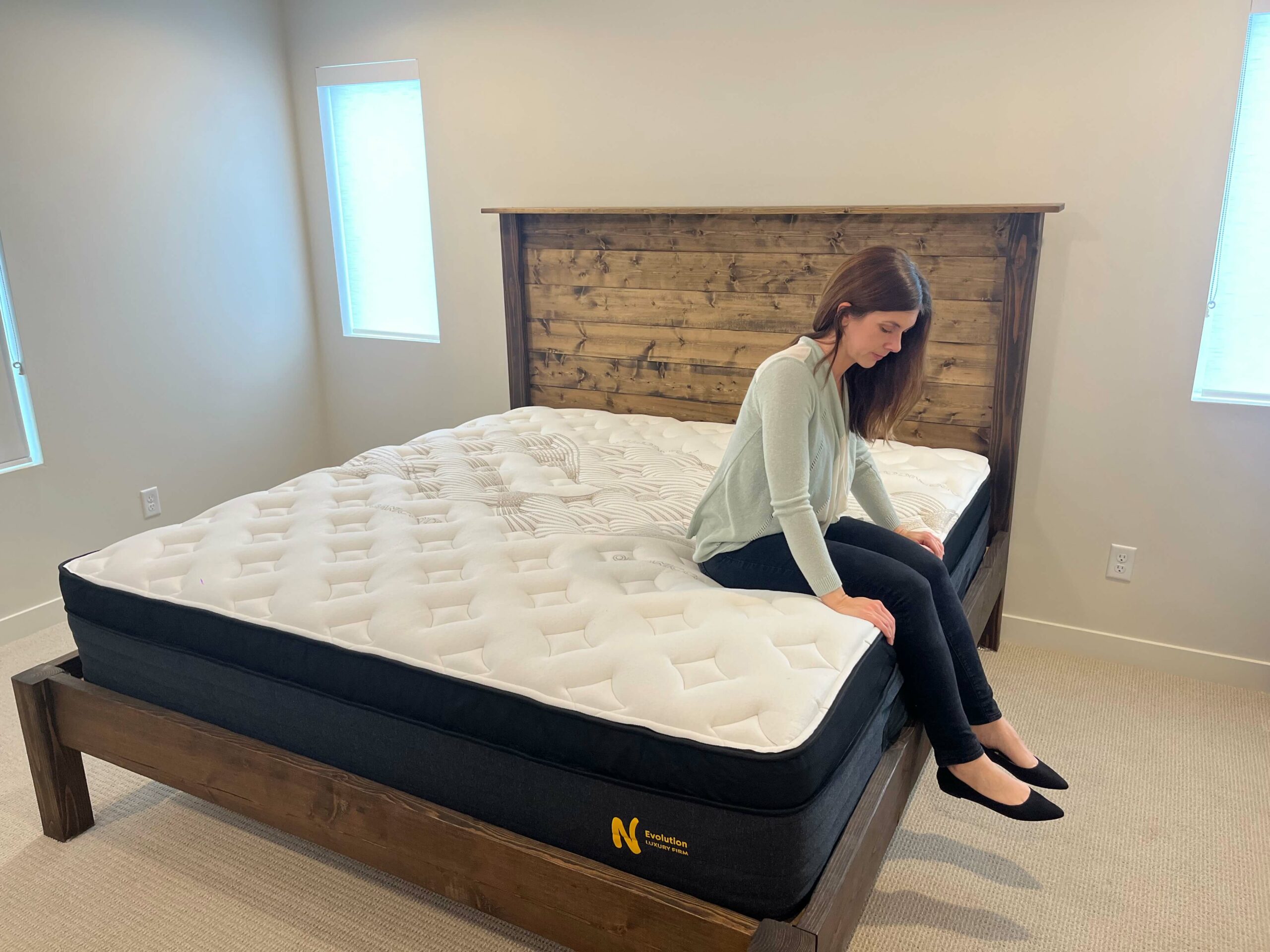
Watch Our Nolah Evolution Video Review
The Nolah Evolution carries the joint highest overall score on this page, and it is the pillow top pick, which is the hardest category to place on a durability guide.
Plush surfaces are the fastest thing on a mattress to fail. The foam in a Euro top takes concentrated load in a small area every night and eventually stops recovering, which is how a body impression forms. That is the specific thing I watched for here across weeks of sleeping in the same spot, and when I stripped the bed and looked at it flat at the end, the surface sat level.
The reason is that the plushness is not doing structural work. The three coil zones underneath are, and the transition and support foams between them stop you reaching through the soft layers to the springs. The Euro top gets to be soft because nothing is asking it to hold you up.
Against the rest of this list it ties the tallest build here at 15 inches, ties the top value score, and offers among the widest firmness choice. What that height costs you is practical: deep pocket sheets, a two-person setup, and a compatibility check if you sleep on an adjustable base.
It is the pick for a side sleeper who wants a plush surface that will still be plush rather than flat.
- 10 Value
- 10 Edge Support
- 9 Trial Period
- 9 Response Time
- 10 Motion Transfer
- 9 Cooling & Breathability
The Nolah Evolution carries the joint highest overall score on this page and it is the deepest pillow top here that did not soften under me.
That combination is the whole point. A 15 inch bed with a quilted Euro top is exactly the build that develops a body impression, and after weeks of sleeping in the same spot the surface still sat level when I stripped the bed and looked at it flat. On my side the top layers gave at the shoulder and hip and then stopped, rather than continuing to sink the way a plush top does once the foam beneath it has tired.
The three coil zones did visible work on my back. My hips lifted slightly while my shoulders were allowed to drop, so I was not hammocked through the middle, and I could still feel that difference between the zones at the end of testing rather than a uniformly softened surface.
The perimeter is reinforced and stayed reinforced. Sitting on the edge night after night it compressed and held rather than developing the sag that plush hybrids usually grow at the sides first.
At 15 inches it ties for the tallest bed on this page, so it needs deep pocket sheets, a two-person setup, and a check against the height of an adjustable base if you use one.
Best For:
- Sleepers who want a plush pillow top surface that will still be plush rather than flat
- Side sleepers who want deep cushioning at the shoulder with the hips still supported
- Couples who want a firmness choice and a lifetime warranty behind a soft-feeling bed
Compare Instead:
- Leesa Sapira Chill if you want a similar cooled hybrid in a lower profile that is easier to move
- Zoma Boost if you want the same 15 inch height and can accept a 10 year warranty rather than a lifetime one
- Amerisleep AS5 Hybrid if you want a genuinely soft feel rather than a plush surface over a firm base
I tested the Luxury Firm, which sits at 6 to 7 out of 10, the middle of the three options.
The quilted Euro top is the first thing you meet and it gives immediately at the contact points, but the give stops at a defined depth rather than continuing, which is the difference between plush and soft.
On my side, the cushioning at the shoulder and hip let both drop far enough to keep my spine straight without the deep sink that throws alignment off. On my back, the three coil zones lifted my hips slightly while allowing my shoulders to settle, so I was not hammocked through the middle.
Changing position is easier than a 15 inch pillow top suggests. The AirFoamICE layer recovers quickly rather than holding the shape you left, so there is nothing to climb out of when you roll.
Lying near the edge, the perimeter stayed stable rather than tipping me, which is unusual on a bed with this much soft material on top.
On temperature, the gusset around the Euro top vents air out through the sides rather than through the surface, and the bed did not warm up under extended contact the way tall plush builds usually do.
The three-zone coil unit is what kept me from hammocking. The springs under the hips are firmer than those under the shoulders, and lying on my back I could feel my hips lifted while my shoulders were allowed to drop, and those zones still felt different from each other at the end rather than blending into one softened surface. The AirFoamICE layer above them is where the shoulder cushioning comes from, and it recovered rather than staying compressed, which is why the plush top did not develop a body impression. The heat escape gusset around the Euro top vents air out through the sides rather than through the surface, which is why the bed did not warm up under extended contact the way most 15 inch builds do. The transition and support foams beneath are what stopped me sinking through the plush layers to the coils. The reinforced perimeter is why sitting on the edge nightly never produced sag.
Pros
- Value (10/10) and Edge Support (10/10): the reinforced perimeter never sagged under nightly sitting, on a 15 inch pillow top build that ties the top value score on this page.
- Motion Transfer (10/10): partner movement on the far side barely registered.
- After weeks in the same spot the plush Euro top still sat level when I stripped the bed and looked at it flat, with no body impression.
- The heat escape gusset vents through the sides, so the surface did not warm up under extended contact the way most 15 inch builds do.
Cons
- At 15 inches it ties for the tallest bed on this page, so it needs deep pocket sheets, two people to move, and a height check against a low frame.
- Response Time (9/10): the plush top adds a fraction of lag compared with the coil-forward picks here when changing position.
- Its height and weight limit how well it articulates on some adjustable bases, so confirm compatibility before ordering if you use one.
After weeks of sleeping in the same spot on the Evolution, the plush Euro top still sat level when I stripped the bed and looked at it flat, which is not what a 15 inch pillow top usually does. On my side the top layers gave at the shoulder and hip and then stopped rather than continuing to sink, and on my back the three coil zones kept my hips lifted while my shoulders dropped. At 15 inches it needs deep pocket sheets and two people to move. It is the pick for a side sleeper who wants a plush surface that will still be plush rather than flat.
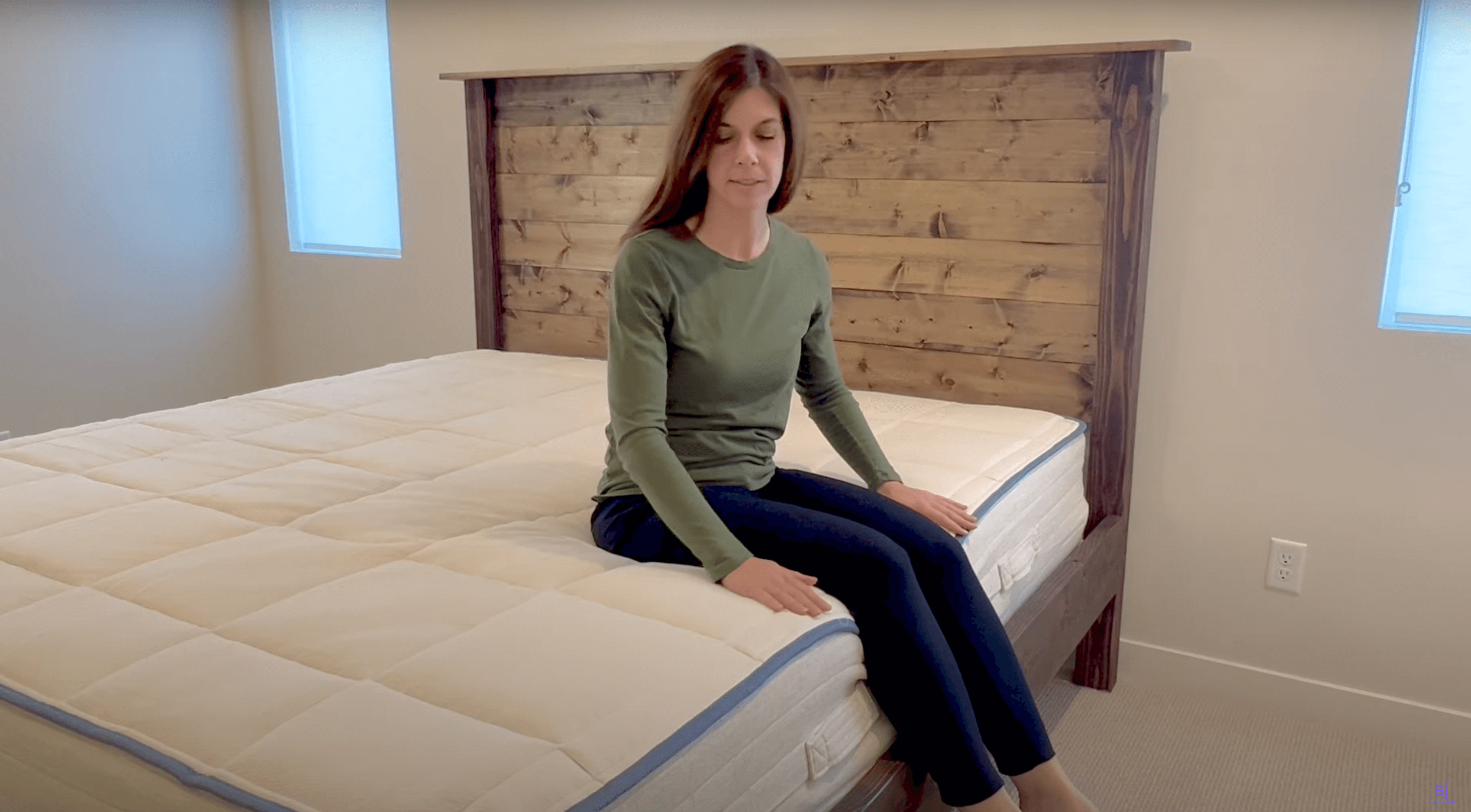
Watch Our Amerisleep Organica Mattress Video Review
The Amerisleep Organica is the latex pick, and latex is the one material on this page where durability is a property of what the bed is made of rather than of how carefully it was assembled.
Foam conforms by compressing, and compression is what eventually becomes an impression. Latex recovers instead, and the practical version of that is simple to see: press your hand into the surface and it comes back level immediately, with nothing left behind. It did that at the start of testing and it did it at the end, which is the clearest early signal a comfort layer has not begun to fatigue.
The build reinforces it. The layers are hand tufted rather than glued, so there is no adhesive that can separate, and the coil unit underneath is doing the support work rather than asking the latex to do both jobs.
Against the rest of this list it ties the top response score, carries a 20 year term tied for the longest fixed warranty here, and gives up ground on the perimeter, where it ties for the lowest edge score on the page.
It is the pick for a combination sleeper who wants certified organic materials and prefers resting on a surface to sinking into one. A sleeper who wants a memory foam hug should look elsewhere on this list.
- 9 Value
- 8 Edge Support
- 9 Trial Period
- 10 Response Time
- 9 Motion Transfer
- 9 Cooling & Breathability
The Organica is the latex pick here, and latex is the one material on this page where durability is a property of the raw material rather than of how well it was assembled.
That showed most clearly in recovery. I pressed my hand into the surface and it came back level immediately, with no lingering outline, and it did the same at the end of testing. Response Time scores 10, tied with five other picks here. For a combination sleeper that means the bed follows you rather than releasing you a beat late, and it is also the clearest early signal that a comfort layer has not started to fatigue.
The feel is genuinely different from the foam picks on this page. Lying on my side I rested on the surface rather than in it, with my shoulder allowed a shallow amount of give before the latex pushed back, and my spine held straight without the deep sink that memory foam gives at the same firmness.
The hand tufting rather than glue is a real structural point rather than a marketing one: nothing between the layers can delaminate because there is no adhesive holding them.
Edge Support scores 8, tied with the Amerisleep AS3 for the lowest on this page, and I felt that when I sat on the side to put my shoes on.
Best For:
- Combination sleepers who want an immediate recovering surface rather than a contouring one
- Shoppers who want certified organic materials without giving up structure
- Sleepers who dislike the sinking sensation of memory foam and want the alternative to last
Compare Instead:
- PlushBeds Signature Bliss if you want a latex build with a stronger perimeter
- Amerisleep AS3 if you want contouring and pressure cradling rather than a buoyant surface
- Amerisleep AS6 Black Series if you want the same 20 year warranty with a cooler running surface
The Organica sits at 5 to 6 out of 10 and feels distinctly different from every foam bed on this page. You rest on it rather than in it.
On my side, my shoulder got a shallow amount of give before the latex pushed back, so my spine held straight without the long sink foam gives at the same firmness. Side sleepers who want to be cradled will find this firmer than the number suggests; side sleepers who dislike feeling enclosed will find it exactly right.
On my back, the zoned latex is firmer under the lumbar region and softer at the shoulder and hip, and my hips stayed level rather than settling.
Changing position is where latex is at its best. Rolling from my back into a side position, the surface followed me instantly with no lag and nothing to push out of.
On temperature, the wool layer under the cotton cover kept the surface from holding heat under extended contact, and it stayed cooler than the denser foam beds I compared in the same session.
Sitting on the edge is its weak spot. The perimeter gave more than the coil-forward picks on this page, which is what its 8 out of 10 edge score reflects.
The GOLS certified Dunlop latex is the layer everything else is built around, and it is the reason my handprint disappeared from the surface immediately instead of lingering. Latex recovers rather than conforms, which is what produced the buoyant feel on my side and why the response score sits at the top of this page. The latex is zoned, firmer under the lumbar and softer at the shoulder and hip, and that is what kept my spine straight without the deep sink foam gives at the same firmness. Under it a pocketed coil unit does the support and airflow work, and the coils being individually wrapped is why my partner’s movement did not cross the bed. Organic wool sits directly under the cotton cover as the flame barrier and is also why the surface did not hold heat under extended contact. The whole stack is hand tufted rather than glued, so there is no adhesive layer that can separate.
Pros
- Response Time (10/10): my handprint disappeared from the surface immediately rather than lingering, at the end of testing as at the start.
- The zoned latex kept my spine straight on my side without the deep sink foam gives at the same firmness.
- Hand tufted rather than glued, so there is no adhesive layer between the components that can separate over time.
- Carries a 20 year term, tied for the longest fixed warranty on this page.
Cons
- Edge Support (8/10): ties for the lowest on this page, and the perimeter gave when I sat on the side.
- The buoyant latex surface lifts rather than cradles, so a sleeper who wants a contouring hug will find it too firm underfoot on their side.
- The dense latex core makes it heavy enough that rotating it needs a second person.
Pressing into the Organica’s surface, my handprint disappeared immediately rather than lingering, and it did the same at the end of testing, which is the clearest signal a comfort layer has not started to fatigue. Lying on my side I rested on the surface rather than in it, with a shallow amount of give at the shoulder before the latex pushed back and my spine holding straight. The perimeter gives more than the coil-forward picks here when you sit on it. It is the pick for a combination sleeper who wants certified organic materials and a buoyant surface rather than a contouring one.
10. Best Cooling Mattress:
Amerisleep AS6 Black Series

Warranty
20 Years
Sleep Trial
100 Nights
Shipping
Free
Watch Our Amerisleep AS6 Black Series Video Review
The Amerisleep AS6 Black Series is the least heat-retentive bed I tested for this guide, and the reason it sits on a durability page is that it was still the least heat-retentive at the end.
Cooling is the feature most likely to quietly stop working. Most cooling mattresses put the whole job in the cover, which means the cooling has the lifespan of a fabric treatment. The AS6 spreads it across three layers instead: the CryoCool cover, the TitanAir layer directly beneath it, and the ArcticWave bands running through the comfort layer. Two of the three are inside the mattress where nothing washes or abrades them.
Structurally it holds up in the place soft beds usually fail, which is the comfort layer above the coils. After weeks of testing there was no shallow dish where I had been sleeping, and the difference between the zoned sections of the coil unit was still noticeable rather than blended into one softened surface.
Against the rest of this list it ties the top cooling score alongside three other picks and holds the cooling award outright, carries a 20 year term tied for the longest fixed warranty here, and offers among the widest firmness choice on the page.
It is the pick for a hot sleeper, including a plus size one, who wants that cooling to still be doing something in year three.
- 9 Value
- 9 Edge Support
- 9 Trial Period
- 9 Response Time
- 10 Motion Transfer
- 10 Cooling & Breathability
The AS6 Black Series is the least heat-retentive bed I tested for this guide, and the reason it belongs on a durability page is that it was still the least heat-retentive at the end.
Cooling covers are the component that fades first. This one felt cool on first contact in week one and it felt cool on first contact in the final week, and after extended contact it did not warm up the way the denser foam beds I compared did. The stack behind that is the CryoCool cover, the TitanAir layer and the ArcticWave bands, and their durability advantage is that the cooling is built into three separate layers rather than into a single treated fabric that can wash out.
On my back the PrecisionCoil base held my hips level while the Bio-Pur above it let my shoulders drop, and weeks in the zones still behaved differently from each other rather than blending into one softened surface.
When my partner moved on the far side of a queen, movement on my side barely registered, scoring a 10 on motion and tying five other picks.
It ships in three firmnesses. The Plush Soft option is soft enough that a dedicated stomach sleeper will feel their hips settle, so if you want this bed and sleep face down, order Luxury Firm or Firm rather than assuming the model is too soft.
Best For:
- Hot sleepers who want the cooling to still work in year three rather than year one
- Plus size sleepers who need support beneath a soft surface
- Shoppers who want a firmness choice inside a 20 year fixed warranty
Compare Instead:
- Leesa Sapira Chill if you want comparable cooling with a lifetime warranty behind it
- Amerisleep AS5 Hybrid if you want a genuinely soft feel and are not choosing on temperature
- Amerisleep AS3 if you want the same brand and warranty term in an all foam build
The AS6 ships in three firmnesses and they behave differently enough that the choice matters. I tested the Luxury Firm at 5 to 7 out of 10.
On my side, the Bio-Pur let my shoulder and hip drop until the PrecisionCoil unit caught them, so there was real cushioning followed by a definite stop rather than a continuing sink. That is the specific thing a coil base does for a soft comfort layer.
On my back, my hips stayed level with my shoulders and the zoned coils held my lumbar region without letting my midsection settle lower than the rest of me.
Stomach sleeping worked on this configuration. On the Plush Soft it would not, and that is the firmness note that matters most: if you sleep face down and want this bed, order Luxury Firm or Firm.
Changing position, the Bio-Pur released quickly rather than holding the outline of my shoulder, so there was no stage of pushing out of anything.
When my partner shifted on the far side of a queen, movement on my side barely registered.
On temperature, the cover sat cool on first contact and, unlike most cooling covers, did not warm up under extended contact, because the TitanAir layer and ArcticWave bands underneath keep working after the surface itself has been in contact with you for hours.
The cooling here is spread across three layers rather than concentrated in one treated fabric, and that is why it was still working at the end of testing rather than only at the start. The CryoCool cover is what felt cool on first contact, the TitanAir layer beneath it is what kept the surface from warming under extended contact the way a cover-only system does, and the ArcticWave bands run through the comfort layer to move heat sideways out of the bed rather than trapping it under the sleeper. Below that the Bio-Pur foam is what let my shoulders drop while releasing quickly when I moved. The Affinity transition layer feeds into the PrecisionCoil base, and those individually wrapped coils are why my hips stayed level on my back and why my partner’s movement on the far side barely registered. The coil unit is also what makes the softest firmness option viable without the sleeper settling into the base.
Pros
- Cooling and Breathability (10/10): the least heat-retentive bed I tested for this guide, and it still felt cool on first contact in the final week.
- Motion Transfer (10/10): my partner moving on the far side of a queen barely registered.
- The PrecisionCoil base kept my hips level on my back while the foam above let my shoulders drop, and those zones still behaved differently at the end of testing.
- Among the widest firmness choice on this page with Plush Soft, Luxury Firm and Firm options.
Cons
- The Plush Soft option is soft enough that a dedicated stomach sleeper will feel their hips settle, so face-down sleepers should order Luxury Firm or Firm rather than the softest configuration.
- Edge Support (9/10): stable, but the perimeter compressed more than the 10 out of 10 picks on this page when I sat on it.
- At 14 inches and a substantial weight it needs deep pocket sheets and two people to move.
The AS6 was the least heat-retentive bed I tested for this guide, and more importantly it still was at the end. The CryoCool cover felt cool on first contact in the final week the way it did in the first, and the TitanAir layer and ArcticWave bands meant it did not warm up under extended contact the way a cover-only cooling system does once it has been slept on. On my back the PrecisionCoil base held my hips level while the foam above let my shoulders drop. It is the pick for a hot sleeper, including a plus size one, who wants that cooling to still be working in year three.
11. Best Organic Mattress:
PlushBeds Signature Bliss

Warranty
Lifetime
Sleep Trial
100 Nights
Shipping
Free
Watch Our Plushbeds Signature Bliss Video Review
The PlushBeds Signature Bliss is the organic pick, and it is on this list because it is the rare certified organic bed that does not trade away perimeter strength to get there.
Organic builds usually put latex over coils and stop there, and the edge is where that shows: sit on the side and the coil unit rolls because nothing is encasing it. The Signature Bliss encases its coils, and the practical result is that sitting on the perimeter compressed it to a stop rather than tipping me toward the floor, at the end of testing as at the start. It ties the strongest edge score on this page.
The latex comfort layer is doing the other half. Getting up in the morning, the surface was already level rather than holding the outline of where I had been lying, and weeks of sleeping in the same spot never produced an impression.
Against the rest of this list it carries a lifetime warranty and a top tier response score, and it offers a stronger edge than the other latex pick here alongside a shorter list of firmness options.
It is the pick for a couple who want certified organic materials and want the full width of the bed usable. A sleeper shopping for a plush cushioned feel should look at the pillow top picks instead.
- 9 Value
- 10 Edge Support
- 10 Trial Period
- 10 Response Time
- 9 Motion Transfer
- 9 Cooling & Breathability
The Signature Bliss is the organic pick that also has one of the strongest perimeters on this page, which is unusual for a latex over coil build.
Sitting on the edge, the encased coils compressed to a stop rather than rolling, and lying right along the side did not tip me, so a couple gets the full width of the bed. It scores a 10 on edge support, tying nine other picks here, and it was still doing it weeks in.
The latex comfort layer is where the durability argument lives. When I got up in the morning the surface was already level rather than holding the outline of where I had been lying, and the same was true at the end of testing. Latex resists that impression better than any foam on this page, and an impression is the first visible stage of a bed failing.
On my side it gave at the shoulder and hip and then pushed back rather than continuing to sink, so my spine stayed straight without the mushy stage in between. On my back the coils held my lumbar region without letting my midsection drop.
It comes in Medium or Medium-Firm only, and the latex-plus-coil build makes it heavy enough to need two people to move or rotate.
Best For:
- Couples who want a certified organic build with a perimeter strong enough to use
- Back and side sleepers who want a buoyant surface rather than a contouring one
- Shoppers who want organic materials and a lifetime warranty in the same bed
Compare Instead:
- Amerisleep Organica if you want a latex build in a lower profile at 13 inches rather than 14
- Nolah Evolution if you want a plusher pillow top and are not buying on materials
- Saatva Classic if you want organic cotton over a coil build with a longer trial
The Signature Bliss comes in Medium or Medium-Firm. I tested the Medium at 5 out of 10, and even that reads firmer than a 5 on a foam bed would, because latex lifts rather than sinks.
On my side, the latex gave at my shoulder and hip and then pushed back rather than continuing, so there was contouring with a defined stop. My spine stayed straight without the surface having to hold it there.
On my back, the pocketed coils held my lumbar region and my midsection did not drop, which is the failure mode on softer organic builds where the latex is asked to do the support work as well as the comfort work.
Changing position, the surface followed me immediately with no lag, which is what its 10 out of 10 response score reflects.
Sharing the bed, my partner moving around at night barely came across, and the coils are quiet rather than creaking.
On temperature, the wool layer between the latex and the cotton cover kept the surface from holding heat under extended contact.
Sitting on the perimeter, the encased coils compressed and stopped rather than rolling me, which is what makes the full width of a queen usable rather than the middle of it.
The Arpico latex comfort layer is why the surface was already level when I got up rather than holding the shape of where I had been lying. Latex pushes back instead of conforming, and that is what produced the give at the shoulder and hip that stopped rather than continued, and what kept an impression from forming across weeks of sleeping in the same spot. Under it the pocketed coil unit is doing the alignment work: the springs held my lumbar region without letting my midsection drop on my back, and their reinforced perimeter is why sitting on the edge compressed to a stop rather than rolling me. Organic wool sits between the latex and the cover as the flame barrier and is also why the surface did not hold heat under extended contact. The GOTS certified organic cotton cover is what the whole thing feels like on first contact. Certifications cover GOTS, GOLS and GREENGUARD Gold, tested for low chemical emissions.
Pros
- Edge Support (10/10): the coil encasement compressed to a stop rather than rolling me when I sat on the side.
- Response Time (10/10): the surface was already level when I got up in the morning rather than holding the outline of where I had been lying.
- Weeks of sleeping in the same spot never produced an impression in the latex comfort layer.
- Carries GOTS, GOLS and GREENGUARD Gold certifications, tested for low chemical emissions.
Cons
- The latex surface lifts rather than sinks, so a sleeper who wants a plush cushioned feel will find it firm even in the Medium option.
- Available in Medium or Medium-Firm only, so shoppers who want a noticeably softer or firmer surface have fewer options than on the three-firmness picks here.
- The latex and coil build is heavy enough that moving or rotating it is a two-person job.
Getting up in the morning, the Signature Bliss surface was already level rather than holding the outline of where I had been lying, and weeks of sleeping in the same spot never produced an impression. On my side the latex gave at the shoulder and hip and then pushed back rather than continuing to sink, and sitting on the edge compressed the coil encasement to a stop rather than rolling me toward the floor. The latex and coil build makes it heavy enough to need two people to rotate. It is the pick for a couple who want a certified organic bed with a perimeter strong enough to actually use.
12. Best Soft Mattress:
Amerisleep AS5 Hybrid

Warranty
20 Years
Sleep Trial
100 Nights
Shipping
Free
Watch Our AS5 Hybrid Video Review
The Amerisleep AS5 Hybrid is the softest bed on this page at 3 out of 10, and soft is the hardest feel to keep, which is why it belongs on a durability guide rather than only a comfort one.
The failure pattern on a soft bed is specific and it is not sagging. It is that the comfort layer stops recovering, so each week you settle a little further than the week before, and eventually the bed you bought as soft has become a bed that has gone soft. Those are different things and they feel different. After weeks of sleeping on my side in the same spot here, the shoulder area still gave the same distance before the coil unit caught me as it had in the first week.
The coils are why. In an all foam soft bed the plush layer is doing both the cushioning and the supporting, which is exactly the load it cannot hold long term. Here it only has to cushion.
Against the rest of this list it ties the top cooling score, which is unusual with this much foam above the coils, and carries a 20 year term tied for the longest fixed warranty here. It ties for the lowest response score on the page.
It is the pick for a side sleeper who finds medium beds too firm at the shoulder.
- 8 Value
- 9 Edge Support
- 9 Trial Period
- 8 Response Time
- 9 Motion Transfer
- 10 Cooling & Breathability
The AS5 Hybrid is the softest bed on this page at 3 out of 10, and the only reason it is on a durability guide is that soft is the hardest feel to keep.
Plush comfort layers are the fastest thing on a mattress to break down, and this one did not. After weeks of sleeping in the same spot on my side, the shoulder area still gave the same distance before the coils caught me, rather than the deeper and deeper sink that soft foam develops as it tires. That is the difference between a soft bed and a bed that has gone soft.
The coil layer under the foam is what makes that possible. On my back my hips stayed lifted rather than settling toward the base, so the surface stayed soft without my spine paying for it, and a heavier sleeper gets the same benefit more strongly.
Its cover sat cool on first contact and stayed cooler than the denser foam beds I compared in the same session, which is not usual for a bed with this much foam above the coils. It ties the top cooling score on this page along with three other picks.
Response Time scores 8, tied with the Zoma Start for the lowest here, and I felt that: the surface takes a beat longer to release than the coil-forward picks, so a restless combination sleeper will notice more lag.
Best For:
- Side sleepers who want a genuinely soft surface that stays soft rather than going flat
- Sleepers who find medium beds too firm at the shoulder
- Shoppers buying plushness who still want a coil base underneath it
Compare Instead:
- Amerisleep AS3 if a 3 out of 10 is softer than you want and you sleep in more than one position
- Helix Midnight Luxe if you want side sleeper cushioning with a firmer base under it
- Amerisleep AS6 Black Series if you want the softer option inside a bed that also gives you a firmness choice
At 3 out of 10 the AS5 Hybrid is the softest bed on this page, and the first thing you feel is how far the surface lets you in before anything stops you.
On my side, my shoulder and hip sank deeply into the Bio-Pur, further than on any other pick here, and then the coil unit caught them. That combination is the whole point: deep cushioning with a hard floor under it rather than an endless sink.
On my back, the coils lifted my hips so they stayed level with my shoulders instead of settling toward the base, which is what keeps a bed this soft from putting your spine into a curve.
On my stomach, my hips settled further than I would want. This is not a face-down sleeper’s bed at any weight.
Changing position, the Active Flex transition layer keeps the surface from feeling like quicksand, though it still takes a beat longer to release than the coil-forward picks on this page, which is what its 8 out of 10 response score reflects.
On temperature, the cover sat cool on first contact and the surface stayed cooler than the denser foam beds I compared in the same session, which is not what usually happens on a bed with this much foam above the coils.
The reason a 3 out of 10 bed holds its shape is that the softness sits over a coil unit rather than over more foam. The pocketed coils are what caught me before I reached the base on my side, which is why the shoulder give stopped at the same depth in the final week as in the first, and why my hips stayed lifted on my back rather than settling. Above them the Active Flex transition layer is what stopped the handoff from plush surface to firm coils feeling like two different beds when I rolled across it. The plush Bio-Pur comfort layer is where the deep cushioning comes from, and it recovers faster than conventional memory foam, though it still takes a beat longer than the coil-forward picks here, which is what the response score reflects. The cover sat cool on first contact and stayed cooler than the denser foam beds I compared, which is unusual with this much foam above the coils.
Pros
- Cooling and Breathability (10/10): ties the top cooling score on this page, which is unusual for a bed with this much foam above the coils.
- After weeks on my side in the same spot, the shoulder area still gave the same distance before the coils caught me rather than sinking further each week.
- The coil unit kept my hips lifted on my back, so the surface stayed soft without my spine settling toward the base.
- Carries a 20 year term, tied for the longest fixed warranty on this page.
Cons
- Response Time (8/10): ties for the lowest on this page, and the surface takes a beat longer to release than the coil-forward picks here.
- At 3 out of 10 it is the softest bed on this list, so a dedicated stomach sleeper will feel their hips settle regardless of the coil base.
- At 14 inches it may not sit flush on a low profile frame or articulate fully on some adjustable bases.
The AS5 Hybrid is the softest bed in this guide at 3 out of 10, and after weeks of sleeping on my side in the same spot the shoulder area still gave the same distance before the coils caught me, rather than sinking further each week the way soft foam usually does. On my back the coil unit kept my hips lifted so the surface stayed soft without my spine paying for it. It takes a beat longer to release than the coil-forward picks here. It is the pick for a side sleeper who finds medium beds too firm at the shoulder and wants a soft bed that stays soft.

Watch Our Westin Heavenly Bed Review
The Westin Heavenly Bed is the hotel pick, and its durability case is unlike anything else on this page: it is the only mattress here built for a bed that gets a different body in it every night.
That changes what the design has to survive. A retail mattress is optimized for one or two sleepers of roughly consistent weight in roughly the same spot. A hospitality mattress cannot assume any of that, and the component that usually pays for it is the plush pillow top, which flattens into a track down the middle. After weeks of nightly use here, the surface still had the same lift under my shoulders as at the start.
The coil-on-coil base underneath is a traditional construction rather than a modern hybrid one, and it behaves accordingly: springy, immediate, and airy through the core rather than contouring.
Against the rest of this list it carries two limitations nothing else here has. There is no sleep trial at all, which is why its trial score is 0 and its overall sits at 7.7, and shipping is a paid line item rather than free. On a durability purchase, no trial means no window to find out whether the bed holds up.
It is the pick for a back or combination sleeper who already knows they like this bed from staying on one.
7.7 Overall Score- 8 Value
- 10 Edge Support
- 0 Trial Period
- 10 Response Time
- 9 Motion Transfer
- 9 Cooling & Breathability
- 8 Value
- 10 Edge Support
- 0 Trial Period
- 10 Response Time
- 9 Motion Transfer
- 9 Cooling & Breathability
The Heavenly Bed is the hotel pick, and its durability case is different from every other bed here: it is the only mattress on this page whose build was designed for a room that gets a different body in it every night.
That showed in the pillow top. Hotel-style plush tops are the component that flattens first, and after weeks of nightly use the surface still had the same lift under my shoulders as it did at the start, with no compressed track down the middle. When I pressed into it the fibers came back rather than staying packed.
The coil-on-coil base is why repositioning is easy. Rolling from side to back the surface followed me immediately, scoring a 10 on response and tying five other picks, and the springiness is the traditional innerspring feel rather than a foam imitation of it.
The perimeter held under sitting weight with no dip, matching the strongest edges here.
It carries two limitations no other bed on this page has. There is no sleep trial at all, which is why Trial Period scores 0 and the overall sits at 7.7, and shipping is a paid line item rather than free. On a durability page that matters more than it would elsewhere, because you have no window to find out how it holds up.
Best For:
- Back and combination sleepers who want a traditional plush hotel feel at home
- Sleepers who like a springy surface rather than a contouring one
- Shoppers who already know they like this bed from staying on one
Compare Instead:
- Saatva Classic if you want the same coil-on-coil feel with a 365 night trial behind it
- Nolah Evolution if you want a plush pillow top with a lifetime warranty and free shipping
- Leesa Sapira Chill if you want a hotel-style cushioned surface that also runs cool
The Heavenly Bed sits at 5 to 6 out of 10 and reads as a genuinely plush surface over an obviously springy base, which is the classic hotel formula rather than a modern hybrid one.
On my side, the pillow top’s high loft fibers gave at my shoulder and hip and cushioned them well, though the give is soft rather than contoured, so it does not shape around you the way memory foam does.
On my back, the coil-on-coil base pushed back consistently through my lower spine and my hips stayed level, with the polyurethane layer above the coils adding a medium amount of contouring without the heat or the lag of memory foam.
On my stomach, my hips settled further than I would want. There is no firmer configuration of this bed to order instead.
Changing position, the surface followed me immediately with no stage of climbing out of anything, which is what its 10 out of 10 response score reflects.
Sitting on the perimeter, the edge held under my full weight with no dip.
On temperature, the coil core moves air rather than collecting it under the sleeper, though there is no dedicated cooling material here, so it does not match the cooling picks on this page.
The coil-on-coil support is why this bed repositions the way it does. Fabric-wrapped springs sit over a second coil layer, so there is no slow foam between the sleeper and the base, and the surface followed me the moment I rolled rather than releasing me late. That same construction is why my partner’s movement stayed reasonably contained despite how springy the bed is, and why air moves through the core rather than collecting under the sleeper. Above the coils sits a layer of supportive polyurethane rather than memory foam, and that is what gives the medium level of contouring without the heat and the slow recovery memory foam brings. The pillow top over it is filled with high loft cushioning fibers, and those fibers coming back rather than staying packed is why the surface still had lift under my shoulders after weeks rather than a compressed track down the middle.
Pros
- Response Time (10/10): the coil-on-coil base followed me the moment I rolled from my side to my back rather than releasing me late.
- Edge Support (10/10): the perimeter held under sitting weight with no dip.
- After weeks of nightly use the pillow top still had the same lift under my shoulders, with no compressed track down the middle.
Cons
- Trial Period (0/10): there is no sleep trial at all, which is the single biggest limitation on a durability purchase, since you have no window to find out how it holds up.
- Shipping is a paid line item rather than free, unlike every other pick on this page.
- The plush pillow top lets a stomach sleeper’s hips settle, and there is no firmer configuration of this model to order instead.
- Distribution is limited compared with direct-to-consumer models, so availability varies by region.
After weeks of nightly use the Heavenly Bed’s pillow top still had the same lift under my shoulders as at the start, with no compressed track down the middle, which is the component that normally flattens first on a plush hotel-style build. Rolling from my side to my back the coil-on-coil base followed me immediately rather than releasing me late, and the perimeter held under sitting weight. It carries no sleep trial and paid shipping, which are real limitations on a durability purchase. It is the pick for a back or combination sleeper who already knows they like this bed from staying on one.
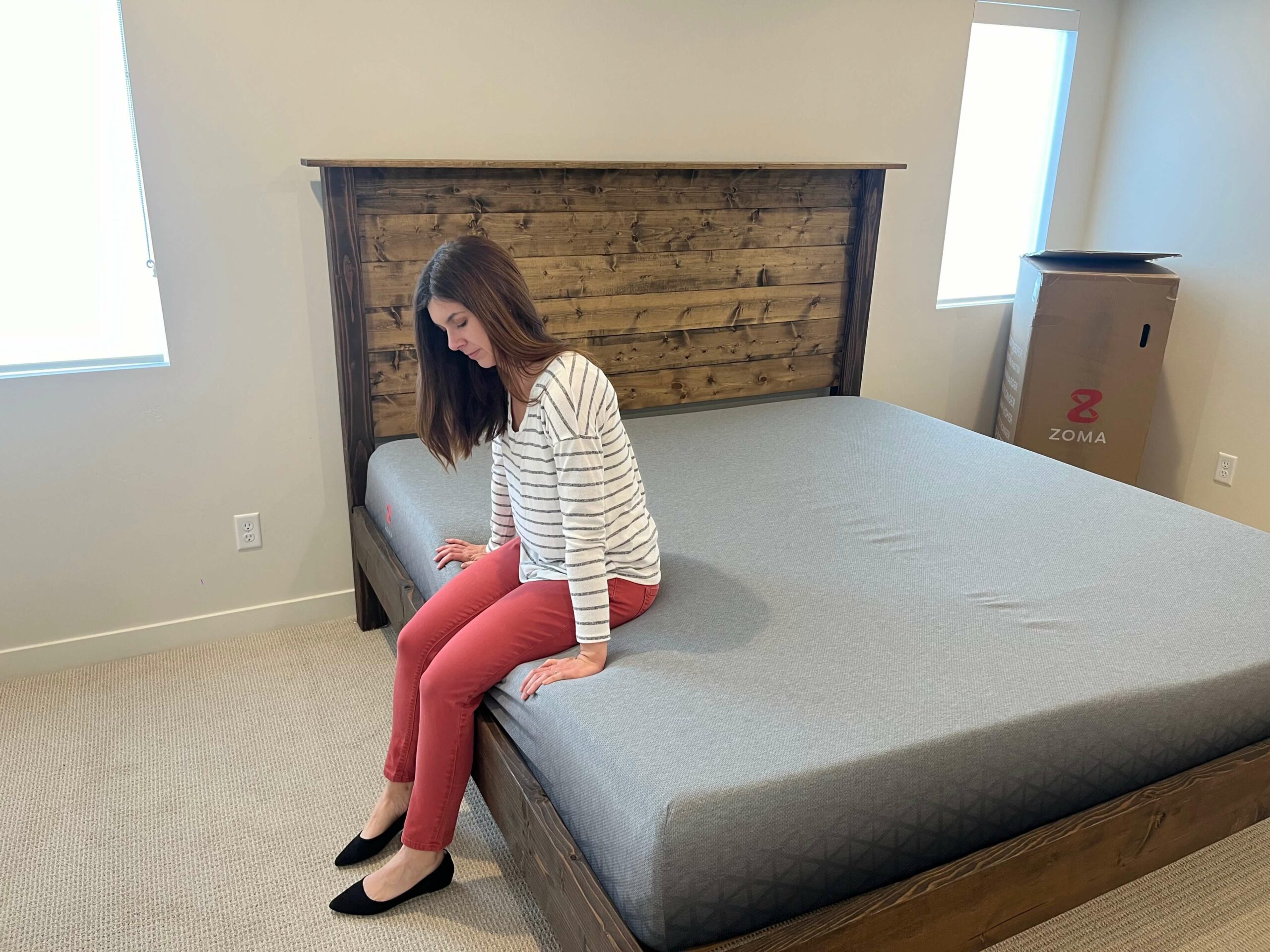
Watch Our Zoma Start Video Review
The Zoma Start ties the top value score on this page and is the thinnest pick here at 10 inches, and both of those make what it does structurally more surprising rather than less.
There is almost nothing between the sleeper and the base here. Eight of its ten inches are support core, which means the comfort layers are thin enough that a soft or under-dense base would show up immediately as a sinking sensation. It never did. Pressing hard through the middle of the bed, the compression stopped at a definite point rather than continuing to give, and the same press at the end of testing stopped in the same place.
The perimeter is the more unusual result. All foam beds normally roll you off the edge, because there is no encasement or firmer coil row doing anything. Sitting on the side of the Zoma Start, it compressed and then held, which is why it ties the strongest edge score on this page alongside nine coil builds.
Against the rest of this list it ties the top value score and ties for the lowest response score. It ships in one feel at 6 out of 10 with no softer or firmer option.
It is the pick for a side or back sleeper who wants zoned foam and long term structure in the thinnest build on this page.
- 10 Value
- 10 Edge Support
- 9 Trial Period
- 8 Response Time
- 9 Motion Transfer
- 9 Cooling & Breathability
The Zoma Start ties the top value score on this page and is the thinnest bed here at 10 inches, which makes what it does structurally more interesting rather than less.
There is not much material between you and the base, so a weak base would show immediately. It did not. Pressing hard through the middle, the compression stopped at a definite point rather than continuing to give, and the same press at the end of testing stopped in the same place. Sitting on the edge, it compressed and held rather than rolling me off, which is genuinely unusual for an all foam bed and is why it scores a 10 on edge support alongside nine coil beds.
The zoned top layer did what it is meant to. On my side my shoulder dropped into the softer sections while my waist stayed lifted, so my spine ran straight, and weeks in those zones still felt different from each other rather than blending into one flat surface.
Response Time scores 8, tied with the Amerisleep AS5 Hybrid for the lowest on this page, and that is the honest tradeoff. Rolling from back to side the surface takes a beat longer to release than the coil picks here, so a very restless combination sleeper will feel the lag.
It ships in one feel at 6 out of 10, so there is no adjusting if that turns out not to suit you.
Best For:
- Shoppers who want long term structure without paying for a coil build
- Side and back sleepers who want zoned foam rather than a uniform surface
- Anyone who needs a low profile bed for a bunk, a platform frame or a low ceiling
Compare Instead:
- Vaya Hybrid if you want coils and a faster recovering surface at a similar price
- Amerisleep AS3 if you want more foam above the base and a longer warranty term
- Amerisleep AS5 Hybrid if a 6 out of 10 is firmer than you want on your side
The Zoma Start sits at 6 out of 10 and reads as a medium that leans slightly firm, with enough surface give to feel cushioned and not enough to feel plush.
On my side, my shoulder dropped into the softer zoned sections of the top layer while my waist stayed lifted by the firmer sections, so my spine ran straight rather than bowing. At 10 inches there is not a lot of foam to sink into, and that is fine at this firmness but would not be at a softer one.
On my back, the support core held my hips level with my shoulders and there was no settling toward the base across weeks of testing.
On my stomach, my hips stayed high enough not to arch my lower back, which is the one position where a thinner firmer foam bed has an advantage over the plush picks on this page.
Changing position, the Reactiv layer gets the surface back up under you, but it takes a beat longer than the coil picks here, which is what its 8 out of 10 response score reflects. A very restless combination sleeper will feel that lag.
On temperature, the stretch cover sat cool on first contact and the surface stayed cooler than the denser foam beds I compared in the same session.
At 10 inches there is very little between the sleeper and the base, so every layer here has to earn its place. The 8 inch Support+ core is most of the bed, and it is why pressing hard through the middle stopped at a fixed point rather than continuing to give, and why the perimeter held when I sat on it, which is what an all foam bed usually cannot do. Above it the 1 inch Reactiv layer is the reason the surface releases at all when you move, though it still takes a beat longer than the coil picks here, which is exactly what the response score reflects. The 1 inch gel memory foam top is cut into zones, and that is what let my shoulder drop while my waist stayed lifted on my side, so my spine ran straight rather than bowing. The stretch cover is what kept the surface from feeling warm to the touch against the denser foam beds I compared.
Pros
- Edge Support (10/10): the perimeter compressed and held when I sat on it rather than rolling me off, which an all foam bed usually cannot do.
- Value (10/10): ties the top value score on this page, and the base still stopped at the same compression point at the end of testing.
- The zoned top layer let my shoulder drop while my waist stayed lifted on my side, and the zones still felt different from each other weeks in.
- At 10 inches it is the thinnest pick here, which suits a bunk, a platform frame or a low ceiling.
Cons
- Response Time (8/10): ties for the lowest on this page, and rolling from back to side the surface takes a beat longer to release than the coil picks here.
- Single feel at 6 out of 10, so a sleeper who wants a noticeably softer or firmer surface has no option within the model.
- At 10 inches there is less material between the sleeper and the base than on any other pick, which a sleeper over roughly 250 pounds will feel more than a lighter one.
At 10 inches the Zoma Start is the thinnest bed in this guide, so there is very little between the sleeper and the base, and pressing hard through the middle still stopped at a fixed point rather than continuing to give, in the final week as in the first. Sitting on the edge, it compressed and held rather than rolling me off, which an all foam bed usually cannot do. The surface takes a beat longer to release than the coil picks here. It is the pick for a side or back sleeper who wants zoned foam and long term structure without a coil build.
The Mattresses We Have Tested
Every mattress below was tested hands-on and on camera by me, Kristina Hindes, our lead tester. Each row links to its written review and filmed test, so you can check our work. For how we score every mattress, see How We Test Mattresses.
See the full list, with review and video links
| Mattress | Review and video |
|---|---|
| Amerisleep AS2 | Review · Video |
| Amerisleep AS3 | Review · Video |
| Amerisleep AS3 Hybrid | Review · Video |
| Amerisleep AS5 | Review (test clips inside) |
| Amerisleep AS5 Hybrid | Review · Video |
| Amerisleep AS6 Black Series | Review · Video |
| Amerisleep Organica | Review · Video |
| Amerisleep Organica Plush | Review · Video |
| Bear Original | Review · Video |
| Birch Natural | Review · Video |
| Brooklyn Bedding Aurora Luxe Hybrid | Review · Video |
| Brooklyn Bedding Plank Firm | Review · Video |
| Casper The One | Review · Video |
| Eco Terra Hybrid Latex | Review · Video |
| FORM Core | Review · Video |
| FORM Core Hybrid | Review · Video |
| FORM Prime | Review · Video |
| FORM Prime X | Review · Video |
| GhostBed Flex | Review · Video |
| Happsy Organic | Review · Video |
| Helix Dawn Luxe | Review · Video |
| Helix Midnight Luxe | Review · Video |
| Helix Sunset Luxe | Review · Video |
| Latex For Less Hybrid | Review · Video |
| Leesa Original | Review · Video |
| Leesa Sapira Chill Hybrid | Review · Video |
| Leesa Sapira Hybrid | Review · Video |
| Naturepedic Concerto | Review · Video |
| Naturepedic EOS Classic Organic | Review · Video |
| Nest Bedding Owl | Review · Video |
| Nest Bedding Puffin Kids | Review · Video |
| Nest Bedding Raven | Review · Video |
| Nest Bedding Sparrow Signature Hybrid | Review · Video |
| Nolah Evolution 15 | Review · Video |
| Nolah Natural 11 | Review · Video |
| Nolah Original Hybrid | Review · Video |
| PlushBeds Botanical Bliss | Review · Video |
| PlushBeds Luxury Bliss | Review · Video |
| PlushBeds Organic Bliss | Review · Video |
| PlushBeds Organic Kids | Review · Video |
| PlushBeds Signature Bliss | Review · Video |
| Saatva Classic | Review · Video |
| SweetNight CoolNest | Review · Video |
| SweetNight Prime | Review · Video |
| Vaya Hybrid | Review · Video |
| Vaya Mattress | Review · Video |
| Westin Heavenly Bed | Review · Video |
| Zoma Boost | Review · Video |
| Zoma Hybrid | Review · Video |
| Zoma Start | Review · Video |
How Long Do Different Types of Mattresses Last?
Mattress type sets the baseline for how long a bed lasts, but it does not settle it. The averages below describe the category, and every pick on this list was chosen because its specific build sits at the top end of its category rather than the middle.
Memory Foam
Approximate category lifespan: 8 to 10 years
Memory foam contours by compressing, and repeated compression in the same place is what eventually becomes a body impression. The variable that decides whether that happens is the density of the base layer, not the comfort layer everyone shops for. A high density base that makes up half or more of the bed’s total height is the difference between a foam mattress that lasts a decade and one that dishes in three years.
The two all foam picks on this list, the Amerisleep AS3 and the Zoma Start, both carry bases in that proportion. Plant-based, perforated and gel memory foam constructions also recover faster than conventional memory foam, which slows the same process. Shoppers interested in this type may want to consult our memory foam mattress buying guide.
Latex
Approximate category lifespan: 12 to 15 years
Latex is the most durable material on this list, and the reason is mechanical rather than a matter of quality. Natural latex mattresses recover rather than conform, so they do not accumulate the compression that becomes an impression in foam. Hand tufted builds extend that further, since there is no adhesive between the layers to separate. Our latex mattress buying guide covers the type in full.
Innerspring
Approximate category lifespan: 5 to 7 years
The category average is genuinely short, and it is driven by two things: low gauge open coils that fatigue, and thin pillow tops that flatten with nothing structural to protect them. What changes the answer is coil quality and lumbar reinforcement.
Both innerspring mattresses on this list use a coil-on-coil construction rather than a single open coil layer, and the Saatva Classic adds a reinforced band through the middle third, which is where a standard innerspring goes first. Read our innerspring mattress buying guide for more on the type.
Hybrid
Approximate category lifespan: 5 to 7 years
The category average is dragged down by budget hybrids with unwrapped or low count coils and thin foam over them. Individually wrapped coils change the math, because each spring works independently and does not transmit fatigue to its neighbours, and a foam encasement around the coil unit stops the perimeter collapsing, which is the single most common hybrid failure.
Every one of the hybrid mattresses on this list uses wrapped coils, and most add a foam encasement or a firmer perimeter row on top of that, which is what separates a 10 on edge support from a 9. See our hybrid mattress buying guide for more information.
FAQs
What is the most durable type of mattress?
Latex is the most durable material, with a category lifespan of 12 to 15 years, because it recovers rather than compressing and so does not accumulate the impressions foam does. After that come hybrids built with individually wrapped coils and a foam encased perimeter, then high density memory foam with a base layer making up half or more of the total height, then standard innersprings at 5 to 7 years.
Type is only the starting point though. The most durable mattress I tested for this guide is the Amerisleep AS3, an all foam bed, and it ranked above several hybrids here because more than half its height is a dense support core. Construction quality inside a category matters more than the category itself, which is worth keeping in mind when choosing a mattress.
How do I know if my mattress is worn out?
The clearest signals are physical:
- A visible dip or hollow where you sleep most
- Lumps or soft spots that were not there when the bed was new
- A perimeter that gives way when you sit on it
- Discoloration or odors
Strip the bed and look at the surface flat rather than made, since a fitted sheet hides a shallow dish.
There are also signals you feel rather than see. If you are taking longer to get comfortable than you used to, waking in a different position than the one that used to work, or sleeping noticeably better on other beds, the surface has probably changed even if it still looks level. Most mattresses reach that point somewhere between year seven and year ten, sooner for a budget innerspring and later for latex.
What happens if I do not replace my mattress?
A worn mattress stops doing the two things you bought it for. The comfort layer no longer relieves pressure at the shoulder and hip, and the support layer no longer holds your hips level with your shoulders, so your spine settles into whatever shape the dip has taken. Most people notice it first as taking longer to get comfortable and shifting position more often through the night.
There is no hard deadline. A mattress does not fail on a date, it degrades gradually, and the practical test is whether you are sleeping worse on it than you do elsewhere. If you are, the bed is telling you where it is in its life regardless of how old it is.
Can a mattress last 20 years?
Rarely. Latex is the longest lived material here and tops out around 15 years, and most mattresses become uneven well before that. A few very high end beds claim longer, but paying thousands more for a handful of extra years is poor value against replacing a mid priced mattress every ten. Plan on ten years and let the bed tell you if it has more in it.
Do firm mattresses last longer than soft ones?
No. Firmness describes the top of the mattress and durability is decided underneath it. What actually predicts lifespan is the density of the support core, the proportion of the bed that core makes up, and whether the coils are individually wrapped.
That is why the softest bed on this list, the Amerisleep AS5 Hybrid at 3 out of 10, sits on a durability guide at all: its plush comfort layer only has to cushion, because a pocketed coil unit underneath is doing the support work. A soft bed with nothing structural beneath the foam is the one that will sag, and a firm bed with a thin low density base will sag just as readily. Buy the feel that suits your sleeping position and check what is holding it up separately.
Can I put a new mattress on an old base?
It depends on the age of the base. Box springs, slatted foundations and solid platforms last roughly ten years, the same as the mattress on top of them, and a sagging base passes that sag straight into a new bed and can void the warranty. If your base is two or three years old, it is fine. If it went in at the same time as the mattress you are replacing, replace both.
Conclusion
Durability is the one mattress quality you cannot judge in a showroom or on night one, which is why it is worth being specific about what to look for. Across the 14 beds here, the picks that held up shared the same three traits: a support core making up half or more of the total height, a perimeter that compressed to a stop rather than folding, and a comfort layer that still released at the same speed at the end of testing as at the start.
If you take one thing from this guide, make it that last one. Recovery speed is the earliest signal a mattress gives you, and it changes months before anything is visible.
Whatever you buy, how you look after it matters. Use a supportive foundation with slats close enough together for your warranty terms, put a protector on it from day one, and rotate it on the schedule the manufacturer specifies. Those three habits add years to any of the beds on this list.
Related Reads
- I Tested 50+ Mattresses to Find the 14 Best Mattresses for Piriformis Syndrome of 2026

- I Tested 50+ Mattresses to Find the 14 Best Mattresses for Neuropathy of 2026


- I Tested 50+ Mattresses to Find the 14 Best Mattresses for Kyphosis of 2026

- I Tested 50+ Mattresses to Find the 14 Best Mattresses for Anterior Pelvic Tilt of 2026