Innerspring vs. Pocket Spring Mattress: What’s The Difference?

- Innerspring mattresses, known for their firm sleeping surface and airflow, are favored by stomach sleepers and individuals who sleep hot.
- Meanwhile, pocket spring mattresses feature individually wrapped coils and respond well to pressure points, reduce motion transfer, and promote proper spinal alignment, making them ideal for combination sleepers and couples.
- For those seeking non-spring alternatives, memory foam mattresses offer excellent motion isolation and pressure point relief, while latex mattresses provide resilience, durability, and natural hypoallergenic properties, catering to various sleep needs and preferences.
While you are browsing for a new bed, you may come across traditional innerspring mattresses and pocket spring beds. Both mattresses consist of a coil system, but they differ in the support each bed provides.
Some sleepers look to innerspring beds because innerspring mattresses tend to be more affordable and have a traditional comfort over pocketed coil mattresses. More people are purchasing pocket spring mattresses for their innovative technology.
In this article, we’ll discuss the differences between innerspring and pocket spring beds.
Coil Mattress vs. Spring Mattress: Differences and Similarities
| Feature | Coil Mattress | Spring Mattress |
|---|---|---|
| Construction | Uses individual metal coils (often pocketed) wrapped separately in fabric | Uses interconnected springs that are linked together |
| Support | Provides targeted support because each coil moves independently | Offers uniform support but may not adapt as closely to body contours |
| Motion Isolation | Better motion isolation since coils move independently | Higher motion transfer because springs are connected |
| Pressure Relief | Good pressure relief, especially when combined with foam comfort layers | Moderate pressure relief depending on padding layers |
| Durability | Often more durable due to individually wrapped coil systems | Durability varies depending on spring type and construction |
| Noise | Generally quieter because coils are individually wrapped | May produce squeaking sounds as springs age |
| Cooling | Good airflow between coils helps regulate temperature | Also provides airflow, but connected springs may compress over time |
| Comfort Feel | Balanced feel with support and slight responsiveness | Traditional bouncy feel associated with classic mattresses |
| Best For | Couples, combination sleepers, and people needing better motion isolation | People who prefer a traditional firm and responsive mattress |
Differences
1. Pressure Relief and Customized Comfort
One of the most significant differences between pocket spring and traditional innerspring mattresses is how they respond to pressure points and provide comfort.
Innerspring mattresses, though durable, can create discomfort at pressure-sensitive areas, such as the shoulders and hips, due to the interconnected springs that offer uniform resistance.
Because these coils are linked together, they compress and push back with equal force, regardless of the sleeper’s body shape or weight distribution. This lack of adaptability can be particularly problematic for side sleepers, as the excessive pressure on the shoulders and hips can lead to numbness, tingling, and even long-term joint pain.
This uniformity often means that these pressure points bear the weight unevenly, leading to soreness and discomfort over time.
Some manufacturers attempt to counteract this issue by adding pillow tops or extra foam layers, but these additions can break down over time, diminishing their effectiveness. Additionally, firmer innerspring models may exacerbate discomfort, particularly for those with arthritis or chronic back pain.
Pocket spring mattresses, however, are designed for personalized comfort, as each spring is individually encased and responds independently to the body’s weight and contour.
Unlike traditional coils, pocket springs work in isolation, meaning that when pressure is applied to one area, the surrounding springs remain unaffected. This adaptability ensures that different parts of the body receive the right level of support, helping to maintain spinal alignment and reduce strain on key pressure points.
This structure helps alleviate pressure by distributing it across multiple springs rather than centralizing it on one area, which allows for better body alignment and a more restful sleep experience.
Many high-end pocket spring mattresses also feature zoned support, where firmer coils are placed in areas that require more reinforcement, such as the lumbar region, while softer coils cradle lighter areas like the head and feet. This targeted approach enhances overall comfort and reduces the likelihood of waking up with aches and pains.
2. Temperature Regulation
Another distinction lies in temperature control. Traditional innerspring mattresses often have fewer layers and allow for excellent airflow between the springs, which helps with cooling.
This breathability makes them a good option for those who tend to sleep hot, as the open coil system encourages airflow and dissipates heat.
Since there are fewer dense materials trapping heat, innerspring mattresses remain cooler throughout the night, making them ideal for individuals who live in warmer climates or experience night sweats. Some models even feature cooling gel-infused covers or perforated designs to further enhance ventilation.
While pocket spring mattresses offer pressure relief, they may retain more heat, depending on the materials used above the springs.
For example, memory foam layers—often included for additional comfort—tend to trap body heat, making the mattress feel warmer over time. However, modern advancements in mattress design have led to breathable foam compositions, phase-change materials, and moisture-wicking covers that help counteract this issue.
Some pocket spring designs incorporate advanced cooling layers or breathable fabrics to mitigate heat retention, but they generally retain warmth more than innerspring models.
Latex-topped pocket spring mattresses tend to sleep cooler than memory foam varieties, as latex is naturally more breathable. Additionally, some premium models include airflow channels between the coil layers, improving heat dissipation without sacrificing the benefits of pressure relief.
3. Cost and Value
Cost is another area where the two types diverge. Innerspring mattresses have long been the affordable choice due to their simple construction and accessible materials, making them a budget-friendly and durable option. However, lower-end models may use inexpensive foams that wear down quickly, leading to reduced comfort over time.
Since they require fewer manufacturing steps, traditional innerspring mattresses are widely available at lower price points, making them a popular choice for guest rooms, temporary setups, and budget-conscious buyers. However, the trade-off is often a shorter lifespan, as the interconnected springs can lose their resilience and begin to sag after prolonged use.
Additionally, budget innerspring mattresses often lack sufficient edge support, causing the sides to weaken and sink when pressure is applied. This can make getting in and out of bed more difficult, particularly for elderly individuals or those with mobility concerns.
Pocket spring mattresses, in contrast, are generally more expensive due to the complexity of the individually wrapped coils and the quality materials often used in their construction.
The additional cost is justified by the enhanced support, longevity, and motion isolation that pocket springs provide. Many luxury mattress brands incorporate multiple comfort layers, including high-density foams, gel-infused memory foam, and natural latex, to further improve sleep quality.
This added investment can pay off in the form of targeted support and greater comfort, but it’s essential to choose one with high-quality foam or fabric layers, as subpar materials can lead to discomfort just as quickly.
Well-constructed pocket spring mattresses can last significantly longer than their innerspring counterparts, often maintaining their structural integrity for 8 to 12 years with proper care. Some manufacturers even offer extended warranties, highlighting the durability of their designs.
4. Motion Isolation
In terms of motion transfer, innerspring mattresses tend to transfer a significant amount of movement across the bed due to their interconnected coil system. This can be problematic for couples, especially if one partner is a light sleeper who can be easily disturbed by movement.
Because all the springs in a traditional innerspring mattress are connected, any pressure applied on one side of the bed creates a ripple effect, spreading vibrations throughout the entire surface. This can make it difficult for partners with different sleep schedules to rest undisturbed.
Pocket spring mattresses excel in reducing motion transfer. Since each coil moves independently, motion is less likely to spread across the bed.
This feature is especially beneficial for couples, parents sharing a bed with children, or individuals who sleep with pets. By isolating motion at its source, pocket spring mattresses allow one person to toss and turn without disrupting their partner’s sleep.
This design helps minimize disturbances, making it a preferred choice for couples who prioritize undisturbed sleep.
Many modern pocket spring mattresses also integrate memory foam or plush pillow tops to further absorb movement, creating an even more stable sleeping surface. This makes them an excellent choice for those who value both support and minimal sleep disruptions.
Edge support refers to how well the mattress maintains its firmness and structure at the perimeter. Innerspring mattresses typically excel in this area because their interconnected coil system provides a more rigid and stable edge. This makes sitting or sleeping near the edge feel secure, as the coils offer consistent support across the mattress surface. Strong edge support is particularly beneficial for individuals who use the entire sleeping surface or those who frequently sit on the edge of the bed.
Pocket spring mattresses, on the other hand, may have weaker edge support since the independently encased coils compress individually.
Without reinforcement, the edges can sink more when pressure is applied, creating a less secure feel. However, many premium pocket spring models now incorporate edge-support technologies, such as reinforced borders or high-density foam encasements, to address this issue.
5. Noise Level
Noise level is an important consideration for those who value a quiet sleep environment. Innerspring mattresses often produce more noise due to the interconnected metal coils that can creak or squeak with movement over time. As the coils wear down, the likelihood of noise increases, which can be disruptive, especially for light sleepers.
Pocket spring mattresses, however, are much quieter because each coil is individually wrapped in fabric. This encasement minimizes the friction between coils, reducing the noise associated with movement. The lack of interconnected components also helps maintain a quieter sleep experience over the mattress’s lifespan.
6. Weight and Portability
The weight and portability of a mattress can influence how easy it is to move or rotate. Innerspring mattresses are generally lighter due to their simple construction, making them easier to lift, transport, or flip when needed. This can be a significant advantage for individuals who need to move the mattress frequently or for those living in multi-story homes.
In contrast, pocket spring mattresses are typically heavier because of their more complex construction, which includes individually wrapped coils and additional comfort layers. The increased weight can make moving or rotating the mattress more challenging. While the added heft can be inconvenient, it often correlates with better overall support and durability.
7. Body Contouring
Body contouring refers to how well a mattress conforms to the sleeper’s body shape, providing targeted support and comfort. Innerspring mattresses tend to provide minimal contouring since the interconnected coils distribute weight uniformly across the surface. This lack of adaptability can lead to pressure points, particularly at sensitive areas like the shoulders and hips.
Pocket spring mattresses, on the other hand, excel in body contouring. Each spring operates independently, allowing the mattress to respond precisely to the body’s unique shape and weight distribution. This design helps alleviate pressure points, promote better weight distribution, and provide a more comfortable sleeping experience overall. The result is a mattress that conforms to the natural curves of the body, reducing discomfort and enhancing sleep quality.
8. Spinal Alignment
Proper spinal alignment is essential for maintaining good posture and reducing back pain during sleep. Innerspring mattresses may struggle to provide optimal spinal support because they offer uniform resistance across the surface.
This can cause the spine to be misaligned, especially for side sleepers, as the mattress may not adapt well to the body’s natural curvature.
Pocket spring mattresses are better at promoting proper spinal alignment. The independently encased coils adjust to the sleeper’s body, supporting the natural curvature of the spine.
This individualized support helps maintain a neutral spine position, reducing the risk of back pain and discomfort. Additionally, the targeted support offered by pocket springs can benefit individuals with specific orthopedic concerns.
Similarities
1. Support for Various Sleep Positions
Both pocket spring and innerspring mattresses provide firm support that many sleepers need, regardless of their sleep position. Innerspring models offer general, even support across the mattress, which can be ideal for those who sleep on their backs or stomachs, where uniform support is beneficial.
Pocket spring mattresses, with their individually wrapped coils, contour more effectively to the body, supporting various sleeping positions—especially side sleepers, who often need extra cushioning for pressure points. This customized support can also benefit people who experience joint pain or discomfort, as the mattress conforms more precisely to the body’s shape.
2. Durability and Longevity
Both innerspring and pocket spring mattresses are highly durable and can withstand years of use with proper care. The coil systems in these mattresses generally resist sagging or warping, even after extended periods, provided they are rotated and cared for as recommended.
While both types share durability, pocket spring mattresses can sometimes experience wear in specific areas more quickly, especially if the foam or fabric layers are of low quality. Nevertheless, a well-maintained pocket spring mattress can last just as long as an innerspring mattress, often exceeding a decade.
3. Traditional Feel
Both pocket spring and innerspring mattresses provide a classic, responsive sleeping surface that many people associate with traditional mattresses.
This feel is characterized by a springy, bouncy surface that responds quickly to movement, making it easier to change positions during sleep compared to memory foam mattresses, which have a slower response time. The lively surface is often preferred by individuals who dislike the sinking sensation associated with foam mattresses.
These mattresses also offer firm and consistent support, which helps distribute body weight evenly and ensures proper spinal alignment, reducing the likelihood of developing pressure points. This level of support is familiar to those who grew up sleeping on older coil mattresses and continues to be a popular choice for those seeking a tried-and-true sleeping experience.
Another hallmark of pocket spring and innerspring mattresses is the minimal sinking sensation. Sleepers remain on top of the mattress surface rather than sinking into it, which can be particularly beneficial for individuals with mobility concerns. Additionally, these mattresses generally provide immediate comfort without requiring a break-in period, unlike some foam models that need time to adjust and soften.
The overall structure of both mattress types, often paired with quilted or pillow-top comfort layers, evokes a traditional look and feel. This timeless design continues to appeal to those who prioritize durability, support, and a classic bedding experience over modern innovations.
4. Availability and Versatility
Finally, both pocket spring and innerspring mattresses are widely available in various levels of firmness and configurations to suit different comfort needs.
Innerspring mattresses are often more accessible and found in a range of options, from budget models to luxury versions with enhanced comfort layers.
Pocket spring mattresses are also available in a wide range of designs and price points, with many models featuring additional layers like memory foam or gel for enhanced comfort and cooling. This versatility makes it easier for consumers to choose a mattress tailored to their comfort, support, and cooling preferences.
Both pocket spring and innerspring mattresses offer unique benefits, and the best choice depends on individual needs, sleeping preferences, and budget. Testing them in person, if possible, can help determine which type is more suitable for achieving a restful and comfortable sleep experience.
Traditional Innerspring Mattress
Innerspring mattresses are the most traditional mattresses of the 20th century. These beds are popular for their firm and responsive support. Budget shoppers also appreciate innerspring mattresses.
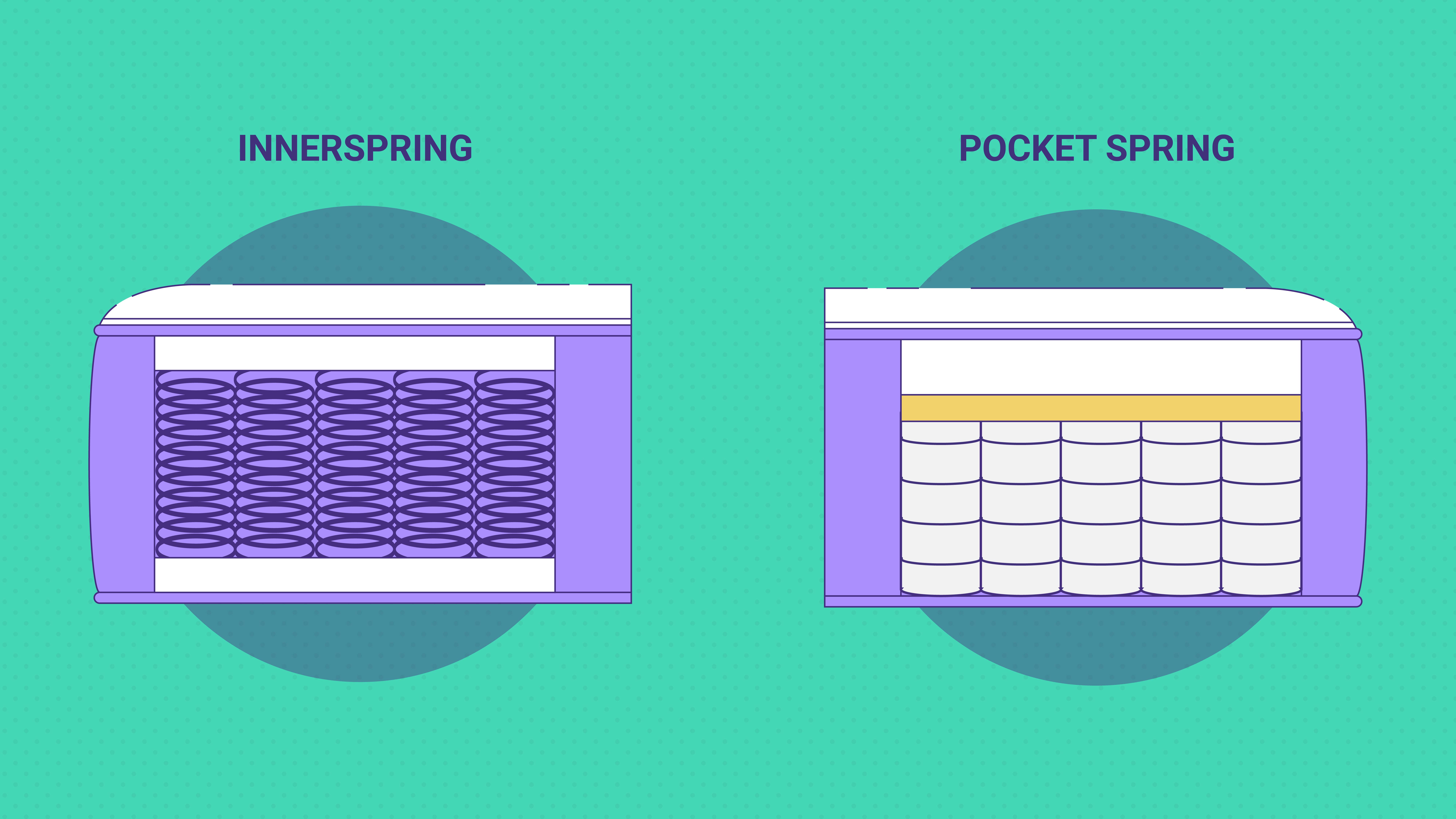
Innerspring beds have metal coils with an hourglass shape. The most common hourglass coils are Bonnell and offset coils. Bonnell coils have a thin structure in the middle of the spring but are broader near the top and bottom.
Offset coils also have an hourglass shape but with flat tops and bottoms. These coils are more durable than Bonnell coils and give your mattress an extra-firm feel.
Other innerspring models may use continuous coils. Continuous coils have a single long wire twisted into individual springs. Their structure helps limit motion isolation and improves the durability of the mattress.
Additionally, innerspring beds have limited contouring. To combat this, some innerspring beds include a soft pillow top layer. Pillow top mattresses may use cotton, wool, down, fiberfill, memory foam, or latex foam in the layers.
If you’re interested in sleeping on an innerspring mattress, we recommend reading our Innerspring Mattress Buying Guide.
What’s a Pocket Spring Mattress?
A pocket-coil or spring mattress has metal coils or springs, each wrapped in fabric. Pocket spring beds allow the coils to respond with the shape and weight it feels. This is the main difference between pocket spring and open coil mattresses.
Beds with pocketed coil systems differ from traditional spring beds. Innerspring beds feature generalized support, while pocket springs offer targeted support. These beds even have a memory or latex foam comfort layer to add a bit of cushioning to your bed. This kind of pocket spring bed is known as a hybrid mattress.
The Pros and Cons of Innerspring vs. Pocket-Coil Mattresses
Innerspring and pocketed coil spring mattresses share many similarities. But, there are distinct characteristics to enhance the comfort of sleepers.
In this next section, we will look at the advantages and disadvantages of each mattress type. We’ll also discuss what mattress is best for your sleeping preferences.
Innerspring Mattresses
Innerspring mattresses have a firm sleeping surface. This makes them the perfect option for stomach sleepers or plus-size individuals. Plus-size sleepers need a firm mattress to keep their bodies from sinking too far.
The firm support of innerspring mattresses helps maintain spinal alignment, particularly for those who sleep on their stomachs or backs.
Additionally, innerspring mattresses are widely available and often more affordable than other types of mattresses, making them a popular choice for budget-conscious shoppers.
Spring beds are also better for hot sleepers than foam beds. The coil system provides more airflow and does not absorb body heat. Air circulates between each coil, establishing a cooling mattress.
This air circulation prevents heat from building up within the mattress, helping hot sleepers stay comfortable throughout the night.
Innerspring mattresses often have reinforced edges, offering strong edge support that prevents sagging and extends the mattress’s lifespan.
Innerspring mattresses tend to have a quick response time to movements, making them ideal for combination sleepers who shift positions during the night. This responsive feel allows users to move freely without feeling “stuck” in the bed, which can sometimes occur with memory foam mattresses. Furthermore, innerspring mattresses’ durable coil structure provides dependable support for heavier individuals, ensuring the mattress retains its shape over time.
Most times, innerspring mattresses bounce or squeak throughout the night. As a result, this can cause sleeping disruptions throughout the night. Additionally, innerspring beds do not have body-conforming layers found in foam or hybrid mattresses, which may make them less suitable for side sleepers who need pressure relief for their hips and shoulders.
Finally, while innerspring mattresses offer firm support, they may not be as effective at isolating motion, which means that movements on one side of the bed can be felt on the other side.
Pocket Spring Mattresses
Pocket spring mattresses respond better to pain from pressure points than innerspring mattresses.
Individually wrapped coils work independently to adjust to your body’s natural curves, providing targeted support where it’s needed most. This design reduces motion transfer, helping you sleep soundly throughout the night without being disturbed by your partner’s movements.
They also reduce motion transfer so you can sleep soundly throughout the night.
Combination sleepers are better suited for pocket spring beds. The coil layers provide your bed with plenty of bounce.
The independent coil design allows the bed to adjust to shifting positions easily, making it easier to switch sleeping positions without feeling restricted. The individual coil support also promotes proper spinal alignment, helping prevent back pain and discomfort.
The added responsiveness makes it easier to switch sleeping positions. Plus, pocket spring beds promote proper spinal alignment.
Couples can also appreciate a pocket coil mattress.
The design not only promotes good posture but also isolates movements, ensuring one partner’s tossing and turning won’t disturb the other’s rest. This makes pocket spring mattresses a great choice for couples who have different sleep schedules or movement habits.
Pocket Spring mattresses are also known for their durability and ability to maintain their shape over time. The independent coils resist sagging and wear, which extends the mattress’s lifespan.
This longevity makes pocket spring mattresses an excellent investment, as they retain their supportive qualities for many years. These mattresses often feature multiple comfort layers made from foam or latex, adding cushioning and providing extra relief for pressure points.
Not only does the design promote good posture, but it also isolates movements. One partner’s movements won’t disturb the other’s rest.
The downside of purchasing a pocket spring bed is they do not contour to your curves, which may be less ideal for those who prefer the body-hugging feel of memory foam.
Furthermore, some layers consist of wool and other fibers. This can create an environment for allergens and dust mites to settle and grow. The invasion of allergens can ruin your mattress. This can pose a concern for allergy sufferers, as allergens can accumulate over time, potentially affecting sleep quality.
Finally, pocket spring mattresses are often heavier and more challenging to move due to their dense construction and added layers, which could make repositioning or rotating the mattress difficult.
Furthermore, some layers consist of wool and other fibers. This can create an environment for allergens and dust mites to settle and grow. The invasion of allergens can ruin your mattress.
Finding the Right Mattress for Every Sleep Style
These recommendations are general; individual preferences can vary widely. It’s essential to consider personal comfort, including desired firmness and pressure relief, when choosing between an innerspring or pocket coil mattress.
1. Recommendations for Lightweight Sleepers
Lightweight sleepers (under 130 pounds) may find pocket coil mattresses particularly comfortable, as the individual coils can deliver better contouring and pressure relief at a lower body weight, providing the support needed without excess firmness.
Selecting a mattress with a plush or pillow-top comfort layer can further enhance the sleep experience by creating a soft and enveloping feel. Lightweight individuals often benefit from mattresses that do not exert excessive pushback, which may lead to discomfort in the hips and shoulders. Latex hybrid mattresses can also be a good alternative, as they offer gentle responsiveness and breathable materials.
2. Durable Support for Heavier Sleepers
Heavier sleepers (over 230 pounds) might appreciate the robust support of an innerspring mattress, especially one with a higher coil count or thicker gauge coils. Alternatively, a pocket coil mattress with higher coil density and firm comfort layers can also deliver necessary support and durability.
For enhanced longevity, mattresses reinforced with high-density foam edges and supportive base layers are recommended. Additionally, firmer models are less likely to sag under pressure, which is a common concern for heavier sleepers. It’s also advisable to opt for mattresses with zoned support systems that offer tailored reinforcement to the lumbar and hip areas, promoting better spinal alignment and pressure distribution.
3. Cooling Options for Hot Sleepers
Innerspring mattresses are generally more breathable, thanks to the open space between the coils, which promotes airflow and helps regulate temperature. Pocket coil mattresses with breathable comfort layers, such as natural fibers or gel-infused foams, can also serve as cooling options, providing a comfortable sleep environment for hot sleepers.
When choosing a cooling mattress, consider those designed with phase-change materials, which adjust to the body’s temperature, or mattresses with built-in ventilation channels to improve air circulation. Hot sleepers may also benefit from moisture-wicking covers that keep the surface dry throughout the night.
Hybrid designs with gel-infused foams combined with pocket coils are increasingly popular for their superior cooling performance and responsive support.
4. Ideal Choice for Side Sleepers
Pocket coil mattresses often make an excellent choice for side sleepers due to their ability to adapt to the body’s shape, offering specific, targeted support. The individual coils provide relief to pressure points in the hips and shoulders, crucial areas for side sleepers needing extra comfort.
Memory foam comfort layers paired with pocket coils can create a highly supportive yet pressure-relieving surface that cushions sensitive joints. Additionally, side sleepers may benefit from mattresses with zoned support systems, which offer softer reinforcement around the shoulders while maintaining firmer support for the lower body. Plush or medium-firm models are often the best fit for this sleep style.
5. Support for Back Sleepers
Both innerspring and pocket coil mattresses can meet the needs of back sleepers, depending on their preferred firmness level. A firmer innerspring mattress may offer the support needed to keep the spine aligned, while a medium-firm pocket coil mattress can provide a balance of contouring and support.
Back sleepers should prioritize mattresses that offer even weight distribution and prevent the hips from sinking too deeply, as this can lead to spinal misalignment.
Zoned support systems, which reinforce the lumbar area, are particularly beneficial for promoting healthy posture during sleep. Memory foam hybrid models are also gaining popularity for their ability to contour gently while maintaining a supportive structure.
6. Options for Stomach Sleepers
Stomach sleepers generally benefit from a firmer mattress to prevent hips from sinking too far, which can lead to lower back strain. A firmer innerspring mattress or a pocket coil mattress with firm comfort layers can be a suitable choice, as these options help maintain spinal alignment.
Mattresses with minimal cushioning are often preferred by stomach sleepers to maintain a stable, supportive surface. Too much plushness in the comfort layer can cause the hips to dip, leading to unwanted pressure on the lower back. Additionally, models with reinforced edge support can help maintain firmness throughout the mattress, which is crucial for maintaining consistent spinal alignment across the sleep surface.
7. Best Fit for Combination Sleepers
Combination sleepers often prefer pocket coil mattresses due to their effective motion isolation. The individually wrapped coils reduce disturbances during position changes, an important feature for those who shift frequently throughout the night.
Combination sleepers should look for mattresses that provide a responsive surface, allowing for smooth transitions between positions without feeling stuck. Medium-firm hybrid mattresses often strike the right balance between support and contouring, accommodating multiple sleep positions. Motion isolation is particularly important for partners with different sleep habits, as it minimizes disruptions when one person moves during the night. A bouncy yet supportive mattress can provide the perfect balance for this sleep style.
Other Mattress Types
If you’re interested in mattresses without springs, we suggest looking to memory foam and latex mattresses.
Memory Foam Mattress
A memory foam mattress is a type of mattress that doesn’t rely on springs for support. Instead, it utilizes a dense and viscoelastic material called memory foam. This foam is designed to conform to the shape of the body when pressure is applied, providing a customized and comfortable sleeping experience.
Memory foam mattresses offer excellent motion isolation, as the foam absorbs and disperses movement. In other words, this prevents disturbances from a restless sleeping partner.
The material also helps to relieve pressure points by distributing weight evenly, which can be beneficial for individuals with joint or back pain. Additionally, memory foam mattresses tend to be quieter compared to spring mattresses, as there are no metal components that can create noise when compressed.
Latex Mattress
A latex mattress is another type of non-spring mattress that offers a unique sleeping surface. It is made from natural or synthetic latex foam, which provides a resilient and bouncy feel. Latex mattresses are known for their exceptional durability and longevity, as latex is a highly resilient material that maintains its shape over time.
Like memory foam, latex conforms to the body, but with a slightly firmer and more responsive feel. It offers excellent support, promoting proper spinal alignment and reducing pressure points. Latex mattresses are naturally hypoallergenic, resistant to dust mites, and mold, making them a suitable option for individuals with allergies. They also provide good breathability, allowing for better temperature regulation during sleep.
FAQS
Are pocket spring mattresses good for back pain?
Pocketed spring beds are a great option for individuals with back pain. Unlike innerspring beds, pocket spring mattresses have individual springs with foam layers. The structure of your bed provides a medium-firm surface and may help ease your back pain.
Do pocket spring mattresses lose their shape over time?
Pocket Spring mattresses are celebrated for their durability and resistance to sagging compared to traditional innerspring mattresses, yet over time, they may still experience some level of sagging with extended use. Factors like the quality of materials, weight distribution, and usage frequency all play a role in how quickly or noticeably a pocket spring mattress may lose its shape.
To help maintain its structure and minimize sagging, it’s recommended to rotate the mattress regularly, invest in a high-quality model with reinforced edges, and avoid placing excessive weight on specific areas.
Are pocket spring mattresses suitable for all sleep positions?
Yes, pocket spring mattresses can accommodate various sleeping positions. The individual coil support provides targeted pressure relief, making them ideal for side, back, and combination sleepers. For stomach sleepers, a firmer pocket spring mattress may offer better spinal alignment and support.
Are pocket spring mattresses better than memory foam?
Most people turn to memory foam mattresses rather than pocket spring mattresses. The coil system in pocket spring mattresses can cause sleeping interruptions. If you toss and turn at night, your bed may squeak or bounce and hinder a good night’s rest. Furthermore, pocket spring beds do not provide targeted pressure point relief.
Memory foam beds absorb body movement and also contour to your body for more pressure relief.
Can pocket spring mattresses cause noise over time?
While pocket spring mattresses are quieter than traditional innerspring models due to their individually wrapped coils, they may develop slight creaking or noise over time. This usually occurs if the springs or mattress components wear out. Opting for a high-quality mattress and a sturdy foundation can help reduce noise issues.
Which is a better choice: innerspring or pocket coil mattress?
Choosing between an innerspring or a pocket coil mattress depends on personal preferences and individual needs. Pocket coil mattresses generally provide superior motion isolation and targeted support compared to traditional innerspring designs, making them a popular choice for those seeking tailored support.
However, some may favor the firmer feel and generally lower cost of a traditional innerspring mattress, especially if they prefer less contouring.
How often should I replace a pocket spring mattress?
On average, a high-quality pocket spring mattress should be replaced every 7 to 10 years. However, this timeline can vary based on factors such as usage, body weight, and how well the mattress has been maintained. Signs that it may be time to replace your mattress include sagging, loss of support, and noticeable discomfort during sleep.
How long does an innerspring mattress last?
Some quality innerspring mattresses may last for up to 7 years, while others may only last for 3 or 4 years. How long a mattress lasts all depends on the quality of materials and how well you take care of your bed. Often, springs in the mattress lose flexibility over time.
Does a higher coil count mean a better pocket coil mattress?
While a greater number of pocket coils in a mattress can enhance support and durability, it isn’t the only factor that determines the quality of a mattress. Elements such as coil gauge, the quality of materials in the comfort layers, and the mattress’s overall design all significantly impact its performance.
Thus, while a higher coil count can contribute to improved support and responsiveness, it’s wise to consider the mattress’s full construction when evaluating its quality.
Why do innerspring mattresses sag?
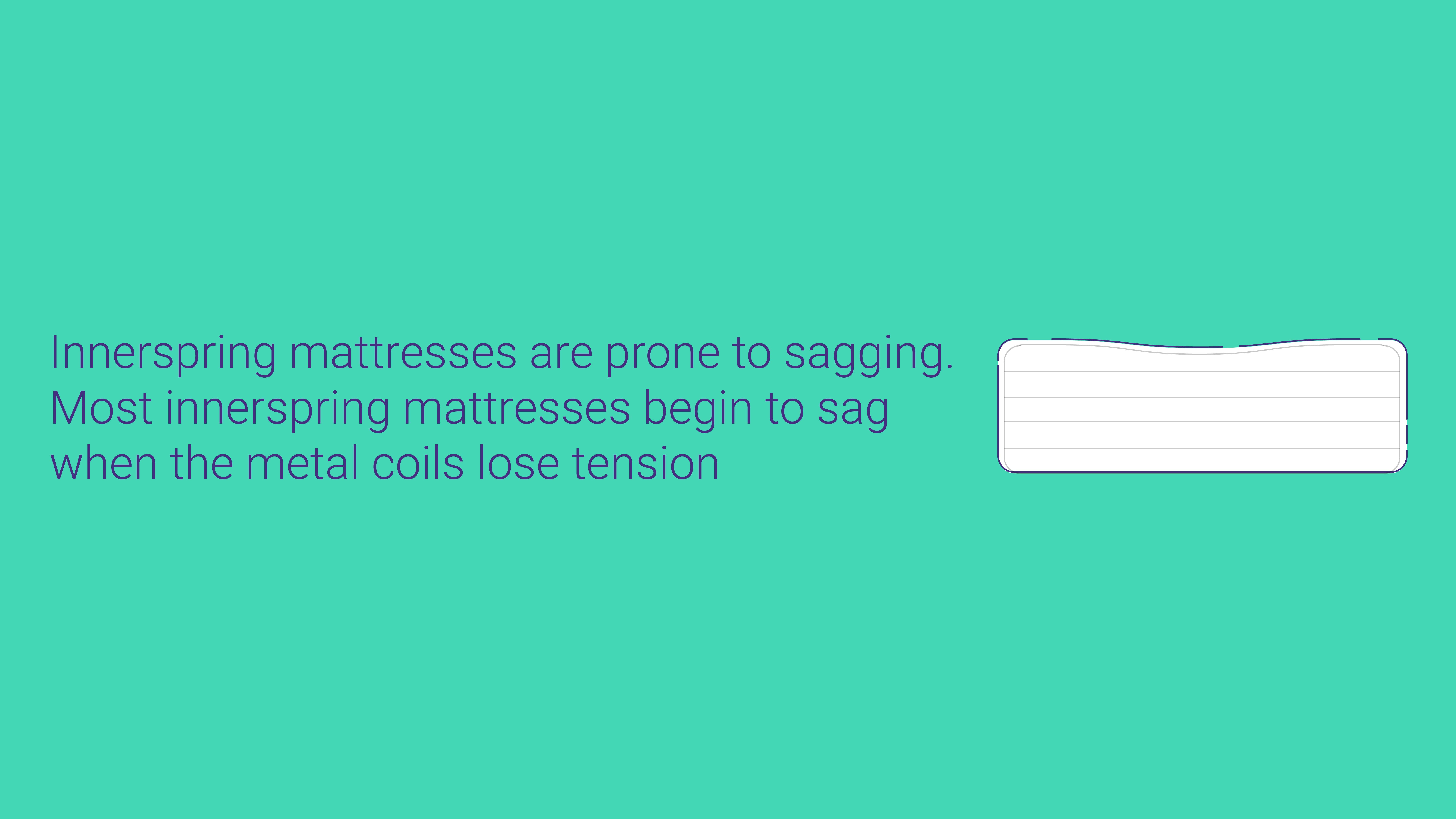
Innerspring mattresses are prone to sagging. Most innerspring mattresses begin to sag when the metal coils lose tension. Additionally, the layers may soften over time, making the mattress material less durable. Sagging is a result of normal wear-and-tear or improper mattress care.
A good mattress foundation can minimize sagging. We recommend solid or slatted surfaces. If you choose slats, the slats should be no more than 3 inches apart.
Are more pocket coils better?
Beds with more coils than average do not equate to a more durable mattress. If your mattress has a low coil count, this means your bed has thicker springs. Most times, thicker springs take longer to lose their flexibility. Mattresses with high coil count usually provide better body support for sleepers.
Are pocket coil mattresses designed to be flipped?
Whether or not a pocket coil mattress can be flipped is based on its specific design. Many modern pocket coil mattresses are constructed as one-sided, which means they aren’t intended to be flipped; doing so could cause discomfort and uneven wear.
That said, there are flippable pocket coil mattresses available, typically designed with similar comfort layers on both sides to provide a consistent feel.
Conclusion
Many sleepers complain about the limited pressure point relief on innerspring beds. It may be a better choice to buy a pocket spring mattress since its coil system moves with your shape and weight.
If you are a hot sleeper, an innerspring bed is the best option because they do not contain any foam layers. They also have an open coil structure to provide more airflow.