I Tested 50+ Mattresses to Find the 13 Best Mattresses for Poor Circulation of 2026

Top Recommendation of 2026: Amerisleep AS3
The best mattress for poor circulation is the one that spreads your weight instead of concentrating it at the shoulder, hip, and heel, and the Amerisleep AS3 did that most consistently in my testing.
I tested 50+ mattresses and kept 13, ranking each on how evenly it distributed pressure on my side and my back, how hard it was to change position, how far the perimeter compressed when I sat on it to stand up, and whether it held up on an adjustable base.
No mattress treats a circulatory condition. These 13 are the surfaces that stop making the night harder than it has to be.

Every mattress featured on Sleep Junkie is evaluated using the same testing framework for support, pressure relief, cooling, motion isolation, edge support, responsiveness, and overall value. Learn How We Test Mattresses.
- Best Mattress Overall: Amerisleep AS3
- Best Purple Alternative: FORM Prime
- Best Mattress For Athletes: Zoma Boost
- Best Value Mattress: Vaya Hybrid
- Best Mattress for Side Sleepers: Helix Midnight Luxe
- Best Hybrid Mattress: Leesa Sapira Hybrid
- Best Innerspring Mattress: Saatva Classic
- Best Pillow Top Mattress: Nolah Evolution
- Best Latex Mattress: Organica
- Best Cooling Mattress: Amerisleep AS6 Black Series
- Best Organic Mattress: PlushBeds Signature Bliss
- Best Soft Mattress: Amerisleep AS5 Hybrid
- Best Mattress for Couples: Westin Heavenly Bed
You wake up at three in the morning and your arm is gone. Not asleep exactly, just absent, until you shake it back and lie there waiting for the pins and needles to pass. Or your calf cramps you upright. Or your feet are cold under two blankets in a warm room. Sooner or later you start wondering whether the bed is doing this to you.
It is a fair question and it has two halves, so let me take the uncomfortable one first. A mattress does not treat a circulatory condition. Peripheral artery disease is a medical problem with medical treatments, and the CDC counts roughly 6.5 million Americans aged 40 and over living with it 1 Verified Source Centers for Disease Control and Prevention (CDC) The United States’ health protection agency that defends against dangers to health and safety. See the source .
The part that catches people out is that up to 4 in 10 of them have no leg pain at all, so waiting for the classic symptom is not the safety net it sounds like. Harvard Health points to the quieter signs people file under getting older: toenails that stop growing, hair disappearing from the toes, skin on the legs turning shiny. If any of that rings true, make the appointment. Read this afterward.
Here is the other half, and it is the part I can actually put a body on and measure. When you lie still for hours, your weight does not spread itself evenly. It funnels into a few small places, mostly the shoulder, the hip, and the heel.
A surface that concentrates it there is what produces the dead arm and the aching hip and the sense that you spent the night rearranging yourself instead of sleeping. A surface that spreads it out across your ribcage, your thigh, and your calf carries the same body very differently. That has nothing to do with what is happening inside your arteries. It has everything to do with how the night feels.
So that is what this guide is. I tested 50+ mattresses and kept 13, ranked on how evenly each one spread my weight, how hard it was to change position, whether the edge held when I sat on it to stand up, and whether it works on an adjustable base, since positioning advice in this area is specific and worth being able to repeat. None of these beds is a treatment. What they are is a surface that stops making the night harder than it has to be.
How We Selected These Mattresses
Our team narrowed the list around the three places your weight concentrates when you lie still for hours: the shoulder, the hip, and the heel.
Every bed here was ranked on how evenly it spread that load across the rest of me, how easily I could change position without pushing off the surface, how far the perimeter gave when I sat on the edge to stand up, how much of my partner’s movement reached my side of the bed, and how the surface behaved once the head and foot were raised on an adjustable base.
A mattress that had me rearranging myself to get comfortable did not make the list, however well it performed on paper.
Sleep Junkie uses hands-on product evaluation, product-spec review, owner-feedback review where available, and expert review where applicable. Health-related claims are routed to credentialed reviewers when the topic requires added clinical or scientific oversight. Pages with completed commentary from our expert review board should show the reviewer clearly on the page.
Mattresses do not diagnose, treat, or cure poor circulation. A supportive mattress may help some sleepers feel more comfortable, but severe, persistent, radiating, or neurological symptoms should be discussed with a healthcare professional.
Best Mattresses for Poor Circulation
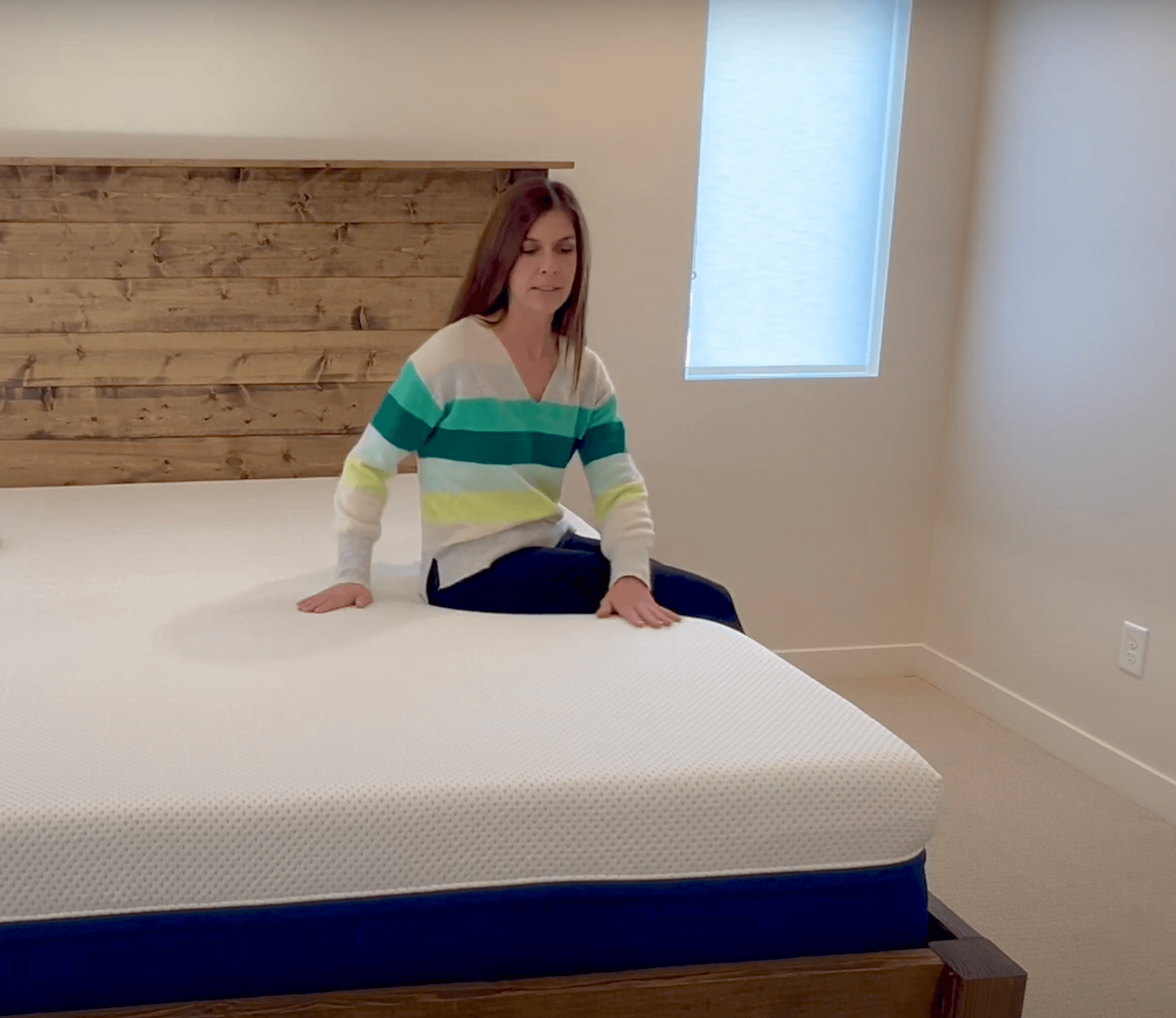
Watch Our Amerisleep AS3 Video Review
Among the 50+ mattresses I tested for this guide, the Amerisleep AS3 spread my weight the most evenly without letting any one area take the load, which is exactly the behavior this category needs.
On my side, the Bio-Pur layer gave at the shoulder and hip while the HIVE transition layer underneath stayed firm at the waist. After twenty minutes without moving, I did not get the hot spot at the hip that had me shifting on the firmer beds I tested in the same session. On my back, my hips stayed level with my shoulders rather than settling below them, so a sleeper who alternates between positions gets both without adjusting anything.
The AS3 also releases quickly for a memory foam bed. Rolling from back to side, the surface let go rather than holding the old impression, which matters if you are the kind of sleeper who changes position several times a night and does not want to fight the mattress each time.
The edge is where it gives ground. When I sat on the edge to put on shoes, it compressed more than the coil beds on this list, and it was the softest edge among my top three picks. If getting up from a seated position on the edge of the bed is part of your night, a hybrid on this list will serve you better.
For a side, back, or combination sleeper who wants one balanced medium feel that spreads weight evenly and lets go quickly when they move, the AS3 is the pick.
- 9 Value
- 8 Edge Support
- 9 Trial Period
- 9 Response Time
- 10 Motion Transfer
- 10 Cooling & Breathability
I picked the AS3 first because after 50+ beds it was the one I could recommend to the most people without a caveat about body type or position.
Pressure redistribution. Lying still on my side, the load spread across my ribcage and thigh instead of piling into the shoulder and hip. That is the difference between waking up because your arm has gone numb and sleeping through, and it is the single behavior I weighted most heavily on this page.
Responsiveness. When I rolled from my back onto my side, the foam released almost immediately rather than keeping the shape of where I had been. For a sleeper who changes position often, that means less effort per move and less waking up to do it.
Motion isolation. When my partner got out of bed on the far side of the queen, movement on my side barely registered, so a light sleeper who shares the bed with someone who is up in the night is less likely to be pulled awake by it.
Cooling. The Bio-Pur surface felt cooler to the touch through the first hours of testing than the denser traditional memory foam beds I compared, and it ties for the highest cooling score on this page.
Best For:
- Side, back, and combination sleepers who want one versatile feel
- Sleepers who change position several times a night
- Couples where one partner is up during the night
Compare Instead:
- Zoma Boost if you want a plusher hybrid with a firmer edge to push off from
- Vaya Hybrid if you want a similar balanced feel at the lowest price on this page
- Amerisleep AS5 Hybrid if the medium feel is too firm at your shoulder
The AS3 reads as a true medium. There is a moment of give at contact, then the surface stops and holds.
On my side I sank in at the shoulder and hip and stopped rather than continuing down, which is the behavior that keeps a side sleeper’s spine straight instead of bowed.
On my back, the lumbar gap filled without my hips dropping.
On my stomach, my hips sat slightly lower than I would want for a full night, so a dedicated stomach sleeper should size up in firmness.
This is the feel for a side or combination sleeper who wants cushioning at the joints without the sensation of being held in place.
The Bio-Pur comfort layer is an open-cell memory foam, and the practical result during testing was that it did two things standard memory foam usually does not do together: it contoured at my shoulder and hip, and it let go quickly when I rolled off it.
The HIVE transition layer underneath is cut into five zones of differing firmness, and lying on my back I could feel the difference as a firmer band under my lower back with softer sections at the shoulders and hips, which is why my hips stayed level rather than settling.
The Bio-Core base is the reason the bed did not develop a body impression across the testing period.
There is no coil or reinforced edge around the sides, which is exactly what I felt when I sat on one. For a sleeper who wants even weight distribution and quick release from a foam bed, this construction delivers both.
Pros
- Motion Transfer (10/10): my partner leaving the bed barely registered on my side
- Cooling and Breathability (10/10): the surface felt cooler to the touch through the first hours than the denser foam beds compared in the same session
- Lying still on my side, weight spread across the ribcage and thigh instead of concentrating at the shoulder and hip
- 20-year warranty is longer than most fixed-term coverage on this page
Cons
- Edge Support (8/10): the perimeter compressed noticeably when I sat on it to put on shoes, the softest edge among the top three picks
- One firmness only, so there is no adjustment if the medium feel is wrong for your body weight
- Hips sat lower than ideal on my stomach, so strict stomach sleepers should look at a firmer option
Why The Amerisleep AS3 Won
Among the 13 mattresses on this list, the AS3 spread my body weight the most evenly across the widest range of positions. Lying still on my side, the load moved out to my ribcage and thigh instead of piling into the shoulder and hip, and rolling from back to side the surface released rather than holding me in the old shape. It is the pick for a side or combination sleeper who repositions during the night and wants one feel that works without picking a firmness first.
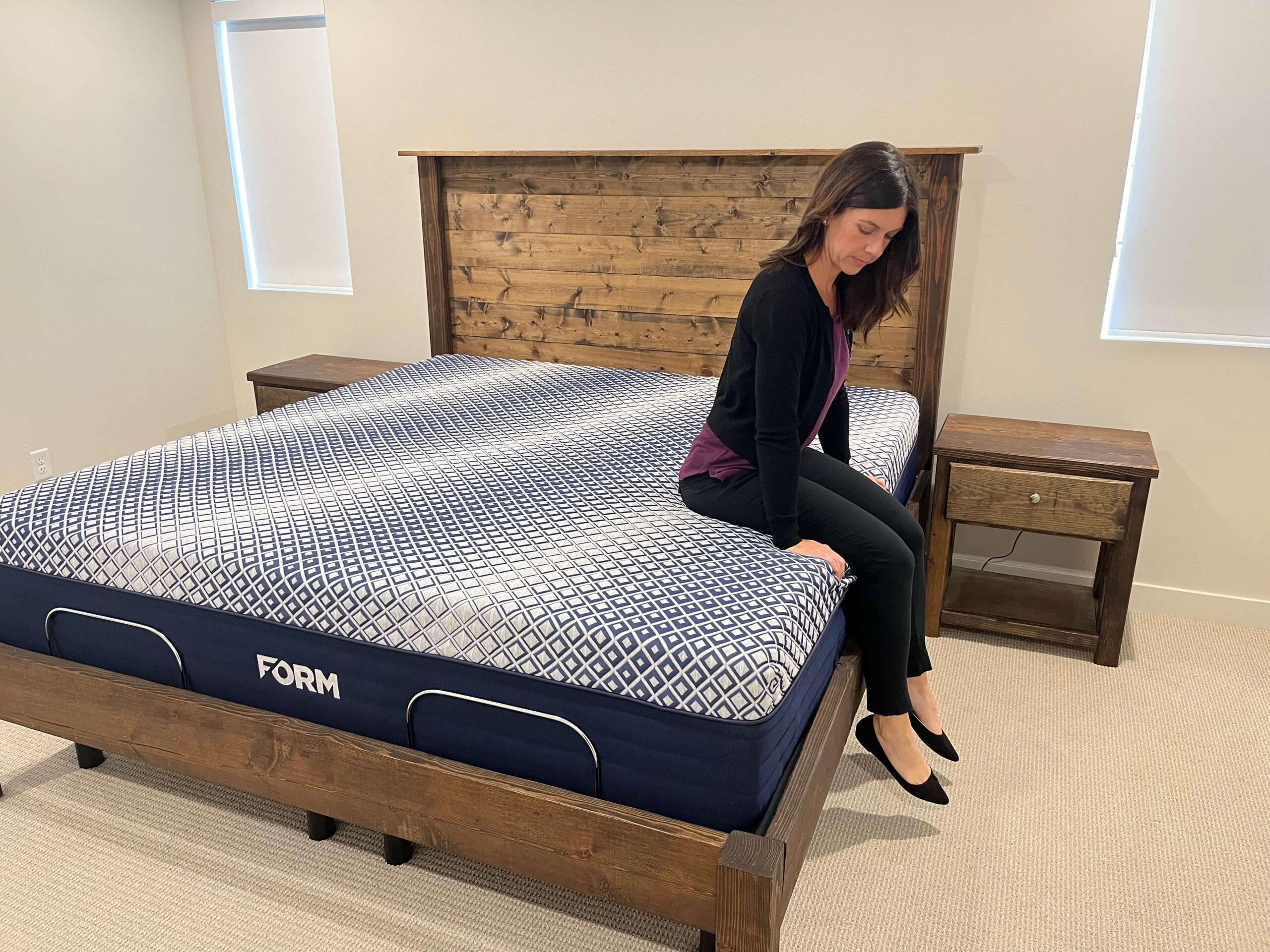
Watch Our FORM Prime Video Review
Among the grid beds I tested, the FORM Prime does the thing grid construction is genuinely good at for this category: it collapses only where the load is and stays firm everywhere else.
On my side, the grid buckled directly under my shoulder and hip while the cells a few inches away held their shape. The practical result was that my weight sat on a much wider footprint than it did on the firmer foam beds I compared, and I could stay put longer before feeling the need to move. That is a useful property if you are someone who wakes up because one shoulder has gone dead.
The Integra-Mesh woven through the grid is what separates this from other grid beds I have tested. When my partner moved on the far side of the queen, the surface did not ripple the way an unreinforced grid does, so the adaptive give does not come with the jiggle those beds are known for.
Edge support was among the strongest results on this list. Sitting on the perimeter with my feet on the floor, it compressed very little and stayed level under me, which is the behavior you want if you are getting up more than once a night.
The FORM Prime comes in one feel rather than multiple firmness levels, so a strict stomach sleeper who needs a very firm surface should use the trial to test it. For a side or back sleeper who wants localized give at the joints and a firm edge to get up from, this is the pick.
- 8 Value
- 10 Edge Support
- 10 Trial Period
- 9 Response Time
- 10 Motion Transfer
- 9 Cooling & Breathability
The FORM Prime earned its spot because the grid does something no foam bed on this page does: it gives in one small area without softening anywhere else.
Pressure redistribution. On my side, the cells directly under my shoulder buckled while the ones under my ribs stayed rigid. I could feel the boundary.
The load ended up spread across a much wider area than the contact patch I started with, which is exactly the mechanism that lets you hold a position longer without a hot spot forming.
Edge support. Sitting on the perimeter to put shoes on, it barely gave and stayed level, so getting up from a seated position on the edge takes one motion rather than a push and a shift.
Motion isolation. The reinforced grid did not transmit my partner’s movement across the surface, which for anyone sharing a bed with a restless sleeper means fewer partial wakeups.
Ownership terms. A lifetime warranty paired with a 365-night trial ties for the longest trial on this page, which matters when the feel is unusual enough that you will want real time to decide.
Best For:
- Side sleepers who want give at the shoulder and hip without sinking into the surface
- Anyone who sits on the edge of the bed to get up during the night
- Shoppers cross-shopping grid mattresses who want a longer trial
Compare Instead:
- Amerisleep AS3 if you prefer contouring foam over the distinct feel of a grid
- Nolah Evolution if you want plush pillow-top cushioning and a choice of three firmness levels
- Saatva Classic if you want to sleep on top of the surface rather than in it
A grid does not feel like foam and there is no point pretending otherwise. The first impression is firmer than the firmness number suggests, because the surface only softens where you press hard enough to buckle a cell.
On my side, that meant a clear pocket at the shoulder and hip with the surface holding flat at the waist. On my back, it read as medium-firm with no lumbar gap.
Rolling over, there is no sinking-out feeling, so repositioning takes almost no effort. This is the feel for a side or combination sleeper who wants localized relief and dislikes the sensation of being cradled by memory foam.
The GelGrid is a hyperelastic polymer laid out in open cells, and in testing it behaved as a set of independent columns rather than a continuous surface: the ones under my hip collapsed, the ones an inch away did not. That is why the pressure map felt so different from the foam beds compared in the same session.
The Integra-Mesh reinforcement woven through the grid is the reason the surface stayed steady when my partner moved, since an unsupported grid transmits that motion as a ripple.
The ZoneCoil 7-Series pocketed coils underneath are what kept my hips from dropping on my back, and the reinforced perimeter is what I felt sitting on the edge.
The AeroWeave cover felt cool on initial contact, though the bed did not stay ahead of the top cooling scores on this page through the first hours. For a sleeper who wants localized give plus a firm edge, this build is what produces both.
Pros
- Edge Support (10/10): the perimeter barely compressed when I sat on it with my feet on the floor
- Motion Transfer (10/10): the reinforced grid did not ripple when my partner shifted on the far side
- Trial Period (10/10): 365 nights ties for the longest on this page, and a lifetime warranty behind it
- The grid gave at the shoulder while staying firm at the waist, spreading load over a wider area than the foam beds compared
Cons
- Value (8/10): the price sits well above the foam picks on this page for a comparable overall score
- One firmness only, so there is no adjustment if medium to medium-firm is wrong for your body weight
- The grid surface is genuinely different to lie on and is not for a shopper who wants a conventional foam feel
The grid buckled directly under my shoulder and the cells an inch away did not move, and I could feel exactly where that boundary sat. On my side it meant my weight ended up carried across a much wider footprint than the contact patch I started with, and I could stay put longer before anything started to ache. Sitting on the perimeter to stand up, it barely gave. This one is for the side sleeper who wants relief at the joints but dislikes the held-in-place sensation of memory foam, and who gets up more than once a night.
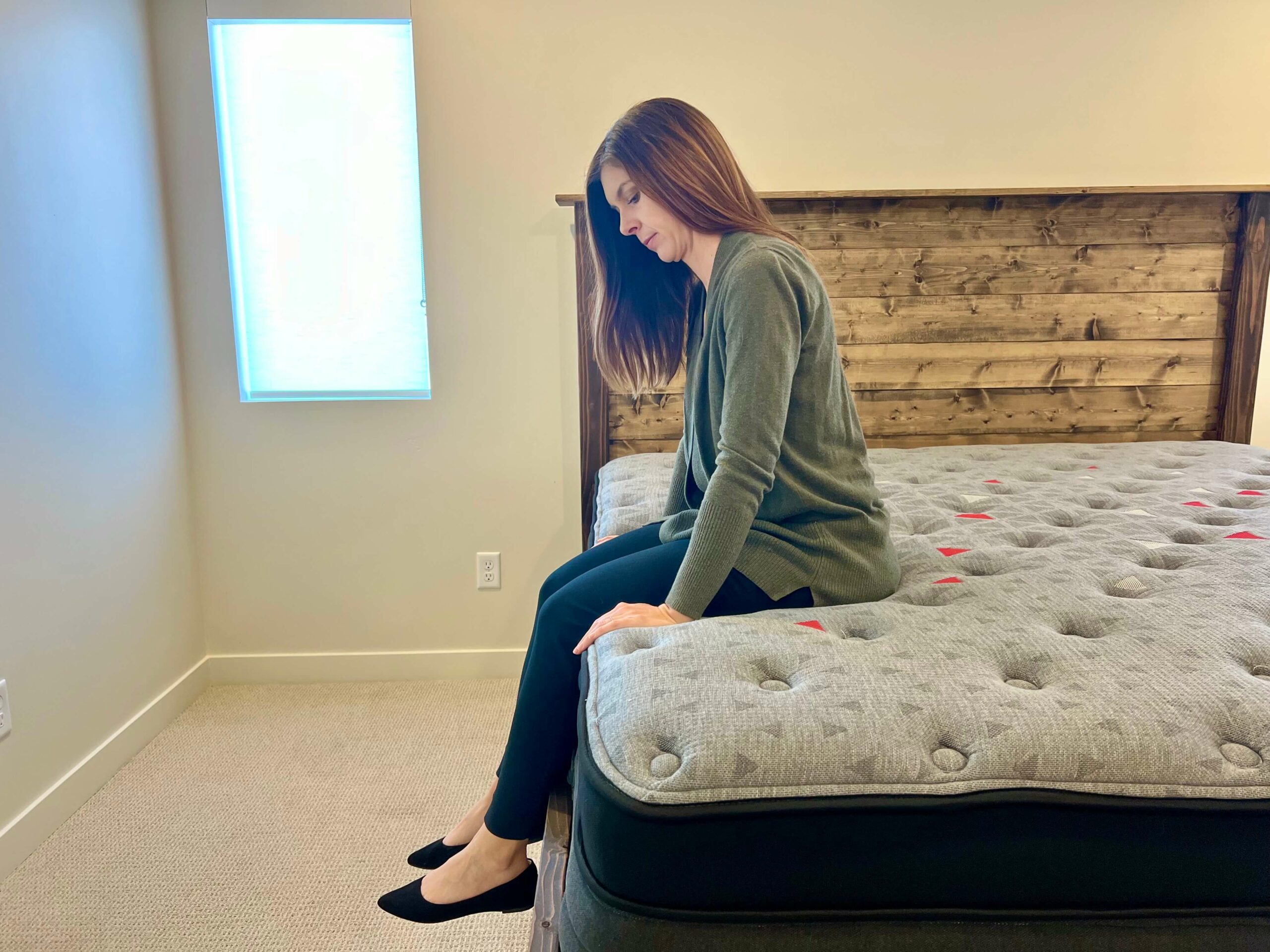
Watch Our Zoma Boost Video Review
The Zoma Boost carries one of the two highest overall scores on this page, and among the plush hybrids I tested it was the one that cushioned the most without letting my hips sink.
On my side, the comfort system took my shoulder in deeply on contact while the zoned coils underneath held my hips at the same height as the rest of me. That combination is unusual. Most beds that cushion this much let the heaviest part of you settle, and then the spine bows. Here it did not, and after a long stretch lying still I had no build at the hip.
The Reactiv layer is what makes the plushness workable for someone who repositions. Rolling from side to back, the surface came back up under me rather than leaving a trough, so I was not climbing out of my own impression each time I moved.
Edge support was among the strongest on this list. Sitting on the perimeter, the Dynamic Edge coils held me level with minimal compression, and the 15-inch height meant the sitting position was closer to standing height than the lower-profile beds I tested.
Ten years of coverage is the catch. That is the shortest fixed term coverage on this page, tied with the Vaya Hybrid and the Westin, and for a bed at this price that is a real consideration. For a side or combination sleeper who wants deep cushioning that does not turn into sinkage, this is the pick.
- 10 Value
- 10 Edge Support
- 9 Trial Period
- 9 Response Time
- 10 Motion Transfer
- 9 Cooling & Breathability
I ranked the Zoma Boost this high because it solved the tradeoff that usually forces a choice between cushioning and support.
Pressure redistribution. On my side, the graphite-infused comfort layers took my shoulder in on contact while the zoned coils kept my hip from following it down. Deep cushioning without the spine bowing is the combination this category actually wants, and very few beds do both.
Responsiveness. When I rolled from my side to my back, the Reactiv layer pushed the surface back up rather than leaving a trough where I had been. For a sleeper who moves several times a night, that is less effort per position change.
Edge support. Sitting on the perimeter to put my shoes on, the coils held me level with very little give, so the edge is usable as a place to sit rather than something to avoid.
Temperature. The surface felt cooler to the touch through the first hours than the denser all-foam beds I compared, which is not typical of a comfort layer this thick.
Best For:
- Side and combination sleepers who want plush cushioning with the hips held level
- Anyone who sits on the edge of the bed to get up
- Sleepers who want a taller profile that sits closer to standing height
Compare Instead:
- Amerisleep AS3 if you want a firmer medium feel and a 20-year warranty
- Amerisleep AS5 Hybrid if you want an even softer surface at the shoulder
- Saatva Classic if you would rather sleep on top of the mattress than in it
The Boost feels plusher than its firmness number on first contact and then firms up underneath, which is the opposite of the usual pattern.
On my side, I went in far enough at the shoulder to feel cradled and then stopped at the coils. On my back, the lumbar gap filled and my hips stayed level. On my stomach, the comfort layers are too thick for a full night and my hips settled.
Rolling over takes almost no effort because the surface comes back rather than holding the shape. This is the feel for a side or combination sleeper who wants to feel held without feeling stuck.
The graphite-infused Energex foam is the top layer, and the observable result in testing was a surface that cushioned deeply at contact but did not warm up the way a thick comfort layer usually does through the first hours.
Under it, the Reactiv transition layer is what returned the surface to level after I rolled off a spot, and the difference is easy to feel against beds that leave a lingering impression.
The zoned coil unit is what held my hips level on my back while the foam above was still giving at my shoulder, which is why the bed cushions without the spine bowing.
The Dynamic Edge coils around the perimeter are what I sat on, and they held with very little compression. For a sleeper who wants a plush surface that still keeps the hips lifted, this layer sequence is what makes that possible.
Pros
- Value (10/10): ties for the highest value score on this page for a bed with this build
- Edge Support (10/10): the perimeter held level with very little give when I sat on it
- Motion Transfer (10/10): my partner’s movement on the far side barely reached me
- On my side, the comfort layers took my shoulder in while the coils kept my hip from following it down
Cons
- Trial Period (9/10): 100 nights is shorter than the 365-night trials on this page
- The 10-year warranty is the shortest fixed-term coverage among the higher-priced picks here
- The comfort layers are too thick for a strict stomach sleeper, whose hips settled during testing
Most beds that cushion this deeply let the hips follow the shoulder down, and then the spine bows and you have traded one problem for another. This one did not. On my side the comfort layers took my shoulder in on contact while the coils underneath held my hip at the same height as the rest of me, and after a long stretch lying still there was no build at the hip at all.
The 15-inch profile also puts the edge closer to standing height when you sit on it. Buy it if you sleep on your side, want a plush surface, and do not want to give up the hips being held level to get one.
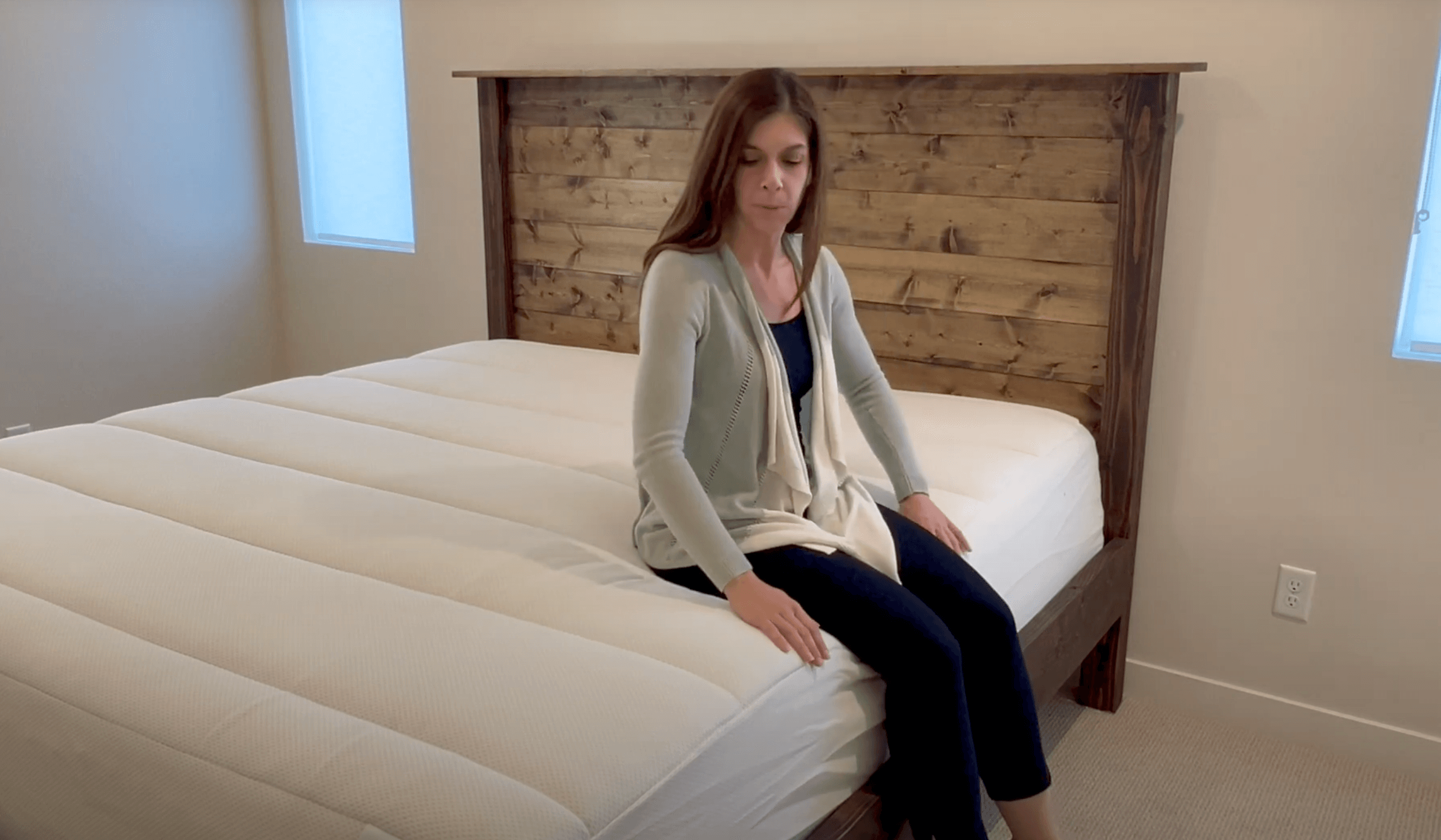
Watch Our Vaya Hybrid Video Review
The Vaya Hybrid is the lowest price on this page and it is the only bed here I would call a genuine value outlier, because it delivers coil support at a price where most competitors are still selling all-foam.
On my side, the Vaya Comfort Foam gave at the shoulder and stopped at the coils, and while the contour is less precise than the zoned beds higher on this list, the load still spread rather than piling into one spot. After a long stretch without moving, I got mild build at the hip that the top picks did not produce, which is the honest difference between this and a bed that costs twice as much.
The perimeter is where it punches above its price. The reinforced side supports meant that when I sat on the edge, it compressed less than the AS3, a bed that costs considerably more. If getting up at night is part of your routine and your budget is fixed, that is a meaningful piece of the value case.
The surface is also porous enough that it did not hold heat the way budget memory foam usually does, and it recovers quickly, so changing position is easy.
For a shopper who wants coil support and a usable edge at the lowest price on this page, the Vaya Hybrid is the pick. If your budget allows more, the Zoma Boost gives you deeper cushioning and a longer feature set for the money.
- 10 Value
- 10 Edge Support
- 9 Trial Period
- 10 Response Time
- 7 Motion Transfer
- 9 Cooling & Breathability
The Vaya Hybrid earned the value category on price tier, and the case for it is that it does not cut the things this page cares about most.
Pressure redistribution. On my side, the comfort foam gave at the shoulder and handed off to the coils rather than bottoming out. The contour is less precise than the zoned beds above it, and after twenty minutes still I felt a mild build at the hip, but nothing like the sharp pressure the cheap all-foam beds I compared produced in the same session.
Edge support. When I sat on the perimeter to stand up, the reinforced sides compressed less than the AS3 did, which is not what I expected from the lowest-priced bed here.
Responsiveness. Rolling from back to side, the surface released quickly and did not hold my old impression, so repositioning is easy.
Temperature. The porous foam and open coil layer meant the surface did not warm as quickly as the budget memory foam beds I compared through the first hours.
Best For:
- Shoppers with a fixed budget who want coils rather than all foam
- Side and back sleepers who want a straightforward medium feel
- Guest rooms and secondary bedrooms
Compare Instead:
- Amerisleep AS3 if you want more precise contouring and a 20-year warranty
- Zoma Boost if your budget stretches and you want deeper cushioning with a firmer edge
- Saatva Classic if you want to choose a firmness level rather than take a single medium
The Vaya Hybrid feels like a straightforward medium with a bit of bounce from the coils. There is no deep cradling. You settle into the comfort layer, meet the coils, and stop. On my side it read as slightly firm at the shoulder compared with the plusher hybrids here. On my back, my hips stayed level and the lumbar gap mostly filled. On my stomach it held up better than most beds on this list because the comfort layer is thin. This is the feel for a side or back sleeper who wants simple, supportive, and inexpensive rather than plush.
The Vaya Comfort Foam layer is more porous than standard memory foam, and the practical consequence during testing was twofold: it released quickly when I rolled off it, and it did not warm up as fast as the budget memory foam beds compared in the same session.
Underneath, the pocketed coil unit is what stopped my hips from settling on my back, and it is the reason this bed feels more supportive than its price suggests.
The reinforced side supports are the part I noticed most, because sitting on the perimeter produced less compression than several pricier beds here.
What holds it back is how thin that comfort layer is. The contour at the shoulder never gets as precise. And that matched the mild hip build I felt lying still.
For a budget shopper who needs coil support and a usable edge, this construction covers the essentials.
Pros
- The lowest price on this page and the only bed here delivering coil support at this tier
- Sitting on the perimeter, the reinforced sides compressed less than the AS3, which costs considerably more
- The surface released quickly when I rolled from back to side, so repositioning is low-effort
- CertiPUR-US certified foams, tested for low VOC emissions
Cons
- Lying still on my side, I felt mild pressure build at the hip that the higher-ranked beds did not produce
- The 10-year warranty and 100-night trial are both shorter than most of this list
- One firmness only, with no option to adjust if medium is wrong for you
I sat on the edge of the cheapest bed on this page expecting it to give way, and it compressed less than the AS3, which costs considerably more. On my side the comfort foam gave at the shoulder and handed off to the coils rather than bottoming out, though the contour is less precise than the zoned beds above it and I did get mild build at the hip after twenty minutes.
That is the honest difference at this price. It suits the side or back sleeper on a fixed budget who wants coils underneath and a perimeter they can actually push off from.
Best Mattress for Side Sleepers
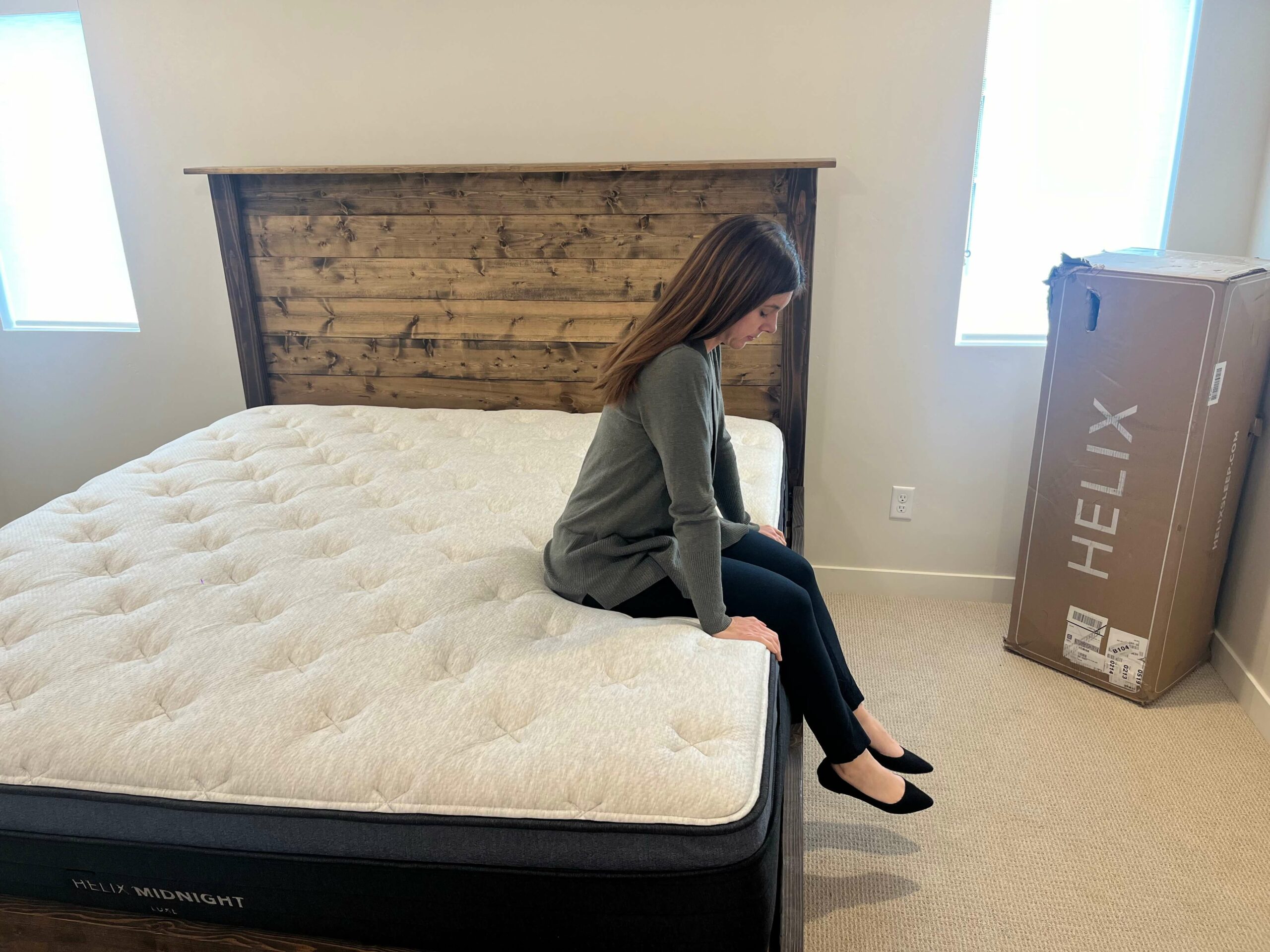
Helix Midnight Luxe

Warranty
Lifetime

Sleep Trial
120 Nights

Shipping
Free
Watch Our Helix Midnight Luxe Video Review
Among the beds I tested for side sleeping, the Helix Midnight Luxe produced the widest contact patch at the shoulder, which is the single most useful property on a page about pressure and numbness.
Lying on my side, the comfort foams let my shoulder drop into the surface while the reinforced coil section under my hips held firm. The result was that my shoulder was not carrying the load on a small area, and that is exactly the condition that produces a dead arm at three in the morning. After a long stretch without moving, the shoulder was the last place pressure built rather than the first.
The support is genuinely directional, and it comes from two different places. The give at my shoulder is foam. The firmness under my hips is coil. Because those are separate systems rather than one surface trying to do both jobs, my hips sat higher than my shoulder and my spine ran straight rather than dipping, which is the behavior a side sleeper needs and does not get from a uniformly soft bed.
Edge support was among the strongest results here. Sitting on the perimeter, it held level with little compression.
Price is the sticking point. At a value score of 7, this is the weakest value result on this page, and a side sleeper on a budget will get most of the shoulder relief from the AS5 Hybrid or the Nolah Evolution for less. For a dedicated side sleeper who wants zoned support and is not price constrained, the Midnight Luxe is the pick.
- 7 Value
- 10 Edge Support
- 9 Trial Period
- 9 Response Time
- 10 Motion Transfer
- 9 Cooling & Breathability
The Midnight Luxe won the side sleeper category because of what happened at my shoulder specifically.
Pressure redistribution at the shoulder. On my side, my shoulder went into the comfort foams far enough that the load spread across the upper arm and ribcage rather than sitting on the shoulder joint. On the firmer beds tested in the same session, the shoulder was the first place pressure built. Here it was the last.
Directional support. The coil unit is reinforced under the hips, so my hips sat higher than my shoulder and my spine ran level. Give at the top, firmness underneath, in the two places each belongs. That is the difference between waking up with a numb arm and a stiff lower back and waking up neither.
Edge support. The perimeter held level when I sat on it with my feet on the floor.
Motion isolation. My partner shifting on the far side of the queen barely reached my side, which matters if you share a bed and are already waking up on your own.
Best For:
- Dedicated side sleepers who want the widest contact patch at the shoulder
- Sleepers who want zoned support rather than a uniform feel
- Couples where one partner moves during the night
Compare Instead:
- Amerisleep AS5 Hybrid if you want a softer shoulder for less money
- Nolah Evolution if you want similar plush cushioning with three firmness levels to choose from
- Amerisleep AS3 if you split your night between side and back and want a single balanced feel
The Midnight Luxe reads plush at the surface and firm underneath, and the transition is quick.
On my side, the comfort foams compressed at the shoulder and then met resistance, so I stopped rather than continuing down. On my back it felt medium with no lumbar gap and no sense of the hips sinking. On my stomach the surface is too soft for a full night.
Rolling over takes a little more effort than on the grid or latex beds here, because dense memory foam compresses before it releases. This is the feel for a dedicated side sleeper who wants a soft landing at the shoulder and firm support everywhere else.
The comfort system is built around a high-density memory foam Helix calls SupremeSupport 4.0, and the behavior that produced in testing was give with a floor under it.
My shoulder dropped in far enough to spread the load across the upper arm and ribcage, and then the descent stopped rather than continuing. Pressure built last at the shoulder instead of first.
Underneath, the coil unit carries up to 1,000 individually wrapped coils with the reinforcement concentrated under the hips and around the full perimeter, and that is what I felt as my hips sitting higher than my shoulder with my spine running level between them.
It is also what held when I sat on the edge to get up.
The standard TENCEL cover is breathable rather than actively cooling, and the surface did not warm as fast as the denser comfort systems I compared, though it did not lead the cooling scores here either.
Two upgrades change this build materially: a GlacioTex cooling cover and a CoolForce heat transfer layer for the cover, and an ErgoAlign extra-firm foam segment under the hips for anyone who wants more lumbar resistance than the standard layer gives.
For a side sleeper who needs shoulder relief without the hips sagging, the standard configuration already produces both.
Pros
- Edge Support (10/10): the perimeter held level when I sat on it with my feet on the floor
- Motion Transfer (10/10): my partner’s movement on the far side barely reached me
- On my side, pressure built last at the shoulder rather than first, the widest shoulder contact patch on this page
Cons
- Value (7/10): the weakest value result on this page, and the price sits well above beds delivering similar shoulder relief
- The comfort system is too soft for a strict stomach sleeper, whose hips settled during testing
- Rolling over takes more effort than the grid and latex picks here, since dense memory foam compresses before it releases
- Getting the cooling cover or the ErgoAlign lumbar layer means paying past an already high entry price, and the value score above reflects the standard build
Pressure built last at my shoulder rather than first, which is the opposite of what happened on every firmer bed I tested in the same session. The comfort foams let my shoulder drop far enough that the load spread across my upper arm and ribcage, while the coil reinforcement under my hips kept them sitting higher than my shoulder and my spine running level between the two.
Give at the top, firmness underneath, in the places each belongs. The sleeper who gets the most from it is a dedicated side sleeper with broad shoulders who is not shopping on price.

Watch Our Leesa Sapira Video Review
The Sapira Hybrid is the thinnest mattress on this page at 11 inches, and it gets more out of those 11 inches than anything else here manages.
Rolling from my side onto my back, the foam released and the springs pushed the surface back to level before I had finished settling. There is no trough left behind and nothing to climb out of, which is the property that matters most if you change position repeatedly through the night. On a bed this thin, that responsiveness is partly the construction and partly the simple fact that there is not much foam above the springs to recover.
Lying still on my side, the load spread through my shoulder and hip without a hot spot forming. The relief is moderate rather than deep. My shoulder went in, met the springs, and stopped, so this is a bed that supports you near the surface instead of surrounding you.
The Cool-Knit cover is soft rather than cold to the touch, and the ventilated channels through the GreenFlex foam meant the surface did not warm as quickly as the denser comfort layers I compared in the same session.
One thing about this bed matters more on this page than it would almost anywhere else. At 11 inches, this is a low bed. Sitting on the edge to stand up, the seat height is meaningfully closer to the floor than the 15-inch builds here, which matters if getting up at night is part of your routine. Add a taller foundation and the problem mostly goes away, but it is a real consideration rather than a footnote.
For a side or combination sleeper who repositions through the night, wants a responsive surface rather than a cradling one, and is not fighting a low bed frame, the Sapira Hybrid is the pick.
- 8 Value
- 8 Edge Support
- 9 Trial Period
- 9 Response Time
- 9 Motion Transfer
- 9 Cooling & Breathability
The Sapira Hybrid took the hybrid category because it does the most with the least material.
Responsiveness. Rolling from my side to my back, the surface returned to level before I had settled. Nothing held the shape of where I had been. For a sleeper who moves several times a night, that a low amount of effort per position change, especially for a foam-over-spring build I tested for this guide.
Pressure redistribution. On my side, the load spread through my shoulder and hip rather than concentrating at either. The relief is moderate, not deep, which suits a sleeper who dislikes sinking in and will frustrate one who wants the shoulder cradled.
Spring independence. The springs are individually wrapped rather than connected, so compression stayed local to where my weight sat. When my partner shifted on the far side of the queen, the movement did not travel across to me the way it does on a connected coil unit.
Temperature. The Cool-Knit cover and the ventilated channels through the GreenFlex layer meant the surface did not warm as quickly through the first hours as the denser comfort systems compared in the same session.
Best For:
- Side and combination sleepers who reposition often through the night
- Sleepers who want to rest near the surface rather than sink into it
- Anyone who wants a slim profile that will not overwhelm a low bed frame
Compare Instead:
- Nolah Evolution if you want a much taller bed with deeper cushioning at the shoulder
- Amerisleep AS3 if you want contouring foam rather than a surface that pushes back
- Saatva Classic if you want the same easy movement with a firmer perimeter and a choice of heights
The Sapira Hybrid reads medium to medium-firm and it reads consistent, which is what happens when there is one comfort build rather than a choice of them. The cover is soft, the foam gives briefly, and then the springs are there. On my side, my shoulder went in a moderate distance and my waist stayed supported. On my back, the hips held level and the lumbar gap mostly filled. On my stomach it held me up better than most of the plusher hybrids here, since there is less foam to sink through. The defining sensation is how quickly it lets go. There is no cradle and no effort to leave a position. This is the feel for a combination sleeper who wants support near the surface and finds deep contouring claustrophobic.
The Cool-Knit cover is a viscose blend, and in testing it read as soft and breathable rather than cold on contact, which is a different thing from the actively cooling covers elsewhere on this page. Beneath it, the GreenFlex foam is plant-based at a 3-pound density with an open-cell structure and ventilated channels running through it, and the two things that produced in testing were a surface that recovered immediately when I rolled off it and one that did not warm as fast as the denser comfort layers compared alongside it. More than 1,000 individually wrapped springs make up the support core, and because each one compresses on its own rather than pulling its neighbors down, my partner’s movement stayed on their side of the bed and my hips stayed level while the foam above was still giving at my shoulder. The whole build comes to 11 inches, which is where both its strength and its limit come from: little enough material above the springs to recover fast, and a finished height that sits low when you sit on the edge. For a sleeper who wants responsiveness and spring support without bulk, this is the construction that delivers it.
Pros
- Rolling from side to back, the surface returned to level before I had finished settling, with no impression left behind
- More than 1,000 individually wrapped springs kept my partner’s movement on their side of the bed
- Limited lifetime warranty, longer coverage than the fixed-term picks on this page
- In-home setup and old mattress removal available at checkout, which most beds here ship without
Cons
- At 11 inches this is the lowest bed on this page, so the seat height when you sit on the edge is closer to the floor than the taller builds here
- Relief is moderate rather than deep, so a broad-shouldered side sleeper who wants the shoulder to sink in will want more give than this offers
- One comfort build only, with no firmness choice to match the surface to your body weight
- The cover is soft and breathable rather than cold to the touch, so a sleeper shopping primarily on temperature should look at the cooling pick on this page instead
- Edge Support (8/10): the perimeter gave more than the coil-forward picks here, and at 11 inches the seat height is already the lowest on this page.
Rolling from my side onto my back, the springs had the surface level again before I finished settling, and on a bed this thin that is exactly what you would hope for: there is not much material above the springs to hold a shape.
Lying still on my side, the load spread through my shoulder and hip without concentrating at either, though the relief stays moderate and my shoulder met the springs rather than disappearing into foam.
At 11 inches it also sits lower than anything else on this page when you sit on the edge to get up. It is the pick for a combination sleeper who repositions all night, prefers resting near the surface to sinking into it, and is pairing it with a bed frame tall enough to make up the height.
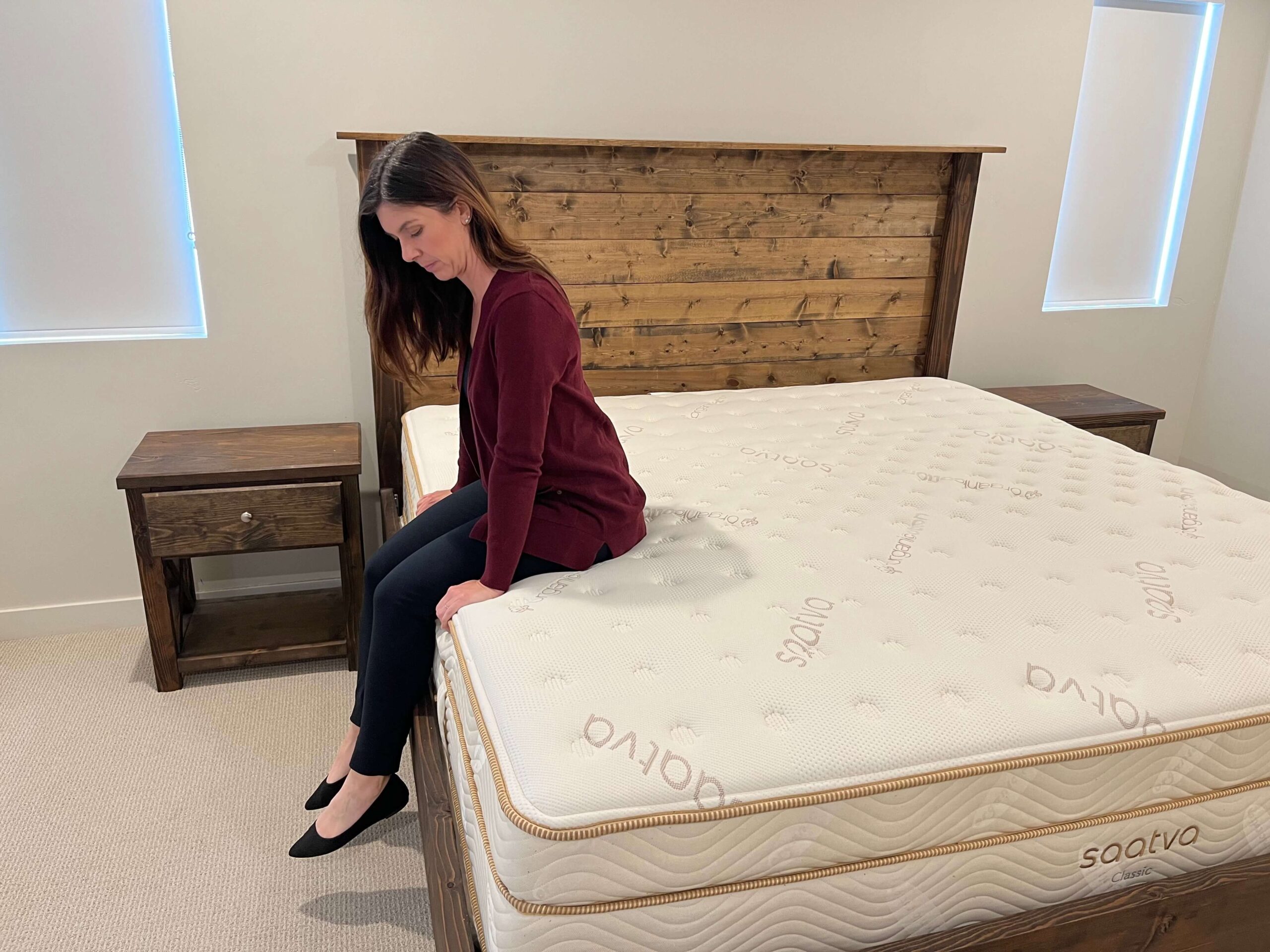
Watch Our Saatva Classic Video Review
Among the innersprings I tested, the Saatva Classic was the easiest bed on this page to move on and to get out of, and for this category that combination carries real weight.
The dual-coil build puts you on top of the surface rather than in it. Rolling from back to side took less effort than any foam bed here, which matters if the reason you are reading this page is that you shift positions repeatedly through the night. It ties for the highest response time score on this list.
The Lumbar Zone quilting runs through the center third, and on my back the effect was that my lower back stayed filled while my hips held level rather than settling into the pillow top.
Sitting on the perimeter, the edge held firmly and the higher profile option put the sitting height closer to standing, which makes getting up a shorter motion.
Two things give me pause. The Euro pillow top gives less at the shoulder than the plush hybrids on this list, so a dedicated side sleeper who wants deep shoulder relief should take the plush build or look at the Helix. And the value score of 7 reflects a price well above several beds with the same overall number.
For a back or combination sleeper who wants a traditional on-top feel, easy movement, and a firm perimeter to stand up from, the Saatva Classic is the pick.
- 7 Value
- 10 Edge Support
- 10 Trial Period
- 10 Response Time
- 9 Motion Transfer
- 9 Cooling & Breathability
The Saatva Classic won the innerspring category because it is the bed here that asks the least of you physically.
Responsiveness. Rolling from my back to my side took noticeably less effort than on the foam beds tested in the same session, because there is no impression to climb out of. It ties for the highest response time score here. For someone who repositions repeatedly through the night, that is the most practical property on the page.
Alignment. The Lumbar Zone quilting through the center third filled the gap under my lower back on my back without my hips dropping into the pillow top.
Edge support. The perimeter held firm when I sat on it, and the 14.5-inch build puts the seat height closer to standing, so getting up is one motion instead of a push and a lift.
Ownership terms. A 365-night trial ties for the longest on this page, backed by a lifetime warranty and white glove delivery that includes setup and removal of the old bed.
Best For:
- Back and combination sleepers who prefer a traditional on-top feel
- Anyone who gets in and out of bed frequently during the night
- Shoppers who want to choose both a firmness and a height
Compare Instead:
- Helix Midnight Luxe if you are a dedicated side sleeper who needs deeper shoulder relief
- Amerisleep AS3 if you want contouring foam and a lower price
- Nolah Evolution if you want a plusher pillow top with a taller profile
In the Luxury Firm build, the Saatva feels like a hotel bed in the specific sense that you rest on the surface rather than in it. The Euro pillow top compresses about an inch and then you are on the coils.
On my back, my lower back was supported and my hips stayed level. On my side, the shoulder relief is moderate rather than deep, so a broad-shouldered side sleeper should take the Plush Soft build. On my stomach it held me up well, which is rare on this list.
Movement is the standout: rolling over feels almost frictionless. This is the feel for a back or combination sleeper who wants support and mobility over cradling.
The dual-coil design is the reason this bed behaves the way it does. A layer of individually wrapped coils sits over a steel coil base, and in testing the practical result was that the surface pushed back rather than compressing and holding, which is what made rolling over so easy and produced the top response time score.
The three-inch Euro pillow top gives about an inch on contact and then hands off to the coils, which is why shoulder relief is moderate rather than deep.
The Lumbar Zone quilting is denser through the center third, and I could feel that band supporting my lower back while the rest of the top stayed softer.
The dual-coil structure also leaves airflow channels through the middle of the bed, and the surface did not warm as quickly as the thick foam comfort layers I compared. For a sleeper who values mobility and a firm edge over deep contouring, this construction is built for exactly that.
Pros
- Response Time (10/10): rolling from back to side took less effort than any foam bed tested here
- Edge Support (10/10): the perimeter held firmly when I sat on it, and the taller build puts the seat closer to standing height
- Trial Period (10/10): 365 nights ties for the longest on this page, with a lifetime warranty and white glove delivery
- Three firmness levels and two heights, the widest configuration choice on this list
Cons
- Value (7/10): priced above several beds here carrying the same or a higher overall score
- The Euro pillow top gives less at the shoulder than the plush hybrids on this page, so deep side-sleeping relief means taking the Plush Soft build
- Motion Transfer (9/10): coil-on-coil construction transmitted more of my partner’s movement than the top-scoring beds here
There is no impression to climb out of, and that is the whole point of this bed for this page. Rolling from my back onto my side took noticeably less effort than on any foam mattress I tested, because the coils push back instead of holding the shape you left. On my back, the denser quilting through the center third filled the gap under my lower back without my hips settling into the top.
Sitting on the perimeter, it held firm, and the taller build puts you closer to standing when you get up. It fits the back or combination sleeper who gets in and out of bed several times a night and wants the least resistance from the surface.
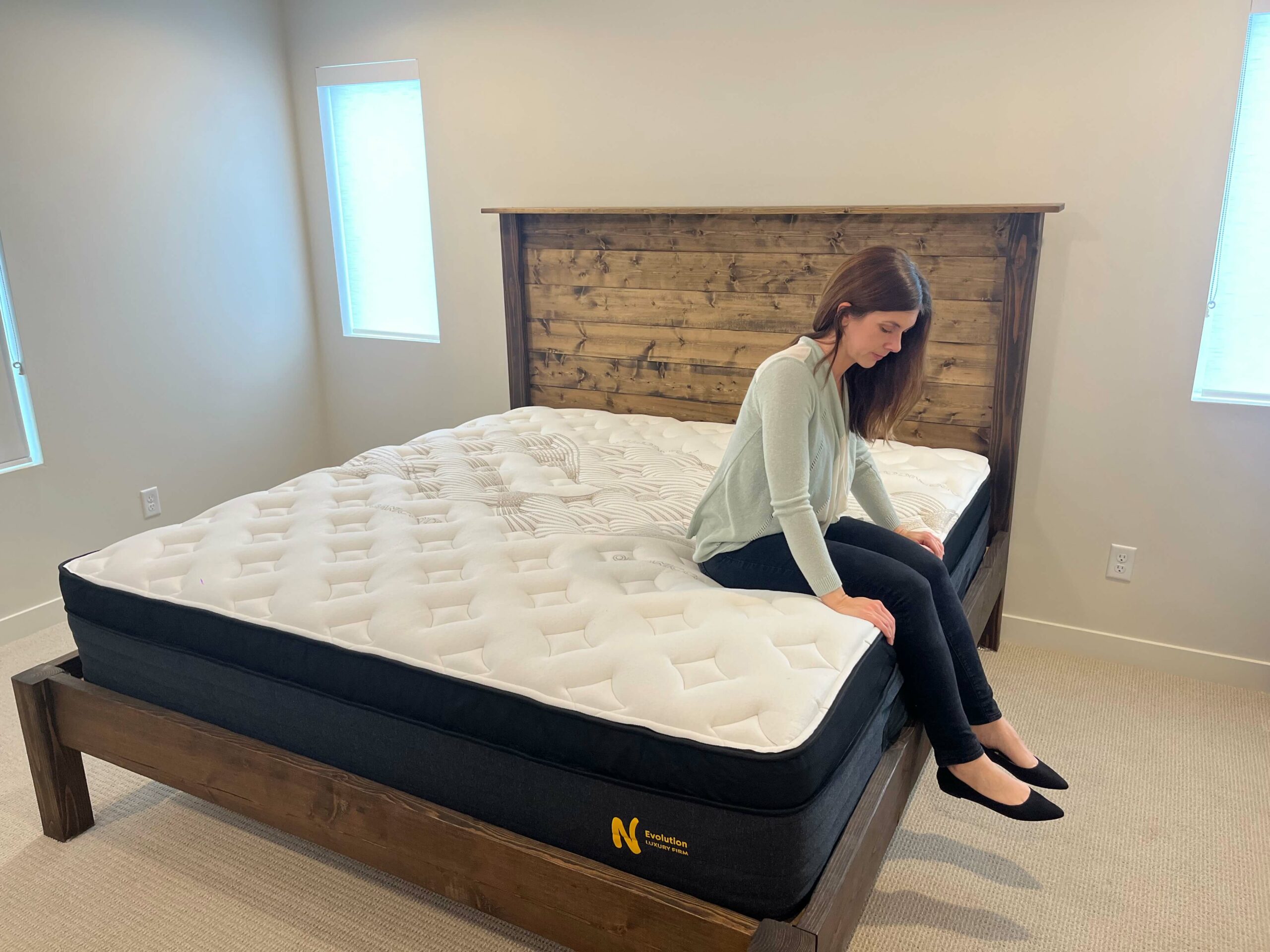
Watch Our Nolah Evolution Video Review
The Nolah Evolution ties for the highest overall score on this page, and among the pillow tops I tested it produced the most cushioning per inch without the hips settling.
The zoning here runs through three separate layers rather than one, and you can feel it. On my side, the surface at my shoulder gave noticeably more than the surface under my waist, and the transition was gradual rather than abrupt. Lying still, pressure took longer to build at the hip than on any other pillow top I compared in the same session.
The 15-inch profile also does something practical for this category. Sitting on the edge with my feet on the floor, the seat height was closer to standing than the lower beds here, and the pencil reinforcement coils meant the perimeter did not roll away under me.
Three firmness levels means the cushioning can be matched to body weight, which is the difference between a plush bed that relieves pressure and a plush bed that lets you sink until your spine bows.
Size is the catch. At 15 inches this is a heavy bed that will need deep-pocket sheets and two people to move, and the 120-night trial is shorter than the 365-night options here.
For a side sleeper who wants deep pillow-top cushioning with the hips held level and a tall, firm edge to get up from, the Evolution is the pick.
- 10 Value
- 10 Edge Support
- 9 Trial Period
- 9 Response Time
- 10 Motion Transfer
- 9 Cooling & Breathability
The Evolution won the pillow top category because its cushioning does not come at the cost of alignment.
Pressure redistribution. On my side, pressure took longer to build at the hip than on any other pillow top I compared. The tri-zoned foam gives more at the shoulder and less at the waist, and because the zoning runs through three layers rather than one the transition is gradual instead of a shelf you can feel.
Alignment under cushioning. The zoned Ascension coils held my hips level on my back while the foam above was still giving, so the plushness did not turn into a hammock.
Edge support. Sitting on the perimeter, the pencil reinforcement coils held me level, and the 15-inch height put the seat closer to standing than the shorter beds here.
Temperature. The perforated AirFoam Luxe and the border gusset meant the surface felt cooler to the touch through the first hours than the denser pillow tops I compared, which is unusual for a comfort system this thick.
Best For:
- Side sleepers who want deep cushioning with the hips held level
- Anyone who wants a taller bed that is easier to sit up from
- Couples who want three firmness levels to choose between
Compare Instead:
- Helix Midnight Luxe if you want the widest shoulder contact patch specifically
- Amerisleep AS3 if 15 inches is more bed than you want at a lower price
- Leesa Sapira Hybrid if you want a faster-recovering surface with less bulk
In the Luxury Firm build, the Evolution feels deep at the top and firm at the bottom, with a long gradual transition rather than a sudden stop.
On my side, my shoulder kept going for a while and then met resistance, and my waist was supported the whole time. On my back, the hips held level and the lumbar gap filled.
On my stomach the Luxury Firm was borderline and the Firm build would be the better choice. Rolling over takes moderate effort because there is a lot of foam to come back up. This is the feel for a side sleeper who wants to be cushioned deeply and still wake up straight.
The AirFoam Luxe layer is hole-punched in zones and infused with graphite and copper, and the observable results were two things at once: more give at my shoulder than at my waist, and a surface that did not warm as fast through the first hours as the denser pillow tops compared alongside it.
Under it, the gel-swirl and transition foams continue the zoning, which is why the shoulder-to-waist transition felt gradual rather than like a step.
The zoned Ascension coil core is what held my hips level on my back while all that foam was still compressing at the shoulder, and the pencil reinforcement coils around the perimeter are what I sat on without rolling off.
The AirBreath border gusset keeps the sides open, and the perimeter did not feel like the hottest part of the bed the way a sealed pillow top often does.
For a side sleeper who wants deep cushioning without the spine bowing, this three-layer zoning is what makes that combination work.
Pros
- Value (10/10): ties for the highest value score on this page for a bed at this build level
- Edge Support (10/10): the pencil reinforcement coils held me level when I sat on the perimeter
- Motion Transfer (10/10): my partner’s movement on the far side barely reached me
- Lying still on my side, pressure took longer to build at the hip than on any other pillow top compared in the same session
Cons
- Trial Period (9/10): 120 nights is shorter than the 365-night trials on this page
- At 15 inches this is a heavy, tall bed that needs deep-pocket sheets and two people to move
- Rolling over takes more effort than the innerspring and grid picks here, since there is more foam to recover
Twenty minutes on my side and my hip still had not started to complain, which took longer than any other pillow top I compared in the same session.
The zoning runs through three separate layers rather than one, so the surface gave progressively more from my waist out to my shoulder instead of stepping down at a shelf I could feel, and the coils underneath held my hips level while all that foam was still compressing.
At 15 inches it is a lot of bed to move and it needs deep-pocket sheets. Worth it for the side sleeper who wants to be cushioned deeply and still wake up straight, with three firmness levels to match their weight.
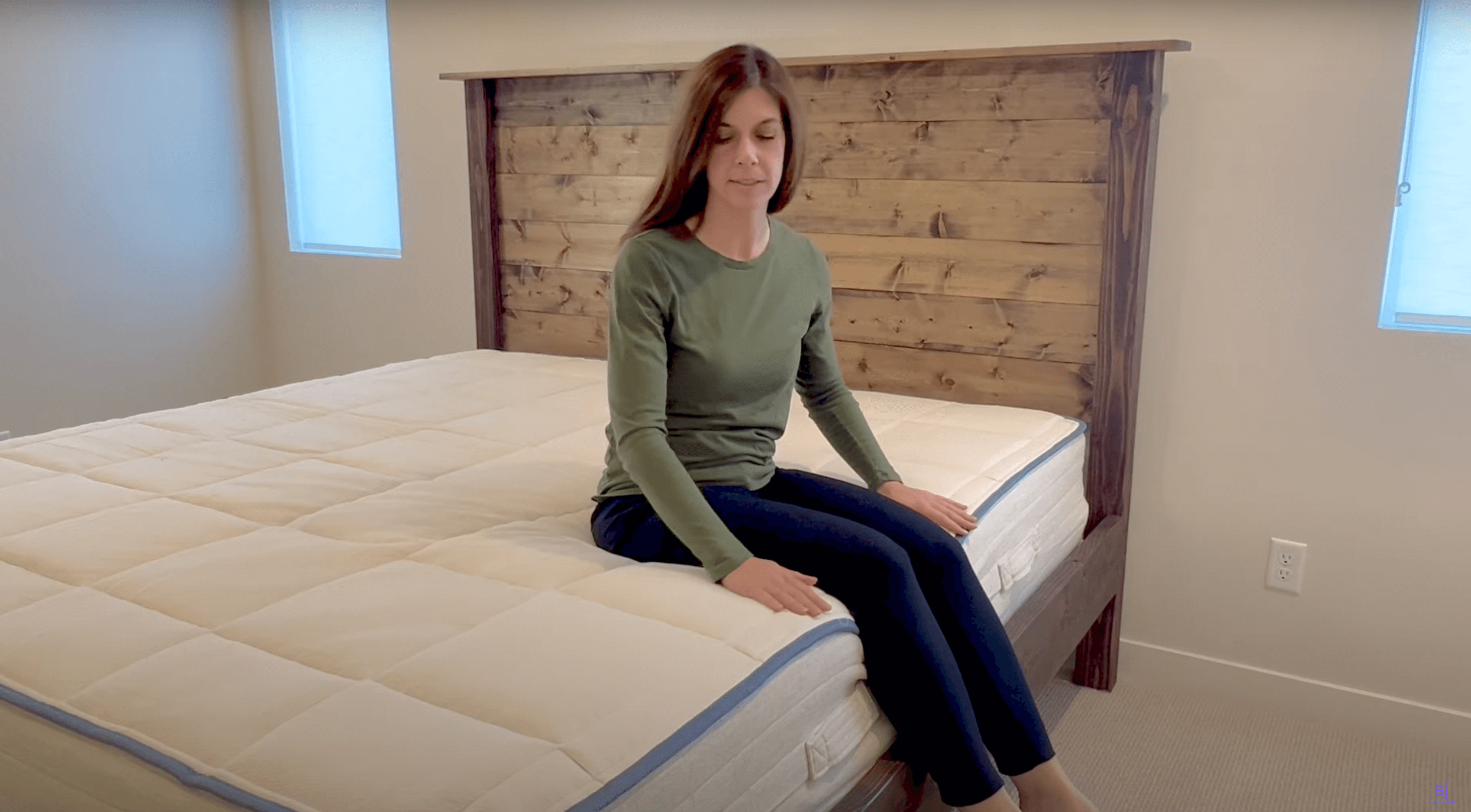
Watch Our Amerisleep Organica Video Review
Among the latex beds I tested, the Amerisleep Organica had the fastest surface recovery on this page, tying for the top response time score, and that is the property that earned it the latex crown.
Latex pushes back rather than holding a shape, and rolling from my back to my side there was no impression to get out of. If you are someone who repositions repeatedly through the night, that is the practical difference between latex and memory foam, and this build shows it clearly.
The relief profile is different from the foam beds here. On my side, the latex distributed my weight across a broad area rather than letting my shoulder settle into a pocket. Lying still, pressure stayed spread rather than concentrating, though a broad-shouldered side sleeper who wants deep cradling will find this bed too buoyant.
The coil unit underneath held my hips level on my back, and the latex layers stayed cool to the touch since latex does not trap heat the way dense foam does.
The edge is the weak spot. At an edge support score of 8, this ties with the AS3 for the softest edge here, and sitting on it produced more compression than any of the coil-forward picks.
For a sleeper who wants a natural, responsive surface that spreads load broadly and lets go instantly when they move, the Organica is the pick.
- 9 Value
- 8 Edge Support
- 9 Trial Period
- 10 Response Time
- 9 Motion Transfer
- 9 Cooling & Breathability
The Organica won the latex category because it delivers the specific thing latex is best at without the compromises that usually come with it.
Responsiveness. Rolling from back to side, the latex returned to level under me before I finished moving. It ties for the highest response time score on this page, and for a sleeper who changes position several times a night, that is the least effortful surface here.
Pressure redistribution. The latex spread my weight across a broad area on my side rather than forming a pocket at the shoulder. Lying still, the pressure stayed distributed rather than concentrating in one spot, though the relief is broad rather than deep.
Temperature. Latex does not hold heat the way dense memory foam does, and the surface stayed cool to the touch longer than the foam comfort layers I compared in the same session.
Certification depth. OEKO-TEX Standard 100, Rainforest Alliance, and eco-INSTITUT certification on the latex, with OEKO-TEX on the wool, is the kind of documented sourcing worth having if material sensitivity is part of why you are shopping.
Best For:
- Sleepers who reposition frequently and want the least resistance from the surface
- Shoppers avoiding synthetic foams who still want coil support
- Back and combination sleepers who want broad support rather than deep contouring
Compare Instead:
- PlushBeds Signature Bliss if full organic certification across every layer is the priority
- Amerisleep AS3 if you want the surface to contour around you rather than push back
- Nolah Evolution if you are a side sleeper who wants deep cushioning at the shoulder
Latex feels springy in a way no foam on this page does. You press it and it presses back, immediately.
On my side, the surface spread under me rather than opening a pocket at the shoulder, so relief came from distribution instead of from sinking.
On my back, my hips stayed level and the support felt uniform.
On my stomach the Medium build held me up better than most beds here. There is no cradling and no sensation of being held.
This is the feel for a sleeper who finds memory foam confining and wants to move freely on the surface.
The comfort system is three inches of natural Talalay latex over an eight-inch coil unit, and the behavior that came out of that in testing was speed: the latex returned to level before I finished rolling, which is what produced the top response time result.
The Talalay layers are also open-structured enough that the surface stayed cool to the touch longer than the dense foam comfort layers compared in the same session.
The organic cotton cover and one-inch wool layer sit above the latex, and the wool is what keeps the surface from feeling clammy. The coil unit is what held my hips level on my back.
Where the build shows its limit is the edge, which relies on the coil unit’s own edge support rather than a separate reinforced perimeter, and that matched the compression I felt sitting on the side.
For a sleeper who wants natural materials and a surface that never holds them in place, this is the construction that does it.
Pros
- Response Time (10/10): the latex returned to level before I finished rolling from back to side
- Value (9/10): strong for a certified natural build with a 20-year warranty
- On my side, weight spread broadly rather than concentrating into a shoulder pocket
- OEKO-TEX Standard 100, Rainforest Alliance, and eco-INSTITUT certified latex with OEKO-TEX wool
Cons
- Edge Support (8/10): sitting on the perimeter produced more compression than any coil-forward pick on this page
- One firmness in the Medium build, so heavier sleepers who need firmer support have only the Box-Top to consider
- The buoyant latex feel gives broad rather than deep relief, and a broad-shouldered side sleeper will want more give at the shoulder
Latex pushes back, and this one pushed back before I had finished rolling. Going from my back to my side there was nothing to get out of, no shape left behind, no effort spent on the move itself.
On my side the relief came from spread rather than depth: my weight distributed across a broad area instead of opening a pocket at the shoulder, which is a different sensation from every foam bed on this page and not one everybody wants. Sitting on the edge, it compressed more than any coil-forward pick here.
It belongs to the sleeper who finds memory foam confining, repositions constantly, and wants natural materials with certification behind them.
Best Cooling Mattress
Amerisleep AS6 Black Series

Warranty
20 Years
Sleep Trial
100 Nights
Shipping
Free
Watch Our Amerisleep AS6 Black Series Video Review
The AS6 Black Series is the coolest-running bed I tested for this guide, and it earns that on a build where cooling usually goes wrong: a thick, plush comfort system.
The cover felt genuinely cold on first contact, not just smooth, and through the first hours of testing the surface stayed ahead of every other bed in the session including the other two beds tied with it on the cooling subscore. Thick comfort layers normally trap heat against you. This one did not behave that way.
Underneath the cooling, the pressure relief is among the deepest here. On my side, my shoulder went in far and the PrecisionCoil core kept my hip from following it down, so the cushioning did not turn into sag.
Motion isolation was among the strongest results on this page. When my partner got out of bed on the far side of the queen, movement barely reached me.
Price is what will decide it. This is the most expensive Amerisleep on the list, and if temperature is not the reason you are shopping, the AS3 delivers the same tied cooling subscore for considerably less.
For a sleeper who runs warm and wants deep plush cushioning without the heat that usually comes with it, the AS6 Black Series is the pick.
- 9 Value
- 9 Edge Support
- 9 Trial Period
- 9 Response Time
- 10 Motion Transfer
- 10 Cooling & Breathability
The AS6 won the cooling category because it was the surface I could feel the difference on immediately and still could through the first hours.
Temperature. The CryoCool cover was cold to the touch on first contact rather than just smooth, and through the first hours the surface stayed cooler than every other bed I compared in that session, including the two tied with it on the cooling subscore. On a comfort system this thick, that is the opposite of the usual pattern.
Pressure redistribution. On my side, my shoulder went deep into the Bio-Pur layer while the zoned coil core kept my hip from dropping with it, so the load spread without my spine bowing.
Motion isolation. My partner getting out of bed on the far side barely registered, which matters for anyone sharing a bed while already sleeping lightly.
Firmness choice. Three builds mean a heavier sleeper can take the Firm and still get the same cooling construction, so the temperature performance is not tied to one feel.
Best For:
- Hot sleepers who want plush cushioning rather than a firm surface
- Side sleepers who want deep pressure relief at the shoulder
- Couples where one partner is up during the night
Compare Instead:
- Amerisleep AS3 if you want the same tied cooling score in a thinner, less expensive build
- Amerisleep AS5 Hybrid if you want an even softer surface and cooling matters less
- Leesa Sapira Hybrid if you want a faster-recovering surface with a lifetime warranty
In the Luxury Firm build, the AS6 is plush at the top and firm underneath, with a long entry before you meet the coils. The first sensation is temperature rather than softness, because the cover is noticeably cold. On my side, my shoulder went in deep and then stopped at the coil layer. On my back, the hips held level with no lumbar gap. On my stomach, the Luxury Firm let my hips settle and the Firm build would suit better. Rolling over takes moderate effort given the depth of the comfort system. This is the feel for a warm side sleeper who wants to be cushioned deeply and not overheat for it.
The cooling here is layered rather than a single feature, and in testing each part showed up separately. The CryoCool cover is what felt cold on first contact. The TitanAir layer and the ArcticWave bands underneath are what kept the surface from warming as quickly as it should have through the first hours given how much foam sits above the coils. The Bio-Pur comfort layer is open-cell, and its practical result on my side was deep give at the shoulder that still released reasonably fast when I rolled. The PrecisionCoil core is zoned, and lying on my back I could feel the firmer band under my lower back holding my hips level while the foam above was still compressing at my shoulder. The perimeter is reinforced but not the firmest here, which matched the moderate compression I felt sitting on the edge. For a hot sleeper who wants plush cushioning without the heat buildup thick comfort layers usually bring, this stack is what makes that combination possible.
Pros
- Cooling and Breathability (10/10): the cover was cold on first contact and the surface stayed ahead of every bed in the session through the first hours
- Motion Transfer (10/10): my partner getting out of bed on the far side barely registered
- On my side, the shoulder went deep into the comfort layer while the zoned coils held the hip level
- Three firmness builds keep the cooling construction available at any feel
Cons
- The most expensive Amerisleep on this page, and the AS3 ties it on the cooling subscore for considerably less
- Edge Support (9/10): the perimeter compressed more than the coil-forward picks here when I sat on it
- At 14 inches this needs deep-pocket sheets and is heavy to move alone
The cover was cold to the touch before the mattress did anything else, and unlike most beds that open cold, it was still running ahead of everything else in the session hours later. That is backwards for a comfort system this thick, which is usually where heat gets trapped against you.
On my side, my shoulder went deep into the foam and the zoned coils stopped my hip from following it down. Three firmness builds mean the same construction is available whether you want plush or firm. This is the bed for the sleeper who runs warm and refuses to give up a soft surface to fix it.
Best Organic Mattress
PlushBeds Signature Bliss

Warranty
Lifetime
Sleep Trial
365 Nights
Shipping
Free
Watch Our Plushbeds Signature Bliss Video Review
The PlushBeds Signature Bliss earns the organic category on documentation rather than feel, and that distinction matters. If certified materials in every layer is why you are shopping, this is the bed here that carries it furthest.
On the surface, it behaves like the responsive latex build it is. Rolling from back to side, the surface returned quickly and did not hold my impression, tying for the highest response time score on this page. On my side, the organic latex spread my load broadly rather than opening a deep pocket at the shoulder.
Edge support was among the strongest results here. Sitting on the perimeter with my feet on the floor, it compressed very little and stayed level.
The size range is the widest on this page, including split queen and split California king, which matters if two people need different firmness levels or one side needs to elevate independently on an adjustable base.
Two limits. The relief is broad rather than deep, so a side sleeper who wants their shoulder cradled will prefer the Nolah or the AS6. And this is a premium price for a bed whose overall score is matched by several less expensive picks here.
For a shopper who wants certified organic materials with a firm edge and a split configuration option, the Signature Bliss is the pick.
- 9 Value
- 10 Edge Support
- 10 Trial Period
- 10 Response Time
- 9 Motion Transfer
- 9 Cooling & Breathability
The Signature Bliss won the organic category because the certification runs through the whole build rather than one marketed layer.
Responsiveness. Rolling from back to side, the organic latex returned to level immediately with no impression left behind. It ties for the highest response time score on this page, which for a sleeper who repositions often is the most useful property here.
Edge support. Sitting on the perimeter to get up, it compressed very little and held level, which is not typical of latex builds and comes from the reinforced coil edge.
Pressure redistribution. On my side, the latex spread my weight across a broad area rather than forming a pocket at the shoulder, so no single point took the load.
Configuration range. Split queen and split California king are available, which is what lets two people take different firmness levels or elevate one side independently on an adjustable base.
Best For:
- Shoppers who want organic certification across every layer, not one
- Couples who want split sizes or independent adjustment
- Sleepers who want a responsive surface with a firm perimeter
Compare Instead:
- Amerisleep Organica if you want a natural latex build at a lower price
- Nolah Evolution if you are a side sleeper who wants deeper cushioning at the shoulder
- Saatva Classic if you want an organic cotton cover with a traditional innerspring feel
In the Medium build, the Signature Bliss feels buoyant. The latex compresses and immediately pushes back, so you rest on the surface rather than settling into it. On my side, my shoulder went in modestly and my waist stayed supported, with relief coming from spread rather than depth. On my back, hips held level and the support felt even across the whole bed. On my stomach the Medium held me up well and the Medium-Firm would suit a heavier stomach sleeper. This is the feel for someone who wants natural materials and a lively surface, not a cradling one.
The comfort layers are certified organic latex, and in testing they produced the same behavior latex always does when it is good latex: instant recovery, which is what generated the top response time result, and broad weight distribution rather than a deep pocket. The organic cotton cover and wool layer sit above, and the wool is what kept the surface from feeling damp through the session. The zoned coil unit underneath held my hips level on my back, and its reinforced perimeter is what I felt sitting on the edge, where it compressed less than any other latex bed I tested. The two firmness builds change the latex layering rather than the coil unit, so support behavior stays consistent between them. For a shopper who wants documented organic materials without giving up a firm edge, this construction covers both.
Pros
- Response Time (10/10): the latex returned to level immediately when I rolled from back to side
- Edge Support (10/10): the reinforced perimeter compressed very little when I sat on it, unusual for a latex build
- Certified organic latex, cotton, and wool throughout rather than in a single marketed layer
- The widest size range on this page, including split queen and split California king
Cons
- Motion Transfer (9/10): my partner’s movement registered more than on the top-scoring beds here, which is normal for responsive latex
- Premium pricing against several picks here carrying the same overall score
- Relief is broad rather than deep, so a side sleeper wanting the shoulder cradled should look elsewhere on this page
Latex beds usually give way at the perimeter, so I expected this one to as well. Sitting on the edge with my feet on the floor to put my shoes on, it barely moved. On my side the organic latex spread my weight broadly rather than forming a pocket at the shoulder, and rolling from back to side it returned to level immediately with nothing left behind.
Relief is broad rather than deep, so it is not the bed for a shoulder that wants to be cradled. It is the right one for a couple who wants certified organic materials in every layer and needs a split size so each side can be set differently.
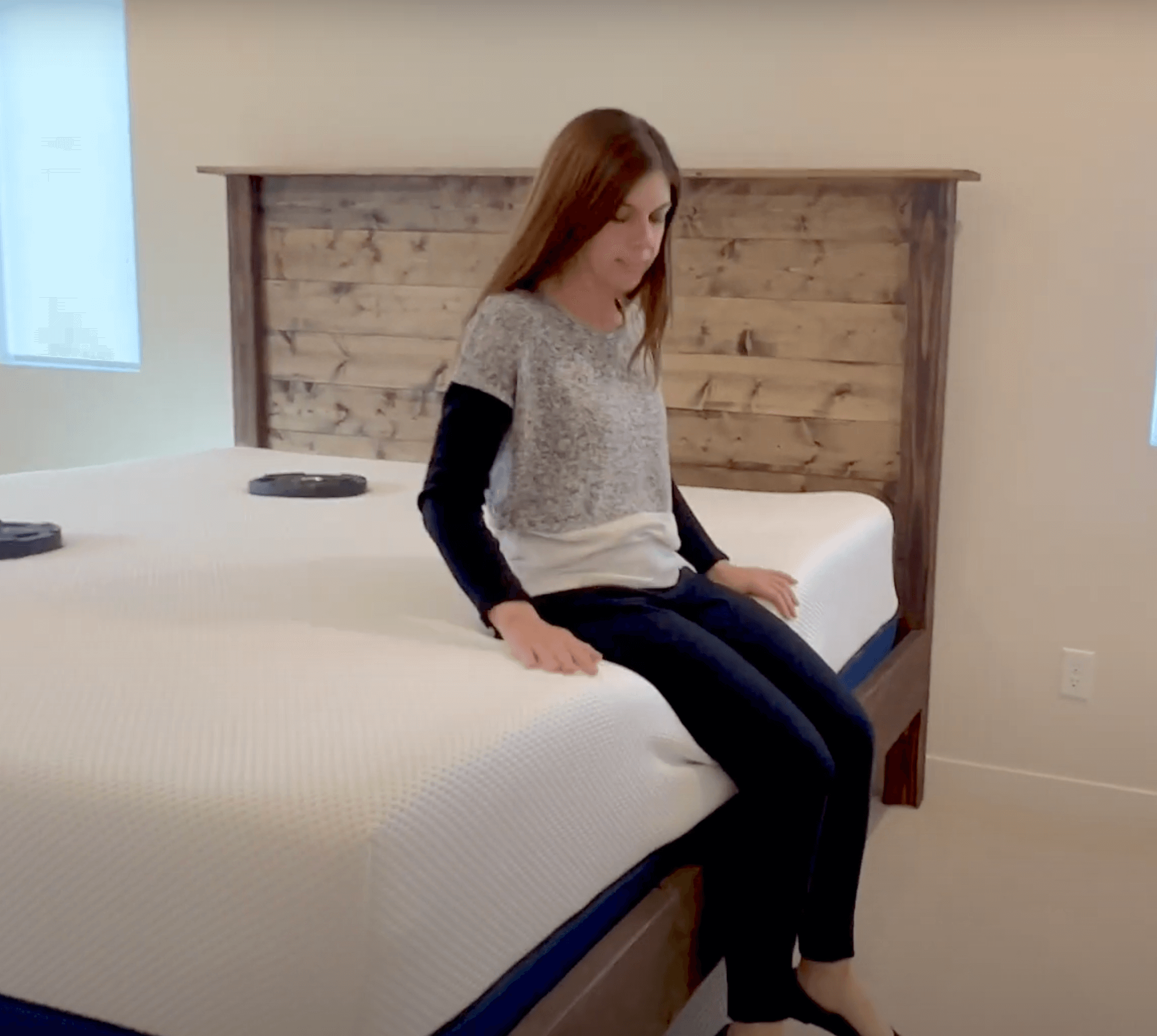
Watch Our AS5 Hybrid Video Review
The AS5 Hybrid is the softest bed on this page at a 3 out of 10, and it is here because softness is the right answer for a specific reader: someone light enough that firmer mattresses never compress enough to spread their weight at all.
On my side, my shoulder went further into this surface than any other bed I tested for this guide, and the Active Flex layer underneath is what kept that from becoming a sag. The distinction matters. A soft bed without that layer lets you keep going until your spine bows. Here the descent stopped.
The cooling is the other reason it made the list. It ties for the highest cooling subscore here, which is unexpected on a comfort system this soft and thick, and the surface did not warm as quickly through the first hours as the denser foam beds I compared.
Two limits, and they are real. The response time score of 8 is the lowest on this page, so rolling over takes more effort than on any other bed here. And at a 3 out of 10, this is too soft for back and stomach sleepers and for heavier sleepers who will compress past the comfort layer.
For a lighter side sleeper who wants a genuinely soft surface that still stops before the spine bows, the AS5 Hybrid is the pick.
- 8 Value
- 9 Edge Support
- 9 Trial Period
- 8 Response Time
- 9 Motion Transfer
- 10 Cooling & Breathability
The AS5 Hybrid won the soft category because it is soft in a controlled way rather than an uncontrolled one.
Pressure redistribution. On my side, my shoulder went further into this surface than anything else I tested for this guide, which is precisely what a lighter sleeper needs from a bed, since firmer surfaces never compress enough under them to spread the load at all.
Support under softness. The Active Flex layer stopped the descent before my spine bowed. Lying on my back, my hips did not keep sinking the way they do on soft beds without a resistance layer.
Temperature. The surface did not warm as quickly through the first hours as the denser foam beds I compared, and it ties for the highest cooling score on this page, which is unusual for a comfort system this thick and soft.
Edge support. The reinforced perimeter held better than the all-foam picks here when I sat on it, though not as firmly as the coil-forward beds above.
Best For:
- Petite and lighter sleepers who do not compress firmer mattresses enough
- Side sleepers who want the deepest shoulder give on this page
- Sleepers who want a soft feel and still want coils underneath
Compare Instead:
- Amerisleep AS3 if you sleep on your back or stomach as well as your side
- Amerisleep AS6 Black Series if you want a plush surface with a firmness choice
- Helix Midnight Luxe if you want zoned side-sleeper support in a medium feel
This is the softest surface on the page and it announces itself immediately. You sink at contact and keep going for a while.
On my side, my shoulder went in deeply and my waist was cradled rather than merely supported. On my back, my hips settled lower than I want for a full night, and on my stomach it is not workable.
The Active Flex layer is what you feel at the bottom of the descent, a firmer floor that stops you. Rolling over takes the most effort of any bed on this list. This is the feel for a lighter side sleeper who wants to be surrounded rather than supported from underneath.
The Bio-Pur comfort layer here is thicker than in the AS3, and the observable result was the deepest shoulder give on the page.
Under it, the Active Flex layer is the piece that makes the softness usable: it is noticeably firmer than the foam above it, and in testing I could feel the descent stop there rather than continuing.
Without that layer this would be a bed that lets your hips drop. The pocketed coils below hold the overall structure and the reinforced perimeter is what I sat on, where it held better than the all-foam picks here.
The open-cell Bio-Pur is also why the cooling result is as high as it is on a comfort system this thick, since the surface did not warm as fast as the denser foam beds compared alongside it.
What this build does not do is release quickly, and that matched the lowest response time score on the page. For a lighter side sleeper who wants deep give with a floor under it, this is the construction that provides both.
Pros
- Cooling and Breathability (10/10): ties for the highest cooling score here despite the thickest soft comfort system on the page
- The deepest shoulder give of anything I tested for this guide, with the Active Flex layer stopping the descent before the spine bowed
- Edge Support (9/10): the reinforced perimeter held better than the all-foam picks here
- 20-year warranty
Cons
- Response Time (8/10): the lowest on this page, so rolling over takes more effort than on any other bed here
- At a 3 out of 10 this is too soft for back and stomach sleepers, whose hips settled during testing
- Heavier sleepers will compress past the comfort layer, so this suits petite and average builds rather than all body types
My shoulder went further into this surface than anything else I tested for this guide, and then it stopped. That stop is the Active Flex layer, and it is the difference between a soft bed and a bed you keep sinking into until your spine bows.
On my back my hips still settled lower than I want for a full night, and on my stomach it does not work at all, so the softness is genuinely specialized rather than universally plush.
Rolling over takes more effort here than on any other bed on this page. It is for the petite or lighter side sleeper who never compresses a firmer mattress enough to get any relief from it.

Watch Our Westin Heavenly Bed Review
The Westin Heavenly Bed is on this list for a narrow and honest reason: if you have slept on one in a hotel and know it works for you, buying the actual bed removes the guesswork that every other pick on this page requires you to accept.
The reinforced pocketed coils are what earn it the couples category. Individually wrapped coils respond where the weight is rather than transferring it across the surface, so one person shifting does not move the other side, and the reinforced perimeter means both people can use the full width of the mattress instead of avoiding the outer six inches.
The pillow top gives on contact and then meets the coils, which is the traditional hotel feel: cushioned at the surface, supportive underneath. It is a moderate-relief bed rather than a deep-contouring one, so a side sleeper who needs their shoulder to go in deeply will get more from the Helix or the AS5 Hybrid.
Now the part that should decide it for most readers. There is no sleep trial and the mattress cannot be returned. Every other bed on this page gives you at least 100 nights to find out whether it works. This one gives you none, and it takes four to six weeks to arrive. That is an acceptable trade only if you already know the answer.
For a couple who has slept on this bed in a hotel, wants the same thing at home, and wants delivery and setup handled, the Heavenly Bed is the pick. For anyone still deciding, take a bed with a trial.
- 8 Value
- 10 Edge Support
- 0 Trial Period
- 10 Response Time
- 9 Motion Transfer
- 9 Cooling & Breathability
The Heavenly Bed earned the couples category on the two things couples actually complain about, and it is here in spite of its ownership terms rather than because of them.
Motion separation. The pocketed coils are individually wrapped, so compression stays local to where the weight is instead of traveling across the bed. In practice that means one person turning over does not lift or tilt the other side.
Usable width. The reinforced perimeter is what lets both people sleep near the edge without the roll-off feeling that pushes couples toward the middle of a queen. On a shared bed, edge support is width you paid for and can actually use.
Familiar feel. The pillow top compresses on contact and hands off to the coils, which is the hotel feel people are looking for when they search this bed by name, and it is the one product on this page where a reader may already know from experience how they sleep on it.
Delivery. White glove service includes in-home setup and removal of the old mattress, which matters more than it sounds if moving a mattress is not something you want to organize.
Best For:
- Couples who have slept on this bed in a hotel and want it at home
- Sleepers who want a traditional pillow-top hotel feel over deep contouring
- Households that want setup and haul-away included
Compare Instead:
- Saatva Classic if you want a comparable hotel-style innerspring feel with a 365-night trial behind it
- Leesa Sapira Hybrid if you want a pillow-top hybrid with a choice of three firmness levels
- Nolah Evolution if you want deeper pillow-top cushioning and a lifetime warranty
The Heavenly Bed feels like the hotel version of itself, which is the point. The pillow top compresses about an inch on contact and then you are on the coils, so you rest on the surface rather than sinking into it. Relief is moderate: enough cushioning that a firm coil bed does not press back at your hip, not enough that a broad-shouldered side sleeper gets deep shoulder give. Back sleepers get the most from it. Movement is easy since there is little foam to climb out of. This is the feel for a couple who wants a cushioned, supportive, familiar surface rather than a contouring one.
The reinforced pocketed coil unit is the load-bearing part and it is what earns the couples pick, since individually wrapped coils compress where the weight sits rather than passing movement to the other side of the bed, and the reinforcement around the perimeter is what keeps the outer edges usable. Above that sit foam layers built with air pockets, which is a construction choice aimed at keeping air moving through the comfort system rather than sealing it, and the pillow top is what gives on contact before the coils take over. The cover carries silver fibers, which the manufacturer includes for antimicrobial properties. What the build does not include is any mechanism for deep contouring, and that matches the moderate rather than deep relief profile. For a couple who wants a cushioned surface with full usable width and a familiar hotel feel, this is the construction behind it.
Pros
- Individually wrapped, reinforced pocketed coils keep compression local, so one partner moving does not tilt the other side
- The reinforced perimeter keeps the outer edges of the bed usable rather than pushing both people to the middle
- The one bed on this page a reader may already know from experience before buying
- White glove delivery includes in-home setup and removal of the old mattress
Cons
- No sleep trial and the mattress cannot be returned, the only pick on this page with no way out if it is wrong for you
- The 10-year warranty ties for the shortest coverage on this list
- Relief is moderate rather than deep, so a side sleeper who needs the shoulder to sink in should choose differently
- Four to six week delivery window, the longest wait on this page
One partner turning over stayed on that partner’s side of the bed, which is what individually wrapped coils are for and what most couples are actually complaining about. The pillow top compresses about an inch and then you are on the coils, so relief is moderate rather than deep, and on my back that was the position it suited best.
The reinforced perimeter means both people can use the full width instead of drifting to the middle. There is no sleep trial and no way to return it, so this is only for the couple who has already slept on this bed in a hotel and knows the answer before they order.
The Mattresses We Have Tested
Every mattress below was tested hands-on and on camera by me, Kristina Hindes, our lead tester. Each row links to its written review and filmed test, so you can check our work. For how we score every mattress, see How We Test Mattresses.
See the full list, with review and video links
| Mattress | Review and video |
|---|---|
| Amerisleep AS2 | Review · Video |
| Amerisleep AS3 | Review · Video |
| Amerisleep AS3 Hybrid | Review · Video |
| Amerisleep AS5 | Review (test clips inside) |
| Amerisleep AS5 Hybrid | Review · Video |
| Amerisleep AS6 Black Series | Review · Video |
| Amerisleep Organica | Review · Video |
| Amerisleep Organica Plush | Review · Video |
| Bear Original | Review · Video |
| Birch Natural | Review · Video |
| Brooklyn Bedding Aurora Luxe Hybrid | Review · Video |
| Brooklyn Bedding Plank Firm | Review · Video |
| Casper The One | Review · Video |
| Eco Terra Hybrid Latex | Review · Video |
| FORM Core | Review · Video |
| FORM Core Hybrid | Review · Video |
| FORM Prime | Review · Video |
| FORM Prime X | Review · Video |
| GhostBed Flex | Review · Video |
| Happsy Organic | Review · Video |
| Helix Dawn Luxe | Review · Video |
| Helix Midnight Luxe | Review · Video |
| Helix Sunset Luxe | Review · Video |
| Latex For Less Hybrid | Review · Video |
| Leesa Original | Review · Video |
| Leesa Sapira Chill Hybrid | Review · Video |
| Leesa Sapira Hybrid | Review · Video |
| Naturepedic Concerto | Review · Video |
| Naturepedic EOS Classic Organic | Review · Video |
| Nest Bedding Owl | Review · Video |
| Nest Bedding Puffin Kids | Review · Video |
| Nest Bedding Raven | Review · Video |
| Nest Bedding Sparrow Signature Hybrid | Review · Video |
| Nolah Evolution 15 | Review · Video |
| Nolah Natural 11 | Review · Video |
| Nolah Original Hybrid | Review · Video |
| PlushBeds Botanical Bliss | Review · Video |
| PlushBeds Luxury Bliss | Review · Video |
| PlushBeds Organic Bliss | Review · Video |
| PlushBeds Organic Kids | Review · Video |
| PlushBeds Signature Bliss | Review · Video |
| Saatva Classic | Review · Video |
| SweetNight CoolNest | Review · Video |
| SweetNight Prime | Review · Video |
| Vaya Hybrid | Review · Video |
| Vaya Mattress | Review · Video |
| Westin Heavenly Bed | Review · Video |
| Zoma Boost | Review · Video |
| Zoma Hybrid | Review · Video |
| Zoma Start | Review · Video |
What “Poor Circulation” Actually Means
Poor circulation is a description of a symptom, not a diagnosis, and Harvard Health makes the point that people use the phrase without a clear sense of what it refers to 2 Verified Source Harvard Health Blog run by Harvard Medical School offering in-depth guides to better health and articles on medical breakthroughs. See the source . Underneath it sit several different problems, and Harvard draws the most useful line between them: arteries carry blood from the heart out to the body, veins return it, and because they do opposite jobs, they fail in opposite ways.
Arterial problems reduce blood reaching a limb. Harvard lists peripheral artery disease among them, alongside angina, heart attack, and stroke, and notes that leg muscle pain that shows up when you walk is a red flag.
Venous problems usually start when valves inside the veins weaken and blood and fluid pool instead of returning cleanly. Harvard describes the results as visible varicose veins, discolored skin on the hands or feet, and swelling in the legs, ankles, or feet.
The distinction matters for this page more than it does on most, and the positioning section below is why.
The Word Underneath All of This: Atherosclerosis
One term explains most of what follows, atherosclerosis. It is plaque building up inside the arteries.
MedlinePlus describes plaque as a sticky mix of cholesterol, fat, blood cells, calcium, and other substances carried in the blood, which hardens over time and narrows the artery, limiting the flow of oxygen-rich blood 3 Verified Source Medline Plus Online resource offered by the National Library of Medicine and part of the National Institutes of Health. See the source . 4 Verified Source Medline Plus Online resource offered by the National Library of Medicine and part of the National Institutes of Health. See the source
The NHLBI adds a detail most people find surprising: plaque often starts forming in childhood and gets worse with age, and diseases linked to it are the leading cause of death both in the United States and worldwide 5 Verified Source National Library of Medicine (NIH) World’s largest medical library, making biomedical data and information more accessible. See the source 6 Verified Source National Library of Medicine (NIH) World’s largest medical library, making biomedical data and information more accessible. See the source 7 Verified Source National Library of Medicine (NIH) World’s largest medical library, making biomedical data and information more accessible. See the source 8 Verified Source National Library of Medicine (NIH) World’s largest medical library, making biomedical data and information more accessible. See the source 9 Verified Source National Library of Medicine (NIH) World’s largest medical library, making biomedical data and information more accessible. See the source .
Worth getting right, since the two words look alike: atherosclerosis is not the same as arteriosclerosis. The NHLBI explains that arteriosclerosis means hardening of the arteries generally, where they thicken and lose flexibility, and has several causes. Atherosclerosis, the kind caused by plaque, is one common type of it.
Here is why it matters for a page about legs. The same disease gets a different name depending on which artery it narrows. MedlinePlus lists them: coronary artery disease in the heart, carotid artery disease in the neck, renal artery stenosis at the kidneys, vertebral artery disease at the back of the brain, mesenteric ischemia at the intestines, and peripheral artery disease in the legs, arms, or pelvis. So PAD is not a separate leg condition. It is a body-wide process that happens to be showing up in your legs first.
The broader term for what that produces is arterial insufficiency, which MedlinePlus defines as any condition slowing or stopping blood flow through the arteries 10 Verified Source Medline Plus Online resource offered by the National Library of Medicine and part of the National Institutes of Health. See the source . Symptoms depend entirely on which artery narrowed: chest pain or a heart attack in the heart, a TIA or stroke in the brain, cramping when you walk in the legs, pain after eating in the abdomen. Plaque is the usual cause, though a clot forming on the plaque or traveling from elsewhere can stop flow suddenly.
One more thing from the same sources, and it is the reason the symptom section below matters. MedlinePlus notes that atherosclerosis usually produces no symptoms in the early stages, and that the first thing you tend to notice comes at moments when your body is asking for more oxygen than usual. Risk climbs after 45 in men and 55 in women.
Peripheral Artery Disease, in Plain Terms
PAD is the arterial problem that most often turns up in searches like this one, so it is worth being specific.
The NHLBI describes atherosclerosis as the main cause: plaque made of fat, cholesterol, fibrous tissue, and calcium builds up on the inner lining of the arteries, narrowing them and reducing the flow of oxygen-rich blood to the limbs 11 Verified Source National Library of Medicine (NIH) World’s largest medical library, making biomedical data and information more accessible. See the source . MedlinePlus adds that when arteries stiffen this way, they can no longer widen to deliver more blood when the muscles need it, which is why symptoms often appear during activity first 12 Verified Source Medline Plus Online resource offered by the National Library of Medicine and part of the National Institutes of Health. See the source .
Scale. The CDC puts PAD at roughly 6.5 million Americans aged 40 and over, and notes prevalence rises with age 13 Verified Source Centers for Disease Control and Prevention (CDC) The United States’ health protection agency that defends against dangers to health and safety. See the source . The NHLBI states that most people in the United States who have PAD are 65 or older 14 Verified Source National Library of Medicine (NIH) World’s largest medical library, making biomedical data and information more accessible. See the source .
The symptom most people expect. Pain, aching, or cramping in the calf, thigh, buttock, or hip brought on by walking and relieved by rest. Clinicians call it claudication.
The part almost everyone misses. The CDC states that up to 4 in 10 people with PAD have no leg pain at all, and MedlinePlus opens its PAD summary the same way, saying many people who have it have no symptoms 15 Verified Source Medline Plus Online resource offered by the National Library of Medicine and part of the National Institutes of Health. See the source . The NHLBI adds that women are more likely than men to have PAD without symptoms while still developing more complications from it. If you are waiting for walking pain as your signal, you may be waiting for something that never arrives.
What to watch instead. The CDC, MedlinePlus, and Harvard converge on the same physical signs: hair loss on the legs and feet, smooth or shiny skin, thickened or slow-growing toenails, weak or absent pulses in the feet, skin that is cool to the touch, one leg cooler than the other, pale or bluish skin color, cold or numb toes, and sores on the feet or legs that heal slowly or not at all.
Risk factors include inactivity, stress, and eating patterns high in saturated fat, along with diabetes, chronic kidney disease, high blood pressure, metabolic syndrome, obesity, unhealthy cholesterol or triglyceride levels, and clotting disorders. Family history matters, and the NHLBI notes that African American people carry a higher risk of PAD and of its complications, and that a history of preeclampsia or gestational diabetes raises later risk.
Why Symptoms Show Up at Night
Two things are worth understanding here, and the first surprises people.
Your circulation does not simply idle while you sleep. It is actively regulated, and the settings change by sleep stage. The NHLBI describes blood pressure and heart rate falling as you enter non-REM sleep, with the parasympathetic system in control and the heart working less hard than it does when you are awake, then the sympathetic system reactivating during REM sleep and on waking to bring both back to normal waking levels.
A foundational review by Coote in the Journal of Experimental Biology documented the same architecture in more detail, describing sleep-related cardiovascular adjustments as coordinated rather than passive, including a distinctive redistribution of sympathetic output across different vascular beds between sleep stages 16 Verified Source National Library of Medicine (NIH) World’s largest medical library, making biomedical data and information more accessible. See the source .
And poor sleep pushes back on cardiovascular health. The NHLBI states that people who do not get enough sleep, or who wake often during the night, may have a higher risk of coronary heart disease, high blood pressure, obesity, and stroke, and that the sharp rise in blood pressure and heart rate on waking has been linked to angina and heart attacks.
A commentary by Redline and Foody in Circulation argued that sleep disturbance deserves consideration among modifiable cardiovascular risk factors 17 Verified Source American Heart Association (AHA) Funds cardiovascular medical research and promotes awareness about heart health. See the source . They did a study of more than 50,000 people in Norway followed over eleven years in which those reporting trouble falling asleep almost every night showed a meaningfully higher adjusted risk of heart attack, with risk rising as sleep disturbance increased.
They also note that experimentally disrupting sleep produces measurable increases in blood pressure and inflammatory markers.
And federal prevention guidance now names sleep directly. Among the steps MedlinePlus lists for preventing atherosclerosis, alongside heart-healthy eating, regular activity, a healthy weight, and managing stress is getting enough good-quality sleep. That sits in the same list as the advice everybody already knows. It is not a claim about any mattress and it does not make one a medical device. It does mean sleep has a place in vascular prevention that it did not have in public health guidance twenty years ago.
This is the honest case for taking your bed seriously, and notice what it is not. It is not that a mattress improves circulation. It is that sleep and cardiovascular health influence each other in both directions, so a bed that keeps waking you up is a problem worth fixing on its own terms while your doctor handles the medical side.
The same idea shows up in migraine research, where broken sleep is linked to more frequent attacks. My best mattress for migraines guide covers that connection in more depth.
The Positioning Question
This is the part most articles get wrong, and it’s the one place where following generic advice could actually make you feel worse.
Most sleep and swelling advice tells you to prop your legs up. For peripheral artery disease, that advice can backfire. Severe PAD symptoms can include pain that gets worse when you raise your legs and eases when you let them hang off the bed.
That’s worth pausing on, because it goes against what almost everyone would do on instinct. If your legs ache at night, propping them up feels like the obvious fix, especially if you have an adjustable bed or wedge pillow handy to make the task simple.
For advanced artery disease, it can do the opposite of what you want. The same source lists nighttime cramping and pain as signs of severe PAD, along with pain or tingling in the feet and toes so intense that even a bed sheet resting on them can hurt.
So what should you actually do? Figure out what’s causing the pain before you change anything about your bed. If your leg pain wakes you up, shows up even when you’re resting rather than just after walking, or if you’ve caught yourself hanging a leg off the mattress to get relief, MedlinePlus lists that combination as a reason to call a doctor. That’s a medical issue, not a mattress one.
If a doctor does recommend you sleep in a certain position, an adjustable base makes it easy to do that every night without stacking pillows to hold yourself in place. That’s why we weighted adjustable base compatibility as a tiebreaker in our rankings instead of treating it as a nice-to-have.
What a Mattress Can and Cannot Do
Let me be as clear as I can, because this is where pages like this one usually oversell.
Cannot: treat PAD, clear plaque from an artery, repair a vein valve, or change what is happening inside your circulatory system. Nothing on this page does any of that, and no mattress company can honestly claim otherwise.
Can: change how your body weight is distributed across the hours you spend lying still. That is a real, physical, measurable variable, and it is the one I tested for.
Here is the mechanism in plain terms. Lying down, your weight travels into the mattress through a small number of contact areas, mostly the shoulder, the hip, and the heel.
On a surface that concentrates load into those points, the tissue underneath takes all of it, and the familiar result is the arm that has gone dead when you wake, the hip that aches you into rolling over, and the sense that you spent the night rearranging yourself. On a surface that spreads that load out across the ribcage, the thigh, and the calf, the same body weight is carried by far more of you.
That is a mattress performance question, not a medical one, and it is answerable by lying on beds and paying attention, which is what I did for all 13 picks above.
What to Look For
Pressure redistribution rather than firmness. Neither extreme wins. Too firm concentrates load at the shoulder and hip. Too soft lets you sink until your spine bows and concentrates it anyway. Most people land in the medium range, which is where the top picks on this page sit.
Fast surface recovery. If you reposition through the night, a surface that holds your impression makes every move harder. Latex and coil builds recover fastest. Dense memory foam is slowest.
Edge support. If you get up at night, this is the difference between one motion and a two-handed operation. Hybrids and innersprings lead. All-foam beds are consistently weakest.
Adjustable base compatibility. Only matters if your doctor recommends a specific position, but check it before you buy rather than after.
A real trial period. Pressure relief does not reveal itself in a showroom. It shows up after hours of lying still. Every bed on this page except the Westin gives you at least 100 nights.
Temperature. Not a circulatory claim, just comfort. A bed that runs hot wakes people up, and this audience is already waking up enough.
These same properties, fast recovery and a supportive edge, matter for other conditions too. My best mattress for osteoporosis guide covers them from that angle.
Habits Worth Discussing With Your Doctor
These come from the clinical sources, not from mattress testing, and each is a conversation to have rather than a change to make unilaterally.
- Move, in a structured way. The CDC recommends supervised exercise training programs for people with PAD, noting they can improve and prolong walking distance and quality of life. MedlinePlus describes balancing exercise with rest, walking to the point of pain and then resting, and adds that circulation may improve over time as small new blood vessels form. It also says to talk to your provider before starting. Harvard makes a related point that arteries can adapt to increased demand, which is why a cardiologist quoted there frames progressively longer walking as the best single preventive step.
- Take care of your feet, especially with diabetes. MedlinePlus is direct that tissue heals slowly and infects more easily when blood flow is reduced, so shoes should fit and any cut or scrape warrants a call.
- Manage the numbers. Blood pressure, cholesterol, blood sugar, and weight all appear across the CDC, NHLBI, and MedlinePlus guidance.
- Eat for your blood vessels. The NHLBI points to the DASH pattern and away from saturated fat. Harvard adds that anti-inflammatory foods high in antioxidants and fiber, plus foods naturally high in nitrates such as beets, celery, garlic, broccoli, cauliflower, and dark chocolate, support better blood flow, while cautioning that diet cannot undo major existing blockages.
- Manage stress and sleep. The NHLBI lists stress management among heart-healthy changes and notes stress can tighten and narrow arteries. Redline and Foody suggest that improving sleep in patients with cardiovascular disease is worth clinical attention, including routine sleep hygiene practices and keeping regular bedtimes.
When to Stop Shopping and Call a Doctor
MedlinePlus lists these as reasons to contact a provider:
- A leg or foot that becomes cool to the touch, pale, blue, or numb
- Leg pain that does not go away even when you are not walking or moving, which clinicians call rest pain
- Chest pain or shortness of breath along with leg pain
- Legs that are red, hot, or swollen
- New sores or ulcers
- Signs of infection such as fever, redness, or generally feeling unwell
Add to that the specific nighttime pattern described above: pain that worsens when you raise your legs and eases when you hang them off the bed.
“Not every symptom people describe as ‘poor circulation’ is actually vascular,” notes Dr. Miller. “Numbness, tingling, heaviness, cramping, or leg pain can also have neurological or musculoskeletal causes.”
“One clue I pay attention to as a physical therapist is the pattern—what brings the symptoms on, what makes them better, whether position changes them, and whether they consistently appear with walking and resolve with rest. Those details can help your healthcare team determine what needs to be evaluated rather than assuming a mattress or sleep position is the problem.”
Diagnosis is straightforward and not invasive. The CDC describes the ankle-brachial index, which compares blood pressure at the ankle with blood pressure in the arm, sometimes at rest and again after exercise, and notes that ultrasound, MR angiography, and CT angiography may follow.
MedlinePlus lists the same set plus Doppler ultrasound of the limb, and notes blood tests may reveal high cholesterol, diabetes, or kidney disease underneath. One caveat from the CDC worth knowing: there is no recommended screening test for PAD in people without symptoms, so if you have risk factors, raising them yourself is how the conversation starts.
Most PAD, MedlinePlus notes, is controlled without surgery.
FAQs
Can a mattress improve poor circulation?
No. A mattress is not a treatment for any circulatory condition, and any product page telling you otherwise is overselling. What a mattress affects is how your body weight is distributed while you lie on it. Concentrated pressure at the shoulder, hip, or heel is what produces the numbness and repositioning people describe, and a surface that spreads weight rather than concentrating it addresses that specific problem. If you have symptoms of PAD or venous insufficiency, see a doctor.
Is a firm or soft mattress better if I wake up numb?
Neither extreme. A surface that is too firm concentrates weight into the shoulder and hip. One that is too soft lets you sink until your spine bows and then concentrates weight anyway. Most people do best in the medium range, which is where the highest-ranked beds on this page sit. Lighter sleepers are the exception, since they often do not compress a firmer bed enough to get any spread at all, which is why the Amerisleep AS5 Hybrid is on this list.
Should I sleep with my legs elevated?
It depends entirely on which condition you have, and this is the question to bring to your doctor rather than settle from an online article. Elevation is standard advice for venous conditions like varicose veins and chronic venous insufficiency. But for peripheral artery disease it can make things worse. So, your doctor is the best one to tell you what is the right thing to do.
Can I have PAD without leg pain?
Yes, and this is the commonly misunderstood part of the condition. The physical signs are what to watch instead: hair loss on the legs and feet, smooth shiny skin, weak or absent pulses in the feet, cold or numb toes, thickened toenails, and any sore on the foot or leg that is slow to heal.
Why does the weight of my bed sheets hurt my feet?
It has little to do with your bedding, as pain or tingling in the feet and toes severe enough that even the weight of clothing or bed sheets hurts is among the signs of severe PAD.
That specific symptom is worth a same-week phone call to your doctor rather than a bedding change. Yes, lighter bedding may reduce the sensation. But it does not address what is producing it.
What is the best sleeping position for PAD?
There is no scientifically proven best position for PAD, and sleep position has little effect on symptoms for most people with the condition. Stomach sleeping is generally discouraged, just as it is for most other sleepers.
Some people find modest relief lying on their back with the head of the bed slightly raised, though if you go that route, raise the head only and keep your legs flat or hanging off the side. Do not raise the foot of the bed or prop your legs on pillows. For advanced PAD, elevating the legs is the direction that makes the pain worse, which is the opposite of the advice given for vein problems.
If your leg pain is waking you, that is a reason to see a doctor rather than to change your pillows.
Do I need an adjustable base?
Only if your doctor has recommended a specific position, in which case an adjustable base makes it repeatable night after night without a stack of pillows. If you think you might go that route, check adjustable base compatibility before you buy the mattress, since not every bed is rated for it.
Which mattress type is best for someone who repositions a lot at night?
Latex and coil-forward builds, because they recover fastest and leave no impression to climb out of. On this page the Amerisleep Organica, PlushBeds Signature Bliss, and Saatva Classic all tie for the highest response time score. Dense memory foam is the slowest to release.
Does mattress firmness matter for cold feet?
Cold feet are usually about blood supply rather than surface material, and persistently cold extremities are something to discuss with a doctor. Bedding and room temperature will change how cold your feet feel. The mattress itself will not.
Are compression socks safe to wear in bed?
Ask a vein specialist. Daytime compression is standard for venous conditions, but most patients are advised to take daytime stockings off before bed unless a specialist has said otherwise. Overnight use depends on your circulation, skin condition, and history.
Is poor circulation the same thing as atherosclerosis?
Not quite, and the distinction is useful. Atherosclerosis is plaque building up inside the arteries, which MedlinePlus describes as a sticky mix of cholesterol, fat, blood cells, and calcium that hardens and narrows the vessel. It is the underlying disease. “Poor circulation” is what you notice as a result.
And the same disease carries different names depending on where it lands: coronary artery disease in the heart, carotid artery disease in the neck, peripheral artery disease in the legs. Plaque often starts forming in childhood and gets worse with age, which is why the physical signs matter more than your age does.
Does bad sleep actually affect my heart and blood vessels?
Yes. The NHLBI states that people who sleep too little, or wake often through the night, may face higher risk of coronary heart disease, high blood pressure, and stroke. Federal prevention guidance now says it plainly: MedlinePlus lists getting enough good-quality sleep among the steps for preventing atherosclerosis, alongside diet, activity, and not smoking. That does not make a mattress a medical device, but it does mean a bed that wakes you up is worth fixing.
Why do my legs or arms go numb when I sleep?
Usually pressure. Your weight funnels into a few small contact points, mostly the shoulder, hip, and heel, and the tissue underneath carries all of it. That numbness clears within a minute or two of moving. Numbness that keeps returning to the same spot regardless of how you slept, or one foot colder than the other, is different. The CDC and MedlinePlus both list cold or numb toes among the physical signs of PAD.
How do I know whether it is my mattress or something medical?
A pressure problem tracks with position and clears when you move. A medical problem does not. If your legs cramp when you walk and settle when you rest, if pain is there at rest rather than only during activity, or if foot sores heal slowly, stop troubleshooting the bed. The CDC also notes up to 4 in 10 people with PAD have no leg pain at all, so the physical signs matter more than the pain does.
Can poor circulation cause leg cramps at night?
It can. MedlinePlus lists cramping and pain at night among the symptoms of severe peripheral artery disease. The useful question is not whether you cramp but when: cramps during walking that ease with rest, or night cramps alongside cold toes or slow-healing sores, are worth raising with a doctor. A mattress cannot treat that. It can stop adding pressure on top of it.
Is stomach sleeping bad if I have poor circulation?
I would avoid it, for mechanical rather than circulatory reasons. On anything softer than about a 6 out of 10, my hips settled below my shoulders and my lower back absorbed the difference, which produces exactly the tossing this page is about. If you are not going to change position, size up in firmness. The Saatva Classic and the Leesa Sapira Hybrid held me up best there.
Would a mattress topper work instead of a new mattress?
Sometimes. A topper can add cushioning to a bed that is simply too firm at your shoulder and hip, and that is a real fix at a fraction of the cost. What it cannot do is replace support that has gone: softness on top of a sag drops your hips further. It also does nothing for edge support, which matters if you get up at night. Check for a visible dip first.
How is poor circulation diagnosed?
Quickly and without anything invasive. The CDC describes the ankle-brachial index as the usual first step, comparing blood pressure at the ankle with the arm, with ultrasound or angiography if more detail is needed. Worth knowing before you go: the CDC states there is no recommended screening test for people without symptoms, so if you have risk factors, raising them yourself is how it starts.
The Bottom Line
If you take one thing from this guide, make it this: stop shopping by firmness and start shopping by how a mattress spreads your weight.
Firm and soft are the wrong axis. A bed that is too firm pushes back at your shoulder and hip until they are carrying everything. A bed that is too soft lets you sink until your spine bows, and then your shoulder and hip are carrying everything anyway.
What you want is the surface that moves the load off those points and out across the rest of you, and in my testing that lands in the medium range for most people, which is where the top picks here sit.
The Amerisleep AS3 won because it did that for the widest range of bodies and positions of anything I tested. If you already know your situation is more specific, the list above is built to route you: the Helix Midnight Luxe for a broad-shouldered side sleeper, the Amerisleep AS5 Hybrid if you are light enough that firmer beds never compress under you at all, the Saatva Classic if getting in and out of bed several times a night is the real problem, the Vaya Hybrid if the budget is fixed and you still want coils.
And the boundary, one last time, because it matters more here than on most pages I write. Nothing on this list treats anything.
If your legs hurt badly enough to wake you, if the pain is there when you are resting rather than only when you walk, if you have found yourself hanging a foot off the side of the bed for relief, or if sores on your feet are slow to heal, that is a conversation with a doctor rather than a purchase.
The tests are quick and not invasive. A better mattress will still be there afterward, and you will be buying it with a much clearer idea of what you actually need.
Sources
- Centers for Disease Control and Prevention. About Peripheral Arterial Disease (PAD).
- National Heart, Lung, and Blood Institute. Peripheral Artery Disease: Causes and Risk Factors.
- National Heart, Lung, and Blood Institute. Why Is Sleep Important?
- Redline S, Foody J. Sleep Disturbances: Time to Join the Top 10 Potentially Modifiable Cardiovascular Risk Factors? Circulation. 2011;124(19).
- MedlinePlus, U.S. National Library of Medicine. Peripheral Arterial Disease.
- MedlinePlus Medical Encyclopedia, U.S. National Library of Medicine. Peripheral artery disease, legs.
- Harvard Health Publishing. Decoding poor circulation. 2024.
- Coote JH. Respiratory and circulatory control during sleep. Journal of Experimental Biology. 1982;100:223-244.
- MedlinePlus, U.S. National Library of Medicine. Blood, Heart and Circulation. General topic hub for further reading.
- MedlinePlus, U.S. National Library of Medicine. Atherosclerosis (health topic).
- MedlinePlus, U.S. National Library of Medicine. Atherosclerosis (medical encyclopedia).
- National Heart, Lung, and Blood Institute. Atherosclerosis.
- MedlinePlus, U.S. National Library of Medicine. Arterial Insufficiency.
- National Heart, Lung, and Blood Institute. Facts About Peripheral Artery Disease (PAD).
Related Reads
- I Tested 50+ Mattresses to Find the 14 Best Mattresses for Multiple Sclerosis of 2026


- I Tested 50+ Mattresses to Find the 14 Best Mattresses for Menopause of 2026


- I Tested 50+ Mattresses to Find the 14 Best Mattresses for Piriformis Syndrome of 2026
- I Tested 50+ Mattresses to Find the 14 Best Mattresses for Neuropathy of 2026