I Tested 50+ Mattresses to Find the 14 Best Mattresses for Osteoporosis of 2026
Dr. Jennifer Miller, PT, DPT: Doctor of Physical Therapy
Dr. Jennifer Miller is a compassionate and skilled outpatient physical therapist with nine years of experience in the field. She earned her Doctor of Physical Therapy from Elon University and holds a Bachelor of Science in Health Science from Minnesota State University-Mankato. Dr. Miller specializes in Neurological, Geriatric, and Vestibular Physical Therapy and serves as […]

Top Recommendation of 2026: Amerisleep AS3
After testing 50+ mattresses for this guide, the Amerisleep AS3 earned the top spot because it delivered the strongest combination of pressure relief, spinal alignment, motion isolation, and cooling across every sleeping position I tested it in. During testing, my hips stayed level with my shoulders on my back, and the medium surface cushioned my hip and shoulder on my side without letting either joint press into the layers underneath.
Rolling from my side to my back took one motion rather than a push and a twist, which matters if turning over is the part of the night you notice most. The AS3 suits side, back, and combination sleepers who want one feel that works in every position, couples sensitive to partner movement, and anyone matching a mattress to a bed frame where a 12 inch profile sets the surface at a comfortable sitting height. Its balance across positions and its steady support at the hips are what made it the top overall recommendation in this guide.
The best mattress for osteoporosis is one that is easy to get in and out of, holds the spine in a neutral line, and cushions the hips and shoulders without letting them sink. After testing 50+ mattresses, the Amerisleep AS3 ranked first for its balance across sleeping positions, while the Nolah Evolution and Zoma Boost post the highest overall scores on this page at 9.5.

Every mattress featured on Sleep Junkie is evaluated using the same testing framework for support, pressure relief, cooling, motion isolation, edge support, responsiveness, and overall value. Learn How We Test Mattresses.
- Best Mattress Overall: Amerisleep AS3
- Best Purple Alternative: FORM Prime
- Best Mattress For Athletes: Zoma Boost
- Best Value Mattress: Vaya Hybrid
- Best Mattress for Side Sleepers: Helix Sunset Luxe
- Best Hybrid Mattress: Leesa Sapira Chill
- Best Innerspring Mattress: Saatva Classic
- Best Pillow Top Mattress: Nolah Evolution
- Best Latex Mattress: Organica Plush
- Best Cooling Mattress: Amerisleep AS6 Black Series
- Best Organic Mattress: Naturepedic Concerto
- Best Memory Foam Mattress: Amerisleep AS5
- Best Hotel Mattress: Westin Heavenly Bed
- Best Mattress for Couples: Nest Bedding Sparrow
Osteoporosis develops when bone mineral density and bone mass decrease, or when the structure and strength of bone changes, and it is often called a silent disease because there are usually no symptoms until a bone breaks. Fractures can happen in any bone, but they are most common in the hip, the vertebrae of the spine, and the wrist, according to MedlinePlus and the National Institute of Arthritis and Musculoskeletal and Skin Diseases.
It is common enough that CDC’s National Center for Health Statistics put the age-adjusted prevalence at 12.6 percent of adults aged 50 and over, with another 43.1 percent carrying low bone mass, a precursor to the condition.
None of that is something a mattress fixes. What a mattress can do is change the mechanics of the eight or so hours you spend on it and the two transfers at either end of the night. That is why this guide weights profile height, edge support, and surface responsiveness more heavily than it would on a cooling or budget page.
NIAMS advises people with osteoporosis to avoid movements that twist the spine or bend it forward from the waist, and a mattress that lets you roll over in one motion rather than push, twist, and reset is doing real work inside that guidance.
There is a second reason to take the sleep surface seriously, and it runs in the other direction. A growing body of research links sleep disruption to bone health. A 2021 review in Current Opinion in Endocrinology, Diabetes and Obesity concluded that sleep and circadian disruptions such as night shift work, abnormal sleep durations, and obstructive sleep apnea appear detrimental to skeletal health, while noting the evidence is mixed and the mechanisms are not settled 1 Verified Source National Library of Medicine (NIH) World’s largest medical library, making biomedical data and information more accessible. See the source .
A 2025 analysis of two prospective cohorts found that participants with persistently poor sleep quality had a higher incidence of osteoporosis than those with consistently good sleep 2 Verified Source National Library of Medicine (NIH) World’s largest medical library, making biomedical data and information more accessible. See the source . In August 2026, an international panel published an expert consensus in Bone Research recommending that sleep disorder management be folded into osteoporosis prevention and care pathways.
Association is not causation, and none of this makes a mattress a medical device. It does mean that comfortable, uninterrupted sleep is worth taking seriously rather than treating as a luxury.
Below are the fourteen mattresses that handled this category best in my testing, what each one is for, and where each one falls short.
How We Selected These Mattresses
Our team evaluated mattresses for pressure-relieving foam layers, zoned support technology, motion isolation, and temperature regulation. We focused on designs that may help support comfort for sleepers with chronic pain sensitivity, particularly in the hips, shoulders, and lower back. Consumer reviews from verified buyers were also assessed to reflect real-world comfort experiences across different sleep positions and body types.
Sleep Junkie uses hands-on product evaluation, product-spec review, owner-feedback review where available, and expert review where applicable. Health-related claims are routed to credentialed reviewers when the topic requires added clinical or scientific oversight. Pages with completed commentary from our expert review board should show the reviewer clearly on the page.
Mattresses do not diagnose, treat, or cure osteoporosis. A supportive mattress may help some sleepers feel more comfortable, but severe, persistent, radiating, or neurological symptoms should be discussed with a healthcare professional.
Best Mattresses for Osteoporosis
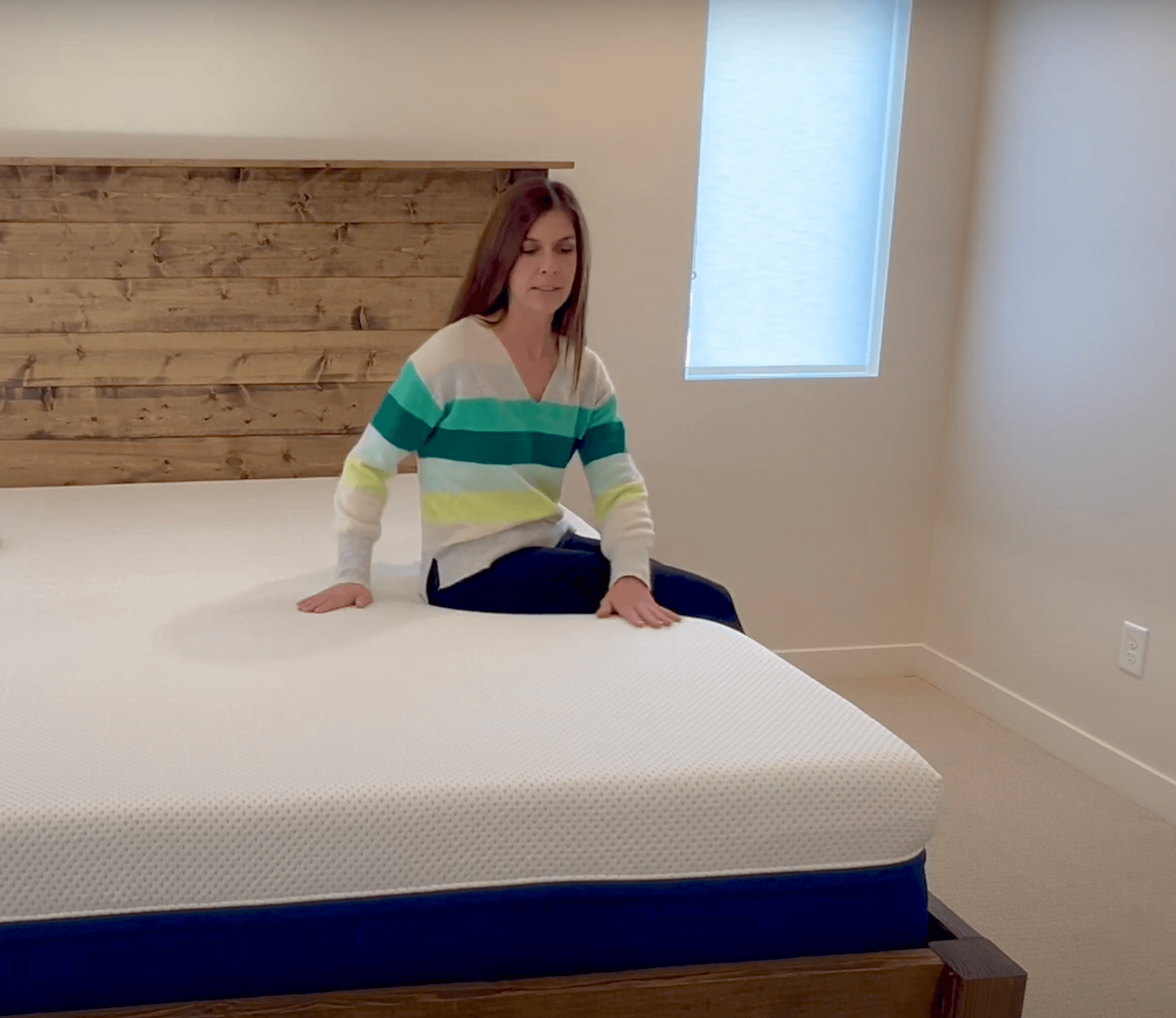
Watch Our Amerisleep AS3 Video Review
After testing more than 50 mattresses for this guide, the Amerisleep AS3 earned the top overall recommendation for the best mattresses for osteoporosis of 2026.
What decided it was position versatility. On my back, my hips stayed level with my shoulders and the surface under my lower back stayed steady instead of dipping. When I rolled to my side, the medium surface let my hip and shoulder settle in far enough that neither joint felt like it was pressing against something firm underneath, and my spine stayed in the same line it had been in on my back. Very few beds I tested held both of those results without trading one for the other.
Rolling between the two took a single motion. The HIVE layer under the comfort foam pushed back sooner than the slower memory foam beds I compared in the same session, so I was not sinking in, pausing, and then pushing myself over. For anyone who finds turning over at night to be the moment they notice most, that difference is the whole point of the bed.
At 12 inches the AS3 is one of the shorter beds on this page, and here that works in your favor. Profile height and frame height combine, and a 12 inch mattress on a standard foundation lands closer to sitting height than a 15 inch bed on the same base does. It gives you room to adjust the setup rather than committing you to a tall surface out of the box.
For a side, back, or combination sleeper who wants one medium feel that holds alignment in every position, and who wants the option to tune final bed height with the frame underneath, the AS3 is the pick.
- 9 Value
- 8 Edge Support
- 9 Trial Period
- 9 Response Time
- 10 Motion Transfer
- 10 Cooling & Breathability
I picked the AS3 first because it was the only bed I tested that held its alignment result in all three positions without me changing anything about the setup.
Spinal alignment. During testing, my hips stayed level with my shoulders on my back, and when I moved to my side the line held rather than dropping at the hip. The HIVE layer is firmer under the midsection than under the shoulders, and that is what I felt: the shoulder sank, the hip did not.
Motion isolation. When my partner got in and out on the far side of a queen, movement on my side barely registered. If you share a bed and the disruptions you notice are transfers rather than tossing, that is the specific behavior that matters.
Responsiveness. Rolling from back to side took one motion, with the surface coming back up under me instead of holding the shape I had just left, so changing positions did not require pushing off with an arm.
Best For:
- Side, back, and combination sleepers who want one versatile medium feel
- Couples where one partner gets up during the night
- Memory foam shoppers who want contouring without a deep sink
Compare Instead:
- Vaya Hybrid if you want a similar balanced feel at a lower price with a taller profile
- Amerisleep AS5 if you want a noticeably softer cradle at the shoulder and hip
- Saatva Classic if you want to sleep on top of the surface rather than in it, with a firmness choice
The AS3 feels like a medium that leans supportive. There is a soft first inch or two where the Bio-Pur layer takes the shape of your shoulder and hip, then the feel changes and you meet something that holds.
You are not floating on the surface and you are not sunk into it, which is why it worked in three positions rather than one.
Sitting on the edge, the perimeter compressed more than the coil-based picks on this page and I felt the surface tilt slightly toward the floor.
It was stable enough to sit and stand from, but if the edge is where you do most of your getting in and out, one of the hybrid picks here will feel steadier under you.
The bed suits a side or combination sleeper of average build who wants cushioning at the shoulder without losing the hip line, and who does not need the reinforced perimeter a coil bed provides.
The Bio-Pur comfort layer is the reason the shoulder settled in without the slow, molded feel of denser memory foam. It came back up quickly enough that repositioning took one motion.
Under it, the zoned HIVE layer is what kept my hips from dropping while the shoulder sank, and it is the layer doing the alignment work across three positions rather than one.
The Bio-Core base is what made the surface feel the same at the end of a long testing session as it did at the start, with no soft spot developing under the midsection.
The one thing the build does not include is a coil unit or a reinforced perimeter, and that is exactly where the bed gave up points at the edge.
Pros
- Motion Transfer (10/10): my partner getting in and out on the far side of a queen barely registered on my side.
- Spinal alignment: my hips stayed level with my shoulders on my back and the line held when I rolled to my side.
- Cooling and Breathability (10/10): ties for the top cooling score on this page, and the surface felt less heat retentive by touch through the first hours than the denser foam beds I compared.
- Officially endorsed by the American Chiropractic Association following evaluation by licensed doctors of chiropractic.
Cons
- Edge Support (8/10): the perimeter compressed more than the coil-based picks here when I sat on it, so the outer six inches feel less steady to push up from.
- Available in one firmness, so shoppers who want a distinctly softer or firmer surface have no option within the model.
- At 12 inches it is one of the shorter profiles on this list, so pairing it with a low platform frame can leave the surface lower than you want.
Why The Amerisleep AS3 Won
Among the fourteen mattresses on this list, the AS3 was the only one that held my hips level with my shoulders on my back and kept that same line when I rolled to my side, without a firmness change or a topper. Some beds here scored higher overall, but none of them matched it for positional versatility or gave me the same room to set final bed height with the frame. It is the pick for a side, back, or combination sleeper who wants one medium feel that works in every position and a profile they can build the right bed height around.
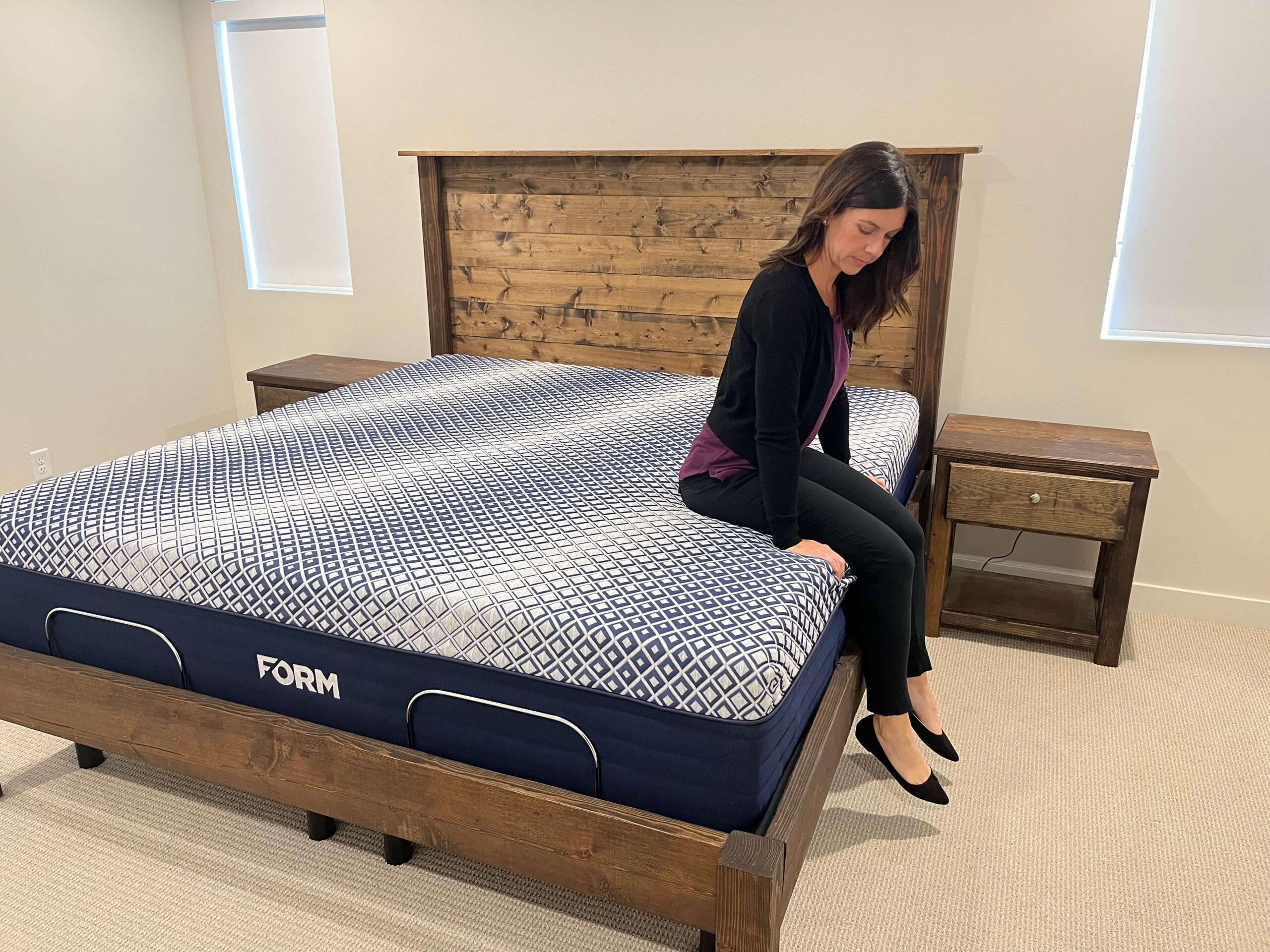
Watch Our FORM Prime Video Review
Among the grid hybrids I tested, the FORM Prime stood out for pairing an adaptive gel grid with a zoned coil base, which gives it the contact cooling and pressure relief grid shoppers want without the jiggle those beds are known for.
That stability is the reason it lands on an osteoporosis guide rather than just a cooling one. On a standard grid mattress, the surface moves when you move, and the surface next to you moves too. Here, the Integra-Mesh reinforcement woven through the grid kept the ripple local. When my partner shifted on the far side of the queen, the grid under me stayed put rather than passing the wave across.
Sitting on the perimeter, the edge compressed very little and stayed level under me, and I could stand up without bracing a hand on the mattress. That is the transfer test that matters most in this category, and the FORM Prime ties for the top edge support score on this page.
On my side, the GelGrid flexed open right at my shoulder and hip while staying firm through the middle, so I got pressure relief in two spots rather than a general sink. The tradeoff is that this is a single medium to medium-firm feel with no firmness options, and a strict stomach sleeper who needs a genuinely firm surface should use the trial window rather than assume it will adapt.
For a side or back sleeper who wants adaptive cushioning, a steady perimeter to push up from, and the longest return window on this page to decide in, the FORM Prime earned its place.
- 8 Value
- 10 Edge Support
- 10 Trial Period
- 9 Response Time
- 10 Motion Transfer
- 9 Cooling & Breathability
I picked the FORM Prime because it solved the one problem that keeps me from routinely recommending grid beds in this category, which is surface instability.
Edge support. When I sat on the perimeter to put my shoes on, the edge held its shape and stayed level rather than rolling away under me, so I could stand up without pushing off with a hand. For anyone whose morning starts by sitting on the edge of the bed, that is the difference between a routine transfer and an awkward one.
Pressure relief. During testing, the grid collapsed under my shoulder and hip specifically while staying supportive between them, so pressure did not concentrate at either joint on my side.
Motion isolation. When my partner changed positions on the far side of a queen, the movement stopped before it reached me, which is unusual for a grid surface and matters if you share a bed with someone who gets up at night.
Best For:
- Side and back sleepers who want targeted relief at the shoulder and hip
- Shoppers cross-shopping grid mattresses who want a steadier surface
- Anyone who wants a long window to test a bed at home before deciding
Compare Instead:
- Nolah Evolution if you want a taller profile and a plush pillow top with three firmness choices
- Leesa Sapira Chill if you want the same hybrid stability with a firmness choice and a cooler surface by touch
- Vaya Hybrid if the price here is more than you want to spend
The FORM Prime feels cool on first contact and springier than a memory foam bed of the same firmness.
There is no slow melt into the surface. The grid gives where your body is heaviest and holds everywhere else, so the sensation is of being held in a few specific places rather than cradled all over.
Repositioning is easy. The grid returns to shape as soon as you move off it, so rolling from side to back took one motion. Getting to a seated position at the edge was equally uneventful, since the perimeter did not sag under me on the way up.
It suits a side or back sleeper who wants pressure relief at the joints, likes a responsive rather than a sinking surface, and wants a firm edge to transfer from.
The AeroWeave cover is why the surface read cool on first contact rather than warming under me in the first minutes.
The GelGrid under it is the layer that flexed at my shoulder and hip while holding through the middle, and the Integra-Mesh reinforcement running through it is why that flex stayed local instead of rippling across to my partner’s side.
Underneath, the ZoneCoil 7-Series unit is what kept my hips from settling lower than my shoulders on my back, and the reinforced BaseFlex perimeter is what held its shape when I sat on the edge. Together the grid and coil sections account for the 14 inch profile.
Pros
- Edge Support (10/10): ties for the top edge support score here, and the perimeter stayed level under me when I sat to put my shoes on.
- Trial Period (10/10): ties for the longest trial on this page at 365 nights, with a lifetime warranty behind it.
- Motion Transfer (10/10): partner movement stopped before it reached my side, which is uncommon on a grid surface.
- Pressure relief: the grid opened at my shoulder and hip specifically rather than letting my whole torso sink.
Cons
- Value (8/10): the strongest sub-scores here come at one of the higher prices on this page.
- Available in one firmness only, so a sleeper who needs a genuinely firm surface has no option within the model.
- The grid feel is distinctive, and shoppers expecting a traditional foam cradle should plan on an adjustment period.
During testing the grid flexed open at my shoulder and hip while the perimeter held level when I sat on it, so both the cushioning and the transfer worked in the same bed. It is the pick for a side or back sleeper who wants adaptive relief on a stable surface and a firm edge to stand up from.
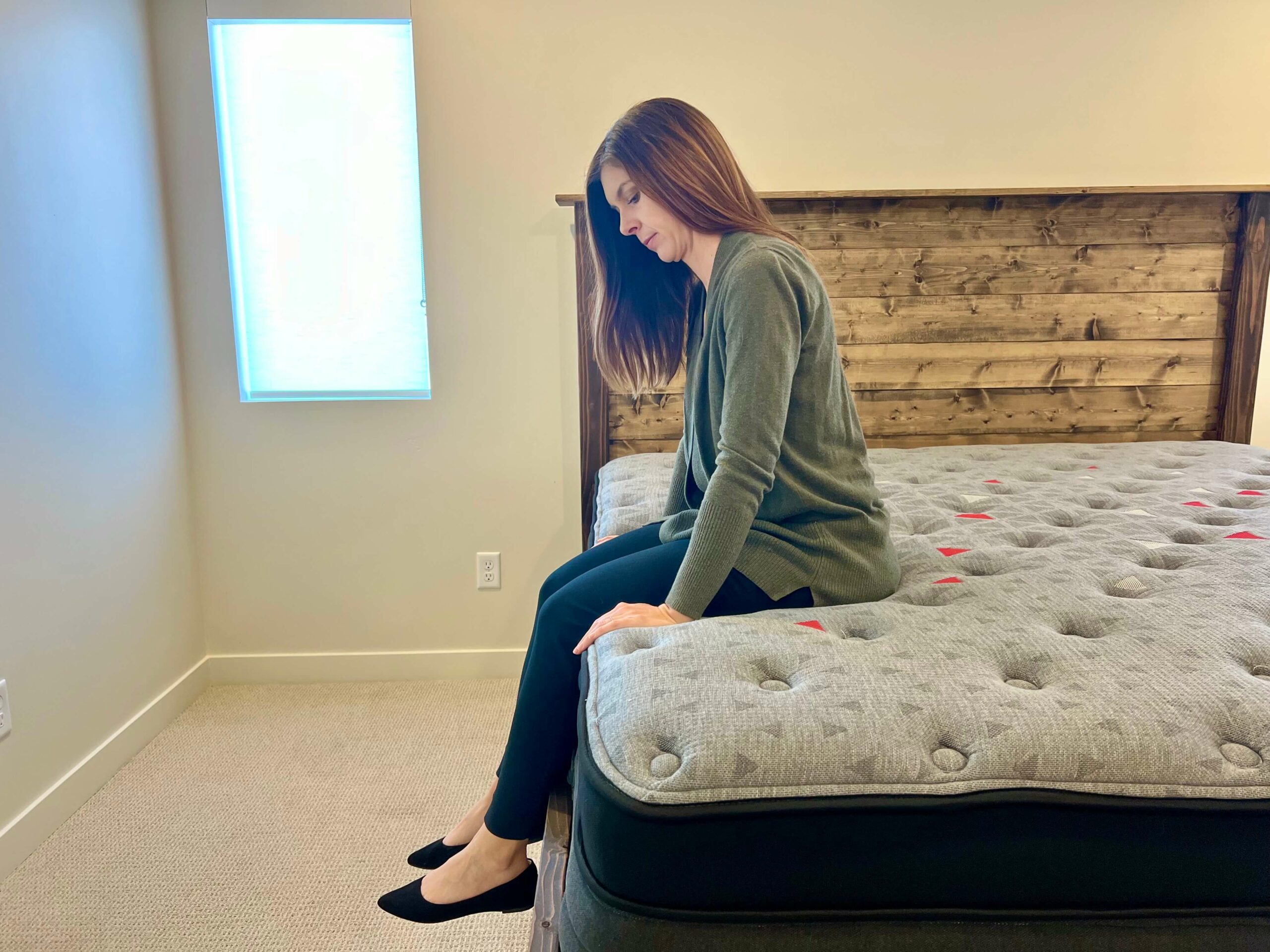
Watch Our Zoma Boost Video Review
The Zoma Boost carries one of the two highest overall scores on this page, and it earned the athletes label for a specific reason: it delivered deep cushioning at the shoulder and hip without letting my hips drop out of line, which is the combination active sleepers usually have to choose between.
On my side, the graphite-infused comfort layers took my shoulder and hip in noticeably further than the medium number suggests they would, while the zoned coils underneath held my hip at the same height as my shoulder. I could feel the two layers doing different jobs, which is not something I say about most beds in this firmness range.
At 15 inches, the Boost ties for the tallest profile on this page. That cuts both ways in this category. On a low platform frame it puts the surface at a height that is easy to sit down on and stand up from. On a tall traditional frame with a foundation, the same 15 inches can leave you climbing rather than sitting, so measure your frame before ordering.
The Reactiv layer between the foam and the coils is what made turning over straightforward. Rolling from side to back, the surface came back up under me rather than holding the shape I had just left, so I did not have to push off to get out of the impression.
For a side or combination sleeper who trains hard, wants deep pressure relief at the joints, and is pairing the bed with a low frame, the Zoma Boost earned its place near the top of these rankings.
- 10 Value
- 10 Edge Support
- 9 Trial Period
- 9 Response Time
- 10 Motion Transfer
- 9 Cooling & Breathability
I picked the Boost because it gave me the deepest cushioning of any medium bed I tested here while still holding the hip line.
Pressure relief. On my side during testing, my shoulder and hip settled into the comfort system further than the firmness rating led me to expect, and I felt no build-up at either joint after lying still, so a side sleeper who wakes up aware of their hip has somewhere to put it.
Spinal alignment. Despite that depth, my hips stayed level with my shoulders. The zoned coils are firmer through the middle third, and the difference was noticeable when I moved from the shoulder zone to the hip zone.
Edge support. The Zoned Edge Coil system held the perimeter flat when I sat on it, and it ties for the top edge support score on this page, so the full width of the surface is usable rather than just the middle.
Best For:
- Side and combination sleepers who want plush cushioning without a soft support core
- Active sleepers who want a taller bed on a low frame
- Couples who need low motion transfer at a mid-tier price
Compare Instead:
- Amerisleep AS3 if you want a shorter profile for a taller frame
- Nolah Evolution if you want a firmness choice, a lifetime warranty, and the option of a 14 inch build instead
- Helix Sunset Luxe if you want a distinctly softer surface at the shoulder
The Boost feels plusher than its rating implies on first contact, then firms up as you settle.
The comfort layers absorb you for the first couple of inches, and then the coils meet you and stop the sink. It reads as a cushioned bed with a firm floor underneath rather than a firm bed with padding on top.
Movement is easy. The Reactiv layer keeps the surface from holding an impression, so rolling over does not involve climbing out of a divot. At the edge, the perimeter stayed flat under me while sitting, and standing up did not require a hand on the mattress.
It fits a side or combination sleeper of average or higher body weight who wants deep cushioning at the joints and a stable surface to move around on.
The graphite-infused memory foam is what let my shoulder and hip settle in as far as they did, and the graphite is also why the surface read cooler by touch through the first hours than the plain memory foam beds I compared in the same session.
The Reactiv transition layer is the reason none of that depth turned into a stuck feeling, since it pushed back as soon as I started to move.
Underneath, the Zoned Edge Coil unit did two separate jobs I could feel: it kept my hips from dropping below my shoulders on my side, and it held the perimeter flat when I sat down on it. Those layers together account for the 15 inch profile.
Pros
- Value (10/10): ties for the top value score on this page, with the deepest cushioning of any medium bed I tested here.
- Edge Support (10/10): ties for the top edge support score, and the perimeter stayed flat under me when I sat to transfer.
- Pressure relief: my shoulder and hip settled in further than the firmness number suggests without pressure building at either joint.
- Motion Transfer (10/10): partner movement on the far side of a queen barely reached me.
Cons
- Warranty: 10 years, tied with the Vaya Hybrid for the shortest coverage on this page
- At 15 inches it ties for the tallest profile here, so on a tall frame with a foundation the surface can end up higher than is comfortable to sit down on.
- Available in one firmness, so a sleeper who wants a firmer surface for stomach sleeping has no option within the model.
On my side during testing, the graphite-infused layers took my shoulder and hip in deeply while the zoned coils held my hips level, and the perimeter stayed flat when I sat on it. It is the pick for a side or combination sleeper who trains hard, wants real cushioning at the joints, and is putting the bed on a low frame.
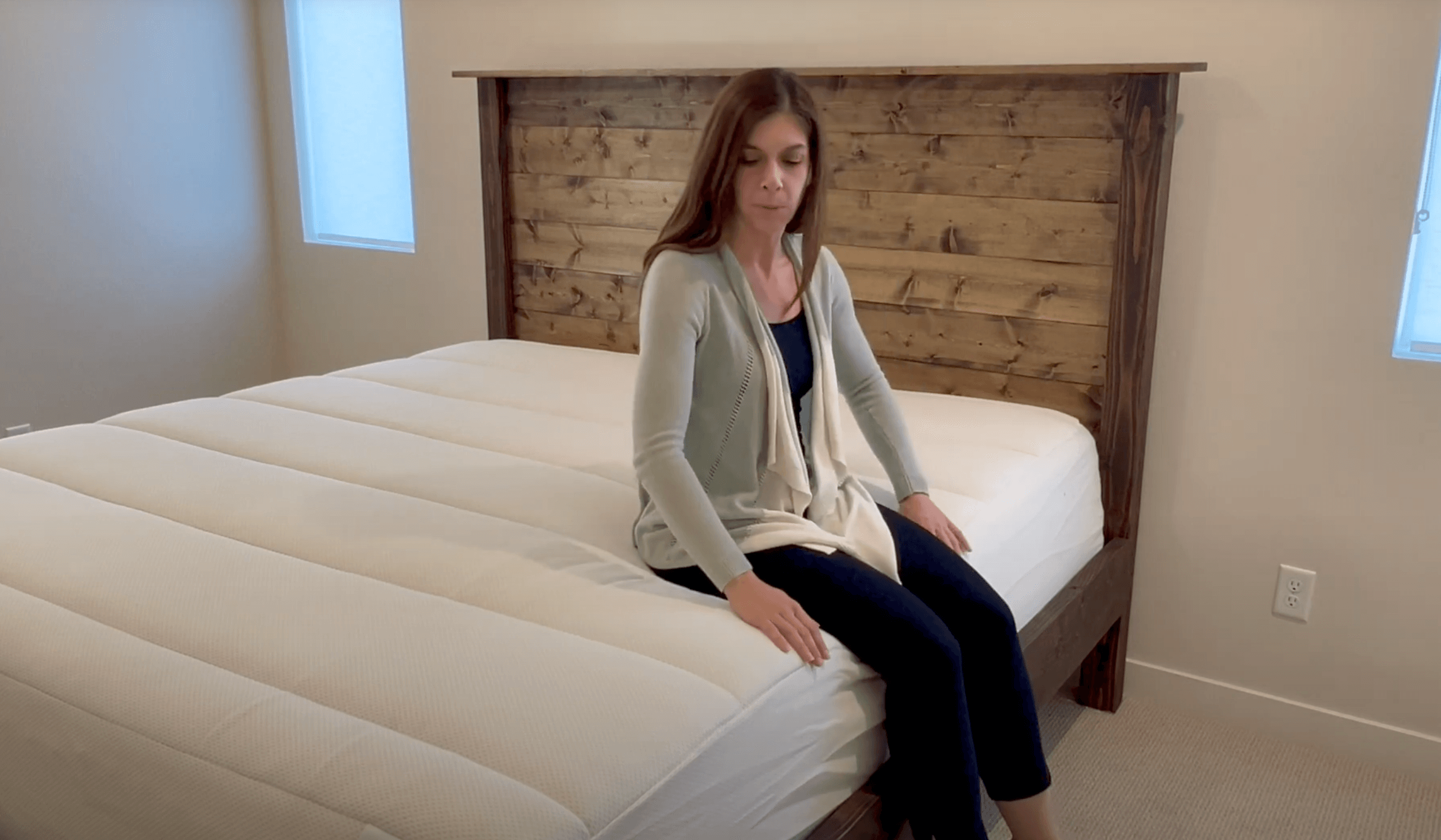
Watch Our Vaya Hybrid Video Review
The Vaya Hybrid is the pick for anyone who reads the rest of this page, agrees with the reasoning, and does not want to spend two thousand dollars acting on it. It delivered the fundamentals this category runs on, a 14 inch profile, a reinforced perimeter, and a medium feel that held alignment, at a price that undercuts most of the list.
During testing it handled all three positions without a standout weakness. On my back my hips stayed level with my shoulders, and on my side the comfort foam gave enough at the shoulder that pressure did not concentrate there. It is not the deepest cushioning here and it is not the firmest support, which is why it lands fourth instead of first.
Where it surprised me was responsiveness. The comfort foam is more porous than standard memory foam, so it came back up immediately when I moved, and rolling from side to back took one motion with no divot to climb out of. That put it in a tie for the top response time score on this page.
Motion transfer is its weakest dimension. When my partner got in and out on the far side of a queen, I felt more of it than I did on the foam picks here. If your sleep is broken by a partner’s movement, that is a real consideration and one of the coil-and-foam picks with a 10 will serve you better.
For a shopper who wants the profile height, the reinforced edge, and the medium alignment this category calls for at a lower price, and who does not share the bed with a restless partner, the Vaya Hybrid is the value pick.
- 10 Value
- 10 Edge Support
- 9 Trial Period
- 10 Response Time
- 7 Motion Transfer
- 9 Cooling & Breathability
I picked the Vaya Hybrid because it was the least expensive bed I tested that did not give up profile height or edge reinforcement to hit its price.
Responsiveness. During testing, rolling from my side to my back took one motion and the surface was back to level under me immediately rather than holding the shape I left, so a combination sleeper who changes position several times a night is not fighting the mattress to do it.
Edge support. Sitting on the perimeter, the reinforced sides compressed some but held their shape, and I could stand without bracing. It ties for the top edge score on this page, and it is a long way ahead of most beds in its price tier.
Value. It ties for the top value score here, and at $1,199 it is the lowest queen price on this page while still carrying a 14 inch hybrid build.
Best For:
- Budget-conscious shoppers who still want a hybrid build and a taller profile
- Combination sleepers who reposition often
- Guest rooms where an older relative may be the one staying over
Compare Instead:
- Amerisleep AS3 if partner movement is what wakes you and you want the stronger motion isolation
- Nolah Evolution if you want a plusher surface and a firmness choice
- Saatva Classic if you want a longer trial and a lifetime warranty
The Vaya Hybrid feels like a straightforward medium. There is a cushioned first layer with give at the shoulder and hip, then coils that push back sooner than a thicker comfort system would.
You sit more on the surface than in it, and the bounce from the coils is noticeable when you move.
The perimeter is firm enough to sit on without the surface tilting toward the floor, and getting up from the edge did not take a second attempt. Partner movement carries further than it does on the foam beds here, which is the tradeoff for the responsiveness.
It suits a back or combination sleeper on a budget who wants a bed that is easy to move around on and easy to get out of, and who sleeps alone or with a still partner.
The Vaya Comfort Foam on top is more porous than standard memory foam, and that showed up in two results during testing: it cushioned my shoulder without the slow melt, and it recovered immediately when I moved off it, which is why the response time score is what it is.
The pocketed coil unit underneath is what kept my hips from settling below my shoulders on my back, and the extra supports built into both sides are what kept the perimeter from rolling away when I sat down.
The airy cover is the reason the surface did not warm up as quickly as the denser all-foam beds I compared.
What the build does not include is a thick, dense comfort system, and that is why partner movement carries further here than on the foam picks.
Pros
- Value (10/10): ties for the top value score on this page and delivers a 14 inch hybrid profile at the lowest price tier here.
- Response Time (10/10): ties for the fastest surface recovery on this page, and rolling from side to back took one motion with no impression left behind.
- Edge Support (10/10): ties for the top edge support score on this page, and the reinforced sides held their shape when I sat on the perimeter to transfer.
Cons
- Motion Transfer (7/10): the lowest motion score on this page by a clear margin, and I felt my partner get in and out on the far side of a queen more clearly than on the foam picks here.
- Warranty: 10 years, tied with the Zoma Boost for the shortest coverage on this page.
- Available in one firmness, so sleepers who want a plusher or firmer surface have no option within the model.
Rolling from my side to my back during testing took one motion, with the surface level under me again immediately and the reinforced edge steady when I sat on it. It is the pick for a combination sleeper on a budget who wants an easy bed to move around on and does not share it with a restless partner.
Best Mattress for Side Sleepers
Helix Sunset Luxe


Warranty
Lifetime

Sleep Trial
120 Nights

Shipping
Free
Watch Our Helix Sunset Luxe Video Review
The Helix Sunset Luxe is the softest hybrid on this page, and it earned the side sleeper label because it gave my shoulder somewhere to go that no other bed here matched.
Lying on my side, the copper gel memory foam took my shoulder in deeply and immediately, and the quilted pillow top above it meant there was no firm layer to meet on the way down. What kept that from becoming a problem is the zoned coil unit: the coils under the hip zone are reinforced, so while my shoulder sank, my hip was pushed back up and my spine stayed in line rather than bowing.
That is the specific combination side sleepers with sensitive shoulders are usually looking for and rarely find, because most soft beds go soft everywhere and the hip goes down with the shoulder.
The softness is also a catch, though, and it is not a small one for this category. A soft surface means more sink, and more sink means more effort to get up out of. Where the Sunset Luxe recovers some of that ground is the perimeter, which is reinforced and held better under me than the middle of the bed did, so the transfer happens at the firmest part of the surface rather than the softest.
For a side sleeper who wants deep shoulder cushioning with a supported hip, who does most of their getting in and out from a seated position at the edge, and who does not spend much of the night on their back or stomach, the Sunset Luxe is the pick.
- 7 Value
- 8 Edge Support
- 9 Trial Period
- 9 Response Time
- 10 Motion Transfer
- 9 Cooling & Breathability
I picked the Sunset Luxe because it was the only bed here that let my shoulder sink that far while still holding my hip up.
Pressure relief. On my side during testing, the SupremeSupport 4.0 layer took my shoulder in without me meeting a firmer layer underneath, and there was no build-up at the shoulder joint after lying still, so a side sleeper who wakes up rolling off a sore shoulder has an option.
Spinal alignment. The coils are reinforced under the hips, and that is what I felt: my hip pushed back while my shoulder gave, so my spine stayed straight instead of dropping at the hip, which is what usually goes wrong on a soft bed.
Edge support. The same coil unit carries that reinforcement around the full perimeter, and the edge stayed firm when I sat on it. It does not match the reinforced perimeters on the hybrid picks here, but it does mean the softest surface on this page still has a stable place to sit down and stand up from.
Best For:
- Dedicated side sleepers with shoulder sensitivity
- Lighter-weight sleepers who find medium beds unyielding
- Couples where one partner is a light sleeper
Compare Instead:
- Amerisleep AS3 if you split your night between your side and your back and need more support in the middle
- Nolah Evolution if you want plush cushioning with a firmer option available
- Saatva Classic if you would rather sleep on top of the surface than in it
This bed feels like sinking. The pillow top and the memory foam under it take you in before anything pushes back, and you settle in for a noticeable moment before the coils meet you.
Side sleeping is where that pays off. Back sleeping is where you feel it as a limitation, since the surface is accommodating enough that a back sleeper who wants hip elevation will feel underlifted.
Repositioning takes a little more effort than on the responsive picks here, because you are moving out of a deeper impression each time. The perimeter is the firmest part of the bed and the easiest place to get up from.
It fits a dedicated side sleeper, particularly a lighter-weight one, who wants a soft cradle at the shoulder and does the majority of their transfers seated at the edge.
The cover is the first decision. The standard TENCEL fabric is breathable and soft to the touch, and it is what the tested configuration used.
Two paid upgrades sit above it: the GlacioTex Cooling Cover, which reads cool on contact, and a CoolForce heat transfer layer applied directly to the upper foam. Confirm which you are ordering, because the cooling score here reflects the standard cover.
Underneath, the softness is built in stages rather than all at once, which is what kept it from collapsing. Helix’s gel memory foam cushions first and is designed to stop you sinking too far, and that matched what I felt: my shoulder went in without continuing down.
The SupremeSupport 4.0 layer below it is the reason that depth held its shape through a long session. Helix pours it at 4 lb density against the under 2 lb foams it cites as typical, and dense foam of that kind holds its form rather than developing a hollow where you lie.
Two layers of Helix Premium Responsive Foam sit around it, built for side sleepers, and they are what kept the deep cushioning from turning into a full stall when I changed positions.
The Enhanced Lumbar Support Layer is doing two jobs I could feel separately. It carries up to 1,000 individually wrapped coils with reinforced support under the hips, which is why my hip pushed back while my shoulder settled, and that same reinforcement runs around the full perimeter, which is why the edge held firm when I sat on it.
So one component is behind both the alignment result and the edge support score.
Ordering the ErgoAlign layer adds an extra-firm segment of foam directly under the hips on top of that, a meaningful change on a surface this soft. DuraDense base foam sits at the bottom and is what the whole system loads onto. Those layers make up the 13.5 inch profile.
Pros
- Motion Transfer (10/10): weights on the opposite side stayed still while I moved, and my partner’s repositioning did not reach me.
- Edge Support (8/10): the reinforced perimeter is the firmest part of the softest bed on this page, so the edge is where the transfer happens even though it trails the coil-reinforced picks here.
- Pressure relief: my shoulder settled in without meeting a firmer layer, while the reinforced hip zone kept my spine level.
Cons
- Value (7/10): one of the lower value scores on this page, since the price sits well above beds carrying similar sub-scores.
- The soft feel means more sink, so getting up from the middle of the bed takes more effort than it does on the medium and medium-firm picks here.
- Available in one firmness, and it is a soft one, so strict back and stomach sleepers who need hip elevation are not the audience.
- The cooling covers and the ErgoAlign support layer are paid upgrades, so the fully configured version costs several hundred dollars more than the listed price.
- At 13.5 inches with a coil unit, it is heavy and awkward to rotate without a second person.
On my side during testing, the surface took my shoulder in while the reinforced hip zone pushed back and held my spine level, and the perimeter stayed firm when I sat on it. It is the pick for a dedicated side sleeper with a sensitive shoulder who transfers in and out from the edge of the bed.

Watch Our Leesa Sapira Chill Video Review
The Leesa Sapira Chill is the best hybrid on this page because it is the most adaptable one. It comes in plush, medium-firm, and firm at the same price, and the coil unit underneath does not change between them, so you are choosing a comfort feel without giving up the support system.
That flexibility is worth more in this category than in most. Firmness needs vary by sleeping position and body weight, and if a bed is too soft you sink and struggle to get up, while if it is too firm your shoulder and hip press into it. Being able to make that call at the point of purchase, on a bed whose alignment behavior stays the same across all three options, is a real advantage.
I tested the medium-firm. My hips stayed level with my shoulders on my back, and on my side the four-layer comfort system gave at the shoulder while the zoned springs under the hips pushed back. The zoning is concentrated where it matters, and I felt the change in support when I moved from the shoulder zone down to the hip.
The cover is the other thing worth naming. It read cool to the touch on first contact and stayed cooler by touch through the first hours than the standard pillow-top fabrics I compared in the same session, which is unusual for a quilted top. It ties for the top cooling score on this page.
For a shopper who wants a hybrid with a stable perimeter and a fast surface, and who wants to pick their own firmness rather than take the one the brand chose, the Sapira Chill earned this recognition.
- 8 Value
- 10 Edge Support
- 9 Trial Period
- 10 Response Time
- 9 Motion Transfer
- 10 Cooling & Breathability
I picked the Sapira Chill because it is the only bed here that lets you choose the comfort feel without changing the support system underneath it.
Responsiveness. Rolling from my back to my side in the medium-firm took one motion, and the surface was level under me again before I had settled, so turning over does not mean pushing out of an impression. It ties for the fastest surface recovery on this page.
Edge support. The perimeter held its shape when I sat on it and the surface did not tilt toward the floor, so the edge works as a transfer point rather than just a boundary.
Cooling. The quilted cover read cool on contact and stayed cooler by touch through the first hours than the standard pillow tops I compared, which helps if you are sharing a queen and pooling body heat with a partner.
Best For:
- Shoppers who want to select firmness by sleeping position and body weight
- Combination sleepers who want a fast surface to reposition on
- Couples who want a cooler pillow top
Compare Instead:
- Nolah Evolution if you want the same choice of three firmnesses plus a choice of profile height
- Nest Bedding Sparrow if you want three firmnesses plus a 365 night window to change your mind
- Amerisleep AS3 if you want stronger motion isolation and a shorter profile
In medium-firm, the Sapira Chill feels like a hotel bed with a quilted surface: cushioned on top, firm underneath, and quick to come back when you move.
You feel the cover give first, then the foams, then the coils. The transitions are smooth rather than abrupt, which is what makes it work for back and side sleeping in the same night.
The plush option feels a full step softer at the shoulder without the hips dropping, and the firm sits you noticeably on top of the surface.
All three share the same perimeter behavior, which stayed steady under me while sitting.
It suits a combination sleeper who wants to tune firmness to their own build and position, and who wants a bed that is easy to turn over on and stable at the edge.
The Ultra Cool quilted cover is why the surface read cool on first contact rather than warming under me the way most pillow tops do.
The four foam layers under it, including the plant-based GreenFlex Foam, are what gave at my shoulder without the slow molded feel, and their open structure is why the surface recovered fast enough for a one-motion roll.
The zoned spring unit is where the alignment work happens: the springs are concentrated under the hips, and that is what kept my hips from settling below my shoulders on my side.
The reinforced perimeter is what held its shape when I sat down on the edge. These layers make up the 14 inch profile across all three comfort levels.
Pros
- Response Time (10/10): ties for the fastest surface recovery here, and rolling from back to side took one motion with no impression to climb out of.
- Cooling and Breathability (10/10): ties for the top cooling score, and the quilted cover read cool on contact rather than warming in the first minutes.
- Edge Support (10/10): ties for the top edge support score, and the perimeter held its shape when I sat on it.
- Three comfort levels at the same price, all on the same coil unit, so firmness can be matched to sleeping position without changing the support system.
Cons
- Motion Transfer (9/10): partner movement carried slightly further than on the foam-topped picks here, which is the usual tradeoff for a responsive coil bed.
- Value (8/10): priced above the mid-tier hybrids on this page without leading them on more sub-scores.
- At 103 pounds in a queen, it is a two-person job to move or rotate.
Rolling from my back to my side in the medium-firm took one motion, with the zoned springs holding my hips level as my shoulder settled and the perimeter steady when I sat on it. It is the pick for a combination sleeper who wants to choose their own firmness and still get a fast, stable surface to move on.
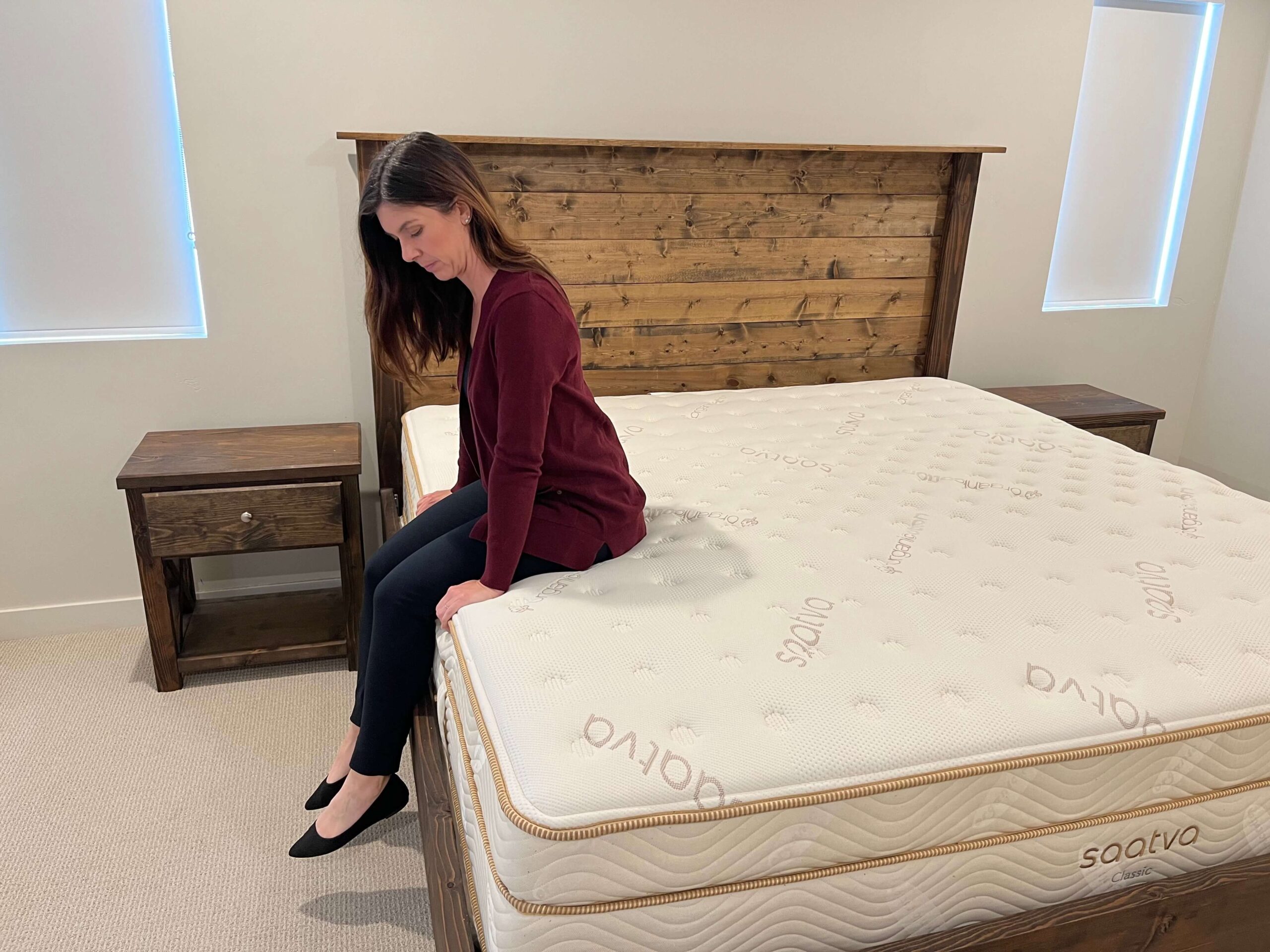
Watch Our Saatva Classic Video Review
The Saatva Classic is the most configurable bed on this page, and configurability is worth a lot in this category. It is the only pick that lets you choose the profile height as well as the firmness: 11.5 inches or 14.5 inches, in plush soft, luxury firm, or firm. If bed height is the thing you are trying to solve, this is the pick that lets you solve it at the point of order rather than by changing your frame afterward.
I tested the luxury firm at 14.5 inches. It sleeps on top of the surface rather than in it. On my back, the coil-on-coil build held my midsection up rather than letting it settle, and the Lumbar Zone quilting through the middle third was noticeable as a firmer band under my lower back. The Euro pillow top still cushioned my shoulder on contact, so on-top does not mean unforgiving here.
Getting in and out is where this bed separates from the foam picks. There is no impression to climb out of, the surface pushes back as soon as you put weight on it, and the perimeter uses high-density foam rails that held their shape when I sat on the edge. It ties for the top edge support and response time scores on this page, and that combination is the whole transfer story.
The 365 night trial and white glove delivery matter more here than they read on paper. The mattress arrives set up, the old one leaves, and you get a full year to decide whether the height and firmness you picked were right.
For a back or combination sleeper who wants a firm, responsive innerspring feel, control over both height and firmness, and delivery that does not leave a boxed mattress in the hallway, the Saatva Classic earned this win.
- 7 Value
- 10 Edge Support
- 10 Trial Period
- 10 Response Time
- 9 Motion Transfer
- 9 Cooling & Breathability
I picked the Classic because it is the only bed here where profile height is something you choose rather than something you work around.
Responsiveness. During testing, the surface pushed back the moment I put weight on it and left no impression when I moved off, so turning over and sitting up both took one motion. It ties for the fastest surface recovery on this page, and for anyone who does not want to push out of a divot to change position, that is the reason to look here.
Edge support. The high-density foam rails held the perimeter flat when I sat on the edge, with no roll-off, so the edge is a usable seat rather than a boundary.
Spinal alignment. On my back, the dual coil build and the Lumbar Zone quilting held my midsection up instead of letting it settle below my shoulders and hips.
Best For:
- Back and combination sleepers who want to sleep on the surface, not in it
- Shoppers who need to control final bed height
- Anyone who wants a long trial and in-home setup
Compare Instead:
- Nolah Evolution if you want a plusher pillow top surface with the same three-firmness flexibility
- Amerisleep AS3 if you want stronger motion isolation and a contouring foam feel
- Westin Heavenly Bed if the hotel pillow top feel is specifically what you are after
The Classic feels like a traditional bed built better. You lie on top of it, with the Euro pillow top providing the cushioning and the coils providing the lift. There is bounce, and the surface answers back when you move rather than absorbing you.
Sitting on the edge, the foam rails kept the perimeter level under me. Standing up from a seated position at the edge was the easiest of any bed on this page, because nothing had compressed under me on the way down.
It suits a back or combination sleeper who wants a firm, springy, on-top feel, and specifically someone for whom getting up easily matters more than being cradled.
The 3 inch Euro pillow top is why the surface still cushioned my shoulder despite the firm feel underneath, and the Lumbar Zone quilting inside it is the firmer band I could feel under my lower back on my back.
Below that, the dual coil-on-coil design is what produced the immediate pushback and the lack of any impression when I moved, which is the source of the response time score.
The high-density foam rails around the perimeter, rather than reinforced coils, are what kept the edge flat when I sat on it.
The organic cotton cover and the breathable coil-on-coil structure are why the surface did not hold heat the way a solid foam core does.
The 11.5 and 14.5 inch versions use the same system with different comfort depth.
Pros
- Edge Support (10/10): ties for the top edge support score here, and the foam rails kept the perimeter flat when I sat on it with no roll-off.
- Response Time (10/10): ties for the fastest surface recovery, and the bed left no impression to push out of when changing position or sitting up.
- Trial Period (10/10): ties for the longest trial on this page at 365 nights, with a lifetime warranty and free white glove delivery and setup.
- The only pick here offered in two profile heights and three firmnesses, so bed height can be matched to the frame at the point of order.
Cons
- Value (7/10): one of the lower value scores here, since the price sits above beds that match it on more sub-scores.
- Motion Transfer (9/10): the coil-on-coil build carries a partner’s movement further than the foam-topped picks, so a light sleeper sharing the bed will feel more of it.
- The luxury firm is genuinely firm, and a strict side sleeper with shoulder sensitivity should order the plush soft rather than assume the middle option will cushion enough.
On my back during testing, the coil-on-coil build held my midsection up rather than letting it settle, and the foam rails kept the perimeter flat when I sat to stand up. It is the pick for a back or combination sleeper who wants an on-top innerspring feel and needs to control the final height of the bed.
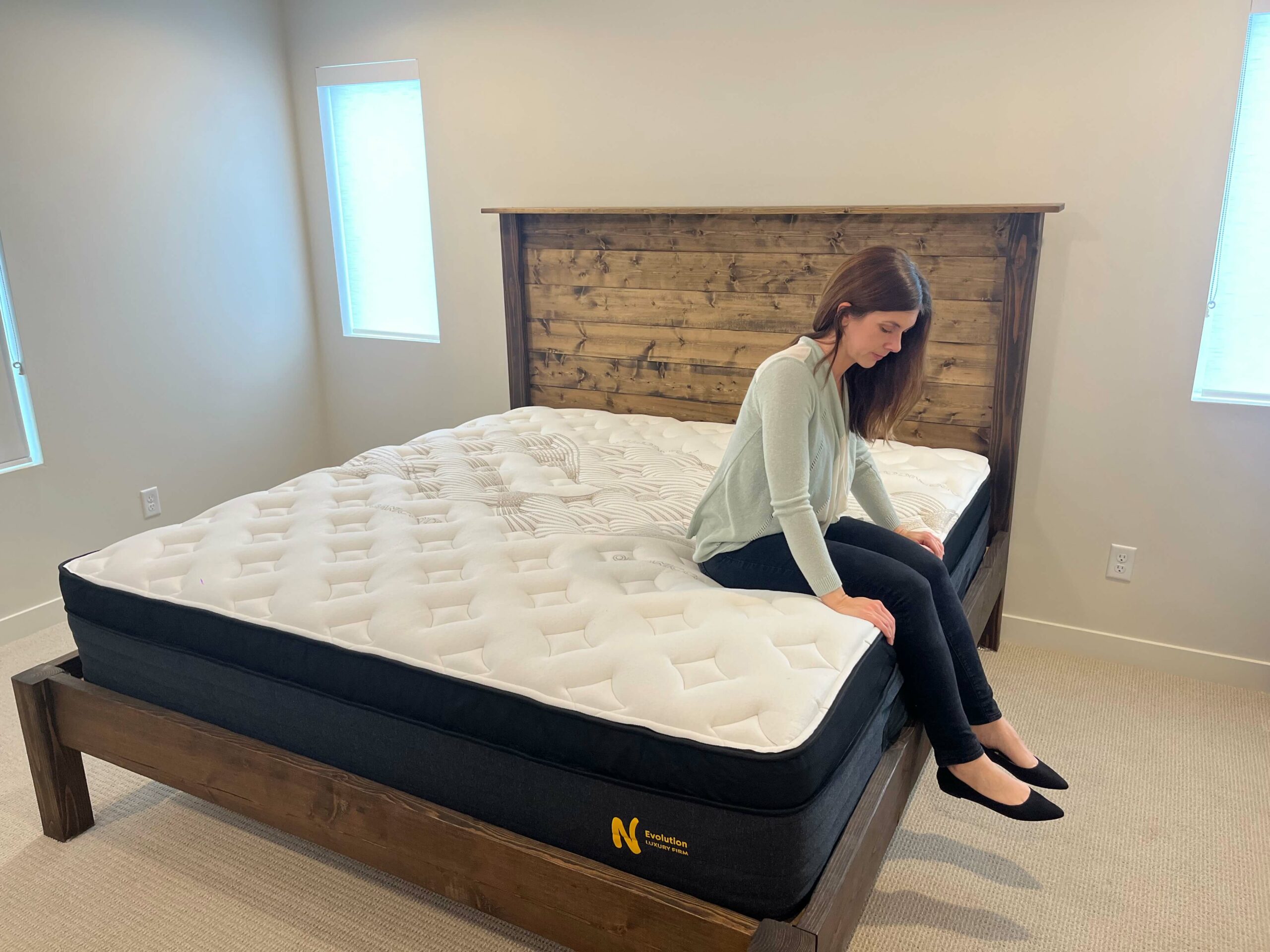
Watch Our Nolah Evolution Video Review
The Nolah Evolution is the plush pillow top that does not give up the things sleepers need. That is a harder combination than it sounds, because most pillow tops buy their softness with a soft perimeter and a slow surface, and both of those work against you when the issue is getting in and out of bed.
On my side, the AirFoam Luxe layer cushioned my shoulder and hip with the depth you expect from a Euro top, while the zoned coils underneath held my lower back from dropping. The difference between the shoulder zone and the lumbar zone was clear when I moved down the bed, which is the zoning doing its job rather than being a spec-sheet claim.
The perimeter is where it earns its place here. The coil core is finished with pencil reinforcement coils around the edge, and when I sat on it the perimeter held rather than compressing under me. It ties for the top edge support score on this page, which is not what a tall plush pillow top usually delivers.
You choose the height on this one, which is worth knowing before you order. The standard build pairs a cotton cover with 1 inch of quilted foam and stands 14 inches. Adding the GlacioTex Cooling Pillow Top doubles that quilted layer to 2 inches and takes the mattress to 15 inches, where it ties for the tallest profile on this page.
On a low platform frame either version lands at a workable height. On a tall frame with a foundation, that extra inch is the difference between sitting down onto the bed and climbing onto it, so measure your frame before deciding on the upgrade. The three firmness options are a separate choice from the height.
For a side sleeper who wants a genuinely plush surface, a firm edge to transfer from, and the ability to set bed height by choosing the cover rather than changing the frame, the Nolah Evolution earned the pillow top category.
- 10 Value
- 10 Edge Support
- 9 Trial Period
- 9 Response Time
- 10 Motion Transfer
- 9 Cooling & Breathability
I picked the Evolution because it was the only plush pillow top I tested that did not soften at the edge as well as the middle.
Edge support. When I sat on the perimeter, the reinforcement coils held it flat under me and I could stand without pushing off the mattress. On a bed this plush that is unusual, and it means the surface stays usable right to the edge.
Pressure relief. On my side, the AirFoam Luxe layer cushioned my shoulder and hip while the zoned coils kept my lower back from dropping, so I got the plush feel without losing the line through my spine.
Motion isolation. When my partner shifted on the far side of the queen, the movement did not carry to me, which is worth noting on a bed with an 8 inch coil core.
Best For:
- Side sleepers who want a deep pillow top surface with support underneath
- Shoppers who want to set bed height by choosing between the two cover builds
- Couples who want plush comfort with low motion transfer
Compare Instead:
- Leesa Sapira Chill if you want a cooler quilted surface by touch with the cooling built in rather than sold as an upgrade
- Amerisleep AS3 if even the 14 inch build is taller than your frame allows
- Helix Sunset Luxe if you want a softer shoulder cradle than even the plush option here provides
In the luxury firm, the Evolution feels cushioned on top and firm underneath, with a clear transition between the two. The quilted top compresses first, then the AirFoam takes your shoulder and hip, and then the coils stop the sink.
With the GlacioTex pillow top that first stage lasts a little longer and starts cooler; with the cotton cover you reach the AirFoam sooner. Either way it reads as a hotel bed with a firmer core than most hotel beds have.
Repositioning is straightforward for a bed this plush. The AirFoam does not hold an impression the way slower memory foams do, so rolling over does not mean climbing out of a hollow. At the edge, the perimeter stayed flat under me.
It fits a side sleeper of average or higher body weight who wants deep cushioning at the shoulder and hip and needs a firm perimeter to sit on.
The Evolution is built in two versions, and the difference is the top inch. The standard build pairs an organic cotton cover with 1 inch of quilted foam and comes to 14 inches.
The GlacioTex Cooling Pillow Top swaps in a cool-to-touch cover and a second inch of quilted foam, which takes it to 15 inches.
During testing the upgraded top read cooler on first contact and gave a little further before I reached the foam underneath, so that inch changes both the surface temperature and the initial softness rather than only the number on the spec sheet.
Everything below that point is the same in both. The graphite-infused AirFoam Luxe is what took my shoulder and hip in without leaving an impression when I moved off it, and it is why the surface did not warm as quickly as the denser pillow tops I compared in the same session.
The Tri-Zone foam and the zoned Ascension coils work as a pair, firmer through the middle, and that combination is what kept my lower back from dropping while my shoulder settled.
The pencil reinforcement coils around that 8 inch core are the specific reason the edge held flat when I sat on it, which is what separates this from most plush pillow tops.
Pros
- Edge Support (10/10): ties for the top edge support score here, and the reinforcement coils held the perimeter flat under me on a plush pillow top.
- Value (10/10): ties for the top value score, delivering a zoned hybrid with three firmness options, two cover builds, and a lifetime warranty.
- Motion Transfer (10/10): my partner’s movement on the far side of a queen did not carry to me.
- Three firmness levels, so the plush pillow top surface can be dialed to a sleeper’s position and body weight.
Cons
- Ordered with the GlacioTex Cooling Pillow Top it reaches 15 inches and ties for the tallest profile on this page, so on a tall frame with a foundation the surface can end up higher than is comfortable to sit down onto.
- Response Time (9/10): the plush comfort system recovers a beat slower than the coil-heavy picks here, so a combination sleeper who repositions constantly will notice a little more lag.
- The cooling pillow top is a paid upgrade that also adds an inch of height, so the cooler version of this bed costs more and sits taller than the standard build.
On my side during testing, the AirFoam Luxe layer took my shoulder and hip in while the zoned coils held my lower back level, and the reinforced perimeter stayed flat when I sat on it. It is the pick for a side sleeper who wants a deep pillow top surface and a firm edge to get up from.
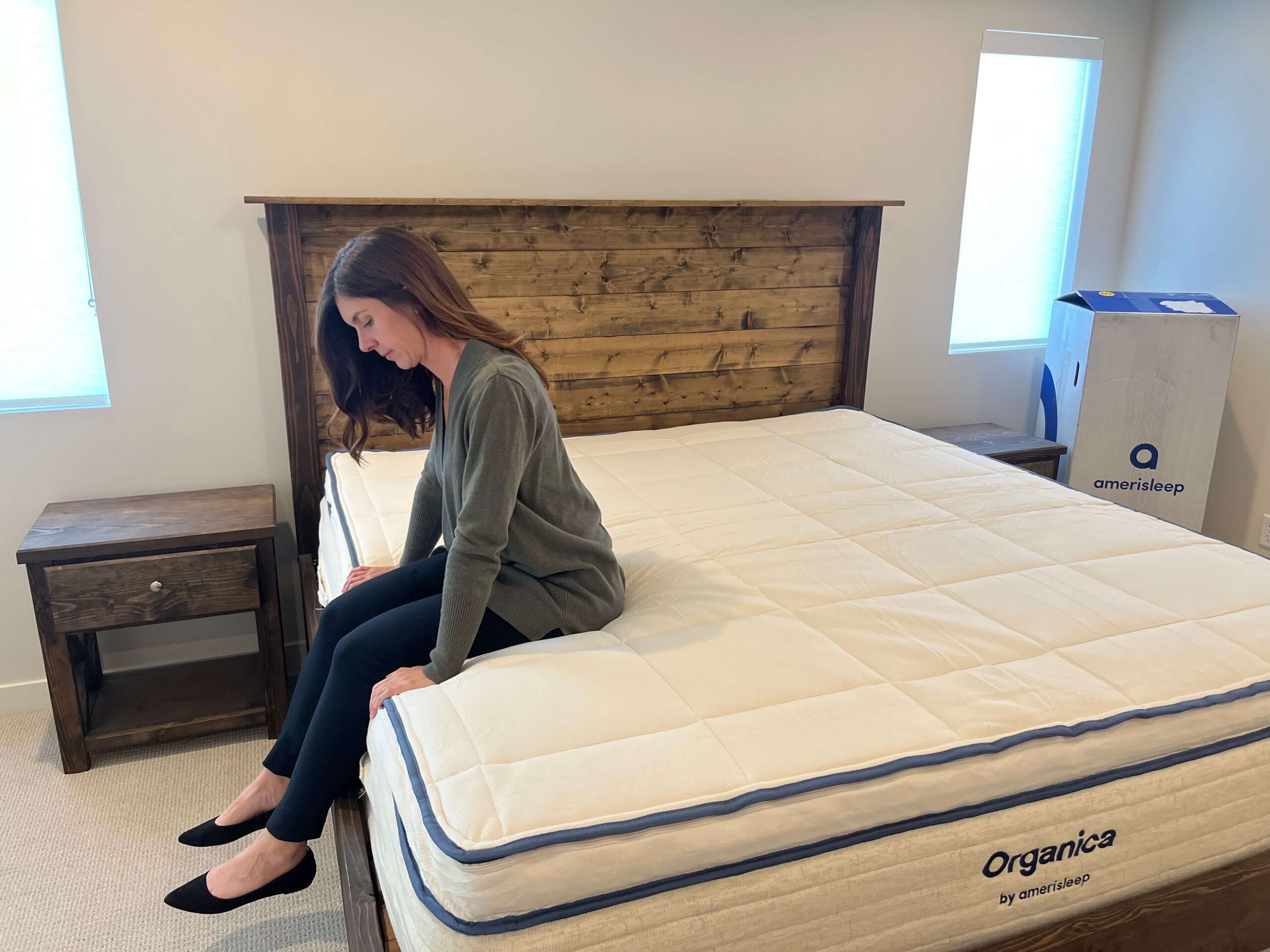
Watch Our Amerisleep Organica Plush Video Review
The Organica Plush is the latex pick, and latex behaves differently from every foam bed on this page in a way that matters here: it pushes back rather than holding you.
On my side, the latex layers cushioned my shoulder and hip on contact, then sprang back the instant I moved instead of keeping the shape I had just been in. There was no impression to climb out of and no pause between deciding to move and moving. It scores a 9 for responsiveness, just behind the coil-forward picks here, and that ease of repositioning is the reason a latex bed belongs in this category rather than being a materials preference.
The plush box top adds 3 inches of latex on top of the standard build, which softens the initial contact without changing what the coils are doing underneath. My hips stayed level with my shoulders even through that extra depth, which is what usually goes wrong when a brand adds a plush layer on top.
At 15 inches it ties for the tallest profile on this page, so the same frame-height caution applies as with the other two: it sits well on a low platform and can be too tall on a frame plus foundation.
The perimeter is a genuine strength rather than the compromise a plush latex bed usually forces. The coil unit is finished with double-density reinforced coils around the edge, and I felt stable both sitting on the perimeter and lying along it, with very little compression under me. It ties for the top edge support score on this page.
For a side or combination sleeper who wants natural materials, a buoyant surface that is easy to turn over on, and a plush top layer without a memory foam feel, the Organica Plush is the latex pick.
- 8 Value
- 10 Edge Support
- 9 Trial Period
- 9 Response Time
- 9 Motion Transfer
- 9 Cooling & Breathability
I picked the Organica Plush because latex solved the repositioning problem more cleanly than any foam bed I tested.
Responsiveness. During testing, the latex sprang back as soon as I shifted weight, so rolling from side to back took one motion with nothing to push out of. At 9 it sits just under the coil-forward picks here, but for anyone who turns over several times a night it is one of the most useful properties on this page
Pressure relief. The plush box top cushioned my shoulder and hip on contact, but the cushioning came from give rather than sink, so I stayed near the surface rather than settling into it.
Spinal alignment. Despite the added 3 inches of latex on top, my hips stayed level with my shoulders on my back, because the coil unit underneath is doing the same job it does in the medium build.
Edge support. Sitting on the perimeter and lying along it, the double-density reinforced coils held with minimal compression, so the edge is a stable place to sit down and stand up from rather than a boundary to avoid. It ties for the top edge support score here.
Best For:
- Side and combination sleepers who reposition often
- Shoppers who want natural latex, organic cotton, and organic wool instead of synthetic foams
- Sleepers who dislike the sinking feel of memory foam
Compare Instead:
- Naturepedic Concerto if you want certified organic construction and a shorter 13 inch profile
- Nolah Evolution if you want a lower 14 inch build with the same edge support score
- Amerisleep AS3 if you want a shorter profile and stronger motion isolation
The Organica feels buoyant. The latex gives under your shoulder and hip and then lifts, so you are supported from below rather than surrounded.
There is a gentle bounce, and it is immediate rather than delayed the way a coil bed’s bounce can be.
Moving on it is the easiest part. There is no lag, no impression, and no need to push off with a hand to change position.
Sitting on the edge, the perimeter held under me with very little compression and no tilt toward the floor.
It suits a side or combination sleeper who wants natural materials and a lively surface, and who wants a firm edge to transfer from.
The natural Talalay latex is the reason the surface came back up instantly rather than holding my shape, and the soft top layer over the medium layer is what let my shoulder settle while the layer underneath kept pushing back.
The attached 3 inch latex box top on the Plush build is what softened the first contact without changing the alignment result.
The organic wool layer at the top is a fire barrier that also moves moisture, and the organic cotton cover is why the surface did not feel warm on contact the way a synthetic knit can.
The coil unit at the base is what held my hips level with my shoulders, and it is finished with double-density reinforced coils around the perimeter, which is why the edge held with so little compression when I sat on it. These sections make up the 15 inch profile.
Pros
- Response Time (9/10): a dropped 10-pound weight rebounded almost instantly, and the latex left no impression to push out of when I changed position.
- Edge Support (10/10): ties for the top edge support score on this page, and the double-density reinforced perimeter coils kept me stable sitting on the edge and lying along it.
- Pressure relief: the plush box top cushioned my shoulder and hip through give rather than sink, so I stayed near the surface.
- Materials: natural Talalay latex certified to OEKO-TEX Standard 100 and eco-INSTITUT, with an organic cotton cover, and one of Amerisleep’s ACA-endorsed models.
Cons
- At 4 out of 10 it is a soft surface, and in testing stomach sleeping produced more hip sinkage than is ideal, so strict stomach sleepers and back sleepers who want firm hip support are not the audience.
- At 15 inches it ties for the tallest profile here, so a tall frame plus foundation can leave the surface higher than is comfortable to sit down onto.
- Latex is heavy, so rotating this bed is a two-person job.
Rolling from my side to my back during testing took one motion, with the latex springing back before I had finished moving and my hips staying level with my shoulders through the plush top. It is the pick for a side or combination sleeper who wants natural materials and a surface that never has to be climbed out of.
Best Cooling Mattress
Amerisleep AS6 Black Series

Warranty
20 Years
Sleep Trial
100 Nights
Shipping
Free
Watch Our Amerisleep AS6 Black Series Video Review
The AS6 Black Series is the cooling pick because it approaches heat in three separate places rather than one, and I could feel the difference by touch across a testing session.
The CryoCool cover reads cool the moment you make contact, before body heat has entered the picture at all. The TitanAir layer under it and the ArcticWave bands running through the comfort system are what kept the surface from warming as quickly as the denser memory foam beds I compared through the first hours. It ties for the top cooling score on this page, and it earns the category on the strength of that layered approach rather than a single cool-touch cover.
Cooling matters more in this category than a shopper might assume, because the beds that suit osteoporosis best tend to have thick, cushioned comfort systems, and thick comfort systems are where heat collects. The AS6 lets you have the cushioning without that pattern.
I tested the luxury firm. On my side, the Bio-Pur layer cushioned my shoulder and hip while the support system underneath kept my hips from settling below my shoulders. Motion isolation was among the strongest here, with my partner’s movement on the far side of a queen barely reaching me.
The 14 inch profile sits in the middle of this page rather than at the extremes, and the three firmness options let you match the feel to your position and body weight without changing the cooling build. For a hot sleeper who wants a cushioned surface and a firmness choice, the AS6 Black Series earned the cooling category.
- 9 Value
- 9 Edge Support
- 9 Trial Period
- 9 Response Time
- 10 Motion Transfer
- 10 Cooling & Breathability
I picked the AS6 for this category because its cooling result held up across a full testing session rather than fading after the first few minutes.
Cooling. The cover read cool on first contact and the surface did not warm up as quickly as the denser memory foam beds I compared through the first hours, which helps two people sharing a queen and pooling heat between them.
Motion isolation. When my partner changed positions on the far side of the bed, the movement barely reached me, so a light sleeper sharing the bed has fewer disruptions to work around.
Pressure relief with a choice. In the luxury firm, my shoulder settled into the Bio-Pur layer while my hips stayed level with my shoulders, and the plush soft and firm options change that cushioning depth without changing the cooling system underneath.
Best For:
- Hot sleepers who want cushioning without the heat that usually comes with it
- Side sleepers who want a firmness choice on a cooling build
- Couples sensitive to partner movement
Compare Instead:
- Leesa Sapira Chill if you want a comparable cooling result with a longer trial and a lifetime warranty
- Amerisleep AS3 if you want a shorter 12 inch profile at a lower price
- Nolah Evolution if you want a firmer perimeter to transfer from
In the luxury firm, the AS6 feels plush on contact and supportive underneath. The cover is cool to the touch before you have even settled, and the comfort layers take your shoulder and hip in without the slow, sticky feel of traditional memory foam. It is a cushioned bed with a clear floor.
Repositioning is easy for a bed with this much comfort depth, since the layers recover rather than holding an impression.
The perimeter compressed slightly when I sat on the edge, less than on the all-foam picks here and more than on the reinforced-coil ones.
It fits a side sleeper who runs warm, wants deep cushioning at the shoulder and hip, and shares a bed with someone whose movement they would rather not feel.
The CryoCool cover is what produced the cool-on-contact reading before any body heat entered the picture.
The TitanAir layer beneath it is titanium-infused memory foam, and it is why the surface cushioned my shoulder while moving heat away instead of trapping it under me, which is the usual pattern with a comfort system this deep.
The ArcticWave bands are the third piece, running through the comfort layers to keep heat from settling in one spot.
The Bio-Pur layer is what took my shoulder and hip in, and the support system below it is what kept my hips level with my shoulders on my side.
The perimeter is not reinforced coil, and that shows up as a 9 rather than a 10 in the edge score. These layers build to the 14 inch profile.
Pros
- Cooling and Breathability (10/10): ties for the top cooling score on this page, and the surface did not warm up as quickly as the denser memory foam beds I compared through the first hours.
- Motion Transfer (10/10): my partner’s repositioning on the far side of a queen barely reached me.
- Three firmness options on the same cooling build, so cushioning depth can be matched to position and body weight.
- Officially endorsed by the American Chiropractic Association following evaluation by licensed doctors of chiropractic.
Cons
- Edge Support (9/10): the perimeter compressed under me when I sat on the edge, more than on the reinforced-coil picks here.
- Price: this sits in the top tier on this page, and the cooling system is most of what you are paying for.
- Trial: 100 nights, shorter than the 120 and 365 night windows several picks here offer.
The cover read cool on contact during testing and the surface did not warm as quickly as the denser memory foam beds I compared, while my shoulder settled into the comfort layers and my hips stayed level. It is the pick for a side sleeper who runs warm and wants deep cushioning without the heat that usually comes with it.

Watch Our Naturepedic Concerto Video Review
The Concerto is the organic pick, and it is also the only bed on this page that pairs a plush pillow top with a 13 inch profile. That is worth pointing out, because most plush pillow tops solve comfort by adding height, and height is the variable this category cannot ignore.
The construction is unusual. Between the organic latex comfort layer and the full-size encased coils sits a layer of high-density microcoils, which are smaller and more responsive than standard coils and sit much closer to the sleep surface. During testing that showed up as cushioning that stayed buoyant rather than dense. On my side, my shoulder settled into the latex and the microcoils met me before I sank far, so the plush surface never felt like a hole.
Edge support held up well. Sitting on the perimeter and lying along the outer edge, the reinforced encased coils prevented any roll-off, and the transition from the middle of the bed to the edge felt gradual rather than sudden.
Two things to know before you buy. It is expensive, and plush is the only option. Stomach sleepers and back sleepers who want hip elevation should look elsewhere. In my stomach test my midsection sank deeper than my hips and shoulders. Stomach sleeping is not a position we recommend with osteoporosis anyway, for the reasons further down this page.
For a side sleeper who wants certified organic materials and a plush surface without the height most plush builds carry, the Concerto earned the nod as the top organic mattress.
- 6 Value
- 8 Edge Support
- 9 Trial Period
- 9 Response Time
- 8 Motion Transfer
- 9 Cooling & Breathability
I picked the Concerto because the microcoil layer changes how a plush organic bed behaves, and I could feel it during testing.
Pressure relief with buoyancy. On my side, the organic latex took my shoulder in and the high-density microcoils met me before I sank further, so the cushioning felt supported rather than soft all the way down. A side sleeper who has bottomed out on plush beds before will notice that difference.
Edge support. Sitting on the perimeter at several points along the edge, the reinforced coils held without roll-off, and the change from the center to the edge was gradual rather than abrupt, so the transfer point stays predictable.
Cooling. The wool batting and the airflow through both coil layers meant the surface did not warm as quickly under me as the solid foam picks I compared in the same session.
Best For:
- Shoppers who want GOTS-approved organic materials with real support
- Side sleepers who want a plush surface on a lower-profile bed
- Anyone who prioritizes long warranty coverage
Compare Instead:
- Amerisleep Organica Plush if you want natural latex at a lower price with a taller profile
- Nolah Evolution if you want a plush pillow top with a firmness choice
- Amerisleep AS3 if you want a similar profile with stronger motion isolation
The Concerto feels plush at the surface and springy underneath, which is not a common pairing. The hand-tufted Euro top and organic latex give first, then the microcoils answer, then the support coils. The three-stage response is what keeps a soft bed from feeling formless.
Moving on it is easier than the plush description suggests, because latex and microcoils both push back rather than holding a shape. The edge is stable to sit on and the transition to it is gradual.
It suits a side sleeper who wants organic materials and a plush surface, and who is keeping the bed on a frame where a 13 inch mattress lands at the right height.
The organic latex comfort layer is why my shoulder settled in with give rather than a slow mold, and the high-density microcoil layer directly beneath it is the reason that give stopped where it did instead of continuing into a sink.
Those microcoils sit closer to the surface than standard coils, and that proximity is what produced the buoyant feel under a plush top.
The full-size encased support coils below are what kept my hips in line on my side and, in their reinforced perimeter form, what held the edge steady when I sat on it.
The organic wool batting is the fire barrier and also the layer moving moisture away, which is part of why the surface did not warm quickly. Those three sections make up the 13 inch profile.
Pros
- Edge Support (8/10): the reinforced encased coils prevented roll-off at several points along the perimeter, and the transition from center to edge was gradual, though it trails the coil-reinforced picks here.
- Pressure relief: the microcoil layer stopped my shoulder from sinking past the latex, so the plush surface stayed buoyant.
- Warranty: 25 years, the longest fixed-term coverage on this page, with GOTS-approved organic materials and construction without polyurethane foam or added flame retardants.
Cons
- Value (6/10): the lowest value score on this page, since the price sits above beds that outperform it on most sub-scores.
- Available in plush only, and in my stomach test my midsection sank deeper than my hips and shoulders, so stomach sleepers and back sleepers who want hip elevation are not the audience.
- Motion Transfer (8/10): one of the two lowest motion scores here, so a partner’s movement carries further than on the foam-topped picks.
On my side during testing, the organic latex took my shoulder in and the microcoil layer stopped the sink before I bottomed out, while the perimeter held steady when I sat along the edge. It is the pick for a side sleeper who wants certified organic materials and a plush surface on a 13 inch profile.
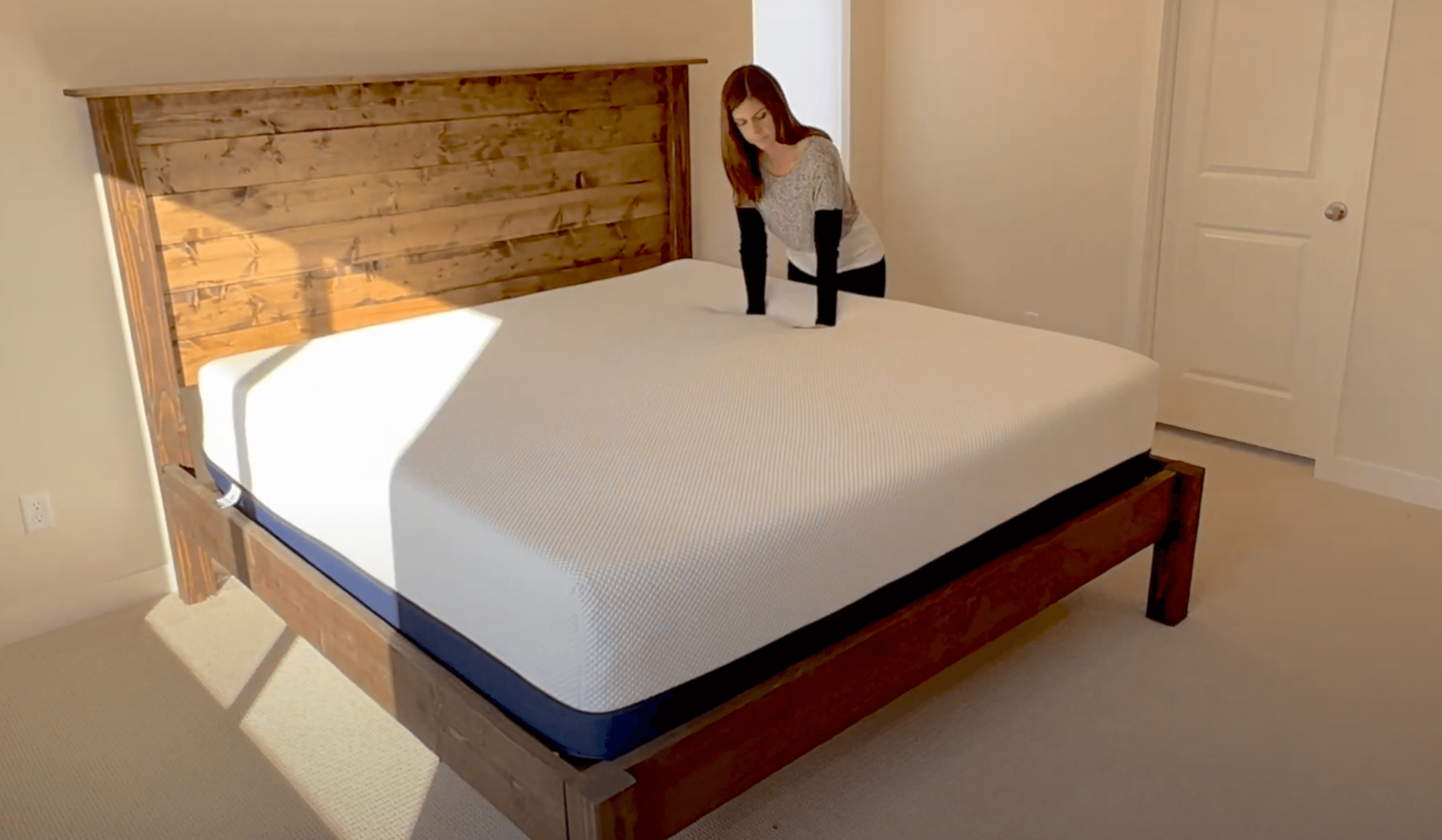
The AS5 is our memory foam pick and the softest all-foam bed on this page. That makes it the most specific recommendation here: right for a narrow group, wrong for most of the others.
On my side, the thick Bio-Pur comfort layer took my shoulder and hip in further than any foam bed I tested for this guide, and pressure did not build at either joint even after lying still for a while. If your shoulder is the reason you wake up and change position, this is the deepest cushioning available on this list.
What keeps that depth from becoming a problem is the Active Flex layer underneath. It is a responsive foam rather than a slow memory foam, and it is why the surface stopped giving at a certain point instead of continuing down. On my back, my hips did not fall below my shoulders, which is the failure mode a soft all-foam bed usually has.
Motion isolation is where an all-foam build has an inherent advantage, and the AS5 uses it. When my partner moved on the far side of the queen, almost nothing reached me.
Now the caution, and it is a real one for this category. A soft foam bed means you sit into the surface rather than on it, and getting up from the middle of the bed takes more effort here than on any hybrid on this page.
The perimeter compresses too, since there are no coils to reinforce it. If transfers are the part of your day you are trying to make easier, one of the coil picks will serve you better, and that tradeoff is the honest reason this bed sits at a lower recommended spot, rather than higher in our list.
For a side sleeper who needs deep shoulder relief above all else, who is lighter-weight, and who does not find getting out of a soft bed difficult, the AS5 is the memory foam pick.
- 8 Value
- 9 Edge Support
- 9 Trial Period
- 8 Response Time
- 9 Motion Transfer
- 10 Cooling & Breathability
I picked the AS5 because it delivered the deepest shoulder relief of any foam bed I tested for this guide without letting the hips fall out of line.
Pressure relief. On my side during testing, my shoulder and hip settled into the Bio-Pur layer further than on any other foam bed here, and no pressure built at either joint after lying still, so a side sleeper with a sore shoulder has the most cushioning on this page available to them.
Support inside a soft feel. The Active Flex layer stopped the give at a set depth, and on my back my hips stayed level with my shoulders rather than dropping, which is the usual failure of a soft all-foam bed.
Motion isolation. My partner’s movement on the far side of the queen barely reached me, which is the strongest result the all-foam builds on this page produced.
Best For:
- Side sleepers who want maximum cushioning at the shoulder and hip
- Lightweight sleepers who find medium beds too firm
- Couples where one partner is a light sleeper
Compare Instead:
- Amerisleep AS3 if you want a medium feel that is easier to get up from
- Helix Sunset Luxe if you want a soft surface with a reinforced perimeter to transfer from
- Amerisleep AS5 Hybrid if you want this comfort system over a pocketed coil base with firmer edges
The AS5 feels like the softest bed on this page, because it is. You settle in rather than lying on top, and the surface closes around your shoulder and hip.
The Active Flex layer is what you meet at the bottom of that, and it arrives sooner than the depth of the foam suggests it will.
Changing position takes more effort than on the hybrids here, since you are moving out of a deeper impression each time.
The perimeter compresses when you sit on it and the surface tilts toward the floor, so the edge is not the strong point.
It suits a lightweight side sleeper who wants the deepest cushioning available and does not struggle to get up from a soft surface.
The thick Bio-Pur memory foam layer is what let my shoulder and hip settle in as far as they did, and its plant-based, more open structure is why it did not feel as slow or as warm as traditional memory foam of the same depth.
The Active Flex layer under it is the reason that depth stopped where it did: it is responsive rather than slow, and it is what kept my hips level with my shoulders on my back instead of letting them fall through.
The Bio-Core base is what kept the surface consistent through a long session with no soft spot forming under the midsection.
What the build does not have is a coil unit or a reinforced perimeter, and that is why the edge compressed under me and why the surface takes more effort to get up from than the hybrids here.
Pros
- Motion Transfer (9/10): my partner’s movement on the far side of a queen barely reached me, the strongest result of the all-foam builds here.
- Pressure relief: my shoulder and hip settled in further than on any other foam bed I tested for this guide, with no pressure building at either joint.
- Spinal alignment inside a soft feel: my hips stayed level with my shoulders on my back rather than dropping through the comfort layers.
Cons
- There is no coil unit to reinforce the perimeter, so it compressed under me when I sat on it more than the coil-reinforced picks here.
- Response Time (8/10): the slowest surface recovery on this page, and moving out of a deeper impression each time makes repositioning slower than on the coil picks.
- Available in one firmness, a soft one, so back and stomach sleepers who need hip elevation have no option within the model.
On my side during testing, the Bio-Pur layer took my shoulder and hip in more deeply than any other foam bed here while the Active Flex layer kept my hips from dropping on my back. It is the pick for a lightweight side sleeper who wants maximum shoulder cushioning and does not find a soft surface hard to get up from.

Watch Our Westin Heavenly Bed Review
The Heavenly Bed is on this list for one reason, and it is a good one: it is the bed a lot of people have already tried. If you have stayed at a Westin, slept better than you do at home, and wondered what the mattress was, this is it, and the shopping problem is already solved for you.
It is a medium pillow top over a reinforced pocketed coil unit. On my back the coils held my midsection up while the pillow top cushioned my shoulders, which is the classic hotel bed result and the reason the feel travels well across body types and positions. The perimeter held its shape when I sat on it, as reinforced coil edges tend to.
The part that matters most for this category is the box spring choice. The mattress ships with either a low-profile 5.5 inch or a standard 9 inch box spring, which means the final surface height is something you decide at checkout. Between a 13.25 inch mattress and two base options, you have roughly three and a half inches of adjustment, and that is the most direct height control on this page after the Saatva.
There is one big catch, and you should know it before anything else: Westin says this mattress cannot be returned. Every other bed on this page gives you at least 100 nights. That is why the trial score is a 0 and why the overall score is the lowest here.
For a shopper who has already slept on this exact bed, wants the pillow top hotel feel, and wants the box spring height chosen at the point of order, the Heavenly Bed is the hotel pick.
- 8 Value
- 10 Edge Support
- 0 Trial Period
- 10 Response Time
- 9 Motion Transfer
- 9 Cooling & Breathability
I picked the Heavenly Bed because it is the only pick on this page a shopper may have already tested, over multiple nights, before ever seeing this guide.
Edge support. When I sat on the perimeter, the reinforced pocketed coils held their shape and the surface did not roll away under me, so standing up from the edge did not need a hand on the mattress.
Spinal alignment. On my back, the coil unit held my midsection up while the pillow top cushioned my shoulders, which is why the medium feel works across a range of body types rather than one.
Height control. The choice between a 5.5 inch and a 9 inch box spring lets you set the final surface height at the point of order, which is the practical version of the advice this whole guide is built on.
Best For:
- Shoppers who have slept on this bed in a hotel and want it at home
- Back and combination sleepers who want a medium pillow top
- Anyone who wants delivery, setup, and old mattress removal handled
Compare Instead:
- Saatva Classic if you want a similar on-top innerspring feel with a 365 night trial and two profile heights
- Nolah Evolution if you want a plusher pillow top with a firmness choice and a lifetime warranty
- Leesa Sapira Chill if you want a hotel-style quilted top with a cooler surface by touch
It feels like a hotel bed, which is to say cushioned on top and springy underneath, with the pillow top doing the softening and the coils doing the lifting. You rest on the surface rather than settling into it, and there is bounce when you move.
The perimeter stayed steady under me when I sat down, and getting up from the edge was straightforward. Partner movement carried further than on the foam picks here, which is the usual coil tradeoff.
It fits a back or combination sleeper who wants a familiar medium pillow top feel and is choosing the box spring height to match how they get in and out of bed.
The plush pillow top is what cushioned my shoulders on contact and gives the bed its familiar hotel surface. The foam layers below it are built with air pockets, and that structure is why the surface did not warm under me as quickly as a solid foam comfort layer of the same depth.
The reinforced pocketed coil unit is doing two things I could feel: it held my midsection up on my back rather than letting it settle, and its reinforced perimeter is what kept the edge from rolling away when I sat on it.
The silver fibers in the cover are an antimicrobial treatment rather than a comfort feature. The 13.25 inch mattress then sits on either a 5.5 or 9 inch box spring, and that pairing is what sets your final bed height.
Pros
- Edge Support (10/10): ties for the top edge support score on this page, and the reinforced coil perimeter held its shape when I sat on it, so standing up from the edge did not require a hand on the mattress.
- Height control: two box spring heights, 5.5 inches and 9 inches, let you set the final surface height at the point of order.
- White glove delivery, in-home setup, and old mattress removal are included rather than sold as an upgrade.
Cons
- The only pick on this page that cannot be returned, while every other bed here carries at least 100 nights.
- Delivery takes roughly four to six weeks, the longest lead time on this page, and shipping is $195 rather than free.
- Available in one medium firmness, so side sleepers who want deeper shoulder cushioning have no option within the model.
On my back during testing, the reinforced coil unit held my midsection up while the pillow top cushioned my shoulders, and the perimeter stayed steady when I sat on the edge. It is the pick for a back or combination sleeper who already knows this exact bed from a hotel stay and wants to set the final height with the box spring.
Best Mattress for Couples
Nest Bedding Sparrow
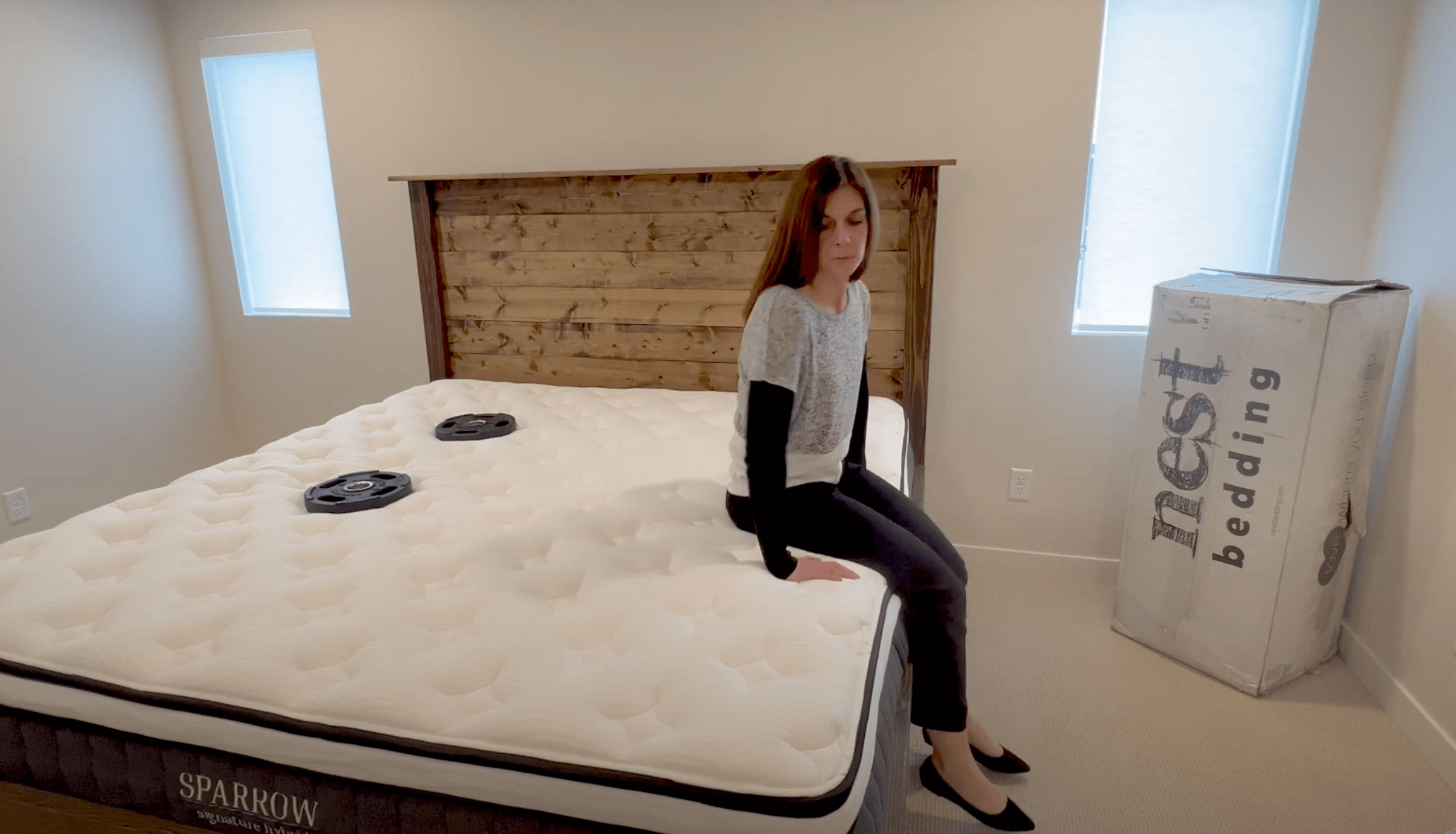
Warranty
Lifetime
Sleep Trial
365 Nights
Shipping
Free
Watch Our Nest Bedding Sparrow Video Review
The Sparrow is the couples pick because it is the only bed on this page that lets two people in the same bed choose different firmnesses. On a split configuration, one side can be plush and the other firm, which solves a problem that otherwise has no good answer: two people with different body weights, different positions, and different support needs sharing one surface.
That flexibility is particularly relevant here, because if one partner needs a softer surface for shoulder relief and the other needs a firmer one to get up from easily, a single compromise firmness leaves both of them slightly wrong.
I tested the medium. On my side, the gel-infused memory foam let my shoulder and hip settle while the zoned coils held my spine supported underneath, and when my partner changed positions on the far side of the queen, movement barely reached me. That combination is what a shared bed actually needs: cushioning on your side, isolation from theirs.
The perimeter is reinforced and held its shape when I sat on it, and it ties for the top edge support score on this page. With two people sharing a queen, the usable width matters, and a bed that stays supportive to the edge is functionally wider than one that does not.
The 365 night trial and lifetime warranty tie for the longest coverage here, which is worth having on a purchase two people have to agree on.
For a couple with different firmness needs who want strong motion isolation, a reinforced perimeter, and a year to decide, the Nest Bedding Sparrow earned this category.
- 8 Value
- 10 Edge Support
- 10 Trial Period
- 9 Response Time
- 10 Motion Transfer
- 9 Cooling & Breathability
I picked the Sparrow because it is the only bed on this page that does not force two people to agree on one firmness.
Motion isolation. During testing, my partner changed positions and got in and out on the far side of the queen and movement barely reached me, so a light sleeper sharing a bed with someone who gets up at night has fewer disruptions to sleep through.
Edge support. The reinforced perimeter held its shape when I sat on it to transfer, and it ties for the top edge support score here, which makes the full width of the bed usable when two people are sharing it.
Pressure relief with support. On my side in the medium, the gel-infused memory foam let my shoulder settle while the zoned coils kept my spine from dropping at the hip.
Best For:
- Couples with different firmness needs on each side
- Side sleepers who want cushioning plus strong motion isolation
- Shoppers who want the longest decision window available
Compare Instead:
- Leesa Sapira Chill if you both want the same firmness and would rather have a cooler quilted surface
- Amerisleep AS3 if you want a shorter 12 inch profile at a lower price
- Saatva Classic if you want two profile heights as well as a firmness choice
In the medium, the Sparrow feels balanced: the memory foam layer takes your shoulder and hip in, then the zoned coils meet you and hold.
It has less bounce than the innerspring picks here and more support than the all-foam ones, which is where a lot of couples land.
The perimeter stayed firm under me while sitting, and getting up from the edge did not require pushing off the surface. Partner movement was among the least noticeable on this page.
It fits a couple where one or both are side sleepers, where partner movement is what wakes you, and where the two of you want different surfaces without buying two beds.
The gel-infused memory foam comfort layer is what let my shoulder and hip settle in without the surface warming under me the way plain memory foam does.
The zoned pocketed coil unit below it is what kept my spine from dropping at the hip while that settling happened, and because the coils are individually wrapped, they are also the reason my partner’s movement stayed on their side of the bed rather than traveling across.
The reinforced edge coils are what held the perimeter firm when I sat on it, which is what keeps the full width usable for two people.
In a split configuration the same coil unit sits under both comfort levels, so a plush side and a firm side share one support system. These layers make up the 14 inch profile.
Pros
- Motion Transfer (10/10): ties for the top motion score here, and my partner getting in and out on the far side of a queen barely reached me.
- Edge Support (10/10): ties for the top edge support score, and the reinforced perimeter held firm when I sat on it to transfer.
- Trial Period (10/10): ties for the longest trial on this page at 365 nights, backed by a lifetime warranty.
- Split firmness available, so two sleepers can have different comfort levels on one coil system.
Cons
- Value (8/10): priced above the mid-tier hybrids here without leading them on more sub-scores.
- Response Time (9/10): the memory foam comfort layer recovers a beat slower than the latex and innerspring picks here, so a combination sleeper who repositions constantly will notice a little lag.
- Split configurations add cost and require a compatible frame or base, so the flexibility is not free.
On my side in the medium during testing, the gel-infused foam let my shoulder settle while the zoned coils held my spine level, and my partner’s movement on the far side of a queen barely reached me. It is the pick for a couple who need different firmness levels on each side and want a reinforced edge to transfer from.
Compare the Best Mattresses for Osteoporosis
Queen list prices on this page run from $1,199 to $3,649 before discounts.
| Model | Mattress Type | Firmness | Profile | Sleep Trial | Warranty | Price (Queen) |
|---|---|---|---|---|---|---|
| Amerisleep AS3 | Memory foam | 5 to 6 (Medium) | 12 inches | 100 nights | 20 years | $1,749See Price |
| FORM Prime | Gel grid hybrid | 5.5 to 6 | 14 inches | 365 nights | Lifetime | $2,999See Price |
| Zoma Boost | Memory foam hybrid | 5 (Medium) | 15 inches | 100 nights | 10 years | $1,799See Price |
| Vaya Hybrid | Foam hybrid | 5 to 6 (Medium) | 14 inches | 100 nights | 10 years | $1,199See Price |
| Helix Sunset Luxe | Memory foam hybrid | 3 to 4 (Soft) | 13.5 inches | 120 nights | Lifetime | $2,498.66See Price |
| Leesa Sapira Chill | Memory foam hybrid | 4, 6, or 8 | 14 inches | 120 nights | Lifetime | $2,399See Price |
| Saatva Classic | Innerspring hybrid | 3, 5 to 7, or 8 | 11.5 or 14.5 inches | 365 nights | Lifetime | $2,249See Price |
| Nolah Evolution | Memory foam hybrid | 4 to 5, 6 to 7, or 7 to 8 | 14 or 15 inches | 120 nights | Lifetime | $2,277See Price |
| Organica Plush | Latex hybrid | 4 (Soft) | 15 inches | 100 nights | 20 years | $2,999See Price |
| Amerisleep AS6 Black Series | Memory foam hybrid | 4, 5 to 7, or 8 | 14 inches | 100 nights | 20 years | $3,649See Price |
| Naturepedic Concerto | Latex hybrid | 4 (Soft) | 13 inches | 100 nights | 25 years | $2,999See Price |
| Amerisleep AS5 | Memory foam | 3 (Soft) | 14 inches | 100 nights | 20 years | $2,349See Price |
| Westin Heavenly Bed | Innerspring | 5 to 6 (Medium) | 13.25 inches | Not returnable | 10 years | $2,495 (mattress only)See Price |
| Nest Bedding Sparrow | Memory foam hybrid | 3, 5, or 8 | 14 inches | 365 nights | Lifetime | $2,349See Price |
List prices checked October 2026.
The Mattresses We Have Tested
Every mattress below was tested hands-on and on camera by me, Kristina Hindes, our lead tester. Each row links to its written review and filmed test, so you can check our work. For how we score every mattress, see How We Test Mattresses.
See the full list, with review and video links
| Mattress | Review and video |
|---|---|
| Amerisleep AS2 | Review · Video |
| Amerisleep AS3 | Review · Video |
| Amerisleep AS3 Hybrid | Review · Video |
| Amerisleep AS5 | Review (test clips inside) |
| Amerisleep AS5 Hybrid | Review · Video |
| Amerisleep AS6 Black Series | Review · Video |
| Amerisleep Organica | Review · Video |
| Amerisleep Organica Plush | Review · Video |
| Bear Original | Review · Video |
| Birch Natural | Review · Video |
| Brooklyn Bedding Aurora Luxe Hybrid | Review · Video |
| Brooklyn Bedding Plank Firm | Review · Video |
| Casper The One | Review · Video |
| Eco Terra Hybrid Latex | Review · Video |
| FORM Core | Review · Video |
| FORM Core Hybrid | Review · Video |
| FORM Prime | Review · Video |
| FORM Prime X | Review · Video |
| GhostBed Flex | Review · Video |
| Happsy Organic | Review · Video |
| Helix Dawn Luxe | Review · Video |
| Helix Midnight Luxe | Review · Video |
| Helix Sunset Luxe | Review · Video |
| Latex For Less Hybrid | Review · Video |
| Leesa Original | Review · Video |
| Leesa Sapira Chill Hybrid | Review · Video |
| Leesa Sapira Hybrid | Review · Video |
| Naturepedic Concerto | Review · Video |
| Naturepedic EOS Classic Organic | Review · Video |
| Nest Bedding Owl | Review · Video |
| Nest Bedding Puffin Kids | Review · Video |
| Nest Bedding Raven | Review · Video |
| Nest Bedding Sparrow Signature Hybrid | Review · Video |
| Nolah Evolution 15 | Review · Video |
| Nolah Natural 11 | Review · Video |
| Nolah Original Hybrid | Review · Video |
| PlushBeds Botanical Bliss | Review · Video |
| PlushBeds Luxury Bliss | Review · Video |
| PlushBeds Organic Bliss | Review · Video |
| PlushBeds Organic Kids | Review · Video |
| PlushBeds Signature Bliss | Review · Video |
| Saatva Classic | Review · Video |
| SweetNight CoolNest | Review · Video |
| SweetNight Prime | Review · Video |
| Vaya Hybrid | Review · Video |
| Vaya Mattress | Review · Video |
| Westin Heavenly Bed | Review · Video |
| Zoma Boost | Review · Video |
| Zoma Hybrid | Review · Video |
| Zoma Start | Review · Video |
What Osteoporosis Is, and Who Gets It
Osteoporosis is a bone disease that develops when bone mineral density and bone mass decrease, or when the structure and strength of bone changes, which raises the risk of fractures. NIAMS calls it a silent disease because there are typically no symptoms until a bone breaks, and notes that bones affected by osteoporosis can fracture from a minor fall or from normal stresses such as bending, lifting, or coughing.
Anyone can develop it, and risk rises with age. MedlinePlus lists sex, age, body size, family history, hormone changes, diet, long-term use of certain medicines, and several medical conditions among the factors that increase risk.
The FDA Office of Women’s Health notes that of the estimated 10 million Americans with osteoporosis, more than 8 million are women, and that in the United States the condition affects one in four women aged 65 or older.
Womenshealth.gov covers prevention across the lifespan, which starts long before anyone is shopping for a mattress.
The current national numbers come from CDC’s National Center for Health Statistics. Its 2021 data brief put the age-adjusted prevalence of osteoporosis at the femur neck or lumbar spine at 12.6 percent of adults aged 50 and over, 19.6 percent among women and 4.4 percent among men, with low bone mass affecting another 43.1 percent.
Current summary figures are maintained at CDC FastStats, and osteoporosis remains a tracked objective under Healthy People.
Screening, diagnosis, and treatment are your doctor’s territory, not a mattress guide’s. NIAMS bone health resources and the MedlinePlus magazine overview are good places to read further before that appointment.
The Sleep and Bone Health Connection
Research over the past decade has looked at whether sleep itself relates to bone health, and the pattern is consistent enough to mention, with the caveat that most of it is observational.
A 2021 review in Current Opinion in Endocrinology, Diabetes and Obesity summarized the evidence that sleep and circadian disruptions, including night shift work, abnormal sleep durations, and obstructive sleep apnea, appear detrimental to skeletal health, while stating plainly that more research is needed on which disturbances matter most and why.
A cross-sectional NHANES analysis published in Scientific Reports found that women over 50 reporting less than five hours of sleep per day had substantially higher odds of osteoporosis than other groups.
A study of 3,659 postmenopausal women in Archives of Osteoporosis found higher osteoporosis risk associated with total and nocturnal sleep durations of six hours or less, and with taking daytime naps. A 2016 study in Sleep Medicine reported that poor sleep quality, and sleep disturbances in particular, were associated with bone stiffness index.
More recently, a 2025 analysis of the ELSA and HRS cohorts found that participants with persistently poor sleep quality had significantly higher osteoporosis incidence than those with consistently good sleep.
And in August 2026, an international panel published an expert consensus in Bone Research arguing that sleep disorder management should be integrated into osteoporosis prevention and care pathways, with recommendations that include screening fall history and optimizing the home environment for fall risk, such as removing tripping hazards and providing enough light for getting up at night.
This body of research suggests that sleeping poorly is worth addressing with your doctor for reasons beyond how you feel the next day. A mattress does not change any of that. What it can change is how comfortable you are and how easily you get in and out of bed, and that is the only claim this guide makes.
“For women, I think it’s especially important to think about bone health before osteoporosis is diagnosed,” says Dr. Miller. “Bone loss accelerates around the menopause transition, so this isn’t something I want women waiting until their 60s or 70s to think about. Resistance training, appropriate weight-bearing activity, adequate nutrition, and conversations with your healthcare provider about your individual risk are all pieces of protecting bone health across the lifespan.”
How to Choose a Mattress if You Have Osteoporosis
Bed height and ease of transfer
The number that gets ignored on most mattress pages is the one that matters most here. Your mattress profile and your frame or foundation combine into a single surface height, and that bed height determines whether getting into and out of bed is a step or a climb.
The general target is a surface where you can sit on the edge with your feet flat on the floor and your knees at roughly hip level. Too low and you are pushing up from a deep squat. Too high and you are sliding down to reach the floor. Measure from the floor to the top of your current mattress, decide whether that number is working, and then shop profile height accordingly.
“In my years working in outpatient neurorehab, I saw how often falls happened during very ordinary transitions—getting out of bed, sitting back down, or getting up during the night to use the bathroom,” says Dr. Miller. “For someone with osteoporosis, that matters because the consequences of a fall can be much greater.”
“Bed height isn’t just a comfort preference; it can change the physical demands of the transfer. I want someone to be able to move from sitting to standing—and back down again—with control, rather than having to use momentum, pull themselves up, or essentially drop onto the bed.”
On this page, profiles run from 11.5 inches (Saatva Classic, low profile option) to 15 inches (Zoma Boost, Organica Plush, and the Nolah Evolution with its pillow top upgrade), and three picks let you set height at the point of order: the Saatva Classic through its two profile heights, the Westin Heavenly Bed through its two box spring heights, and the Nolah Evolution through its choice of cover.
Edge support
The perimeter is where you sit down, where you swing your legs over, and where you push up from. An edge that compresses under you turns a controlled movement into an uncontrolled one.
Reinforced coil perimeters and high-density foam rails hold up better than an unreinforced foam edge, which is why nine of the picks on this page score a 10 on edge support, while the two all-foam models come in at 8 and 9.
Test it yourself when your mattress arrives: sit on the edge as you normally would, then stand up. If the surface tips toward the floor or you find yourself needing a hand on the mattress, that is the bed telling you something before the trial period ends.
Firmness and spinal alignment
The goal is a surface that keeps your spine in the same neutral line it holds when you are standing well. Too soft, and your hips drop below your shoulders and you have to work to get out. Too firm, and your shoulder and hip carry your weight at two small points instead of spreading it.
Most sleepers land in the medium to medium-firm range, but firmness is a function of your body weight and your sleeping position, not a universal number.
Lighter-weight sleepers experience any given bed as firmer than heavier sleepers do, so a lighter side sleeper often needs a softer surface than the standard recommendation, and a heavier sleeper often needs a firmer one to avoid sinking past the comfort layers.
If numbness or tingling in your hands or feet is also part of your nights, my best mattress for neuropathy guide looks at firmness for pressure-sensitive sleepers.
If you are not sure, the picks here that come in three firmness levels give you the most room to be wrong once.
Responsiveness
NIAMS advises people with osteoporosis to avoid movements that twist the spine or bend it forward from the waist. That guidance points at a mattress property most shoppers never think about.
On a slow, deep surface, turning over means pushing off with an arm and rotating your torso out of an impression. On a responsive surface, you roll in one motion. The innerspring and coil-forward picks on this page recover fastest; the soft memory foam picks are slowest.
This same movement guidance comes up with other spine conditions. My best mattress for ankylosing spondylitis guide covers a stiffer, more rigid spine specifically.
Motion isolation
If you share a bed, a partner getting up at night is one of the most common reasons people wake. The picks with a deep memory foam comfort system isolate movement best as a mattress for two, while the thinner-comfort hybrids transfer the most.
Adjustable bases
Raising the head of the bed makes it easier to get into a seated position, and slightly raising the legs takes pressure off the lower back. If you use one, confirm the mattress is compatible before ordering, and check for gaps between the mattress and the base in raised positions.
If circulation is also a concern, my best mattress for poor circulation guide covers base and mattress pairings from that angle.
Whether an adjustable base is right for you is a question worth putting to your doctor or physical therapist rather than a mattress reviewer.
Sleeping Positions and Pillow Setup
Back sleeping distributes your weight most evenly and makes a neutral spine easiest to hold. A pillow under the knees takes some strain off the lower back. Your head pillow should fill the space between a mattress for back sleeping and your head without pushing your chin toward your chest.
Side sleeping works well on a surface that lets the shoulder and hip settle while keeping the spine level. A pillow lengthwise between the knees keeps the top leg from pulling the hips out of alignment. Your head pillow needs to be tall enough to fill the gap between your ear and the surface of a mattress for side sleeping. And this means a taller pillow than a back sleeper needs.
Stomach sleeping is generally not recommended with osteoporosis, since it extends the spine and turns the neck to one side for hours. If it is the only position you can fall asleep in, a firmer surface that keeps the hips from sinking is the least bad version of it. Still, it is worth raising with your provider than just quietly buying a mattress for stomach sleeping.
Movements to avoid, per NIAMS, include twisting the spine and bending forward from the waist. That applies to getting out of bed too: rolling to your side, dropping your legs off the edge, and pushing up with your arms is a gentler sequence than sitting straight up from flat.
Setting Up the Bedroom
The Bone Research consensus panel recommends optimizing the home environment to reduce fall risk and support sleep at the same time, including removing tripping hazards and providing enough light to move safely at night. NIAMS makes similar points in its guidance on living with osteoporosis.
Here are the practical steps to make:
- Keep a clear path from the bed to the bathroom and light it well enough to use at night.
- Secure or remove loose rugs near the bed, and keep cords out of the walking path.
- Keep shoes with support and thin nonslip soles near the bed rather than walking in socks.
- Keep a phone within reach of the bed.
- Make sure there is a stable surface, a nightstand or a bed frame, near where you sit up.
If migraines are part of your nights as well, my mattress for migraines guide covers bedroom setup from that angle.
FAQs
What is the best mattress firmness if you have osteoporosis?
Most people do best somewhere in the medium to medium-firm range, because that band tends to cushion the hips and shoulders while still holding the spine in a neutral line and staying easy to get out of.
The right number for you depends on your sleeping position and body weight. Side sleepers usually need something softer than back sleepers, and lighter-weight sleepers usually need something softer than heavier sleepers. Talk with your doctor or physical therapist about your own situation.
Is a firm mattress good for osteoporosis?
Not necessarily. A very firm surface concentrates your weight at the hip and the shoulder rather than spreading it, which is uncomfortable for most side sleepers. A very soft surface has the opposite problem: you sink in and getting up takes more effort.
Neither extreme is a good default, which is why most of the picks on this page sit in the middle of the firmness scale or offer a choice.
Does mattress height matter if you have osteoporosis?
It matters more than most other specs. Bed height determines whether you sit down onto the surface or drop onto it, and whether you stand up from it or slide off it.
Aim for a setup where you can sit on the edge with your feet flat on the floor and your knees at roughly hip level, and remember that mattress profile and frame height combine to produce that number. If your current bed is close but not right, changing the foundation is often easier than changing the mattress.
Can a mattress help with osteoporosis?
A mattress does not treat osteoporosis, change bone density, or prevent a fracture. What it can do is affect your comfort, how well your spine is supported for the hours you are on it, and how much effort it takes to get in and out of bed. Those are worth optimizing on their own terms. Any decision about managing the condition itself belongs with your healthcare provider.
What does the American Chiropractic Association endorsement mean?
Four picks in this guide (Amerisleep AS3, Organica Plush, Amerisleep AS6 Black Series, and Amerisleep AS5) carry an endorsement from the American Chiropractic Association. The endorsement reflects support and build quality as judged by licensed chiropractors. It is not a medical claim that a mattress treats, prevents, or improves osteoporosis.
Is memory foam or a hybrid better for osteoporosis?
Hybrids tend to suit this situation better on two dimensions that matter here: they usually have reinforced perimeters that hold up when you sit on the edge, and their coil support recovers faster, so turning over takes less effort.
Memory foam usually wins on motion isolation and on deep cushioning at the shoulder. If getting in and out of bed is your priority, look at the hybrids on this page. If a partner’s movement is what wakes you, look at the foam builds.
Is an adjustable base worth it?
For many people, raising the head of the bed makes getting into a seated position easier, and slightly raising the legs eases pressure on the lower back. Whether it is right for you is a question for your doctor or physical therapist. If you buy one, check that your mattress is rated for it and look for gaps between the mattress and the base in raised positions.
Does poor sleep affect bone health?
Research has found associations between sleep and bone health, though most of it is observational and the mechanisms are still being studied. But none of that means a mattress treats or prevents the condition, and none of it replaces medical advice.
What sleeping position is best if you have osteoporosis?
Back sleeping distributes weight most evenly and makes a neutral spine easiest to maintain, usually with a pillow under the knees. Side sleeping works well with a pillow between the knees to keep the hips level. Stomach sleeping is generally not recommended because it extends the spine and holds the neck turned.
NIAMS also advises avoiding movements that twist the spine or bend it forward from the waist, which is worth applying to how you get out of bed as well as how you sleep in it.
How often should a mattress be replaced?
Most mattresses lose support somewhere in the seven to ten year range, sooner if they were inexpensive to begin with. If you can see a dip where you sleep, if you wake up feeling less supported than when you lay down, or if you have started avoiding one side of the bed, those are the practical signals.
What pillow works best with osteoporosis?
The pillow’s job is to fill the space between your head and the mattress so your neck stays in line with the rest of your spine. Side sleepers need more loft than back sleepers, since the gap is larger. A pillow that pushes your chin toward your chest is too tall, and one that lets your head tip back is too short.
Did You Find Your Next Bed?
If you take one thing from this guide, make it the height measurement. Before you order anything, measure from the floor to the top of your current mattress and decide whether that number is working for you, because it is the variable that decides how the first and last minute of every night go, and it is the one you can control at the point of purchase by pairing the right profile with the right frame.
After that, work down the list: a perimeter that holds when you sit on it, a surface that keeps your hips level with your shoulders in the position you actually sleep in, and enough responsiveness that turning over takes one motion instead of a push and a twist. Every bed on this page was picked against those three things, in that order.
Use the trial. Sit on the edge, stand up, roll over, and get out of bed the way you actually do it, in the room where the bed lives. That is the test no spec sheet answers, and thirteen of the fourteen picks here give you at least 100 nights to run it.
Related Reads
- I Tested 50+ Mattresses to Find the 14 Best Mattresses for Multiple Sclerosis of 2026


- I Tested 50+ Mattresses to Find the 14 Best Mattresses for Menopause of 2026


- I Tested 50+ Mattresses to Find the 14 Best Mattresses for Piriformis Syndrome of 2026
- I Tested 50+ Mattresses to Find the 14 Best Mattresses for Neuropathy of 2026