I Tested 50+ Mattresses to Find the 13 Best Mattresses for Ankylosing Spondylitis of 2026

Top Recommendation of 2026: Amerisleep AS2
After testing more than 50 mattresses for this guide, the Amerisleep AS2 earned our pick as the Best Mattress for Ankylosing Spondylitis of 2026 because it held my spine in the straightest line of any bed I tested while still cushioning my shoulders and hips. During testing, its medium-firm surface kept my hips from dropping below my shoulders on my back and on my side, and it recovered fast enough that rolling from one side to the other took a single push rather than a full reset.
The AS2 is best suited for back sleepers, side sleepers who want support before softness, and anyone whose morning stiffness makes getting out of bed the hardest part of the night. Its firmer feel and quick recovery made it the most useful bed in this guide for sleepers who need a steady surface to push against.

Every mattress featured on Sleep Junkie is evaluated using the same testing framework for support, pressure relief, cooling, motion isolation, edge support, responsiveness, and overall value. Learn How We Test Mattresses.
- Best Mattress Overall: Amerisleep AS2
- Best Purple Alternative: FORM Prime
- Best Mattress For Athletes: Zoma Boost
- Best Budget Mattress: Vaya Mattress
- Best Mattress For Side Sleepers: Helix Midnight Luxe
- Best Hybrid Mattress: Leesa Sapira Chill
- Best Innerspring Mattress: Saatva Classic
- Best Pillow Top Mattress: Nolah Evolution
- Best Latex Mattress: Organica
- Best Cooling Mattress: Amerisleep AS6 Black Series
- Best Hotel Mattress: Westin Heavenly Bed
- Best Organic Mattress: PlushBeds Signature Bliss
- Best Mattress For Couples: Nest Bedding Sparrow
With most back problems, you hurt more the harder you push. Ankylosing spondylitis turns that around. The pain and stiffness are usually worst when you are still, which means the hours you spend in bed are often the hours you feel it most. Plenty of people with AS wake at three in the morning sore, and then spend the first stretch of the day working the stiffness out.
That puts a lot of weight on one piece of furniture. Your mattress is the surface you are lying on during the worst hours, and it decides three things that matter here: whether your spine stays in a straight line, whether your shoulders and hips get cushioned or pressed, and how much work it takes to roll over or sit up.
I tested more than 50 mattresses for this guide and ranked 13 of them. I looked at the usual things, meaning pressure relief, cooling, motion transfer, and value. I also weighted two things most roundups barely mention: how fast a mattress springs back when you move, and whether the edge holds firm when you sit on it to stand up. If stiffness makes turning over a project, those two matter more than almost anything else.
One thing to be clear about up front. No mattress treats ankylosing spondylitis, and nothing on this page is a substitute for your rheumatologist or your physical therapist. A good bed just keeps the night from being harder than it already is. That is the bar I held every mattress to.
How We Selected These Mattresses
Our team evaluated mattresses for pressure-relieving foam layers, zoned support technology, motion isolation, and temperature regulation. We focused on designs that may help support comfort for sleepers with chronic pain sensitivity, particularly in the hips, shoulders, and lower back. Consumer reviews from verified buyers were also assessed to reflect real-world comfort experiences across different sleep positions and body types.
Sleep Junkie uses hands-on product evaluation, product-spec review, owner-feedback review where available, and expert review where applicable. Health-related claims are routed to credentialed reviewers when the topic requires added clinical or scientific oversight. Pages with completed commentary from our expert review board should show the reviewer clearly on the page.
Mattresses do not diagnose, treat, or cure ankylosing spondylitis. A supportive mattress may help some sleepers feel more comfortable, but severe, persistent, radiating, or neurological symptoms should be discussed with a healthcare professional.
Best Mattresses for Ankylosing Spondylitis

Watch Our Amerisleep AS2 Video Review
Among the 50+ mattresses I tested for this guide, the Amerisleep AS2 earned our top recommendation and was named the Best Mattress for Ankylosing Spondylitis of 2026.
The AS2 gave me the straightest spinal line of any bed on this list. On my back, my hips stayed level with my shoulders instead of settling into the foam, and the firmer surface under my midsection meant I was not fighting a sag every time I shifted. That matters here, because a surface that lets the pelvis drop pulls the lower spine out of its neutral line all night.
What separated it from the other firm beds I tested was recovery time. The Bio-Pur foam released my shoulder almost as soon as I moved off it, so turning from my back to my side took one push instead of a roll and a reset. On mornings when your back is already stiff, that difference is the whole experience of getting out of bed.
The AS2 also ran cooler to the touch through the first three hours than the traditional memory foam beds I compared, and a partner’s movement barely reached my side of the queen. The AS2 is one of Amerisleep’s officially ACA-endorsed models, a recognition the American Chiropractic Association grants only after hands-on review by licensed doctors of chiropractic.
- 9 Value
- 8 Edge Support
- 9 Trial Period
- 9 Response Time
- 10 Motion Transfer
- 10 Cooling & Breathability
Choosing the AS2 as our top pick came after testing more than 50 mattresses against the six things that matter most when your spine is inflamed and stiff.
Spinal Alignment
The AS2 held my hips and shoulders in the same plane on my back, and it did it without the flatness that firmer foam beds usually bring.
The HIVE transition layer is softer under the shoulders and firmer under the hips, so the middle of the bed carried the heaviest part of my body while the top of the bed still gave way.
That is the combination you want when the goal is a neutral line rather than a soft landing.
Ease of Repositioning
The AS2 recovered its shape faster than the traditional memory foam beds I tested. When I rolled from my side to my back, the impression was gone before I finished the move, so I was pushing off a flat surface instead of climbing out of a dent.
Sleepers with limited spinal rotation feel this immediately.
Edge Support
Sitting on the perimeter with my feet on the floor, the edge held enough shape that I could push up from it. Foam beds usually collapse here. The AS2 did not, which makes the morning transition from lying down to standing up less of an event.
Cooling
The plant-based Bio-Pur foam moved air better than the conventional memory foam beds I compared, so the surface stayed cooler to the touch through the first hours of testing and warmed up more slowly.
Best For:
- Back sleepers who need the hips held level with the shoulders
- Side sleepers who want firmer support with shoulder give
- Anyone who finds turning over at night difficult
Compare Instead:
- Amerisleep AS6 Black Series if you sleep hot and want a plusher, taller hybrid
- Vaya Mattress if you want a similar balanced foam feel at a lower price
- Saatva Classic if you want an on-top innerspring feel with three firmness choices
The AS2 feels supportive first and cushioning second. You rest closer to the top of the mattress than on a typical memory foam bed, with just enough give at the shoulders to keep the surface from feeling hard.
Back sleepers get the clearest benefit, since the firmer core keeps the pelvis from settling.
Side sleepers who like a deep cradle will find it too firm and should look at the AS6 Black Series or the Helix Midnight Luxe instead.
Stomach sleepers, who need the hips held highest of all, are well matched here.
The Bio-Pur comfort layer is a plant-based memory foam with an open-cell structure, and in testing that structure showed up as faster recovery and a cooler surface than the standard memory foam beds I compared it against.
Underneath it, the HIVE layer is cut into five zones of hexagonal channels that are more open at the shoulders and denser at the hips, which is what produced the level hip-to-shoulder line on my back.
The Bio-Core base is a high-density support foam, and it is the reason the edge held its shape when I sat on it rather than folding under me. Together the three layers explain the AS2’s strongest testing results: spinal alignment, response time, and edge support.
Pros
- Motion Transfer (10/10): a partner’s repositioning barely registered on the other side of a queen
- Cooling & Breathability (10/10): the surface stayed cooler to the touch through the first hours than the traditional memory foam beds I compared
- Spinal Alignment: hips stayed level with shoulders on my back across body positions
Cons
- Edge Support (8/10): firm enough to push up from, but it compressed more under me than the reinforced coil perimeters here
- Not enough give at the shoulders for sleepers who want a deep side-sleeping cradle
- The 100-night trial is shorter than the 365-night trials several beds on this list offer
Why The Amerisleep AS2 Won
Among the 13 mattresses on this list, the AS2 gave me the most neutral spinal line paired with quick recovery, which is the combination that matters most when stiffness makes turning over hard. Other beds cushioned more and a few ran cooler, but none combined alignment, responsiveness, and a usable edge as well. It is the pick for a back or side sleeper with ankylosing spondylitis who wants support first.
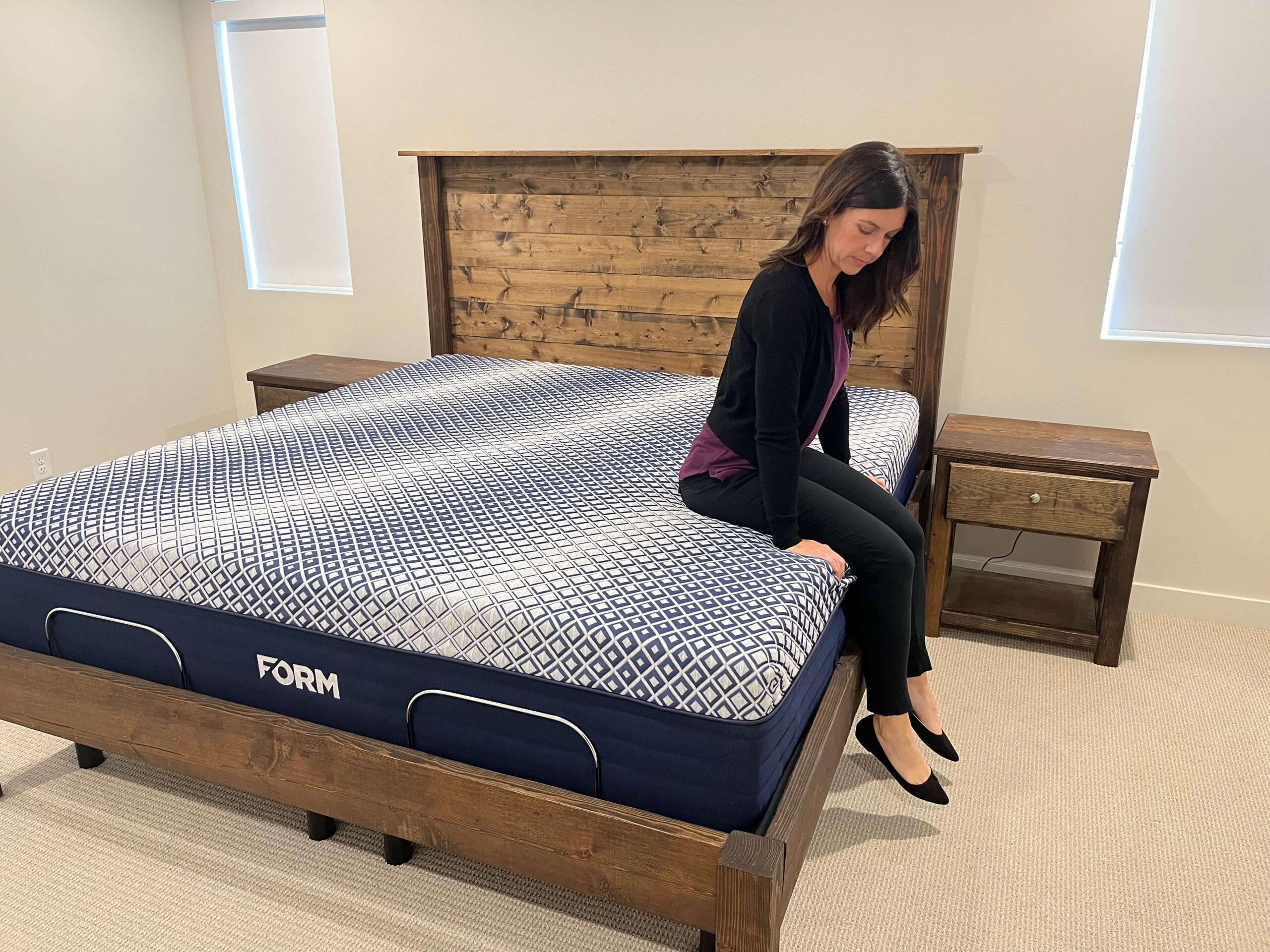
Watch Our FORM Prime Video Review
With the grid hybrids I tested, the FORM Prime stood out for giving me pressure relief exactly where my shoulder and hip met the bed while holding everything in between steady.
During testing, the GelGrid buckled under my shoulder on my side and stayed firm under my ribs and waist, so my spine stayed in line instead of bowing. Grid beds usually pay for that trick with a jiggle every time you move. The Integra-Mesh woven through this one kept the surface from rippling, which is why it posted one of the strongest motion isolation results on this list.
The grid also recovered instantly. When I rolled over, there was no impression to climb out of at all, which puts the FORM Prime near the top of the guide for sleepers whose spinal rotation is limited. The zoned coils underneath kept my hips from sinking on my back.
The FORM Prime is built around a single medium to medium-firm feel rather than multiple firmness options. That works for side and back sleepers. Strict stomach sleepers who need a very firm surface should use the 365-night trial to confirm the fit.
- 8 Value
- 10 Edge Support
- 10 Trial Period
- 9 Response Time
- 10 Motion Transfer
- 9 Cooling & Breathability
Pressure Relief Without Sinking
The GelGrid collapses under a joint and holds firm everywhere else. On my side, my shoulder dropped into the grid while my waist stayed supported, which kept my spine level rather than letting it curve toward the mattress. Sleepers who need shoulder and hip relief but cannot afford to lose lumbar support get both here.
Response Time
There is no recovery lag with a grid. The surface snapped back the moment I moved off it, so every position change started from a flat bed. That puts it among the easier beds on this list to reposition on.
Cooling
The open channels through the grid let air move under my body instead of trapping it. The AeroWeave cover felt cool to the touch on contact, and the surface temperature stayed below the category average through the first three hours of testing.
Edge Support
The zoned coil perimeter held firm when I sat on it with my feet on the floor. That gives you a stable place to push off from in the morning.
Best For:
- Side sleepers who want shoulder relief without losing lumbar support
- Combination sleepers who change positions several times a night
- Hot sleepers cross-shopping a grid mattress
Compare Instead:
- Amerisleep AS2 if you want a firmer, all-foam feel and a lower price
- Helix Midnight Luxe if you want deeper side-sleeping cushioning
- Leesa Sapira Chill if you want to choose among three firmness levels
The FORM Prime feels like sitting on top of a springy, gently textured surface rather than sinking into one. The Euro-top softens first contact, then the grid takes over and buckles only where your body is heaviest.
There is no slow melt and no stuck feeling. Side sleepers get shoulder relief with a supported waist, back sleepers get a level hip line, and combination sleepers can change positions without climbing out of an impression.
Sleepers who want to feel wrapped by a mattress will not get that here.
The GelGrid is a hyper-elastic gel layer built in open columns, and in testing those columns are what produced the two results the Prime scored highest on: instant recovery when I rolled off, and a surface that stayed cool because air kept moving under me instead of collecting.
The Integra-Mesh reinforcement is woven through the grid, and it is the reason this bed isolated motion as well as several foam beds on this list rather than rippling the way unreinforced grids do.
The ZoneCoil 7-Series coils below are zoned firmer through the middle, which is what held my hips level on my back, and the reinforced perimeter is what kept the edge from collapsing when I sat on it.
Pros
- Response Time (9/10): the grid recovered instantly, making position changes effortless
- Cooling (9/10): stayed below the category average for surface temperature through three hours
- Trial Period (10/10): 365 nights and a lifetime warranty, tied for the longest coverage pairing on this list
Cons
- Value (8/10): priced above most of the beds in this guide
- Only one firmness option, which leaves strict stomach sleepers with no firmer version to choose
On my side during testing, the grid buckled under my shoulder while my waist stayed supported, and it recovered the instant I moved off it. It is the pick for a side or combination sleeper who wants grid pressure relief and a surface that recovers the instant they move.
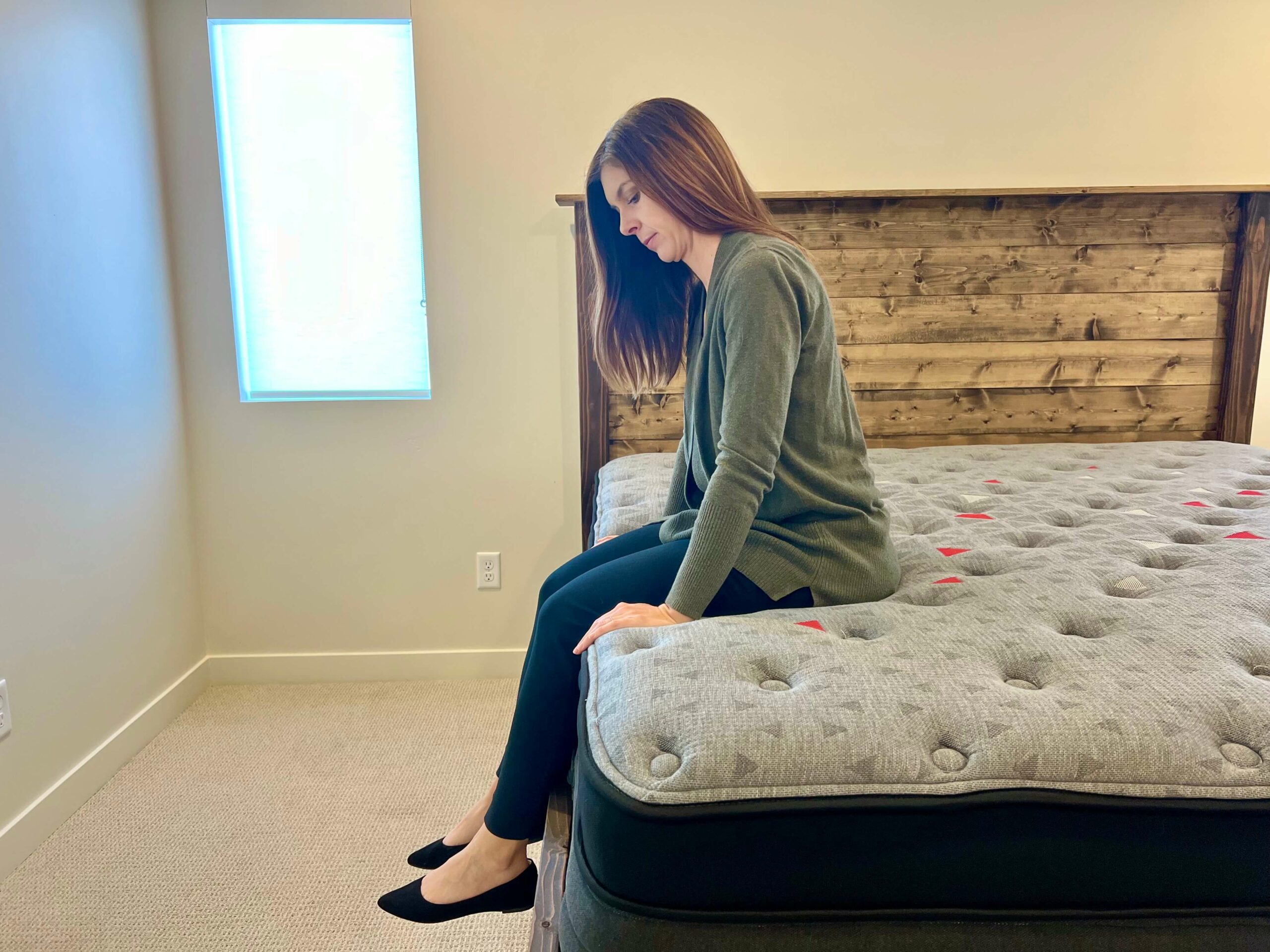
Watch Our Zoma Boost Video Review
Among the mattresses I tested for recovery and joint cushioning, the Zoma Boost gave me the most cushioning at the shoulders and hips without letting my midsection drop.
The plush top cradled my shoulder on contact, but the zoned coils underneath held my hips up, so I got a soft landing without losing the spinal line. That combination is unusual. Most beds this cushioning let the pelvis sink, which is exactly what you do not want when the lower back is already inflamed.
The Reactiv layer is what makes the Boost work for stiff mornings. It sits between the memory foam and the coils and pushes back, so the bed never held me in place. Rolling over took one movement, and getting up from the edge was steady because the Dynamic Edge coils kept the perimeter firm under my weight.
Cooling was another strong result. The graphite-infused foam pulled heat away faster than the standard memory foam tops I compared, so the surface did not build up warmth through the first hours of testing.
- 10 Value
- 10 Edge Support
- 9 Trial Period
- 9 Response Time
- 10 Motion Transfer
- 9 Cooling & Breathability
Joint Cushioning With a Held Hip Line
On my side, my shoulder sank into the top layers while my waist stayed lifted. The zoned coils are firmer through the middle third of the bed, and that is what kept my hips from following my shoulder down. Sleepers with sore hips and shoulders who still need a neutral spine get both.
Edge Support
This was one of the firmest perimeters I tested in the hybrid category. Sitting on the side with my feet on the floor, the edge barely compressed, so standing up was a push rather than a climb.
Cooling
Graphite conducts heat away from the surface, and in testing the Boost stayed cooler through the first three hours than the traditional memory foam beds I compared on this list. For sleepers whose night pain is already breaking up sleep, not adding heat to the problem matters.
Responsiveness
The Reactiv layer kept the bed from swallowing me. Even with 15 inches of mattress under me, I never felt stuck, which is why this made the list despite being one of the plusher picks.
Best For:
- Side sleepers who want deep shoulder and hip cushioning
- Sleepers who sit on the edge of the bed to get up
- Hot sleepers who still want a plush surface
Compare Instead:
- Amerisleep AS2 if you want a firmer surface and a longer warranty
- Nolah Evolution if you want a pillow top with three firmness options
- Helix Midnight Luxe if you want zoned coils in a slightly firmer medium feel
The Boost feels plush on contact and supportive underneath. You sink into the top few inches, then meet resistance from the coils rather than continuing down.
Side sleepers get the most out of it. Back sleepers who like some cushioning will be comfortable, but back sleepers who want a firm, on-top feel should look at the AS2 or the Saatva Classic instead.
Strict stomach sleepers should skip this one, since the plush top does not hold the hips high enough.
The graphite-infused memory foam on top pulled heat out of the surface faster than the standard memory foam tops I compared, which is why the Boost did not warm up under my shoulder and hip.
The Reactiv foam in the middle is a latex-like responsive layer, and it is what kept a 15-inch plush bed from feeling like a trap when I changed positions.
Underneath, the Dynamic Edge coil unit is zoned firmer under the hips and reinforced around the perimeter, which produced the two results that earned the Boost its place here: a level hip line on my back and one of the firmest edges in the hybrid category.
Pros
- Edge Support (10/10): the perimeter barely compressed when I sat on it with my feet down
- Cooling (9/10): the graphite foam stayed cooler through three hours than the standard memory foam tops I compared
- Pressure Relief: cushioned the shoulder and hip without letting the midsection drop
Cons
- Trial Period (9/10): the 100-night trial is shorter than the 365-night trials four beds here offer
- The 10-year warranty is shorter than the 20-year and lifetime coverage most beds here carry
- Too plush on top for stomach sleepers who need the hips held high
On my side during testing, the plush top cushioned my shoulder while the zoned coils held my hips level, and the edge stayed firm when I sat on it to get up. It is the pick for a side sleeper who wants deep joint cushioning without giving up the spinal line.
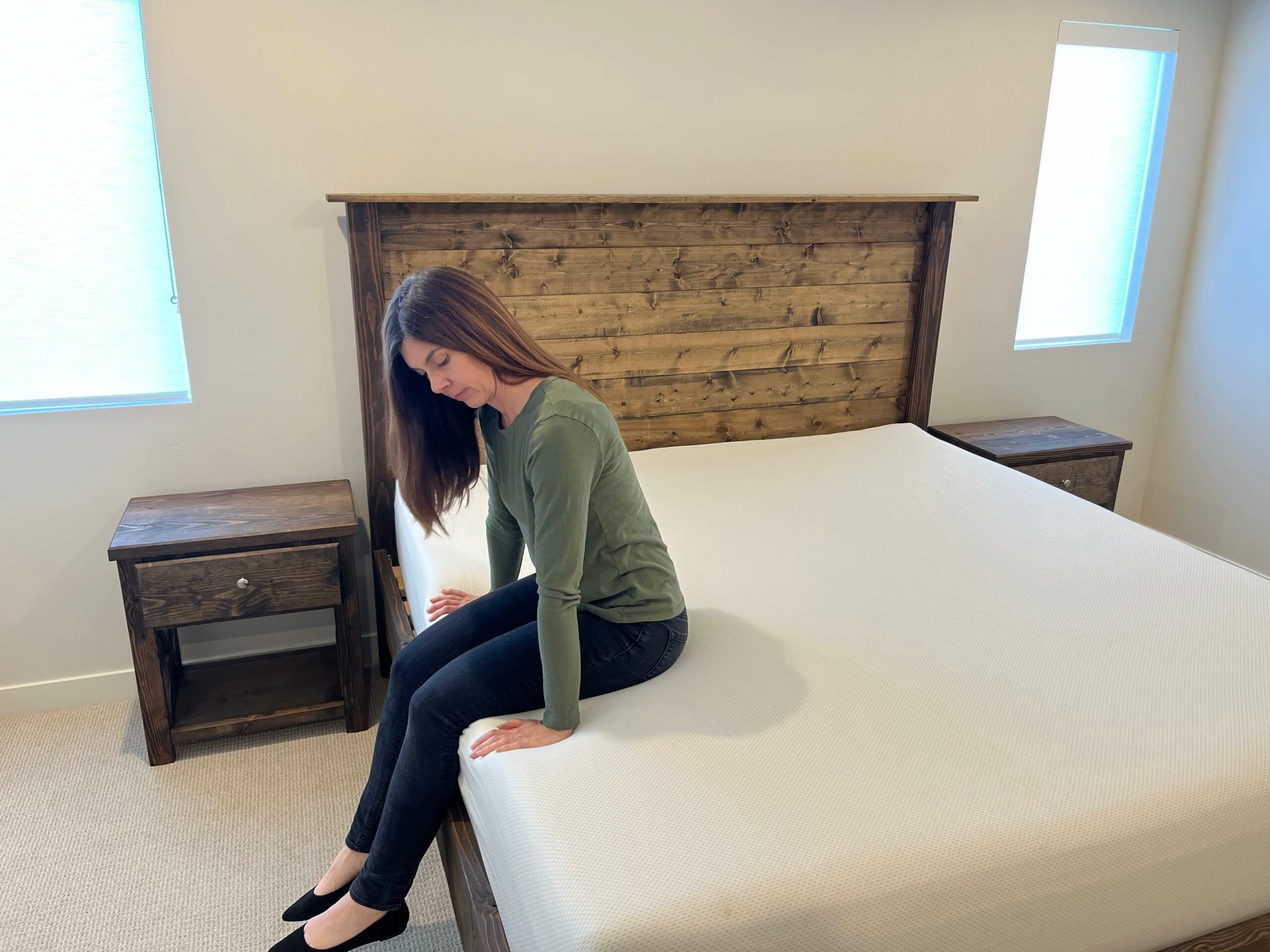
Watch Our Vaya Mattress Video Review
Among the budget mattresses I tested, the original Vaya Mattress delivered the most spinal support for the money.
The thing that put it on this list is that it does not give up support to hit a low price, which is the usual budget compromise. On my back, the medium surface held my hips in line with my shoulders instead of letting them settle, and it cushioned my lower back at the same time. Beds at this price normally do one or the other.
The Vaya Comfort Foam is more open than standard memory foam, and in testing that showed up two ways. The surface felt cooler through the first hours than the dense foam beds I compared, and it recovered faster when I rolled off it. Neither is a small thing when heat and difficult turning are already part of the night.
Motion transfer was low, so a partner’s movement barely reached my side. The tradeoff is edge support. As an all-foam bed with no reinforced perimeter, the Vaya compressed a little more than the coil beds here when I sat on the side, though it stayed steady enough to push up from. Sleepers who lean heavily on the edge to stand up should look at the Zoma Boost or the Saatva Classic instead.
- 10 Value
- 9 Edge Support
- 9 Trial Period
- 10 Response Time
- 8 Motion Transfer
- 9 Cooling & Breathability
Support at a Budget Price
The Vaya held a neutral spinal line on my back, and it did it at a price where most beds sag under the hips within the first few minutes of lying down. That is the single reason it made this guide.
Response Time
The porous foam released my shoulder quickly when I moved. Cheaper memory foam beds hold an impression, and that turns every position change into extra work. The Vaya did not do that.
Motion Transfer
A weighted drop on the opposite side of the queen barely registered. For couples where one partner is up at night because of pain, that keeps one person’s bad night from becoming two.
Value
A 10-year warranty and a 100-night trial at this price point is unusual, and it is why the Vaya scored a 10 on value.
Best For:
- Shoppers who need real support and cannot spend more
- Back and side sleepers who want a single balanced feel
- Couples on a budget who share a bed
Compare Instead:
- Amerisleep AS2 if you want firmer support and a 20-year warranty
- Zoma Boost if you need a firm edge to push off from
- Nest Bedding Sparrow if you and your partner need different firmness levels
The Vaya feels like a straightforward medium foam bed. There is contouring at the shoulders and hips but no deep sink, and no slow melt. It suits back sleepers and side sleepers about equally.
Stomach sleepers will want something firmer. The edge is usable for sitting up, but anyone who leans on it heavily to stand will find a firmer perimeter on the coil beds here.
The Vaya is two layers of foam and a cover, and that is the whole build. Vaya Comfort Foam sits on top.
It has an open-cell structure, and that structure is what produced the two testing results separating this bed from other budget picks: it released my shoulder quickly on position changes instead of holding an impression, and it stayed cooler to the touch through the first hours than the dense foams in its price range.
Under it sits Vaya Base Foam, with no transition layer in between, so the base is doing all of the support work on its own.
In testing it did the job, holding my hips level with my shoulders on my back rather than letting them settle.
It is also why the edge compressed more than the coil perimeters here when I sat on it, since a foam base has nothing extra reinforcing the sides.
The plush cover is built to breathe rather than seal heat in, and the foams are CertiPUR-US certified.
Pros
- Value (10/10): a neutral spinal line and 10-year coverage at a budget price
- Response Time (10/10): released quickly on position changes instead of holding an impression
- Edge Support (9/10): steady enough to push up from, which is uncommon for an all-foam bed at this price
Cons
- Trial Period (9/10): the 100-night trial is shorter than the 365-night trials four beds on this list offer
- No firmness options, so heavier sleepers who need a firmer surface have no alternate version
On my back during testing, the medium surface cushioned my lower back while keeping my hips level with my shoulders, and a partner’s movement barely reached my side. It is the pick for a shopper who needs real spinal support at the lowest price on this list.
Best Mattress for Side Sleepers
Helix Midnight Luxe

Warranty
Lifetime

Sleep Trial
120 Nights

Shipping
Free
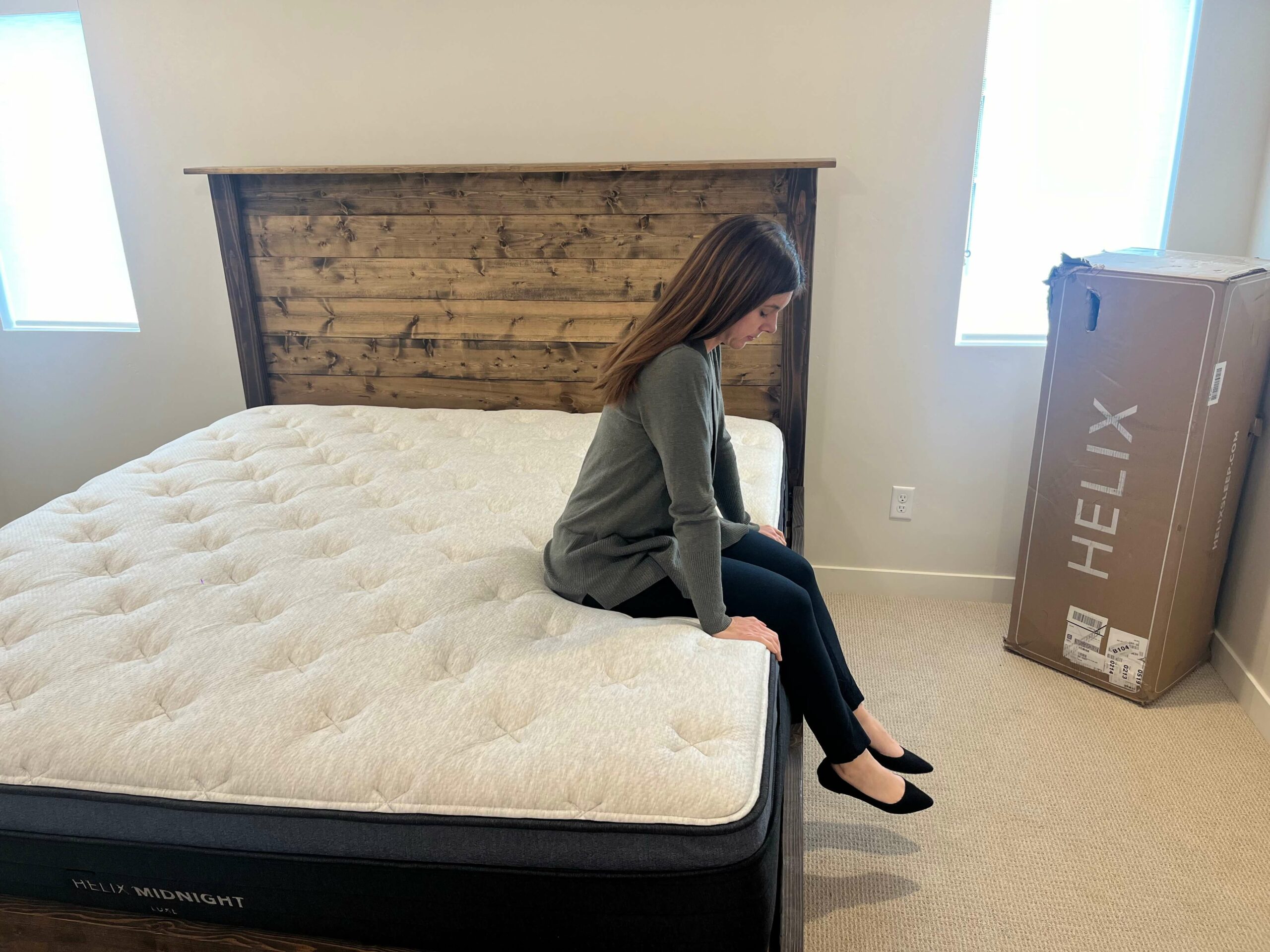
Watch Our Helix Midnight Luxe Video Review
Among the beds I tested for side sleeping, the Helix Midnight Luxe gave the shoulders and hips the most room to sink while keeping the waist and lower back supported.
Side sleeping is where ankylosing spondylitis gets complicated. You need the shoulder and hip to drop far enough that the spine stays level, but you cannot let the whole torso follow them down.
The Midnight Luxe manages both because it stacks a dedicated side sleeper support layer over a coil unit that is reinforced under the hips. On my side, my shoulder settled in and my waist stayed lifted, and the line from my neck to my tailbone stayed straight.
The feature that matters most on a page like this one is optional. Helix offers an ErgoAlign layer, an extra segment of extra-firm foam placed under the hips, in place of the standard Luxe support layer. Its purpose is to stop the lower back from sagging.
Since keeping the pelvis from dropping below the shoulders is the entire alignment problem in this guide, that is the more relevant configuration for most sleepers with ankylosing spondylitis.
It adds to the price, and it is worth raising with your physical therapist before you order, since more firmness under the hips is not the right answer for everyone.
Motion transfer was low across the queen. Cooling depends on which cover you choose. The standard TENCEL cover is breathable rather than cold, and the two GlacioTex upgrades are what deliver the cool-to-the-touch feel, at extra cost.
The tradeoff is response time. The SupremeSupport 4.0 memory foam is four-pound density, roughly double what most beds use, and dense foam recovers more slowly.
Turning over took slightly more effort here than on the latex and coil beds. Sleepers whose main problem is difficulty repositioning should compare the Organica or the Saatva Classic.
- 7 Value
- 10 Edge Support
- 9 Trial Period
- 9 Response Time
- 10 Motion Transfer
- 9 Cooling & Breathability
Side-Sleeping Relief With a Supported Waist
A layer of responsive foam is built specifically for side sleepers and toss-and-turners, and it sits above coils that are reinforced under the hips.
That combination showed up clearly on my side. My shoulder dropped in, my hip settled less, and my waist stayed supported, which is the arrangement that keeps a side sleeper’s spine level.
An Optional Layer Built for Hip Support
No other bed in this guide lets you add a dedicated extra-firm section under the hips. The ErgoAlign option exists to keep the lower back from sagging, which is the single alignment failure that causes the most trouble for sleepers with inflammatory back pain.
Motion Isolation
Up to 1,000 individually wrapped coils plus dense memory foam above them absorbed a weighted drop from a foot away with almost no transfer. For couples where one partner shifts positions repeatedly because of night pain, this matched the best motion results on this list.
Edge Support
The coil unit is reinforced around the full perimeter, so sitting on the side to put on shoes was steady. It scored alongside the firmest perimeters here and held up better than the all-foam picks.
Best For:
- Side sleepers who need shoulder and hip cushioning with a supported waist
- Combination sleepers who spend most of the night on their side
- Sleepers who want to add firmer support under the hips
Compare Instead:
- Organica if you want a latex surface that recovers faster
- Nolah Evolution if you want a taller build and a choice of three firmness levels
- Amerisleep AS2 if you want a firmer surface for back sleeping at a lower price
The Midnight Luxe feels cushioned on top and structured underneath. The cover and gel memory foam give right away, the denser foams below contour to your shoulder and hip, and the coils stop the sink before it goes too far.
Side sleepers get the most out of this bed. Back sleepers will find the medium feel comfortable but slightly soft under the hips compared with the AS2, though adding the ErgoAlign layer closes some of that gap.
Stomach sleepers should choose something firmer. The Midnight Luxe comes in one firmness, so the configuration choices are about support and cooling rather than feel.
The standard TENCEL cover is made from eucalyptus fiber and handles airflow well, but it is breathable rather than cooling.
The cool-to-the-touch feel comes from the optional GlacioTex cover, and a further CoolForce upgrade adds a heat transfer layer applied to the foam beneath it.
Under the cover, a gel memory foam layer cushions without letting you sink far, then SupremeSupport 4.0 memory foam does the deep contouring.
At four-pound density it is about twice as dense as the foam in most mattresses, and that density explains both of this bed’s defining test results: strong pressure relief that holds its shape over time, and slower recovery when you roll off it.
Below that sits either the standard Luxe responsive foam layer or the optional ErgoAlign layer, which adds extra-firm foam under the hips. A side sleeper support layer of responsive foam handles the shoulders and hips.
The coil unit underneath holds up to 1,000 individually wrapped coils with reinforcement under the hips and around the full perimeter, which is what produced the level side-sleeping spinal line and the usable edge.
A DuraDense foam base anchors everything. All foams are CertiPUR-US certified and made without fiberglass.
Pros
- Motion Transfer (10/10): a weighted drop a foot away barely reached my side
- Side-Sleeping Alignment: shoulder sank in while the waist stayed lifted, keeping the spine level
- The ErgoAlign option adds extra-firm support under the hips, which no other bed here offers
Cons
- Response Time (9/10): four-pound-density memory foam recovered more slowly than the latex and coil beds here, so turning took a little more effort
- Cooling and the ErgoAlign layer are both paid upgrades, so the configuration most useful for this condition costs more than the listed price
On my side during testing, the side sleeper layer let my shoulder drop while the hip-reinforced coils held my waist, keeping my spine level from neck to tailbone. It is the pick for a side sleeper who needs pressure relief without losing lumbar support, and the only one here that offers an extra-firm hip section as an option.

Watch Our Leesa Sapira Chill Video Review
Among the hybrids I tested, the Leesa Sapira Chill was the most adaptable, because it offers a plush, medium-firm, and firm version of the same construction.
That matters more than usual here. Ankylosing spondylitis affects people differently, and what works for someone with early inflammatory back pain often does not work for someone with reduced spinal mobility. Being able to choose the firmness while keeping the same zoned coil support underneath removes most of the guesswork.
In testing, the Medium-Firm version held my hips level with my shoulders on my back while the pillow top still cushioned my shoulder blades. The zoned coils are firmer through the hips in all three versions, so the lumbar support does not change when the surface feel does.
The cooling quilt cover was the standout. It felt cooler to the touch through the first hours of testing than the standard pillow-top fabrics I compared, which is unusual for a quilted top. Motion isolation was strong across all three comfort levels.
- 8 Value
- 10 Edge Support
- 9 Trial Period
- 10 Response Time
- 9 Motion Transfer
- 10 Cooling & Breathability
Three Firmness Levels, One Support System
The Plush, Medium-Firm, and Firm versions share the same zoned coil unit. You change the surface without changing the lumbar support, which means a side sleeper and a back sleeper can both get the alignment they need from the same bed.
Cooling
The quilt cover uses heat-dissipating fibers, and in testing the surface read cooler than the pillow tops I compared through the first three hours. Quilted tops usually trap heat. This one did not.
Motion Isolation
The wrapped coils and the foam above them absorbed a weighted drop with almost no transfer, in every one of the three comfort levels.
Edge Support
The perimeter held firm enough to sit on and push up from, matching the best results in the hybrid category.
Best For:
- Sleepers who want to choose a firmness rather than accept one
- Hot sleepers who want cushioning without heat buildup
- Couples who share a bed and want low motion transfer
Compare Instead:
- Amerisleep AS2 if you want a firmer all-foam bed at a lower price
- Nest Bedding Sparrow if you and your partner need different firmness levels on each side
- Saatva Classic if you want a taller innerspring feel with a 365-night trial
The feel depends on which version you order.
The Plush option cradles deeply and suits side sleepers with sore shoulders.
The Medium-Firm sits in the middle and is the safest choice for most sleepers with ankylosing spondylitis, since it cushions without letting the hips drop.
The Firm option holds the hips highest and suits back and stomach sleepers.
All three share the same bounce and the same recovery speed, so repositioning feels similar across the range.
The cooling quilt cover holds heat-dissipating fibers, and that is what produced the coolest surface reading among the pillow-top beds I tested.
Under it, four foam layers including the plant-based GreenFlex foam provide the contouring, and GreenFlex’s open-cell structure is why the comfort layers released quickly on position changes instead of holding an impression.
The zoned coil unit below is firmer through the hip and lumbar section, which is what kept my hips level on my back in the Medium-Firm version, and the reinforced perimeter is what let the edge hold its shape when I sat on it.
Changing comfort levels changes the foam above, not the coil support beneath.
Pros
- Cooling (10/10): the quilt cover read cooler than every other pillow top I tested through three hours
- Response Time (10/10): the comfort layers released quickly on position changes instead of holding an impression
- Firmness Choice: the same zoned lumbar support in a plush, medium-firm, or firm surface
Cons
- Value (8/10): priced above most of the beds in this guide
- Choosing the wrong comfort level means using the 120-night trial to exchange, which is shorter than the 365-night trials here
On my back during testing, the Medium-Firm version held my hips level while the quilt cover stayed cooler than the other pillow tops I compared. It is the pick for a sleeper who wants to choose a firmness without giving up zoned lumbar support.
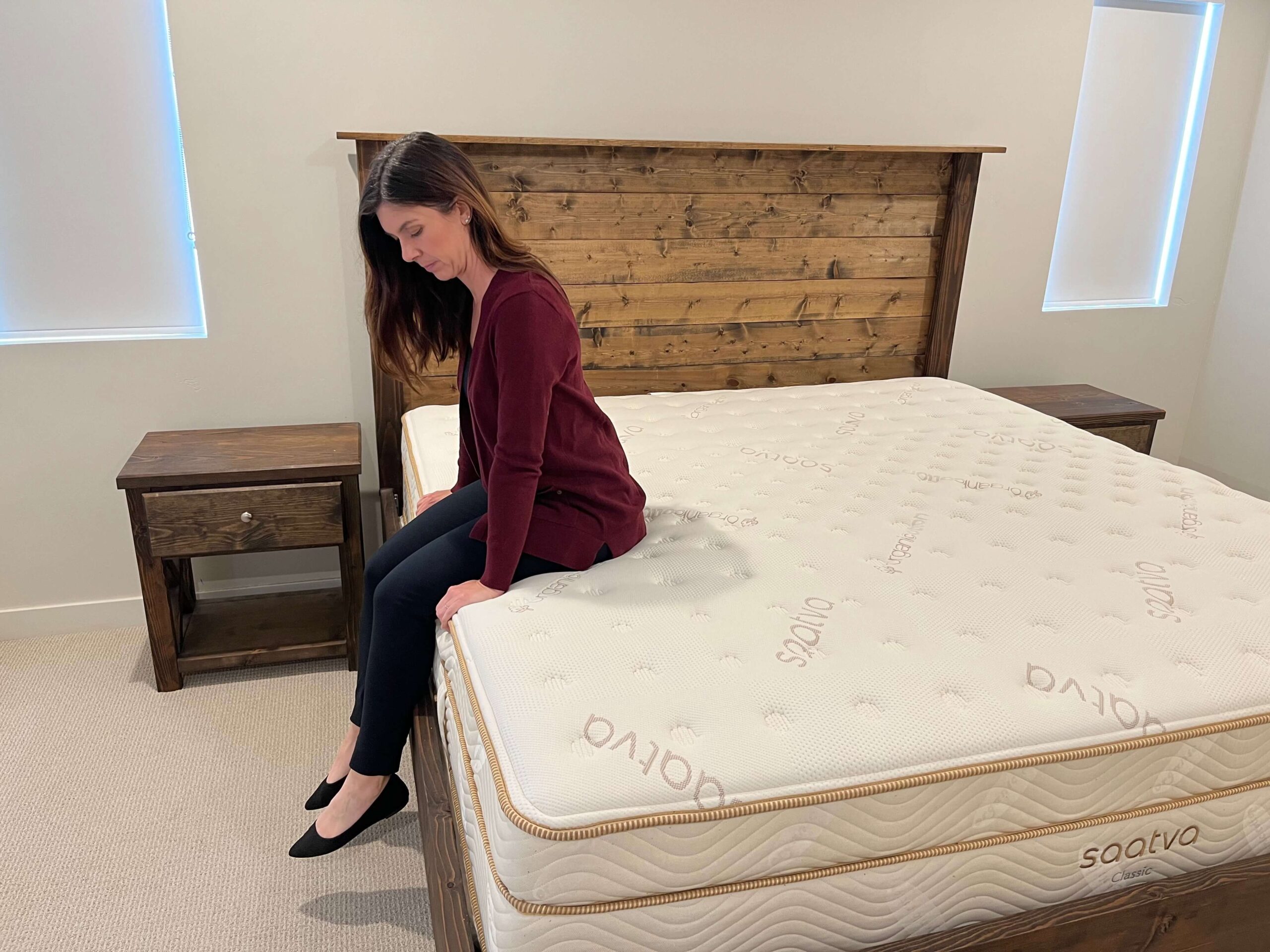
Watch Our Saatva Classic Video Review
Among the innerspring mattresses I tested, the Saatva Classic was the easiest bed on this list to get in and out of.
That is not a small category for this guide. When spinal mobility is limited, the height of the bed and the firmness of the edge decide how hard the morning is. The Saatva comes in an 11.5-inch or 14.5-inch profile, so you can match the mattress height to your own hip height and sit down and stand up without lowering yourself into a well. The perimeter is reinforced, and in testing it held firm when I sat on the side with my feet flat on the floor.
The dual-coil design also keeps you on top of the mattress rather than in it. On my back in the Luxury Firm version, my hips stayed lifted and the lumbar zone through the center filled the gap under my lower back rather than leaving it unsupported.
The tradeoff is motion transfer. Coil-on-coil construction moves more than foam does, so couples who are woken easily should compare the AS2 or the Helix Midnight Luxe.
- 7 Value
- 10 Edge Support
- 10 Trial Period
- 10 Response Time
- 9 Motion Transfer
- 9 Cooling & Breathability
Getting In and Out of Bed
Two height options plus a reinforced perimeter made this the easiest transition from lying to standing of anything I tested. Sitting on the edge, the surface stayed level under me instead of tipping, so pushing up was a single movement.
Lumbar Zone Support
The center third of the mattress is reinforced. On my back in the Luxury Firm version, that showed up as support under my lower back rather than an open gap between my body and the bed.
Response Time
Coils recover instantly. There is no impression to climb out of, which makes turning over about as easy as it gets, and it is why this bed scored a 10 on response time.
Airflow
The dual-coil construction leaves open space through the middle of the mattress, so heat moved out instead of collecting. The surface stayed cool through testing without any added cooling technology.
Best For:
- Sleepers who need the bed height to match their hips
- Anyone who sits on the edge of the bed to get up
- Sleepers who want a firm, on-top innerspring feel
Compare Instead:
- Amerisleep AS2 if motion transfer matters more to you than getting-up ease
- Nolah Evolution if you want a taller pillow top with stronger motion isolation
- Westin Heavenly Bed if you specifically want the hotel pillow-top feel
The Saatva Classic feels like a traditional luxury innerspring. You rest on the surface rather than in it, with the Euro pillow top softening first contact.
The Luxury Firm version suits the widest range of sleepers with ankylosing spondylitis, since it cushions the shoulders while holding the hips up.
The Plush Soft version is for side sleepers who want more give, and the Firm version is for back and stomach sleepers who want the hips held highest. Sleepers who want a contouring memory foam hug will not find it here.
The Saatva uses two coil layers rather than a foam core, and that construction is directly responsible for its three best results in testing: instant recovery on position changes, a surface that stayed cool because air moved freely through the middle of the mattress, and long-term resistance to the sagging that makes an aging bed uncomfortable.
The upper microcoil layer is what provides the contouring at the shoulders, and the lumbar zone through the center of the support core is what filled the space under my lower back on my back.
The perimeter is reinforced with a foam encasement, which is why the edge stayed firm when I sat on it. The organic cotton cover adds to the airflow rather than sealing heat in.
Pros
- Edge Support (10/10): the perimeter stayed level when I sat on it with my feet on the floor
- Response Time (10/10): the coils recovered instantly, so turning over took one movement
- Trial Period (10/10): 365 nights plus a lifetime warranty
Cons
- Value (7/10): it scored lower on value than most beds here, largely on price
- Motion Transfer (9/10): a partner’s movement carried further across the coil-on-coil build than on the best-isolating foam hybrids here
- The white-glove delivery schedule means a longer wait than the boxed beds on this list
Sitting on the edge during testing, the reinforced perimeter stayed level under me and pushing up took one movement, and the coils recovered the instant I rolled. It is the pick for a sleeper who needs getting in and out of bed to be the easy part.
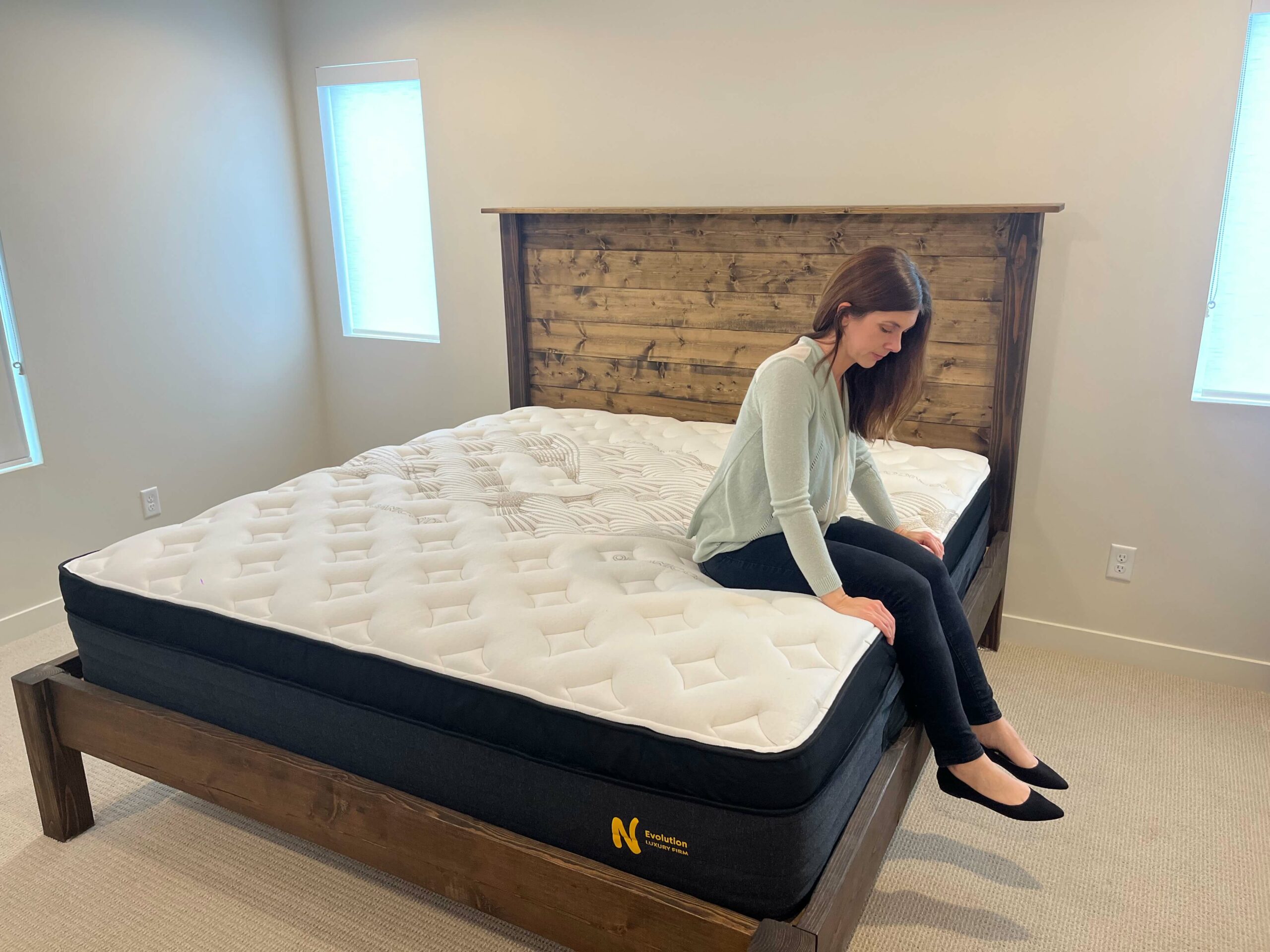
Watch Our Nolah Evolution Video Review
Among the pillow-top mattresses I tested, the Nolah Evolution gave me the most cushioning without letting my hips drop.
Pillow tops normally force a choice. You get the plush surface and lose the lumbar line, or you keep the line and lose the cushioning. The Evolution is zoned in three separate layers, and in testing those zones did what they claim. My shoulder sank into the softer section while the firmer middle held my hips up, so I was lying on a plush bed with my spine in a straight line.
The AirFoam Luxe is hole-punched and infused with copper, and it recovered faster than the memory foam pillow tops I compared. That kept a 15-inch bed from feeling like something I had to climb out of. The perimeter coils held firm when I sat on the edge.
The Evolution comes in three firmness levels. Luxury Firm is the version most sleepers with ankylosing spondylitis should start with, since it cushions the shoulders while keeping the hips lifted.
- 10 Value
- 10 Edge Support
- 9 Trial Period
- 9 Response Time
- 10 Motion Transfer
- 9 Cooling & Breathability
Zoning Across Three Layers
Most zoned beds put the zoning in the coils alone. The Evolution repeats it in the foam and the transition layer, and the result on my side was a shoulder that dropped noticeably further than my hip, which is what keeps a side sleeper’s spine level rather than curved.
Cooling
Copper in the AirFoam Luxe plus perforations through the foam and a gusseted border kept air moving. The surface stayed cool through three hours of testing, close behind the top cooling scores on this list.
Motion Isolation
The individually wrapped coils and the dense foam above them absorbed a weighted drop with almost no transfer.
Edge Support
Reinforcement coils around the perimeter kept the edge from folding when I sat on it, which is uncommon on a bed this plush.
Best For:
- Side sleepers who want a plush surface and a level spine
- Hot sleepers who do not want to give up cushioning
- Couples who are woken by movement
Compare Instead:
- Helix Midnight Luxe if you want the option of an extra-firm hip section
- Zoma Boost if you want a plush hybrid with a slightly firmer edge
- Amerisleep AS2 if you want firm support rather than a pillow top
The Evolution feels deep and cushioned without feeling loose. You settle into the top layers, then the zoned foam and coils stop you and hold you level.
The Luxury Firm version is the most useful here, since it gives side sleepers cushioning and back sleepers a supported hip line.
The Plush version is for side sleepers who want a deeper cradle and is too soft for stomach sleeping. The Firm version suits back and stomach sleepers who want the hips held highest.
The quilted top layer softens first contact. Below it, AirFoam Luxe is hole-punched in zones and infused with copper, and both features showed up directly in testing: the zoning is what let my shoulder drop further than my hip, and the copper plus perforations are why the surface stayed cool through three hours.
A gel swirl foam layer and a firmer transition foam sit underneath, and the transition layer is what absorbed motion from the coils before it reached the surface.
The 8-inch zoned Ascension coil core is firmest through the middle, which held my hips level on my back, and its pencil reinforcement coils are why the edge stayed usable on a bed this plush.
Pros
- Edge Support (10/10): reinforcement coils kept the edge from folding when I sat on it
- Motion Transfer (10/10): a weighted drop across the queen barely registered
- Zoned Alignment: the shoulder dropped further than the hip, keeping my side-sleeping spine level
Cons
- Trial Period (9/10): the 120-night trial is shorter than the 365-night trials four beds here offer
- At 15 inches tall, it sits high, so shorter sleepers should check the height against their hips before ordering
On my side during testing, the AirFoam Luxe layer took my shoulder and hip in while the zoned coils held my lower back level, and the reinforced perimeter stayed flat when I sat on it. It is the pick for a side sleeper who wants a deep pillow top surface and a firm edge to get up from.
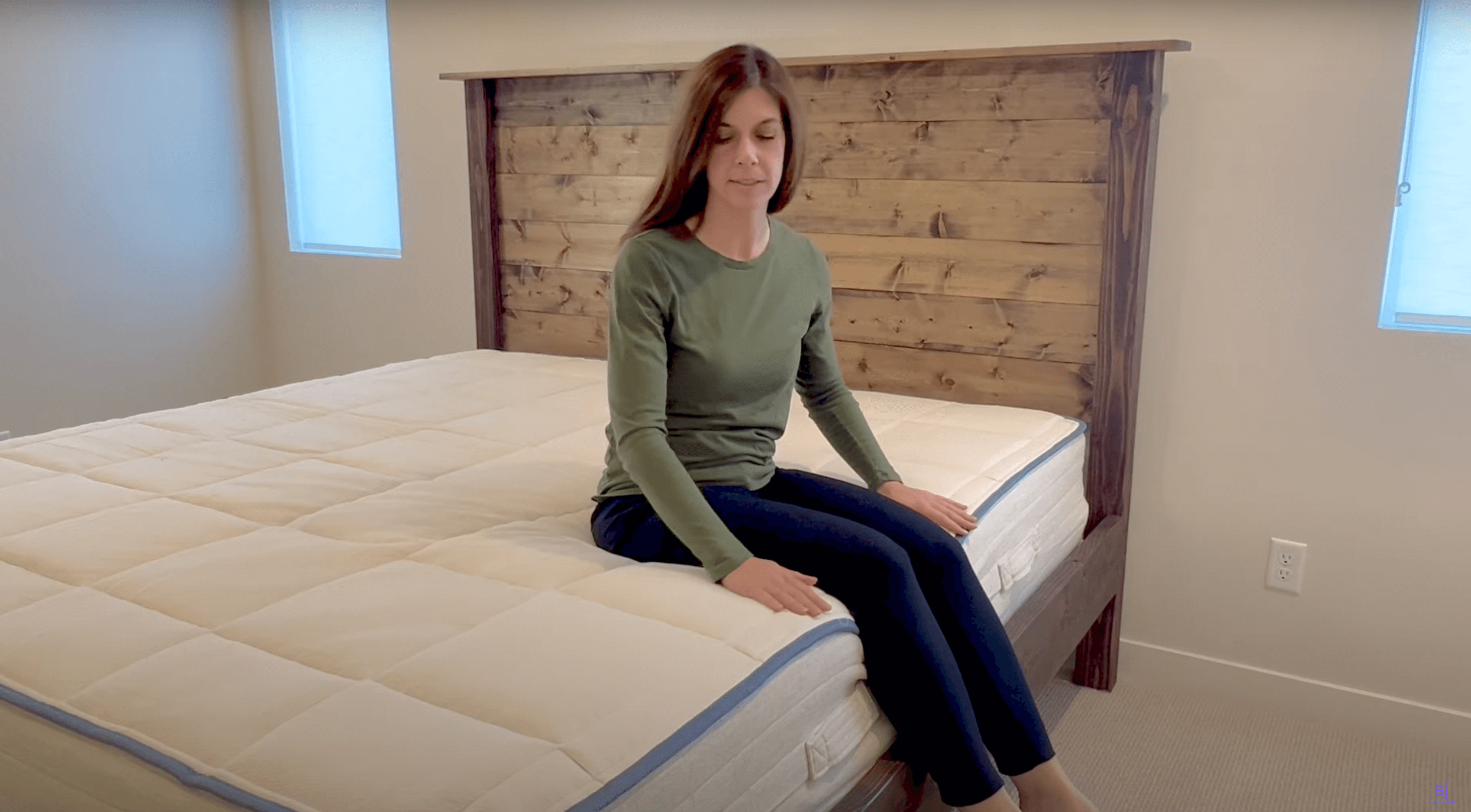
Watch Our Amerisleep Organica Video Review
Among the latex mattresses I tested, the Organica tied for the fastest recovery on this list with five others.
Latex pushes back. Where memory foam holds an impression for a few seconds, the Talalay latex in the Organica returned to flat as soon as I lifted off it, so rolling from my side to my back was one movement with nothing to climb out of. For anyone whose spinal rotation is limited, that is the most useful property a mattress can have.
The medium feel also held a good line. On my back, the two latex layers cushioned my shoulders while the coil unit underneath kept my hips lifted. On my side, the softer top layer gave enough at the shoulder without letting my ribs follow it down.
Latex and wool both breathe well, and the surface stayed cool through testing without any cooling technology added. The tradeoff is motion transfer. Latex is bouncier than memory foam, so movement travels further across the bed than it does on the AS2 or the Nolah Evolution.
- 9 Value
- 8 Edge Support
- 9 Trial Period
- 10 Response Time
- 9 Motion Transfer
- 9 Cooling & Breathability
Response Time
This tied for the fastest-recovering bed on this list. The latex returned to flat the moment I moved off it, so every position change started from a level surface.
Natural Breathability
Latex and wool move heat and moisture on their own. In testing, the Organica held its surface temperature through three hours without any gel, graphite, or cooling cover doing the work.
Support Through the Middle
The 8-inch coil unit with edge support kept my hips from settling on my back, and the two latex layers above it, one soft and one medium, gave shoulder relief without softening the middle of the bed.
Materials
The latex carries Standard 100 OEKO-TEX, Rainforest Alliance, and eco-INSTITUT certifications, and the wool carries Standard 100 OEKO-TEX. The Organica is also one of Amerisleep’s officially ACA-endorsed models.
Best For:
- Sleepers who find turning over difficult and want a responsive surface
- Shoppers who want natural materials with third-party certifications
- Sleepers in any position who want a balanced medium feel
Compare Instead:
- FORM Prime if you want a firmer edge plus stronger motion isolation
- PlushBeds Signature Bliss if you want fully certified organic materials and a longer trial
- Amerisleep AS2 if you want a firmer surface and stronger motion isolation
The Organica feels buoyant. You rest on the surface with some contouring at the shoulders and hips, but there is no sink and no slow melt.
It works across sleeping positions, which is why it is a reasonable single choice for a couple who sleep differently.
Sleepers who want to feel wrapped by a mattress should look at the AS2 or the AS6 Black Series instead.
A layer of organic wool sits under the organic cotton cover, and wool’s natural moisture handling is part of why this bed held its surface temperature without any added cooling technology.
Below that, two inches of soft Talalay latex and one inch of medium Talalay latex do the contouring, and Talalay’s structure is what produced the Organica’s best result in testing: it snapped back to flat the instant I moved off it, instead of holding a dent.
The 8-inch coil unit underneath is what kept my hips lifted on my back, and its built-in edge support is why the perimeter stayed usable when I sat on it. The same open build that moves air also lets more motion travel across the bed than it does on the memory foam picks.
Pros
- Response Time (10/10): the latex returned to flat immediately, making position changes effortless
- Cooling (9/10): held its surface temperature for three hours with no added cooling technology
- Certified natural materials with ACA endorsement behind them
Cons
- Edge Support (8/10): usable when I sat on it, but it compressed more than the reinforced coil edges here
- Motion Transfer (9/10): latex bounce carried movement further than the memory foam beds here
- The 100-night trial is shorter than the 365-night trials several picks on this list offer
On my back during testing, the latex cushioned my shoulders while the coils held my hips lifted, and the surface returned to flat the instant I rolled off it. It is the pick for a sleeper who wants natural materials and a surface that recovers the instant they roll.
Best Cooling Mattress
Amerisleep AS6 Black Series

Warranty
20 Years
Sleep Trial
100 Nights
Shipping
Free
Watch Our Amerisleep AS6 Black Series Video Review
Among the mattresses I tested for temperature, the Amerisleep AS6 Black Series felt the coldest on first contact of any bed on this list.
The CryoCool cover reads cold to the touch on contact, not just cooler than average. In testing, the difference was noticeable within seconds, and the surface stayed cooler through the first three hours than the memory foam beds I compared. That matters for this guide because pain already breaks up the second half of the night, and heat that adds another wake-up makes a broken night worse.
Underneath the cover, the TitanAir layer pulls heat down away from the surface while the Bio-Pur foam moves air through the comfort system. The zoned coils below held my hips level on my back even in the Luxury Firm version, which is the version most sleepers with ankylosing spondylitis should start with.
The AS6 is the plushest Amerisleep bed on this list. Sleepers who want firmer support should choose the AS2, and sleepers who need a shorter path to standing should note that this is a taller mattress.
- 9 Value
- 9 Edge Support
- 9 Trial Period
- 9 Response Time
- 10 Motion Transfer
- 10 Cooling & Breathability
Cooling
Three separate systems handle heat here, and all three showed up in testing. The CryoCool cover was cold on contact, the TitanAir layer kept heat from collecting at the surface, and the open-cell Bio-Pur foam moved air rather than trapping it. It shares the top cooling score with the AS2 and the Leesa.
Pressure Relief With Support
On my side in the Luxury Firm version, my shoulder sank into the Bio-Pur while the zoned coils kept my hips from following. That is the pairing side sleepers with lower back inflammation need.
Motion Isolation
The individually wrapped coils and the dense foam above them absorbed a weighted drop with almost no transfer across the queen.
Firmness Choice
Three options, from Plush Soft to Firm, sit on the same zoned coil base. You change the surface feel without changing the support underneath.
Best For:
- Hot sleepers whose sleep is already broken by night pain
- Side sleepers who want a deep cradle with a held hip line
- Sleepers who want a firmness choice from an ACA-endorsed brand
Compare Instead:
- Amerisleep AS2 if you want firmer support in a lower-profile bed
- Nolah Evolution if you want similar cooling with three zoned layers
- Leesa Sapira Chill if you want a firmness choice with a cooling quilt top
The AS6 feels soft and cool on contact, then supportive underneath. The Plush Soft version is a deep cradle for side sleepers.
The Luxury Firm version, which is the middle option, balances cushioning with a held hip line and is the version most sleepers with ankylosing spondylitis should try first.
The Firm option holds the hips highest and suits back and stomach sleepers. At 14 inches, this is a tall bed, so check the finished height against your hips if standing up in the morning is difficult.
The CryoCool cover uses high-energy-transfer fibers, and it is the reason this bed read colder on first contact than anything else I tested.
Below it, the TitanAir layer is titanium-infused memory foam, and its job in testing was clear: it pulled heat down and away instead of letting it collect at the surface.
The plant-based Bio-Pur foam is open-cell, which is what kept the comfort layers from turning into a heat trap while still contouring at the shoulders and hips.
The zoned coil unit underneath is firmer through the middle, and that is what kept my hips level on my back even in the plusher configurations, while the reinforced edge system is why the perimeter held when I sat on it.
Pros
- Cooling (10/10): cold on contact, and tied for the top cooling score on this list
- Motion Transfer (10/10): a weighted drop across the queen barely registered
- Three firmness options on the same zoned coil support system
Cons
- Value (9/10): one of the higher-priced beds in this guide
- At 14 inches tall, it may sit too high for shorter sleepers who struggle to stand up in the morning
On my side during testing, the CryoCool cover was cold on contact and the surface stayed cooler than the memory foam beds I compared for three hours, while the zoned coils held my hips level. It is the pick for a hot sleeper who does not want heat adding another wake-up to the night.

Watch Our Westin Heavenly Bed Review
Among the hotel mattresses I tested, the Westin Heavenly Bed delivers the familiar plush pillow-top feel with pocketed coils underneath doing more support work than the surface suggests.
The pillow top gives immediately, so first contact is soft. Underneath, the reinforced pocketed coils spread weight rather than letting the middle collapse, and on my back my hips stayed close to level with my shoulders. It is a medium feel that leans cushioned, which suits side sleepers and back sleepers who like some give.
The coil core also breathes. Air moved through the middle of the mattress during testing and the surface did not build up heat the way an all-foam pillow top does.
There are two things to weigh carefully before buying. This mattress cannot be returned, so there is no sleep trial to fall back on if the feel turns out to be wrong for your back. Delivery takes roughly four to six weeks. If you are not already certain this feel works for you, choose a bed on this list with a long trial instead.
- 8 Value
- 10 Edge Support
- 0 Trial Period
- 10 Response Time
- 9 Motion Transfer
- 9 Cooling & Breathability
A Feel You Can Test Before You Buy
Almost nothing else in this guide can be tried for a night before purchase. If you have slept well at a Westin, you already know how this surface treats your back, and that is worth something when a sleep trial is not on offer.
Coil Support Under a Plush Top
The pocketed coils spread weight rather than concentrating it, and on my back that kept my hips from settling below my shoulders despite the soft pillow top.
Airflow
Air moved through the coil core during testing, and the foam layers above it are built with air pockets, so the surface did not collect heat the way solid foam pillow tops do.
Delivery Handled
White-glove delivery includes in-home setup and haul-away of your old mattress. For anyone who cannot wrestle a boxed mattress up a flight of stairs, that is a real benefit rather than a marketing line.
Best For:
- Sleepers who have already slept well on this exact bed
- Guest rooms and second bedrooms
- Buyers who need delivery and setup handled for them
Compare Instead:
- Saatva Classic if you want the same on-top innerspring feel with a 365-night trial
- Leesa Sapira Chill if you want a cooling pillow top with a firmness choice
- Nolah Evolution if you want a plush surface with zoned lumbar support
The Heavenly Bed feels like a soft hotel bed, because that is what it is. First contact is plush, then the coils take over and hold you. Side sleepers and back sleepers who like cushioning will be comfortable.
Sleepers who need firm lumbar support, and stomach sleepers who need the hips held high, should choose the AS2 or a firmer version of the Saatva Classic instead.
The cover holds high-tech silver fibers with antimicrobial properties, which help keep the surface fresh over time rather than affecting how it feels.
The foam layers underneath are built with air pockets, and in testing that structure is why the surface did not collect heat the way a solid foam pillow top does.
The reinforced pocketed coil unit is the layer carrying the load, and it is what kept my hips near level on my back under a soft surface, and what kept the perimeter from folding when I sat on it.
Because the support comes from coils rather than a dense foam core, motion travels a little further across this bed than it does on the foam picks here.
Pros
- A known quantity if you have slept on this bed at a Westin property
- Edge Support (10/10): the perimeter held steady when I sat on it with my feet on the floor
- White-glove delivery with setup and old mattress haul-away included
Cons
- Trial Period (0/10): this mattress cannot be returned, so there is no trial to fall back on
- Delivery takes roughly four to six weeks, the longest wait on this list
On my back during testing, the plush pillow top gave right away while the pocketed coils kept my hips near level, and air moved through the coil core rather than collecting. It is the pick for a sleeper who already knows this hotel bed works for their back and wants delivery handled.
Best Organic Mattress
PlushBeds Signature Bliss

Warranty
Lifetime
Sleep Trial
365 Nights
Shipping
Free
Watch Our Plushbeds Signature Bliss Video Review
Among the organic mattresses I tested, the PlushBeds Signature Bliss combined certified materials with the most zoned support in the category.
The pillow top here is organic latex rather than foam, and that changes how it behaves. On my side, the latex cushioned my shoulder and hip and then released as soon as I shifted, so I never had to push out of an impression. Latex also means the plushness at the surface does not come at the cost of support underneath.
The five-zone fabric-encased coil core is what holds the line. On my back, my hips stayed lifted while my lower back stayed in contact with the mattress instead of arching over a gap. The perimeter stayed firm when I sat on it, which puts this bed among the best on this list for standing up in the morning.
The 365-night trial and lifetime warranty are the longest coverage pairing here, shared with the FORM Prime, Saatva Classic, and Nest Bedding Sparrow.
- 9 Value
- 10 Edge Support
- 10 Trial Period
- 10 Response Time
- 9 Motion Transfer
- 9 Cooling & Breathability
Certified Organic Materials
The latex is GOLS certified and the cotton and wool are GOTS certified. For sleepers who react to synthetic foams or who simply want documented materials, this is the most thoroughly certified bed on this list.
Five-Zone Coil Support
The coil unit changes firmness across five sections rather than three. On my back, that showed up as support that followed my body instead of a single firm band through the middle.
Edge Support
The fabric-encased perimeter coils held firm when I sat on the side with my feet on the floor, matching the strongest edge results in this guide.
Natural Temperature
Regulation Wool and latex handle heat and moisture on their own. The surface held its temperature through three hours of testing without any cooling technology added to it.
Best For:
- Shoppers who want documented organic certifications
- Side and combination sleepers who want latex responsiveness
- Couples who need a firm edge and a long trial
Compare Instead:
- Organica if you want natural latex at a lower price with ACA endorsement
- Nolah Evolution if you want a plusher pillow top with stronger motion isolation
- Saatva Classic if you want a taller innerspring feel with three firmness levels
The Signature Bliss feels springy and supportive with a cushioned top. There is give at the shoulders and hips, but the surface pushes back rather than holding you.
The Medium version suits side and combination sleepers. The Medium-Firm version holds the hips higher and suits back sleepers and anyone who wants more lift under the pelvis.
Sleepers looking for a memory foam hug will not find it here.
The cover is GOTS-certified organic cotton and wool blended with cashmere and silk, and the wool content, up to ten pounds per mattress, is a large part of why this bed held its temperature through testing without added cooling technology.
Three inches of GOLS-certified organic Dunlop latex form the pillow top, and Dunlop’s structure is what produced this bed’s best pressure-relief result: it cushioned my shoulder and released it immediately when I shifted.
The five-zone fabric-encased coil core underneath varies in firmness across the length of the bed, which is what kept my lower back in contact with the mattress on my back rather than arching over a gap, and its encased perimeter is why the edge held firm when I sat on it.
An organic wool layer serves as the fire barrier without synthetic flame retardants.
Pros
- Edge Support (10/10): the encased perimeter coils held firm when I sat on the side
- Response Time (10/10): the Dunlop latex released my shoulder the moment I shifted, so I never had to push out of an impression
- 365 nights plus a lifetime warranty
Cons
- Motion Transfer (9/10): latex bounce carried movement further than the memory foam hybrids here
- Latex and coils together make this heavy and hard to move or rotate on your own
On my side during testing, the organic latex cushioned my shoulder and released the moment I shifted, and the five-zone coils kept my lower back supported on my back. It is the pick for a sleeper who wants certified organic materials with the zoned support to match.
Best Mattress For Couples
Nest Bedding Sparrow
Warranty
Lifetime
Sleep Trial
365 Nights
Shipping
Free
Watch Our Nest Bedding Sparrow Video Review
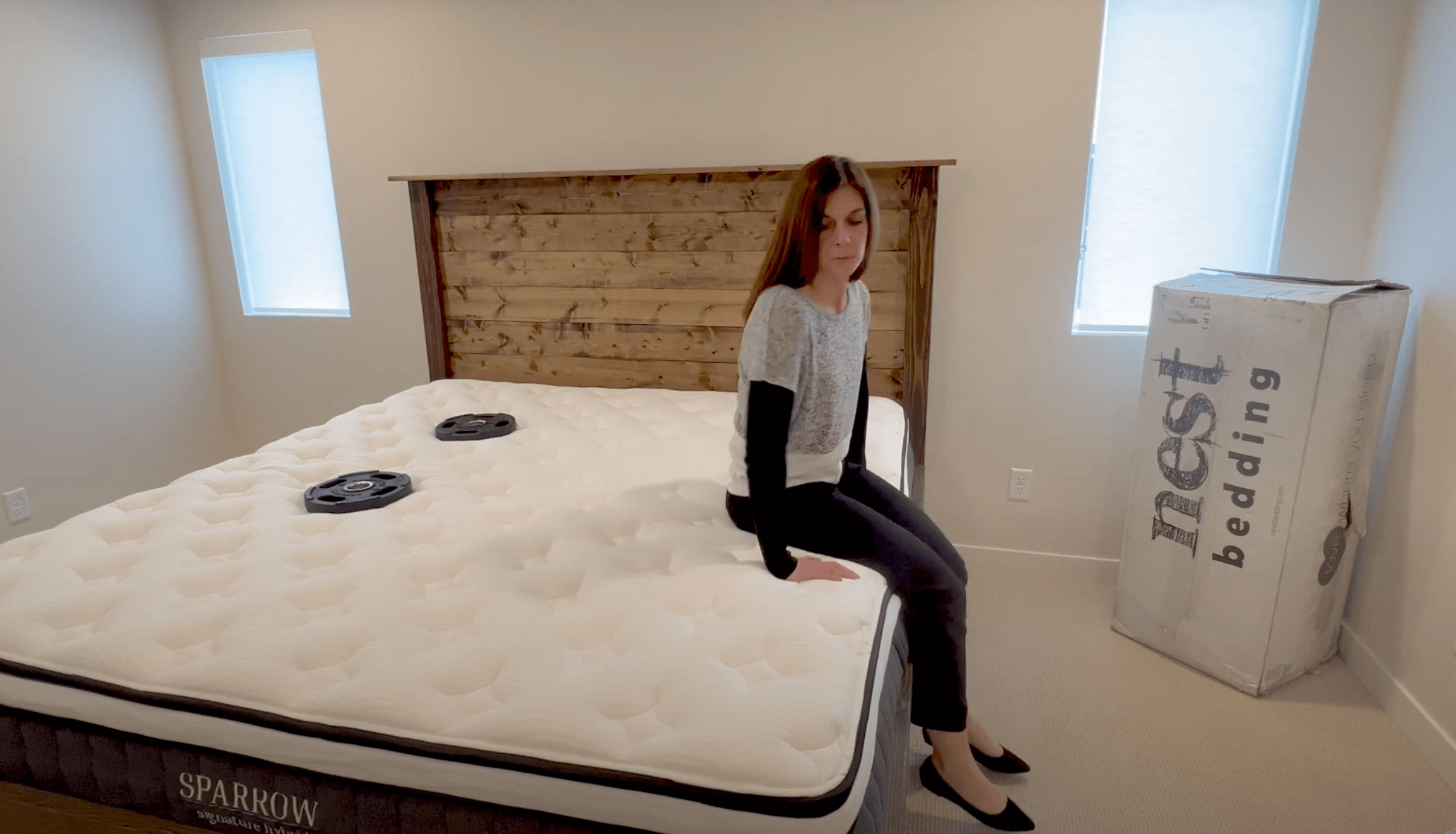
Among the mattresses I tested for couples, the Nest Bedding Sparrow solved the problem this guide runs into most often: two people in one bed who need two different surfaces.
When one partner has ankylosing spondylitis and the other does not, their needs usually pull in opposite directions. The Sparrow comes in Plush, Medium, and Firm, and the split configuration lets each side be ordered separately, so a partner who needs firmer lumbar support is not negotiating with a partner who wants a softer surface.
Motion isolation backed that up in testing. A weighted drop from a foot away barely reached the far side of the queen, which matters when pain has one partner shifting positions repeatedly through the night. The reinforced perimeter held firm when I sat on the edge, so getting up did not disturb the other side either.
On my side in the Medium version, my shoulder and hip sank in while the zoned coils kept my spine supported through the middle. Nest also backs the Sparrow with a 365-night trial and a lifetime warranty.
- 8 Value
- 10 Edge Support
- 10 Trial Period
- 9 Response Time
- 10 Motion Transfer
- 9 Cooling & Breathability
Different Firmness on Each Side
This is the only bed in this guide that can be ordered with two different firmness levels in one mattress. For a couple where one person needs firm lumbar support and the other does not, that removes the compromise entirely.
Motion Isolation
The wrapped coils and gel memory foam above them absorbed a weighted drop with almost no transfer. When night pain has one partner turning over repeatedly, this keeps one broken night from becoming two.
Edge Support
The reinforced perimeter stayed firm when I sat on the side with my feet on the floor, which gives you something to push off from without rocking the other half of the bed.
Trial Length
365 nights plus a lifetime warranty gives you a full year of seasons to judge whether the surface suits your back.
Best For:
- Couples with different firmness needs
- Side sleepers who want shoulder cushioning with zoned support
- Light sleepers who wake when a partner moves
Compare Instead:
- Leesa Sapira Chill if you want three firmness levels but not a split configuration
- Amerisleep AS2 if you both want a firmer surface and a lower price
- Helix Midnight Luxe if you are both side sleepers who want zoned coils
The feel depends on which version you choose. Plush cradles deeply and suits side sleepers with sore shoulders. Medium balances cushioning with a held hip line and is the version most sleepers with ankylosing spondylitis should start with. Firm keeps the hips highest and suits back and stomach sleepers. Because you can split the bed, two people can have two of those answers at once.
The gel-infused memory foam comfort layer is what produced the shoulder and hip cushioning I measured on my side, and the gel infusion is why it did not warm as quickly as the untreated memory foam tops I compared.
Below it, the zoned support system is firmer through the hip and lumbar section, which is what kept my spine supported through the middle rather than letting the pelvis settle.
The individually wrapped coil unit is the reason motion transfer stayed as low as it did, and the reinforced perimeter is why the edge held its shape when I sat on it.
Swapping firmness changes the comfort layer, so the zoned support underneath stays the same in every version.
Pros
- Motion Transfer (10/10): a weighted drop a foot away barely reached the far side of the queen
- Trial Period (10/10): 365 nights plus a lifetime warranty
- Split configuration lets each partner choose a different firmness
Cons
- Value (8/10): priced above the budget and mid-range picks in this guide
- You have to guess your firmness up front, and guessing wrong means arranging a swap
On my side in the medium version during testing, my shoulder and hip sank in while the zoned coils held the middle, and a partner’s movement barely reached my side. It is the pick for a couple who need two different firmness levels in one bed.
Mattress Comparison Chart
| Model | Type | Firmness | Trial | Warranty |
|---|---|---|---|---|
| Amerisleep AS2 | Memory Foam | 7 out of 10 (Medium-Firm) | 100 Nights | 20 Years |
| FORM Prime | Gel Grid Hybrid | 5.5 to 6 out of 10 (Medium to Medium-Firm) | 365 Nights | Lifetime |
| Zoma Boost | Memory Foam Hybrid | 5.5 out of 10 (Medium) | 100 Nights | 10 Years |
| Vaya Mattress | Foam | 5 to 6 out of 10 (Medium) | 100 Nights | 10 Years |
| Helix Midnight Luxe | Memory Foam Hybrid | 5 to 6 out of 10 (Medium) | 120 Nights | Lifetime |
| Leesa Sapira Chill | Memory Foam Hybrid | 4, 6, or 8 out of 10 (Plush, Medium-Firm, or Firm) | 120 Nights | Lifetime |
| Saatva Classic | Innerspring Hybrid | 3, 5 to 7, or 8 out of 10 (Plush Soft, Luxury Firm, or Firm) | 365 Nights | Lifetime |
| Nolah Evolution | Memory Foam Hybrid | 4 to 5 (Plush), 6 to 7 (Luxury Firm), or 7 to 8 (Firm) out of 10 | 120 Nights | Lifetime |
| Organica | Latex Hybrid | 5 to 6 (Medium) or 4 out of 10 (Plush Box-Top) | 100 Nights | 20 Years |
| Amerisleep AS6 Black Series | Memory Foam Hybrid | 4 (Plush Soft), 5 to 7 (Luxury Firm), or 8 (Firm) out of 10 | 100 Nights | 20 Years |
| Westin Heavenly Bed | Pillow Top Innerspring | 5 to 6 out of 10 (Medium) | None | 10 Years |
| PlushBeds Signature Bliss | Latex Hybrid | 5.5 (Medium) or 8 (Medium-Firm) out of 10 | 365 Nights | Lifetime |
| Nest Bedding Sparrow | Memory Foam Hybrid | 3, 5, or 8 out of 10 (Plush, Medium, Firm) | 365 Nights | Lifetime |
The Mattresses We Have Tested
Every mattress below was tested hands-on and on camera by me, Kristina Hindes, our lead tester. Each row links to its written review and filmed test, so you can check our work. For how we score every mattress, see How We Test Mattresses.
See the full list, with review and video links
| Mattress | Review and video |
|---|---|
| Amerisleep AS2 | Review · Video |
| Amerisleep AS3 | Review · Video |
| Amerisleep AS3 Hybrid | Review · Video |
| Amerisleep AS5 | Review (test clips inside) |
| Amerisleep AS5 Hybrid | Review · Video |
| Amerisleep AS6 Black Series | Review · Video |
| Amerisleep Organica | Review · Video |
| Amerisleep Organica Plush | Review · Video |
| Bear Original | Review · Video |
| Birch Natural | Review · Video |
| Brooklyn Bedding Aurora Luxe Hybrid | Review · Video |
| Brooklyn Bedding Plank Firm | Review · Video |
| Casper The One | Review · Video |
| Eco Terra Hybrid Latex | Review · Video |
| FORM Core | Review · Video |
| FORM Core Hybrid | Review · Video |
| FORM Prime | Review · Video |
| FORM Prime X | Review · Video |
| GhostBed Flex | Review · Video |
| Happsy Organic | Review · Video |
| Helix Dawn Luxe | Review · Video |
| Helix Midnight Luxe | Review · Video |
| Helix Sunset Luxe | Review · Video |
| Latex For Less Hybrid | Review · Video |
| Leesa Original | Review · Video |
| Leesa Sapira Chill Hybrid | Review · Video |
| Leesa Sapira Hybrid | Review · Video |
| Naturepedic Concerto | Review · Video |
| Naturepedic EOS Classic Organic | Review · Video |
| Nest Bedding Owl | Review · Video |
| Nest Bedding Puffin Kids | Review · Video |
| Nest Bedding Raven | Review · Video |
| Nest Bedding Sparrow Signature Hybrid | Review · Video |
| Nolah Evolution 15 | Review · Video |
| Nolah Natural 11 | Review · Video |
| Nolah Original Hybrid | Review · Video |
| PlushBeds Botanical Bliss | Review · Video |
| PlushBeds Luxury Bliss | Review · Video |
| PlushBeds Organic Bliss | Review · Video |
| PlushBeds Organic Kids | Review · Video |
| PlushBeds Signature Bliss | Review · Video |
| Saatva Classic | Review · Video |
| SweetNight CoolNest | Review · Video |
| SweetNight Prime | Review · Video |
| Vaya Hybrid | Review · Video |
| Vaya Mattress | Review · Video |
| Westin Heavenly Bed | Review · Video |
| Zoma Boost | Review · Video |
| Zoma Hybrid | Review · Video |
| Zoma Start | Review · Video |
What Ankylosing Spondylitis Does to Your Sleep
Ankylosing spondylitis is a type of arthritis that causes inflammation in the joints and ligaments of the spine, and in severe cases it can lead the bones of the spine to fuse together and leave the spine rigid and inflexible 1 Verified Source National Library of Medicine (NIH) World’s largest medical library, making biomedical data and information more accessible. See the source . It can also affect the hips, knees, and ankles. Most people develop symptoms before age 45.
The reason it shapes what mattress you should buy is timing. With most back problems, pain gets worse the more you do. With ankylosing spondylitis, it works the other way around. Pain and stiffness typically get worse during rest or inactivity, which means some people feel it most in the middle of the night or after sitting for a long time. Johns Hopkins Medicine describes the back pain as usually most severe at night during rest, followed by stiffness first thing in the morning 2 Verified Source Johns Hopkins Medicine University focused on medical research that produces thoroughly reviewed health articles. See the source . MedlinePlus gives the same picture, noting that the pain is usually worse during the night or after sitting for a long time 3 Verified Source Medline Plus Online resource offered by the National Library of Medicine and part of the National Institutes of Health. See the source .
So your mattress is not a background detail. It is the surface you are on during the hours when symptoms are strongest.
How Common Sleep Problems Are With AS
Sleep trouble is one of the most common complaints in this condition, and the research backs that up.
A 2023 systematic review and meta-analysis pooled 18 studies covering 5,840 people with ankylosing spondylitis and found that roughly 53 percent had sleep disorders, with results across individual studies ranging widely depending on the tool used and where the study was run 4 Verified Source National Library of Medicine (NIH) World’s largest medical library, making biomedical data and information more accessible. See the source .
A 2025 cross-sectional study of 205 patients found sleep disorders in about 67 percent of them 5 Verified Source National Library of Medicine (NIH) World’s largest medical library, making biomedical data and information more accessible. See the source .
The same study identified which factors independently predicted worse sleep scores: spinal mobility as measured by the BASMI, peripheral joint pain, fatigue, anxiety, and HLA-B27 positivity. Two of those, spinal mobility and joint pain, are things a mattress interacts with directly.
An earlier case-control study of 314 patients compared them against matched healthy controls and found meaningfully worse sleep quality scores in the AS group 6 Verified Source National Library of Medicine (NIH) World’s largest medical library, making biomedical data and information more accessible. See the source . Looking at which factors mattered most, that study found nocturnal pain and total back pain among the major contributors to disturbed sleep, alongside depression and anxiety. It also reported that the single most common sleep complaint was daytime dysfunction, reported by nearly 58 percent of patients, which is the tiredness and difficulty concentrating that follows a broken night.
Sleep lab research fills in what is actually happening overnight. A study that ran overnight polysomnography on patients with AS found that compared with healthy controls, they took longer to fall asleep, spent more time in light sleep, got less deep slow-wave sleep, and woke more often 7 Verified Source ScienceDirect One of the largest hubs for research studies and has published over 12 million different trusted resources. See the source . Their sleep efficiency, meaning the share of time in bed actually spent asleep, measured about 75 percent compared with 93 percent in the control group.
None of that is caused by a mattress, and no mattress fixes it. But a surface that adds pressure, traps heat, or makes turning over hard is stacking problems on top of a night that is already fragile.
Why Movement Matters at Night
The other piece worth understanding is that with ankylosing spondylitis, movement generally helps. The Johns Hopkins Arthritis Center notes that symptoms tend to worsen in the early morning hours, causing sleep disturbance in many patients, and that inflammatory back pain tends to improve with stretching and physical activity while worsening with prolonged inactivity 8 Verified Source Johns Hopkins Medicine University focused on medical research that produces thoroughly reviewed health articles. See the source . Harvard Health describes the same pattern, with back pain and stiffness typically worse in the morning and better with exercise 9 Verified Source Harvard Health Blog run by Harvard Medical School offering in-depth guides to better health and articles on medical breakthroughs. See the source .
That has a direct consequence for mattress shopping. If you shift position at night to break up stiffness, you need a surface that lets you do it. A mattress that holds a deep impression turns every position change into a two-step effort. This is why I weighted response time and edge support heavily in this guide, and why beds like the FORM Prime, the Organica, and the Saatva Classic scored so well on those measures.
It also matters because spinal mobility changes over time. Inflammation in AS can lead to new bone formation that reduces spinal mobility and eventually fuses the spine, and more than 30 percent of patients develop thoracolumbar kyphosis, a forward curve through the mid and lower back.
If your spine has less rotation available, the mattress has to do more of the work of letting you turn. You can better prepare by looking at what the best mattresses for kyphosis must deliver.
What to Look For in a Mattress if You Have Ankylosing Spondylitis
Firmness
General guidance for this condition tends to point toward a firm surface. Harvard Health suggests that if you can, sleep on your back on a firm mattress and use a small pillow or none at all, and a 2024 review lists sleeping on a firm mattress, maintaining good posture, and regular exercise among common home and lifestyle measures alongside medical treatment 10 Verified Source Harvard Health Blog run by Harvard Medical School offering in-depth guides to better health and articles on medical breakthroughs. See the source 11 Verified Source National Library of Medicine (NIH) World’s largest medical library, making biomedical data and information more accessible. See the source .
In practice, “firm” is worth reading as “supportive,” not “hard.” A surface with no give at all creates pressure at the shoulder and hip for side sleepers, and pressure is the thing most likely to wake you.
What you want is a mattress that keeps your hips from sinking below your shoulders while still letting the shoulder settle. Medium-firm hits that balance for most people, which is why the AS2 sits at the top of this list. Talk to your doctor or physical therapist about what suits your case, since spinal mobility and where your pain sits both change the answer.
Support Through the Middle
The single most useful feature on any mattress in this guide is zoning. A zoned bed is firmer under the hips and lower back and softer under the shoulders. That difference is what keeps your spine in a straight line instead of a curve. Every top-scoring bed on this list has it, whether through coils, foam, or both.
Zoned support matters for bone health too. If osteoporosis is a concern alongside AS, my best mattress for osteoporosis guide covers firmness and support from that angle.
Ease of Turning Over and Getting Up
Ask two questions about any mattress you are considering. Does the surface recover quickly when you move off it? And does the edge hold firm when you sit on it with your feet on the floor?
Beds that fail the first question make every position change harder. Beds that fail the second make the first minute of the morning harder. Latex, coils, and grid materials recover fastest. Reinforced perimeters and encased edges hold up best.
Bed Height
This gets overlooked. A 15-inch mattress on a tall frame can put the surface high enough that sitting down and standing up become a stretch. Measure from the floor to the top of your mattress and compare it against your hip height. You want to sit down without dropping and stand up without climbing. The Saatva Classic offers two heights for this reason.
If poor circulation is also part of your situation, my best mattress for poor circulation guide covers positioning and support from that angle.
Cooling
Heat is not a cause of AS symptoms, but it is another thing that can wake you. When you already lose sleep to night pain, a mattress that builds heat through the night adds a second reason to wake up. Latex, coils, and open-cell plant-based foams move heat better than dense traditional memory foam.
Heat is also a common trigger for migraine. If that’s part of your picture too, my guide to the best mattress for migraines covers cooling and motion transfer in more depth.
Adjustable Bases
Many sleepers with back and hip pain find that raising the head and knees slightly takes load off the lower spine. An adjustable base does not treat the condition, and it will not work for everyone.
If you think bed positioning might help your case, raise it with your doctor or physical therapist first, then check that the mattress you are considering is rated for use on an adjustable frame. Most of the beds on this list are.
Mattress Types Compared for Ankylosing Spondylitis
Memory Foam
Memory foam cushions pressure points better than most materials and isolates motion well, which helps if you share a bed. The catch is recovery time. Traditional memory foam holds an impression, and that makes turning over harder. Plant-based and open-cell foams, like the Bio-Pur in the AS2 and AS6, recover faster and run cooler than the standard version of a memory foam mattress.
Best for: sleepers who want cushioning and quiet, especially couples.
Watch out for: dense budget foams that hold a dent and trap heat.
Latex
Latex is one of the most responsive materials in this guide. A latex mattress cushions, then springs back immediately, which makes repositioning easier than on most memory foam beds. It also breathes well on its own.
But latex mattresses are usually expensive and heavy, and they transfer more motion than memory foam does.
Best for: sleepers who find turning over difficult, and anyone avoiding synthetic foams.
Watch out for: price, weight, and bounce if your partner is restless.
Hybrid
Hybrid mattresses pair coils with foam or latex on top, which is why most of the beds in this guide are hybrids. You get cushioning at the surface, support and airflow from the coils, and usually a reinforced edge.
The tradeoffs to a hybrid mattress are price and weight.
Best for: most sleepers with ankylosing spondylitis, especially those who need zoned lumbar support with a cushioned surface.
Watch out for: cheaply built hybrids, where the coils transfer motion and the foam is too thin to cushion.
Innerspring
A traditional innerspring mattress keeps you on top of the mattress rather than in it, recovers instantly, and lets air move through the middle. That makes it strong for repositioning and cooling. Older or cheaper innersprings sag sooner and cushion pressure points least, and they transfer more motion than any other type.
Best for: sleepers who want an on-top feel and the easiest exit from bed.
Watch out for: thin comfort layers that leave the shoulders and hips unsupported.
Types to Approach Carefully
Very soft beds of any type let the hips settle below the shoulders, which pulls the lower spine out of its neutral line for the whole night. Very thin mattresses, under 10 inches, usually cannot cushion and support at the same time. And any mattress without a reinforced edge will make sitting up and standing harder than it needs to be.
Sleeping Positions With Ankylosing Spondylitis
Back Sleeping
Back sleeping keeps the spine in its most neutral position and spreads weight most evenly, which is why it is the position most often suggested for this condition.
What you need from a mattress for back sleeping is enough firmness through the middle that your hips do not settle, plus enough contour that your lower back is supported rather than arching over a gap.
The AS2, the Saatva Classic in Luxury Firm, and the Leesa Sapira Chill in Medium-Firm all did this well in testing.
Side Sleeping
Side sleeping needs the opposite thing at the top of the bed and the same thing underneath. Your shoulder and hip have to sink far enough that your spine stays level, while your waist stays supported.
That is exactly what zoned coils are for in mattresses for side sleeping. The Helix Midnight Luxe, the Nolah Evolution, and the AS6 Black Series were the strongest picks here. A pillow between the knees takes load off the hips and lower back in this position.
Stomach Sleeping
Stomach sleeping puts the most strain on the lower back, because the heaviest part of your body is in the middle and there is nothing holding it up.
If you sleep this way, a firmer mattress keeps the hips lifted and the spine closer to neutral. The AS2 and the firm versions of the Saatva Classic, Leesa Sapira Chill, and Nolah Evolution are the options here. A thin pillow, or none, keeps the neck from twisting further when one is used as a mattress for stomach sleeping.
Combination Sleeping
If you change positions through the night, and many people with AS do because holding one position gets uncomfortable, response time is the spec that matters most.
The Organica, the Saatva Classic, and the PlushBeds Signature Bliss were among the fastest to recover in testing, so switching positions on them took the least effort. They are what I would recommend as mattresses for combination sleeping.
Frequently Asked Questions
What is the best mattress for ankylosing spondylitis?
Our top pick after testing more than 50 mattresses is the Amerisleep AS2. Its medium-firm surface held my hips level with my shoulders during testing, and it recovered quickly when I moved, which makes turning over easier on a stiff night. Side sleepers who need more cushioning may prefer the Helix Midnight Luxe, and hot sleepers may prefer the Amerisleep AS6 Black Series. A mattress cannot treat ankylosing spondylitis, so use the sleep trial to confirm the fit and talk to your doctor about your symptoms.
Should a mattress be firm or soft for ankylosing spondylitis?
Most guidance points toward a firmer, supportive surface rather than a soft one, because a soft mattress lets the hips sink below the shoulders and pulls the lower spine out of line. That said, a surface with no give creates pressure at the shoulder and hip for side sleepers. Medium-firm suits most people. Your sleeping position, your body type, and how much spinal mobility you have all change the answer, so it is worth discussing with your doctor or physical therapist.
Why is my back pain worse at night with ankylosing spondylitis?
Inflammatory back pain behaves differently from mechanical back pain. It tends to get worse with rest and inactivity and better with movement, which is why many people feel it most in the middle of the night and first thing in the morning. This is a question to raise with your rheumatologist, since night pain and morning stiffness are part of how the condition is tracked and treated.
Can a mattress help ankylosing spondylitis?
No mattress treats or slows ankylosing spondylitis. What a good mattress can do is keep your spine in a more neutral position, cushion sore joints, and make turning over and getting out of bed easier. Those are comfort and function benefits, not medical ones. Treatment decisions belong with your doctor.
Is a hybrid or memory foam mattress better for ankylosing spondylitis?
Hybrids tend to be the better fit for most people, because the coils provide zoned support under the hips, airflow through the middle, and a reinforced edge to push off from. Memory foam is the stronger choice if motion isolation is your main concern or if you are shopping on a budget. Plant-based memory foams recover faster and run cooler than traditional versions.
What sleeping position is best for ankylosing spondylitis?
Back sleeping on a supportive surface keeps the spine closest to neutral and is the position most often suggested. Side sleeping works well too if the mattress lets your shoulder and hip settle while supporting your waist, and a pillow between the knees helps. Stomach sleeping puts the most strain on the lower back. Ask your physical therapist what fits your situation, since existing spinal changes affect what is comfortable.
Does an adjustable base help with ankylosing spondylitis?
Some people find that raising the head and knees slightly takes pressure off the lower back and makes it easier to get in and out of bed. It is not a treatment and it does not work for everyone. If you think positioning might help, talk to your doctor or physical therapist first, then confirm your mattress is approved for use on an adjustable frame.
How often should I replace my mattress if I have ankylosing spondylitis?
Most mattresses lose support somewhere between seven and ten years. If yours sags in the middle, feels flattened where you sleep, or has started making it harder to turn over, it is no longer doing the job. Sagging under the hips is the specific thing to check, since that is what pulls the lower spine out of line.
Which mattresses on this list have the longest trial periods?
The FORM Prime, Saatva Classic, PlushBeds Signature Bliss, and Nest Bedding Sparrow all offer 365-night trials. That length is worth prioritizing here, because symptoms fluctuate and a few weeks may not be long enough to tell whether a surface works for your back across a full range of good and bad weeks.
Are any mattresses officially endorsed by the American Chiropractic Association?
Yes. The American Chiropractic Association runs an endorsement program that reviews and tests products for chiropractic-related benefits, then publishes the brands and models that pass. Amerisleep is one of the mattress brands the ACA officially endorses. The endorsed Amerisleep models are the AS2, AS3, AS5, AS6, and Organica, including their Hybrid versions.
On this page, that includes my top pick, the Amerisleep AS2, plus the AS6 Black Series and the Organica. An ACA endorsement reflects quality and design as judged by licensed chiropractors. It is not a medical claim that a mattress treats or cures any condition.
Finding the Right Bed for Your Back
There is no single best mattress for ankylosing spondylitis, because the condition does not affect two people the same way. Someone with early inflammatory back pain and full spinal mobility needs something different from someone whose spine has begun to fuse. Where your pain sits, how you sleep, and how easily you can move all change the answer.
What does not change is the checklist. Keep your hips level with your shoulders. Cushion your shoulder without losing the middle. Choose a surface that lets go of you when you move. Make sure the edge holds when you sit on it. Get the height right for your hips. If a mattress clears all five, it is doing everything a mattress can do here.
Use the sleep trial. Symptoms in this condition come and go, and a bed that feels right in a good week may feel different in a hard one. The longer trials on this list, at 365 nights, give you the room to find that out.
And keep the mattress in its place. It is a surface, not a treatment. Your rheumatologist, your physical therapist, and your treatment plan do the work that matters. A good bed just stops making the night harder than it has to be.
Sources
- National Institute of Arthritis and Musculoskeletal and Skin Diseases. “Ankylosing Spondylitis.” National Institutes of Health.
- Johns Hopkins Medicine. “Ankylosing Spondylitis.”
- MedlinePlus. “Ankylosing Spondylitis.” National Library of Medicine.
- Salari N, Sadeghi N, Hosseinian-Far A, Hasheminezhad R, Khazaie H, Shohaimi S, Mohammadi M. “Prevalence of Sleep Disturbance in Patients With Ankylosing Spondylitis: A Systematic Review and Meta-Analysis.” Advances in Rheumatology. 2023 Jul 19;63(1):33. Full text.
- Ying X, Zhao Q, Wu Y, Deng S, Ma Q, Fang R. “Analysis of Sleep Disorders and Their Influencing Factors in Patients With Ankylosing Spondylitis.” PLOS One. 2025 May 13;20(5):e0323324.
- Li Y, Zhang S, Zhu J, Du X, Huang F. “Sleep Disturbances Are Associated With Increased Pain, Disease Activity, Depression, and Anxiety in Ankylosing Spondylitis: A Case-Control Study.” Arthritis Research & Therapy. 2012;14(5):R215.
- Abdulaziez O, Asaad T. “Sleep Problems in Ankylosing Spondylitis: Polysomnographic Pattern and Disease Related Variables.” The Egyptian Rheumatologist. 2012;34(2):59-65.
- Johns Hopkins Arthritis Center. “Ankylosing Spondylitis.”
- Harvard Health Publishing. “Help for your aching back.” Harvard Medical School.
- Zhu W, He X, Cheng K, Zhang L, Chen D, Wang X, Qiu G, Cao X, Weng X. “Ankylosing Spondylitis: Etiology, Pathogenesis, and Treatments.” Bone Research. 2019;7:22.
- Harvard Health Publishing. “Ankylosing Spondylitis A to Z.” Harvard Medical School.
- Agrawal P, Tote S, Sapkale B. “Diagnosis and Treatment of Ankylosing Spondylitis.” Cureus. 2024 Jan 19;16(1):e52559.
Related Reads
- I Tested 50+ Mattresses to Find the 14 Best Mattresses for Piriformis Syndrome of 2026

- I Tested 50+ Mattresses to Find the 14 Best Mattresses for Neuropathy of 2026


- I Tested 50+ Mattresses to Find the 14 Best Mattresses for Kyphosis of 2026

- I Tested 50+ Mattresses to Find the 14 Best Mattresses for Anterior Pelvic Tilt of 2026