I Tested 50+ Mattresses to Find the 12 Best Mattresses For Use Without A Box Spring of 2026

Top Recommendation of 2026: Amerisleep AS3
After testing 50+ mattresses for this guide, the Amerisleep AS3 earned our pick as the best mattress you can use without a box spring of 2026. During testing, the HIVE zoned transition layer kept my hips and midsection supported while letting my shoulders settle in when I moved to my side, so my spine stayed in line as I changed positions. The plant-based Bio-Pur surface felt cooler to the touch through the first hours than the denser all-foam beds I compared, and when my partner moved, the motion on my side barely registered. The AS3 fits back and combination sleepers who want support without a firm surface, side sleepers who still need some give at the shoulders, and couples who share body heat and want low motion transfer. Its balanced feel and steady support across positions are what made it the top overall pick in this guide.

Every mattress featured on Sleep Junkie is evaluated using the same testing framework for support, pressure relief, cooling, motion isolation, edge support, responsiveness, and overall value. Learn How We Test Mattresses.
- Best Overall: Amerisleep AS3
- Best Purple Alternative: FORM Prime
- Best Luxury: Zoma Boost
- Best Budget: Vaya Mattress
- Best for Side Sleepers: Helix Midnight Luxe
- Best Innerspring: Saatva Classic
- Best Hybrid: Nolah Evolution
- Best Latex: Organica
- Best Cooling: Amerisleep AS6 Black Series
- Best Memory Foam: Zoma Start
- Best Organic: PlushBeds Signature Bliss
- Best for Couples: Nest Bedding Sparrow Hybrid
I tested 50+ mattresses to find the 12 best mattresses without a box spring, judging each on support, pressure relief, cooling, motion isolation, edge support, and value. Every pick here is built to sit directly on a platform bed, slatted frame, or adjustable base, so you get full support with no box spring and no separate foundation.
A box spring here, a special foundation there, and before you know it, you’re spending hundreds more than you planned.
Sound familiar?
Here’s what nobody tells you at the mattress store: that box spring they’re pushing might be completely useless for your new mattress. In fact, it could actually make your sleep worse and your mattress wear out faster.
In fact, most modern mattresses work better without box springs. Those foam and hybrid mattresses you see everywhere? They’re designed to work on their own. The box spring is often just an expensive add-on that makes the store more money.
Think about it. Your smartphone doesn’t need a separate computer to work, right? Your car doesn’t need another car underneath it. So why would your mattress need a whole other piece of furniture to do its job?
You’re not alone in this confusion. People buy mattresses thinking they need all the traditional extras, only to realize later they wasted money on something that’s actually holding back their sleep quality.
Maybe you’re dealing with:
- A mattress that sleeps too hot because the box spring blocks airflow
- Back pain from an old, saggy box spring that’s lost its support
- Frustration with a bed that’s too high or too low for comfort
- Regret about spending money you didn’t need to spend
- Confusion about what you actually need for good sleep
The good news? You have options. Lots of them. And most of them are cheaper, easier, and better for your sleep than the old box spring setup.
Modern mattresses are like smartphones compared to the old rotary phones of sleep. They’re smarter, more efficient, and designed to work without a bunch of extra stuff. They can give you better support, cooler sleep, and more flexibility. All while saving you money.
In this guide, we’ll show you exactly how to get great sleep without wasting money on a box spring. You’ll discover:
- Why today’s mattresses actually work better without box springs
- How to save hundreds of dollars on your next bed setup
- Simple alternatives that give you better support and comfort
- How to choose the right mattress for your specific needs
- What support options work best for different situations
No more confusion. No more overspending. No more wrestling with bulky box springs that don’t even help your sleep.
It’s time to sleep smarter, not harder.


Watch Our Amerisleep AS3 Video Review
So just what is the perfect all-around mattress that doesn’t need a box spring? Well, among the many options I’ve reviewed, I would say the Amerisleep AS3 might just be the Goldilocks option you’ve been searching for. It’s not too firm, not too soft, but just right for most sleepers.
This mattress has earned its reputation as a best-seller by consistently delivering on what people actually want: comfortable sleep without the common problems that plague many mattresses.
What sets the AS3 apart is how it handles the common memory foam complaints. If you have woken up hot, felt stuck in the foam, or wanted more support than a soft bed gives, the AS3 targets those exact issues. The plant-based Bio-Pur foam runs cooler than traditional memory foam, and the HIVE zoning firms up under your midsection while cushioning your shoulders and hips.
At 12 inches thick, the AS3 works beautifully on platform beds, adjustable bases, or any solid foundation without needing a box spring.
It’s made in the USA, comes with a 20-year warranty (one of the longest in the industry), and has earned perfect ratings from thousands of customers.
Whether you’re a side sleeper, back sleeper, or combination sleeper, this medium-feel mattress adapts to your body and sleep style.
- 9 Value
- 8 Edge Support
- 9 Trial Period
- 9 Response Time
- 10 Motion Transfer
- 10 Cooling & Breathability
The Amerisleep AS3 earned the top overall spot because it held up across the widest range of sleepers in my testing without needing a box spring.
The Bio-Pur plant-based foam is the reason it does not feel like traditional memory foam. During testing, the surface felt cooler to the touch through the first hours than the denser all-foam beds I compared, and I did not get the slow, sinking, stuck feeling I get on conventional memory foam, so a hot sleeper who still wants foam contour is less likely to overheat early in the night.
The HIVE zoned transition layer was something I could feel working. Lying on my back, my hips and midsection stayed supported while my shoulders got softer give, and when I rolled to my side my spine stayed in line. That is what makes it work for more than one sleep position.
When my partner moved during the night, the motion on my side barely registered, which matters for a light sleeper sharing the bed.
Best For:
– Back and combination sleepers who want support without a firm surface
– Side sleepers who still want some give at the shoulders
– Couples who share body heat and want low motion transfer
Compare Instead:
– Nolah Evolution if you want stronger edge support and a coil-backed pillowtop
– Saatva Classic if you want a responsive innerspring bounce instead of foam
Lying on my back, the first thing I noticed was how the HIVE zoning worked: my hips and midsection stayed supported while my shoulders got softer give, so my spine held its line. Rolling to my side, the larger cutouts under my hip let me sink in just enough for pressure relief without my hips dropping out of alignment. The Bio-Pur foam contoured at my shoulders and hips but responded quickly when I changed positions, so I never got the slow, quicksand sink of conventional memory foam.
On temperature, the cover felt cooler to the touch than my old mattress on first contact, and the surface did not warm up as fast as the denser foam beds I compared through the first hours. When my partner moved, I felt only minimal disturbance thanks to the foam layers.
The medium feel landed as a genuine compromise: supportive enough that I never felt like I was in a hammock, soft enough that I did not wake up on pressure points. That balance of contour and support is why the AS3 fits a back or combination sleeper who wants both in one bed, and a couple who shares body heat.
The AS3 is a three-layer all-foam build, and each layer earns its place by what it did in testing. The Bio-Pur top is why the surface felt cooler on contact and did not warm up as fast as the denser memory foam beds I compared: its open-cell structure moves air where standard memory foam traps it. Underneath, the HIVE zoned Affinity layer is the reason my hips and midsection stayed supported while my shoulders got softer give, holding my spine in line as I switched from back to side. The high-density base kept the surface from bottoming out, which is what let the zoning above do its job. All foams are CertiPUR-US certified and tested for low VOC emissions.
Pros
- Motion Transfer (10/10): partner movement barely registered during testing, so a light sleeper is less likely to wake.
- Cooling and Breathability (9/10): the Bio-Pur surface felt cooler on contact than the denser foam beds I compared.
- HIVE zoning kept my hips and midsection supported while cushioning my shoulders on my side, holding alignment across positions.
Cons
- Edge Support (8/10): the all-foam perimeter is softer than the coil beds on this list, so edge-sitters will notice give; if that matters, consider the Nolah Evolution.
- Single medium firmness: a strict stomach sleeper who wants a firmer surface may prefer the Saatva Classic.
Why The Amerisleep AS3 Won
Among the 50+ mattresses I tested for this guide, the Amerisleep AS3 earned the top spot for support, pressure relief, cooling on contact, and motion isolation, without needing a box spring. During testing, the HIVE zoned layer kept my hips and midsection supported while cushioning my shoulders on my side, and my partner’s movement barely reached my side. For back and combination sleepers who want steady support with foam contour, and couples who share body heat, it is my top overall recommendation on this list.
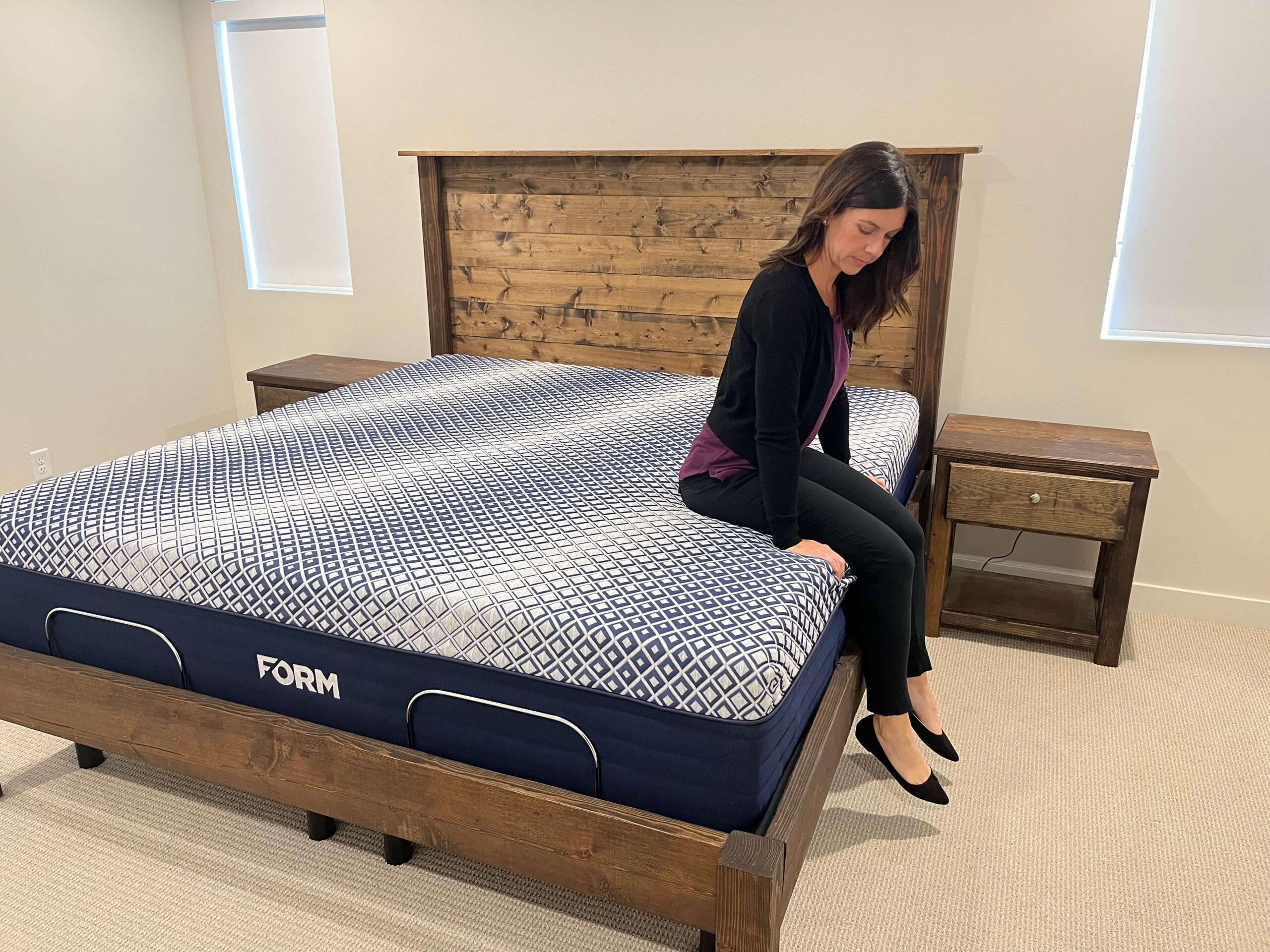
Watch Our FORM Prime Video Review
The FORM Prime isn’t a foam mattress with a coil layer bolted on for marketing purposes. It’s a genuinely engineered hybrid built to be a complete, self-supporting sleep system on its own, no box spring, no separate foundation required beyond a platform bed, slatted frame, or adjustable base.
The ZoneCoil™ 7-Series pocketed coil unit and BaseFlex™ perimeter encasement handle the structural work a box spring would otherwise do, so the mattress performs the way it’s designed to straight out of the box.
What sets the FORM Prime apart is the GelGrid™ layer, reinforced with Integra-Mesh™. Most grid-style mattresses trade responsiveness for a wobbly, unstable surface feel. This one doesn’t. The grid contours quickly and resets just as fast, without the jiggle that grid mattresses are often known for.
Add the AeroWeave™ Euro-top cover on top for airflow and the ContourFlex™ transition layer smoothing the handoff to the coils below, and you get a mattress that feels plush at the surface while staying structurally stable underneath.
At 14 inches thick, the FORM Prime has the substantial profile that makes it feel like a genuine furniture-grade mattress rather than a compressed foam slab, and it’s built with that height specifically to work without a box spring.
It’s backed by a 365-night sleep trial, one of the longest in the industry, and a lifetime warranty that goes well beyond the standard 10-year coverage most brands offer.
Whether you’re a side sleeper, a combination sleeper, or a couple who wants both comfort and motion isolation, this medium-feel mattress is built to adapt without asking you to buy anything else underneath it.
- 8 Value
- 10 Edge Support
- 10 Trial Period
- 9 Response Time
- 10 Motion Transfer
- 9 Cooling & Breathability
The FORM Prime earned its spot because it works as a complete, self-supporting system with no box spring: the ZoneCoil 7-Series unit and BaseFlex perimeter do the structural work a box spring would otherwise handle.
The GelGrid layer reinforced with Integra-Mesh is what sets it apart from other grid beds. During testing, the grid contoured on contact and reset almost instantly when I changed positions, without the wobble I have felt on unreinforced grid surfaces, so a combination sleeper who shifts a lot is not fighting the surface to move.
Response time and motion isolation both scored a perfect 10 in testing. When one side of the bed moved, the other side barely registered it, which supports a couple where one partner is restless.
On the edge, the perimeter held firm with no dip when I sat to put on shoes, which matters more on a bed with no rigid box spring under it, so couples can use the full width.
Best For:
– Side and combination sleepers who want grid contouring with fast reset
– Couples who need strong motion isolation and a stable edge
– Hot sleepers who want coil-backed airflow under a cool-touch cover
Compare Instead:
– Zoma Boost if you want memory-foam contouring rather than a grid feel
– Amerisleep Organica if you want a natural-materials build instead of synthetics
Lying down on the FORM Prime, the AeroWeave cover felt cool on contact, and the GelGrid layer contoured right away without the slow, sinking sensation of memory foam. Changing positions was effortless: the grid snapped back into shape almost instantly rather than holding an impression.
On my side, the shoulder zone gave enough to relieve pressure while the firmer lumbar zone kept my spine supported. Rolling to my back, the ZoneCoil base gave a stable, even foundation under the grid and transition foam.
Motion isolation was the standout, with movement on one side barely registering on the other, which the Integra-Mesh reinforcement and wrapped coils make possible. Edge support held firm to the perimeter with no dip when I sat near it, which matters more on a bed with no rigid box spring underneath. That fast-resetting grid with strong isolation and a solid edge is why the Prime fits a side or combination sleeper, or a couple who wants motion isolation.
The FORM Prime works as four layers that together replace what a box spring would do. The AeroWeave cover felt cool on contact and kept the surface feeling breathable rather than trapping heat. The GelGrid reinforced with Integra-Mesh is why the surface contoured on contact and reset almost instantly when I moved, without the wobble unreinforced grids have. The ContourFlex transition foam is what kept individual coils from pressing through, so the plush surface stayed even. The ZoneCoil 7-Series and BaseFlex perimeter did the structural work: they held the edge firm when I sat on it and gave the whole bed its support with no foundation underneath. CertiPUR-US, GREENGUARD Gold, and OEKO-TEX certified, and fiberglass-free.
Pros
- Edge Support (10/10) and Motion Transfer (10/10): the perimeter held firm when I sat on it and partner movement barely crossed the bed.
- The GelGrid reset almost instantly when I changed positions, without the wobble of unreinforced grid beds.
- CertiPUR-US, GREENGUARD Gold, and OEKO-TEX certified, and fiberglass-free.
Cons
- Value (8/10): it sits at the premium end, so a budget shopper may prefer the Vaya or Zoma Start.
- Single medium feel: a strict stomach sleeper who wants a very firm surface may prefer a firmer pick on this list.
In testing, the GelGrid surface contoured on contact and reset almost instantly when I changed positions, and partner movement barely crossed the bed. On my side the shoulder zone gave while the lumbar zone held my spine, and the edge stayed firm when I sat on it. For a side or combination sleeper who wants grid contouring, and a couple who needs strong motion isolation with no box spring, the FORM Prime is a standout on this list.
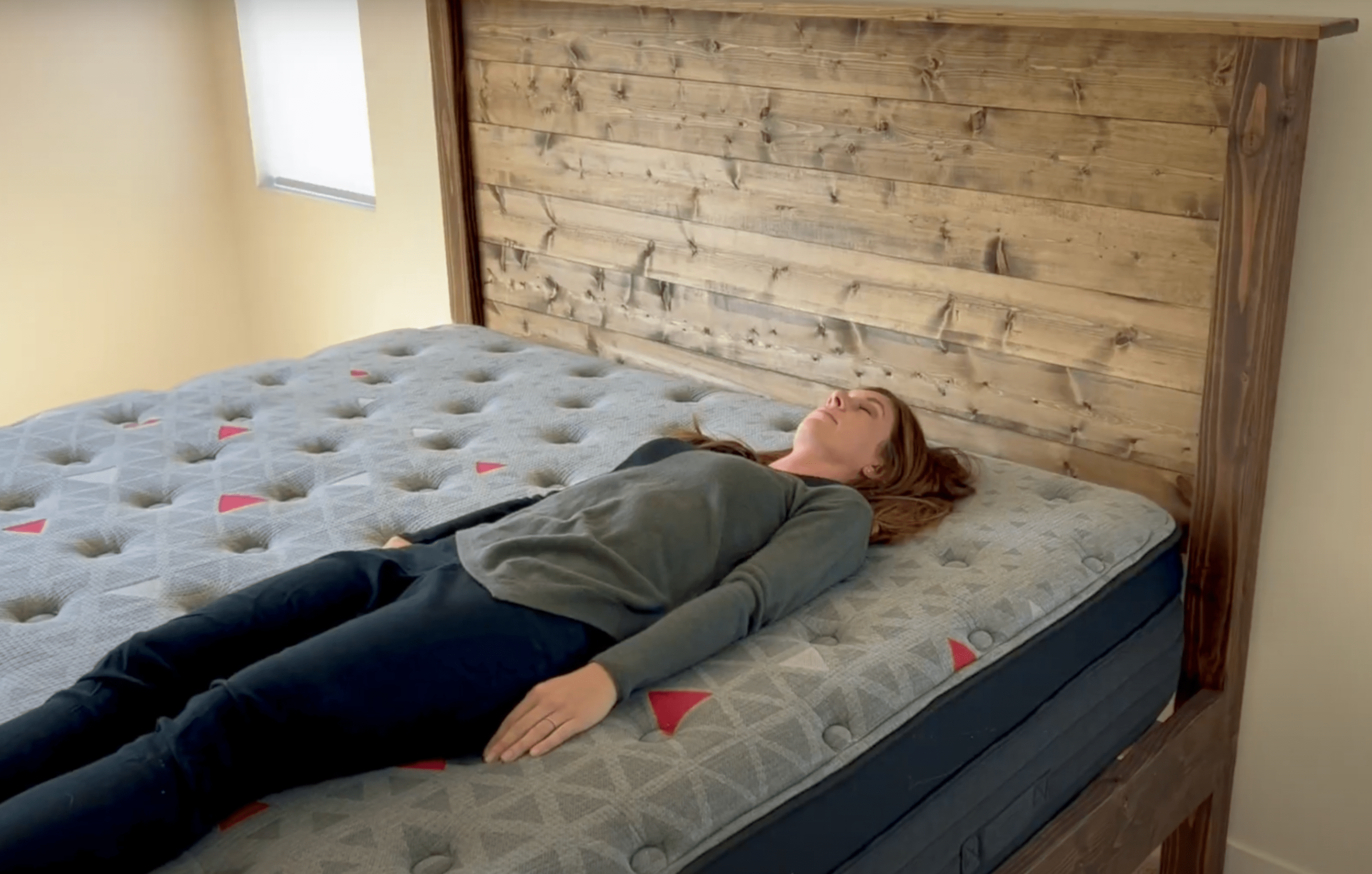
Watch Our Zoma Boost Video Review
Looking for a luxury mattress that doesn’t need a box spring and can keep up with your active lifestyle? The Zoma Boost might be exactly what you’ve been searching for.
This isn’t just another expensive mattress with fancy marketing. It’s a carefully engineered hybrid that combines the best of memory foam comfort with the support and breathability of coils.
What sets the Zoma Boost apart in the luxury category is that it pairs a plush feel with real coil support rather than leaning on softness alone. In my testing it delivered both a high-end surface and steady support underneath, without the overheating or stuck feeling that can come with luxury memory foam.
The hybrid design means you get the pressure relief of premium memory foam with less of the overheating or stuck feeling that some memory foam has.
At 15 inches thick, it’s substantial enough to work beautifully on platform beds, adjustable bases, or any foundation without needing a box spring.
Plus, with features like graphite-infused cooling foam and buoyant wrapped coils, you’re getting technology that actually makes a difference in how you sleep.
- 10 Value
- 10 Edge Support
- 9 Trial Period
- 9 Response Time
- 10 Motion Transfer
- 9 Cooling & Breathability
The Zoma Boost earned the luxury spot because it pairs deep foam contouring with coil support and a stable edge, and it does it without a box spring.
The graphite-infused memory foam is the cooling story here, and I judged it by touch and comparison, not by the label. During testing, the surface felt cooler on contact and did not warm up as quickly as the denser all-foam beds I compared through the first hours, which helps a hot sleeper who still wants a plush foam feel.
The Reactiv layer over the wrapped coils kept it from feeling stuck. When I changed positions, the surface gave enough bounce to move easily, and lying on my back my midsection stayed supported while my shoulders and hips got pressure relief.
Edge support scored a 10. I could sit on the edge without the perimeter collapsing, so a couple can use the full surface.
Best For:
– Back and combination sleepers who want foam contour with coil support
– Hot sleepers who want graphite-foam cooling in a plush build
– Couples who want motion isolation with a firm edge
Compare Instead:
– Nolah Evolution if you want to choose your firmness (Plush, Luxury Firm, or Firm)
– Amerisleep AS6 Black Series if cooling is your single highest priority
When I first lay down, the surface felt plush and welcoming, with the memory foam contouring to my shape while the coils underneath kept it from feeling too soft. On my back, my midsection stayed supported while my shoulders and hips got pressure relief, and the Reactiv layer gave enough bounce that changing positions felt effortless rather than stuck.
The graphite-infused foam felt cool on contact and did not warm up as quickly as the denser memory foam beds I compared over the first hours. Edge support stood out: I could sit on the perimeter to put on shoes without it collapsing.
When my partner moved, I barely felt it, so the motion separation held up well for a hybrid. That mix of plush contour, a firm edge, and steady coil support is why the Boost fits a back or combination sleeper who wants a luxury feel without overheating early in the night.
The Zoma Boost is a foam-and-coil hybrid, and the layers matter for what they did under me. The graphite-infused memory foam is why the surface felt cooler on contact and did not warm up as fast as the denser foam beds I compared: graphite conducts heat out of the foam. The quilted gel layer added to that cooler surface feel. The Reactiv layer is the reason I did not feel stuck when I changed positions, giving the bounce a pure memory foam bed lacks. The wrapped coils, with reinforced edge coils, held my spine steady on my back and kept the perimeter firm when I sat on it. The high-density base anchored it all. CertiPUR-US certified and fiberglass-free.
Pros
- Edge Support (10/10) and Motion Transfer (10/10): the perimeter held firm when I sat on it and partner movement barely registered.
- Cooling and Breathability (9/10): the graphite-infused surface felt cool on contact and did not warm up as fast as the denser foam beds I compared.
- The Reactiv layer kept it from feeling stuck when I changed positions.
Cons
- Single firmness: a sleeper who wants to choose a firmness may prefer the Nolah Evolution.
- Premium price and a tall, heavy profile make rotation a two-person job; a lower-priced pick on this list is the Vaya or Zoma Start.
In testing, the graphite-infused surface felt cool on contact and did not warm up as fast as the denser foam beds I compared, and I did not wake up overheated on warmer nights. On my back my midsection stayed supported while my shoulders and hips got relief, and the edge held firm. For a back or combination sleeper who wants a plush luxury feel with coil support and cooling, the Zoma Boost fits.
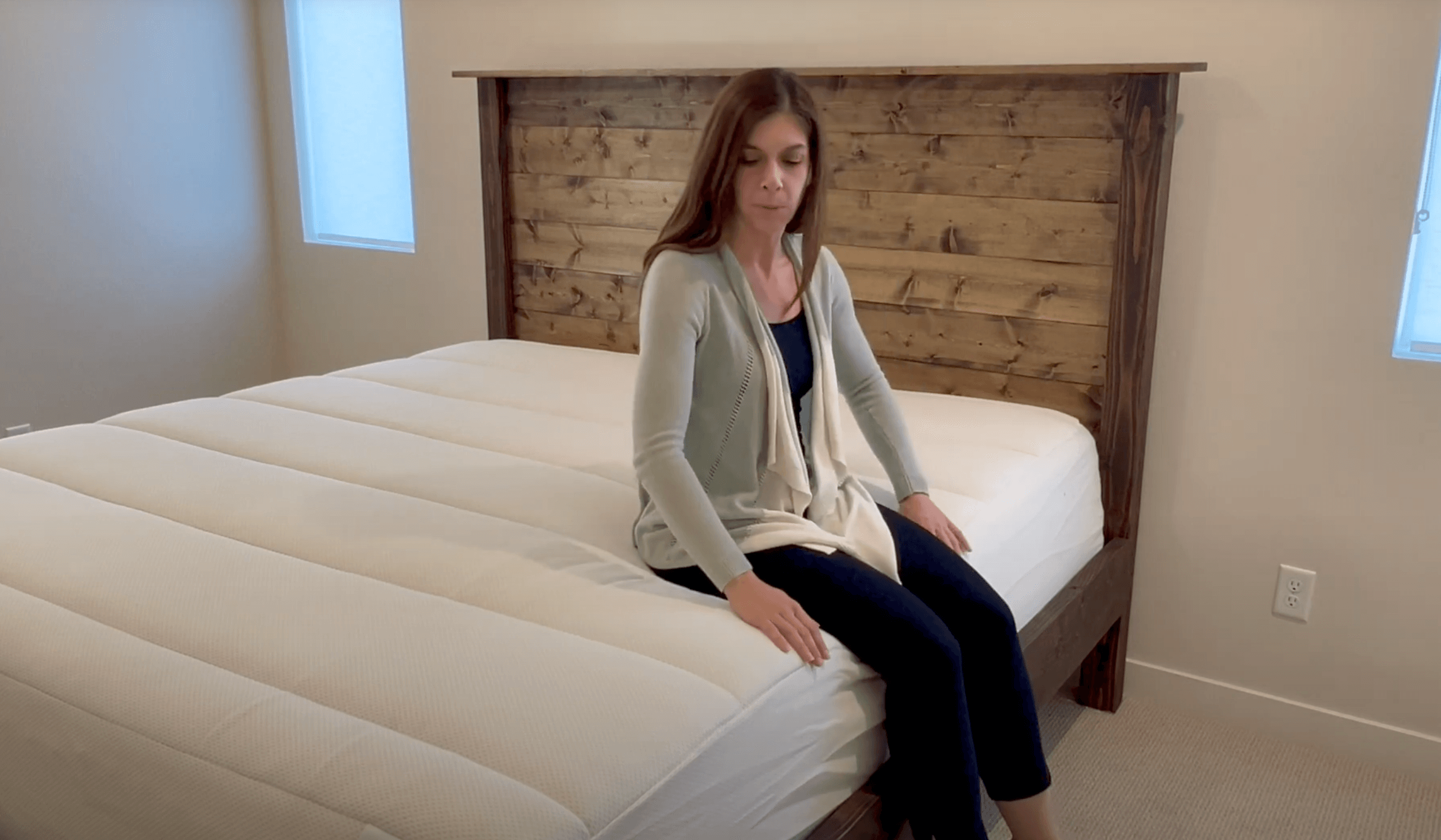
Watch Our Vaya Mattress Video Review
Need a quality mattress that won’t break the bank and doesn’t have to sit on a box spring? The Vaya Mattress might be exactly what you need.
While many budget mattresses cut corners and leave you with poor sleep quality, Vaya has found a way to deliver genuine comfort and support at a price that actually makes sense for most people.
What makes the Vaya special is its simple approach to mattress design. Instead of using complicated layer systems with fancy marketing names, they focus on just two high-quality foam layers that work together perfectly.
This streamlined design keeps costs down while still delivering the comfort and cooling you’d expect from much more expensive mattresses.
At 12 inches thick, the Vaya works great on platform beds, adjustable bases, or any solid foundation. No box spring required! It’s made with CertiPUR-US certified foams, comes with a 10-year warranty, and offers a 100-night trial so you can make sure it’s right for you.
The best part? Even at full price, it costs significantly less than most comparable mattresses, and frequent sales make it an even better deal.
- 10 Value
- 9 Edge Support
- 9 Trial Period
- 10 Response Time
- 8 Motion Transfer
- 9 Cooling & Breathability
The Vaya earned the budget spot because it delivers responsive foam comfort at a low price and needs no box spring on any solid foundation.
Its two-layer build is the point: fewer layers, better foam in each. During testing, the Vaya Comfort Foam contoured at my hips and shoulders but bounced back quickly when I moved, so I did not get the slow, stuck sink I expect from cheap memory foam, which helps a combination sleeper on a budget.
The open-cell top felt less heat-retentive than the denser budget foams I have tested, so a hot sleeper who cannot spend more is less likely to feel that trapped-heat buildup early on.
The honest tradeoff: motion isolation is good for the price but not premium, and the all-foam edge is softer than a coil bed, so a restless partner or an edge-sitter will notice it.
Best For:
– Budget shoppers who want responsive foam, not dense bargain foam
– Back and side sleepers around average weight
– Hot sleepers on a budget who want open-cell airflow
Compare Instead:
– Zoma Start if you want a lower-profile foam bed with a similar price
– Amerisleep AS3 if your budget can stretch for zoned support and stronger motion isolation
I was surprised by how comfortable the Vaya felt for a budget bed. The Vaya Comfort Foam contoured at my hips and shoulders but had a natural bounce, so it was easy to move rather than dense and unforgiving like some cheap foams.
On temperature, the open-cell foam felt less heat-retentive than the denser budget foams I have tested, so I did not get that stuffy, trapped-heat feeling early in the night. The medium to medium-firm feel worked for both back and side sleeping: on my back I had good spinal alignment, and on my side the foam gave enough to relieve pressure without letting me sink too far.
Motion isolation was decent for the price, better than most budget options though not premium, and after several weeks it held its shape with no sagging. That responsive, cooler-running foam is why the Vaya fits a budget shopper or an average-weight back or side sleeper.
The Vaya keeps it to two foam layers and a cover, and that simplicity is the point. The breathable cover and the open-cell Vaya Comfort Foam are why the surface ran less heat-retentive than the denser budget foams I compared, so heat did not build up early in the night. That same comfort layer contoured at my hips and shoulders but sprang back quickly when I moved, which is what keeps it from feeling stuck the way cheap memory foam can. The high-density base is what held the surface stable and kept me from feeling like I was sinking into a hammock. Because there are only two layers, the foam in each is better than the thin stacked layers some budget beds use. CertiPUR-US certified and tested for low VOC emissions.
Pros
- Value (10/10) and Response Time (10/10): it delivers responsive foam at a budget price and moved easily when I changed positions.
- Cooling and Breathability (9/10): the open-cell foam ran less heat-retentive than the denser budget foams I compared.
- Works on any solid foundation with no box spring.
Cons
- Motion Transfer (8/10): movement is contained but not as isolated as premium foam; a couple wanting stronger isolation should consider the Amerisleep AS3.
- The all-foam edge is softer than a coil bed, so edge-sitters will notice give.
In testing, the open-cell foam ran less heat-retentive than the denser budget foams I compared, and it contoured at my hips and shoulders while springing back quickly when I moved. On my side and front, I did not feel stuck or overheated early on. For a budget shopper who wants responsive foam and cooler airflow with no box spring, the Vaya is the value pick on this list.

Watch Our Helix Midnight Luxe Video Review
Are you a side sleeper who wants your hips and shoulders cushioned without your spine dropping out of line? The Helix Midnight Luxe is built around that exact problem, with a softer shoulder zone and firmer support under the hips.
This mattress was specifically designed with side sleepers in mind, featuring targeted pressure relief where you need it most and the perfect medium feel that cradles your body without letting you sink in too far.
What makes the Midnight Luxe special for side sleepers is its zoned lumbar support system. Instead of having the same firmness throughout, it’s softer under your shoulders and firmer under your hips to keep your spine properly aligned.
Add in the premium quilted pillow top and memory foam layers, and you get a sleep surface that actually adapts to the way side sleepers need support.
At 13.5 inches thick, this hybrid mattress works beautifully on platform beds, adjustable bases, or any solid foundation. No box spring required. It’s made in Arizona with high-quality materials, comes with cooling cover options, and includes a lifetime warranty.
With over 7,500 customer reviews behind it, this is a mattress I found delivers consistent pressure relief and alignment for side sleepers who want comfort and support in one bed.
- 7 Value
- 10 Edge Support
- 9 Trial Period
- 9 Response Time
- 10 Motion Transfer
- 9 Cooling & Breathability
The Helix Midnight Luxe earned the side-sleeper spot because its zoned build cushions the shoulder and holds the hip in line, which is exactly what side sleeping needs.
During testing on my side, my shoulder sank into the softer zone just enough to take the pressure off it, while the firmer coils under my hips kept my spine from dropping, so a side sleeper gets pressure relief and alignment at the same time rather than trading one for the other.
The quilted pillow top over gel memory foam gave immediate surface softness, and the wrapped coils underneath kept it from feeling like quicksand, so changing positions stayed easy.
Motion isolation and edge support both scored high in testing: partner movement barely reached my side, and the perimeter stayed stable when I sat on it.
The tradeoff to flag: the medium feel and plush surface are not ideal for a strict stomach sleeper, and the cooling and support add-ons push the price up.
Best For:
– Side sleepers who need shoulder and hip pressure relief with alignment
– Hot side sleepers who add the GlacioTex or CoolForce cooling upgrade
– Couples who want strong motion isolation
Compare Instead:
– Nolah Evolution if you want a pillowtop with a choice of three firmness levels
– Amerisleep AS3 if you want softer foam contour at a lower price
When I lay down on my side, the mattress cradled my hips and shoulders where I needed it. The quilted pillow top gave a soft surface while the memory foam underneath contoured, and the zoned coils did the real work: my shoulder sank into the softer zone just enough to relieve pressure while my hips stayed supported by the firmer coils, so my spine held its line rather than my hips dropping.
The medium feel gave enough cushion without the quicksand sensation, and it stayed responsive enough to change positions easily. On temperature, the TENCEL cover felt breathable on contact and the coil airflow kept the surface from trapping heat the way an all-foam bed can. When my partner moved, I barely felt any disturbance.
Edge support stayed stable when I sat on the side to put on shoes, so I could use the full surface. That combination of shoulder cushioning and hip alignment is why it fits a dedicated side sleeper, especially one who runs warm and adds the cooling cover.
The Helix Midnight Luxe is a zoned hybrid, and the layers earn their place through the side-sleeping test. The TENCEL cover felt breathable on contact, and the optional GlacioTex cover and CoolForce ribbons pull more heat for a hot side sleeper, with Helix citing 22% more heat pulled. The quilted pillow top and gel memory foam are why my shoulder settled in and my hips got cushioned on my side. The zoned wrapped coils, softer at the shoulders and firmer at the hips, are the reason my spine stayed in line rather than dropping. Those same coils held the edge stable when I sat on it and kept partner motion from crossing the bed. The optional ErgoAlign layer adds lumbar support. CertiPUR-US certified.
Pros
- Edge Support (10/10) and Motion Transfer (10/10): the perimeter stayed stable when I sat on it and partner movement barely reached my side.
- On my side, the softer shoulder zone and firmer hip support gave pressure relief with spinal alignment.
- Choice of TENCEL or GlacioTex cover; optional CoolForce ribbons pull more heat, with Helix citing 22% more.
Cons
- Value (7/10): the cooling and support upgrades push the price up, so a value-focused side sleeper should consider the Amerisleep AS3.
- The medium, plush surface is not ideal for a strict stomach sleeper who wants a very firm feel.
In testing, my shoulder settled into the softer zone while the firmer coils held my hips in line, so I got cushioning and alignment at the same time on my side. The pillow top gave a plush surface, and partner movement barely reached my side. For a dedicated side sleeper who wants pressure relief with spinal alignment, and a hot side sleeper who adds the cooling upgrade, the Helix Midnight Luxe leads this category.
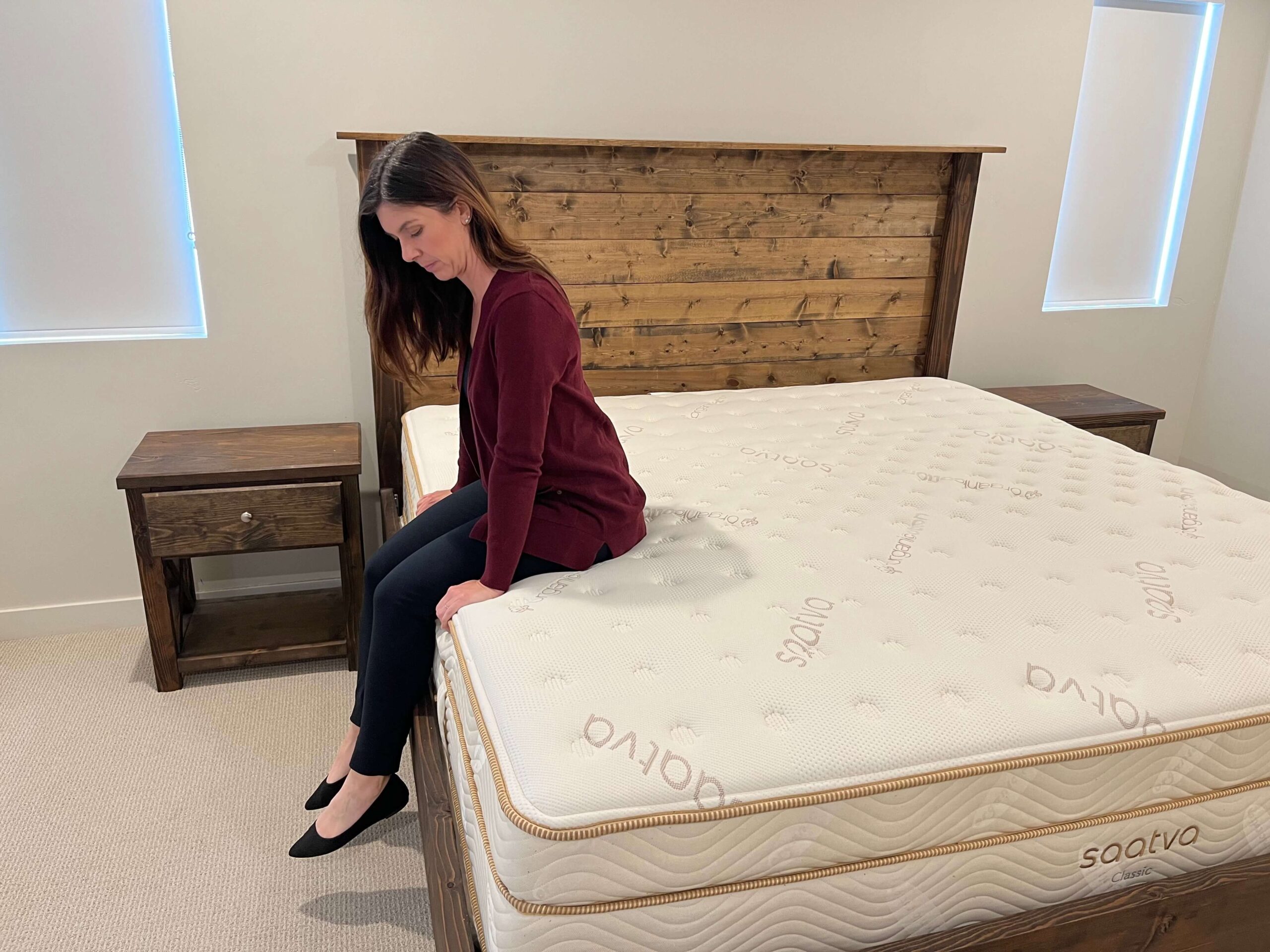
Looking for the feel of a traditional innerspring mattress but without the hassle of needing a box spring? The Saatva Classic might be exactly what you’re after.
This luxury innerspring mattress brings back that classic hotel-quality feel that many people love, but with modern engineering that makes it work perfectly on platform beds, adjustable bases, or any solid foundation.
What makes the Saatva Classic special is that it’s a true innerspring mattress. Not just a hybrid with thick foam layers on top.
You get that responsive, bouncy feel that innerspring lovers crave, along with excellent airflow and temperature regulation.
The 3-inch Euro pillow top provides just the right amount of cushioning without losing that classic innerspring support that helps you sleep “on” the mattress rather than “in” it.
The dual-coil design sets it apart from other innerspring mattresses. With over 1,000 recycled steel coils working together in two layers, you get incredible support and durability.
The patented Lumbar Zone technology provides extra support where your back needs it most, while the three comfort levels (Plush Soft, Luxury Firm, and Firm) mean you can find the perfect feel for your sleep preferences.
Plus, with 98% of customers keeping this mattress, it’s clearly delivering on its promises.
- 7 Value
- 10 Edge Support
- 10 Trial Period
- 10 Response Time
- 9 Motion Transfer
- 9 Cooling & Breathability
The Saatva Classic earned the innerspring spot because it gives the responsive, sleep-on-top feel innerspring buyers want while working on a platform or adjustable base with no box spring.
The dual-coil build is what I could feel. During testing, the Euro pillow top gave a soft entry while the coils underneath kept me on top of the bed rather than sinking in, so a sleeper who dislikes the in-the-foam feeling gets support with a little cushion.
The Lumbar Zone section in the center third kept my lower back supported on my back without pushing it up, which is the usual complaint with older innersprings.
Airflow through the coil layers meant the surface felt more breathable than the all-foam beds I compared, so a hot sleeper who wants a traditional feel is not stuck with a heat-trapping foam.
The tradeoff: it is bouncier and offers less deep contour than memory foam, so a strict side sleeper who wants a cradle may want a foam or hybrid pick instead.
Best For:
– Sleepers who want a true responsive innerspring bounce
– Back sleepers who want lumbar-zone support
– Hot sleepers who want coil airflow over foam
Compare Instead:
– Nolah Evolution if you want pillowtop plush over a coil base
– Helix Midnight Luxe if you are primarily a side sleeper who needs pressure relief
The moment I lay down, I felt the responsive bounce that foam beds do not give. The Euro pillow top offered a soft entry, but the coils underneath kept me on top of the bed rather than sinking into it. The Luxury Firm option I tested held my spine aligned on my back, with enough pillow-top cushion to stay comfortable when I rolled to my side, and the Lumbar Zone section kept my lower back supported without pushing it up.
Airflow through the dual coils kept the surface feeling more breathable than the all-foam beds I compared. Repositioning was effortless on the responsive coils, with no stuck feeling.
Motion isolation was decent for an innerspring, and the reinforced perimeter held firm when I sat on the edge. That responsive, breathable, sleep-on-top feel with lumbar support is why the Saatva fits a back sleeper who wants a traditional innerspring and no box spring.
The Saatva Classic is a coil-on-coil innerspring, and the build shows up in the feel. The 3-inch Euro pillow top with Lumbar Zone quilting is why I got a soft entry while still sleeping on top of the bed rather than in it, and the memory foam lumbar insert is what kept my lower back supported on my back. The upper wrapped coils contoured to me and contained partner motion better than a connected coil unit, while the tempered steel base coils gave the responsive support and airflow that kept the surface feeling cooler than foam. The reinforced perimeter held the edge firm when I sat on it. A plant-based thistle-pulp barrier handles fire protection in place of fiberglass. Organic cotton cover with a botanical antimicrobial treatment.
Pros
- Edge Support (10/10), Trial Period (10/10), and Response Time (10/10): the perimeter held firm, the trial runs a full year, and the coils made repositioning effortless.
- The Lumbar Zone section kept my lower back supported on my back without pushing it up.
- Coil airflow kept the surface feeling more breathable than the foam beds I compared.
Cons
- Value (7/10): it is priced above basic innersprings and delivery is white glove; a lower-priced pick is the Vaya.
- Less deep contour than memory foam, so a strict side sleeper who wants a cradle should consider the Helix Midnight Luxe.
In testing, the dual-coil build kept me on top of the bed with a responsive bounce, while the Lumbar Zone section held my lower back on my back. The pillow top added cushion for side sleeping, and airflow through the coils kept the surface feeling breathable. For a back sleeper who wants a true innerspring feel with lumbar support and no box spring, the Saatva Classic is the innerspring pick here.
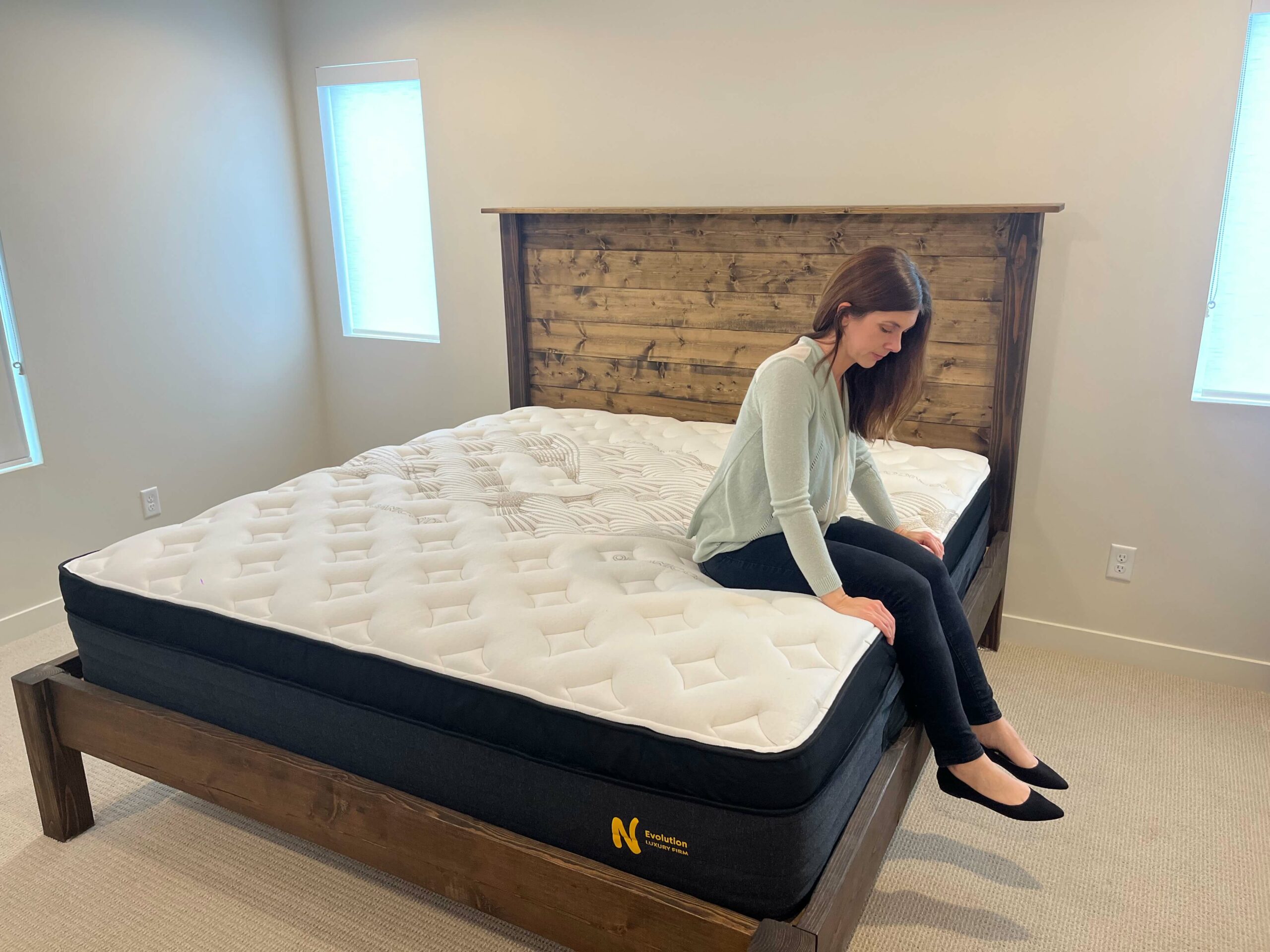
Watch Our Nolah Evolution Video Review
Want a luxurious pillowtop mattress that doesn’t need a box spring and delivers hotel-quality comfort? The Nolah Evolution might be exactly what you’re dreaming of.
It’s not just another hybrid mattress with a thin layer of padding on top. It’s a thoughtfully designed pillowtop hybrid that combines plush quilted comfort with advanced support technology that works perfectly on platform beds, adjustable bases, or any solid foundation.
What makes the Evolution special is how it balances that classic pillowtop feel with modern engineering. The quilted foam top layer gives you that immediate “sink-in” comfort you expect from a pillowtop.
Meanwhile the zoned AirFoam and tri-zone coil system underneath provide targeted support exactly where your body needs it. It’s like getting the luxury of a five-star hotel mattress with the precision of modern sleep science.
At 14 inches thick (or 15 inches with the cooling pillowtop upgrade), this mattress has the substantial feel that pillowtop lovers crave.
Forbes Vetted rated it the “Best Mattress for Side Sleepers Overall” in 2026, and it’s earned recognition from experts for solving the common pillowtop problems of overheating and poor support.
With three firmness options and optional cooling upgrades, you can match it to your position and temperature needs rather than settling for a single soft pillowtop feel.
- 10 Value
- 10 Edge Support
- 9 Trial Period
- 9 Response Time
- 10 Motion Transfer
- 9 Cooling & Breathability
The Nolah Evolution earned the hybrid spot because it delivers pillowtop plushness without the two things that usually go wrong with pillowtops: sagging support and trapped heat.
The zoned AirFoam HD is hole-punched at the shoulders and firmer at the lumbar, and I could feel the difference. On my side, my shoulder settled in while my lower back stayed supported, so a side and combination sleeper gets the cradle up top and alignment underneath.
The tri-zone HDMax coils kept the plush surface from feeling unsupported. Rolling to my back, the coils firmed up the middle so I did not sink, and the surface still reset quickly when I moved.
The AirBreath gusset around the border let the surface run less heat-retentive than a sealed pillowtop, so a warm sleeper who wants that hotel-plush feel is less likely to overheat early.
Motion isolation scored a 10, so a couple sharing the bed is less likely to feel each other move.
Best For:
– Side and combination sleepers who want pillowtop plush with real support
– Buyers who want to choose firmness (Plush, Luxury Firm, or Firm)
– Couples who want strong motion isolation
Compare Instead:
– Helix Midnight Luxe if you sleep on your side almost exclusively
– Saatva Classic if you want a true innerspring feel instead of a foam pillowtop
The quilted top gave that instant plush, sink-in feeling when I lay down, but the bed did not feel unsupportive underneath. On my side, my shoulder settled into the hole-punched softer zone while my lumbar stayed supported by the firmer zone, so I got the cradle up top with alignment below.
Rolling to my back, the tri-zone coils firmed up the middle so I did not sink, and the EverAdapt foam let the surface reset quickly when I moved rather than feeling slow. On temperature, the AirBreath gusset around the border let the surface run less heat-retentive than the sealed pillowtops I compared.
When my partner moved, I barely felt any disturbance, and the reinforced perimeter held stable when I sat on the edge. That plush-but-supported feel with a firmness choice is why the Evolution fits a side or combination sleeper who wants hotel-plush comfort without the usual pillowtop sag.
The Nolah Evolution is a pillowtop hybrid, and each layer answers a common pillowtop weakness. The organic cotton cover and quilted foam gave the plush entry. The AirBreath gusset around the border is why the surface ran less heat-retentive than the sealed pillowtops I compared. The zoned AirFoam HD, hole-punched at the shoulders and firmer at the lumbar, is the reason my shoulder settled in while my lower back held on my side. The HDMax tri-zone coils firmed up the middle so the plush top did not leave me unsupported, and the thicker side coils kept the edge stable when I sat on it. The EverAdapt foam is what let the surface reset quickly when I moved. CertiPUR-US and GREENGUARD Gold certified, fiberglass-free.
Pros
- Value (10/10), Edge Support (10/10), and Motion Transfer (10/10): strong across the board, with a stable edge and partner movement that barely registered.
- The zoned AirFoam let my shoulder settle in while my lumbar stayed supported on my side.
- Choice of Plush, Luxury Firm, or Firm; the AirBreath border kept the plush surface from trapping heat.
Cons
- The pillowtop may show body impressions over time and takes a longer break-in; a firmer, simpler feel is the Saatva Classic.
- Tall and heavy to rotate.
In testing, the zoned AirFoam let my shoulder settle in while my lumbar stayed supported on my side, and the tri-zone coils firmed up the middle when I rolled to my back. Partner movement barely registered, and the AirBreath border kept the plush surface from trapping heat. For a side or combination sleeper who wants pillowtop plush with real support, and the option to pick a firmness, the Nolah Evolution is the hybrid pick.
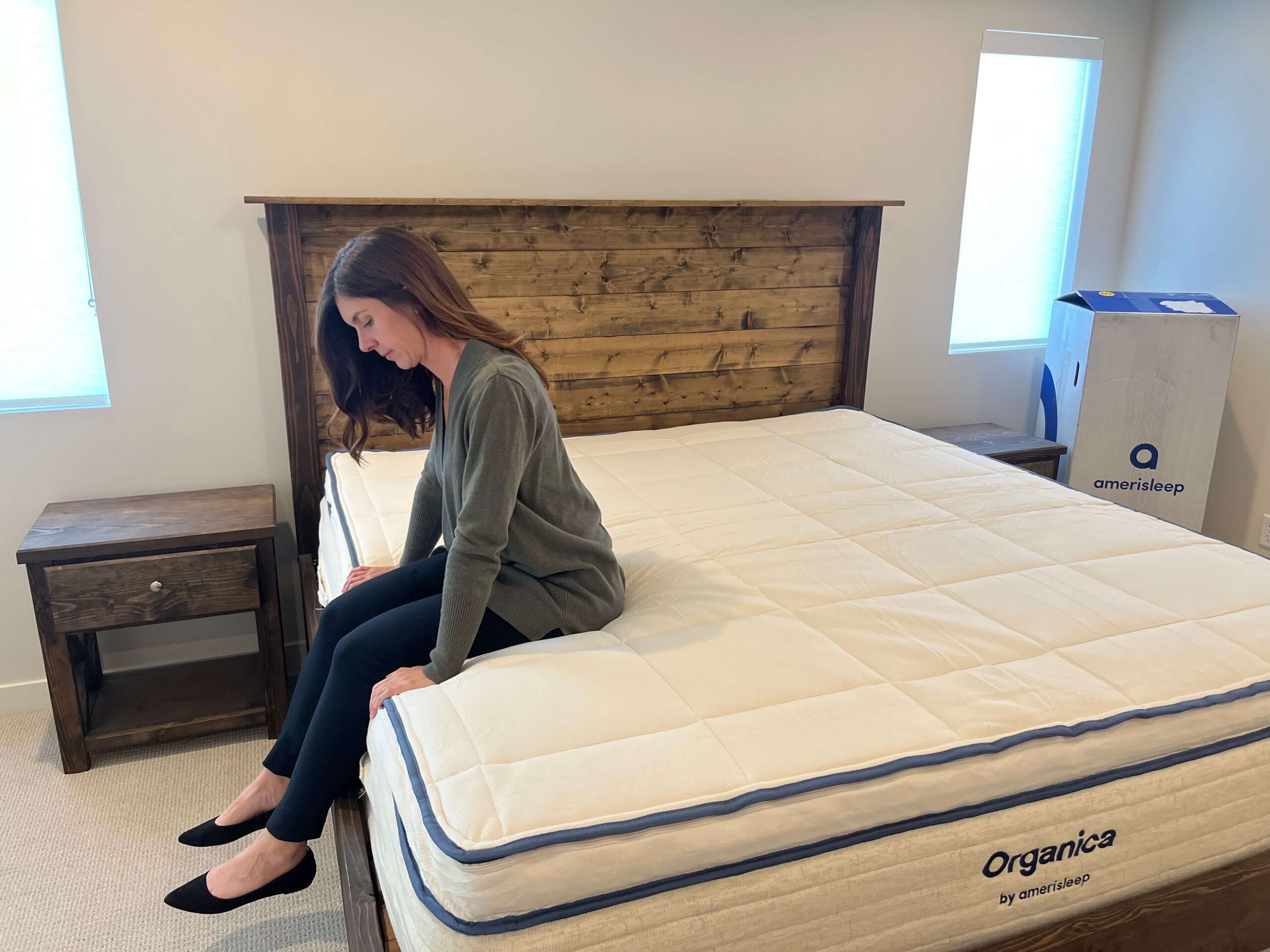
Watch Our Amerisleep Organica Mattress Video Review
Seeking a natural latex mattress that doesn’t need a box spring and won’t compromise your health or the environment? The Amerisleep Organica might be exactly what you’re searching for.
This isn’t just another mattress with a few organic materials thrown in. Not at all, as it’s a completely natural sleep system made with certified organic cotton, wool, and Talalay latex that works perfectly on platform beds, adjustable bases, or any solid foundation.
What makes the Organica special is its commitment to truly natural materials. While many “natural” mattresses still use synthetic foams or chemical adhesives, the Organica uses only materials that come from nature.
The Talalay latex is seven times more breathable than conventional foam, the organic wool regulates temperature naturally, and the organic cotton cover feels soft and breathable against your skin.
The hybrid design combines the best aspects of latex comfort with coil support, giving you that responsive, bouncy feel that latex lovers crave while providing excellent motion isolation and edge support.
At 13 inches thick (or 16 inches for the plush version), it’s substantial enough to work beautifully without any box spring.
Plus, knowing that every material is certified by organizations like OEKO-TEX and the Rainforest Alliance gives you peace of mind that you’re sleeping on something truly safe and sustainable.
- 9 Value
- 8 Edge Support
- 9 Trial Period
- 10 Response Time
- 9 Motion Transfer
- 9 Cooling & Breathability
The Amerisleep Organica earned the latex spot because it gives the responsive, buoyant latex feel with certified natural materials and a coil base that fixes latex’s usual weak points.
During testing, the Talalay latex contoured to my curves but sprang back the instant I moved, so I never felt stuck the way I do on memory foam, which suits a combination sleeper who changes position often.
The pocketed coil base is what makes this better than most all-latex beds: it added edge stability and held partner motion better than a solid latex core, so a couple gets a usable edge and less disturbance.
The latex and wool ran cooler and more breathable than the foam beds I compared, so a hot sleeper who wants natural materials has a real option here.
The tradeoff: latex is bouncy by nature, so a sleeper who wants a deep memory-foam hug will not get it, and the taller plush model is heavy to move.
Best For:
– Eco-minded buyers who want certified natural latex
– Side and combination sleepers at the medium firmness
– Hot sleepers who want latex and wool breathability
Compare Instead:
– PlushBeds Signature Bliss if you want fuller GOLS and GOTS organic certifications
– Saatva Classic if you want an innerspring feel with an organic cotton cover
Lying on the standard Organica, the first thing I noticed was the buoyant, responsive feel that is completely different from memory foam. The organic cotton cover felt soft and natural against my skin with no chemical smell. The Talalay latex contoured to my curves but sprang back the instant I moved, so I never felt stuck the way I do on memory foam.
On my side, the soft latex relieved pressure at my hips and shoulders while the medium layer underneath held my spine aligned. On my back, I felt supported with no sagging. On temperature, the latex and wool ran cooler and more breathable than the foam beds I compared, and the coil airflow added to that.
Motion isolation was strong for a bouncy latex bed thanks to the pocketed coils, and the edge held when I sat on it. That responsive, cooler-running natural build is why the Organica fits an eco-minded side or combination sleeper who wants natural materials with real edge support.
The Amerisleep Organica is a natural latex hybrid, and the materials matter for what they did in testing. The organic cotton cover and organic wool ran cool and breathable, and the wool doubles as the fire barrier in place of fiberglass. The soft Talalay latex is why the surface contoured to my hips and shoulders on my side while springing back the instant I moved, so I never felt stuck. The medium Talalay layer added structure and handed my weight to the coils below. The pocketed coil base is the reason the edge stayed usable and partner motion stayed contained, which a solid latex core does less well. The plush model adds 3 inches of latex on top. Latex certified by OEKO-TEX, Rainforest Alliance, and eco-INSTITUT; wool by OEKO-TEX.
Pros
- Response Time (10/10): the Talalay latex sprang back the instant I moved, so I never felt stuck.
- Certified natural materials (OEKO-TEX, Rainforest Alliance, eco-INSTITUT) with wool as the fire barrier in place of fiberglass.
- Latex and wool ran cool and breathable in testing.
Cons
- Edge Support (8/10): the edge is usable but softer than the strongest coil beds here; if edge is a priority, consider the PlushBeds Signature Bliss or Saatva Classic.
- Bouncy by nature, so a sleeper who wants a deep memory-foam hug should consider a foam pick; the 16-inch plush model is heavy.
In testing, the Talalay latex contoured to my hips and shoulders on my side but sprang back the instant I moved, so I never felt stuck, and the coil base kept the edge usable and partner motion contained. The latex and wool ran cool and breathable. For an eco-minded side or combination sleeper who wants natural materials with real edge support, the Organica is the latex pick on this list.

Watch Our Amerisleep AS6 Black Series Video Review
Are you tired of waking up hot and sweaty in the middle of the night? The Amerisleep AS6 Black Series might be the cooling solution you’ve been searching for.
This is not just another mattress that claims to sleep cool. It layers three cooling features, and in my testing they held the surface cooler for longer than the single-feature cooling beds I compared. The CryoCool cover felt cool on contact, the TitanAir titanium-infused layer kept airflow moving under me, and the ArcticWave bands helped the surface hold that cooler feel deeper into the night rather than fading after the first hour.
At 14 inches thick, this luxury mattress works beautifully on platform beds, adjustable bases, or any solid foundation without needing a box spring. It’s handcrafted in the USA with premium materials, comes with multiple firmness options, and includes a 20-year warranty.
The AS6 has earned a 4.9-star average from customers. If you run warm at night, this is the bed on this list built most directly around cooling.
- 9 Value
- 9 Edge Support
- 9 Trial Period
- 9 Response Time
- 10 Motion Transfer
- 10 Cooling & Breathability
The AS6 Black Series earned the cooling spot because its cooling stack held up longer under my body than the single-feature cooling beds I compared, and it does it on a coil base with no box spring.
I judged the cooling by touch and comparison. During testing, the CryoCool cover felt genuinely cool on contact, like the cool side of a pillow, and the surface did not warm up as fast as the all-foam beds I compared over the first hours, so a hot sleeper who runs warm at night gets a longer cool window rather than an instant that fades.
The TitanAir titanium-infused foam and the PrecisionCoil base kept airflow moving under me, so the heat did not pool at my shoulders and hips the way it does on dense foam.
Support held across positions: on my back the coils kept my spine steady, and on my side the comfort layers gave at the shoulder and hip. Motion isolation scored a 10 despite the coils.
The tradeoff: it is a premium price and a tall, heavy bed, and it is more cooling than a cool sleeper needs.
Best For:
– Hot sleepers who want the strongest cooling stack on this list
– Buyers who want to choose firmness (Plush Soft, Luxury Firm, or Firm)
– All-position sleepers who want coil support with cooling
Compare Instead:
– Zoma Boost if you want strong cooling at a lower price
– FORM Prime if you want grid-based cooling with a firmer edge
When I first lay down, the CryoCool cover felt genuinely cool to the touch, not just room temperature but cool, like the cool side of a pillow across the whole surface. The Luxury Firm option balanced support and pressure relief: the titanium-infused foam contoured at my hips and shoulders but felt more responsive than traditional memory foam, so I could change positions without feeling stuck.
Several hours in, when I would normally start to feel warm, the surface still felt cooler to the touch than the all-foam beds I compared, and I did not get the heat buildup at my shoulders and hips that usually wakes me. On my back the coils held my spine steady, and on my side the comfort layers gave where I needed.
When my partner moved, I barely felt it, and the edge stayed stable when I sat on it. That longer cool window with coil support across positions is why the AS6 fits a hot sleeper who wants cooling without giving up support.
The AS6 Black Series is a cooling-focused hybrid, and the layers are built around holding a cooler surface longer. The CryoCool cover felt cool on contact, and the TitanAir titanium-infused foam kept airflow moving so heat did not pool at my shoulders and hips. The ArcticWave bands are the reason the surface held that cooler feel deeper into the night rather than fading after the first hour. The Bio-Pur plant-based foam added contour without trapping heat the way dense petroleum foam does. The Affinity transition layer handed my weight to the coils, and the PrecisionCoil base gave the support that kept my spine steady on my back and added airflow underneath. CertiPUR-US, GREENGUARD Gold, and OEKO-TEX certified, fiberglass-free.
Pros
- Cooling and Breathability (10/10): the surface felt cool on contact and held that cooler feel deeper into the night than the single-feature cooling beds I compared.
- Motion Transfer (10/10): partner movement barely registered despite the coil base.
- Choice of Plush Soft, Luxury Firm, or Firm; CertiPUR-US, GREENGUARD Gold, and OEKO-TEX certified, fiberglass-free.
Cons
- Premium price and a tall, heavy profile; a lower-priced cooling pick is the Zoma Boost.
- More cooling than a cool sleeper needs, so a neutral sleeper may prefer the Amerisleep AS3.
In testing, the surface felt cool on contact and held that cooler feel deeper into the night than the single-feature cooling beds I compared, and I did not get the heat buildup at my shoulders and hips that usually wakes me. On my back the coils held my spine steady, and the edge stayed stable. For a hot sleeper who wants the strongest cooling stack with coil support across positions, the AS6 leads the cooling category.
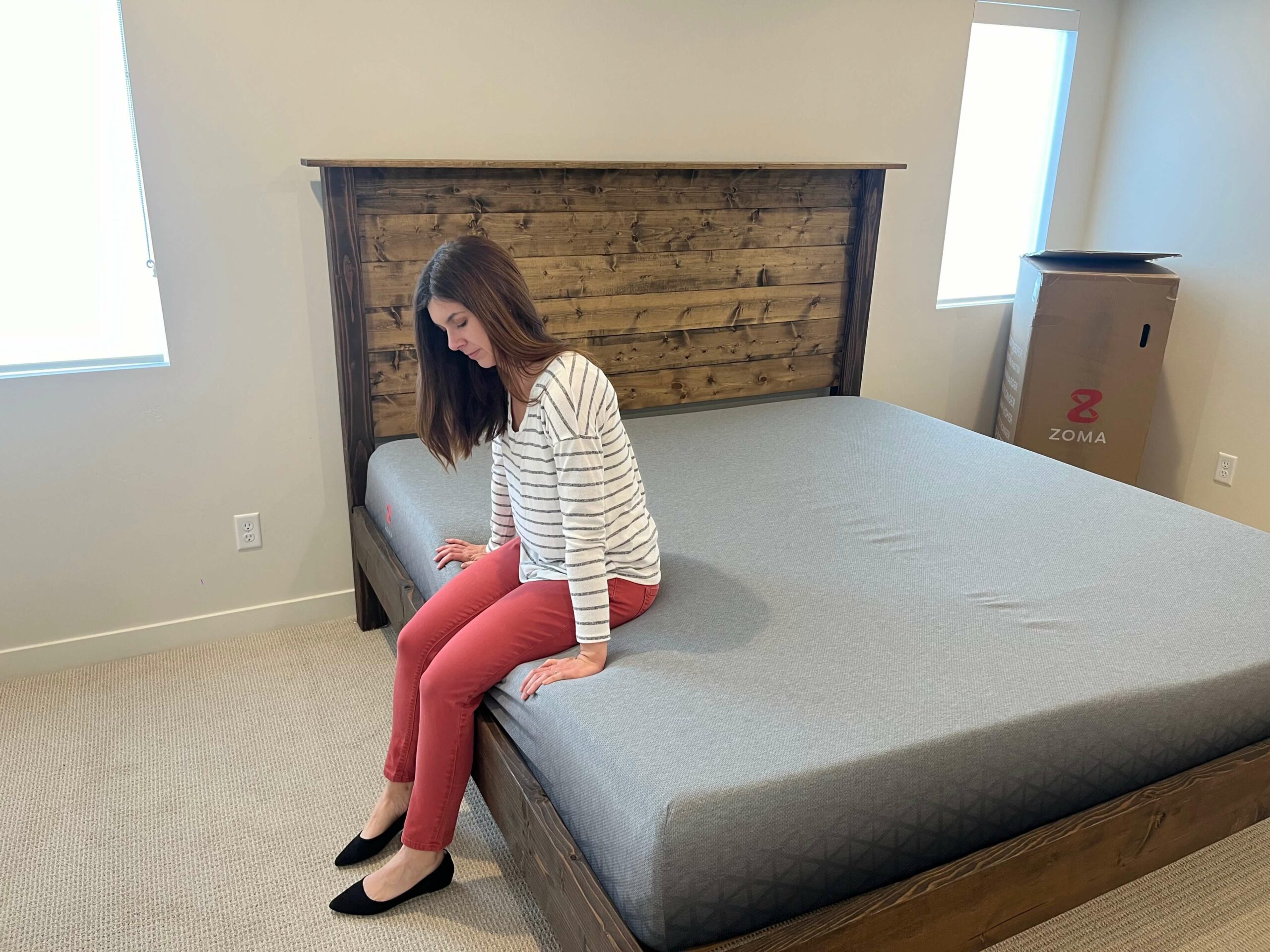
Watch Our Zoma Start Video Review
If you’re an active person looking for a memory foam mattress that doesn’t need a box spring, the Zoma Start might be your perfect match.
This mattress was designed with active people in mind, but you do not need to be an athlete to get the benefit: a responsive foam feel that does not leave you stuck, at a low price.
What makes the Zoma Start special is how it balances the contouring comfort of memory foam with responsive support that won’t leave you feeling stuck.
Many memory foam mattresses can feel hot and slow to respond when you move, but Zoma has solved these common problems with their innovative foam layers and cooling technology.
The best part? This mattress works great on platform beds, adjustable bases, or any flat foundation, no box spring needed. It’s made in the USA, comes with a 100-night trial, and has earned a 4.9-star rating from hundreds of customers.
Plus, at 10 inches thick, it provides substantial support while still being compatible with most bed frames and foundations.
- 10 Value
- 10 Edge Support
- 9 Trial Period
- 8 Response Time
- 9 Motion Transfer
- 9 Cooling & Breathability
The Zoma Start earned the memory-foam spot because it fixes the two things people dislike about memory foam, heat and the stuck feeling, in a low-profile 10-inch build that needs no box spring.
The Reactiv layer under the gel memory foam is the reason it does not feel like quicksand. During testing, the top layer contoured at my hips and shoulders, but when I changed positions the Reactiv layer pushed back fast enough that moving stayed easy, so a combination sleeper is not trapped in the foam.
The gel-infused top and AirCloth cover ran less heat-retentive than the plain memory foams I compared over the first hours, so a hot sleeper who wants a foam feel at a low price has an option.
The honest tradeoffs: at 10 inches with an all-foam edge, the perimeter is softer than a coil bed, and heavier sleepers may want more under them. It is a single firmness, so it will not suit everyone.
Best For:
– Budget shoppers who want a low-profile foam bed
– Back and side sleepers around average weight
– Hot sleepers who want gel-foam airflow at a low price
Compare Instead:
– Vaya Mattress if you want a similarly simple foam bed with a thicker profile
– Amerisleep AS3 if you want zoned support and stronger motion isolation
When I first lay down, the Zoma Start managed to feel supportive and comfortable at once. The gel memory foam contoured at my hips and shoulders, but I never sank into quicksand the way I have on some memory foam beds. The Reactiv layer was the standout: when I changed positions, it pushed back fast enough that moving stayed easy, so it felt more like sleeping on the bed than in it.
The firmness worked for both back and side sleeping, with good spinal alignment on my back and enough give at my hips and shoulders on my side. On temperature, the gel foam and AirCloth cover ran less heat-retentive than the plain memory foams I compared over the first hours.
The edge was decent for an all-foam bed, fine to sit on but softer than a coil bed at the very perimeter. That cooler-running, responsive foam at a low profile is why the Zoma Start fits a budget shopper or an average-weight back or side sleeper.
The Zoma Start is a three-layer all-foam bed at 10 inches, and each layer earns its place. The AirCloth cover and the gel-infused memory foam are why the surface ran less heat-retentive than the plain memory foams I compared, so heat did not build up around me early on. That gel foam also contoured at my hips and shoulders. The Reactiv responsive layer is the reason I did not feel stuck when I changed positions, giving the bounce a pure memory foam bed lacks. The Support+ high-density base kept the surface stable and held my spine in line on my back. Because it is all foam at 10 inches, the edge is softer than a coil bed. CertiPUR-US certified and tested for low VOC emissions.
Pros
- Value (10/10) and Edge Support (10/10): strong value with a firmer-than-expected edge for an all-foam bed.
- Cooling and Breathability (9/10): the gel foam and AirCloth cover ran less heat-retentive than the plain memory foams I compared.
- The Reactiv layer kept it from feeling stuck when I changed positions.
Cons
- Response Time (8/10): it is responsive for memory foam but not the fastest on this list; a springier feel is the Vaya or Saatva Classic.
- Single firmness at 10 inches, so heavier sleepers who want more support should consider the Amerisleep AS3.
In testing, the gel-infused foam contoured at my hips and shoulders while the Reactiv layer pushed back fast enough that changing positions stayed easy, so I did not feel stuck. The surface ran less heat-retentive than the plain memory foams I compared. For a budget shopper or a back and side sleeper who wants a low-profile foam bed that sleeps cooler and moves easily, the Zoma Start fits.

Watch Our PlushBeds Signature Bliss Video Review
Looking for a truly organic mattress that doesn’t need a box spring? The PlushBeds Signature Bliss might be exactly what you’re searching for.
This isn’t just another “natural” mattress with a few organic materials thrown in, either. It’s the real deal, handcrafted in California with some of the world’s finest certified organic materials.
What makes this mattress special is that it’s built to work perfectly without a box spring. You can put it on a platform bed, adjustable base, or even a simple foundation, and it’ll perform beautifully.
The hybrid design combines organic latex with fabric-encased coils, giving you the best of both worlds: natural comfort and solid support.
I’ll be honest, the Signature Bliss isn’t cheap. But when you consider what goes into it (GOLS-certified organic latex, GOTS-certified organic cotton and wool, plus luxury touches like cashmere and silk) it’s hard to deny that you’re getting a mattress that’s as healthy as it is comfortable.
Plus, it comes with a lifetime warranty, which tells you something about the quality PlushBeds puts into every mattress.
- 9 Value
- 10 Edge Support
- 10 Trial Period
- 10 Response Time
- 9 Motion Transfer
- 9 Cooling & Breathability
The PlushBeds Signature Bliss earned the organic spot because it backs the organic claim with paperwork, GOLS-certified latex and GOTS-certified cotton and wool, and it performs as a hybrid with no box spring.
During testing, the organic Dunlop latex over the 5-zone coil system gave a plush entry but sprang back instantly when I moved, so a combination sleeper gets softness without the stuck feeling.
The 5-zone coils were something I could feel supporting different parts of my body: my hips and shoulders got give on my side, and my lumbar held on my back. The fabric-encased coils also kept partner motion contained better than a solid latex core, so a couple is less disturbed.
The wool, cotton, and coil airflow ran cooler and more breathable than the foam beds I compared, so a hot sleeper who wants organic materials is covered.
The tradeoff: this is a premium price, and the natural materials mean slight feel variation and real weight to move.
Best For:
– Buyers who want full GOLS and GOTS organic certifications
– Side and back sleepers at the medium or medium-firm feel
– Hot sleepers who want latex, wool, and coil airflow
Compare Instead:
– Amerisleep Organica if you want certified organic latex at a lower price
– Saatva Classic if you want an innerspring with an organic cotton cover
When I first lay down, the pillowtop cradled me with a gentle, cloud-like give that never tipped into feeling stuck. The organic Dunlop latex responded to my movements instantly, so changing positions stayed effortless.
On my side, the medium option gave enough pressure relief at my hips and shoulders, and when I rolled to my back the 5-zone coils held my spine aligned. I could feel the zones supporting different parts of my body. On temperature, the organic wool, breathable cotton, and coil airflow ran cooler and more breathable than the foam beds I compared.
Motion isolation was strong: when my partner got up, I barely felt it, since the fabric-encased coils contain movement to where it happens. The edge held firm when I sat on it. That responsive organic build with zoned coil support is why the Signature Bliss fits a side or back sleeper who wants certified organic materials.
The PlushBeds Signature Bliss is an organic latex hybrid, and the materials back the feel. The GOTS-certified organic cotton cover and the wool, cashmere, and silk beneath it ran cool and breathable and let air move rather than trapping heat. The GOLS-certified organic Dunlop latex is why the surface gave a plush entry but sprang back instantly when I moved, so I never felt stuck. The 5-zone fabric-encased coils are the reason different parts of my body got the support they needed, hips and shoulders on my side and lumbar on my back, and those coils kept partner motion contained and the edge stable when I sat on it. Organic wool serves as the fire barrier in place of chemical retardants. Handcrafted to order.
Pros
- Edge Support (10/10) and Response Time (10/10): the coils held the edge firm and the organic latex sprang back instantly when I moved.
- Full GOLS and GOTS organic certifications with wool as the fire barrier.
- The 5-zone coils supported my hips and shoulders on my side and my lumbar on my back.
Cons
- Premium price and real weight to move; a lower-priced organic latex option is the Amerisleep Organica.
- Natural materials mean slight feel variation and only medium or medium-firm feels; a firmer innerspring feel is the Saatva Classic.
In testing, the organic latex gave a plush entry but sprang back instantly when I moved, and the 5-zone coils supported my hips and shoulders on my side and my lumbar on my back. The wool, cotton, and coil airflow ran cool and breathable. For a buyer who wants full GOLS and GOTS organic certifications in a side or back sleeper build, the Signature Bliss is the organic pick here.
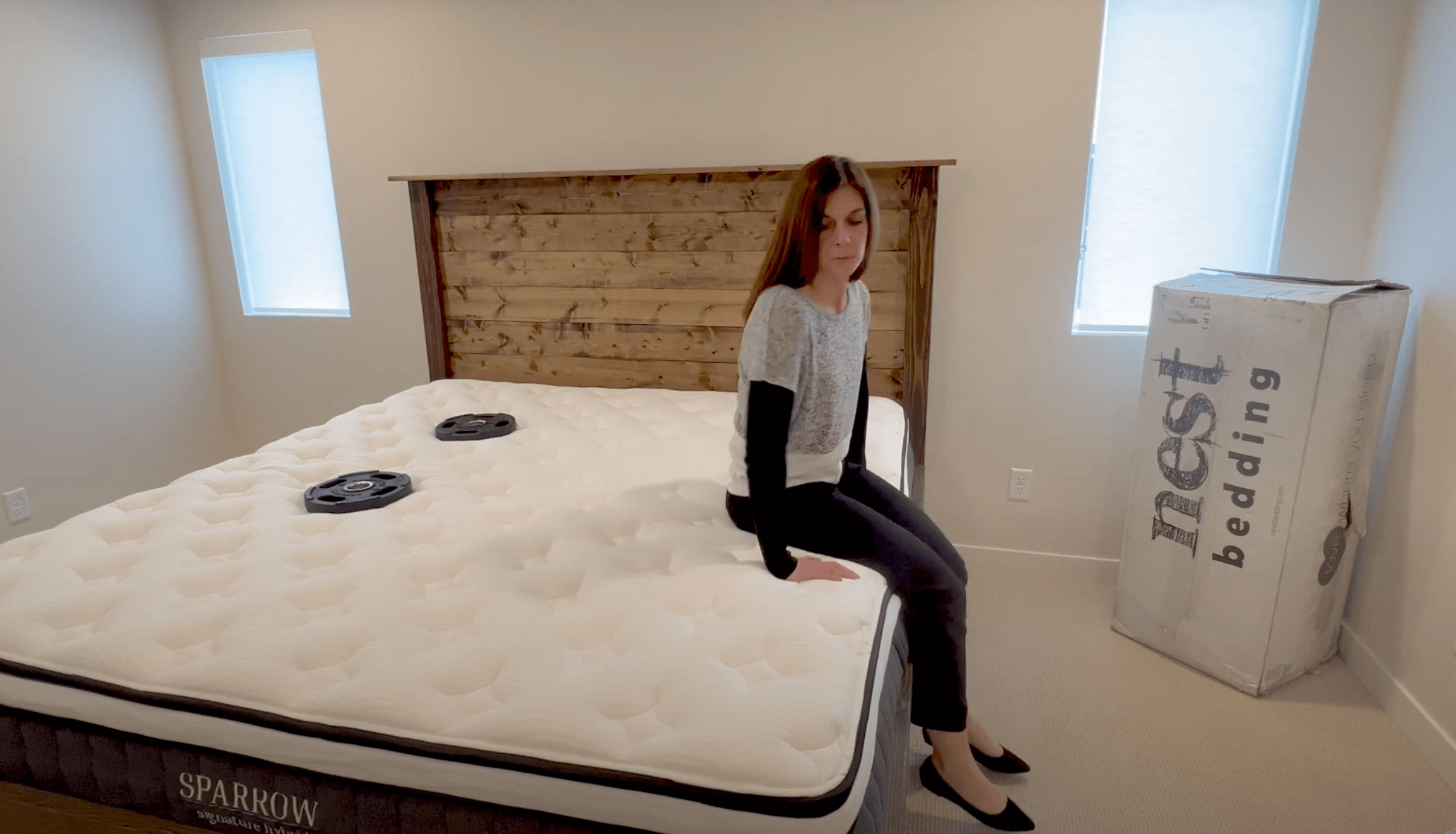
Best for Couples:
Nest Bedding Sparrow Hybrid

Warranty
Lifetime

Sleep Trial
365 Nights

Shipping
Free
Watch Our Nest Bedding Sparrow Video Review
Looking for a mattress that works great without a box spring and keeps both you and your partner happy? The Nest Bedding Sparrow Hybrid might be exactly what you need.
This mattress is designed to work perfectly on platform beds, adjustable bases, or even directly on the floor, no box spring required.
What makes the Sparrow Hybrid special for couples is how it balances comfort and support while minimizing motion transfer.
You know that annoying feeling when your partner tosses and turns all night and you feel every movement?
This mattress helps solve that problem. Plus, it’s built with quality materials right here in the USA, so you’re getting something that’s made to last.
The hybrid design combines the best of both worlds. The pressure relief of foam with the support and breathability of coils.
This means you get a mattress that sleeps cool, supports your body properly, and feels comfortable whether you’re a side sleeper, back sleeper, or stomach sleeper.
- 8 Value
- 10 Edge Support
- 10 Trial Period
- 9 Response Time
- 10 Motion Transfer
- 9 Cooling & Breathability
The Nest Bedding Sparrow earned the couples spot because its wrapped coils and layered foam contain motion well while still giving a firmness that works for two different sleepers.
During testing, when I moved on one side the other side barely registered it, which is the single most important thing for a couple where one partner is restless or keeps a different schedule.
The Energex comfort foam over the pocketed coils gave a responsive feel rather than a slow memory-foam sink, so a couple with different positions can both move easily. On my side I got give at the hips and shoulders, and on my back and stomach the coils kept me supported.
The THERMIC phase-change cover and the coil airflow ran less heat-retentive than the all-foam beds I compared, which helps two people who share body heat.
The tradeoff: the medium build is not for someone who wants a very soft bed, and like any new foam it may off-gas at first.
Best For:
– Couples who want strong motion isolation
– Couples who want to choose a firmness (Plush, Medium, or Firm)
– All-position sleepers around average weight
Compare Instead:
– Amerisleep AS3 if you want stronger all-foam motion isolation
– Nolah Evolution if you want a zoned pillowtop with a firmness choice for two
When I first lay down, the top memory foam layer contoured with a gentle sink, but I did not feel stuck or buried the way some all-foam beds do. The Energex foam gave a responsive feel that made changing positions easy.
The medium build worked across positions: on my side I got give at the hips and shoulders, and on my back and stomach the coils kept my spine supported, with a subtle, natural bounce from the pockets. On temperature, the THERMIC phase-change cover and coil airflow ran less heat-retentive than the all-foam beds I compared.
The single most important thing for couples held up: when I moved on one side, the other barely registered it. The reinforced perimeter stayed solid when I sat on the edge, so both sleepers can use the full surface. That strong motion isolation with a firmness choice is why the Sparrow fits a couple sharing the bed.
The Nest Bedding Sparrow is a foam-and-coil hybrid, and the layers show up in couples testing. The THERMIC phase-change cover and the memory foam quilt are why the surface felt cool on contact and did not trap heat the way an all-foam bed can. The Energex temperature-responsive foam is the reason it did not feel like a slow memory-foam sink: it sprang back fast enough that changing positions stayed easy. The SmartFlow transition foam handed my weight to the coils. The pocketed coils with reinforced edges are what contained partner motion so one side barely felt the other, and they held the edge firm when I sat on it. The base foam anchored the coils. All foams CertiPUR-US certified.
Pros
- Motion Transfer (10/10) and Edge Support (10/10): partner movement barely registered and the perimeter held firm when I sat on it.
- Choice of Plush, Medium, or Firm, so two sleepers can pick their feel.
- The Energex foam kept the surface responsive rather than a slow memory-foam sink.
Cons
- Value (8/10): priced above basic foam beds; a lower-priced all-foam pick with strong isolation is the Amerisleep AS3.
- The medium build is not for someone who wants a very soft bed, and it may off-gas at first.
In testing, when I moved on one side the other barely registered it, and the Energex foam kept the surface responsive rather than a slow sink. On my side I got give at the hips and shoulders, and on my back the coils held me supported. For a couple who wants strong motion isolation and the option to pick a firmness for each sleeper, the Nest Sparrow is the couples pick on this list.
The Mattresses We Have Tested
Every mattress below was tested hands-on and on camera by me, Kristina Hindes, our lead tester. Each row links to its written review and filmed test, so you can check our work. For how we score every mattress, see How We Test Mattresses.
See the full list, with review and video links
| Mattress | Review and video |
|---|---|
| Amerisleep AS2 | Review · Video |
| Amerisleep AS3 | Review · Video |
| Amerisleep AS3 Hybrid | Review · Video |
| Amerisleep AS5 | Review (test clips inside) |
| Amerisleep AS5 Hybrid | Review · Video |
| Amerisleep AS6 Black Series | Review · Video |
| Amerisleep Organica | Review · Video |
| Amerisleep Organica Plush | Review · Video |
| Bear Original | Review · Video |
| Birch Natural | Review · Video |
| Brooklyn Bedding Aurora Luxe Hybrid | Review · Video |
| Brooklyn Bedding Plank Firm | Review · Video |
| Casper The One | Review · Video |
| Eco Terra Hybrid Latex | Review · Video |
| FORM Core | Review · Video |
| FORM Core Hybrid | Review · Video |
| FORM Prime | Review · Video |
| FORM Prime X | Review · Video |
| GhostBed Flex | Review · Video |
| Happsy Organic | Review · Video |
| Helix Dawn Luxe | Review · Video |
| Helix Midnight Luxe | Review · Video |
| Helix Sunset Luxe | Review · Video |
| Latex For Less Hybrid | Review · Video |
| Leesa Original | Review · Video |
| Leesa Sapira Chill Hybrid | Review · Video |
| Leesa Sapira Hybrid | Review · Video |
| Naturepedic Concerto | Review · Video |
| Naturepedic EOS Classic Organic | Review · Video |
| Nest Bedding Owl | Review · Video |
| Nest Bedding Puffin Kids | Review · Video |
| Nest Bedding Raven | Review · Video |
| Nest Bedding Sparrow Signature Hybrid | Review · Video |
| Nolah Evolution 15 | Review · Video |
| Nolah Natural 11 | Review · Video |
| Nolah Original Hybrid | Review · Video |
| PlushBeds Botanical Bliss | Review · Video |
| PlushBeds Luxury Bliss | Review · Video |
| PlushBeds Organic Bliss | Review · Video |
| PlushBeds Organic Kids | Review · Video |
| PlushBeds Signature Bliss | Review · Video |
| Saatva Classic | Review · Video |
| SweetNight CoolNest | Review · Video |
| SweetNight Prime | Review · Video |
| Vaya Hybrid | Review · Video |
| Vaya Mattress | Review · Video |
| Westin Heavenly Bed | Review · Video |
| Zoma Boost | Review · Video |
| Zoma Hybrid | Review · Video |
| Zoma Start | Review · Video |
Why You Don’t Need a Box Spring
Simply put, that giant wooden box you used to use with every mattress is now about as useful as a chocolate teapot. Today’s mattresses work better without them. Your parents had one. Your grandparents had one. But guess what? You probably don’t need one.
Here’s why skipping the box spring for a mattress is a smart choice.
Easier to Move and Set Up
Remember the last time you moved? That box spring was a nightmare, right? It’s like trying to move a refrigerator that’s made of wood and spite.
New mattresses that don’t need a box spring come in boxes now. Real boxes. The kind you can actually carry.
You can take these mattresses in a box up stairs without help. You can fit them through narrow doors. Once you open the box, the mattress grows to full size in a few hours.
No heavy lifting. No struggling with bulky box springs.
Your Room Looks Better
Without a box spring, your bed sits lower. This makes your room feel bigger. It looks clean and modern. Low beds work great in small rooms or places with low ceilings. You can store things under the bed easier too. Boxes, shoes, or bins fit better under a lower bed, and if you need more space bed risers can help you out.
Better Sleep Support
Old mattresses needed box springs for support. New ones don’t. Today’s mattresses have built-in support systems. They give you the right support for your whole body. Foam mattresses spread your weight evenly. This helps you sleep better and wake up without aches.
Save Money
Box springs cost extra money. Why spend it if you don’t need to? When you skip the box spring, you save $100 to $300. When your mattress wears out, you only need to buy a new mattress. Not a whole new set. This saves money for years.
Better for the Earth
Using fewer things is good for our planet. One mattress instead of a mattress plus box spring means less waste. Many mattress companies now use materials that don’t harm the earth. Choosing simple setups helps reduce what we throw away.
Works with Special Beds
Want an adjustable bed that moves up and down? Most box springs don’t work with these beds, but mattresses without box springs do. You can raise your head to watch TV or lift your feet to get comfortable, which a rigid box spring cannot do.
Stays Cooler
Box springs can trap hot air. Without one, air moves better around your mattress. Platform beds with slats let air flow through. This keeps you cooler at night. Hot sleepers will notice the difference.
Stronger Edges
Good mattresses without box springs have strong edges. You can sit on the side without it sinking down. With such mattress edge support, the whole bed feels solid. This gives you more space to sleep on and can make it easier to slide out of bed in the morning.
Factors to Consider When Choosing a Mattress
With all these factors to consider, choosing a mattress can feel overwhelming. Here’s a systematic approach to help narrow down your options:
- Start with the basics: Determine your sleep position, body weight category, and firmness preference.
- Set your budget: Decide how much you’re willing to spend, remembering to factor in savings from not buying a box spring.
- Choose your material type: Based on your needs for motion isolation, temperature regulation, and support, decide whether memory foam, latex, hybrid, or innerspring is most appropriate.
- Consider your foundation: Make sure any mattress you’re considering is compatible with your intended support system.
- Research specific models: Look at reviews, warranties, and trial periods for mattresses that meet your criteria.
- Take advantage of trial periods: Choose a mattress with a reasonable sleep trial so you can test it in your own home.
Remember that the “best” mattress is the one that works best for your specific needs, preferences, and situation. What works perfectly for someone else might not work for you, so focus on finding the right match for your individual requirements.
Your Sleep Position
How you sleep has a huge impact on what type of mattress will work best for you. Most people have a primary sleep position, even if they move around during the night. Understanding your dominant sleep position helps you choose the right firmness and support level.
Side sleepers make up about a majority of all sleepers. If you sleep on your side, you need a mattress for side sleeping that can contour to your body’s curves, especially around your hips and shoulders.
These are pressure points that can become sore on a mattress that’s too firm. Side sleepers usually do best with medium to medium-soft mattresses that provide pressure relief while still supporting the spine. Memory foam and latex mattresses are often good choices because they conform to body shape.
Back sleepers need a balance of support and comfort. A mattress for back sleeping should support the natural curve of your spine without being so soft that your hips sink in too much.
Medium to medium-firm mattresses typically work well for back sleepers. Hybrid mattresses can be excellent choices because they provide the contouring of foam with the support of coils.
Stomach sleepers need the firmest support to prevent their hips from sinking too low, which can cause back pain. A mattress for stomach sleeping that’s too soft will create an unnatural arch in the spine.
Firm mattresses, whether they’re memory foam, latex, or innerspring, usually work best. Some stomach sleepers also prefer thinner pillows or no pillow at all to keep their neck aligned.
Combination sleepers change positions throughout the night and need a mattress for combination sleeping that works well in multiple positions. Medium mattresses with good responsiveness, like latex or hybrid mattresses, often work well because they provide support while making it easy to change positions.
Body Weight and Physical Build
Your weight significantly affects how a mattress feels and performs. Heavier people compress mattresses more, while lighter people may not sink in enough to get proper pressure relief.
Most mattress firmness ratings are based on average-weight sleepers (around 150-200 pounds), so you may need to adjust accordingly.
Heavier sleepers (over 230 pounds) typically need firmer, more supportive mattresses to prevent excessive sinking. They should also look for mattresses with strong edge support and durable materials that won’t break down quickly under higher pressure.
Thicker mattresses (12+ inches) often provide better support for heavier individuals. Latex and high-quality hybrid mattresses tend to hold up well over time.
Lighter sleepers (under 130 pounds) may find that many mattresses feel too firm because they don’t compress the materials enough to reach the comfort layers.
Softer to medium mattresses often work better, and thinner profiles (8-10 inches) may provide adequate support without being overly firm. Memory foam can be particularly good for lighter sleepers because it responds to body heat and pressure.
Average-weight sleepers (130-230 pounds) have the most options since most mattresses are designed with this weight range in mind. They can usually choose based on personal preference and sleep position rather than being limited by weight considerations.
Firmness Preferences and Comfort
Mattress firmness is subjective. So what feels firm to one person might feel soft to another. However, understanding the general firmness scale can help you communicate your preferences and choose appropriate options.
Most companies use a 1-10 scale, with 1 being very soft and 10 being very firm.
Soft mattresses (1-4) provide deep contouring and pressure relief but may not offer enough support for heavier sleepers or stomach sleepers. They’re often preferred by side sleepers and people with joint pain.
Medium mattresses (5-6) offer a balance of comfort and support and work well for most sleep positions and body types. They’re often recommended for couples with different preferences.
Firm mattresses (7-10) provide strong support with minimal sinking. They’re typically preferred by stomach sleepers, back sleepers, and heavier individuals.
Remember that firmness preferences can change over time due to age, weight changes, health issues, or simply evolving comfort preferences. Consider whether you generally prefer to sleep “in” a mattress (softer) or “on top” of a mattress (firmer).
Support Requirements
Without a box spring, your mattress needs to provide all the support on its own, so understanding support requirements is crucial. Support refers to how well the mattress maintains proper spinal alignment and prevents sinking into uncomfortable positions.
Zoned support is a feature found in some higher-end mattresses where different areas provide different levels of support. For example, firmer support under the hips and softer support under the shoulders. This can be particularly beneficial for side sleepers.
Edge support becomes more important when you’re not using a box spring. Strong edges prevent the feeling of rolling off the bed and provide a stable surface for sitting. Look for mattresses with reinforced edges or perimeter support systems.
Progressive support means the mattress gets firmer as you sink deeper, providing comfort on the surface with strong support underneath. This prevents the feeling of being “stuck” in the mattress while still offering pressure relief.
Temperature Regulation
Temperature regulation is becoming increasingly important as people become more aware of how sleep temperature affects sleep quality. Different mattress materials have very different heat retention properties.
Memory foam traditionally sleeps the warmest because it’s dense and conforming. However, many manufacturers now add cooling technologies like gel infusions, copper, or plant-based foams to improve temperature regulation.
Latex naturally sleeps cooler than memory foam due to its more open cell structure and natural properties. It doesn’t retain as much body heat and allows for better airflow.
Innerspring and hybrid mattresses typically sleep the coolest because the coil systems allow air to flow freely through the mattress. The comfort layers on top may retain some heat, but the overall temperature regulation is usually good.
Cooling technologies include gel infusions, phase-change materials, copper or graphite infusions, and special foam formulations. Some mattresses also have covers made from moisture-wicking fabrics.
Consider your personal temperature preferences, your bedroom environment, and whether you share the bed with someone who has different temperature needs.
Motion Isolation
Motion isolation refers to how well a mattress prevents movement on one side from being felt on the other side. This is particularly important for couples, especially if one partner is a restless sleeper or has a different sleep schedule.
Memory foam mattresses excel at motion isolation because it absorbs movement rather than transferring it across the surface. This makes it an excellent choice for couples with different sleep patterns.
Latex mattresses provide moderate motion isolation. Natural latex tends to isolate motion better than synthetic latex, but both are generally good for couples.
Innerspring mattresses traditionally have poor motion isolation because the connected coil systems transfer movement across the entire mattress. However, individually wrapped coils (pocket coils) significantly improve motion isolation.
Hybrid mattresses with pocket coils and foam comfort layers can provide good motion isolation while maintaining the responsiveness that some people prefer.
Durability and Longevity
Since you’re making a long-term investment, consider how long the mattress is likely to last and maintain its comfort and support. Different materials have different expected lifespans.
High-quality memory foam can last 8-12 years, but lower-quality versions may break down in 4-6 years. Look for higher-density foams (4+ pounds per cubic foot) for better durability.
Natural latex is extremely durable and can last 15-20 years with proper care. Synthetic latex is less durable but still typically lasts 8-12 years.
Hybrid mattresses usually last 7-10 years, depending on the quality of materials. The coil system tends to be very durable, but the comfort layers may wear out sooner.
Innerspring mattresses can last 6-10 years, with higher-quality models lasting longer. Individual coil construction tends to be more durable than connected coil systems.
Consider the mattress construction, material quality, and warranty terms when evaluating potential longevity.
Budget Considerations
Mattresses without box springs come in a wide range of prices, from under $300 to over $3,000. While price doesn’t always indicate quality, there are some general guidelines for what to expect at different price points.
Budget mattresses ($300-800) can provide good value but may use lower-quality materials or simpler construction. They’re often good options for guest rooms, children’s beds, or temporary situations.
Mid-range mattresses ($800-1,500) typically offer better materials, more sophisticated construction, and longer warranties. This price range often provides the best balance of quality and value for most people.
Premium mattresses ($1,500+) usually feature high-quality materials, advanced technologies, and superior construction. They may be worth the investment if you have specific needs or prioritize luxury features.
Remember to factor in the money saved by not buying a box spring when calculating your total budget. Also consider the cost per year of use. A more expensive mattress that lasts longer may actually be more economical than a cheaper one that needs replacement sooner.
Compatibility with Your Foundation
Even though you’re not using a box spring, you still need to ensure your chosen mattress is compatible with your intended support system. Different mattresses have different requirements for proper support.
Platform bed compatibility: Most modern mattresses work well on platform beds, but check the manufacturer’s recommendations for slat spacing if you’re using a slatted platform.
Adjustable base compatibility: If you plan to use an adjustable base, make sure the mattress is designed to flex without damage. Memory foam, latex, and many hybrid mattresses work well, but some innerspring mattresses do not.
Foundation requirements: Check the warranty terms to see what types of foundations are approved. Using an unapproved foundation could void your warranty.
Weight limits: Make sure your chosen foundation can support the combined weight of the mattress and sleepers. Some high-end mattresses are quite heavy.
Trial Periods and Warranties
Since you can’t truly know how a mattress will work for you until you’ve slept on it for several weeks, trial periods and warranties are important considerations.
Sleep trials typically range from 30-365 nights, with 90-100 nights being common. Longer isn’t necessarily better. Most people know within 30-60 nights whether a mattress works for them. Pay attention to any requirements, such as minimum trial periods before returns are allowed.
Warranties usually range from 10-25 years, but read the fine print carefully. Many mattress warranties are prorated, meaning you’ll pay more for replacement as the mattress ages. Also check what voids the warranty, such as stains, using an unapproved foundation, or normal wear and tear.
Return policies vary significantly between companies. Some offer full refunds, others charge restocking fees, and some require you to donate the mattress to charity. Online companies often have different policies than traditional retailers.
Types of Mattresses That Don’t Need Box Springs
The mattress world has changed a lot in the past 20 years. Today’s mattresses are built to work on their own, without any help from a box spring.
When shopping for any of these mattress types, here are some key things to consider:
- Thickness matters. Most mattresses that don’t need box springs are at least 8 inches thick, with many being 10-14 inches. Thicker usually means more comfort layers and better support.
- Check the foundation requirements. Even though these mattresses don’t need box springs, they still need proper support. Read the warranty information to see what types of foundations are approved.
- Consider your sleeping position. Side sleepers usually need softer surfaces, while back and stomach sleepers often prefer firmer support. Most mattress types come in different firmness levels.
- Think about temperature. All-foam mattresses tend to sleep warmer than hybrids or innerspring mattresses. If you’re a hot sleeper, look for cooling features or choose a mattress type that naturally sleeps cooler.
- Don’t forget about motion isolation. If you share your bed, consider how much movement transfer you can tolerate. Memory foam is best for motion isolation, while innerspring mattresses typically transfer the most movement.
The good news is that all of these mattress types are designed to work without box springs. This means you have more options than ever before, and you can choose based on comfort, price, and personal preferences rather than being limited by what works with a box spring.
Memory Foam Mattresses
Memory foam is the superstar of the mattress world. This material was actually invented by NASA for astronauts, but lucky for us, it made its way into bedrooms. Memory foam responds to your body heat and weight, slowly molding to your shape like a gentle hug that lasts all night.
The best part about memory foam? It absorbs movement really well. If your partner tosses and turns, you won’t feel it on your side of the bed. This makes it perfect for couples who have different sleep schedules or restless sleepers.
Memory foam mattresses work great on any flat, solid surface. Platform beds, adjustable bases, and even bunkie boards all provide the steady support these mattresses need. Just make sure whatever you use has good support across the whole mattress. Memory foam can sag if part of it isn’t supported properly.
One thing to know: memory foam can sleep hot. The dense material traps body heat, which some people love in winter but hate in summer. Many companies now make cooling versions with gel or special airflow designs.
Latex Foam Mattresses
Latex mattresses are like the athletic cousin of memory foam. They’re bouncy, responsive, and naturally tough. Latex comes from rubber trees, so it’s more eco-friendly than many other materials. These mattresses have a springy feel that makes it easy to move around and change positions during sleep.
Natural latex is great for people with allergies. It naturally fights off dust mites, mold, and bacteria without any chemical treatments. It’s also incredibly durable – a good latex mattress can last 15-20 years with proper care.
Like memory foam, latex mattresses work perfectly on platform beds and other solid foundations. They’re heavier than most mattresses, so make sure your bed frame can handle the weight. The responsive nature of latex means it bounces back quickly when you move, unlike memory foam which takes a few seconds to return to its original shape.
The downside? Latex mattresses usually cost more upfront. But when you consider how long they last, they often end up being a good value over time.
Hybrid Mattresses
Hybrid mattresses are the best-of-both-worlds option. They combine the support of traditional springs with the comfort of modern foam materials. The bottom layer has individually wrapped coils (called pocket coils) that move independently. On top, you’ll find layers of memory foam, latex, or other comfort materials.
This combination gives you the bouncy support of springs with the pressure relief of foam. Hybrids tend to sleep cooler than all-foam mattresses because the coils allow air to flow through the mattress. They also provide good edge support, so you can sleep right up to the edge without feeling like you’ll roll off.
Hybrid mattresses work well on most support systems, including platform beds and adjustable bases. The coil system provides its own support, so you don’t need a box spring to help with that job. Just make sure your foundation can handle the weight – hybrids are typically heavier than all-foam mattresses.
The variety in hybrid construction means you can find options for almost any sleep preference. Side sleepers can find softer versions, while back and stomach sleepers can choose firmer models.
Modern Innerspring Mattresses
Don’t count out innerspring mattresses just yet. While traditional innerspring mattresses were designed to work with box springs, many modern versions stand on their own. These new innerspring mattresses have stronger coil systems and better edge support than their ancestors.
Modern innerspring mattresses often use pocket coils instead of the old-fashioned connected coil systems. Pocket coils are individually wrapped, so they move independently and provide better support for different body parts. This reduces motion transfer and gives you more personalized support.
These mattresses typically have reinforced edges and multiple layers of comfort materials on top of the coils. The result is a mattress that feels familiar to people who grew up with traditional spring beds but works perfectly on platform beds and other modern foundations.
Innerspring mattresses tend to sleep cool because air flows freely through the coil system. They also tend to be less expensive than other types, making them a budget-friendly option for people who want to skip the box spring.
Alternative Support Options for Your Mattress
Once you’ve decided to skip the box spring, you’ll need something else to support your mattress. The good news is that you have plenty of options, and most of them work better than traditional box springs anyway.
Platform Beds
Platform beds are probably the most popular choice for people ditching box springs. Think of them as the reliable, no-nonsense option that just works. A platform bed has a solid, flat surface or closely spaced slats that support your entire mattress evenly.
There are two main types of platform beds: solid platforms and slatted platforms. Solid platforms are basically a big, flat piece of wood or engineered material.
They provide completely even support, which is perfect for memory foam and latex mattresses. Slatted platforms have wooden or metal slats spaced close together, usually 2-3 inches apart.
The beauty of platform beds is their simplicity. There are no moving parts to break, no assembly of multiple pieces, and no maintenance required.
They also tend to have a clean, modern look that works well in contemporary bedrooms. Many platform beds sit lower to the ground, which can make smaller rooms feel more spacious.
Platform beds come in every style imaginable, from minimalist designs that look like floating rectangles to ornate wooden frames with built-in storage.
Some have headboards attached, while others are just the platform itself. Prices range from under $200 for basic models to over $1,000 for high-end designs with premium materials.
Slatted Bed Frames
Slatted bed frames are like platform beds’ more flexible cousin. Instead of a solid surface, they use wooden or metal slats that run across the width of the frame. These slats are usually spaced 2-4 inches apart and provide excellent support while allowing air to flow through.
The spacing between slats is important. For memory foam mattresses, slats should be no more than 3 inches apart to prevent the foam from sagging between them. Latex and hybrid mattresses can usually handle slightly wider spacing, up to 4 inches. Some slatted frames come with adjustable slat spacing, which is helpful if you might change mattress types in the future.
One advantage of slatted frames is better airflow compared to solid platforms. This helps regulate temperature and can prevent moisture buildup under your mattress. The slight flexibility of the slats also provides a more responsive feel, which some people prefer over the firmness of solid platforms.
Many slatted frames are designed to work with standard bed frames, so you might be able to upgrade your existing setup without buying a completely new bed. Some come with center support legs for larger sizes like queen and king, which helps prevent sagging over time.
Bunkie Boards
Bunkie boards are the unsung heroes of mattress support. Originally designed for bunk beds (hence the name), these thin, solid foundations have become popular for regular beds too.
A bunkie board is essentially a thin piece of plywood or engineered wood, usually 1-3 inches thick, that fits perfectly inside your existing bed frame.
The main advantage of bunkie boards is that they provide solid, even support without adding much height to your bed.
If you have a bed frame that you love but it has widely spaced slats or wire mesh that won’t properly support your new mattress, a bunkie board is an easy fix. Just drop it in and you’re ready to go.
Bunkie boards are also incredibly affordable, usually costing between $50-150 depending on size and materials.
They’re lightweight compared to platform beds, making them easy to move and install. Some come with fabric covers to make them look more finished and prevent scratching.
The downside is that bunkie boards provide very firm support with no give whatsoever. They also don’t allow for much airflow since they’re solid pieces. However, for people who prefer firm support or need a quick, inexpensive solution, bunkie boards are hard to beat.
Adjustable Bed Bases
Adjustable bed bases are the luxury sports cars of mattress support. These motorized frames allow you to raise and lower the head and foot sections independently, creating customized sleeping and lounging positions.
While they’re more expensive than other options, they offer benefits that go beyond just supporting your mattress.
Modern adjustable bases come with wireless remotes and preset positions for activities like reading, watching TV, or relieving pressure on your legs. Some high-end models include massage functions, USB charging ports, and even under-bed lighting.
Raising the head or foot sections can make reading, watching TV, or getting in and out of bed easier, and many people find an elevated head or foot position more comfortable for how they sleep.
Most memory foam, latex, and hybrid mattresses work well with adjustable bases. The key is flexibility – your mattress needs to be able to bend without damage. Traditional innerspring mattresses usually don’t work well with adjustable bases unless they’re specifically designed for it.
Adjustable bases typically cost $500-2,000 or more, depending on features and size. While that’s a significant investment, many people find the health and comfort benefits worth the cost. They’re especially popular with older adults and people with mobility issues.
Floor Placement
Putting your mattress directly on the floor is the most basic option, and it’s not as bad as it sounds.
This approach costs nothing and can actually work well as a temporary solution or even long-term in certain situations. Some people genuinely prefer the firm support and low profile that floor sleeping provides.
The main advantages are simplicity and cost – you literally just put your mattress on the floor and you’re done.
It’s also the lowest possible bed height, which can be helpful for very small rooms or people who have trouble getting in and out of higher beds. Some cultures traditionally sleep on floor-level beds, so this isn’t an unusual concept worldwide.
However, floor placement does have some significant drawbacks. The biggest issue is airflow – without space underneath, your mattress can’t breathe properly.
This can lead to moisture buildup, which creates conditions for mold and mildew. The problem is worse in humid climates or if you’re a heavy sweater.
If you do choose floor placement as a permanent method, there are ways to minimize problems. Make sure your floor is completely clean and dry.
Consider putting down a moisture barrier like a tarp or plastic sheeting. Rotate your mattress regularly to prevent permanent indentations. And be prepared to move to a proper support system eventually.
DIY Solutions
For the handy and budget-conscious, there are several do-it-yourself support options. The most common is using plywood as a makeshift bunkie board. A piece of 3/4-inch plywood cut to the size of your mattress can provide excellent support for under $50.
Other DIY options include building your own platform bed from lumber, using furniture pieces like dressers or storage cubes to create a platform, or repurposing pallets (though be careful about treatment chemicals and splinters).
Some people use interlocking foam tiles or even multiple layers of cardboard as temporary solutions.
While DIY solutions can save money, they require time, tools, and some skill to execute properly.
Make sure any DIY support is level, stable, and strong enough to handle the combined weight of your mattress and sleepers.
Also consider that homemade supports might void your mattress warranty if they don’t meet manufacturer specifications.
FAQs
What is the best mattress without a box spring?
In my testing, the Amerisleep AS3 was the best all-around pick that needs no box spring. Its zoned HIVE layer kept my hips and midsection supported while cushioning my shoulders on my side, and the plant-based foam ran cooler on contact than the denser foam beds I compared. Back, side, and combination sleepers and couples all fit it well. Side sleepers may prefer the Helix Midnight Luxe, and innerspring fans the Saatva Classic.
Will my mattress fall apart without a box spring?
Nope, your mattress won’t turn into a pancake without a box spring. Modern mattresses are built tough, like trucks but for sleeping.
They have their own support systems built right in. Think of it this way, would you buy a car that needed another car underneath it to work? Of course not. Same idea here.
Can I just put my mattress on the floor?
You can, but it’s not the best long-term plan. Putting your mattress on the floor is like wearing flip-flops in the snow. While it works, there are better options.
The floor doesn’t let air move around your mattress, which can make it damp and gross. Plus, you’ll be sleeping really low, which makes getting up harder. Try a simple platform bed instead – your back will thank you.
What if my old mattress came with a box spring?
If you bought them as a set, they were probably made to work together like peanut butter and jelly. But here’s the thing. You don’t have to keep using the box spring forever.
When it’s time for a new mattress, you can ditch the box spring and get something that works on its own. It’s like upgrading from a flip phone to a smartphone. You don’t need all the old accessories anymore.
Will sleeping without a box spring hurt my back?
A solid, flat foundation supports your mattress more evenly than an old box spring that has started to sag. When the mattress sits on even support, it can do its job of keeping your weight distributed and your spine aligned. That even, consistent surface is a big part of why modern mattresses are built to skip the box spring.
Are platform beds strong enough to hold my mattress?
Yes, platform beds are surprisingly tough cookies. They’re designed to hold the weight of your mattress plus you and whoever else sleeps in your bed. Most can handle 500 pounds or more without breaking a sweat.
Just make sure you buy a decent one, not something that looks like it was made from cardboard and hope. Read the weight limits before you buy.
What about warranty issues if I don’t use a box spring?
This is where you need to read the fine print, like really read it. Some mattress companies still require specific types of support to keep your warranty valid.
But most modern mattress makers have caught up with the times. They know their mattresses work great on platform beds and other supports.
When in doubt, ask before you buy. It’s better to know now than find out later when you need that warranty.
Will my bed be too low without a box spring?
It depends on what you’re used to and how tall you are. Without a box spring, your bed will sit lower.
Usually it’s about 6-9 inches lower. This is great if you’re short or have trouble climbing into high beds.
But if you’re tall or like sitting on the edge of your bed, you might miss the extra height. The good news?
You can buy thicker mattresses or taller bed frames to get the height you want. It’s all about finding what works for your body and your room.
Conclusion
You don’t need a box spring anymore. Modern mattresses give you better support, save you money, and make your life easier. Whether you choose memory foam, latex, hybrid, or innerspring, these mattresses work perfectly without that bulky wooden box underneath.
Think about it: easier moving, better looks, cooler sleep, and hundreds of dollars saved. Plus, you get more storage space under your bed and a setup that works with adjustable bases if you want them later.
Don’t worry about making this change. Start simple. If you already have a bed frame, try a bunkie board for under $100. Want something fancier? A platform bed gives you that modern look everyone’s talking about. Need health benefits? An adjustable base might change your life.
The best part? Most mattress companies offer sleep trials. You can try your new setup for months and return it if it doesn’t work. That’s way better than being stuck with an expensive box spring you don’t need.
You spend about 8 hours every night in bed. That’s one-third of your life. Don’t you deserve the best sleep possible? Getting rid of your box spring might seem like a small change, but it can make a big difference in how you sleep and how you feel.
Better sleep means better days. More energy. A setup that supports you instead of a saggy old box spring. Happier mornings. All because you chose a mattress that actually knows what it’s doing.
The mattress world has moved on from box springs. It’s time you did too. Your back, your wallet, and your bedroom will all thank you. Tonight could be the first night of the best sleep of your life.
Sweet dreams are waiting. All you have to do is take the first step.
Ready to ditch your box spring? Share this article with friends who are still stuck in the past! Drop a comment below and tell us about your box spring horror stories or your amazing new mattress setup. Did you make the switch? How’s it working out? We want to hear from you!
Related Reads
- I Tested 50+ Mattresses to Find the 14 Best Mattresses for Piriformis Syndrome of 2026

- I Tested 50+ Mattresses to Find the 14 Best Mattresses for Neuropathy of 2026


- I Tested 50+ Mattresses to Find the 14 Best Mattresses for Kyphosis of 2026

- I Tested 50+ Mattresses to Find the 14 Best Mattresses for Anterior Pelvic Tilt of 2026