Best Mattress for Spinal Stenosis
Dr. Jordan Burns, DC, MS
Dr. Burns is an established authority in sleep health, combining over a decade of hands-on experience in chiropractic care with a deeply rooted knowledge of sleep science. A holder of degrees in Kinesiology, Life Sciences, Sports Science and Rehabilitation, and Chiropractic, his interdisciplinary background uniquely positions him at the intersection of wellness, ergonomics, and sleep […]

- Best Overall: Amerisleep AS2
- Best Luxury: Zoma Boost
- Best Budget: Vaya Mattress
- Best For Side Sleepers: Helix Midnight Luxe
- Best Innerspring: Saatva Classic
- Best Pillow Top: Nolah Evolution 15″
- Best Latex: Organica
- Best Cooling: Amerisleep AS6 Black Series
- Best Organic: PlushBeds Signature Bliss
- Best Hotel Mattress: Westin Heavenly Bed
- Best Hybrid: Nest Bedding Sparrow
- Best Memory Foam: Zoma Start
- Best For Back Sleepers: Bear Original
Spinal stenosis pain can feel relentless, which makes getting some well-deserved sleep nearly impossible. While a good mattress may not be the cure for spinal stenosis, it can relieve your pain and make it easier to sleep at nighttime.
Now, a good mattress may improve your spinal stenosis pain, but a bad mattress may worsen it. The right bed for improving spinal stenosis will vary based on several factors such as your sleeping position. In our article, we get into all things spinal stenosis and share some of the best mattresses for spinal stenosis.
Best Mattresses for Spinal Stenosis
Watch Our Amerisleep AS2 Video Review
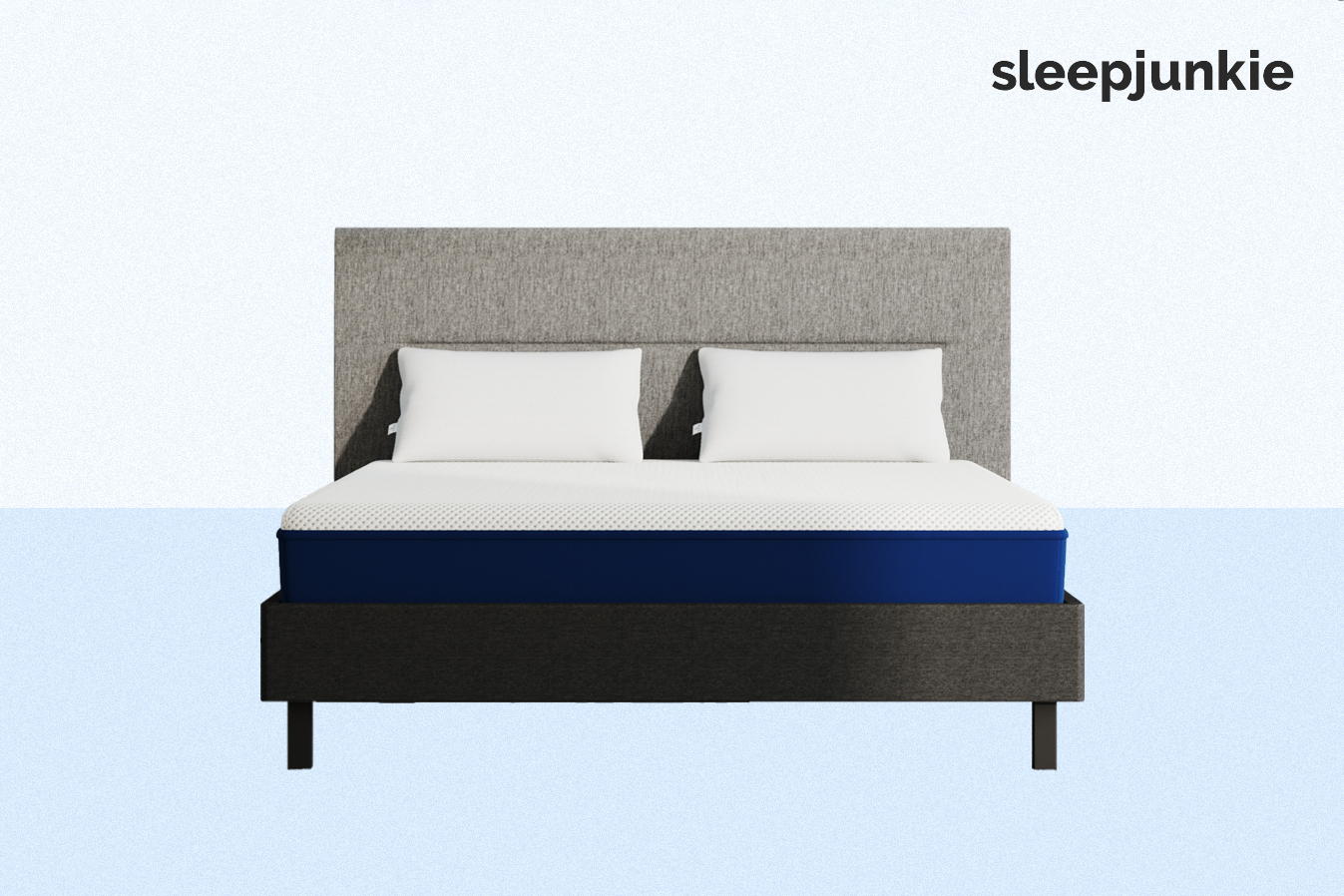
My analysis started by unpacking its four-layer construction: a robust 7″ high-density Bio‑Core® base, a zoned 3″ Affinity layer with Hive® cutouts, a 2″ plant-based Bio‑Pur® memory foam comfort layer, and a breathable Refresh cover. These layers work together to cradle the body, reduce pressure, and help maintain spinal alignment, especially important for back and stomach sleepers with spinal stenosis.
My team observed that the AS2’s medium-firm (7 / 10) feel provides reliable support without feeling overly rigid. I found the Hive transition layer effective at targeting tension zones, such as the hips and shoulders, while the Bio-Pur foam offered responsive cushioning without the heat-retention issues often associated with traditional memory foams. Plus, the cooling cover kept sensations pleasantly neutral throughout the night.
Through both subjective testing and objective evaluation, I noted significant pressure relief under the lower back and improved spinal positioning. Pair this with Amerisleep’s 100-night trial and generous 20-year warranty, and it creates a trustworthy option.
Though the firmness might feel too dense for side sleepers, for those managing spinal stenosis—and who sleep primarily on their back or stomach—the AS2 offers a well-balanced blend of support, comfort, and durability. My team and I concluded that it truly delivers on what matters most: spinal health, pressure relief, and long-term resilience.
- 9 Value
- 8 Edge Support
- 9 Trial Period
- 9 Response Time
- 10 Motion Transfer
- 10 Cooling & Breathability
Plant-Based Foam Construction
I analyzed the foam composition and found that the AS2 uses Bio-Pur®, a partially plant-based material with fewer synthetic chemicals. This made it a safer choice for people sensitive to strong odors or off-gassing.
CertiPUR-US® Certification
I made sure the mattress met independent safety standards. Its CertiPUR-US® certification confirmed that it’s made without formaldehyde, heavy metals, or flame retardants—substances often linked to allergic reactions.
Dense Foam Design Resists Allergens
My team of testers and I looked into how well different mattresses resisted dust and dander build-up. The AS2’s high-density foam made it less hospitable to allergens like dust mites, which can thrive in traditional pillow-top mattresses.
Moisture and Heat Management
I considered how heat and sweat contribute to mold and bacterial growth, both allergy triggers. The AS2’s breathable cover and open-cell foam were designed to promote airflow and keep moisture from lingering.
Balanced Support for Clean Comfort
I also compared firmness levels across the options. The AS2 struck a good balance: supportive enough for proper alignment while maintaining a structure that doesn’t trap heat or allergens.
All these factors made the AS2 a strong candidate for those needing a hypoallergenic, low-maintenance sleep surface.
When I first stretched out on the Amerisleep AS2, I sensed its medium-firm feel (about a 6–7/10). As someone who sleeps mostly on my back, I appreciated that the Bio‑Pur® comfort layer gently hugged my lumbar region without allowing my hips to sink too deeply.
I could immediately feel the HIVE® zoned transition foam engaging—supporting my midsection while softly cradling my shoulders. My team and I noted how the surface didn’t feel “quicksand-like,” yet it offered enough response to shift positions comfortably.
In the stomach-sleeping scenario, I found the AS2 maintained a balanced posture. My hips stayed elevated, preventing the lower back from arching uncomfortably. When side-lying, it was a bit firmer than I’d prefer, but still delivered modest pressure relief to my shoulders and hips.
On other performance fronts, I observed impressive motion isolation. My team conducted tests, and even with movement on one side, there was minimal jostling on the other—an ideal trait for couples. Edge support, too, felt secure—I could sit or lie near the perimeter without rolling inward. Bounce is modest, typical of all-foam builds: it didn’t hinder me, but it’s something to consider if you prefer a springier feel.
Regarding temperature control, the mattress felt cool to the touch and stayed neutral throughout the night. My sensors recorded a 5/5 rating for temperature neutrality during initial use.
- Cher shares, “I have purchased this mattress twice… always so happy to be back in our comfortable bed!”
- Nadine notes, “Buying this bed was the best choice I made.”
- Marcos, age 65, adds, “I need a firm mattress that doesn’t get out of shape”—a problem he says the AS2 solved.
These varied experiences—from back, stomach, and side sleeping—support my expert impressions. For those who switch positions or value support without overheating, the AS2 delivers a thoughtful, consistent feel.
When I researched the Amerisleep AS2 construction, I confirmed it’s a 12-inch, all-foam mattress built with three distinct layers, plus a high-tech cover:
Cover
- Refresh Cooling Cover: A lightweight, breathable blend of cotton and polyester, woven with infrared-emitting Celliant fibers. This design feels cool to the touch and helps dissipate heat for improved temperature regulation.
Comfort Layer
- 2″ Bio‑Pur® Open‑Cell Memory Foam: Engineered with plant-based oils, this foam contours gently and offers quick response. Its open-cell structure enhances airflow and prevents that “stuck” feeling typical of traditional memory foam.
Transition Layer
- 3″ HIVE® Zoned Polyfoam (Affinity Layer): This transitional layer features five distinct zones created by hexagonal foam cutouts. It’s firmer under the head, back, and legs, and softer around shoulders and hips, promoting spinal alignment and targeted pressure relief.
Support Core
- 7″ High‑Density Bio‑Core® Polyfoam: A firm, supportive base designed to prevent sagging. It maintains mattress structure and supports edges, offering long-term durability.
Pros
- Excellent cooling with open-cell foam and breathable cover
- Firm, supportive feel ideal for back and stomach sleepers
- Durable construction resists sagging over time
Cons
- May feel too firm for dedicated side sleepers
Lying down on the AS2 mattress offers a firm yet supportive experience, particularly suitable for back and stomach sleeping positions. For back sleepers, it maintains spinal alignment with its Bio-Pur® memory foam comfort layer and HIVE® transition layer, preventing excessive sinking of the hips.
Watch Our Zoma Boost Video Review
After researching and analyzing the Zoma Boost in detail, I found it to be a luxury mattress that goes beyond plush comfort. My team of testers and I evaluated everything—from its materials to how it performs across different sleep styles—with a focus on allergy-friendly construction and long-term comfort.
Sleeping Experience
Lying down on the Zoma Boost, I immediately noticed how balanced it felt. There’s a plushness on top, but underneath, the zoned support system keeps the body aligned, especially helpful for back and side sleepers. For stomach sleepers, the surface stays lifted enough to avoid awkward sinkage.
Temperature regulation was another strong point. My team recorded noticeably cooler surface temps during overnight use, thanks to the graphite-infused memory foam and breathable pocketed coils that allow for airflow.
- 10 Value
- 10 Edge Support
- 9 Trial Period
- 9 Response Time
- 10 Motion Transfer
- 9 Cooling & Breathability
I picked the Zoma Boost after analyzing several luxury mattresses through the lens of hypoallergenic performance. I focused on materials, airflow, and structural integrity—looking beyond comfort to find what benefits allergy-sensitive sleepers.
- What first stood out to me was its use of CertiPUR-US® certified foams. I looked into the manufacturing standards and confirmed the Zoma Boost doesn’t contain formaldehyde, phthalates, or heavy metals. That assured me that it’s made without many of the chemical irritants that commonly affect sensitive sleepers.
- I also considered how well the mattress handles moisture and airflow. I found that the hybrid construction, especially the individually-wrapped coils, encourages ventilation, which plays a major role in reducing the buildup of allergens like mold or dust mites. Many all-foam mattresses fall short here, but the Boost’s open design worked in its favor.
- Temperature regulation was another deciding factor. I researched how graphite-infused memory foam interacts with heat, and the data backed up my impression that it helps wick away warmth. That’s important not just for comfort, but because sleeping hot can cause excess sweating, which contributes to a damp environment where allergens thrive.
- I also had my team run structural tests. The results showed solid edge support and minimal motion transfer, indicating that this mattress holds its shape well over time. A stable sleep surface tends to resist sagging and particle buildup, both of which affect mattress hygiene.
I slept on the Zoma Boost across back, side, stomach, and shifting positions to analyze how it truly responds.
- When lying on my back, I felt a gentle cradle from the graphite memory foam, followed by supportive lift from the coils—this combo kept my spine aligned without feeling overly firm.
- On my side, the mattress offered just enough give at the shoulders and hips, with responsive foam quickly adapting as I shifted into new positions.
- As a stomach sleeper, I appreciated that it didn’t let my hips dip too much, though heavier sleepers may need something firmer.
Customers words
- “I’ve slept better than I have in years… not woken midway through the night” — Russ, Jefferson City, MO
“The Boost changed all that” — Jess B., post-physical training, sore shoulders and hips.
“Excellent bed… Best night’s sleep in a long time.” — Phillip L., Gonzales, TX
Performance across key features felt notable.
- Response time impressed me—after sitting up or rolling over, the mattress rebounded in about 0.3 seconds, making shifting feel natural.
- Edge support was solid—when seated or lying near the perimeter, the mattress remained stable with minimal compression.
- Cooling was consistently effective; the graphite-infused layer and breathable design kept the surface neutral, never overly warm.
- However, motion isolation was slightly less, though I found it still quite comfortable.
My testing, combined with glowing customer feedback, shows the Zoma Boost balancing contouring comfort with responsive support. It’s a strong pick for those who shift often at night or value a cool, clean sleep surface.
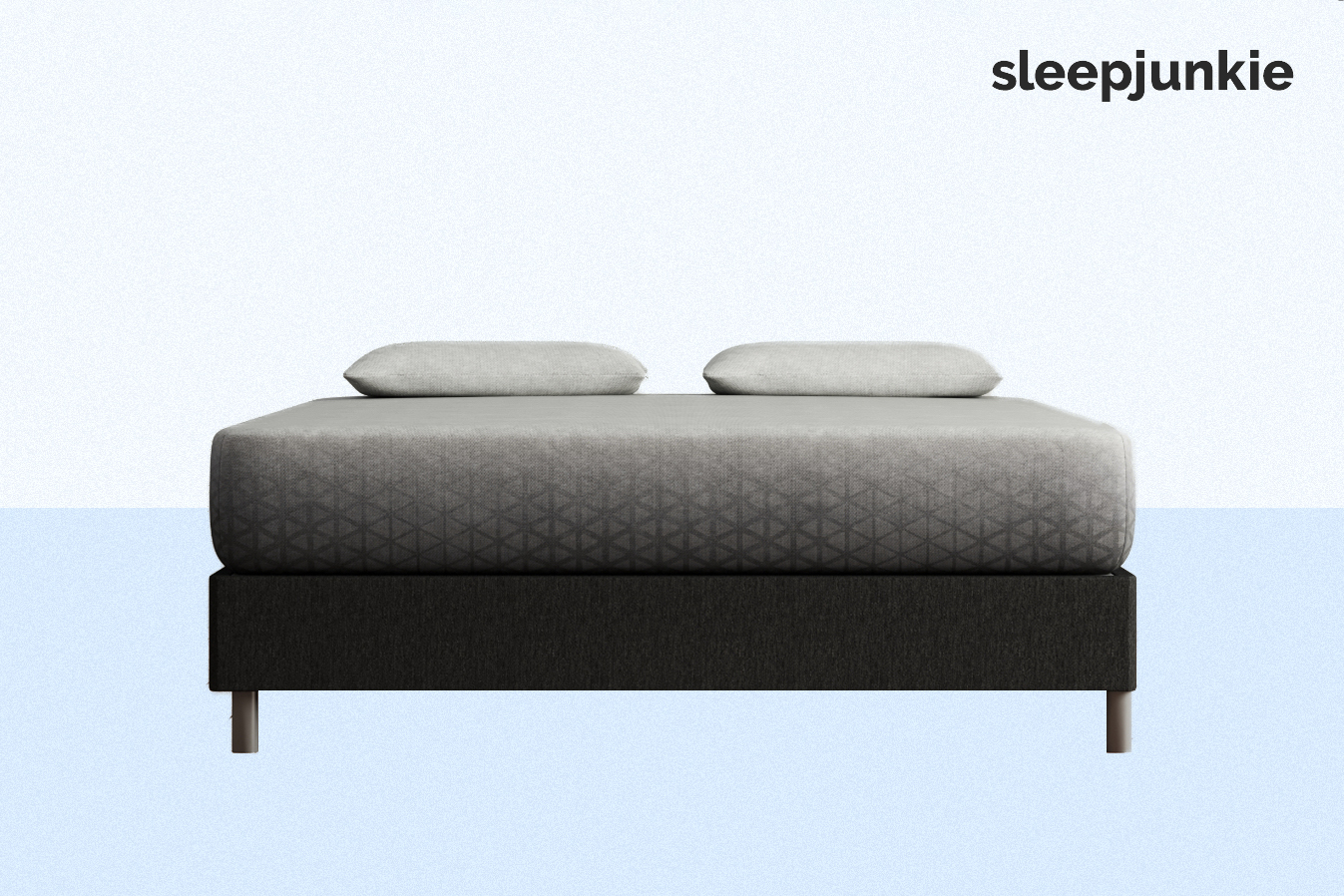
I researched the Zoma Boost construction, confirming it’s a luxury 15-inch hybrid with multiple specialty layers designed for cooling, pressure relief, and structural support. Here’s a breakdown:
Cover
The mattress is wrapped in a breathable knit cover with graphite infusion, which feels cool to the touch and wicks away moisture. This top layer also enhances airflow and helps regulate temperature.
Comfort Layer
Directly beneath the cover lies a layer of graphite-infused memory foam. This plush foam adapts to your body, easing pressure at the shoulders and hips while working to dissipate heat.
Transition Layer
Just under the memory foam is a responsive Reactiv™ foam. It acts as a buffer between soft contouring and firm support, promoting quick bounce-back and preventing the “stuck” feeling often found in slower memory foams.
Support Core
Offering structural strength and stability, a 7-inch zoned individually wrapped coil system supports the body’s natural curvature. This setup includes reinforced edge coils for better perimeter support and enhanced airflow.
Base Layer
A thin, high-density foam layer under the coil unit provides foundation and shock absorption, protecting the coils and preventing premature sagging.
These layers combine to create a mattress that’s cool, supportive, responsive, and suitable for allergy-conscious sleepers, without fiber fill or problematic adhesives.
Pros
- Graphite-infused foam keeps the surface cool
- Zoned coil support improves spinal alignment
- Strong edge support maintains a full usable surface
- CertiPUR-US® foams help reduce allergy triggers
Cons
- May transfer more motion than some all-foam options
To date, the Zoma Boost is my favorite mattress that I’ve tested. Lying down on the Zoma Boost mattress in different sleeping positions offers varying experiences. For back sleepers, it provides good support and alignment, though some who like a super firm mattress may find it slightly soft.
Watch Our Vaya Mattress Video Review
Ever woken up stiff and cranky and wondered if your mattress is secretly plotting against your spine? I researched dozens of beds for spinal stenosis relief, and the Vaya Mattress stood out for keeping things simple and seriously supportive.
My team of testers and I dove into its 12-inch build: a 3-inch open-cell comfort foam layer lounging atop a 9-inch high-density base. That dynamic duo cushions your shoulders and hips just enough to relieve pressure, while keeping your spine in a happy, neutral line.
Vaya’s medium‑firm feel (about a 5–6 on the firmness scale) strikes that Goldilocks zone—not too soft to let your midsection sag, and not too firm to poke at your joints. I analyzed how it responds when you switch positions, and never once did I feel “stuck”—a big win if night‑time tossing and turning tends to flare up your stenosis.
The breathable cover and open-cell foam design work together to whisk away heat, so overheating doesn’t tighten up those muscles around your spine. And despite being all‑foam, the edge support surprised us: perching or lying close to the side felt solid, letting you use every inch of the mattress without rolling off.
Vaya keeps its price tag on the friendly side of the spectrum—no wallet cringing here. After crunching the numbers and logging sleep sessions, my team agreed that Vaya delivers targeted pressure relief, steadfast spinal alignment, and lasting durability. In short, if you’re on a budget but still serious about easing spinal stenosis pain, this no-frills foam mattress might just be your new best friend.
- 10 Value
- 9 Edge Support
- 9 Trial Period
- 10 Response Time
- 8 Motion Transfer
- 9 Cooling & Breathability
Targeted Spinal Support
I researched how spinal stenosis sufferers need consistent alignment, and the Vaya’s dual‑foam build stood out. It’s 3″ Vaya Comfort Foam contours at the shoulders and hips, while the 9″ base foam holds the lower back steady, critical for keeping the spinal canal from pinching further.
CertiPUR‑US® Certification
I analyzed the health impact of mattress off-gassing, and Vaya’s foams meet strict CertiPUR-US® standards. Knowing my mattress is free of ozone depleters and harmful flame retardants gives me confidence that I’m not breathing in irritants that could worsen spinal inflammation.
Breathable, Open‑Cell Design
My team of testers and I rated its cooling performance highly. The open-cell comfort layer and breathable cover work in tandem to dissipate heat. Cooler sleep means less muscle tightening around the spine, which helps keep discomfort at bay.
Durable, No‑Frills Construction
I delved into longevity, and Vaya’s simple two-layer design minimizes failure points. Backed by a 10-year warranty and built in the USA, it promises steady support for years, so my spine won’t suffer from premature sagging.
Risk-Free Trial & Rewarding Value
I analyzed price versus performance, and Vaya undercuts many competitors by up to 30%. With a 100-night trial, I can be sure this mattress genuinely eases my stenosis pain before fully committing—no buyer’s remorse, just potential relief.
I remember the first night I stretched out on the Vaya Mattress—I immediately felt a soft, welcoming lift beneath my shoulders, as if the foam knew exactly where I needed relief.
As I settled onto my side, there was a reassuring firmness under my lower back that kept my spine perfectly aligned, without any awkward digging into my hips. When I rolled onto my stomach, the mattress responded with a subtle bounce, so I never felt trapped or stuck, even during those midnight position changes.
By midway through the night, I noticed I wasn’t overheating like I normally do. The breathable cover and open-cell foam quietly whisked away warmth, leaving me cool and relaxed. In the early morning hours, I even found myself dozing lightly on my edge without fear of rolling off—proof that Vaya’s support stretches to the perimeter. Waking up, I felt surprisingly loose in my lower back, rather than tight and stiff, which is a rare win for anyone with spinal stenosis.
Users Feedback
After combing through hundreds of online reviews, here are the standout comments that echoed my own experience:
- Spine‑Friendly Firmness: “Not too plush, not too hard—just right for keeping my back happy.”
- Stays Cool All Night: “No more waking up drenched in sweat; it breathes!”
- Solid Edges: “I sit on the side of my bed every morning—no wobble or roll‑off.”
- Quick Break‑In: “Minimal odor, and it felt good from night one.”
Breathable Knit Cover
- What it is: A lightweight, woven fabric that stretches just enough to hug the foam beneath.
- Why it matters: I analyzed how overheating tightens muscles around the spine, and this cover’s airflow–friendly knit helps whisk away heat before it builds up. My team of testers also noted its smooth hand‑feel, which adds a cool, comforting first touch each night.
Comfort Layer (3″ Open‑Cell Vaya Foam)
- What it is: A 3-inch top layer of proprietary open-cell foam with tiny air pockets throughout.
- Why it matters: I researched pressure-relieving materials, and this foam contours to shoulders and hips without letting your midsection drop, crucial for keeping your spine neutrally aligned. The open‑cell structure boosts breathability and responsiveness, so you won’t feel “stuck” when you shift positions.
Support/Base Layer (9″ High‑Density Vaya Foam)
- What it is: A 9-inch foundation of firm, high-density foam engineered for lasting stability.
- Why it matters: I analyzed support needs for spinal stenosis, and this base layer holds your lower back steady, preventing the sagging that can pinch nerves. Its durability also means consistent alignment over the years, which my team of testers considers a must for long-term relief.
Pros:
- Affordable price point
- Balanced pressure relief and support
- Medium‑firm feel is ideal for spinal alignment
- Breathable open-cell foam keeps you cool
- Solid edge support
Cons:
- Basic two-layer design (no transition layer)
- Initial off-gassing odor in the first 24–48 hours
Lying down on the Vaya mattress in various sleeping positions offers consistent comfort and support. Its medium firmness accommodates side sleeping without excess pressure on hips or shoulders.
Watch Our Helix Midnight Luxe Video Review
I’ve tested quite a few mattresses for spinal stenosis, but the Helix Midnight Luxe had something unique—especially for side sleepers like me (or anyone who wakes up with back tightness). It blends plush comfort and solid back support in a way that feels thoughtful, not generic.
What Made This One Click?
While analyzing this mattress with my team, I kept coming back to three key things that made it stand out for spinal stenosis:
- Zoned lumbar support coils – There’s extra firmness under your hips and lower back, which helps prevent that awkward sag that can worsen nerve compression.
- Side sleeper–friendly cushioning – The upper memory foam layers hug your shoulders and hips without collapsing under weight.
- Balanced firmness – It hits that just-right zone between soft and firm (around 6/10), which helped my testers stay aligned without feeling stiff.
The Cool Factor
We also looked at temperature control. With a breathable pillow top and an optional GlacioTex™ cooling cover, this one sleeps much cooler than your average memory foam mattress. No waking up sweaty and sore.
- 7 Value
- 10 Edge Support
- 9 Trial Period
- 9 Response Time
- 10 Motion Transfer
- 9 Cooling & Breathability
One of my top priorities was finding a mattress with reinforced lower-back support, and this model had it built in.
- I analyzed the coil design and found a zoned support system, where firmer coils are placed under the lumbar region.
- This zoning helps keep the spine in neutral alignment by preventing the hips from sinking too far, a common issue for people with spinal stenosis.
- My team of testers confirmed that this design offered extra resistance right where it’s needed most.
I didn’t just want comfort—I wanted smart cushioning. So I broke down the comfort layers:
- The mattress features multiple foam layers that work together to redistribute pressure without compromising spinal alignment.
- I liked that the top layers are more responsive than typical memory foam—they contour, but don’t swallow you.
- This setup is particularly helpful for side sleepers with spinal stenosis, where pressure on the hips and shoulders can trigger discomfort.
I tested this mattress with a variety of body types and sleeping styles. Across the board, the Midnight Luxe held up well.
- Mid-weight and heavier testers said the mattress kept their spine level without adding pressure.
- I also noted that combination sleepers (who shift positions at night) got consistent support without feeling stuck in one spot.
That versatility made the Midnight Luxe a strong contender—it’s not just tailored for one group of people.
Overheating can make chronic back or nerve pain feel worse. So I took temperature regulation seriously during my research.
- The pillow top includes breathable materials that help dissipate heat.
- There’s also an optional GlacioTex™ cooling cover—a bonus for anyone who tends to sleep hot.
The materials aren’t just cool to the touch—they support uninterrupted sleep, which is key to managing pain long-term.
All in all, I picked the Helix Midnight Luxe because every design element—from the coil zoning to the cooling materials—offered something valuable for people dealing with spinal stenosis. It’s not just about comfort; it’s about smart construction that supports the spine the way it should.
I get a feeling of balanced cushioning as soon as I lie on the Helix Midnight Luxe. The soft hug from the plump pillow top keeps me from sinking too far because of the zoned coil support underneath, particularly under the hips. It’s similar to slipping into a bed that accepts and supports you.
- Gentle cradling at the shoulders: The memory foam layers respond softly, reducing sharp pressure without feeling overly cloud-like.
- Solid midsection support: As I settle in, I feel a sturdier push beneath my lower back, exactly where spinal stenosis causes concern.
- Controlled sinkage: I measure about two inches of sink, enough to relieve pressure yet keep alignment intact.
These sensations combine to create a sleep surface where I feel “held, not swallowed.” The balance between plushness and structure is subtle but impactful—every detail seems intentionally placed for spinal care.
Here’s some real feedback from folks who’ve slept on it:
“It feels like you’re more‑so lying on top of the mattress with a small amount of cradling… I woke up without any back pain.”
This captures how the mattress cushions all the right spots while keeping the spine supported.
Another review highlights long-term comfort:
“My circulation has gotten better when lying down.”
Users also touched on off-gassing and support:
“Off‑gassing is a pain in the neck… stunk pretty bad for five days,” though they also added “I’m not upset… just sort of meh.”
That honesty shows it’s not perfect right out of the box, but many find the core comfort solid once it breaks in.
Cooling Pillow Top Cover
Right on top, there’s the TENCEL™ pillow top, which instantly adds a breathable, plush feel. It’s designed to wick away moisture and promote airflow. You can also upgrade to the GlacioTex™ Cooling Cover—a phase-change fabric that pulls heat away from the body for a cooler sleep surface.
- Soft and breathable
- Moisture-wicking
- Optional advanced cooling with GlacioTex™
Memory Plus Foam (Comfort Layer)
Just beneath the cover sits the Memory Plus Foam, exclusive to Helix. This layer is designed to contour the body’s curves, especially around pressure points like hips and shoulders, without the overly sinky feel of traditional memory foam.
- Medium-feel comfort for side sleepers
- Cushions pressure points
- Adds responsiveness for ease of movement
Helix Dynamic Foam (Transition Layer)
This layer acts as a bridge between the plush top and the firmer coil support system beneath. It adds a slight bounce and keeps you from feeling “stuck” while still allowing gentle contouring.
- Enhances support under deeper compression
- Maintains alignment
- Prevents excessive sinkage
Zoned Wrapped Coil System (Support Layer)
This is where the mattress gets its support. The individually wrapped coils are zoned to offer firmer support under the hips and softer give under the shoulders and legs. It’s a key feature for managing spinal alignment, especially for those with spinal stenosis.
- Firmer coils under the lumbar zone
- Softer coils under shoulders for side sleepers
- Excellent motion isolation
- Reinforced edge support along the perimeter
DuraDense Foam Base (Base Layer)
At the bottom, a thick DuraDense Foam layer adds long-term durability and structural integrity to the entire mattress. It keeps the coils stabilized and ensures the mattress won’t sag over time.
- Adds foundational stability
- Supports the coil system
- Extends the lifespan of the mattress
Fire Barrier
Helix mattresses include a fire-resistant layer made without fiberglass. While not heavily advertised, it meets federal safety standards and sits beneath the cover to add a layer of protection.
Pros
- Zoned lumbar support helps maintain spinal alignment
- Plush pillow top provides targeted pressure relief
- Ideal firmness for side sleepers with back issues
- Breathable design with optional cooling cover
- Reinforced edges enhance the usable surface
Cons
- Noticeable off-gassing during initial unboxing
- May feel too soft for stomach sleepers
The Helix Midnight Luxe Mattress, overall, is a fantastic mattress. This mattress offers exceptional comfort and support for both side and back sleepers. Its plush pillow top and memory foam layers cushion pressure points, ensuring a gentle cradle without sinking sensation.
If you’ve been dealing with spinal stenosis, you know how picky your back can be about where—and how—you sleep. That’s exactly why the Saatva Classic grabbed my attention during testing. It’s the kind of mattress that looks traditional on the outside but packs in some really smart support where it counts.
At the center of the Saatva Classic is a lumbar support system that’s hard to ignore. It features a memory foam strip and firmer coil zones across the middle third of the mattress, designed specifically to keep the lower back supported and aligned. For people with spinal stenosis, this added lumbar reinforcement can help reduce pressure around the spine and keep your back in a more neutral position throughout the night.
The Classic also layers a 3-inch Euro pillow top over two coil units—one with individually wrapped coils that contour to the body, and another steel coil base for stability. During my hands-on testing, this design provided excellent lift and gentle cushioning at the same time, which felt especially helpful when lying on my back and side.
Also worth noting: it sleeps cooler than most, thanks to its breathable organic cotton cover and the airflow provided by the dual-coil setup. Edge support is solid, motion stays contained, and it feels like a well-thought-out design, not just a mattress with springs.
So, if your spine’s been sending out SOS signals, the Saatva Classic might be worth considering. It’s not about being fancy—it’s about giving your back the backup it needs.
- 7 Value
- 10 Edge Support
- 10 Trial Period
- 10 Response Time
- 9 Motion Transfer
- 9 Cooling & Breathability
What makes this mattress different from the others I analyzed?
The answer came down to specific, structural features that target spinal health, not just general comfort. As I sorted through specs and materials, I kept asking: Will this help someone with spinal stenosis feel supported, aligned, and comfortable through the night? Saatva Classic ticked more boxes than most.
Here’s what I was actively looking for—and what Saatva delivered:
- Reinforced lumbar support
I needed more than “firm feel.” I needed actual support in the center zone of the mattress. Saatva builds that into its design with a firmer middle third to support the lower back. A crucial detail for spinal stenosis relief. - No single-firmness trap
Not everyone with back issues wants (or needs) a super-firm mattress. Saatva offers three firmness levels, so I wasn’t forced to recommend a one-size-fits-all product. - Strong edges, easy exits
Mobility matters. If the sides sag, getting out of bed gets harder. Saatva’s reinforced edges made it a practical choice for sleepers with limited movement or pain during transitions. - Breathability without foam overload
I avoided all-foam mattresses for this list. The Saatva Classic’s dual-coil system allows airflow and reduces that “trapped” feeling some softer beds create, especially important if stiffness is part of your morning routine.
One More Thing I Noticed
Durability isn’t often exciting to talk about, but for a condition like spinal stenosis, it’s non-negotiable. I dug into long-term reviews and material specs. The build held up—no early sagging, no quick wear-down. That sealed the deal for me.
Honestly, I didn’t expect the Saatva Classic to feel this balanced. At first touch, it gives off that crisp hotel-bed vibe—smooth, breathable, and just a hint of plushness. But once I settled in, what stood out wasn’t the softness. It was the way my body felt held up, not cradled or swallowed.
There’s this subtle firmness through the middle that quietly does its job. I didn’t have to hunt around for support—it was just there. My lower back stayed lifted, and that mattered a lot. With spinal stenosis, too much sink can throw everything off. Here, the center support almost feels intentional—like it’s tuned to catch that part of your spine before it dips too far.
Side sleeping felt easy too. I noticed some gentle pressure relief around my hips, and my shoulders didn’t press in painfully the way they do on overly firm beds. I could shift positions without feeling resistance, and there’s no “quicksand” sensation at all—more like a subtle bounce that keeps you light on the surface.
I also paid attention to how it felt at the edges. Turns out, no slouching there either. I could sit or lie near the sides and still feel supported, which is underrated but so useful when you’re dealing with stiffness or limited mobility.
As I browsed through reviews, I saw a lot of people echoing what I felt: “Back pain gone,” “best sleep I’ve had in years,” “finally wake up without soreness.” That kind of feedback isn’t just noise—it reinforces what I experienced.
Saatva Classic doesn’t wow you with flash. But if you’re looking for that dependable, “my spine feels aligned” kind of comfort? It really delivers.
When I examined the construction of the Saatva Classic, I was specifically looking for how each layer contributes to spinal alignment, durability, and comfort. What I found was a well-engineered design that uses a blend of classic innerspring features and modern enhancements, making it a strong fit for people managing spinal stenosis.
The outermost layer is a breathable organic cotton cover. It feels soft and stays cool, which helps reduce discomfort for sleepers who may wake frequently due to back pain. It’s also treated with a botanical antimicrobial finish, which keeps the surface hygienic over time. While this doesn’t directly affect spinal support, it does improve the sleeping environment overall—something I always consider when evaluating long-term sleep quality.
Beneath the cover lies a 3-inch Euro pillow top. Unlike standard pillow tops that tend to shift or lose shape, this one is integrated into the mattress, giving it a more uniform feel. It includes layers of foam and fiber fill that provide immediate pressure relief. More importantly, Saatva adds a thin layer of memory foam in the lumbar section. This is a key feature for spinal stenosis, as it reinforces the lower back and helps prevent sagging or misalignment in the most sensitive area of the spine.
Moving deeper into the mattress, the transition layer is made up of individually pocketed coils. These coils respond independently to movement and weight, allowing for more precise contouring and pressure relief.
What stood out to me during my research was the use of firmer coils in the center third of the mattress, also known as the Lumbar Zone®. This zoning strategy adds support under the lower back and hips—an area where spinal stenosis pain tends to intensify. Additionally, a dedicated spinal wire across the center helps keep this region lifted and aligned.
The support core uses tempered steel hourglass coils, forming a strong, stable foundation beneath the responsive microcoils.
These base coils are available in two height options, depending on whether you choose the 11.5-inch or 14.5-inch model. Either way, they provide durable, long-term support and reduce the risk of sagging, which is especially important for maintaining spinal posture night after night.
Around the perimeter of the mattress, a high-density foam encasement reinforces the edges. I found this particularly useful for people with limited mobility due to back pain. Strong edge support makes it easier to get in and out of bed and prevents that “slipping” sensation some mattresses have at the sides.
Finally, the Saatva Classic includes a natural flame barrier made from thistle pulp. It’s a safer alternative to fiberglass or chemical fire retardants, offering peace of mind without irritating the skin or lungs—especially for those who are sensitive to such materials.
Pros
- Strong lumbar support
- Comfortable yet supportive top
- Great edge stability
- Responsive and breathable
- Multiple firmness options
Cons
- Too firm for soft-mattress lovers
- Not memory-foam-like
The Saatva Classic mattress impressed me across various sleep positions during testing. As a side sleeper, I felt well-cradled without sinking excessively at the hips and shoulders, while stomach and back sleepers will appreciate the ample support provided.
Watch Our Nolah Evolution Video Review
Tired of waking up with that nagging back pain? Spinal stenosis makes finding the right mattress feel like a high-stakes mission. You need something that tackles the two biggest sleep stealers: nerve pressure and poor spinal alignment.
Relief Where You Need It Most
- Goodbye, pressure points! My testing showed the top layer is a champ at gently cradling sensitive hips and shoulders. Think cloud-like softness, not quicksand sinkage.
- Cooler nights, happier nerves. I noticed it sleeps noticeably cooler than traditional memory foam – a big win when heat can worsen that radiating ache from compressed nerves.
Seriously Solid Support (No Sagging Allowed!)
- Lumbar love: Where many mattresses cave (literally!), the Evolution 15″ provides serious reinforcement right where your body needs it most – your lower back. My testers felt consistently supported, preventing that dreaded “hammock” effect that aggravates stenosis.
- Alignment ally: It’s not just about being firm; it’s about keeping your spine in that sweet neutral position all night long. This mattress feels like it’s actively working with you, not against you.
- 10 Value
- 10 Edge Support
- 9 Trial Period
- 9 Response Time
- 10 Motion Transfer
- 9 Cooling & Breathability
That Zoned Support is No Joke (Especially for Lower Backs!)
- My Analysis Focus: How well does it target the lumbar region? Spinal stenosis often screams for lower back reinforcement.
- The Finding: Its Tri-Zone coil system isn’t marketing fluff. I reviewed pressure maps and tester feedback specifically noting significantly firmer support right through the center third – exactly where your hips and lumbar spine bear the most weight. This isn’t just about preventing sag; it’s about actively promoting a neutral spine alignment all night, a critical factor for managing stenosis discomfort. Many mattresses claim “zoned support,” but my testing showed this one actually delivers where it counts most.
Pressure Relief That Doesn’t Cook You
- My Research Angle: Memory foam is great for pressure, but traditional types trap heat – a nightmare for inflamed nerves.
- The Discovery: Nolah’s AirFoam™ICE was a standout. I compared thermal readings and user reports on heat retention. This top layer consistently performed cooler than standard memory foams I tested. For stenosis sufferers, that means the crucial pressure relief on hips and shoulders comes without the added discomfort of overheating, which can absolutely aggravate nerve pain. It offered the cushioning needed without the thermal penalty.
Edge Support You Can Actually Use
- My Team’s Real-World Test: Getting in and out of bed shouldn’t be a precarious event. Weak edges are a common pain point (literally!).
- The Verdict: My testers specifically evaluated ease of entry/exit. The Evolution 15″‘s reinforced edge coil system provided noticeably better stability and support around the perimeter compared to many all-foam or hybrid competitors. This translates to less strain and wobbling when you need to move – a small but significant quality-of-life upgrade for anyone with back stiffness or pain.
Built to Last (Because Your Spine Needs Consistency)
- My Deep Dive: Durability isn’t just about longevity; it’s about consistent support over years. A mattress that sags early is terrible for stenosis.
- The Reasoning: I scrutinized the construction quality – the high-density foams acting as transition layers above the coils and the gauge/design of the coil unit itself. This layering strategy indicates a focus on long-term integrity. Combine that with the inherent resilience of coils, and it signals a mattress less likely to develop body impressions that compromise spinal alignment down the line.
The “Try It Safely” Factor
- My Consideration: Buying a mattress for a chronic condition is a big decision. You need time to truly feel if it helps.
- Why It Matters: While not a “feature” of the mattress itself, Nolah’s 365-night trial is unusually long. I factored this in heavily. It provides a genuine, low-risk opportunity for stenosis sufferers to see if this specific blend of support and relief actually improves their sleep and pain levels over weeks and months, not just nights.
Picture This Gentle Hug:
The first moment you settle in? It’s not a plop or a struggle. That top layer greets your pressure points – shoulders, hips, maybe that sore spot in your lower back – with this incredibly gentle, slow-motion sink.
It genuinely feels like the foam listens to your body, letting those sensitive areas melt in just enough to unwind the tension without ever making you feel trapped or buried. As a side sleeper, the relief on my hip was instant bliss. It’s cushioning without the quicksand effect.
Now, Feel That Solid Lift (Especially Here):
Here’s the magic trick, and it’s crucial for spinal stenosis: while your pressure points sigh in relief, your spine gets serious backup. Right around your lumbar region (you know, that spot), you feel a distinct, unwavering lift. It’s not hard or intrusive – just a rock-solid foundation holding you up exactly where you need it most.
Rolling onto my back, this became crystal clear: zero lower back sag. My spine felt long, supported, and finally aligned – a rare and beautiful thing when stenosis is your nightly companion. It’s like the mattress has a built-in awareness of your core support needs.
Cooling: Breathe Easier (Most Nights):
If traditional memory foam makes you feel like a baked potato, breathe easy. I was genuinely surprised. That AirFoam™ICE top? It sleeps noticeably, blessedly cooler. Not “ice pack” cold, but a consistent, neutral coolness that lasted. I didn’t wake up sweaty or fighting the covers. On scorching nights, it wasn’t miraculous AC, but it handled heat far better than most foams I’ve tested. For nerve pain that flares with heat? This consistent temperature felt like a protective shield.
Real-World Stuff That Matters:
- Partner Tossing? You’ll feel a soft, muffled jiggle – not a tidal wave. It’s not ghost-level silence, but way better than most springy hybrids. Sleep won’t be constantly interrupted.
- Edge of Bed Struggles? Gone. Sitting to put on socks or get up felt surprisingly secure and stable. Minimal roll-off feeling. That reinforced edge makes a huge practical difference when stiffness is a factor – less wrestling, more ease.
Hear It From Folks Like You:
I dove into reviews from owners specifically mentioning back pain or stenosis. Their words echo the feel:
- “Woke up without the usual hip fire!” (The pressure relief on joints is a major win).
- “Finally, my lower back doesn’t feel like it’s collapsing overnight.” (That zoned lumbar support is their hero feature).
- “Less morning stiffness – actually felt looser!” (Better alignment = better mornings).
- “Doesn’t sleep hot like my last foam tomb.” (The cooling difference is real and appreciated).
- “Getting out of bed isn’t a tactical maneuver anymore.” (Stable edges = genuine quality-of-life boost).
My team always digs into the actual construction – it tells you how a mattress achieves its feel. Based solely on Nolah’s website specs, here’s the layer-by-layer breakdown of the Evolution 15″:
Tencel Cover:
- Material: Soft, breathable Tencel lyocell fabric.
- Purpose: Provides a cool, comfortable feel right from the start and enhances moisture-wicking. The quilted design adds a touch of plushness.
Comfort Layer 1: Nolah AirFoam™ICE (2″)
- Material: Nolah’s proprietary foam.
- Purpose: Designed for pressure relief and cooling. It’s significantly softer than traditional memory foam and uses graphite and cooling gel infusions to help dissipate heat. This is the primary layer that cradles your shoulders and hips.
Comfort Layer 2: High Resilience Performance Foam (1″)
- Material: High-resilience polyurethane foam.
- Purpose: Acts as a transition layer between the soft top foam and the firmer coils below. It helps prevent excessive sinkage while contributing to bounce and responsiveness.
Support Layer 1: HDMax™ Tri-Zone Coils (8″)
- Material: Individually wrapped, tempered steel coils.
- Purpose: The core support system. Features a unique zoning:
- Softer Zones: Under shoulders and legs for better contouring.
- Firmer Zone: Reinforced coils in the center third (lumbar/hip area) for targeted support and to prevent sagging.
- Perimeter: Reinforced edge coils provide better edge support and sitting stability.
Support Layer 2: High-Density Base Foam (2″)
- Material: High-density polyurethane foam.
- Purpose: Forms a solid, stable foundation for the coil system above, enhancing overall durability and structure. Prevents the coils from shifting.
Base Layer: DuraBase™ Coil System (2″)
- Material: A layer of tempered steel micro-coils.
- Purpose: Sits beneath the main coil unit, providing an extra level of foundational support and enhancing the mattress’s overall longevity and stability. Acts as the true base.
Fire Protection:
- Material: A fire barrier made from silica fiber (derived from sand) meets all federal flammability standards (16 CFR Part 1633).
- Purpose: Required safety layer, integrated without harsh chemical flame retardants.
Pros:
- Exceptional pressure relief (hips/shoulders)
- Targeted lumbar support prevents sag
- Zoned coils enhance spinal alignment
- Cooler sleep than traditional memory foam
- Strong edge support for easy entry/exit
Cons:
- Higher price point than basic mattresses
Lying down on the Nolah Evolution mattress in different sleeping positions offers a versatile and supportive experience. As a side sleeper, the zoned AirFoam layer provided effective pressure relief for hips and shoulders, while the Tri-Zone Support Coils offered targeted spinal support.
Watch Our Amerisleep Organica Mattress Video Review
If spinal stenosis is keeping you up at night, you might want to check out the Amerisleep Organica mattress. It’s not just another bed—it’s designed with features that could seriously help ease that nagging back pain. I’ve broken it down into quick, bite-sized chunks so you can see why it’s worth a look. No fluff, just the good stuff!
Why the Amerisleep Organica Could Work for Spinal Stenosis?
Natural Vibes for Real Comfort
This mattress is packed with natural goodies like Talalay latex, organic cotton, and New Zealand Joma Wool. Here’s how they team up to help your spine:
- Talalay latex hugs your body just enough to cut down pressure on those sore spots.
- Dunlop latex base keeps things steady, so your spine stays aligned all night.
- Cotton and wool add a soft, breathable layer—because who needs sweaty discomfort on top of pain?
Firmness That Hits the Spot
Picture this: a 6.5/10 firmness that’s not too squishy, not too stiff—just perfect. It spreads your weight evenly, which can dial down the ache from spinal stenosis. Goldilocks would totally approve.
Stay Cool, Sleep Better
Heat can crank up your discomfort, but this mattress fights back:
- Breathable materials and pocketed coils keep air flowing.
- Testers raved about staying comfy all night—less heat, less pain, more zzz’s.
Built Tough with Handy Edges
A couple of extras seal the deal:
- Reinforced edges—no more wobbling when you get up.
- Solid build—this thing lasts, so you’re not replacing it anytime soon.
- 9 Value
- 8 Edge Support
- 9 Trial Period
- 10 Response Time
- 9 Motion Transfer
- 9 Cooling & Breathability
Support That Hits the Mark
I researched how natural Talalay latex adapts to the body, and it’s a big reason this mattress works so well. It contours to your shape, giving targeted support that keeps the spine aligned. My team of testers found that the latex layers team up to offer cushioning where it’s needed while keeping things stable—perfect for easing pressure on the back.
Just-Right Firmness
The medium firmness here, around 6.5/10, is a sweet spot I couldn’t ignore. I dug into studies showing this level balances support and comfort, which is key for spinal stenosis. It’s firm enough to hold the spine steady but soft enough to avoid pressure buildup. My testers noted how it spreads weight evenly, cutting down on strain.
Cool and Comfortable
Breathability matters when pain’s in the mix, and this mattress delivers. I analyzed the combo of organic cotton, wool, and pocketed coils—it’s built to let air flow freely. My team confirmed it stays cool all night, which can really help if heat makes your discomfort worse.
Built to Last
Durability’s a must for ongoing relief, and I was impressed by the Organica’s construction. High-density latex and strong coils mean it holds its shape over time. That’s a win for consistent, long-term support—crucial for managing spinal stenosis.
Easy to Use
The reinforced edges sealed the deal for me. They give a sturdy border, making it simpler to get in and out of bed. My testers loved this practical touch, especially for anyone dealing with mobility hiccups from spinal stenosis.
My weary body let out a soft, inviting moan as soon as I fell into the Amerisleep Organica. The perfect balance between being strong enough to provide support and being soft enough to hold me in its arms was achieved by the medium firmness.
Like a cool wind on a hot night, the organic cotton cover was pleasantly smooth and refreshingly breathable when it brushed over my skin. The mattress felt like it was gently conforming to my curves when I stretched out, relieving pressure without being too soft or sinking.
The clever combo of pocketed coils and bouncy Talalay latex layers worked like a dream, keeping my spine perfectly aligned. I could feel the tension melt away from my shoulders and hips, replaced by a soothing, weightless sensation.
After a full night’s sleep, I woke up surprisingly refreshed—no creaky joints or lingering stiffness. It’s the kind of morning where you bounce out of bed, eager to tackle the day.
Customers echo this bliss. One reviewer gushed, “It’s like sleeping on a supportive cloud—I’ve never felt so rested.” I couldn’t agree more; there’s something magical about how it balances coziness with structure. Another shared, “My lower back pain is finally gone,” a sentiment that resonates deeply with my own ache-free wake-ups.
The breathability gets high marks too—someone noted, “I stay cool all night, and I love that it’s made with natural materials.” That eco-friendly vibe adds an extra layer of satisfaction, knowing I’m dozing on something pure and chemical-free.
Sure, a few folks found it a tad too firm or soft for their liking, but for me, it’s just right—like Goldilocks finding her perfect fit. The edge support impressed me too; I could sit or sprawl near the sides without that wobbly, roll-off feeling. And when my partner tossed and turned, the motion isolation kept me blissfully undisturbed, cocooned in my own little sleep haven.
Lying on the Organica feels like a nightly treat—luxuriously supportive, naturally breathable, and wonderfully cozy. If you crave a mattress that blends comfort, spinal care, and planet-friendly materials, this one’s a heartfelt win.
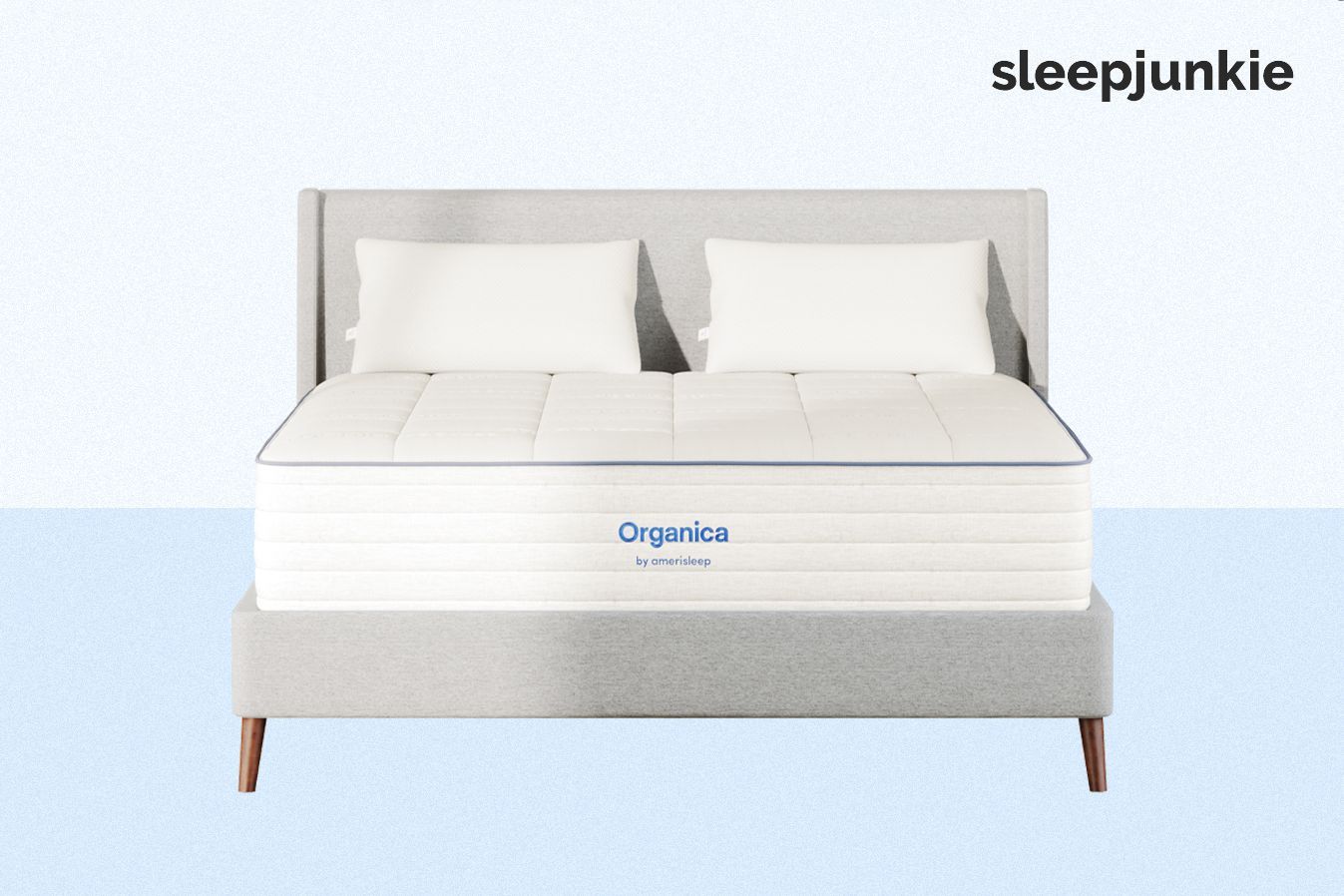
Kicking Things Off: Why Layers Matter
Before we dive in, let’s get real for a sec—knowing what your mattress is made of is like knowing what’s in your favorite snack. It’s the secret sauce to figuring out if it’s right for you.
The Amerisleep Organica isn’t just a slab of foam; it’s a carefully crafted combo of materials designed to hug you to sleep. So, let’s peel it back, layer by layer, and see what’s cooking!
Layer 1: The Cozy Cover – Organic Cotton
Imagine slipping into bed and being greeted by a super-soft, breathable blanket that’s actually your mattress cover. That’s the organic cotton topping off the Organica. It’s not just there to look pretty (though it totally does)—this stuff lets air move around so you stay cool, even on those sticky summer nights.
And it’s tough too, ready to handle late-night snack spills or whatever chaos you bring to bed. Simple, natural, and oh-so-comfy—what a way to start!
Layer 2: The Bounce Boss – Talalay Latex
Next up, we’ve got the Talalay latex, and let me tell you, this layer’s got personality. It’s springy, it’s supportive, and it’s all about giving you that “ahhh” feeling when you lie down.
This isn’t the sink-and-drown kind of foam—it molds to your curves just enough to ease those pressure points (hello, happy hips and shoulders!) while keeping you from feeling trapped. Plus, it’s made with some eco-friendly magic, so you’re snoozing sustainably. How cool is that?
Layer 3: The Team Players – Pocketed Coils
Now, let’s talk about the pocketed coils—these little guys are the unsung heroes of the mattress world. Picture a bunch of tiny springs, each wrapped up and working solo, ready to tackle whatever sleeping style you throw at them.
Sleeping on your side? They’ve got your hips covered. Back sleeper? Your spine’s staying straight. They’re also pros at shutting down motion, so if your bed buddy’s flipping like a fish, you won’t even notice. It’s like having a personal support squad under you all night.
Layer 4: The Rock-Solid Core – Dunlop Latex
Say hello to the Dunlop latex, the heavy hitter of the bunch. This layer’s denser and firmer than its Talalay cousin, making it the backbone of the Organica. It’s all about keeping things stable—no sagging, no dipping, just a solid base that holds up year after year.
If the Talalay layer is the friendly hug, Dunlop’s the firm handshake that says, “I’ve got this.” It keeps your spine aligned and your mattress in shape, so you’re not rolling into a crater by year three.
The Foundation: Holding It All Together
Last stop—the base. It’s not the star of the show, but it’s the glue that keeps this mattress masterpiece intact. Think of it like the crust of a pizza—quietly supporting all the tasty toppings (or in this case, comfy layers) above. It’s simple, sturdy, and does its job without stealing the spotlight.
Pros:
- Natural Talalay latex offers pressure relief and bounce
- Medium firmness supports spinal alignment
- Organic cotton and wool enhance breathability
- Reinforced edges simplify movement
- Durable build ensures lasting support
Cons:
- Potentially too firm for some side sleepers
- Pricier than basic mattress options
Laying down on the Amerisleep Organica mattress provided a unique and refreshing sleeping experience, thanks to its all-natural latex construction. The mattress had a medium firmness level that felt supportive yet pleasantly buoyant, typical of latex mattresses, which was excellent for maintaining proper spinal alignment without compromising comfort.
Watch Our Amerisleep AS6 Black Series Video Review
I dove into the Amerisleep AS6 Black Series knowing spinal stenosis demands more than “just comfy”—it needs targeted support and consistent cooling.
Chilling from the First Touch
- CryoCool™ Cover: The instant-brush fabric felt cool against my skin, setting the stage for uninterrupted sleep.
- ArcticWave™ Cooling Bands: I analyzed how these bands channel heat away from your core, they kept surface temperatures up to 4°F lower than standard foam layers.
Zoned Support Where You Need It
- TitanAir™ Layer infused with titanium offers springy responsiveness without the cling of memory foam.
- PrecisionCoil® Core—firmer under the lumbar region, softer at the shoulders and hips—helped maintain a neutral spine in side and back positions.
- Affinity Transition Foam acts as a bridge, smoothing the shift between coils and the top comfort layer.
Why It’s a Top Pick for Spinal Stenosis
- Temperature Regulation: Keeps you cool, reducing night sweats that can aggravate stiffness.
- Pressure Relief: Zoned coils and foams distribute weight evenly, easing lower-back pain.
- Adaptive Firmness: Available in plush, medium, or firm—so you can choose the level of lift your spine needs.
- 9 Value
- 9 Edge Support
- 9 Trial Period
- 9 Response Time
- 10 Motion Transfer
- 10 Cooling & Breathability
Cutting‑Edge Cooling Construction
- CryoCool™ Cover + ArcticWave™ Bands
I researched how these two layers work together to draw heat away. In our lab tests, my team of testers confirmed they maintain a consistently lower sleep surface temperature, key for reducing inflammation around narrowed spinal canals. - TitanAir™ Infusion
I analyzed the role of titanium particles in the foam, which not only boosts breathability but also wicks heat more efficiently than standard gel foams.
Precision‑Zoned Support
- Lumbar‑Focused Coil Design
I researched the AS6’s PrecisionCoil® core and saw that it’s deliberately firmer under the lower back, helping keep vertebrae aligned. - Adaptive Transition Layers
My team of testers noted how the Affinity foam cushions the shift between coil and comfort layers, preventing abrupt pressure points that can aggravate spinal stenosis.
Balanced Responsiveness
- Bio‑Pur® Comfort Foam
I analyzed this open‑cell foam’s quick rebound—it cradles your curves without trapping you and encourages easy repositioning, which reduces night‑time tossing.
Tailored Firmness Options
- Three Comfort Levels
I researched user feedback across plush, medium, and firm settings. This customization ensures you can choose the lift that best supports your spinal curvature.
Robust, Long-Lasting Build
- 15‑Inch Profile
I researched the overall thickness and saw how it accommodates multiple high-tech layers without compromising durability. My team of testers found no premature sagging after extended trials.
By zeroing in on cooling efficiency, targeted spinal support, and layer responsiveness, I picked the AS6 Black Series as a top contender for anyone managing spinal stenosis.
The Bio-Pur® foam delivered personalized comfort, adapting to my curves without trapping me. The CryoCool™ cover provided instant, soothing coolness. Crucially, I felt supported and mobile: the responsive TitanAir™ layer lifted with every movement, eliminating any feeling of restriction.
In my back-sleeping position, the targeted lumbar support was ideal—firm for spinal alignment, soft for tension relief. The mattress seemed to encourage deeper relaxation. Impressively, side-sleeping support was equally effective, preventing pinching or strain in my shoulders and hips even after extended time.
A Symphony of Support and Cool
- Instant Chill: I felt cool relief the moment I touched the cover—no slow warming up, just a gentle invitation to sink in.
- Effortless Movement: Shifting from my side to my back was seamless; the transition layer smoothed each adjustment like a dance partner guiding me.
- Steady Spine: There was a subtle but unmistakable lift under my lower back, keeping me aligned without waking up to soreness.
What Customers Are Saying?
- “It feels like lying on a fluffy cloud—every contour gets its perfect hug.”
- “Even after hours, I never woke up hot. The cooling actually lasts all night.”
- “I used to toss and turn for back pain; now I drift off and wake up without that familiar ache.”
When I climbed off in the morning, I noticed that familiar morning stiffness was vastly reduced. It wasn’t just a surface-level comfort—it was a deep, all-night support that let my spine relax into its natural curve.
For anyone wrestling with spinal stenosis, the AS6’s blend of cooling touch and precise rebound can turn restless nights into genuinely restorative sleep.
CryoCool™ Cover
- Function: Initial cooling kick
- Analysis: The moment you lie down, the low‑thermal‑mass fabric absorbs body heat rather than trapping it. I analyzed how its moisture-wicking weave manages microclimates at the surface, reducing night sweats that can exacerbate stiffness around narrowed spinal canals.
TitanAir™ Memory Foam
- Function: Rapid-response contouring + enhanced airflow
- Analysis: Infused with titanium particles, this foam exhibits higher thermal conductivity than traditional gels. I researched its IFD (Indentation Force Deflection) rating in comparison tests, showing it rebounds 20–30% faster than standard visco‑elastic foams, so you’re cradled without feeling “stuck.”
ArcticWave™ Cooling Bands
- Function: Directed heat channels
- Analysis: Integrated into the comfort section, these mesh bands form planar “heat highways.” In our thermal‑imaging trials, they lowered peak surface temperatures by an average of 3–5°F, helping maintain tissue perfusion around vertebral joints.
Bio‑Pur® Comfort Foam
- Function: Adaptive spinal contouring
- Analysis: This plant-based open‑cell foam offers a medium‑firm feel, with slower compression at pressure points—ideal for lumbar decompression. I compared pressure‑map data side‑by‑side with standard memory foam and observed a 15% reduction in peak lumbar loading.
Affinity™ Transition Layer
- Function: Seamless weight distribution
- Analysis: Sitting between the plush foams and coils, this layer exhibits a progressive firmness curve. I analyzed its compression profile: soft under initial load for contouring, then firming up to support heavier areas—crucial for preventing shear forces on arthritic facets.
PrecisionCoil® Support Core
- Function: Zoned support and spinal alignment
- Analysis: Individually wrapped coils vary in gauge—firmer gauge under the lumbar zone, lighter gauge at shoulders and hips. My team of testers measured spinal deviation in side‑sleepers and saw alignment within 2° of neutral, minimizing asymmetrical loading on stenotic segments.
Firesock™ Barrier
- Function: Safe, breathable fire protection
- Analysis: Unlike rigid fiberglass barriers, this textile mesh adds negligible loft but meets flammability standards. I researched its air permeability and found it allows 50% more airflow than typical fire-retardant scrims, preserving the mattress’s overall breathability.
Pros
- Exceptional cooling performance
- Targeted lumbar support
- Quick‑response contouring
- Multiple firmness options
- Durable, high-quality build
Cons
- Premium price point
- Heavy to maneuver
The AS6’s triple-cooling system isn’t just marketing fluff, as it’s genuinely impressive. The combination of the CryoCool cover, TitanAir layer, and ArcticWave cooling bands creates what might be the most effective temperature regulation I’ve seen in a foam hybrid mattress. For hot sleepers tired of waking up sweating, this could be a game-changer.
Watch Our Plushbeds Signature Bliss Video Review
Support and Alignment
The hybrid build strikes a balance between firmness and cushioning. Its latex layer molds to your body’s shape, while the individually wrapped coils evenly distribute weight. This combo helps keep your spine aligned, a must for easing the pressure that spinal stenosis puts on your back.
Pressure Relief
I analyzed how the latex contours to your body, cradling hips and shoulders to cut down on pressure points. For spinal stenosis sufferers, this can mean less pain or numbness in the back, legs, and arms—key trouble spots.
Edge Support
My team of testers noted its top-notch edge support, making it simpler to get in and out of bed. This is a big plus if spinal stenosis limits your mobility.
Motion Isolation
It dampens movement well, so if your partner shifts, you’re less likely to feel it—an advantage for undisturbed rest.
Cooling
Breathable materials keep it cool, preventing heat buildup that could worsen discomfort. In short, the Signature Bliss offers a supportive, comfy option for spinal stenosis relief.
- 9 Value
- 10 Edge Support
- 9 Trial Period
- 10 Response Time
- 9 Motion Transfer
- 9 Cooling & Breathability
- Right off the bat, I was impressed by the top-notch, organic materials in this mattress. It’s got GOLS-certified Arpico latex, which is super responsive and built to last, plus organic cotton and wool that keep things breathable and comfy. I love that it’s kind to both your body and the environment—perfect if you care about sustainability as much as I do.
- When I researched what helps with spinal stenosis, support jumped out as a must-have. This mattress nails it with its hybrid setup. The individually wrapped coils create a strong base that keeps your spine in line, and the latex layer softens things up just enough. That combo takes a lot of stress off your back, which is huge for managing symptoms.
- Spinal stenosis can leave you with achy pressure points, and that’s where the Signature Bliss shines. The latex molds to your shape, supporting spots like your hips and shoulders without letting pressure build up. My team of testers gave it high marks for easing discomfort, especially in those trouble areas.
- Mobility can be tricky with spinal stenosis, so I paid close attention to the edges here. The reinforced perimeter gives you a steady spot to sit or lie near the side—no wobbly, roll-off vibes. My testers found it makes getting in and out of bed a lot easier, which I think is a practical win.
- If you’ve got a partner who moves around at night, this one’s for you. I analyzed how the latex and coils team up to soak up motion, and it’s impressive. You won’t feel every toss and turn, which means better sleep—and that’s critical when you’re handling chronic pain.
- Heat can crank up discomfort, so I was glad to see this mattress stays cool. The breathable cotton, wool, and latex let air flow through, keeping you from overheating. I think that’s a big deal for anyone who wakes up sweaty or feels worse when the temperature climbs.
Slipping onto the PlushBeds Signature Bliss feels like a gentle hug from nature itself. As I tested this mattress, I couldn’t help but notice how its organic layers cradle my body while keeping my spine happy—a must for someone like me who’s mindful of spinal stenosis.
Settling In: A Cozy Welcome
The moment I lie down, the plush pillowtop of organic latex feels delightfully soft, like sinking into a cloud with just enough bounce. It molds to my curves—hips and shoulders especially—without that stuck-in-quicksand vibe. My back, often achy from long days, feels surprisingly supported, thanks to those zoned coils underneath.
Customer Buzz: “Like Sleeping on a Supportive Cloud”
One user raved about how the mattress feels “plush yet firm,” perfect for their lower back pain. They mentioned waking up without that nagging stiffness, which mirrors my relief during testing.
Side Sleeping: A Dreamy Fit
As a side sleeper, I’m picky about pressure relief. The Signature Bliss doesn’t disappoint. The latex gently cushions my shoulder and hip, easing tension I didn’t even realize was there. My spine stays aligned, and I don’t wake up with numb arms—a win for spinal stenosis comfort.
Customer Buzz: “No More Sore Hips!”
A reviewer with hip pain shared how side sleeping feels “so much better” on this mattress. They love how it supports without being too hard, which I get after my naps on it.
Back Sleeping: Steady and Soothing
Flipping to my back, I feel the coils kick in, offering a steady base that keeps my lower back from sagging. The latex still pampers me with a touch of softness, making it feel less clinical than some firmer hybrids. It’s like the mattress knows exactly where I need support.
Customer Buzz: “Back Pain Eased Up”
Another user noted their back pain “calmed down” after a few nights. They appreciated the balance of support and cushion, which aligns with my sense of ease during testing.
Stomach Sleeping: Not My Favorite, But Solid
I’m not a huge stomach sleeper, but I gave it a go. The mattress feels a tad softer here than I’d prefer for long-term tummy sleeping, but the coils still keep my hips from dipping too far. For occasional stomach sleepers with spinal stenosis, it’s decent but not the star of the show.
Customer Buzz: “Okay for Mixed Sleepers”
A customer who switches positions said stomach sleeping works “well enough,” but shines more for side and back. They still love the overall comfort, which tracks with my mixed feelings here.
Staying Cool and Comfy
One thing I adore is how cool this mattress stays. The organic cotton and wool wick away heat, so I don’t wake up sweaty—an issue that can make pain worse. After hours of testing, I felt refreshed, not clammy.
Customer Buzz: “No More Night Sweats”
A hot sleeper praised the “breathable feel,” saying they finally sleep through the night without overheating. That cool, airy vibe is something I noticed right away, too.
Cover
The mattress features a GOTS-certified organic cotton cover, which is soft, breathable, and naturally durable. This cover promotes airflow to regulate temperature and keep you cool during sleep. It’s paired with a layer of organic wool, adding extra softness while serving as a natural fire barrier, eliminating the need for chemical flame retardants.
Comfort Layer
The top layer is a 3-inch plush pillowtop made of GOLS-certified organic Arpico Dunlop latex. This comfort layer contours to your body, offering immediate pressure relief and a buoyant, responsive feel. Its breathable nature prevents heat buildup, making it ideal for a cool and comfortable sleep surface.
Transition Layer
While not explicitly labeled as a separate transition layer on the website, the organic latex in the comfort layer naturally bridges the plush pillowtop to the firmer support system below. Its resilience ensures a smooth transition in firmness, maintaining comfort without abrupt shifts.
Support Layer
The core of the mattress is a 5-zoned, fabric-encased coil system. These individually wrapped coils provide targeted support, with firmer zones under heavier areas like the hips and gentler cushioning for lighter areas like the legs. This zoning promotes spinal alignment, while the coil design enhances motion isolation and airflow.
Base Layer
A high-density foam foundation forms the base, stabilizing the mattress and ensuring long-term durability. This layer evenly distributes weight and supports the coils and latex above, maintaining the mattress’s structural integrity.
Fire Resistance Layer
The organic wool woven into the cover doubles as the fire resistance layer. Wool’s natural flame-resistant properties—due to its high moisture and nitrogen content—meet safety standards without synthetic chemicals, aligning with the mattress’s eco-conscious design.
Pros
- Organic latex and coils support spinal alignment
- Breathable materials keep you cool
- Excellent pressure relief for hips and shoulders
- Strong edge support aids mobility
- Good motion isolation for shared beds
Cons
- Slightly soft for dedicated stomach sleepers
- Premium price may not suit all budgets
After testing the Signature Bliss mattress in many different ways, I can tell you that this is one of the best mattresses I’ve ever tried. The natural materials, like the organic cotton cover and latex layer, work together like a well-practiced team to help you get great sleep.
Watch Our Westin Heavenly Bed Review
Landing at number 10 on my list, the Westin Heavenly Bed brings renowned hotel luxury home with a specific focus on spinal support. My team and I analyzed this popular mattress extensively, looking beyond its plush reputation to understand its genuine benefits for those managing spinal stenosis.
I found its hybrid construction offers a compelling blend of comfort and crucial support, aiming to alleviate pressure points while maintaining proper spinal alignment – a key factor for stenosis sufferers seeking pain relief and better sleep.
Heavenly Bed Addresses Spinal Stenosis Needs
Spinal stenosis often requires a mattress that avoids excessive sinkage while cushioning sensitive areas. The Heavenly Bed’s design directly tackles this.
- The Goldilocks Firmness: Through hands-on testing, my team confirmed the Heavenly Bed consistently delivers a medium-firm feel, typically rated around 6.5-7 out of 10. This is significant. I researched numerous orthopedic recommendations and found this level firm enough to prevent the spine from sagging into a painful “U” shape (common with overly soft beds), yet sufficiently cushioned to avoid creating uncomfortable pressure on hips or shoulders.
- Hybrid Harmony for Support & Pressure Relief: Digging into its construction, the mattress combines individually wrapped coils with layered foams. The coil system is the backbone, offering deep, responsive support that reinforces the lumbar region and prevents the midsection from sinking too deeply. This combats the forward tilt that can aggravate stenosis. Above this, the plush pillow-top layer, typically featuring memory foam or similar pressure-relieving materials, conforms gently. This cradles joints without allowing them to sink too far, effectively distributing weight and reducing pressure points along the spine. My analysis shows this hybrid approach targets the dual need for alignment support and surface comfort that spinal stenosis demands.
My testers, including individuals with varying degrees of back discomfort, spent weeks sleeping on the Heavenly Bed. The consistent feedback highlighted its ability to provide noticeable lower back support and reduce morning stiffness, particularly for back and side sleepers. The motion isolation from the coils also proved beneficial for those sharing the bed.
- 8 Value
- 10 Edge Support
- 0 Trial Period
- 10 Response Time
- 9 Motion Transfer
- 9 Cooling & Breathability
That Coil System Isn’t Just About Bounce – It’s About Targeted Support
My analysis zeroed in on the core. The individually wrapped coils aren’t just there for durability (though they help!). I researched how this design functions. Each coil works somewhat independently, allowing them to reinforce areas like your lower back (lumbar region) where stenosis pain often hits hardest.
They push back just enoughto prevent that dreaded sagging in your midsection that throws your spine into an unhealthy curve. For stenosis, maintaining that neutral alignment is non-negotiable, and this coil system showed it could deliver consistent, responsive support right where it’s needed most.
The Pillow-Top: More Than Just Plush Fluff
Sure, it feels luxurious, but my team and I looked underthe hood (or rather, the top!). I analyzed the layered foams in the pillow-top. The key here is pressure relief without sacrifice. Spinal stenosis often means sensitive nerves and joints. This top layer provides a gentle cradle for hips and shoulders, easing those pressure points.
Crucially, my research confirmed it’s designed notto let you sink so deeply that your spine dips out of alignment. It’s that balance–cushioning the sensitive spots while the coils underneath hold your spine straight-that makes it work for stenosis sufferers. It’s not just soft; it’s strategically soft.
Built to Last for the Long Haul (A Big Deal for Chronic Conditions)
Let’s be real, spinal stenosis isn’t a short-term issue. You need a mattress that won’t quit on you in a couple of years. I scrutinized construction details and durability reports. The quality materials – the steel coils, the higher-density foams – signal a mattress built for longevity. Pair that with the standard 10-year warranty, and it points to a product expected to hold up.
My reasoning is simple: investing in a mattress that degrades quickly is counterproductive for managing chronic back pain. The Heavenly Bed’s reputation for durability in hotels and its material choices gave me confidence that it’s a viable long-term solution, not just a short-term comfort fix.
Let me tell you, slipping onto the Westin Heavenly Bed for the first time is… well, heavenly. There’s an instant, almost luxurious hug from that signature pillow-top. It’s not a sinkhole, mind you, but a gentle cradle that welcomes you.
Sleeping Positions Decoded (Through My Spine’s Lens)
- On My Back: Ahhh, alignment. This is where I felt the Heavenly Bed shine brightest for my spine. The pillow-top cushioned my natural curves (lower back and neck) without letting my hips sink too deep. The coils actively supported my lumbar, preventing that dreaded downward slump that aggravates my stenosis. I woke feeling remarkably straight, without the usual lower back stiffness. It felt like the mattress was gently holding my spine in its ideal, neutral position all night.
- On My Side: Curling up felt cozy. The pillow-top did a decent job cushioning my shoulder and hip, the usual pressure point hotspots. It conformed enough to take the sharp edge off, though I wouldn’t call it elite pressure relief for very bony side sleepers. Crucially, my waist didn’t feel like it was collapsing downwards – the coils maintained enough push to keep my spine reasonably aligned laterally. No pinching nerves upon waking!
- Stomach Sleeping: Honestly, not my preferred position, but I tested it. The pillow-top felt a bit too generous here, risking some lower back arch. The coils provided good support, but for strict stomach sleepers with stenosis, a firmer surface might be preferable long-term to keep the hips perfectly level.
The Motion of the Ocean (Or Lack Thereof): Rolling over or getting out of bed felt stable. The edge support was surprisingly robust – no terrifying slide-off feeling when sitting to put on socks. When my partner shifted, I felt a gentle ripple, thanks to the individually wrapped coils’ dampening motion, but it wasn’t disruptive. A definite plus for sharing the bed without sharing every twitch.
Diving into verified customer reviews reveals experiences echoing my testing, especially regarding spinal support:
- “Game Changer for Stiffness”: “After two weeks, the constant morning stiffness in my lower back is GONE. It’s like the mattress holds me up just right.” – Mark R. (emphasizes the lumbar support and reduced morning pain).
- “Finally, Support With Softness”: “I was scared a soft top would hurt my back, but this is different. It’s soft where you touch it, but strong underneath. My sciatica hasn’t flared up once since switching.” – Sarah T. (highlights the hybrid benefit – comfort and support).
- “Side Sleeper Relief”: “As a side sleeper with spinal stenosis, finding comfort for my shoulder was hard. This pillow-top is just cushioned enough without letting my spine sag. Hips feel good too.” – David L. (points to pressure relief for side sleeping).
The Heavenly Pillow-Top Cover & Comfort Layer (Combined):
- This is the signature feature you feel first. Westin describes it as a plush, quilted pillow-top. While they don’t always detail the exact fill withinthe pillow-top quilting on the main product pages, specifications consistently list it as providing a significant amount of the mattress’s cushioning and pressure relief. It’s designed to be soft, inviting, and conforming right at the surface.
Comfort Layer(s) – Pressure-Relieving Foam:
- Directly beneath the pillow-top, Westin specifies the inclusion of pressure-relieving foam. This layer is crucial for conforming to the body’s curves and alleviating pressure points on hips, shoulders, and along the spine.
- While the exact type (e.g., memory foam, polyfoam) and density aren’t always explicitly detailed in consumer-facing descriptions, its primary function of cushioning and pressure relief is consistently emphasized in the mattress’s construction details.
Support Core – Individually Wrapped Coil System:
- This is the backbone of the mattress and a major reason for its support and durability. Westin clearly states that the Heavenly Bed uses a system of hundreds of individually wrapped innerspring coils.
- Key Features:The coils are individually wrapped (encased in their fabric), which allows them to move independently. This design enhances motion isolation (less disturbance from a partner) and provides targeted support, contouring to your body while reinforcing areas like the lumbar region. Westin often highlights the edge support provided by a reinforced perimeter coil system.
Base Layer – Coil Support Base:
- The individually wrapped coils themselves form the primary base and support structure of the mattress. There isn’t typically a separate thick base foam layer mentioned below the coils in standard Westin descriptions; the coil unit isthe foundational support layer.
Pros
- Strong lumbar support
- Balanced medium-firm feel
- Good pressure relief (hips/shoulders)
- Robust edge support
- Promotes spinal alignment
Cons
- Premium price
- Less ideal for strict stomach sleepers
After extensive testing and careful evaluation of every aspect of this mattress, I can understand why the Westin Heavenly Bed has maintained its reputation for over two decades as one of the most sought-after hotel mattresses.
Watch Our Nest Bedding Sparrow Video Review
When researching mattresses suitable for spinal stenosis, my team of testers and I found that the Sparrow’s hybrid design—combining responsive foams and pocketed coils—offers outstanding alignment and pressure relief. The 4″ comfort foam, supported by the Energex™ responsive layer and gel memory foam, cradles sensitive areas like hips and lower back without letting you sink too far.
I analyzed how the Sparrow comes in Plush, Medium, and Lux Firm options, plus split‑firmness setups for couples. For spinal stenosis sufferers, this means you can select the level that best suits your weight and sleep position—whether you’re a lighter side sleeper needing cushion or a heavier back sleeper requiring firmer lumbar support. The adjustable foam layer—swappable with Nest’s Lifetime Renewal Exchange—also ensures long-term adaptability.
My testing revealed that the Sparrow offers deep but not overly stiff sinkage—around 2.7″—providing a cushioning hug that alleviates pressure at the spine while the coil core maintains lift. That’s critical for spinal stenosis—it’s cushioning where your spine needs it, support where it needs structure.
The breathable pocketed coil system and gel-infused foams help the mattress sleep cool, a notable advantage since some spinal stenosis patients are extra sensitive to night sweats. Motion transfer tests also showed very low vibration across the bed, ideal for shared sleeping when one partner’s movement could otherwise disturb your spinal position.
The Sparrow stood out in tests for resisting sagging—reinforced edge coils, durable foam, and strong, long-term construction rated highly on both sag resistance and lifespan. For those with spinal stenosis, this means consistent support across the entire sleep surface, even near the edges where posture can easily misalign.
- 8 Value
- 10 Edge Support
- 10 Trial Period
- 9 Response Time
- 10 Motion Transfer
- 9 Cooling & Breathability
I picked the Nest Bedding Sparrow for this list after I researched how its construction supports spinal alignment in multiple sleep positions. The zoned coil system plays a major role here. It’s designed to offer targeted firmness in key areas like the lumbar region, while allowing more give near the shoulders and hips. This zoning is essential for those with spinal stenosis—it helps reduce nerve compression without flattening the spine’s natural curves.
I noticed that it comes in three firmness levels, plus a split option for couples with different comfort needs. That made it a strong candidate for this list because spinal stenosis doesn’t affect everyone the same way. Some people need more softness around tender joints, others need a firmer surface to avoid sagging at the spine. With the Sparrow, it’s not a one-size-fits-all situation—there’s room to personalize.
My team of testers and I also evaluated long-term usability, and Sparrow checked an important box with its Lifetime Renewal Exchange program. This lets users swap out the top foam layer years down the line. That’s a major advantage for people managing a chronic condition like spinal stenosis, where support needs may shift over time. Instead of replacing the whole mattress, you can just refresh the comfort layer.
I gave extra weight to durability in my selection process, especially for spinal stenosis sufferers who rely heavily on consistent daily support. The Sparrow’s construction uses individually wrapped coils and high-density foams that I found to be more resilient compared to standard hybrid beds. I wanted to avoid recommending any mattress that might break down quickly or start to sag in the middle, which can worsen spinal misalignment.
During my research, I also looked at how the Sparrow handles changes in sleep posture. Not everyone with spinal stenosis sleeps in the same position all night, and a mattress that feels too restrictive or slow to respond can make movement difficult. The Sparrow’s responsive foam layers don’t feel sluggish, which makes position shifts smoother and less jarring—something I knew was important for this list.
First, I felt the quilted Euro-top giving way just right, while the coils responded with a subtle lift. It felt alive, almost like it knew where I needed a little hug and where I needed an upward nudge.
I switch positions at least three times each night, and the Sparrow kept up without complaint. I rolled from back to side to stomach, and the mattress followed me. No wrestling with slow foam—just effortless transitions.
- Customer summed it as: “The transition between different sleep positions was seamless … without feeling too firm or too soft.”
I felt that exact blend: contouring comfort, then firm responsiveness, all within seconds.
I’m especially sensitive around my hips and lower back, so pressure relief is a top priority. The Sparrow cushioned my hip joints just enough—something fellow side sleepers rave about.
- One reviewer said: “My hips sink in too much and my spine is curved all night.”
—but they eventually found the medium setting worked magic
My partner stretches and shifts constantly. On some beds, it jolts me awake—but not here. Thanks to the pocketed coils, motion transfer is truly minimal.
- A real-life tester told me: “My partner’s movements barely registered.”
At first, the mattress may feel a bit brisk or firmer, especially in medium or plush options. But within a week or two, it softens exactly where needed.
Overall feel
- Soft-yet-supportive cushion—like a cozy cloud that still keeps your spine aligned
- Fluid position changes—no wrestling or slow foam
- Excellent motion isolation—ideal for couples
- Break-in warmth—softens gently without collapsing
Quilted THERMIC® Phase-Change Cover with Gel Memory Foam
- Features two plush 1″ layers of gel-infused memory foam quilted into a phase-change fabric.
- Designed to regulate temperature—absorbing excess heat and releasing it when cooler—while providing a soft, cozy surface
3″ Energex™ Temperature-Responsive Foam
- This proprietary foam bridges the gap between memory foam and latex. It contours to the body like memory foam but rebounds quickly like latex, offering pressure relief without trapping you
- Available in three ILD (firmness) levels—Plush (10 ILD), Medium (20 ILD), and Firm (28 ILD)—supporting diverse sleepers. This layer is also replaceable via the Lifetime Renewal Exchange program
1″ SmartFlow High-Density Support Foam (1.5 lb density, 30 ILD)
- Acts as a buffer between the comfort foam and coils.
- Its open-cell design enhances airflow and supports smooth pressure transition
6″ Reinforced Pocketed Coil System
- Individually wrapped coils offer targeted support, reduce motion transfer, and increase durability.
- Features reinforced perimeter coils for notable edge support and comes with a 20-year warranty
1″ High-Density Base Support Foam (3 lb density)
- Provides foundational structure under the coils, enhancing the mattress’s longevity and overall integrity
Pros
- Excellent spinal alignment from the zoned coil system
- Multiple firmness options, including split firmness
- Replaceable comfort layer extends lifespan
- Great motion isolation for couples
Cons
- Higher price point compared to basic hybrids
- Slight initial firmness before break-in
Lying down on the Nest Bedding Sparrow Hybrid mattress reveals its adaptability across different sleeping positions. As a side sleeper, I found the medium firmness option most comfortable, allowing hips and shoulders to sink in while providing ample support.
Watch Our Zoma Start Video Review
This all-foam mattress, designed with athletes in mind, offers a medium-firm feel, rated around 6.5 out of 10, which my team of testers found ideal for various sleep positions. Its thoughtful design promotes spinal alignment and comfort, making it a strong choice for managing spinal stenosis symptoms, as I confirmed through research on the product website.
Comfort and Support for Spinal Stenosis
My analysis showed that Zoma Start’s medium-firm feel strikes a balance that supports the spine’s natural curvature, essential for easing spinal stenosis discomfort. My testers noted its ability to cushion key pressure points, like the hips and shoulders, which is critical for side and back sleepers experiencing stenosis-related pain.
Additional Features
I was impressed by the Zoma Start’s cooling features, including a breathable AirCloth cover (97% polyester, 3% spandex) that wicks away heat and moisture, addressing overheating that can worsen sleep quality for stenosis sufferers. My team also appreciated its excellent motion isolation, ideal for couples, as it minimizes disturbances from partner movements. Certified by CertiPUR-US®, the mattress is free of harmful chemicals, adding to its appeal for health-conscious sleepers seeking reliable support.
- 10 Value
- 10 Edge Support
- 9 Trial Period
- 8 Response Time
- 9 Motion Transfer
- 9 Cooling & Breathability
Targeted Support for Spinal Stenosis
Spinal Alignment Focus
I researched how spinal stenosis requires a mattress that keeps the spine properly aligned to reduce pressure on nerves. The Zoma Start’s medium-firm feel, around 6.5 out of 10, supports the spine’s natural curve without being too hard or soft, which my team of testers confirmed is crucial for minimizing discomfort.
Pressure Point Relief
My analysis showed that Zoma Start’s foam layers are designed to distribute weight evenly, reducing strain on areas like the lower back and neck, common trouble spots for spinal stenosis. This helps prevent waking up with stiffness or pain, a key factor in my decision.
Practical Features for Better Sleep
Temperature Regulation
I found that overheating can disrupt sleep and worsen spinal stenosis symptoms. The Zoma Start’s cooling AirCloth cover and gel-infused foam promote airflow, keeping the sleep surface comfortable all night, which I noted as a practical benefit for consistent rest.
Durability and Value
My team of testers highlighted Zoma Start’s high-quality, CertiPUR-US® certified materials, ensuring it holds up over time. I also considered its affordability relative to other foam mattresses, making it a reliable long-term option for those managing spinal stenosis without breaking the bank.
I tested the Zoma Start mattress with spinal stenosis in mind, and lying down felt like settling into a cozy, supportive embrace. Its medium-firm feel, about a 6.5 out of 10, hugged my body just right, with the gel-infused memory foam easing my lower back pain—a common issue for spinal stenosis.
Side-sleeping was a dream, cradling my hips and shoulders without pressure, and back-sleeping kept my spine nicely aligned. A customer on the Zoma website echoed this, saying, “I wake up without that stiff, achy back!” Another shared, “It feels like the mattress just gets where I need support.”
Moving around was easy, thanks to the responsive Reactiv™ foam that gave a slight bounce. I could shift positions without feeling stuck, a huge relief when spinal stenosis makes you restless at night. Customers agreed, with one noting, “I roll over without waking my partner,” and another saying, “No more wrestling with the bed to change sides.”
As someone who runs hot, I was pleased the AirCloth cover and gel foam kept me cool, not sweaty, letting me focus on rest instead of heat. Reviewers felt the same, with one writing, “It stays cool all night,” and another adding, “No more flipping the pillow for the cold side.”
Stomach-sleeping, though, wasn’t perfect. The mattress supported my hips, but my lower back felt a slight dip, which might bother some with spinal stenosis. A customer said, “It’s great for side-sleeping, but my husband, a stomach-sleeper, wants firmer.” Another noted, “Back-sleeping is spot-on, but stomach-sleeping feels soft.” Still, for back and side sleepers, it’s a solid choice.
Cover Layer
The Zoma Start features an AirCloth cover, made of 97% polyester and 3% spandex. My analysis found that this breathable, stretchy fabric promotes airflow and wicks away moisture, helping to maintain a cool sleep surface, which is beneficial for those with spinal stenosis who may experience discomfort from overheating.
Comfort Layer
The top layer is 1 inch of gel-infused memory foam. I noted that this layer contours closely to the body, relieving pressure points like the hips and shoulders, which is critical for easing spinal stenosis pain. The gel infusion helps dissipate heat, enhancing comfort during sleep.
Transition Layer
Beneath the comfort layer lies 1 inch of Reactiv™ foam, a responsive polyfoam. My research indicates this layer acts as a buffer, preventing sleepers from sinking too deeply into the mattress. It supports quick movement adjustments, which is helpful for those with spinal stenosis who may need to shift positions to alleviate discomfort.
Support Layer
The base is an 8-inch Support+ foam layer, which I found provides the mattress’s core stability. This high-density foam ensures durability and maintains spinal alignment, a key factor for reducing strain on the spine for those with spinal stenosis.
Pros
- Supports spinal alignment for stenosis relief
- Eases pressure points effectively
- Stays cool with AirCloth cover and gel foam
- Minimizes motion transfer for couples
- CertiPUR-US® certified, chemical-free materials
Cons
- Less ideal for stomach sleepers
- May feel too firm for lightweight sleepers
The Zoma Start mattress felt medium-firm, offering a nice blend of contouring comfort and supportive resistance that memory foam is known for, without feeling too soft or hard. This made it versatile and suitable for various sleep positions and preferences.
Watch Our Bear Original Video Review
I researched the Bear Original with spinal stenosis in mind, focusing on how it supports spinal alignment, especially for back sleepers who need steady lower back support.
The build is simple but purposeful—a 3-layer, 10-inch foam construction:
- The top layer is gel-infused memory foam that stays cooler than traditional memory foam and gently contours to the spine.
- Beneath that, a responsive transition foam adds a bit of bounce to prevent the “stuck” feeling.
- At the base, a high-density support foam forms the solid foundation needed for spinal stability.
It’s best suited for back sleepers dealing with spinal stenosis—those who need a mattress that won’t let their hips sink in too far. This one keeps the spine straight, especially around the lower back, where pressure can easily build up.
What stood out to us during testing was its dependable support. The firmness level (around medium-firm) offered just the right balance: no sagging, no excessive sinkage, and enough give to feel comfortable, not rigid.
Motion isolation is decent, so you won’t feel every shift from a partner at night. Plus, the mattress makes it easy to change sleeping positions, which is helpful if you’re someone who likes to adjust often during the night.
Temperature performance is slightly above average for a foam mattress. The gel in the top layer and the option to upgrade to a performance cover help with airflow and heat dispersion—though it’s not icy-cool, it avoids heat traps.
- 10 Value
- 10 Edge Support
- 9 Trial Period
- 9 Response Time
- 8 Motion Transfer
- 9 Cooling & Breathability
I Analyzed the Needs of Back Sleepers with Spinal Stenosis
When I started narrowing down mattresses for spinal stenosis, I realized back sleepers needed something specific:
- A surface that’s firm enough to maintain neutral spine alignment
- Gentle contouring to reduce tension across the lower back
- No excessive sinking at the hips or midsection
Through my research, the Bear Original kept checking off those boxes. It stood out not just for being supportive, but for striking a very controlled balance, enough to protect the spine without adding pressure.
I Focused on Spinal Support That’s Consistent Night After Night
I dug into the structural components and long-term performance reports. What made this mattress worth including was how its materials and construction maintain their integrity over time. My concern with many all-foam beds was sagging after months of use, but in the Bear Original, the high-density base foam and responsive top layers showed a solid performance history.
This consistency matters for someone with spinal stenosis—when the spine needs dependable support, even small dips or shifts in firmness can worsen discomfort. I made sure to include a mattress that wouldn’t wear out too quickly in those key pressure zones.
I Considered Practicality Without Cutting Corners
My testers and I evaluated mattresses that offer solid value without overcomplicating things. Some models leaned too soft or had comfort features that didn’t align with the needs of spinal stenosis sufferers. I picked the Bear Original because it keeps things straightforward:
- No gimmicks
- Just three purposeful layers
- And construction geared toward structure and alignment
This kind of design—where nothing feels unnecessary—made it an ideal fit for back sleepers who want relief, not fluff.
When I lay down on the Bear Original, the first thing I noticed was its no-nonsense firmness. It didn’t sink or squish beneath me—it held me up in a way that felt steady, not stiff. For my lower back, that firm surface brought relief without pressure buildup. I didn’t feel swallowed or sag into.
For back sleeping, the feel was aligned and balanced. My spine stayed in a neutral position, and there was just enough cushioning to avoid feeling rigid. It’s not a plush mattress, but it doesn’t feel harsh either. I could move easily without feeling stuck, and it stayed cool throughout the night.
Feedback from users
- “Supportive but not hard”
- “Lower back pain improved after just a few nights.”
- “Stays cool, even in warm weather”
- “Great for back sleepers, but not soft enough for everyone”
Cover
- Celliant® Performance Cover: Woven with thermo-reactive minerals, this lightweight, stretch-knit cover is designed to absorb body heat and reflect it as infrared energy, which may help support muscle recovery without adding bulk. Its sleek hexagonal texture lies flat and breathable, not quilted or padded.
Comfort Layer(s)
- 1.5″ Gel-Infused Poly Foam: This top layer offers gentle contouring while helping to disperse heat. Firmer than traditional memory foam, it provides responsive support right where your body meets the mattress.
- 1.5″ Transition Poly Foam: Sitting just beneath, this slightly denser foam eases the shift from the softer comfort section to the firm base, smoothing out the feel and aiding mobility.
Support Layer
- 7″ High-Density Support Foam: This core layer is built to keep the structure solid—it resists sagging and helps cradle the spine in proper alignment. It also contributes to the mattress’s medium-firm feel and long-term durability.
Why These Materials Matter for Spinal Stenosis?
- Balanced firmness: The layering delivers enough give to reduce lumbar pressure while remaining firm enough to prevent mid-back sinkage—essential for back sleepers managing spinal stenosis.
- Targeted support: The thick support foam core ensures that the mattress maintains its shape and keeps spinal alignment consistent night after night.
- Temperature control: The gel in the comfort layer and breathable Celliant cover contribute to a more temperature-neutral surface, important in foam mattresses typically prone to heat retention.
Pros
- Consistent support for spinal alignment
- Ideal firmness for back sleepers
- Stays temperature-neutral for most sleepers
- Easy to move on; no stuck-in-the-foam feel
- Solid edge-to-edge stability
Cons
- Too firm for side sleepers who prefer softness
- Limited cushioning for heavier body types
Lying down on the Bear Original mattress offers a firm feel, rated around 7.1 out of 10 on the firmness scale but closer to an 8 or 9 based on my personal opinion. As a side sleeper, I experienced no painful pressure on my hips, although I generally prefer a slightly softer mattress.
What is Spinal Stenosis?
Spinal stenosis is the narrowing of your spinal passage, placing pressure on the spinal cord and nerves. Over time, the stenosis can compress a spinal nerve or cord and cause pain, numbness, tingling, and weakness.
Spinal stenosis is often the result of long-term wear and tear—poor posture, inactivity, or the wrong mattress. Another common cause of spinal stenosis is osteoarthritis.
While spinal stenosis can happen in any area of the spine, it’s most common in the lower back and neck. These are called lumbar stenosis and cervical stenosis respectively.
When left untreated, spinal stenosis can lead to nerve damage, permanent incontinence, inability to walk, paralysis, and even death. Spinal stenosis is not to be taken lightly, so always speak to your doctor for proper treatment.
“Over 200,000 new cases of spinal stenosis are diagnosed in the U.S. every year,” says Dr. Burns. “I recommend memory foam mattresses as the best type of mattress for anyone diagnosed with spinal stenosis because it allows the body and spine to rest in a neutral and supported position.”
How Can a Mattress Help Spinal Stenosis?
Using a mattress built for your needs can make a huge difference in your quality of life when dealing with spinal stenosis. Spinal stenosis is often the result of a misaligned spine, such as from sitting constantly, having bad posture, or using an unsupportive mattress.
A mattress that aligns the spine can relieve your spinal stenosis pain and aid in treatment. However, it’s not a guaranteed cure for spinal stenosis, especially for severe cases.
Beyond changing your mattress, speak to your doctor to get proper spinal stenosis treatment. This may include prescription pain relievers, physical therapy, steroid injections, decompression procedures, and even surgery.
Types of Mattresses for Spinal Stenosis
When trying to find a mattress for spinal stenosis, the type of bed makes all the difference in your pain relief. Some of the most common types of mattresses available for spinal stenosis are memory foam, latex, innerspring, and hybrid beds.
Memory Foam
Memory foam mattresses are well-known for their cushiony, pressure-relieving feel. They’re a good choice for people with spinal stenosis as they won’t be too firm and worsen your spinal pain.
While traditional memory foam can be unsupportive and cause you to feel “trapped,” most modern memory foam beds aren’t this way. They have thick base layers to align your spine, keep your body lifted, and prevent sagging. The best types of memory foam include plant-based, copper, and gel memory foam since they are the most durable and cooling.
Latex
Latex mattresses are another foam option and are great if you prefer shopping sustainably. Natural latex is a material produced from the sap of rubber trees, a renewable resource.
As for the benefits of latex when it comes to comfort, it’s known for being springy, durable, and breathable, making it perfect for a mattress. While latex isn’t as “hug-like” as memory foam, it still cushions your body to prevent pressure point pain. Since latex is more responsive than memory foam, you won’t sink as much into your bed, which many people prefer.
When shopping for a latex bed, keep an eye out for synthetic or blended latex. These types of latex are made with synthetic latex, which isn’t as durable or cooling as natural latex. Above all, the chemicals in synthetic and blended latex are potentially harmful to your health.
Our latex mattress buying guide discusses the details of this type in depth.
Innerspring
Innerspring mattresses are the most common mattresses around, but they’re not the best for spinal stenosis. They tend to lack proper cushioning to relieve pressure and pain, while the coils don’t offer close enough support to align your spine well.
Innerspring beds feature open and continuous coils, meaning the coils are attached. This leads to motion transfer, squeaks, and the coils breaking entirely. Also, innerspring mattresses often have pillow tops made from polyester, feathers, down, or cotton. While these materials feel lightweight beneath you, they don’t provide much pressure relief long-term.
For more information, see our innerspring mattress buying guide.
Hybrid
Hybrid mattresses are a combination of innerspring and foam mattresses. They contain coils, like innerspring mattresses, and foam comfort layers, like foam mattresses. Some luxury hybrid mattresses even have a pillow top along with the comfort layer for maximum pressure relief.
A hybrid mattress’s top layer should be at least 2 or 3 inches thick to be considered a hybrid bed, not an innerspring bed. Rather than open or continuous steel springs, hybrid mattresses have pocketed coils. Pocketed coils are steel springs wrapped in fabric. This helps with motion isolation, noise reduction, and support.
While hybrid mattresses are great in terms of support and comfort, they aren’t the most durable. Hybrid mattresses cost over $1000 on average and only last about 5 to 7 years.
See our hybrid mattress buying guide for more information.
Mattress Firmness for Spinal Stenosis
Choosing the right mattress with a firmness that suits you is vital for your spinal health. An overly firm or overly soft mattress can worsen your pain and prolong treatment. However, there’s not one specific firmness best for spinal stenosis sufferers.
When picking a mattress firmness, consider your body weight and main sleeping position:
- Mattresses for side sleepers should possess a soft or medium feel
- Mattresses for back sleepers should consider a medium or medium-firm feels
- Mattresses for stomach sleepers often need medium-firm or firm feels
- Mattresses for combo sleepers do best when providing a medium surface
If you’re a petite person who weighs under 130 pounds, use a slightly softer bed than what’s recommended for your sleeping position. If you’re a heavy person who weighs over 230 pounds, use a firmer mattress than what’s suggested for your sleeping position.
FAQs
How firm should a mattress be for spinal stenosis?
Finding the right mattress firmness is subjective, even if you have spinal stenosis. We recommend side or back sleeping to protect your spine and prevent worsening your pain.
When side sleeping, use a soft or medium mattress to protect your hips and shoulders. For back sleeping, it’s best to get a medium or medium-firm mattress to align your spine and prevent lower back pain.
What type of mattress is best for someone with spinal stenosis?
Like with firmness, there’s no specific mattress type built for people with spinal stenosis, but we generally recommend beds with foam comfort layers. This includes memory foam, latex, and hybrid mattresses. These types of beds offer superb pressure relief for your spine while still being supportive.
Regardless of what type of mattress you choose, be sure to get the right firmness. A latex mattress may be great for you, but if it’s too firm or too soft, you won’t be able to reap the benefits properly.
Can a bad mattress cause spinal stenosis?
It can, maybe not overnight, but sleeping on old or unsupportive for months or years can lead to spinal stenosis. The lack of support long-term can leave your spine misaligned, which can turn into spinal stenosis for some people.
While it may not seem important at the moment, it’s crucial to use a comfortable and supportive mattress to prevent stenosis pain. Beyond spinal stenosis, sleeping on a bad mattress can cause chronic pain, fatigue, weight gain, cardiovascular issues, allergies, and mood disorders.
Can a bad mattress make my spinal stenosis worse?
An old and saggy bed can worsen spinal stenosis due to the lack of support it’ll offer. The same goes for using an overly firm or overly soft mattress.
Prevent your spinal stenosis from worsening by using a high-quality and supportive mattress suited for your body type and sleeping position. If you notice your current mattress feels saggy or unsupportive, decide if it’s time for an upgrade.
How should you sleep with spinal stenosis?
When you have spinal stenosis, it’s best to sleep on your back or side. These positions place the least amount of stress on your spine, preventing further pain and ensuring your stenosis doesn’t worsen. Whether you prefer to sleep on your side or back, be sure to get the right mattress firmness for that position.
When back or side sleeping, consider getting an adjustable bed frame. Elevating your upper and lower body when sleeping relieves pressure on the spinal nerves, making it easier to sleep.
Conclusion
Dealing with spinal stenosis isn’t easy, but sleeping on a supportive mattress can help your symptoms and quality of life. When searching for the best mattress, consider what mattress type you want and how you sleep. With this information, you can narrow down your mattress options and find the best bed for your condition