I Tested 50+ Mattresses to Find the 14 Best Mattresses For Joint Pain of 2026
Dr. Jennifer Miller, PT, DPT: Doctor of Physical Therapy
Dr. Jennifer Miller is a compassionate and skilled outpatient physical therapist with nine years of experience in the field. She earned her Doctor of Physical Therapy from Elon University and holds a Bachelor of Science in Health Science from Minnesota State University-Mankato. Dr. Miller specializes in Neurological, Geriatric, and Vestibular Physical Therapy and serves as […]

Top Recommendation of 2026: Amerisleep AS3
After testing 50+ mattresses for this guide, the Amerisleep AS3 earned our pick as the best mattress for joint pain of 2026 because it balanced contouring and support better than any other bed I tested for a range of sleeping positions. During testing, my hips and shoulders settled into the softer Bio-Pur surface while my lower back stayed level rather than sinking, and when I switched from my side to my back the foam recovered fast enough that I was not fighting the surface to reposition. Motion on the opposite side stayed faint when my partner shifted, which matters if joint discomfort already makes you a light sleeper.
The AS3 suits side and combination sleepers who want cushioning at the hips and shoulders without losing lumbar support, and back sleepers who want a medium feel that keeps the spine level. Its balance of pressure relief, steady support, and easy repositioning is what made it the most broadly useful pick in this guide.

Every mattress featured on Sleep Junkie is evaluated using the same testing framework for support, pressure relief, cooling, motion isolation, edge support, responsiveness, and overall value. Learn How We Test Mattresses.
- Best Mattress Overall: Amerisleep AS3
- Best Purple Mattress Alternative: FORM Prime
- Best Luxury Mattress: Zoma Boost
- Best Mattress for The Money: Vaya Hybrid
- Best Mattress for Side Sleepers: Helix Midnight Luxe
- Best Innerspring Mattress: Saatva Classic
- Best Pillow Top Mattress: Nolah Evolution
- Best Latex Mattress: Organica
- Best Cooling Mattress: Amerisleep AS6 Black Series
- Best Organic Mattress: PlushBeds Signature Bliss
- Best Hotel Mattress: Westin Heavenly Bed
- Best Soft Mattress: Amerisleep AS5 Hybrid
- Best Memory Foam Mattress: Zoma Start
- Best Mattress for Couples: Nest Bedding Sparrow
The best mattress for joint pain cushions the hips and shoulders while keeping the spine level, and across the 50+ beds I tested for this guide the Amerisleep AS3 did that most consistently for side, back, and combination sleepers. I rated every mattress on pressure relief, support, cooling, motion transfer, edge stability, and how easily it let me change positions, then matched each pick to a specific type of sleeper below.
You know that feeling when you wake up and your body creaks like an old wooden ship? When getting out of bed requires the same mental preparation as climbing Mount Everest? When you spend more time adjusting your position at night than a photographer trying to get the perfect shot?
If joint pain is turning your bedroom into a medieval torture chamber, you’re not alone. Millions of people go to bed hoping for relief and wake up feeling like they’ve been in a wrestling match with their mattress. And lost.
Here’s the thing: your mattress might actually be making your joint pain worse. That “firm is better” advice your grandmother swore by? It could be creating pressure points that leave your hips, shoulders, and back screaming for mercy.
But going too soft isn’t the answer either—sinking into a marshmallow might feel good for five minutes, but try getting out of that quicksand when your alarm goes off.
The truth is, finding the right mattress for joint pain isn’t about following one-size-fits-all rules. It’s about understanding what your specific aches and pains are trying to tell you, then choosing a bed that actually listens.
Whether you’re dealing with arthritis that makes every movement feel like you’re 90 years old, lower back pain that turns simple tasks into major productions, or shoulder issues that make side sleeping feel impossible, the right mattress can be the difference between waking up ready to take on the world and waking up ready to crawl back under the covers.
I tested 50+ mattresses with our team, focusing on how each one cushioned the hips and shoulders, held the spine level, contained motion, held its edge, and let me change positions. No marketing claims, just what each bed actually did under testing. Below, each pick is matched to a specific type of sleeper, so you can find the one that fits your position, body type, and temperature preference.

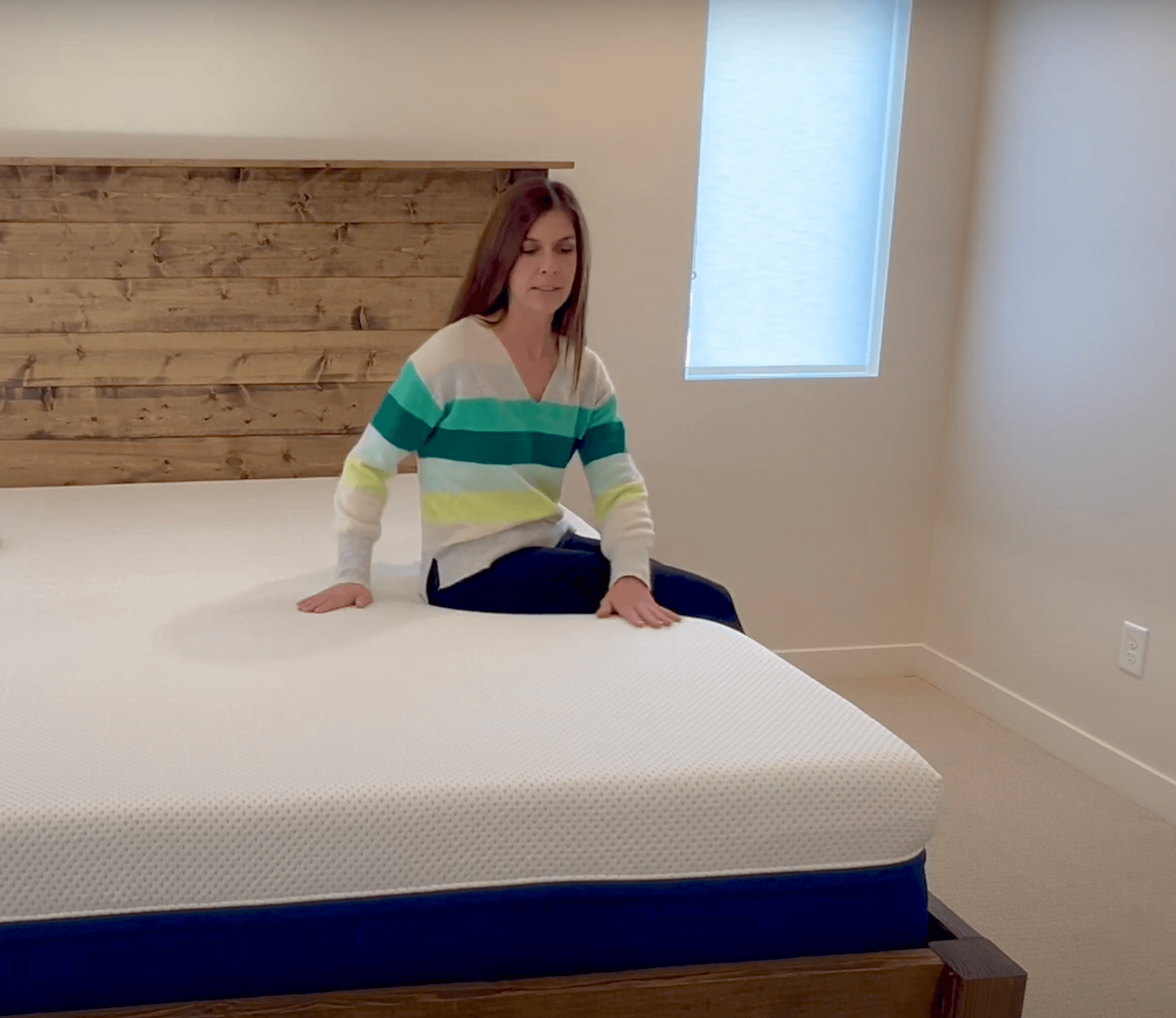


Watch Our Amerisleep AS3 Video Review
The AS3 is Amerisleep’s medium all-foam bed, and it is the one I reached for most across positions during testing. On my side, the Bio-Pur surface gave at my hips and shoulders; on my back, it held my lower back level instead of letting it drop. What set it apart from the softer all-foam beds I compared was recovery: it sprang back quickly when I moved, so changing positions did not mean climbing out of a mold.
At a true medium, it lands between the beds that are too soft to keep the spine level and firmer beds that concentrate weight at the shoulder and hip. That balance, plus its low motion transfer, is why it works for side, back, and combination sleepers, and for couples where one person moves more than the other.
- 9 Value
- 8 Edge Support
- 9 Trial Period
- 9 Response Time
- 10 Motion Transfer
- 10 Cooling & Breathability
I picked the AS3 as the overall winner because it handled the widest range of positions in testing without giving up support. During testing, my hips and shoulders settled into the Bio-Pur surface while my lower back stayed level rather than dropping into the foam, so I was not bridging a gap at the waist the way I did on softer all-foam beds I compared. When I rolled from my side to my back the surface recovered quickly instead of holding a body-shaped dent, which made repositioning easier for a bed in this price range. Motion on the opposite side stayed faint when my partner shifted, so a lighter sleeper sharing the bed is less likely to notice movement.
Best For:
- Combination sleepers who change positions and want the surface to recover quickly
- Back sleepers who want a medium feel that keeps the lumbar area level
- Couples where one partner moves more, given the low motion transfer
Compare Instead:
- Amerisleep AS5 Hybrid if you sleep on your side and want a softer, deeper-cushioning surface
- Saatva Classic if you prefer a responsive coil-on-top feel and multiple firmness choices
On my side, the Bio-Pur top gave at my shoulder and hip while the firmer zone under my torso kept my spine from dipping at the waist. On my back, the surface filled my lower-back curve while holding my midsection level. The medium feel sat between the softer all-foam beds I compared, which let my hips drop too far, and firmer beds that pushed back at the shoulder.
What stood out most was recovery. The Bio-Pur foam sprang back quickly when I rolled over, so I was not fighting a body-shaped dent to reposition, which is not something every all-foam bed manages. The zoned transition changed the feel across the surface, softer under the shoulders and firmer under the torso, so each area met the support it needed.
Motion transfer was among the lowest here: when my partner shifted, the far side barely moved. The surface also felt cooler to the touch than the denser all-foam beds I compared through the first hours. The edge held well enough to sit and get up steadily, though it compressed a little more than the coil hybrids on this list.
The Bio-Pur comfort layer is why the surface contoured at my hips and shoulders without holding a dent when I moved; its faster recovery is what let me reposition instead of climbing out of a mold, which matters for pressure relief and responsiveness. The HIVE transition layer, cut in firmer and softer sections, is what kept my torso level while my shoulders sank in during side testing, so my spine stayed aligned rather than dipping at the waist. The high-density base underneath is what held the whole surface flat with no soft spot at the edge, which is what made sitting on the perimeter to get up feel stable. The foams are CertiPUR-US certified and tested for low VOC emissions.
Pros:
- Response Time (9/10): the Bio-Pur surface recovered quickly when I changed positions, so repositioning did not fight me
- Motion Transfer (10/10): movement on the opposite side stayed faint when my partner shifted
- Cooling & Breathability (10/10): the surface did not warm up as quickly as the denser all-foam beds I compared
Cons:
- Edge Support (8/10): stable overall, but the perimeter compressed more than the coil-based hybrids on this list, so it trails the Zoma Boost for edge firmness
- Value (9/10): priced above basic foam beds; budget shoppers should look at the Vaya Hybrid
- Medium feel is too soft for dedicated stomach sleepers who need a flat, firm surface; consider the Saatva Classic in Firm
Why The Amerisleep AS3 Won
Among the 50+ mattresses I tested for this guide, the AS3 handled the most positions well without losing support: my hips and shoulders settled in while my lower back stayed level, and the surface recovered fast enough to make repositioning easy. Its balance of contouring, steady support, and low motion transfer is what made it the top overall pick for side, back, and combination sleepers.
Watch Our FORM Prime Video Review
If you like the responsive, buoyant feel of a grid mattress but have found most of them wobbly, the FORM Prime is built to fix exactly that. It pairs FORM’s GelGrid™ comfort layer with a reinforcing Integra-Mesh™ layer, so the surface flexes and springs back without the jiggle grid beds are known for. During testing, weights dropped onto it bounced right back, and rolling between positions took no effort at all.
What earns it a spot here is the zoned feel rather than a single firmness. The shoulder zone sits around 4.5 out of 10 while the lumbar zone measures closer to 7, so a side sleeper’s shoulder settles in and finds cushioning while the center of the body stays level and supported. The give felt precise, compressing where I needed it and holding firm where I didn’t.
The GelGrid™ has a distinct, latex-like buoyancy, and paired with the ventilated AeroWeave™ cover it stays neutral-to-cool to the touch instead of warming up under you the way foam-heavy surfaces do. It also arrives made-to-order at full size with free white glove delivery, so there’s no expansion wait and no off-gassing.
One caveat: the FORM Prime comes in a single feel with no plush or firm option, so dedicated stomach sleepers who want a very firm, unyielding surface should test carefully during the trial. Its 14-inch profile also runs tall, calling for deep-pocket sheets and a higher step up into bed.
- 8 Value
- 10 Edge Support
- 10 Trial Period
- 9 Response Time
- 10 Motion Transfer
- 9 Cooling & Breathability
I picked the FORM Prime as the Purple alternative because it delivers the responsive grid feel without the wobble those beds are known for. During testing, weights dropped onto the surface bounced back cleanly at each contact point instead of rippling, and the reinforcing mesh under the grid was the difference: the surface flexed and returned without the unsettled jiggle I felt on other grid beds I compared. The zoned firmness is real rather than nominal: my shoulder settled into the softer top section while the center of my body stayed level, a handoff I could feel when I moved between the two. A jar set on one side barely reacted when I simulated tossing on the other.
Best For:
- Side and combination sleepers who want a buoyant grid feel with a soft shoulder zone
- Couples who want a lively surface that still contains motion
- Shoppers who want a long runway to decide (365-night trial)
Compare Instead:
- Amerisleep Organica if you want a natural, latex-based buoyancy instead of a synthetic grid
- Nolah Evolution if you want a plush pillow-top surface rather than a firm grid
The FORM Prime has a zoned medium feel, roughly 4.5 out of 10 at the shoulder and 7 out of 10 through the lumbar zone, which creates a surface that gives where a side sleeper’s shoulder needs room and firms up where the midsection needs support.
When I first lay down, the standout quality was how the GelGrid™ responded: it flexed instantly and precisely at the contact points, closer to a high-quality latex surface than to traditional foam.
There’s a buoyancy here that holds you up rather than letting you settle in slowly.
For side sleeping, the grid flexed right at my shoulder and hip while my spine stayed neutral.
The give felt targeted rather than general, compressing exactly where I needed it and holding firm where I didn’t, and across several nights on my side I didn’t wake with the shoulder tension that firmer surfaces sometimes leave.
Back sleeping was equally balanced. The ZoneCoil™ 7-Series held my lower back level while the grid conformed to the curve of my spine, and I never felt suspended above the surface or sunk into it.
Stomach sleeping is where preference matters most. The grid adapts naturally enough that my hips didn’t drop dramatically, and the reinforced midsection zone kept me close to flat.
That said, the GelGrid™ flexes by design, and a dedicated stomach sleeper who wants a hard, unyielding surface is the one sleeper who should test carefully during the trial.
Combination sleeping is the mattress’s strongest suit: rolling from back to side to stomach took no effort, the surface adjusted instantly to each new position, and there was none of the quicksand lag that memory foam can create.
Two more things stood out during testing. The edge held firm when I sat at the perimeter with my full weight, thanks to the BaseFlex™ encasement wrapping the coil unit, so getting in and out of bed felt stable rather than precarious.
And the surface stayed neutral-to-cool to the touch across the night. It isn’t the cold shock of a phase-change cover, but it never warmed up under me the way foam-heavy beds tend to after an hour of contact.
The GelGrid comfort layer is what let the surface flex at each contact point and channel air through the open cells, so it cushioned my shoulder without warming up under me the way foam-heavy beds did. The Integra-Mesh woven into the grid is what removed the ripple: it held the grid steady so the surface returned cleanly instead of jiggling when I moved, which is why the responsiveness felt controlled rather than loose. The ContourFlex transition foam is what smoothed the handoff to the coils so the bed did not feel springy over foamy. The ZoneCoil support unit kept my torso level while letting my shoulder settle, and the BaseFlex encasement is what gave the edge its firm, defined feel when I sat on it. Foams are CertiPUR-US certified and tested for low VOC emissions; the bed also carries GREENGUARD Gold and OEKO-TEX Standard 100.
Pros:
- Motion Transfer (10/10): a jar on one side barely reacted when I simulated tossing on the other
- Edge Support (10/10): the BaseFlex encasement kept the perimeter firm when I sat on it
- Response Time (9/10): dropped weights bounced back cleanly with no surface ripple
Cons:
- Single feel only: dedicated stomach sleepers who want a very firm, unyielding surface should test carefully during the trial, or consider the Saatva Classic in Firm
- Value (8/10): the made-to-order grid build costs more than the foam picks here
- 14-inch profile runs tall and needs deep-pocket sheets
During side testing, the GelGrid flexed at my shoulder and hip while my spine stayed level, and the reinforced grid returned without the ripple other grid beds leave. That precise, controlled give and the effortless repositioning make it a strong fit for side and combination sleepers who want a buoyant surface with a soft shoulder zone.
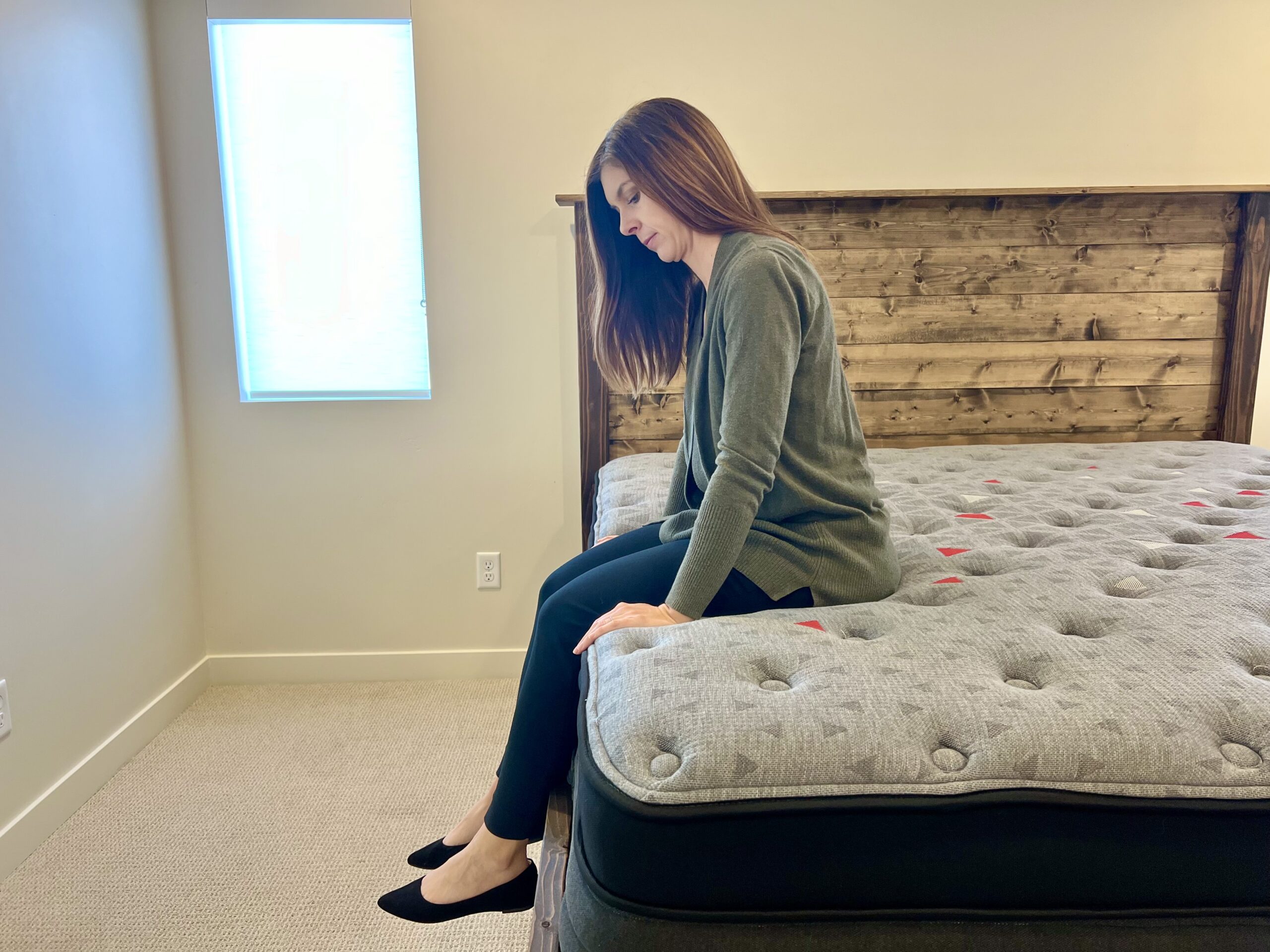
Watch Our Zoma Boost Video Review
The Zoma Boost is Zoma’s luxury hybrid, a medium-firm build with a graphite-infused comfort layer over a zoned coil core. During testing it stood out for pairing a quick-recovering surface with the firmest edge on this list, so it cushions pressure points without the slow, held-in-place feel of dense foam and stays stable when you sit on the perimeter to get up.
At a medium-firm 5.5, it leans slightly firmer than the AS3, which suits combination and back sleepers who want cushioning without sinking. Warm sleepers are the other clear fit: the graphite foam and coil airflow kept the surface cooler to the touch than the all-foam beds I compared.
- 10 Value
- 10 Edge Support
- 9 Trial Period
- 9 Response Time
- 10 Motion Transfer
- 9 Cooling & Breathability
I picked the Zoma Boost as the luxury pick because it pairs a lively, quick-recovering surface with the strongest edge on this list. During testing, the graphite-infused foam contoured at my hips and shoulders but recovered fast when I shifted, so I never felt held in one spot, and when I sat on the perimeter to put on shoes the edge compressed very little and stayed stable. The surface also felt cooler to the touch on first contact than the denser all-foam beds I compared, and it did not warm up as quickly through the first hours. Motion on the opposite side stayed faint when my partner moved.
Best For:
- Combination and back sleepers who want a medium-firm feel that recovers quickly
- Sleepers who sit on the edge to get in and out of bed and want a firm perimeter
- Warm sleepers who run hot on dense foam
Compare Instead:
- Amerisleep AS3 if you want a softer medium feel with more give at the shoulders
- Amerisleep AS6 Black Series if cooling is your top priority and you want a taller luxury build
The graphite-infused foam contoured at my hips and shoulders on contact, but it did not hold me in place the way slow, dense foam does: it recovered quickly when I shifted, so repositioning stayed easy. At a medium-firm feel, it cushioned pressure points while keeping my spine level on my back and my hips from dropping on my side.
The surface felt cool to the touch on first contact and, through the first hours of testing, did not warm up as fast as the all-foam beds I compared. That came from the graphite foam and the coil core moving air through the base rather than trapping it.
Edge support was the strongest on this list: when I sat on the perimeter to put on shoes, it compressed very little and stayed stable. Motion transfer stayed low, so a partner’s movement barely reached the far side. The Reactiv layer under the comfort foam is what kept the response quick while still containing that motion.
The graphite-infused memory foam is what made the surface feel cool to the touch on first contact and recover quickly when I shifted, so I got contouring without the slow, held-in-place feel of denser foam. The quilted gel layer above it added surface give while its channels kept air moving, which is part of why the top did not warm up as fast as the all-foam beds I compared. The Reactiv layer underneath is what let the bed respond quickly at each position change while keeping motion from carrying across to the other side. The zoned coil unit held my torso level and gave the perimeter its firm edge, which is what made getting on and off the bed feel stable. Foams are CertiPUR-US certified and tested for low VOC emissions.
Pros:
- Edge Support (10/10): the perimeter compressed very little when I sat on it to get up
- Value (10/10): strong performance for a luxury-tier price
- Cooling & Breathability (9/10): felt cool to the touch on first contact and did not warm up as fast as the denser foam beds I compared
Cons:
- Response Time (9/10): recovers a beat slower than the coil-forward FORM Prime, so combination sleepers who reposition constantly may notice slightly more lag
- Taller 15-inch build is heavier and needs deep-pocket sheets (confirm profile vs Zoma PDP)
- Medium-firm feel is firmer than some side sleepers want; consider the Amerisleep AS5 Hybrid for a softer surface
The surface felt cool to the touch on first contact and stayed less heat-retentive through the first hours than the denser foam beds I compared, and the edge held firm when I sat on it. That makes it a good fit for warm combination sleepers who want a medium-firm feel and a stable perimeter.

Watch Our Vaya Hybrid Video Review
The Vaya Hybrid is the budget pick, a medium memory-foam hybrid pairing a proprietary comfort foam with a pocketed coil core. What earned it the spot is how much of the pricier hybrids’ balance it reproduces: during testing it cushioned my hips and shoulders while the coils kept my spine level, without the gimmick layers that drive up cost elsewhere.
It keeps things simple rather than loading on features, and that shows in its value and edge-support scores. The one tradeoff is motion transfer, which trails the pricier hybrids here, so a light sleeper sharing the bed should weigh that against the price.
- 10 Value
- 10 Edge Support
- 9 Trial Period
- 10 Response Time
- 7 Motion Transfer
- 9 Cooling & Breathability
I picked the Vaya Hybrid as the value pick because it delivered the balance of cushioning and support I expect from beds that cost hundreds more. During testing, the Vaya Comfort Foam cushioned my hips and shoulders on my side without the slow, sink-and-hold feel of dense memory foam, and the pocketed coils underneath kept my torso from dropping so my spine stayed level. When I sat on the edge to get up, the perimeter held firm rather than caving, and the surface recovered quickly enough that rolling to a new position did not fight me.
Best For:
- Budget shoppers who still want a coil-supported hybrid rather than all-foam
- Combination sleepers who want the surface to recover quickly
- Back and side sleepers who want medium cushioning with level support
Compare Instead:
- Zoma Start if you want an all-foam memory foam feel for even less
- Amerisleep AS3 if you want more refined contouring and can spend more
The Vaya Hybrid feels more substantial than its price suggests. When I first lay down, the Vaya Comfort Foam gave at my hips and shoulders quickly rather than slowly, so I got cushioning without the stuck-in-place feel some memory foam leaves. Underneath, the pocketed coils pushed back enough to keep me from sinking too far, which kept my waist supported on my back.
On my side, my shoulder settled into the top layer while my hips stayed level, and I did not wake with the shoulder tension firmer beds sometimes leave. On my back, the coils held my midsection up while the foam filled the curve of my lower back. Combination sleeping was easy: the surface recovered fast when I rolled, with none of the lag that slows repositioning on denser foam.
The coil layer also kept air moving through the base, so the surface felt cooler to the touch than the all-foam budget beds I compared. Motion transfer was the one area where it trailed the pricier hybrids here, with a 7/10 sub-score: a restless partner is a little more noticeable than on the AS3. The edge held firm when I sat on it, which makes getting in and out steadier for a bed at this price.
The Vaya Comfort Foam is what cushioned my hips and shoulders while recovering quickly, so I got pressure relief without the held-in-place feel of denser memory foam, which matters for pressure relief and responsiveness. Its open structure is also what let air move rather than trapping it, which is why the top felt cooler to the touch than the all-foam budget beds I compared. The pocketed coil layer is what kept my torso from sinking and held my spine level on my back, and because each coil moves on its own it is also what carried most of the support without spreading motion across the bed. The high-density base is what held the surface flat with no soft spot at the perimeter, which is what made sitting on the edge to get up feel stable. Foams are CertiPUR-US certified and tested for low VOC emissions.
Pros:
- Value (10/10): coil-supported hybrid performance at an all-foam price
- Edge Support (10/10): the perimeter held firm when I sat on it to get up
- Response Time (10/10): the surface recovered quickly, so repositioning did not fight me
Cons:
- Motion Transfer (7/10): the lowest sub-score here; a restless partner is more noticeable than on the AS3, so light sleepers who share the bed should weigh that
- Single medium feel: too soft for dedicated stomach sleepers who need a flat, firm surface; consider the Saatva Classic in Firm
- 14-inch profile needs deep-pocket sheets
On my side, the Vaya Comfort Foam cushioned my shoulder while the coils held my hips level, and the surface recovered fast when I rolled to my back. That mix of quick recovery and firm edge at a low price makes it a strong fit for budget shoppers and combination sleepers who still want coil support.
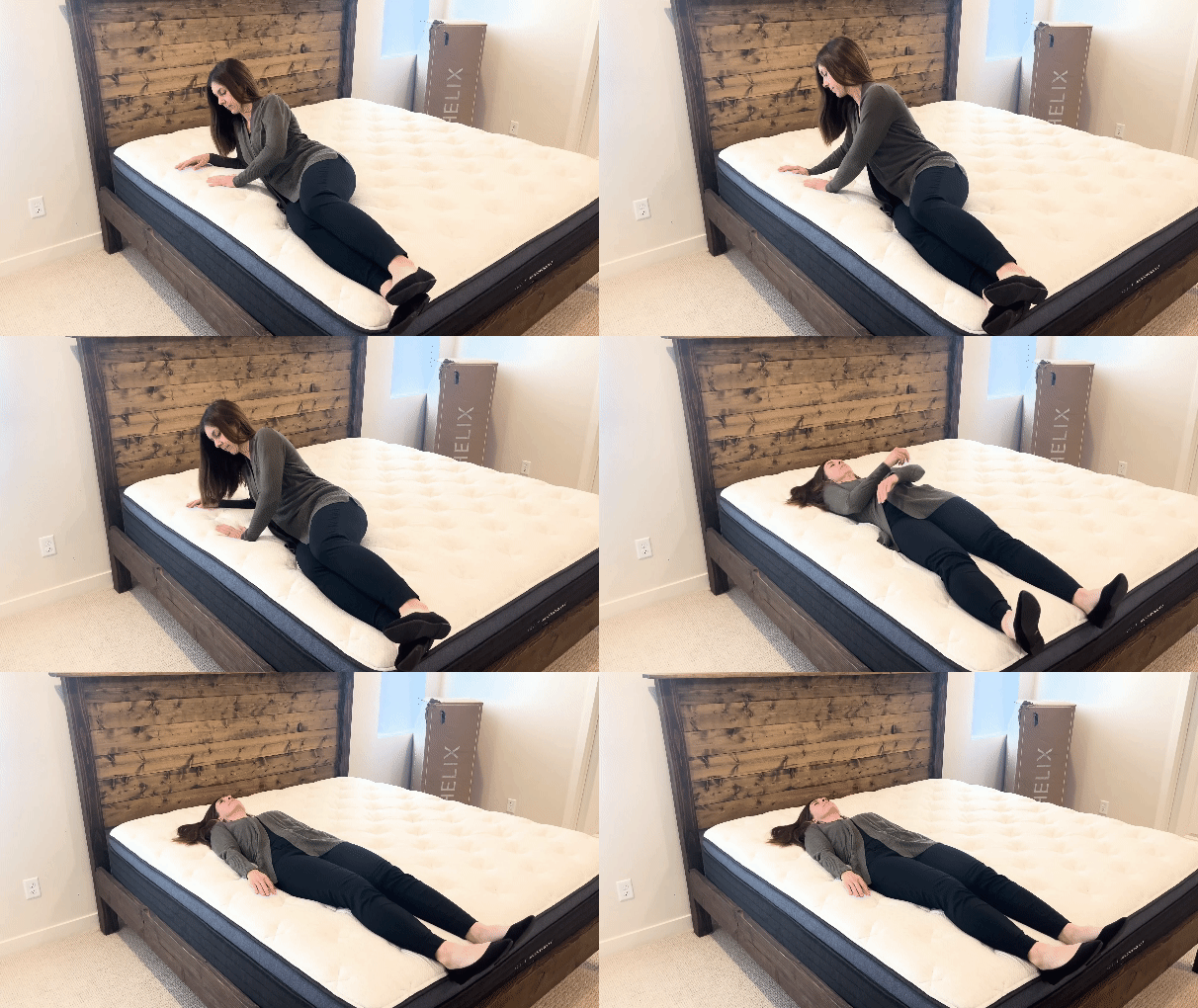
Watch Our Helix Midnight Luxe Video Review
The Helix Midnight Luxe is a medium memory-foam hybrid built around zoned coils, and it earned the side-sleeper spot for how it handles the shoulder-and-hip balance that trips up most beds. During testing, the softer shoulder zone let my shoulder settle while firmer coils under the hips kept my spine straight, a harder balance to strike than a single-firmness bed usually manages.
It ships in one medium feel, with optional cover and lumbar upgrades rather than firmness choices. That makes it a strong fit for side and combination sleepers, and less so for stomach-dominant sleepers who want a firm, flat surface.
- 7 Value
- 10 Edge Support
- 9 Trial Period
- 9 Response Time
- 10 Motion Transfer
- 9 Cooling & Breathability
I picked the Midnight Luxe as the side-sleeper pick because its zoned coil layout cushioned my shoulder while holding my hips level. During testing on my side, my shoulder sank into the softer zone while my hips met firmer support underneath, so my spine stayed straight rather than dipping at the waist, and I did not wake with the shoulder tension that firmer beds sometimes left. The quilted top added surface give without letting me bottom out, and when I sat on the edge the perimeter held firm enough to make getting up feel stable. Motion on the far side stayed faint when my partner shifted.
Best For:
- Side sleepers who need shoulder cushioning with hip-level support
- Combination sleepers who mostly sleep on their side
- Sleepers who want a firm, stable edge
Compare Instead:
- Saatva Classic if you want a responsive innerspring feel with three firmness choices
- Amerisleep AS5 Hybrid if you want a softer surface with deeper shoulder cushioning
On my side, my shoulder settled into the softer top zone while firmer coils under my hips held them up, so my spine stayed straight rather than dipping at the waist. Across several nights on my side I did not wake with the shoulder tension that firmer surfaces sometimes leave.
The quilted top added surface give without letting me bottom out, and the memory foam beneath cushioned gradually while the transition layer kept me from sinking too far. The zoned coils are what made the fit work: softer under the shoulder, firmer under the hips and lumbar. On my back, the lumbar zone held my lower back level.
Edge support was firm: the reinforced perimeter held when I sat to get up. Motion transfer stayed low, so a partner’s movement barely reached my side. With the optional GlacioTex cover the surface felt cool to the touch on contact; the standard TENCEL cover is breathable rather than cool. The single medium feel is the tradeoff for stomach-dominant sleepers who want a firm, flat surface.
The quilted top is what added immediate surface give at my shoulder and hip without letting me bottom out, which is what kept side sleeping comfortable across several nights. The memory foam comfort layers are what let my shoulder settle into the surface while the transition foam below kept me from sinking too far, so my spine stayed level rather than dipping. The zoned coil unit is the core of the fit: softer coils under the shoulder let it drop in while firmer coils under the hips held them up, which is what kept my waist supported on my side. The reinforced perimeter coils are what gave the edge its stable feel when I sat to get up. The optional GlacioTex cover felt cool to the touch on contact for sleepers who want that; the standard TENCEL cover is breathable. Foams are CertiPUR-US certified and tested for low VOC emissions.
Pros:
- Edge Support (10/10): the reinforced perimeter held firm when I sat to get in and out of bed
- Motion Transfer (10/10): movement on the far side stayed faint when my partner shifted
- Zoned coils cushioned my shoulder while holding my hips level during side testing
Cons:
- Value (7/10): the lowest value sub-score on this list; the cover and lumbar add-ons raise the price further
- 13.5-inch profile may not fit low-profile frames
- Single medium feel: stomach sleepers who want a firm, flat surface should consider the Saatva Classic in Firm
On my side, my shoulder settled into the softer zone while firmer coils held my hips level, so my spine stayed straight and I woke without shoulder tension. That zoned handoff makes it a strong fit for side sleepers who need shoulder cushioning with hip support.

The Saatva Classic is a luxury innerspring hybrid with a Euro pillow top over a dual-coil system, offered in three firmness levels. It earned the innerspring spot for delivering a responsive, on-top coil feel while still cushioning pressure points, which cheaper spring beds rarely manage.
During testing, the pillow top cushioned my hips and shoulders while the center-third lumbar reinforcement kept my lower back level on my back. The three firmness choices let you match support to your main position, which is why I chose this over a single-firmness model. The firm edge and coil airflow round out a bed for sleepers who want spring responsiveness without the pressure points.
- 7 Value
- 10 Edge Support
- 10 Trial Period
- 10 Response Time
- 9 Motion Transfer
- 9 Cooling & Breathability
I picked the Saatva Classic as the innerspring pick because it gives you a responsive, on-top coil feel while still cushioning pressure points, and because the three firmness choices let me match support to different positions. During testing, the Euro pillow top cushioned my hips and shoulders on my side while the coils underneath kept me sleeping on the surface rather than sinking into it. The center-third lumbar reinforcement was noticeable on my back: my lower back met support rather than dropping into a gap. When I sat on the edge, the perimeter stayed firm, and the surface responded quickly when I changed positions.
Best For:
- Sleepers who want a responsive innerspring feel with pressure relief on top
- Shoppers who want to choose firmness (Plush Soft, Luxury Firm, Firm)
- Back sleepers who want reinforced lumbar support
Compare Instead:
- Helix Midnight Luxe if you mainly side sleep and want a zoned foam-over-coil feel
- Nolah Evolution if you want a plush pillow-top surface with more foam cushioning
The Saatva Classic feels like a coil bed that finally cushions pressure points. When I first lay down, the Euro pillow top gave at my hips and shoulders right away, but I stayed on top of the surface instead of sinking, which is the innerspring feel coil sleepers want. The smaller coils in the upper layer adjusted quickly to my contours while the tempered support coils underneath held my weight.
On my back, the center-third lumbar reinforcement was the standout: my lower back met firmer support rather than dropping, so my midsection stayed level. On my side (in the Luxury Firm I tested), my shoulder and hip found give while my spine stayed straight. The bounce made repositioning easy, with none of the stuck feel foam can create.
Air moved freely between the coils, so the surface felt cooler to the touch than the foam-heavy beds I compared. Edge support was among the firmest on this list: the perimeter held when I sat to get up. Motion transfer was better than I expected for a coil bed thanks to the wrapped coils, though a very restless partner is slightly more noticeable than on the all-foam picks. The three firmness options genuinely change the feel, so match the choice to your main position: Plush Soft for side-dominant, Firm for back and stomach.
The organic cotton cover is what kept the surface breathable so it felt cooler to the touch than the foam-heavy beds I compared, which matters for cooling. The Euro pillow top is what cushioned my hips and shoulders on contact so I got pressure relief without sinking, and the memory foam set into the center third is what reinforced my lower back on my back so my midsection stayed level, which matters for spinal alignment. The dual-coil layer is the core of the feel: the smaller wrapped coils on top are what let the surface adjust quickly to my contours while the tempered support coils below are what held my weight and kept me on top of the bed, which matters for responsiveness and support. The foam-reinforced perimeter is what gave the edge its firm feel when I sat on it. A natural thistle-pulp barrier meets fire-safety requirements without added chemical flame retardants.
Pros:
- Edge Support (10/10): the perimeter held firm when I sat on it to get up
- Trial Period (10/10) and Response Time (10/10): a 365-night trial plus a quick, on-top coil feel that made repositioning easy
- Lumbar reinforcement in the center third kept my lower back level on my back
Cons:
- Value (7/10): priced above budget hybrids, and white glove delivery adds a scheduling step
- Motion Transfer (9/10): strong for a coil bed, but a very restless partner is slightly more noticeable than on the all-foam picks here
- The coil-forward, on-top feel is not for shoppers who want a deep memory-foam hug; consider the Amerisleep AS5 Hybrid
On my back, the reinforced center third kept my lower back level while the pillow top cushioned my hips and shoulders, and the coils kept me on top of the surface rather than sinking in. With three firmness choices and a firm edge, it fits sleepers who want a responsive innerspring feel matched to their main position.

Watch Our Nolah Evolution Video Review
The Nolah Evolution is a pillow-top memory-foam hybrid with zoned AirFoam over a tri-zone coil unit, offered in three firmness levels with an optional cool-to-the-touch pillow top. It earned the pillow-top spot for cushioning like a plush top without letting the spine drop, which is where most pillow tops fail.
During testing, the hole-punched shoulder zone let my shoulder settle while the firmer lumbar zone held my waist level, and the AirFoam recovered faster than traditional memory foam so repositioning did not lag. With the GlacioTex top the surface felt cool to the touch on contact, which suits warm sleepers who still want a plush surface.
- 10 Value
- 10 Edge Support
- 9 Trial Period
- 9 Response Time
- 10 Motion Transfer
- 9 Cooling & Breathability
I picked the Nolah Evolution as the pillow-top pick because it delivers plush surface cushioning without letting the spine drop, and because the zoned foam does real work. During testing, the quilted top cushioned my hips and shoulders on my side while the hole-punched shoulder zone let my shoulder settle and the firmer lumbar zone kept my waist level. The AirFoam layer recovered faster than traditional memory foam, so repositioning did not lag. With the GlacioTex pillow top, the surface felt cool to the touch on contact rather than neutral. When I sat on the edge, the reinforced perimeter coils held firm.
Best For:
- Side and combination sleepers who want a plush surface that still supports the spine
- Sleepers who want to choose firmness (Plush, Luxury Firm, Firm)
- Warm sleepers who want a cool-to-the-touch pillow-top option
Compare Instead:
- Saatva Classic if you want a responsive innerspring feel instead of a foam-over-coil pillow top
- Amerisleep AS5 Hybrid if you want a softer, deeper cushion for side sleeping
The Nolah Evolution feels plush on top without the spine-dropping sink that sinks most pillow tops. With the GlacioTex pillow top, the first thing I noticed was a cool-to-the-touch surface on contact. Under it, the quilted foam and zoned AirFoam cushioned my hips and shoulders quickly.
On my side, the hole-punched shoulder zone let my shoulder settle in while the firmer lumbar zone held my waist level, so my spine stayed straight rather than dipping. On my back, the center zone kept my midsection up while the surface filled my lower-back curve. The AirFoam recovered faster than traditional memory foam, so changing positions did not leave me climbing out of a dent.
The three firmness options create clearly different feels: Plush for side-dominant sleepers who want the softest surface, Luxury Firm as the balanced middle, Firm for back and stomach sleepers who want more pushback, all keeping the same zoned support. Edge support was strong for a pillow top: the reinforced perimeter coils held when I sat to get up. Motion transfer stayed low across the wrapped coils, so a partner’s movement barely reached my side.
The optional GlacioTex pillow top is what made the surface feel cool to the touch on contact rather than neutral, which matters for cooling. The quilted comfort foam is what cushioned my hips and shoulders the moment I lay down, which matters for pressure relief. The zoned AirFoam is the core of the fit: hole-punched softer at the shoulders and firmer at the lumbar, it is what let my shoulder settle while holding my waist level so my spine stayed aligned, and its faster recovery is what kept repositioning from lagging, which matters for responsiveness. The breathable gusset around the perimeter is what let heat escape the foam layers. The Tri-Zone coil unit is what held my torso level and gave deep support, and its reinforced perimeter coils are what kept the edge firm when I sat on it. Foams are CertiPUR-US certified and tested for low VOC emissions; the mattress also carries GREENGUARD Gold.
Pros:
- Value (10/10) and Edge Support (10/10): premium pillow-top build with a firm perimeter that held when I sat on it
- Zoned AirFoam let my shoulder settle while keeping my waist level on my side
- With the GlacioTex top, the surface felt cool to the touch on contact
Cons:
- The GlacioTex pillow top is a paid upgrade (adds to the base price), so the cool-touch surface is not standard
- 14-to-15-inch profile is tall and heavy; confirm it fits your frame and needs deep-pocket sheets
- The plushest (Plush) build is too soft for stomach sleepers who need a flat surface; choose Firm, or the Saatva Classic in Firm
On my side, the zoned AirFoam let my shoulder settle while the firmer lumbar zone kept my waist level, and with the GlacioTex top the surface felt cool to the touch on contact. That plush-but-supported feel with a firm edge makes it a strong fit for side and combination sleepers who want a pillow top that still holds the spine.
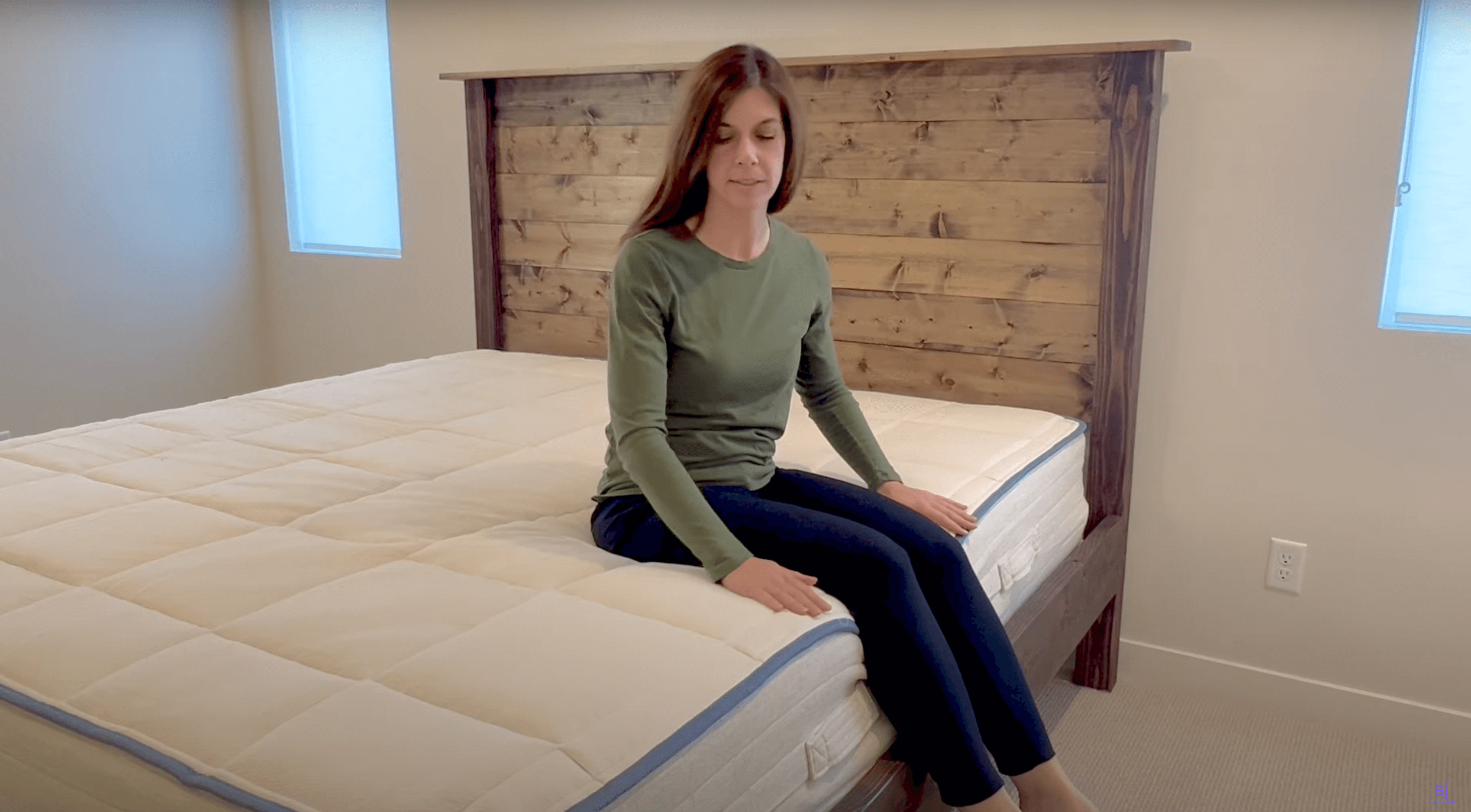
Watch Our Amerisleep Organica Mattress Video Review
The Amerisleep Organica is a natural latex hybrid, pairing Talalay latex and organic wool and cotton over a pocketed coil core, in Medium and Plush builds. It earned the latex spot for delivering a buoyant, breathable latex feel backed by real material certifications.
During testing, the latex contoured at my hips and shoulders but pushed back quickly, holding me on top of the surface and recovering instantly when I switched sides. The natural fibers let air move, so the surface felt cooler to the touch than the memory-foam beds I compared. It suits sleepers who prefer a responsive latex feel to a foam hug, and warm sleepers who run hot on foam.
- 9 Value
- 8 Edge Support
- 9 Trial Period
- 10 Response Time
- 9 Motion Transfer
- 9 Cooling & Breathability
I picked the Amerisleep Organica as the latex pick because it gives you a buoyant, breathable latex feel with the certifications to back up the natural materials. During testing, the Talalay latex contoured at my hips and shoulders but held me on top of the surface rather than letting me sink, and it recovered instantly when I shifted, so repositioning took no effort. The surface felt cooler to the touch than the memory-foam beds I compared, which fits sleepers who run warm on foam. When I sat on the edge, the coil perimeter stayed stable.
Best For:
- Sleepers who want a natural latex buoyancy over a synthetic foam hug
- Warm sleepers who run hot on memory foam
- Combination sleepers who want an instant-recovery surface
Compare Instead:
- PlushBeds Signature Bliss if you want a fully organic-certified build with more surface plushness
- FORM Prime if you want a similar buoyant feel from a synthetic grid with a longer trial
The Amerisleep Organica feels buoyant in a way foam beds do not. When I first lay down, the Talalay latex gave at my hips and shoulders but pushed back quickly, holding me on top of the surface rather than letting me settle in slowly.
On my side, the latex contoured to my shoulder and hip while keeping my spine level, and its instant recovery meant that switching sides took no effort, with none of the lag memory foam creates. On my back, the surface filled my lower-back curve while the coils held my midsection up. The Medium model balances give and support well for most positions; the Plush model, with its added latex topper, gives side-dominant sleepers a softer surface without losing the coil support underneath.
The natural latex, wool, and cotton let air move freely, so the surface felt cooler to the touch than the memory-foam beds I compared and did not warm up as quickly through the first hours. Motion transfer stayed low across the wrapped coils, so a partner’s movement barely carried to my side. Edge support was solid: the reinforced coil perimeter held when I sat to get up.
The organic cotton cover and wool layer are what kept air moving so the surface felt cooler to the touch than the memory-foam beds I compared, and the wool also serves as the natural fire barrier, which matters for cooling. The Talalay latex is the core of the feel: its open cell structure is what let it contour at my hips and shoulders while pushing back fast, so I stayed on top of the surface and repositioning took no effort, which matters for pressure relief and responsiveness. The Plush model’s added latex topper is what gives side-dominant sleepers more surface give without losing support. The pocketed coil core is what held my torso level and, because each coil moves on its own, is what carried support without spreading motion across the bed. The reinforced coil perimeter is what kept the edge stable when I sat on it. The latex carries OEKO-TEX Standard 100, Rainforest Alliance, and eco-INSTITUT certifications, and the wool carries OEKO-TEX Standard 100; layers are joined by tufting rather than adhesives.
Pros:
- Response Time (10/10): the latex recovered instantly, so switching positions took no effort
- Cooling & Breathability (9/10): the surface felt cooler to the touch than the memory-foam beds I compared
- Certified natural materials (OEKO-TEX Standard 100, Rainforest Alliance, eco-INSTITUT on the latex) joined by tufting rather than adhesives
Cons:
- Edge Support (8/10): stable, but the perimeter compressed a little more than the strongest coil hybrids here, such as the Zoma Boost
- 13-to-16-inch profile is tall and heavier than synthetic foam beds, so confirm it fits your frame
- The buoyant, on-top latex feel is not for sleepers who want a deep foam hug; consider the Amerisleep AS5 Hybrid
On my side, the Talalay latex contoured at my shoulder and hip while keeping my spine level, and it recovered instantly when I switched sides. That buoyant, breathable feel with certified natural materials makes it a strong fit for warm sleepers and combination sleepers who prefer latex to a foam hug.

Watch Our Amerisleep AS6 Black Series Video Review
The AS6 Black Series is Amerisleep’s cooling-focused hybrid, layering a CryoCool cover, a titanium-infused foam layer, and cooling bands over Bio-Pur foam and a coil core, in three firmness levels. It earned the cooling spot for the coolest-feeling surface on this list.
During testing, the cover felt cool against my skin on contact and the surface did not warm up as fast as the denser all-foam beds I compared through the first hours. Underneath, the Bio-Pur layer cushioned my hips and shoulders while the coil core kept my torso level. Warm sleepers who still want contouring and a firmness choice are the clear fit.
- 9 Value
- 9 Edge Support
- 9 Trial Period
- 9 Response Time
- 10 Motion Transfer
- 10 Cooling & Breathability
I picked the AS6 Black Series as the cooling pick because it felt cool to the touch on first contact and did not warm up as quickly as the all-foam beds I compared through the first hours of testing. When I first lay down the cover felt cool against my skin rather than neutral, and after extended contact the surface stayed less heat-retentive than the denser foam models in the same session. Underneath, the Bio-Pur layer contoured at my hips and shoulders while the coil core kept my torso from sinking, and the surface recovered quickly when I changed positions. When my partner moved, the opposite side barely registered it.
Best For:
- Warm sleepers who want the coolest-feeling surface on this list
- Combination sleepers who want cushioning plus quick recovery
- Sleepers who want a firmness choice (Plush Soft, Luxury Firm, Firm)
Compare Instead:
- Zoma Boost if you want strong cooling in a shorter, more affordable luxury build
- Amerisleep AS3 if you do not sleep especially hot and want the same contouring for less
The CryoCool cover felt cool against my skin the moment I lay down rather than neutral like a standard cover, and through the first hours the surface stayed less heat-retentive than the denser all-foam beds I compared in the same session. That cool-touch surface is the reason it earned the cooling pick.
The Bio-Pur foam contoured at my hips and shoulders while the coil core kept my torso from sinking, and the titanium-infused layer kept the foam responsive, so I could reposition without fighting the surface. On my side, my shoulder settled in while my spine stayed level; on my back, the coils held my midsection up.
The three firmness options change the feel while keeping the same cooling build: Plush Soft cushions deepest for side sleepers, Luxury Firm balances, and Firm adds pushback for back and stomach sleepers. Motion transfer was among the lowest on this list, so a partner’s movement barely registered. Edge support held firm when I sat on the perimeter. The Plush Soft option specifically runs too soft for stomach sleepers who need a flat surface.
The CryoCool cover is what made the surface feel cool against my skin the moment I lay down, rather than neutral like a standard cover. Beneath it, the titanium-infused TitanAir layer is what helped the top stay less heat-retentive through the first hours by moving heat out of the comfort layer, and it also kept the foam responsive so I could reposition without fighting the surface. The ArcticWave bands are what the build uses to hold that cooler feel through the torso and hip area during testing. The Bio-Pur layer is what contoured at my hips and shoulders, and the Affinity transition foam kept me from sinking to the coils. The PrecisionCoil core is what held my torso level and let air move through the base, which is part of why the surface did not warm up as fast as the all-foam beds I compared. Foams are CertiPUR-US certified and tested for low VOC emissions; the mattress also carries GREENGUARD Gold and OEKO-TEX Standard 100.
Pros:
- Cooling & Breathability (10/10): felt cool to the touch on contact and stayed less heat-retentive than the all-foam beds I compared through the first hours
- Motion Transfer (10/10): the opposite side barely registered movement when my partner shifted
- Firmness choice (Plush Soft, Luxury Firm, Firm) lets you match the same cooling build to different positions
Cons:
- Value (9/10) and premium price: the cooling stack costs more; the Zoma Boost delivers strong cooling for less
- 14-inch profile is heavy and needs deep-pocket sheets
- The Plush Soft option specifically is too soft for stomach sleepers who need a flat surface; choose Luxury Firm or Firm, or the Saatva Classic in Firm
The cover felt cool against my skin on contact and the surface did not warm up as fast as the all-foam beds I compared, while the Bio-Pur layer cushioned my hips and shoulders. That combination fits warm sleepers who still want contouring and a firmness choice.
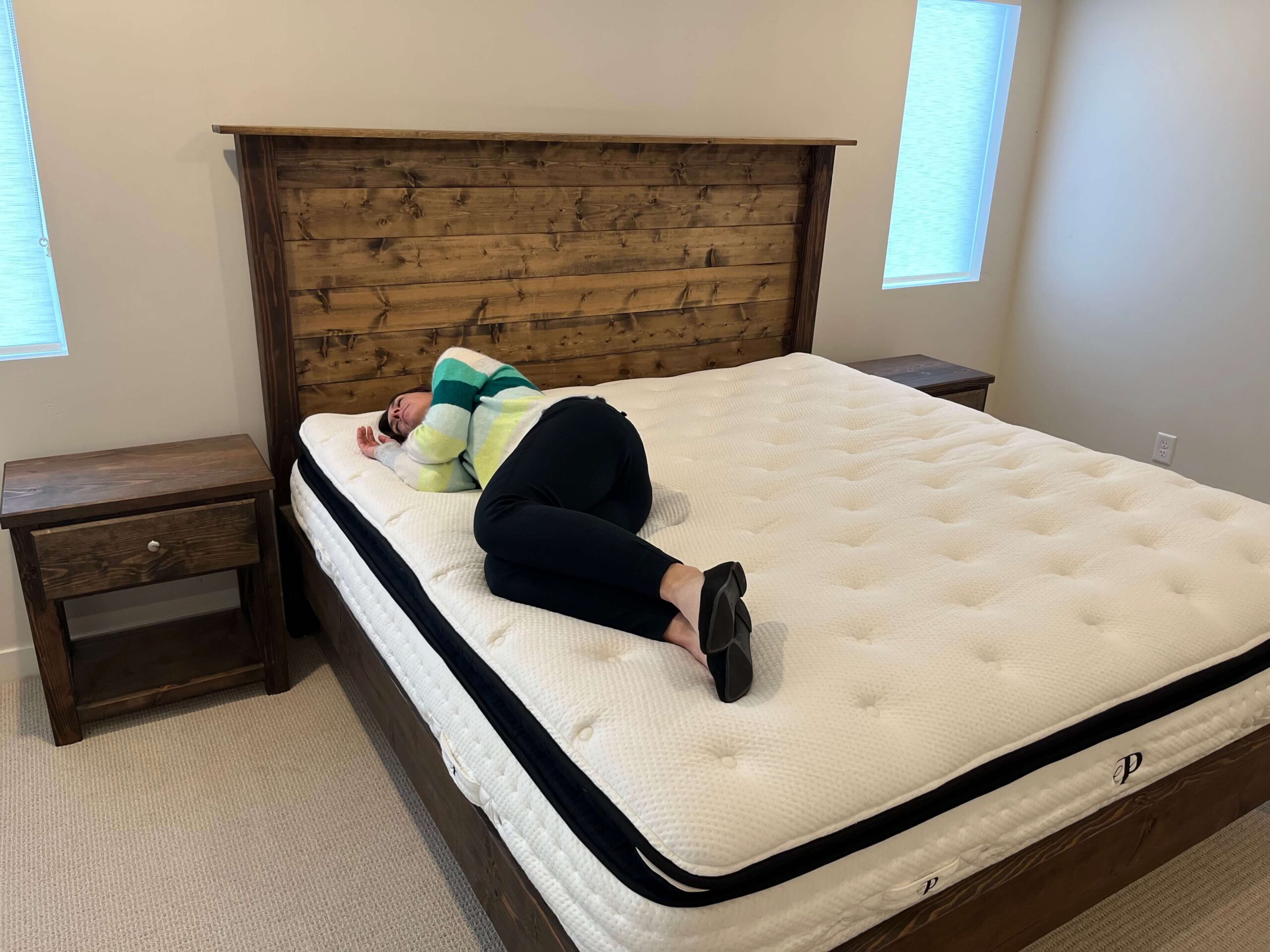
Watch Our PlushBeds Signature Bliss Video Review
The PlushBeds Signature Bliss is a certified-organic latex hybrid, with organic cotton, wool, cashmere, and silk over GOLS-certified Dunlop latex and a 5-zone coil core. It earned the organic spot because every layer carries a real certification and the build still performs rather than trading comfort for credentials.
During testing, the latex cushioned my hips and shoulders while the zoned coils held my torso firmer, keeping my spine level, and the natural fibers kept the surface cooler to the touch than the synthetic-foam beds I compared. It suits sleepers who want a fully certified organic build without giving up zoned support, and warm sleepers who want a naturally breathable surface.
- 9 Value
- 10 Edge Support
- 10 Trial Period
- 10 Response Time
- 9 Motion Transfer
- 9 Cooling & Breathability
I picked the PlushBeds Signature Bliss as the organic pick because every layer carries a real certification and the build still performs. During testing, the organic Dunlop latex over the natural-fiber comfort layers cushioned my hips and shoulders while keeping me on top of the surface, and the 5-zone coil unit held my torso firmer while letting my shoulders and hips settle. The wool and latex let air move, so the surface felt cooler to the touch than the synthetic-foam beds I compared. When I sat on the edge, the coil perimeter held firm.
Best For:
- Sleepers who want a fully certified organic build (GOLS latex, GOTS cotton and wool)
- Warm sleepers who want a naturally breathable surface
- Back and combination sleepers who want zoned coil support with latex cushioning
Compare Instead:
- Amerisleep Organica if you want a similar natural latex feel at a lower entry price
- Nolah Evolution if you prioritize a plush pillow-top surface over organic certification
The Signature Bliss feels plush up top and supported underneath. When I first lay down, the natural-fiber comfort layers and organic Dunlop latex gave a soft, gentle surface, but the coils kept me from sinking through it.
On my side, the latex cushioned my shoulder and hip while the 5-zone coils held my waist level, so my spine stayed straight. On my back, the center zone held my midsection firmer while the surface filled my lower-back curve. The Medium option is the more cushioning of the two; the Medium-Firm adds pushback for back sleepers who want more support, both keeping the same latex-on-coil structure.
The wool naturally moves moisture and the latex lets air flow, so the surface felt cooler to the touch than the synthetic-foam beds I compared. The latex recovered quickly when I shifted, so repositioning did not lag. Motion transfer stayed low across the wrapped coils, and the reinforced perimeter held firm when I sat on the edge to get up.
The GOTS-certified organic cotton, wool, cashmere, and silk layers are what created the soft surface and, because wool moves moisture and breathes, are what helped the surface feel cooler to the touch than the synthetic-foam beds I compared, which matters for cooling. The wool also serves as the natural fire barrier. The 3-inch GOLS-certified organic Dunlop latex is what cushioned my hips and shoulders while holding me on top of the surface, and its quick recovery is what kept repositioning from lagging, which matters for pressure relief and responsiveness. The 5-zone pocketed coil core is what held my torso firmer while letting my shoulders and hips settle, so my spine stayed level, which matters for spinal alignment, and because each coil moves on its own it is what carried support without spreading motion. The reinforced perimeter is what kept the edge firm when I sat on it. Certifications include GOLS, GOTS, GREENGUARD Gold, eco-INSTITUT, and Control Union; layers are tufted rather than glued.
Pros:
- Edge Support (10/10): the reinforced perimeter held firm when I sat on it to get up
- Response Time (10/10): the latex recovered quickly, so repositioning did not lag
- Fully certified organic build (GOLS, GOTS, GREENGUARD Gold, eco-INSTITUT, Control Union) with layers tufted rather than glued
Cons:
- Value (9/10): the certified organic materials carry a premium price
- Heavier than synthetic beds and limited to two firmness options, so confirm the feel matches your position
- Not suitable for sleepers with a latex allergy
On my side, the organic Dunlop latex cushioned my shoulder while the 5-zone coils held my waist level, and the surface felt cooler to the touch than the synthetic-foam beds I compared. That certified-organic build with a firm edge makes it a strong fit for warm sleepers who want natural materials without giving up zoned support.

Watch Our Westin Heavenly Bed Video Review
The Westin Heavenly Bed is the hotel pick, an innerspring build with gel-infused memory foam and a pillow-top comfort layer over pocketed coils, the same bed used in Westin hotels. It earned the spot for recreating the plush-but-supported hotel feel in a version you can own.
During testing, the pillow top cushioned my hips and shoulders while the coils kept me from sinking through to a hard base, and the surface responded quickly enough that repositioning did not lag. The main tradeoff is ownership terms: there is no sleep trial, so this is a buy-and-keep bed rather than a try-at-home one.
- 8 Value
- 10 Edge Support
- 0 Trial Period
- 10 Response Time
- 9 Motion Transfer
- 9 Cooling & Breathability
I picked the Westin Heavenly Bed as the hotel pick because it recreates the plush-but-supported feel that makes a good hotel bed easy to sleep on, in a build you can own. During testing, the pillow top cushioned my hips and shoulders on contact while the pocketed coils kept me from sinking through to a hard base. On my side, my shoulder settled in while my midsection stayed supported, and the surface responded quickly enough that repositioning did not lag. The Feran-Ice cover felt cool to the touch when I first got in, and the coil edge held firm when I sat on it.
Best For:
- Sleepers who want the plush-but-supported feel of a hotel bed at home
- Combination sleepers who want a responsive pillow-top surface
- Back and side sleepers who want cushioning with coil support
Compare Instead:
- Saatva Classic if you want the same coil-and-pillow-top idea with three firmness choices and a sleep trial
- Nolah Evolution if you want a plush pillow top with zoned foam and a longer trial
The Westin Heavenly Bed feels like the hotel bed it is: plush on top, supported underneath. When I first lay down, the pillow top gave a welcoming softness, but I did not sink through to a hard surface the way cheap pillow tops let you.
The gel-infused memory foam cushioned my hips and shoulders on contact, and on my side my shoulder settled in while my midsection stayed supported, so my spine held its line. The pocketed coils added a light, on-top bounce that made repositioning easy, with none of the slow-foam lag. On my back, the coils held my midsection level while the surface filled my lower-back curve.
The Feran-Ice cover felt cool to the touch when I first got in, and the coil structure let air move, so the surface stayed less heat-retentive than the foam-heavy beds I compared through the first hours. Motion transfer stayed low across the wrapped coils. Edge support was firm: the perimeter held when I sat to get up. The main tradeoff is ownership terms rather than feel: there is no sleep trial, so this is a buy-and-keep rather than a try-at-home bed.
The Feran-Ice cover is what made the surface feel cool to the touch when I first got in, which matters for cooling. The deep-tufted pillow top is what cushioned my hips and shoulders on contact so I got pressure relief without sinking through. The gel-infused memory foam is what cradled my joints while staying responsive enough to reposition, which matters for pressure relief and responsiveness, and the open-cell airflow layer beneath it is what let heat move rather than pool. The pocketed coil core is what held my midsection level and kept me on top of the surface, and because each coil moves on its own it is what carried support without spreading motion, which matters for spinal alignment and motion isolation. The reinforced perimeter is what kept the edge firm when I sat on it. Silver-fiber treatment in the cover is included for odor and microbial resistance. Foams are CertiPUR-US certified and tested for low VOC emissions.
Pros:
- Edge Support (10/10) and Response Time (10/10): a firm perimeter that held when I sat on it, plus an on-top bounce that made repositioning easy
- Gel-infused memory foam cushioned my hips and shoulders while staying responsive
- The Feran-Ice cover felt cool to the touch when I first got in
Cons:
- Trial Period (0/10): no sleep trial, so this is a buy-and-keep bed with no at-home return window
- Shipping is a flat fee rather than free, and the single medium feel may run soft for dedicated back and stomach sleepers; consider the Saatva Classic in Firm
- 13.25-inch profile may not fit low-profile frames
On my side, the pillow top cushioned my shoulder while the coils kept my midsection supported, and the Feran-Ice cover felt cool to the touch when I first got in. That plush-but-supported hotel feel with a firm edge fits sleepers who want that vacation-bed comfort at home, as long as they are comfortable buying without a sleep trial.
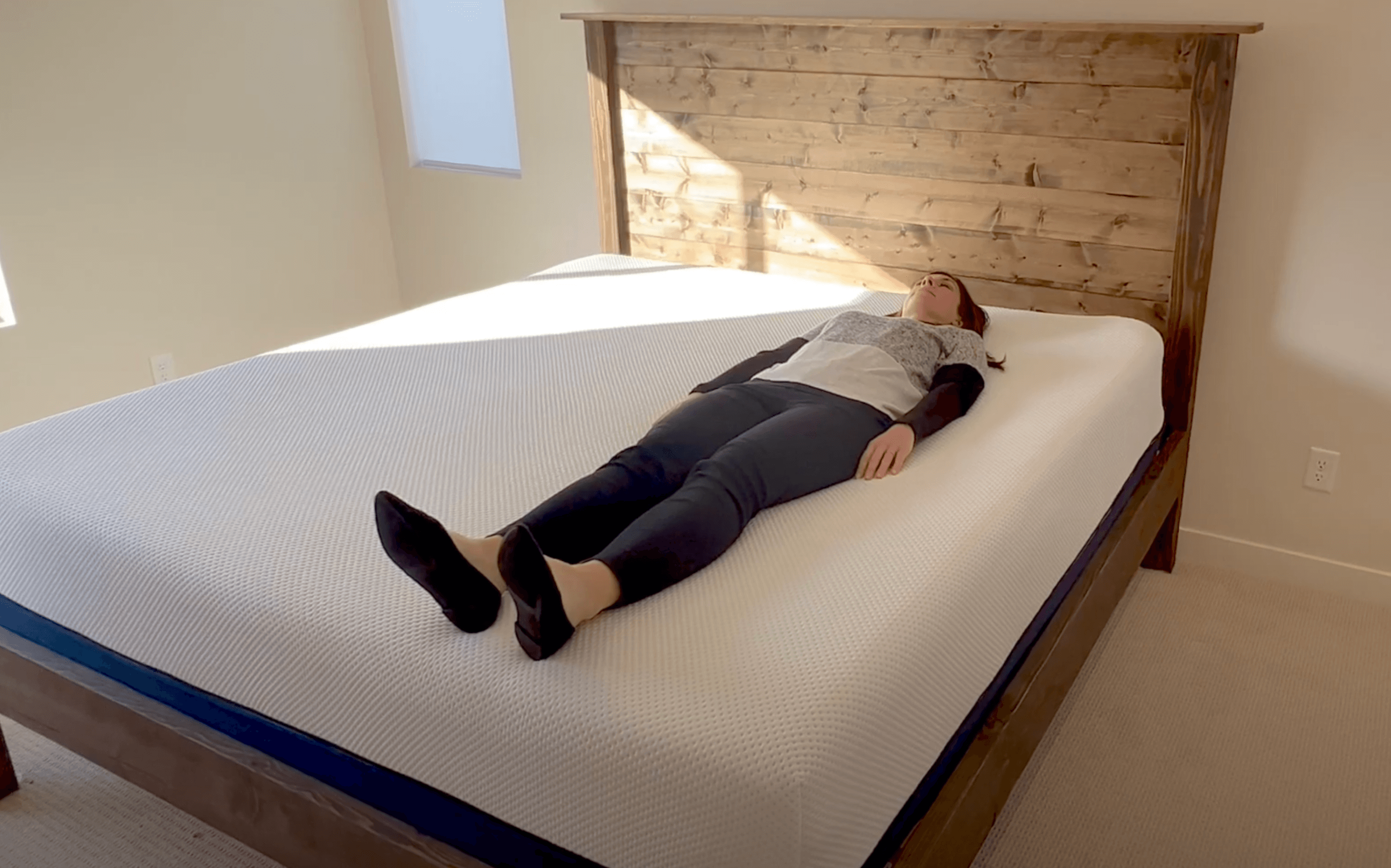
Watch Our AS5 Hybrid Video Review
The AS5 Hybrid is Amerisleep’s softest bed, a 3-out-of-10 memory-foam hybrid pairing Bio-Pur and Active Flex foams over a pocketed coil core. It earned the soft spot for delivering the deepest cushioning on this list without the trapped feel most soft beds create.
During testing, the comfort layers cushioned my hips and shoulders more deeply than any other bed here, but the Active Flex layer sprang back when I moved, so I could still reposition instead of sinking into a mold. On my side, the firmer torso zone kept my spine level under the deep surface give. It suits side sleepers who want the plushest surface here, and less so back and stomach sleepers who want firmer support.
- 8 Value
- 9 Edge Support
- 9 Trial Period
- 8 Response Time
- 9 Motion Transfer
- 10 Cooling & Breathability
I picked the AS5 Hybrid as the soft pick because it delivers a deep, cushioning surface without the trapped feel most soft beds create. During testing, the Bio-Pur and Active Flex layers cushioned my hips and shoulders more deeply than any other bed on this list, but the Active Flex recovered quickly, so I could still change positions instead of feeling stuck. On my side, my shoulder sank into the softer zone while the firmer torso zone kept my spine level. The double-density edge coils held firmer than I expected for a soft bed when I sat on the perimeter.
Best For:
- Side sleepers who want the deepest cushioning on this list
- Sleepers who want a soft surface that still recovers quickly
- Combination sleepers who mainly side sleep
Compare Instead:
- Amerisleep AS3 if you want the same family feel with more support and less sink
- Helix Midnight Luxe if you want zoned coil support with a slightly firmer side-sleep surface
The AS5 Hybrid is the softest bed on this list, but it does not trap you. When I first lay down, the Bio-Pur and Active Flex layers cushioned my whole body deeply, and pressure at my hips and shoulders eased quickly.
What sets it apart from other soft beds is recovery: the Active Flex layer sprang back when I moved, so I did not sink into a mold or fight the surface to reposition. On my side, my shoulder sank into the softer zone while the firmer torso zone kept my hips from dropping too far, so my spine stayed level. On my back, the surface filled my lower-back curve while the coils held my midsection up.
The pocketed coils added a light bounce underneath the plush comfort layers, which kept the bed from feeling dead. The surface felt cooler to the touch than the denser all-foam beds I compared through the first hours. Motion transfer stayed low across the coils. Edge support was firmer than most soft beds thanks to the double-density perimeter coils, which held when I sat to get up.
The Refresh cover is what let the surface feel cooler to the touch than the denser all-foam beds I compared, which matters for cooling. The Bio-Pur memory foam is what cushioned my hips and shoulders deeply while its open structure kept it from trapping heat, which matters for pressure relief. The Active Flex layer is the reason this soft bed does not feel stuck: it is what let the surface spring back when I moved, so repositioning took no effort, which matters for responsiveness. The HIVE zoned transition is what let my shoulders sink into softer sections while firmer sections held my torso, so my spine stayed level, which matters for spinal alignment. The pocketed coil core, with double-density coils at the perimeter, is what added support under the plush layers and kept the edge firm when I sat on it, which matters for edge support. Foams are CertiPUR-US certified and tested for low VOC emissions.
Pros:
- Cooling & Breathability (10/10): the surface felt cooler to the touch than the denser all-foam beds I compared
- Deep cushioning at the hips and shoulders with an Active Flex layer that recovered quickly, so a soft feel that still lets you reposition
- Edge Support (9/10): firmer than most soft beds thanks to the double-density perimeter coils
Cons:
- Response Time (8/10): recovers a beat slower than the coil-forward picks here, so the deep sink is not for dedicated stomach sleepers who need a flat surface; consider the Saatva Classic in Firm
- The soft feel runs too plush for back sleepers who want firmer support; consider the Amerisleep AS3
- 14-inch profile is heavy and needs deep-pocket sheets
On my side, the Bio-Pur and Active Flex layers cushioned my shoulder deeply while the firmer torso zone kept my spine level, and the surface recovered quickly when I moved. That deep-but-responsive softness makes it a strong fit for side sleepers who want the plushest surface here without feeling stuck.
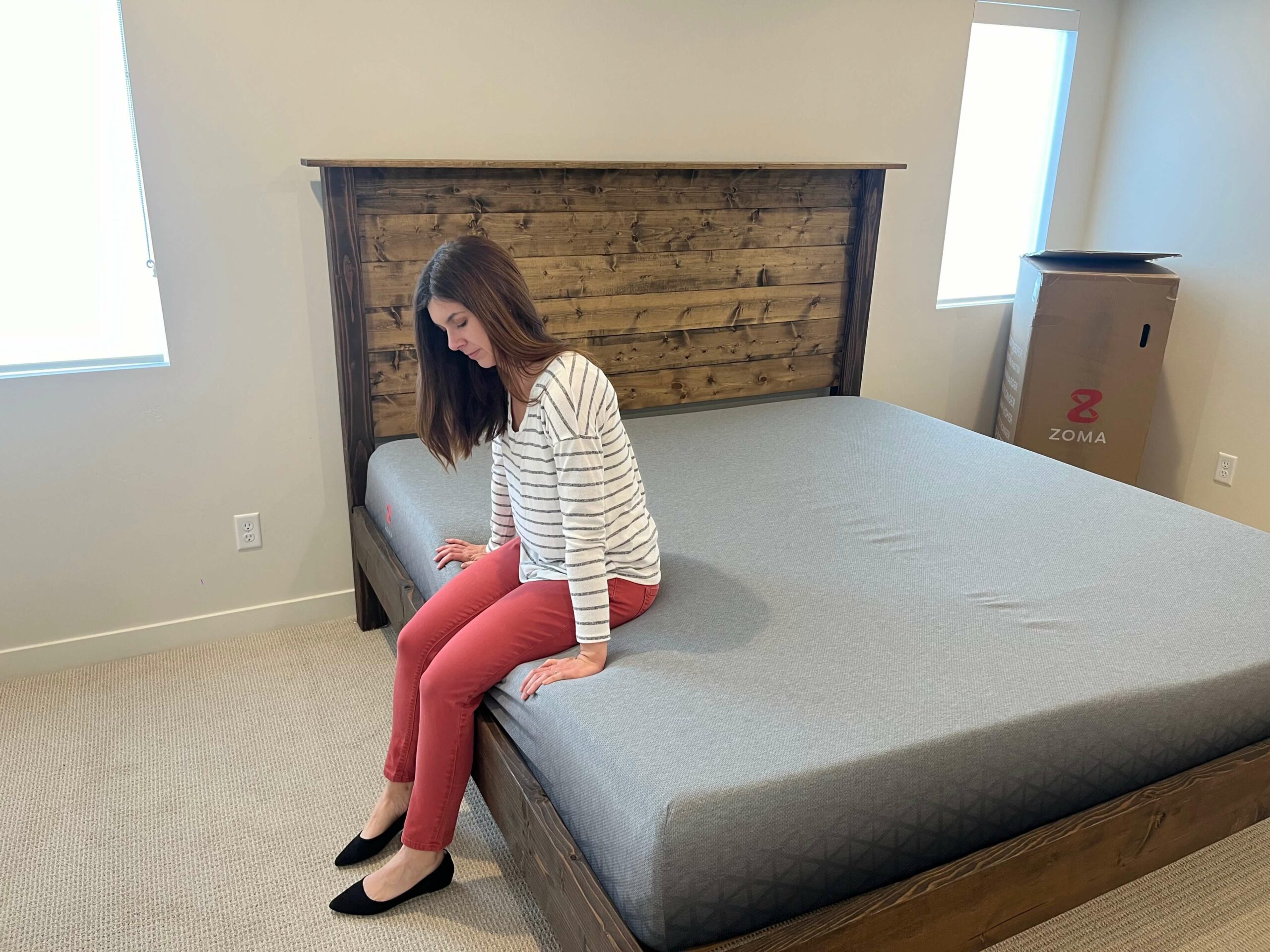
Watch Our Zoma Start Video Review
The Zoma Start is the budget memory-foam pick, an all-foam bed with a gel memory-foam comfort layer, a zoned transition layer, and a high-density base. It earned the memory-foam spot for delivering a true memory-foam feel without the slow, trapped recovery that keeps some sleepers away from foam, at the lowest entry price here.
During testing, the gel foam contoured at my hips and shoulders while the zoned layer kept it from swallowing me, so I could still shift positions. On my back, the high-density base kept my midsection level. It suits budget shoppers who want genuine memory-foam contouring and warm sleepers who run hot on traditional foam.
- 10 Value
- 10 Edge Support
- 9 Trial Period
- 8 Response Time
- 9 Motion Transfer
- 9 Cooling & Breathability
I picked the Zoma Start as the memory-foam pick because it delivers a true memory-foam feel without the slow, trapped recovery that keeps some sleepers away from foam, at the lowest entry price on this list. During testing, the gel memory foam contoured at my hips and shoulders, but the zoned transition layer underneath kept it from swallowing me, so I could still shift positions. On my back, the surface filled my lower-back curve while the high-density base kept my midsection from sinking too far. It runs cooler to the touch than the denser all-foam beds I compared.
Best For:
- Budget shoppers who want a genuine memory-foam feel
- Back and combination sleepers who want contouring with quicker recovery
- Sleepers who run warm on traditional memory foam
Compare Instead:
- Vaya Hybrid if you want coil support underneath at a similar price
- Amerisleep AS3 if you want more refined contouring and can spend more
The Zoma Start feels like memory foam should, without the drawbacks that push some sleepers away from it. When I first lay down, the gel memory foam contoured at my hips and shoulders, but it did not swallow me the way slow, dense foam can.
The zoned transition layer underneath is what keeps the contouring in check: it responded quickly when I shifted, so I got the pressure relief of memory foam without the stuck feel. On my back, the surface filled my lower-back curve while the high-density base kept my midsection from dropping too far, so my spine stayed level. On my side, the foam cushioned my shoulder and hip while the base kept me from sinking through.
At a medium feel, it balances cushioning and support for most positions. The gel foam and breathable cover let the surface run cooler to the touch than the denser all-foam beds I compared. Motion transfer stayed low, so a partner’s movement barely reached my side. Edge support is modest, as expected for an all-foam bed at this price: the perimeter held enough to get up steadily but is softer than the coil beds here.
The gel-infused memory foam is what contoured at my hips and shoulders while its gel and breathable cover let the surface run cooler to the touch than the denser all-foam beds I compared, which matters for pressure relief and cooling. The Triangulex zoned transition layer is what kept the contouring from swallowing me: its zoned response is what let the surface recover quickly when I shifted, so I could reposition without the stuck feel of traditional memory foam, which matters for responsiveness. The high-density base is what held my midsection level on my back and kept me from sinking through, which matters for spinal alignment, and it is what gave the perimeter enough stability to get up steadily. Foams are CertiPUR-US certified and tested for low VOC emissions.
Pros:
- Value (10/10): a genuine memory-foam feel at the lowest entry price on this list
- The Triangulex zoned layer let the surface recover quickly, so it contoured without the stuck feel of traditional memory foam
- Runs cooler to the touch than the denser all-foam beds I compared
Cons:
- Edge Support: the softest perimeter on this list, as expected for an all-foam bed; sleepers who sit on the edge to get up may prefer the coil-based Vaya Hybrid
- Response Time (8/10): recovers a beat slower than the coil picks here, so it is not ideal for sleepers who want a bouncy surface
- 10-inch all-foam profile offers less deep support than the taller hybrids for heavier back and stomach sleepers
On my back, the gel memory foam filled my lower-back curve while the high-density base kept my midsection level, and the zoned layer let the surface recover quickly when I shifted. That true memory-foam feel with quicker recovery at the lowest price here makes it a strong fit for budget shoppers who want contouring without the stuck feel.
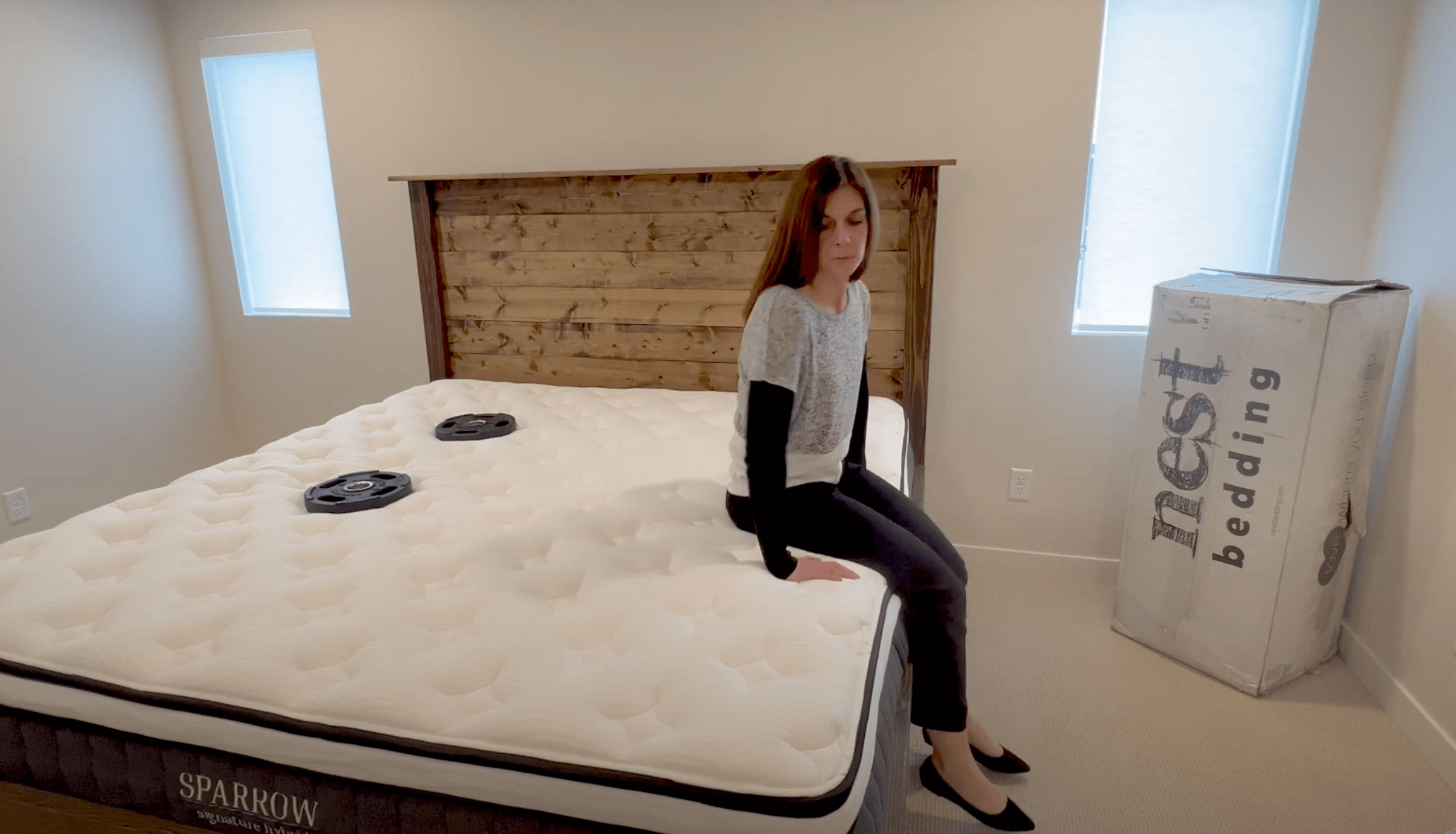
Watch Our Nest Bedding Sparrow Video Review
The Nest Bedding Sparrow is the couples pick, a memory-foam hybrid with a phase-change cover, gel foam and Energex comfort layers, and a pocketed coil core, offered in three firmness levels. It earned the spot for holding up under two different sleepers without forcing a compromise.
During testing, the Energex layer cushioned pressure points but recovered quickly, so repositioning did not carve a slow depression that would tip a partner, and motion transfer was among the lowest on this list. The wrapped coils held support steady across different body weights, and the reinforced edge held firm on both sides. Couples who want low motion transfer and a firm edge across the full width are the clear fit.
- 8 Value
- 10 Edge Support
- 10 Trial Period
- 9 Response Time
- 10 Motion Transfer
- 9 Cooling & Breathability
I picked the Nest Bedding Sparrow as the couples pick because it holds up under two different sleepers without forcing a compromise. During testing, the gel memory foam and Energex layers cushioned my hips and shoulders while staying responsive, so I could reposition without carving a slow-recovering dent that would nudge a partner. Motion transfer was among the lowest on this list: when I simulated movement on one side, the other barely registered it. The wrapped coils held support steady across different weights, and the reinforced edge held firm when I sat on the perimeter.
Best For:
- Couples who want low motion transfer and a firm edge on both sides
- Sleepers who want to choose firmness (Plush, Medium, Firm)
- Combination sleepers who want cushioning with quick recovery
Compare Instead:
- Saatva Classic if you both want a responsive innerspring feel with three firmness choices
- Amerisleep AS3 if you want the same low motion transfer in an all-foam build for less
The Nest Bedding Sparrow feels built for two. When I first lay down, the THERMIC cover and gel memory foam cushioned my hips and shoulders on contact, and the feel held consistent rather than changing sharply with body weight.
The Energex layer is what makes it work for couples: it cushioned pressure points but recovered quickly, so when I changed positions I did not carve a slow depression that would tip a partner toward me. On my side, my shoulder and hip settled in while my spine stayed level; on my back, the coils held my midsection up.
Motion transfer was among the lowest here: movement on one side barely reached the other, so a partner getting up or shifting is easy to sleep through. The wrapped coils adjusted to different weights, so a heavier and a lighter sleeper each got appropriate support. The surface stayed less heat-retentive than the foam-heavy beds I compared through the first hours. Edge support was firm on both sides: the reinforced perimeter held when I sat to get up, so two people can use the full width without a roll-off feel.
The THERMIC phase-change cover is what kept the surface feeling less heat-retentive than the foam-heavy beds I compared, which matters for cooling. The gel memory foam layers are what cushioned my hips and shoulders on contact, which matters for pressure relief. The Energex layer is the reason it suits couples: it is what cushioned pressure points while recovering quickly, so repositioning did not carve a slow depression that would disturb a partner, which matters for responsiveness and motion isolation. The airflow transition foam is what smoothed the handoff to the coils so neither sleeper felt the support core directly. The pocketed coil core, with counts scaled by size, is what held support steady across different body weights and, because each coil moves on its own, is what kept movement from carrying across the bed, which matters for motion isolation. The reinforced perimeter is what kept both edges firm when I sat on them. Foams are CertiPUR-US certified and tested for low VOC emissions.
Pros:
- Motion Transfer (10/10) and Trial Period (10/10): movement on one side barely reached the other, backed by a 365-night trial
- Edge Support (10/10): the reinforced perimeter held firm on both sides, so two people can use the full width
- The Energex layer cushioned pressure points while recovering quickly, so repositioning did not disturb the other side
Cons:
- Value (8/10): the couple-focused build and coil system carry a higher price than all-foam beds
- 13-inch profile is heavier and needs deep-pocket sheets
- The balanced medium feel may not fully satisfy a couple who wants very different firmness on each side; a split-firmness setup would suit them better
On my side, the Energex layer cushioned my shoulder while recovering quickly, and movement on the other side barely registered when I simulated a partner shifting. That low motion transfer and firm edge on both sides make it a strong fit for couples who want to share the full width without waking each other.
The Mattresses We Have Tested
Every mattress below was tested hands-on and on camera by me, Kristina Hindes, our lead tester. Each row links to its written review and filmed test, so you can check our work. For how we score every mattress, see How We Test Mattresses.
See the full list, with review and video links
| Mattress | Review and video |
|---|---|
| Amerisleep AS2 | Review · Video |
| Amerisleep AS3 | Review · Video |
| Amerisleep AS3 Hybrid | Review · Video |
| Amerisleep AS5 | Review (test clips inside) |
| Amerisleep AS5 Hybrid | Review · Video |
| Amerisleep AS6 Black Series | Review · Video |
| Amerisleep Organica | Review · Video |
| Amerisleep Organica Plush | Review · Video |
| Bear Original | Review · Video |
| Birch Natural | Review · Video |
| Brooklyn Bedding Aurora Luxe Hybrid | Review · Video |
| Brooklyn Bedding Plank Firm | Review · Video |
| Casper The One | Review · Video |
| Eco Terra Hybrid Latex | Review · Video |
| FORM Core | Review · Video |
| FORM Core Hybrid | Review · Video |
| FORM Prime | Review · Video |
| FORM Prime X | Review · Video |
| GhostBed Flex | Review · Video |
| Happsy Organic | Review · Video |
| Helix Dawn Luxe | Review · Video |
| Helix Midnight Luxe | Review · Video |
| Helix Sunset Luxe | Review · Video |
| Latex For Less Hybrid | Review · Video |
| Leesa Original | Review · Video |
| Leesa Sapira Chill Hybrid | Review · Video |
| Leesa Sapira Hybrid | Review · Video |
| Naturepedic Concerto | Review · Video |
| Naturepedic EOS Classic Organic | Review · Video |
| Nest Bedding Owl | Review · Video |
| Nest Bedding Puffin Kids | Review · Video |
| Nest Bedding Raven | Review · Video |
| Nest Bedding Sparrow Signature Hybrid | Review · Video |
| Nolah Evolution 15 | Review · Video |
| Nolah Natural 11 | Review · Video |
| Nolah Original Hybrid | Review · Video |
| PlushBeds Botanical Bliss | Review · Video |
| PlushBeds Luxury Bliss | Review · Video |
| PlushBeds Organic Bliss | Review · Video |
| PlushBeds Organic Kids | Review · Video |
| PlushBeds Signature Bliss | Review · Video |
| Saatva Classic | Review · Video |
| SweetNight CoolNest | Review · Video |
| SweetNight Prime | Review · Video |
| Vaya Hybrid | Review · Video |
| Vaya Mattress | Review · Video |
| Westin Heavenly Bed | Review · Video |
| Zoma Boost | Review · Video |
| Zoma Hybrid | Review · Video |
| Zoma Start | Review · Video |
Specific Joint Pain Conditions
Your joints are like that friend who tells you exactly what they think—whether you want to hear it or not. The difference is, you can’t unfriend your hips when they start complaining about your mattress choice.
Each type of joint pain comes with its own personality and demands, and understanding what your particular pain is trying to tell you can make the difference between waking up refreshed and waking up like you’ve been hit by a truck.
Let’s decode what your joints are really saying and how to give them what they need.
Lower Back Pain: The Drama Queen
Lower back pain is the attention-seeker of the joint pain world. It affects most adults at some point
Your spine has a natural S-curve that needs to be maintained during sleep. See, your lower back has one job—support your entire upper body—and it’s not shy about letting you know when it’s unhappy with your sleeping arrangements.
When your mattress is too soft, your hips sink down too far, creating an exaggerated arch that strains your back muscles. Too firm, and the curve flattens out, putting pressure on your discs and joints. It’s like trying to sleep while doing an invisible yoga pose all night.
Most people with lower back pain do best on medium-firm mattresses. Not soft enough to let you sink into trouble, but not firm enough to feel like you’re camping on concrete. Look for mattresses with zoned support that provide firmer areas under your midsection and softer areas for your shoulders and legs.
Memory foam and latex excel here because they can contour to support your back’s natural curve while still providing pushback where you need it. Hybrid mattresses also work well, offering the contouring of foam with the support of coils.
Pro Tips for Back Pain:
- If you’re a back sleeper, try putting a small pillow under your knees to reduce strain on your lower back
- Side sleepers should place a pillow between their knees to keep hips aligned
- Stomach sleepers (we’re looking at you with concern) should consider a thin pillow under the hips to prevent excessive arching
Hip Pain: The Side Sleeper’s Nemesis
Hip pain is particularly sneaky because it often gets worse at night when you’re lying on your side. Your hip joint is essentially bearing the weight of your entire torso concentrated into one small area.
Imagine trying to balance on a golf ball for eight hours straight! See, when you sleep on your side, your hip creates a pressure point that can reduce blood circulation and compress nerves.
If your mattress is too firm, it’s like sleeping on a table—all your weight gets concentrated on that one spot. Too soft, and your hip sinks so far that your spine gets twisted like a pretzel. Sometimes, the wrong mattress is even a hip pain culprit.
Hip pain sufferers typically need medium-soft to medium mattresses that allow the hip to sink in just enough to distribute pressure while still supporting the waist. Memory foam is often the MVP here because it molds around the hip joint and spreads the pressure over a larger area.
Look for mattresses for hip pain with good motion isolation if you sleep with a partner—the last thing you need is their tossing and turning jarring your already-sensitive hip.
Strategic Sleep Positioning:
- Place a pillow between your knees to keep your hips properly aligned
- Try a body pillow that runs from head to toe for full-body support
- Consider a small pillow under your waist if you’re a side sleeper to prevent your spine from sagging
Shoulder and Neck Pain: The Upper Body Rebellion
Shoulder and neck pain often travel together like an unwelcome comedy duo. Your shoulder is a complex joint that needs room to settle into the mattress, while your neck needs to stay aligned with your spine. Get either one wrong, and both start complaining loudly.
Side sleepers face the biggest challenge here. Your shoulder needs to sink into the mattress enough to stay comfortable. But not so much that your spine gets pulled out of alignment. Meanwhile, your neck needs the right pillow support to bridge the gap between your shoulder and head.
Medium to medium-soft mattresses work best for shoulder issues, providing enough give to let your shoulder nestle in without creating pressure points. Memory foam and latex are excellent choices because they contour around the shoulder joint.
However, your pillow choice is just as important as your mattress for neck pain. The two need to work together like a well-choreographed dance—your mattress supports your body while your pillow maintains proper head and neck alignment.
Pro Tips for Shoulder and Neck:
- If you wake up with a numb arm, your mattress is probably too firm
- Neck pain often means your pillow is the wrong height or your mattress isn’t providing proper shoulder support
- Try sleeping with a small pillow hugged to your chest to reduce strain on your top shoulder
Arthritis: The Unpredictable Houseguest
Arthritis is like having an unpredictable houseguest in your joints. Some days it’s quiet and manageable, other days it’s throwing a party at 3 AM. The inflammation and stiffness that come with arthritis make finding the right mattress feel like solving a puzzle where the pieces keep changing shape.
Arthritic joints are often swollen and tender, making them extra sensitive to pressure points. What feels comfortable one night might be unbearable the next, depending on inflammation levels. Traditional firm mattresses can feel like torture devices during flare-ups.
People with arthritis typically benefit from medium-soft mattresses with excellent pressure relief. Memory foam is often ideal because it responds to body heat and molds gently around inflamed joints. The key is finding a mattress for arthritis that provides consistent comfort even when your symptoms fluctuate.
Temperature regulation becomes crucial for arthritis sufferers since heat can worsen inflammation for some people while providing relief for others. Pay attention to whether warmth helps or hurts your symptoms and choose mattress materials accordingly.
Pro Tips for Arthritis-Friendly Features:
- Look for mattresses with good edge support to make getting in and out of bed easier
- Consider adjustable bases that let you elevate different body parts as needed
- Memory foam with cooling technology can provide pressure relief without trapping heat
- Easy movement across the mattress surface helps when you need to change positions frequently
Knee and Leg Issues: The Foundation Problems
Your knees and legs might seem like they’re far from your mattress, but they’re actually crucial players in your sleep comfort. Knee pain often leads to awkward sleeping positions that throw everything else out of whack, creating a domino effect of discomfort.
Poor mattress support can reduce circulation to your legs, causing numbness, tingling, or that “pins and needles” feeling. This is especially common for side sleepers whose top leg doesn’t have proper support.
Medium mattresses that prevent excessive sinking while still providing pressure relief work well for knee issues. The key is maintaining proper leg alignment while ensuring good circulation.
For people with knee problems, pillows become essential tools. A pillow between the knees for side sleepers or under the knees for back sleepers can make a world of difference in comfort levels.
The Multi-Pain Reality
Here’s the thing many people don’t talk about: joint pain rarely travels alone. You might start with lower back pain that leads to hip issues, which cause you to sleep differently and create shoulder problems. It’s like a painful game of dominoes where one issue knocks over the next.
When you have multiple pain points, you need a mattress that can multitask. Medium-firm memory foam or latex mattresses often work best because they provide pressure relief for sensitive areas while maintaining overall support for spinal alignment.
Don’t try to solve everything with just a mattress—consider the whole sleep system, including pillows, mattress toppers, and even adjustable bases that can help position your body for optimal comfort.
When to See a Professional: If your joint pain is severe, getting worse, or interfering with your daily life, don’t try to solve it solely with a new mattress. A healthcare professional can help identify underlying issues and recommend treatments that work alongside your improved sleep setup.
Mattress Materials: The Building Blocks of Better Sleep
No single material is perfect for everyone, which is why understanding what each one brings to the table helps you make the right choice for your specific joint pain needs.
Think of types of mattresses like sandwich options. But instead of turkey and cheese, you’re layering materials that either work together to cradle your aching joints or conspire against you like a badly planned potluck.
The difference between waking up refreshed and waking up like you’ve been wrestling bears all night often comes down to what’s actually inside that fabric cover.
Consider your sleep position, temperature preferences, and pain patterns when weighing these options.
Remember, the best mattress material is the one that supports your body while letting you sleep comfortably through the night. Everything else is just details.
Let’s pull back the curtain (or in this case, the mattress cover) and see what makes these sleep machines tick.
Memory Foam: The Hugger
Memory foam is like that friend who remembers everything about you—including exactly how you like to be hugged. Originally developed by NASA to keep astronauts comfortable during launch (because apparently even rocket scientists need a good night’s sleep), this material has a special talent: it softens when it feels your body heat and molds around your shape like a custom-fitted glove.
First off, let me talk about why it’s worth considering. Memory foam mattresses excel at pressure relief because the material doesn’t push back against your body—it welcomes you in.
When your hip presses into a memory foam mattress, the foam says “come on in” and cradles that joint instead of creating a pressure point. It’s particularly brilliant for side sleepers whose hips and shoulders need extra TLC.
The material also has selective hearing when it comes to movement. While it responds to your body, it ignores your partner’s midnight gymnastics routine, absorbing motion instead of bouncing it around the bed like a trampoline.
But, there’s also the not-so-good. Traditional memory foam can be clingy—and not in a cute way.
Some people feel stuck or trapped when they try to change positions, like they’re sleeping in quicksand. The foam takes its sweet time bouncing back to shape, which can be frustrating if you’re a restless sleeper.
Heat retention is memory foam’s biggest weakness. Early versions were like sleeping on a warm pizza stone. While modern memory foam includes cooling gels, copper infusions, and open-cell structures to combat this issue, it still tends to sleep warmer than other materials.
Latex: The Bouncy Castle
If memory foam is a slow, warm hug, latex is a firm handshake followed by a pat on the back. Made from rubber tree sap (yes, actual trees), latex foam springs back to life the moment you move, giving you that “sleeping on top of the mattress” feeling rather than “sinking into it.”
Latex responds to pressure instantly, so when you roll over, it’s already ready for your new position. This quick response helps maintain proper spinal alignment as you move through different sleep positions during the night. A latex mattress is like having a sleep partner who’s always one step ahead of your needs.
The material naturally resists dust mites, mold, and bacteria without needing chemical treatments. It’s Mother Nature’s own pest control system. This makes it a smart choice for people with allergies or anyone who prefers their sleep environment to be as natural as possible.
Unlike memory foam’s heat-trapping tendencies, latex sleeps cool. The natural structure allows air to flow freely, so you won’t wake up feeling like you’ve been sleeping in a sauna.
Latex mattresses often come with a higher price tag than other options, though they can last up to 20 years with proper care, making them more of an investment than an expense. Some people find the bouncy feel too springy, especially if they’re used to the slower response of memory foam.
Important note: If you have a latex allergy, this material is obviously off the table, even with sheets and protectors as barriers.
Innerspring: The Classic Workhorse
Innerspring mattresses are the reliable pickup trucks of the mattress world—they’ve been getting the job done for over a century, and modern versions have plenty of new tricks under the hood.
These mattresses use metal coils as their foundation, providing that familiar bouncy support that makes it easy to move around and get in and out of bed.
The coil system pushes back against your body weight with authority, preventing that sinking feeling and helping maintain spinal alignment. This firm pushback works particularly well for back and stomach sleepers who need strong support to keep their spine in line.
Modern innerspring mattresses often feature individually wrapped coils (called pocketed coils) that move independently from each other. This means when you move, only the coils directly under you respond, reducing the “bowling ball effect” where your movement creates waves across the entire mattress.
The space between coils creates natural ventilation, making innerspring mattresses naturally cooler than foam alternatives. Air flows freely through the structure, carrying away heat and moisture. Just perfect for hot sleepers.
Innerspring mattresses typically offer the best bang for your buck, providing solid support and durability at reasonable prices. They’re also widely available and familiar to most sleepers.
Basic innerspring mattresses without adequate comfort layers can feel like sleeping on a park bench. It’s supportive but not exactly cozy. For joint pain relief, you’ll want an innerspring with sufficient cushioning layers on top, such as a pillow-top or Euro-top design.
Hybrid: The Child of Two Worlds
Hybrid mattresses are like that perfect friend group where everyone brings something different to the table, and somehow it all works beautifully together. These mattresses layer the pressure-relieving comfort of foam or latex on top of the supportive bounce of innerspring coils.
The coil base provides strong, responsive support that prevents excessive sinking, while the comfort layers above cushion pressure points and reduce motion transfer.
Many hybrids use zoned construction, with different firmness levels in different areas—firmer under your midsection for support, softer under your shoulders and legs for comfort.
The coil system allows excellent airflow, while the comfort layers provide pressure relief. This combination helps hot sleepers stay cool while still getting the contouring they need for joint comfort.
Hybrids work well for couples with different preferences because they balance multiple sleep needs in one package. They’re also excellent for combination sleepers who change positions throughout the night.
Quality hybrid construction costs more than basic foam or innerspring mattresses, and the coil system may not last as long as high-quality all-foam options. However, many people find the balanced performance worth the investment.
Firmness and Support Considerations
The perfect firmness level is the one that keeps your spine aligned while providing pressure relief for your joints—and that’s different for everyone. Don’t get caught up in myths about what’s “best” or let anyone pressure you into a firmness that doesn’t feel right for your body.
Here’s a truth that might surprise you: firmness and support are not the same thing, even though mattress salespeople love to pretend they are. It’s like confusing volume with sound quality.
A mattress can be firm as a rock but still provide terrible support, or soft as a cloud while keeping your spine perfectly aligned. Understanding this difference could save you from years of morning stiffness and a hefty case of buyer’s remorse.
Remember, you’ll spend roughly 2,500 hours on this mattress each year. A few extra minutes finding the right firmness level is time well invested in your long-term comfort and joint health.
Your body knows what it needs—you just have to give it permission to be honest about what feels good, rather than what you think should feel good.RetrySA
Debunking the “Firmer is Better” Myth
Somewhere along the way, we all absorbed the idea that sleeping on something resembling a medieval torture device would cure our back problems. This myth has probably sold more uncomfortable mattresses than any marketing campaign in history.
The truth is, your body has curves—and those curves need accommodation, not punishment. When you sleep on a surface that’s too firm, your body can only touch the mattress at a few high points: your shoulder, hip, and maybe your heel if you’re a back sleeper.
Meanwhile, the spaces in between get zero support, leaving your muscles to work overtime trying to bridge those gaps.
Real support means maintaining your spine’s natural S-curve while allowing pressure points to sink in just enough to stay comfortable. Think of it like a good handshake—firm enough to be meaningful, but not so tight that it cuts off circulation.
The sweet spot varies dramatically from person to person, which brings us to the real factors that matter.
Sleep Position: Your Personal Blueprint
Your favorite sleep position is like the job description for your next mattress. It tells you exactly what kind of support and pressure relief you need.
Side Sleepers
Side sleeping puts your hips and shoulders front and center, creating natural pressure points that need special attention. These joints are essentially bearing most of your body weight in concentrated areas, like trying to balance on two golf balls.
You need a mattress for side sleeping soft enough to let these pressure points sink in and spread the load, but not so soft that your waist gets zero support. Most side sleepers do best with medium-soft to medium firmness, though your weight affects this significantly.
Pro tip: If you wake up with a numb arm or tingling fingers, your mattress is probably too firm and cutting off circulation to your shoulder.
Back Sleepers
Back sleeping is often considered the “healthiest” position for those with recurring aches because it naturally distributes weight fairly evenly. Your main challenge is supporting the natural curve of your lower back while keeping your hips from sinking too deep.
Medium to medium-firm mattresses typically work best, providing enough pushback to support your midsection while cushioning your shoulder blades and heels. The key is maintaining that gentle arch in your lower back—not too flat, not too curved on a mattress for back sleeping.
Stomach Sleepers
Stomach sleeping is like playing on hard mode. This position naturally wants to create an unhealthy arch in your lower back, so your mattress needs to work extra hard to prevent this.
You’ll typically need a firmer surface to keep your hips from sinking and creating that painful arch. However, you still need some cushioning for your chest and pelvis on a mattress for stomach sleeping.
If you absolutely must sleep on your stomach, consider placing a thin pillow under your hips to help maintain better alignment.
Combination Sleepers
If you change positions throughout the night, you need a mattress that performs reasonably well in multiple scenarios. Medium firmness often works best because as a mattress for combination sleeping provides a compromise that doesn’t heavily favor any single position.
Look for responsive materials that adapt quickly as you move, rather than slow-responding memory foam that might leave you feeling stuck between positions.
Body Weight: The Great Equalizer
Your body weight acts like a volume dial for mattress firmness. A 120-pound person lying on a medium-firm mattress experiences something completely different than a 220-pound person on the same surface.
It’s basic physics, but somehow this gets overlooked more often than expired milk in the back of the fridge.
Lighter Sleepers (Under 150 pounds)
If you’re on the lighter side, many “medium-firm” mattresses will feel like sleeping on a sidewalk. You simply don’t have enough weight to compress the comfort layers and activate the pressure relief.
You’ll likely need to go softer than the standard recommendations to get the contouring your joints need.
Average Weight Sleepers (150-200 pounds)
Lucky you, most mattresses are designed with your weight range in mind. You have the most flexibility in firmness choices and can focus primarily on your sleep position and personal preferences without having to make major adjustments.
Heavier Sleepers (Over 200 pounds)
Standard medium mattresses might let you sink too deep, throwing your spine out of alignment and creating the dreaded “hammock effect.”
You’ll likely need to go firmer than the basic recommendations to get proper support, but make sure there are still adequate comfort layers to cushion pressure points.
The Temperature Factor
Here’s something most people don’t consider: how hot you sleep affects what firmness feels comfortable. Softer mattresses typically sleep warmer because you sink into them more, reducing airflow around your body.
If you’re a hot sleeper with joint pain, you might need to go slightly firmer than you’d prefer and add a soft topper for pressure relief.
Conversely, if you’re always cold, a softer mattress that lets you sink in slightly might help you feel more cozy and secure.
Common Firmness Mistakes That Sabotage Sleep
Mistake #1: Choosing Based on Partner Preferences Just because your partner loves sleeping on what feels like a concrete slab doesn’t mean you should suffer in silence. Many couples end up on mattresses that work for one person and torture the other. Consider split firmness options or separate mattresses if your needs are dramatically different.
Mistake #2: Ignoring the Break-In Period Most mattresses feel different after a few weeks of use than they do on day one. Foam materials soften slightly, and your body adapts to the new support system. Don’t panic and return a mattress after three nights unless it’s causing serious pain.
Mistake #3: Confusing Temporary Relief with Long-Term Comfort That super-soft mattress in the showroom might feel amazing for 10 minutes, especially if your current bed is too firm. But sinking into a too-soft surface for eight hours can leave you feeling like you’ve been sleeping in a hammock. Think about support, not just initial comfort.
Mistake #4: Buying for the Wrong Body Your mattress needs have probably changed since your last purchase. Weight changes, new aches and pains, different sleep positions—all of these affect what firmness level will work best for you now, not five years ago.
Before You Leave the House: Know Thyself
Walking into a mattress store without a plan is like going grocery shopping when you’re hungry. You’ll end up with things you don’t need and forget the stuff you actually came for. Before you start shopping, take an honest inventory of your sleep situation.
Your Sleep Detective Work:
- Track your pain patterns for a week. Where do you hurt when you wake up? Is it consistent or does it move around?
- Notice your sleep position preferences. Do you start on your side and end up on your back? Are you a starfish spreader or a tight-curl sleeper?
- Consider your temperature habits. Do you kick off covers, pile on blankets, or constantly flip the pillow to find the cool side?
- Think about your partner’s needs too, if applicable. Mismatched sleep needs cause more relationship stress than who left dishes in the sink.
The Budget Reality Check: If you keep a mattress for 10 years, you’re paying roughly $0.50 to $1.50 per night for sleep, depending on what you spend. Compare that to your daily coffee habit, and suddenly investing in quality sleep seems like the bargain of the century.
However, expensive doesn’t automatically mean better. A $5,000 mattress that doesn’t fit your body is worthless, while a $800 mattress that supports you properly is priceless.
Set a realistic budget range rather than a hard limit. You might find your perfect match costs $200 more than planned, and that extra cost spread over 10 years is pocket change.
Beyond the 30-Second Flop of In-Store Testing
Most people test mattresses like they’re checking if a chair is sturdy. A quick sit, maybe a brief lie-down, then a decision. This approach works about as well as test-driving a car by sitting in the parking lot with the engine off.
Spend at least 10-15 minutes on each mattress you’re seriously considering. Yes, this feels awkward at first, but remember: the salesperson works here every day and has seen it all. Your comfort is more important than feeling embarrassed.
Lie in your actual sleep position, not the polite “showroom position” on your back with hands folded. If you sleep on your side curled up like a shrimp, test the mattress that way. If you sprawl like you’re making snow angels, sprawl away.
Bring your own pillow if possible, or ask the store for one similar to yours. The pillow affects how the mattress feels, especially for side sleepers who need their head properly aligned with their spine.
Don’t be embarrassed to really test the mattress. You’re making a major purchase. And if possible, test with your sleep partner.
What to Pay Attention To:
- Do your hips and shoulders sink in enough to feel comfortable, or are they creating pressure points?
- Does your lower back feel supported, or is there a gap you could drive a truck through?
- Can you easily change positions, or does the mattress fight you?
- If you’re testing with a partner, do their movements shake the whole bed like a minor earthquake?
Red Flag Testing: If a salesperson rushes you or discourages thorough testing, that’s a huge red flag. Quality mattress retailers want you to test properly because they know their products perform well under real conditions.
Online Shopping: The New Reality
Buying a mattress online used to seem as crazy as buying shoes without trying them on. Now, with generous sleep trials and improved return policies, it’s often the smarter choice. You get better prices, more time to test, and no pushy salespeople hovering while you’re trying to relax.
The Online Advantage:
- Lower prices because companies don’t have showroom overhead
- Longer testing periods in your actual bedroom
- Better return policies than most physical stores
- Detailed customer reviews from real people, not sales brochures
Making Online Work
Research the company’s reputation and customer service track record. A mattress company that makes returns difficult or charges excessive fees is essentially betting you’ll give up rather than deal with the hassle.
Read the sleep trial terms carefully. Some companies require you to try the mattress for 30 nights before returning it. They know your body needs time to adjust. Others let you return immediately if you hate it. Know which situation you’re dealing with.
Look for companies that offer phone or chat support with real sleep experts, not just order-taking staff. The best online retailers provide consultations to help you choose the right firmness and type for your needs.
Sleep Trials: Your Safety Net
A generous sleep trial is like a warranty for your comfort. Companies that offer 90+ night trials are essentially saying, “We’re so confident this will work for you that we’ll take all the risk.” Companies with short or no trial periods are basically saying, “Good luck, you’re on your own.”
Most trials require a “break-in period” of 30 nights because your body needs time to adjust to new support. Your muscles and joints adapt to sleeping positions over years, and they need time to appreciate proper support.
Some companies will let you exchange for different firmness during the trial period, which is incredibly valuable if you’re between firmness levels. Others require a full return and repurchase. Know which type you’re dealing with before buying.
Read the fine print about return costs. Some companies cover all return shipping and pickup fees, while others charge $50-200 for return pickup. Factor how to return a mattress into your budget planning. A “free” trial that costs $150 to use isn’t actually free.
The Supporting Cast of Great Sleep
Getting the right mattress is like casting the lead actor. It’s crucial, but not the whole story. Even the best mattress can’t save a production with terrible supporting actors.
Your pillow, foundation, and sleep environment are the supporting cast that either elevates your sleep performance to Oscar-worthy levels or drags it down to flopbuster disaster territory.
The good news? You have complete control over your casting decisions.
Pillow Coordination: Your Mattress’s Best Friend
Your pillow and mattress need to work together like a well-rehearsed dance team. When they’re in sync, everything flows beautifully. When they’re fighting each other, you end up looking like you’re trying to dance salsa with someone doing the robot.
Think of your pillow as the bridge between your mattress and your head. If your mattress allows your shoulder to sink in (which is good for pressure relief). But your pillow loft is too thin, your head tilts down and your neck gets cranked into an uncomfortable angle.
Conversely, if your mattress is firm and keeps your shoulder elevated, a thick pillow will push your head up too high, creating the same neck-craning problem.
Side sleepers typically need thicker pillows to fill the gap between their shoulder and head, while back sleepers need medium support to maintain their neck’s natural curve.
Stomach sleepers should probably reconsider their life choices, but if they insist on this position, they need very thin pillows or no pillow at all to avoid cranking their neck up too high.
Memory foam pillows work well with memory foam mattresses because they both respond to body heat and provide consistent support. However, if you’re a hot sleeper, doubling up on memory foam might turn your bed into a personal sauna.
Latex pillows offer responsive support that works well with most mattress types, while down and down-alternative pillows provide adjustable comfort that you can fluff to your preferred height and firmness.
Don’t limit yourself to one pillow. Strategic pillow placement can solve multiple comfort issues:
- A pillow between your knees keeps your hips aligned and reduces lower back strain
- A small pillow under your lower back (for back sleepers) can provide extra lumbar support
- A body pillow can provide full-length support for side sleepers
- A thin pillow under your pelvis (for stomach sleepers) can reduce back arch
Mattress Toppers: The Plot Twist Solution
Mattress toppers are like movie sequels. Sometimes they fix problems from the original, and sometimes they make things worse. The key is knowing when you need one and choosing the right type for your specific situation.
When Toppers Make Sense
If your mattress is too firm but otherwise supportive, a soft topper can add pressure relief without compromising the underlying support structure. If your mattress is slightly too soft but not old enough to replace, a firmer topper might help (though this is trickier to pull off successfully).
Toppers also work well for couples with different comfort preferences. You can add a soft topper to one side of a medium-firm mattress, giving one person extra cushioning while the other enjoys the firmer feel.
Material Choices
Memory foam toppers excel at pressure relief and can transform a too-firm mattress into a comfortable sleep surface. However, they add heat retention, so hot sleepers should look for gel-infused or open-cell options.
Latex toppers provide pressure relief with better temperature regulation and responsiveness. They’re more expensive than memory foam but offer a good balance of comfort and support.
Down and down-alternative toppers add soft cushioning without much support modification. They’re good for minor comfort adjustments but won’t dramatically change a mattress’s feel.
Topper Reality Check
A topper can’t fix a fundamentally broken mattress. If your mattress is sagging, has broken springs, or is causing serious pain, a topper is like putting a Band-Aid on a broken leg. It might help a little, but you need real medical attention (in this case, a new mattress).
Foundation and Frame Requirements: The Unsung Heroes
Your mattress foundation is like the foundation of a house. That is, when it’s right, you don’t think about it. When it’s wrong, everything else becomes a problem.
Many people focus so much on choosing the perfect mattress that they forget about what goes underneath it.
The Support System
Different mattress types have different support needs. Memory foam and latex mattresses need solid, even support to prevent sagging and maintain their warranty coverage. A box spring designed for innerspring mattresses can actually damage foam mattresses by creating uneven support.
Platform beds, solid foundations, or slat systems with slats no more than 3 inches apart work best for foam mattresses. If you have a slat system with wider gaps, adding a bunkie board (a thin, solid platform) can provide the even support your mattress needs.
Height Considerations
Your bed height affects how easy it is to get in and out of bed—a crucial factor if you have joint pain or mobility issues. The ideal bed height allows you to sit on the edge with your feet flat on the floor and your knees at about a 90-degree angle.
Adding a foundation, box spring, or adjustable base can raise your bed height, while a low-profile foundation or platform bed can lower it. Factor this into your comfort calculations, especially if getting out of bed is already challenging.
Adjustable Bases, Actually Practical Luxury
Adjustable bases used to be medical equipment, but they’ve evolved into comfort accessories that can significantly improve sleep quality for people with joint pain. Being able to elevate your head, feet, or both can reduce pressure on painful areas and improve circulation.
Many adjustable bases also include massage features, USB charging ports, and under-bed lighting. Nice bonuses, but the real value is in positioning options that can reduce pain and improve sleep quality.
FAQs
What is the single best mattress for joint pain?
Across the beds I tested, the Amerisleep AS3 was the most broadly useful because it cushioned my hips and shoulders while keeping my lower back level and recovered quickly when I changed positions. Side sleepers who want more give may prefer the softer AS5 Hybrid, and budget shoppers can look at the Vaya Hybrid. The right pick depends on your main position, body type, and firmness preference.
What is the best mattress for aches and pains?
The best mattress for aches and pains depends on your sleeping position, body weight, and where you feel pressure, but memory foam and latex tend to cushion pressure points best while still supporting the spine. Look for a balanced feel with good motion isolation and temperature regulation, since partner movement and heat buildup are the two things most likely to interrupt sleep. On this guide, the Amerisleep AS3 was the most broadly useful across positions.
Can a too hard mattress cause joint pain?
Yes, a mattress that’s too hard can definitely cause joint pain by creating pressure points where your body contacts the surface.
When you sleep on an overly firm mattress, only a few areas of your body—like your shoulder, hip, and heel—actually touch the surface, concentrating all your weight on these points and reducing blood circulation.
This pressure can cause numbness, tingling, and pain in joints, while also forcing your muscles to work overtime to bridge the gaps where your body isn’t supported.
Does walking reduce joint inflammation?
Yes, regular walking can help reduce joint inflammation by promoting circulation, which helps clear inflammatory compounds from joint tissues and delivers fresh nutrients for healing.
The gentle, low-impact movement also helps maintain joint flexibility and prevents stiffness that can worsen inflammation.
However, it’s important to start slowly and listen to your body. While moderate walking typically reduces inflammation over time, excessive activity or walking on inflamed joints during acute flare-ups might temporarily increase symptoms.
How do I stop my joints from hurting at night?
Start by evaluating your sleep setup. Ensure your mattress provides proper support and pressure relief for your sleep position, and use pillows strategically to maintain proper alignment (like placing one between your knees if you’re a side sleeper).
Apply gentle heat before bed or cold therapy if you’re experiencing inflammation, and consider light stretching or movement before settling in for the night.
If pain persists, try adjusting your sleep position, using supportive pillows in different configurations, or applying topical pain relief creams about 30 minutes before bedtime.
Is a hard or soft mattress better for arthritis?
Neither extremely hard nor extremely soft mattresses are ideal for arthritis. Medium-soft to medium firmness usually works best.
Hard mattresses can create painful pressure points on inflamed joints, while overly soft mattresses don’t provide enough support and can make it difficult to move and change positions.
People with arthritis benefit from mattresses that offer gentle contouring to cushion tender joints while still providing enough support for easy movement and proper spinal alignment.
How do I reduce inflammation in my joints?
Joint inflammation can be reduced through a combination of rest, ice therapy during acute flares (15-20 minutes several times per day), and gentle movement when tolerated to prevent stiffness.
Anti-inflammatory foods like fatty fish, leafy greens, and berries can help, while avoiding processed foods, excess sugar, and foods that trigger your specific inflammatory responses.
Over-the-counter anti-inflammatory medications like ibuprofen can provide temporary relief. But it’s important to address underlying causes through proper sleep, stress management, and maintaining a healthy weight to reduce joint stress.
Why do my joints flare up at night?
Joint pain often worsens at night because your body’s natural cortisol levels drop in the evening, reducing your natural anti-inflammatory response when you need it most.
And after a day of activity, inflammatory compounds can accumulate in joint tissues, and the lack of movement during sleep can cause stiffness and reduced circulation.
Your body temperature also naturally drops at night, which can increase joint stiffness, and without the distractions of daily activities, you may simply become more aware of pain that was present but ignored during busier daytime hours.
When is nighttime joint pain a medical concern?
Nighttime joint pain becomes a medical concern when it’s severe enough to regularly wake you from sleep, is accompanied by significant swelling or redness, or suddenly worsens without an obvious cause like injury or increased activity.
You should also seek medical attention if the pain is spreading to new joints, is accompanied by fever or other systemic symptoms, or significantly impacts your ability to function during the day.
And if simple remedies like position changes, heat/cold therapy, or over-the-counter pain relievers aren’t providing relief, it’s time to consult a healthcare professional.
Conclusion
Before you spend a dime, know your pain patterns. Track where and when your joints hurt most. Are you a side sleeper with hip issues? A back sleeper with lower back complaints? Understanding your specific pain points helps you shop with purpose instead of hope.
Memory foam for pressure relief, latex for responsiveness, hybrids for balanced performance. Choose based on your sleep position, body weight, and temperature preferences. It’s not what sounds coolest in advertisements.
Whether shopping in-store or online, give yourself adequate time to evaluate. Spend 10-15 minutes minimum on store models, and take advantage of generous sleep trials for online purchases. Your body needs time to tell you the truth.
If something feels off—whether it’s a pushy salesperson, a too-good-to-be-true deal, or a mattress that just doesn’t feel right—listen to that instinct. Your joints will thank you for being selective.
You spend about one-third of your life sleeping, which means your mattress choice affects roughly 2,500 hours of every year. When you frame it that way, taking time to find the right one isn’t perfectionism. It’s just smart investing in your health and daily quality of life.
Remember that your mattress is just one piece of the puzzle. Coordinate your pillow choice, consider your foundation needs, and don’t forget about accessories like toppers or adjustable bases that can enhance your comfort.
Joint pain doesn’t have to rule your nights or ruin your mornings. The right mattress won’t cure arthritis or eliminate all your aches.
But it can absolutely help you wake up feeling more human and less like a creaky old haunted house. And honestly, isn’t that worth a little research and testing?
Your joints have been trying to tell you what they need. Now you have the knowledge to finally listen! And the tools to give them what they’re asking for.
Found this guide helpful? Share it with someone who’s been tossing and turning with joint pain. They’ll thank you for it.
And drop a comment below to let us know which section was most eye-opening or if you have questions about your specific situation. Your sleep success story might be exactly what another reader needs to hear.
And if we helped you, share this guide! Because everyone deserves to wake up feeling refreshed instead of wrecked.
Related Reads
- I Tested 50+ Mattresses to Find the 14 Best Mattresses for Multiple Sclerosis of 2026


- I Tested 50+ Mattresses to Find the 14 Best Mattresses for Menopause of 2026


- I Tested 50+ Mattresses to Find the 14 Best Mattresses for Piriformis Syndrome of 2026
- I Tested 50+ Mattresses to Find the 14 Best Mattresses for Neuropathy of 2026