I Tested 50+ Mattresses to Find the 14 Best Mattresses for Acid Reflux of 2026
Dr. Jennifer Miller, PT, DPT: Doctor of Physical Therapy
Dr. Jennifer Miller is a compassionate and skilled outpatient physical therapist with nine years of experience in the field. She earned her Doctor of Physical Therapy from Elon University and holds a Bachelor of Science in Health Science from Minnesota State University-Mankato. Dr. Miller specializes in Neurological, Geriatric, and Vestibular Physical Therapy and serves as […]

Top Recommendation of 2026: Amerisleep AS3
After testing 50+ mattresses for this guide, the Amerisleep AS3 earned the top spot as best mattress for acid reflux of 2026 because it made left side sleeping the easiest to hold for a full night, which is the position most reflux sufferers are trying to stay in. During testing, my shoulder settled into the Bio-Pur layer far enough that I did not feel the pressure buildup that normally pushes me onto my back, and my hips stayed level with my shoulders rather than sinking out of line. When my partner rolled over, movement on my side barely registered, so a partner shifting during the night is one less thing pulling you out of position.
The AS3 suits side sleepers who want a medium feel with real give at the shoulder, combination sleepers who reposition and need the surface to reset, and couples who share heat and movement. It is compatible with an adjustable base if you want to pair side sleeping with head elevation. Its balance of shoulder give, hip support, and motion isolation is what made it the top overall recommendation in this guide.

Every mattress featured on Sleep Junkie is evaluated using the same testing framework for support, pressure relief, cooling, motion isolation, edge support, responsiveness, and overall value. Learn How We Test Mattresses.
- Best Overall Mattress: Amerisleep AS3
- Best Purple Mattress Alternative: FORM Prime
- Best Luxury Mattress: Zoma Boost
- Best Budget Mattress: Vaya Hybrid
- Best Mattress For Side Sleepers: Helix Midnight Luxe
- Best Innerspring Mattress: Saatva Classic
- Best Hybrid Mattress: Leesa Sapira Chill
- Best Pillow Top Mattress: Nolah Evolution
- Best Latex Mattress: Amerisleep Organica
- Best Cooling Mattress: Amerisleep AS6 Black Series
- Best Organic Mattress: PlushBeds Signature Bliss
- Best Soft Mattress: Amerisleep AS5 Hybrid
- Best Hotel Mattress: Westin Heavenly Bed
- Best Mattress in a Box: Zoma Start
The best mattress for acid reflux is one that makes side sleeping comfortable enough to hold for a full night, because left side sleeping keeps the lower esophageal sphincter above the stomach and is the most effective positional step for nighttime reflux. I tested 50+ mattresses for this guide and ranked the 14 that hold side-sleeping alignment best, judging each on how well it cushioned the shoulder without letting the hip drop out of line, how quickly it reset after a position change, and how well it paired with an adjustable base for the 6 inches of head elevation that reflux guidance calls for. The Amerisleep AS3 finished first.
Lying flat makes it easier for stomach acid to travel back up the esophagus, which is why reflux is often worse at night. Lifestyle changes and medication are the first line of response, and sleep position is the lever most people can pull without a prescription. A mattress does not treat reflux, but the wrong one makes side sleeping so uncomfortable that you drift onto your back without meaning to. Every pick below cushions the shoulder enough to keep you on your side, holds the hip level so the spine does not sag at the waist, and works with an adjustable base if you want to pair side sleeping with head elevation.
Best Mattresses for Acid Reflux
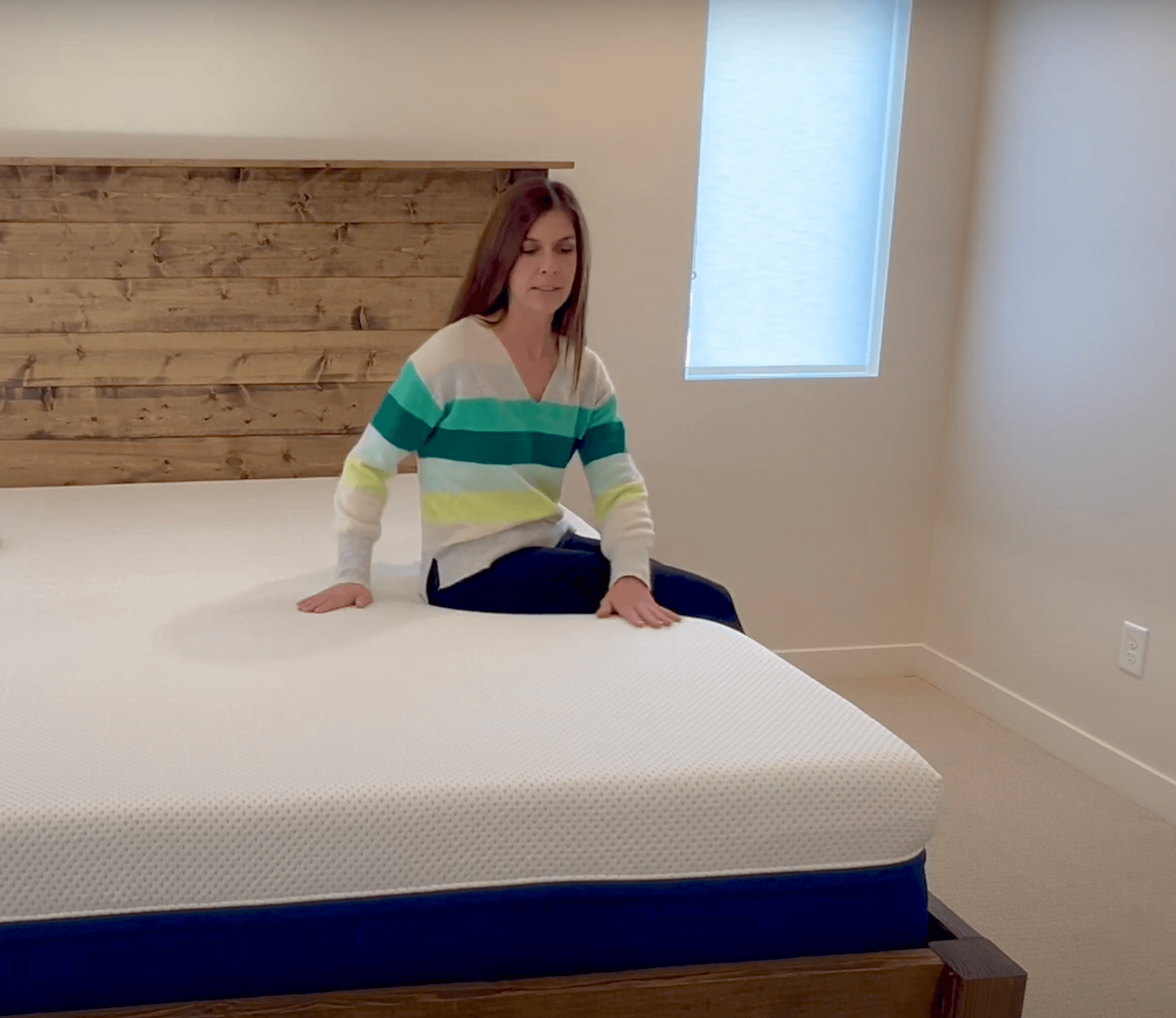
Watch Our Amerisleep AS3 Video Review
For acid reflux, the mattress matters less for the condition itself than for whether it lets you hold a left side position for a full night, since that is the position that keeps the lower esophageal sphincter above the stomach. That was the frame I used when I tested the Amerisleep AS3, and it is why it finished first out of the 50+ mattresses I tested for this guide.
During testing, my shoulder pressed into the Bio-Pur layer far enough that I never felt the pressure buildup that usually pushes me onto my back around the third or fourth hour, and my hips stayed level with my shoulders rather than dropping below them. That combination is the whole job here, and the AS3 did it more reliably than anything else I tested.
The AS3 is a 12-inch all-foam mattress with a medium feel, 5 to 6 out of 10. When my partner rolled over during testing, movement on my side barely registered, which matters more here than it does on most category pages: a partner shifting is one more thing that can knock a side sleeper out of the position they are trying to hold. Motion transfer scored 10/10.
On temperature, the cover felt cool on first contact and the surface did not warm up as quickly as the denser all-foam beds I compared in the same session. The AS3 is also compatible with an adjustable base, so it pairs with the 6 inches of head elevation that reflux guidance calls for. It is the pick I would put in front of a side sleeper who shares a bed and wants to stay on their side.
- 9 Value
- 8 Edge Support
- 9 Trial Period
- 9 Response Time
- 10 Motion Transfer
- 10 Cooling & Breathability
The AS3 won this guide because it made left side sleeping the easiest position to hold for a full night, and holding that position is the whole point of a reflux mattress.
During testing, my shoulder sank into the Bio-Pur layer far enough that I never felt the pressure buildup that usually pushes me onto my back around the third or fourth hour, and my hips stayed level with my shoulders instead of dropping below them. That combination is what keeps a side sleeper on their side, so a reflux sufferer is not fighting the mattress to stay in the position they are trying to maintain.
Motion isolation was the other reason. When my partner rolled over on the far side, the movement barely registered under me (Motion Transfer 10/10), which matters here because a partner shifting is one more thing that can knock you out of position during the night.
On temperature, the AS3 did not warm up as quickly as the denser all-foam beds I compared in the same session, and the surface felt cool on first contact rather than trapping heat around my shoulders. It is also compatible with an adjustable base, so it pairs with head elevation.
Best For:
- Side sleepers who want real give at the shoulder without the hip dropping out of line
- Combination sleepers who reposition during the night and need the surface to reset
- Couples, where one partner’s movement would otherwise pull the other off their side
Compare Instead:
- FORM Prime if you want zoned shoulder and hip support with a firmer lumbar section and a faster, grid-style response
- Amerisleep AS5 Hybrid if you want a noticeably softer, deeper-cradling surface at the shoulder
- Vaya Hybrid if you want the same medium feel at a lower price and can accept weaker motion isolation
The AS3 has a medium feel, 5 to 6 out of 10. Lying on my side, the Bio-Pur layer took my shoulder in without the slow settling that traps you in a hollow, and my hip stayed held up underneath rather than dropping below my shoulder line. My spine stayed level when I checked it, and it was still level hours later.
The surface releases quickly when you move. Unlike a dense traditional memory foam, the Bio-Pur did not hold a body impression, so rolling from my side to my back and back again took no effort and I settled straight into alignment rather than having to work my way back into it.
When I dropped weights on the far side of the bed to simulate a partner turning over, the transition foam took the energy before it reached me and the movement barely registered under my hip (Motion Transfer 10/10). For a side sleeper sharing a bed, that is the difference between holding a position and being knocked out of it.
On temperature, the cover felt cool on first contact and the surface did not warm up as quickly as the denser memory foam beds I compared in the same session, though it warmed gradually across the night rather than staying cool. This is the pick for a side or combination sleeper who shares a bed and wants a medium feel.
The Bio-Pur comfort layer is the reason my shoulder pressed in far enough to stay comfortable on my side without the hip following it down. It is a plant-based memory foam with an open-cell structure, and that structure is why it released when I moved instead of holding a body impression the way a denser closed-cell foam does.
The transition foam underneath is what absorbed my partner’s movement. When she rolled over, the layer took the energy before it reached the coil-free base, and I did not feel it under my hip (Motion Transfer 10/10).
The Bio-Core base is what kept my hips from dropping below my shoulder line over the course of a night. It is dense enough that the surface did not develop a sag under my hips the way a softer base does after several hours in one position.
The cover felt cool on first contact and the surface did not warm up as quickly as the denser all-foam beds I compared in the same session. The foams are CertiPUR-US certified and tested for low VOC emissions.
Pros:
- Motion Transfer (10/10): when my partner rolled over on the far side, the movement barely registered under my hip.
- Cooling and Breathability (10/10): the cover felt cool on first contact and the surface did not warm up as quickly as the denser all-foam beds I compared in the same session.
- Side-sleeping alignment: my shoulder pressed into the Bio-Pur layer without my hip following it down, and my spine stayed level when I checked it on my side.
Cons:
- Edge Support (8/10): the perimeter compressed further under my weight than the coil-reinforced hybrids on this list, so the outer few inches feel less secure to sleep on.
- Single firmness: the AS3 ships in one medium feel, so shoppers who want a noticeably softer or firmer surface have no option within this model.
- Mild off-gassing was noticeable for the first day after unboxing.
Why The Amerisleep AS3 Won
Among the 14 mattresses I tested for this guide, the AS3 was the one that made left side sleeping easiest to hold for a full night. My shoulder settled far enough into the Bio-Pur layer that the pressure buildup that usually pushes me onto my back never arrived, while my hips stayed level with my shoulders instead of dropping below them. Add motion isolation that scored 10/10 and adjustable base compatibility for head elevation, and it is the pick I would recommend first to a side sleeper trying to stay on their side.
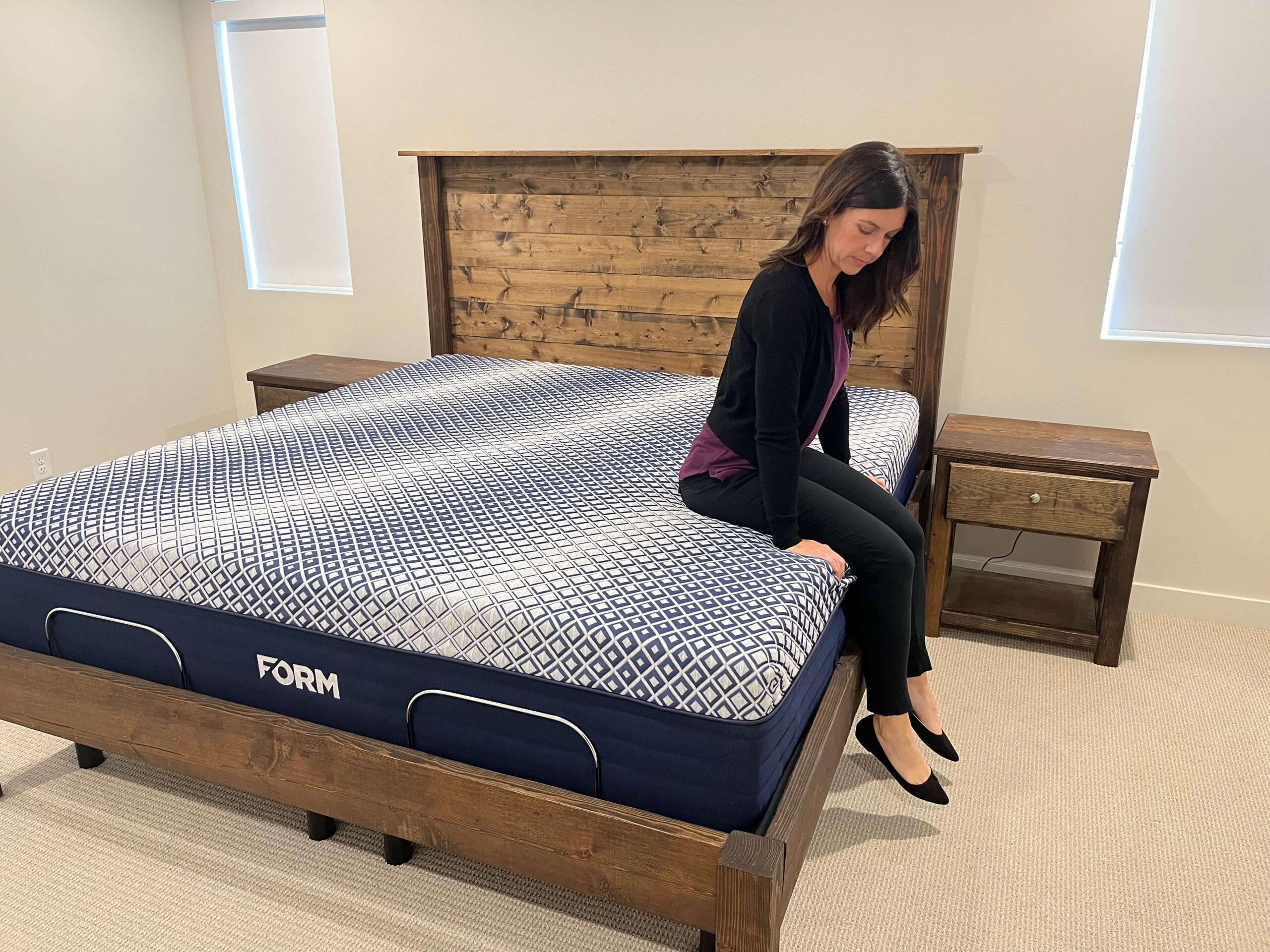
Watch Our FORM Prime Video Review
For acid reflux, the mattress matters less for the condition itself and more for how comfortably it lets you sleep on your side through the night, since left-side sleeping keeps the lower esophageal sphincter above the stomach. That was the frame I used when I tested the FORM Prime, and its zoned build made a strong case.
Side sleeping only works if the surface gets the balance right. If the shoulder is held too rigidly against a firm surface, you shift to relieve the pressure and can end up rolling off your side. If the mattress is too soft, the hip sinks out of line and the lower back compensates.
The FORM Prime’s shoulder zone rates approximately 4.5 out of 10 and let my shoulder settle in, while the firmer lumbar zone at approximately 7 out of 10 kept my hips and spine aligned. Staying on my side felt comfortable rather than effortful across several nights of testing.
The FORM Prime works best for side and combination sleepers, and it also suits couples: motion isolation and edge support both scored at the top of the scale in testing, so a restless partner was only faintly noticeable.
The AeroWeave™ cover and open GelGrid™ channels kept the surface breathable, which helps, since being woken by heat is one more disruption acid reflux sufferers do not need.
It is also compatible with an adjustable base, which is worth noting here. Head elevation of at least 6 inches is one of the most effective steps for nighttime reflux, and the FORM Prime flexed cleanly into a raised position during testing with no bunching or gaps.
Who should consider something else: dedicated stomach sleepers who want a very firm, unyielding surface should test carefully during the trial, since the grid flexes by design. Shoppers set on all-natural materials or a lower price will also want to look elsewhere on this list.
- 8 Value
- 10 Edge Support
- 10 Trial Period
- 9 Response Time
- 10 Motion Transfer
- 9 Cooling & Breathability
The FORM Prime earned its spot because its zoned build separates what the shoulder needs from what the hip needs, instead of splitting the difference across the whole surface.
During testing, the softer shoulder zone (about 4.5 out of 10) let my shoulder settle in without the pressure buildup that drives repositioning, while the firmer lumbar zone (about 7 out of 10) held my hips in line with my spine. Staying on my side felt comfortable rather than effortful across several nights, which is the practical test for anyone trying to hold a left-side position for a full night.
The grid was the other standout. When I changed position, the GelGrid layer released and reset immediately rather than holding the shape of where I had just been, so an occasional shift did not leave me settling back into alignment. For a combination sleeper who has to move, that reset is what keeps the position sustainable.
It also flexed cleanly into a raised head position on an adjustable base during testing, with no bunching or gapping at the hinge, so pairing side sleeping with 6 inches of head elevation works without fighting the mattress.
Best For:
- Side and combination sleepers who want targeted shoulder give with a firm lumbar section
- Couples, where motion isolation and edge support both scored 10/10 in testing
- Anyone planning to pair the mattress with an adjustable base for head elevation
Compare Instead:
- Amerisleep Organica if you want natural latex rather than a synthetic grid
- Vaya Hybrid if the premium price is the sticking point and you want a similar medium feel for less
- Saatva Classic if you want a firmer, more traditional coil feel with a Firm option
The FORM Prime has a zoned medium feel, softer at the shoulder and firmer through the lumbar zone.
Lying on my side, the GelGrid™ layer flexed immediately at my shoulder and hip, creating genuine pressure relief without the sensation of sinking in.
The give felt targeted rather than general: the grid compressed where I needed it and held firm where I did not, and sustained left-side sleeping stayed comfortable across extended testing.
Response time was the standout. Weights dropped on the surface rebounded quickly, and shifting positions took no effort.
So an occasional move during the night reset cleanly instead of leaving me to settle back into alignment.
Side and combination sleepers will find the most comfort here; stomach sleepers who want a very firm surface are the one group I would flag for careful trial testing.
The ZoneCoil 7-Series is the layer that does the real work for a side sleeper. It is split into seven zones, and in testing the difference was obvious under my body: the shoulder section gave (about 4.5 out of 10) while the lumbar section pushed back (about 7 out of 10), so my shoulder settled without my hip dropping out of line.
The GelGrid comfort layer with Integra-Mesh reinforcement is what made the surface reset instantly when I moved. The open polymer grid buckles at the contact point and springs back the moment the load lifts, which is why repositioning during the night cost me nothing and why I settled straight back into alignment (Response Time 9/10). The Integra-Mesh is also why the surface did not wobble the way an unreinforced grid does.
The BaseFlex foam encasement is what held the perimeter when I sat on the edge to put my shoes on. It compressed and stopped rather than folding, which is why edge support scored 10/10 and why the full width of the bed is usable.
The AeroWeave cover felt cool on first contact, and the open channels in the grid meant the surface did not build up the warm pocket I get on solid foam. The FORM Prime holds CertiPUR-US, GREENGUARD Gold, and OEKO-TEX Standard 100 certifications, and it is fiberglass-free. It arrives at full size by white glove delivery, so there is no compression wait and no off-gassing period.
Pros:
- Edge Support (10/10) and Motion Transfer (10/10): the perimeter held when I sat on it, and a restless partner was only faintly noticeable from the other side.
- Zoned shoulder and hip support: the softer shoulder zone let my shoulder settle while the firmer lumbar zone held my hips in line, so staying on my side felt comfortable rather than effortful across several nights.
- Adjustable base compatible: it flexed into a raised head position during testing with no bunching or gaps at the hinge.
- Delivered at full size by white glove service, so there is no compression wait and no off-gassing period.
Cons:
- Value (8/10): the FORM Prime sits at the premium tier and is one of the more expensive picks on this list.
- The grid flexes by design, so dedicated stomach sleepers who want a very firm, unyielding surface should test carefully during the trial.
- Built entirely from synthetic materials, so shoppers set on natural latex, cotton, or wool will not find them here.
The FORM Prime’s zoned design let my shoulder settle while keeping my hips supported, which made staying on my side through the night feel natural rather than effortful. Paired with an adjustable base for head elevation, it is a strong option for reflux sufferers who want responsive support, motion isolation, and a breathable surface.
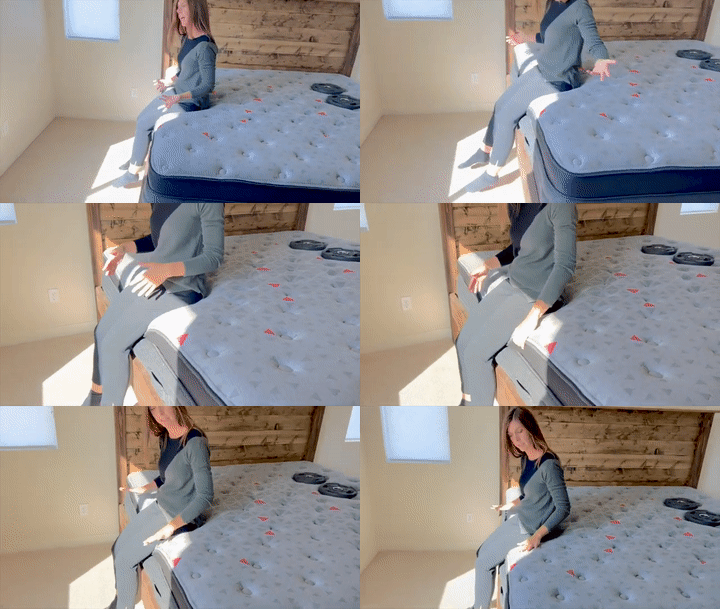
Watch Our Zoma Boost Video Review
The Zoma Boost is the luxury pick here because it was the most stable surface I tested for a side sleeper who does not want to sink. It is a 15-inch hybrid with a medium-firm feel, roughly 5.5 out of 10.
During testing, the coil layer under the graphite foam kept my hip from settling below my shoulder line, which is exactly where plusher luxury beds lose side sleepers. The surface gave enough at the shoulder to stay comfortable, but it pushed back under my hip rather than letting it drop, so I held my side position without the slow drift onto my back that a softer luxury bed produces.
Edge support was the other reason it earned this spot. When I sat on the perimeter to put my shoes on, the edge compressed and held rather than folding, and sleeping close to the rail did not produce the roll-off feeling (Edge Support 10/10). On temperature, the graphite-infused foam did not warm up as quickly as the standard memory foam beds I compared, and the cover felt cool to the touch at first contact. It is the pick for a side sleeper who wants a firm, supportive luxury feel and for couples who need the full width of the bed to be usable.
- 10 Value
- 10 Edge Support
- 9 Trial Period
- 9 Response Time
- 10 Motion Transfer
- 9 Cooling & Breathability
The Zoma Boost took the luxury spot because it was the most stable surface I tested for a side sleeper who does not want to sink.
During testing, the coil layer under the graphite foam kept my hip from settling below my shoulder line, which is where a plusher luxury bed usually loses side sleepers. The medium-firm feel (about 5.5 out of 10) gave enough at the shoulder to stay comfortable, but the surface pushed back under the hip rather than letting it drop, so I held my side position without the slow drift onto my back.
Edge support was the second reason (Edge Support 10/10). When I sat on the perimeter to put my shoes on, the edge compressed and held rather than collapsing, and when I slept close to the rail I did not get the roll-off feeling. For a reflux sufferer sleeping on the far side of a shared bed, that means the outer third of the mattress is actually usable.
On temperature, the graphite-infused foam did not warm up as fast as the standard memory foam beds I compared, and the cover felt cool to the touch at first contact. It did not stay that way indefinitely, but it took longer to warm than the all-foam picks on this list.
Best For:
- Side sleepers who want a supportive rather than a plush luxury feel
- Couples who use the full width of the bed and need a stable perimeter
- Sleepers who run warm on traditional memory foam
Compare Instead:
- Amerisleep AS5 Hybrid if you want a genuinely soft, deep-cradling surface instead of a medium-firm one
- PlushBeds Signature Bliss if you want luxury built from organic latex and wool rather than synthetic foam
- Vaya Hybrid if you want a similar medium feel without the luxury price
The Zoma Boost has a medium-firm feel, roughly 5.5 out of 10. Lying on my side, the graphite foam took my shoulder in and the coils underneath pushed back against my hip, so my spine stayed level rather than bowing at the waist. That is the specific thing a side sleeper needs and the specific thing most luxury beds miss by going too soft.
When I rolled onto my back, the lumbar section stayed supported rather than dropping, so the position change did not cost me alignment. On temperature, the surface felt cool at first contact and warmed more slowly than the standard memory foam beds I compared, though it did warm gradually across the night.
Sitting on the edge to put my shoes on, the perimeter compressed and stopped rather than collapsing, and sleeping near the rail I did not feel like I was going to roll off (Edge Support 10/10). When my partner shifted, the coil pockets absorbed it and I did not feel it under my hip (Motion Transfer 10/10). This is the pick for a side sleeper who wants a supportive luxury feel and for couples who use the full width of a shared bed.
The zoned edge coil system is what kept my hip level when I slept on my side and what held the perimeter when I sat on it. The coils under the hips are tuned firmer than the coils at the shoulders, and in testing that is why my spine stayed straight on my side instead of bowing in the middle. The reinforced perimeter coils are why edge support scored 10/10 and why I did not get the roll-off feeling near the rail.
The graphite-infused memory foam is the layer that took my shoulder in. Graphite is more conductive than gel, and in practice the surface did not warm up as quickly as the standard memory foam beds I compared, though it did warm gradually over the night rather than staying cold.
The Reactiv layer between the foam and the coils is what stopped the surface from feeling stuck. When I changed position, it released rather than holding the shape I had just left, which is why repositioning felt like a spring rather than a climb.
The quilted gel cover felt cool to the touch at first contact. At 15 inches, the Boost sits tall, which is worth checking against your frame and your sheets.
Pros:
- Edge Support (10/10): the perimeter compressed and held when I sat on it to put my shoes on, and I did not get the roll-off feeling sleeping near the rail.
- Motion Transfer (10/10): my partner’s movement stopped at the coil pocket rather than traveling across the bed.
- Value (10/10): it carries a zoned coil system and a graphite foam stack at a price below the luxury beds on this list.
Cons:
- Mattress height: at 15 inches, the Boost will need deep-pocket sheets and sits high enough that getting in and out of bed is a real consideration for anyone with limited mobility.
- Response Time (9/10): the graphite memory foam still takes a beat to release, so the surface reads as a foam bed rather than a springy coil bed when you reposition.
- Built from synthetic foams with no natural or organic components.
Sleeping on my side, the coils under the graphite foam held my hip level rather than letting it drop below my shoulder, and the perimeter stayed firm enough that I could use the outer third of the bed without the roll-off feeling. It is the pick for a side sleeper who wants a supportive luxury feel rather than a plush one, and for couples who need a stable edge on a shared bed.
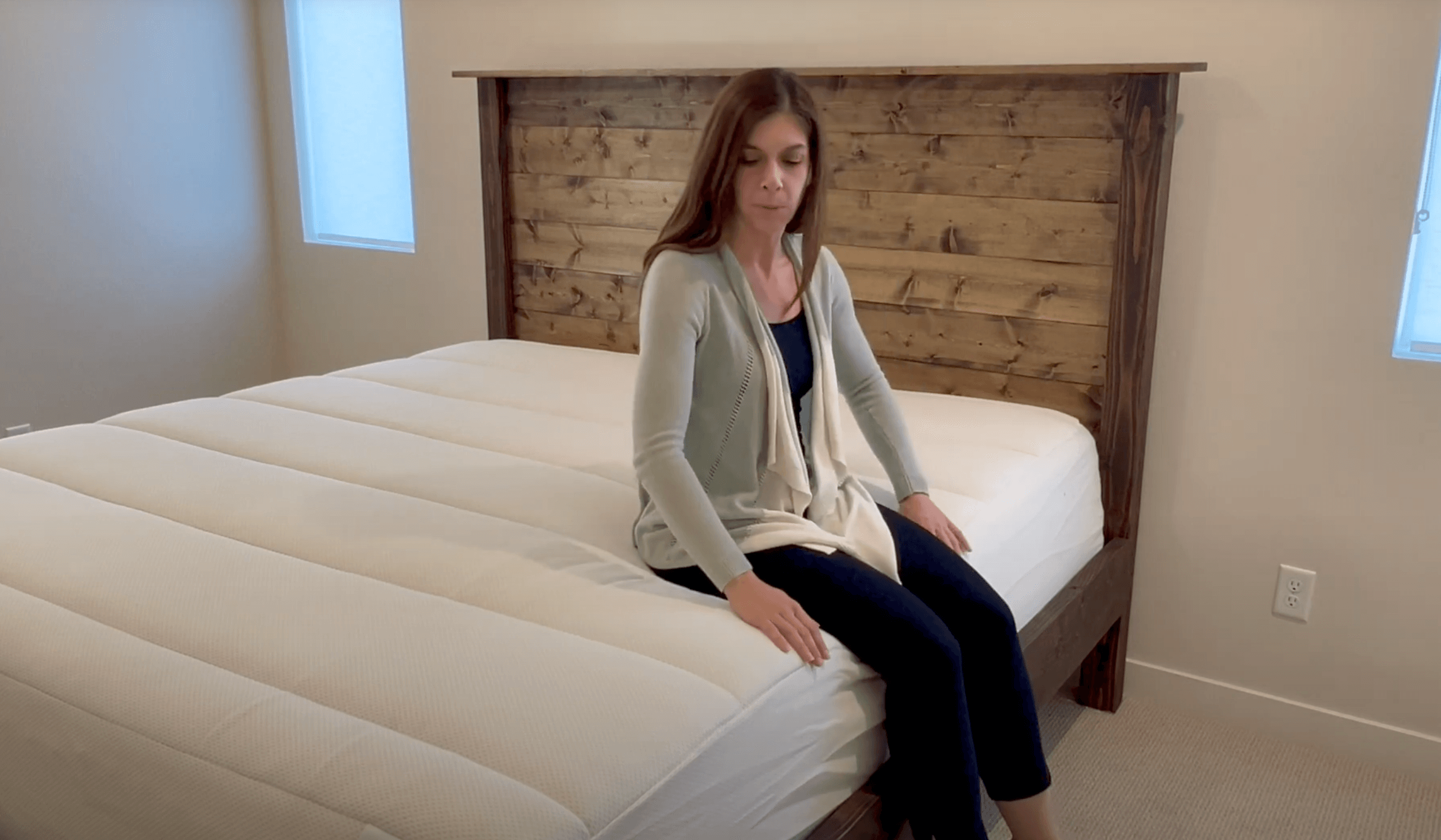
Watch Our Vaya Hybrid Video Review
The Vaya Hybrid is the budget pick here because it holds side-sleeping alignment at a price where most beds stop trying. It is a 12-inch hybrid with a medium feel, and it runs under $900 in a queen.
During testing, the Vaya comfort foam gave at my shoulder without letting the hip follow it down, and the pocketed coils underneath pushed back enough that my spine stayed level when I checked it on my side. That is the one thing a reflux mattress has to do, and at this price most beds do not do it.
Responsiveness was the other genuine strength. When I rolled from my side to my back and back again, the surface released immediately rather than holding a body impression, so repositioning during the night took no effort (Response Time 10/10). Sitting on the perimeter, the edge compressed but did not fold, which is unusual at this price (Edge Support 10/10).
The honest limitation is motion isolation. It scored 7/10, the lowest of any pick on this list, and when my partner shifted I felt it under me. That is the tradeoff you accept for the price, and it makes the Vaya Hybrid the pick for a budget-conscious side or combination sleeper who sleeps alone.
- 10 Value
- 10 Edge Support
- 9 Trial Period
- 10 Response Time
- 7 Motion Transfer
- 9 Cooling & Breathability
The Vaya Hybrid is the budget pick because it holds side-sleeping alignment at a price where most beds stop trying.
During testing, the Vaya comfort foam gave at my shoulder without letting the hip sink, and the pocketed coils underneath pushed back enough to keep my spine straight when I checked alignment on my side. That is the one thing a reflux mattress has to do, and this one does it under $900 in a queen.
Responsiveness was the other genuine strength (Response Time 10/10). When I rolled from my side to my back and back again, the surface released immediately rather than holding a body impression, so repositioning during the night took no effort and I settled straight back into alignment.
Edge support held up as well (10/10). Sitting on the perimeter, the edge compressed but did not fold, which is unusual at this price and matters if you sleep near the rail.
The honest limitation is motion transfer. It scored 7/10, the lowest of any pick on this list, and when my partner shifted I felt it under me. That is the tradeoff you accept for the price.
Best For:
- Budget shoppers who still need real side-sleeping alignment
- Combination sleepers who reposition often and want a fast-responding surface
- Solo sleepers, where the weaker motion isolation does not cost anything
Compare Instead:
- Amerisleep AS3 if you share the bed and need motion isolation that will not wake you
- Zoma Start if you want the lowest profile and an all-foam feel at a similar price
- Zoma Boost if you want the same coil support with a stronger cooling build
The Vaya Hybrid has a medium feel, 5 to 6 out of 10. The Euro-quilted cotton layer is what you feel first, and it is soft on contact, but the support underneath is what matters. Lying on my side, my shoulder pressed into the comfort foam while the coils pushed back under my hip, and my spine stayed level rather than sagging at the waist.
The responsiveness stood out most. When I changed positions, the surface released immediately rather than holding a body impression, so I never had to climb out of a hollow to reposition (Response Time 10/10, the highest here alongside three others).
On temperature, the coil layer carried more airflow than the solid all-foam beds I compared, and the cotton layer pulled moisture off the surface, so the bed did not build up the trapped warmth I get on a dense foam mattress. It did warm gradually across the night rather than staying cool.
Where I felt the price was motion. When my partner shifted, the movement traveled to my side more than it did on the pricier hybrids here (Motion Transfer 7/10). This is the pick for a budget-conscious side or combination sleeper who sleeps alone.
The Vaya comfort foam is what gave at my shoulder without letting the hip follow. It is a responsive open-cell foam rather than a slow memory foam, and that is why the surface released immediately when I rolled over instead of holding an impression (Response Time 10/10, the highest here alongside three others).
The pocketed coil layer underneath is what kept my hips level with my shoulders on my side. The coils pushed back where my hip pressed in, and when I checked my spine line it stayed straight rather than sagging. The coils are also what carried the airflow: the surface did not build up the trapped warmth I get on a solid all-foam bed.
The reinforced perimeter is what held when I sat on the edge (Edge Support 10/10). It compressed and stopped rather than folding, which is unusual at this price.
The Euro-quilted cotton layer at the top is what makes the first contact feel soft rather than firm, and it is the layer that pulls moisture away from the surface.
Where the build shows its price is motion isolation. The coils transmit more movement than the pocketed systems in the pricier hybrids here, and when my partner shifted I felt it (Motion Transfer 7/10, the lowest on this page).
Pros:
- Response Time (10/10): when I rolled from my side to my back and back again, the surface released immediately rather than holding a body impression.
- Edge Support (10/10): the perimeter compressed but did not fold when I sat on it, which is unusual at this price.
- Value (10/10): it holds side-sleeping alignment at under $900 in a queen, where most budget beds stop trying.
Cons:
- Motion Transfer (7/10): the lowest of any pick on this page. When my partner shifted, I felt it under me, which is the tradeoff you accept for the price.
- Single firmness: the Vaya Hybrid ships in one medium feel only, so shoppers who want a noticeably softer or firmer surface have no option within this model.
On my side, the Vaya comfort foam gave at my shoulder while the coils underneath kept my hip level, and the surface released the moment I moved rather than holding an impression. At 12 inches and under $900 in a queen, it is the pick for a budget-conscious side or combination sleeper who sleeps alone, since motion transfer is the one place it gives ground.
5. Best For Side Sleepers
Helix Midnight Luxe

Warranty
15 Years

Sleep Trial
100 Nights

Shipping
Free
Watch Our Helix Midnight Luxe Video Review
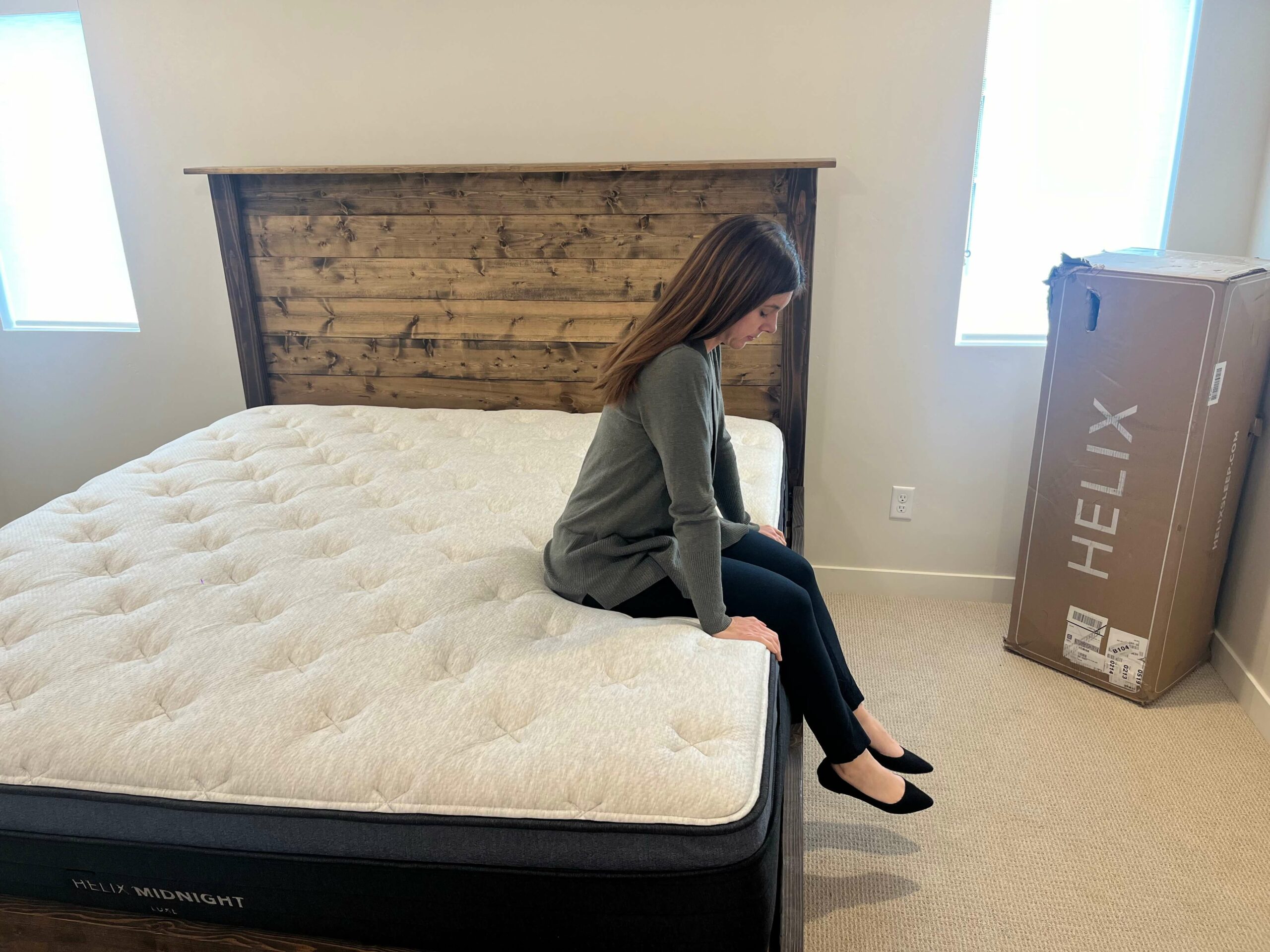
The Helix Midnight Luxe is the side-sleeping pick because its zoned coils are calibrated for exactly the shoulder-versus-hip problem that side sleeping creates. It is a 13.5-inch hybrid with a medium feel, 5 to 6 out of 10.
During testing, the pillow top and the copper gel layer let my shoulder press in without bottoming out, while the coils under my lumbar zone stayed firm enough that my hip did not drop. When I checked my spine line on my side, it stayed straight rather than sagging in the middle, and I could hold that position without the low-grade shoulder ache that eventually pushes me onto my back.
Motion isolation and edge support both scored 10/10. When my partner changed positions, the movement stopped at the coil pocket rather than traveling across the bed, and the perimeter held when I sat on it, so the full width of a shared bed stays usable.
The Midnight Luxe ships in a single medium feel. There are no firmness options, so what you feel on the first night is what you get. It is the pick for a side sleeper who wants deep shoulder relief with a firm lumbar section underneath, and for couples where one partner’s movement would otherwise pull the other off their side.
- 7 Value
- 10 Edge Support
- 9 Trial Period
- 9 Response Time
- 10 Motion Transfer
- 9 Cooling & Breathability
The Midnight Luxe is the side-sleeping pick because its zoned coils are calibrated for exactly the shoulder-versus-hip problem that side sleeping creates.
During testing, the pillow top and copper gel layer let my shoulder press in without bottoming out, while the coils under my lumbar zone stayed firm enough that my hip did not drop. When I checked my spine line on my side, it stayed straight rather than sagging in the middle, and I could hold that position without the low-grade shoulder ache that pushes you onto your back.
Motion isolation was the second reason (10/10). When my partner changed positions, the movement stopped at the coil pocket rather than traveling across the bed, and I did not feel it under my hip.
Edge support scored 10/10. The perimeter held when I sat on it and when I slept close to the rail, which makes the full surface usable on a shared bed.
The Midnight Luxe ships in a single medium feel. There are no firmness options, so what you feel in the showroom or the first night is what you get.
Best For:
- Side sleepers who want deep shoulder relief with a firm lumbar section underneath
- Couples who need strong motion isolation and a stable edge
- Sleepers who want a plush surface feel without a soft support core
Compare Instead:
- Saatva Classic if you want a choice of firmness levels rather than a single medium
- Vaya Hybrid if the price is the obstacle and you want a similar medium hybrid feel
- Amerisleep AS5 Hybrid if the Midnight Luxe is not soft enough at the shoulder for you
The Midnight Luxe has a medium feel, 5 to 6 out of 10. Lying on my side, the pillow top absorbed my shoulder joint and the copper gel layer underneath contoured without letting it bottom out, while the zoned coils held my hip up. My spine stayed level rather than dipping at the waist, and I did not get the shoulder ache that normally builds over the first hour and pushes me onto my back.
When I rolled onto my back, the lumbar zone stayed supported rather than dropping, so switching positions did not cost me alignment.
The surface releases quickly when you move. The coils push back the moment the load lifts, so I never felt stuck in an impression the way I do on a slow memory foam bed.
On temperature, the Tencel cover felt cool on first contact and the copper gel layer did not build up the warm pocket around my shoulder that I get on standard memory foam. It warmed gradually across the night rather than staying cool. This is the pick for a side sleeper who wants a plush surface with firm lumbar support underneath.
The zoned coil layer is the reason this bed works for side sleepers. The coils are calibrated in three sections, and in testing my hip pressed into a firmer zone than my shoulder did, which is why my spine stayed level on my side rather than dipping at the waist.
The copper gel memory foam above it is what took my shoulder in without bottoming out. It contours slowly enough to hold the shoulder joint but not so deeply that the hip follows, and the surface felt cool on first contact rather than warming immediately under my shoulder.
The Memory Plus transition foam is what stopped me feeling the coils underneath. Without it, a 1,000-coil layer under a plush top reads as a hard floor once you press through the comfort layers.
The pocketed coil construction is what absorbed my partner’s movement. The energy stopped at the coil pocket rather than traveling across the bed, which is why motion transfer scored 10/10.
The reinforced perimeter held when I sat on the edge (Edge Support 10/10), and the Tencel pillow top is what makes the surface feel soft at first contact. The Midnight Luxe ships in a single medium feel; there are no firmness options.
Pros:
- Motion Transfer (10/10): my partner’s movement stopped at the coil pocket and I did not feel it under my hip.
- Edge Support (10/10): the perimeter held when I sat on it and when I slept close to the rail.
- Zoned lumbar coils: my shoulder pressed into the copper gel layer without bottoming out while my hip stayed held up, so my spine stayed level on my side.
Cons:
- Value (7/10): the lowest value score on this page alongside the Saatva. This is a luxury-priced bed.
- Single firmness: the Midnight Luxe ships in one medium feel only. There are no firmness options, so what you feel on the first night is what you get.
- The medium surface lets the hips settle more than stomach sleepers want.
Lying on my side, the pillow top took my shoulder in while the zoned coils held my hip up, and my spine stayed level rather than dipping at the waist. It is the pick for a side sleeper who wants deep shoulder relief with firm lumbar support underneath, and for couples who need motion isolation that scored 10/10.
Watch Our Saatva Classic Video Review
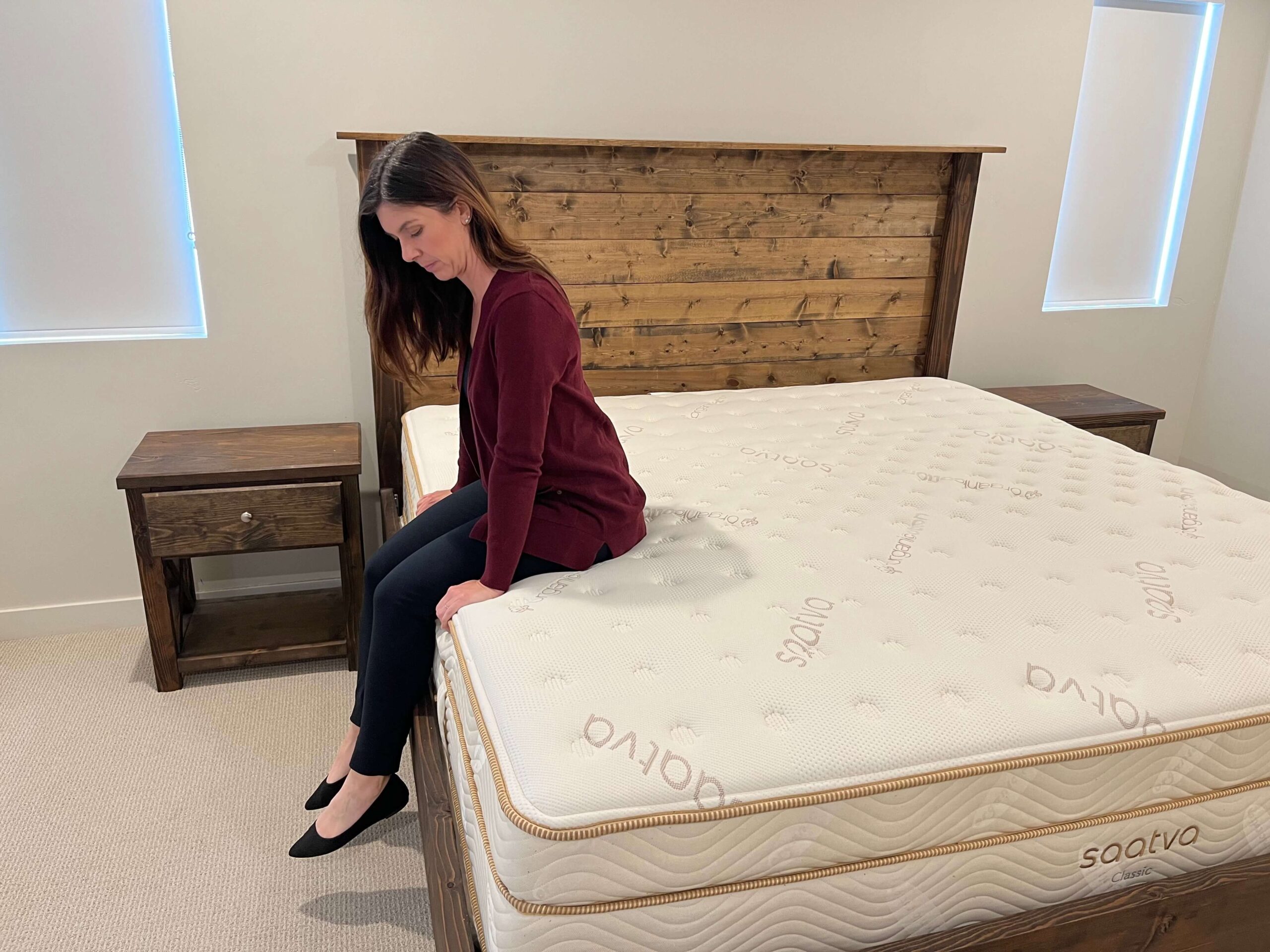
The Saatva Classic is the innerspring pick because it is the only bed on this list that lets you choose the firmness that fits your side-sleeping build, rather than making you adapt to a single feel. It ships in Plush Soft, Luxury Firm, and Firm, and in two heights (11.5 and 14.5 inches).
I tested the Luxury Firm. The Euro pillow top absorbed my shoulder while the dual-coil system underneath held my hip level, and I could feel the two layers working separately rather than one plush surface trying to do everything. When I rolled onto my back, the Lumbar Zone wire kept the lower back supported without letting it arch off the surface.
Response time was the standout. The coil system pushed back the instant I moved, so changing positions took no effort and the surface never held a shape (Response Time 10/10). For a side sleeper who has to shift and then get back onto their left side, that is the difference between a smooth reset and a five-minute resettle.
On temperature, the organic cotton cover and the airflow through the dual-coil system meant the surface did not build up the trapped warmth I get on a dense foam bed, though it warmed gradually across the night rather than staying cool.
The 365-night trial is the longest on this list, and that matters more here than it does on most category pages: if you are testing whether a positional change actually helps your sleep, you need months, not weeks. It is the pick for a side or combination sleeper who wants to choose their firmness and wants a full year to find out.
- 7 Value
- 10 Edge Support
- 10 Trial Period
- 10 Response Time
- 9 Motion Transfer
- 9 Cooling & Breathability
The Saatva Classic is the innerspring pick because it is the only bed here that lets you choose the firmness that fits your side-sleeping build, rather than making you adapt to one.
During testing on the Luxury Firm, the Euro pillow top absorbed my shoulder while the dual-coil system underneath held my hip level, and I could feel the difference between the two layers working rather than one plush surface doing everything. When I rolled to my back, the lumbar section stayed supported without the lower back arching off the surface.
Response time was the standout (10/10). The coil system pushed back the instant I moved, so changing positions took no effort at all and the surface never held a shape. For a combination sleeper who has to shift and then get back onto their left side, that is the difference between a smooth reset and a five-minute resettle.
Edge support (10/10) and the 365-night trial (10/10) are the other genuine strengths. The perimeter held under my full weight when I sat on it, and the year-long trial is the longest on this list, which matters when you are testing whether a position change actually helps your sleep over months.
Best For:
- Side sleepers who want to pick their firmness rather than accept a single medium
- Combination sleepers who need an immediate response when they reposition
- Shoppers who want a long trial window to test a positional change
Compare Instead:
- Helix Midnight Luxe if you want a coil bed with a plusher, more memory-foam-like surface
- Vaya Hybrid if the Saatva’s price is the obstacle and you want a comparable medium feel
- PlushBeds Signature Bliss if you want organic materials rather than a conventional coil build
I tested the Luxury Firm, which sits at 5 to 7 out of 10. The Euro pillow top is what you feel first and it is genuinely soft, but the coils underneath are doing the work, and you can feel the two layers acting separately rather than one plush surface trying to do everything.
Lying on my side, the pillow top gave enough at the shoulder that the joint never pressed against a hard surface, and the dual-coil system held my hip level so my spine stayed straight rather than sagging at the waist. On my back, the Lumbar Zone wire pushed back against my lower back rather than letting it drop.
The coils reset the instant I moved. Changing positions took no effort at all and the surface never held a shape, which is why response time scored 10/10 and why settling back onto my left side after a shift was immediate rather than a slow resettle.
When I sat on the perimeter to put my shoes on, the foam rails compressed and stopped rather than collapsing (Edge Support 10/10), so the full width of the bed stays usable on a shared mattress. This is the pick for a side or combination sleeper who wants to choose their firmness level.
The dual-coil system is what separates this bed from the foam-forward picks here. The 884 pocketed coils near the surface are what kept my hip supported on my side and what absorbed most of my partner’s movement before it reached me. The 416 tempered steel base coils underneath are what push back the instant you move, which is why response time scored 10/10 and why repositioning took no effort at all.
The Lumbar Zone spinal wire is what I felt under my lower back when I rolled off my side. It kept the lumbar section from dropping, so the position change did not cost me alignment.
The high-density foam rails around the perimeter are what held when I sat on the edge (Edge Support 10/10). They compressed and stopped rather than collapsing, which is what makes the full width of the bed usable on a shared mattress.
The 3-inch Euro pillow top is what makes the first contact soft, and the organic cotton cover is what kept the surface from warming as quickly as the foam-topped beds I compared. The foams are CertiPUR-US certified and tested for low VOC emissions.
The Classic ships in three firmness levels (Plush Soft, Luxury Firm, and Firm) and two heights (11.5 and 14.5 inches).
Pros:
- Response Time (10/10): the dual-coil system pushed back the instant I moved, so changing positions took no effort and the surface never held a shape.
- Trial Period (10/10): 365 nights, the longest window on this list, plus a lifetime warranty and free white glove delivery.
- Edge Support (10/10): the high-density foam rails compressed and stopped rather than collapsing when I sat on the perimeter.
Cons:
- Value (7/10): the lowest value score on this page alongside the Helix. This is a luxury-priced bed.
- The coil-forward feel sits on the surface rather than contouring into it, so sleepers who want the deep hug of an all-foam bed will not find it here.
- White glove delivery means a scheduled appointment rather than a box on the doorstep, which is worth planning around.
On the Luxury Firm, the Euro pillow top absorbed my shoulder while the dual-coil system held my hip level, and the coils pushed back the instant I moved, so repositioning cost me nothing. It is the pick for a side or combination sleeper who wants to choose their firmness and wants a full year to test whether a positional change actually helps.
7. Best Hybrid Mattress:
Leesa Sapira Chill Hybrid
Warranty
Lifetime
Sleep Trial
120 Nights
Shipping
Free
Watch Our Leesa Sapira Chill Video Review
The most reliable non-pharmacological step for nighttime acid reflux is sleeping on your left side, because it keeps the lower esophageal sphincter above the stomach and reduces the gravitational pull on stomach acid. That makes mattress selection for reflux less about the condition itself and more about whether the bed lets you hold that position across a full night.
That was the frame I used when I tested the Leesa Sapira Chill Hybrid, and its zoned build made the strongest case of any hybrid here.
Side sleeping is harder than it sounds on the wrong mattress. If the shoulder compresses too aggressively against a firm surface, you shift to relieve the pressure, and that shift can move you off your side. If the mattress is too soft, the hip sinks out of alignment and the lower back compensates, which eventually drives you to reposition anyway.
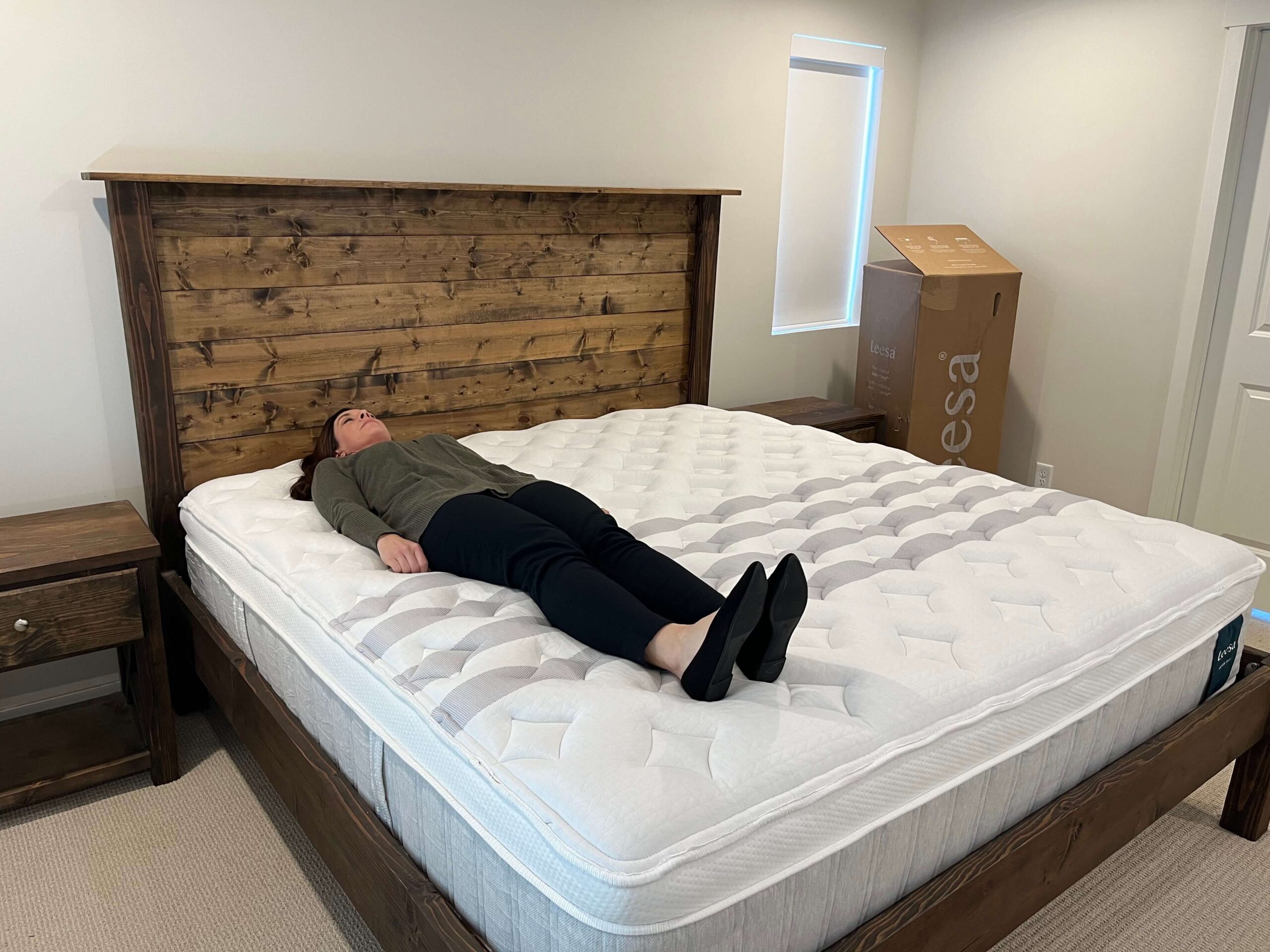
During testing on the Medium-Firm, the springs under my shoulder allowed enough compression that the pressure buildup never arrived, while the springs under my hips stayed firm and held my spine level. Sustained left-side sleeping felt comfortable rather than effortful across extended testing, which is the only measure that matters here.
The quilt top felt cool on first contact and did not warm up as quickly as the standard pillow-top constructions I compared, which scored it 10/10 on cooling, the highest on this list. That matters for a side sleeper specifically: being driven to move by heat is one more thing that can pull you off your side. It is the pick for a side sleeper who runs warm and wants zoned support with a choice of three firmness levels.
- 8 Value
- 10 Edge Support
- 9 Trial Period
- 10 Response Time
- 9 Motion Transfer
- 10 Cooling & Breathability
The Sapira Chill is the hybrid pick because its zoned spring calibration solves the shoulder-versus-hip conflict that decides whether side sleeping lasts a full night or two hours.
During testing on the Medium-Firm, the shoulder zone compressed enough that I never got the pressure buildup that normally drives me off my side, while the springs under my hips stayed firm and held my spine level. Sustained left-side sleeping felt comfortable rather than effortful across extended testing, which is the practical measure that matters here.
The surface temperature was the second reason (Cooling and Breathability 10/10, the highest on this list). The quilt top felt cool on first contact and did not warm up as quickly as the standard pillow-top constructions I compared, so I was not driven to move for a cooler spot.
Response time (10/10) rounds it out. The foam layers released immediately when I shifted, and the surface reset to neutral rather than holding the shape of the position I had just left.
It ships in three feels (Plush, Medium-Firm, and Firm) and is adjustable base compatible, so it pairs with head elevation.
Best For:
- Side sleepers who want zoned support and can pick their firmness
- Sleepers who run warm and want the coolest-testing surface on this list
- Anyone pairing side sleeping with an adjustable base
Compare Instead:
- Amerisleep AS3 if you want an all-foam feel with deeper contour rather than a coil-backed hybrid
- Vaya Hybrid if the price is the obstacle
- Amerisleep Organica if you want natural latex instead of memory foam
The quilt top felt cool on first contact, and it did not warm up as quickly as the pillow-top constructions I compared in the same session. It warmed gradually across the night rather than staying cold, but it took longer than anything else on this list, which is why it scored 10/10 on cooling.
Side sleeping on the Medium-Firm felt well balanced. My shoulder compressed into the softer spring zone without the pressure buildup that normally drives me to reposition, while my hip stayed supported rather than sinking into misalignment, and my spine held level when I checked it.
The foam layers reset quickly. When I shifted, the surface released rather than holding the shape of the position I had just left, so settling back onto my left side took no effort at all (Response Time 10/10). For anyone who has to move occasionally during the night, that reset is what keeps the position sustainable rather than something you have to fight for. This is the pick for a side sleeper who runs warm and wants a choice of firmness levels.
The zoned spring system is the layer that decides whether side sleeping lasts a night. The coils under the hips and lower back are calibrated firmer, and in testing that is what kept my spine level rather than letting my hip sink at the waist. The coils in the shoulder zone are calibrated softer, and that is why my shoulder compressed in without the pressure buildup that normally pushes me onto my back.
The cooling quilt top is what registered first. The surface felt cool on contact and did not warm up as quickly as the standard pillow-top constructions I compared, which is why cooling scored 10/10, the highest on this page.
The four foam layers underneath are what handle the reset. The surface contouring layer takes the shoulder and hip; the two transition layers release when you move rather than resisting, which is why response time scored 10/10 and why shifting positions never left me having to resettle into alignment.
The dense base layer is what stops the asymmetric compression that develops when a mattress is slept on from one side night after night, which matters if you are committing to left-side sleeping long term.
It ships in three feels (Plush, Medium-Firm, and Firm) and is adjustable base compatible.
Pros:
- Cooling and Breathability (10/10): the highest on this page. The quilt top felt cool on first contact and did not warm up as quickly as the standard pillow-top constructions I compared.
- Response Time (10/10): the foam layers released immediately when I shifted, and the surface reset to neutral rather than holding the shape I had just left.
- Edge Support (10/10): the perimeter held under my weight when I sat on it.
- Zoned springs: on the Medium-Firm, my shoulder compressed in without pressure buildup while my hips stayed level, so sustained left-side sleeping felt comfortable rather than effortful.
Cons:
- Value (8/10): a premium-tier price, and the highest-priced hybrid on this list after the FORM Prime.
- The Plush option lets the hips settle further than a heavier side sleeper needs, so body weight should drive the firmness choice at checkout rather than surface preference.
- No wedge or elevation system is included, so head elevation requires a separate adjustable base or wedge pillow.
On the Medium-Firm, the shoulder zone compressed enough that I never got the pressure buildup that drives me off my side, while the springs under my hips held my spine level. The quilt top felt cool on contact and did not warm as quickly as the pillow tops I compared. It is the pick for a side sleeper who runs warm and wants zoned support with a choice of three firmness levels.
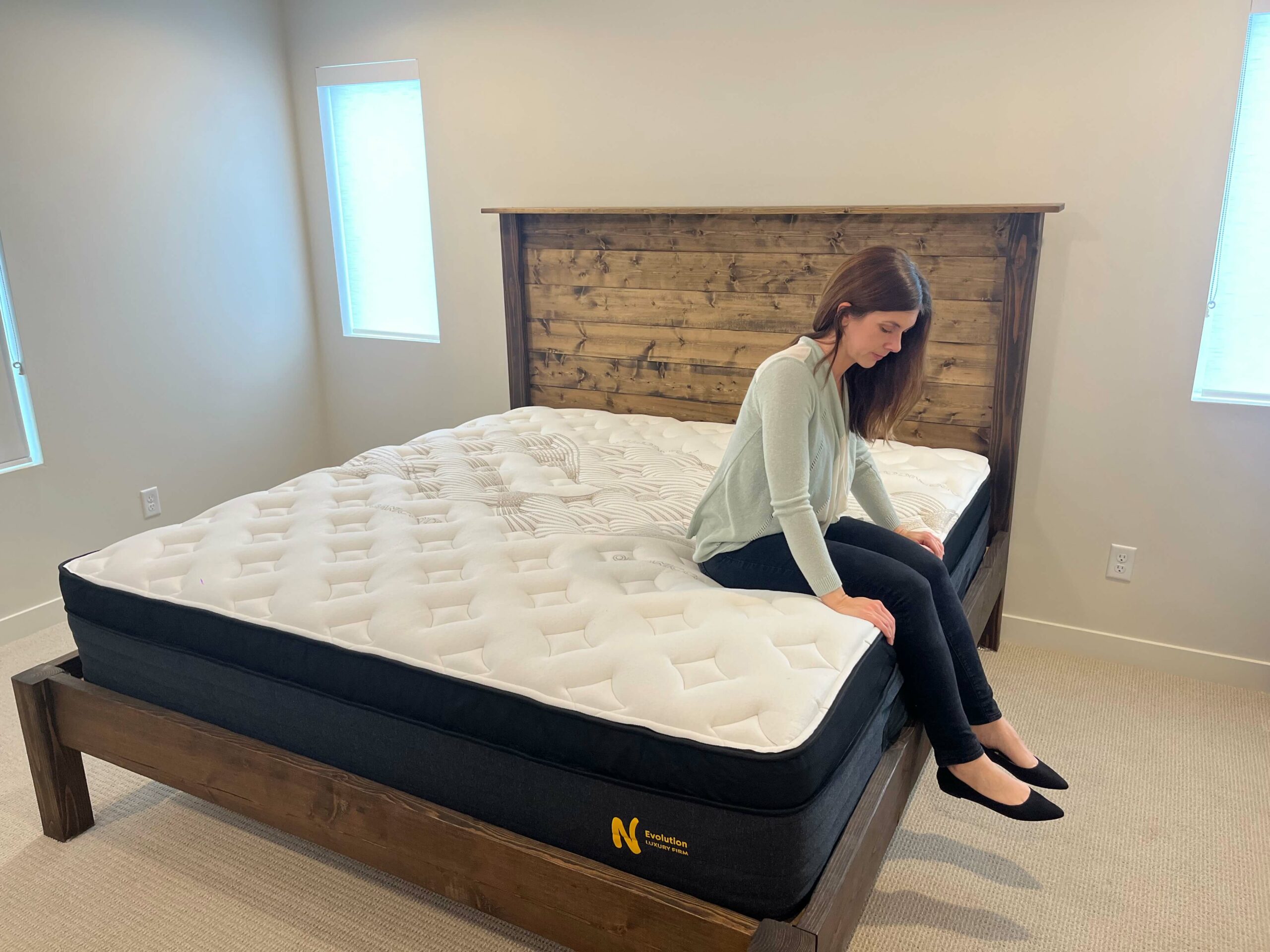
Watch Our Nolah Evolution Video Review
The Nolah Evolution is the pillow-top pick because it delivers a genuinely plush top surface without letting the hip sink, which is where most pillow tops fail a side sleeper. It is a 15-inch hybrid available in Plush, Luxury Firm, and Firm.
I tested the Luxury Firm. The quilted Euro topper compressed under my shoulder while the HDMax Tri-Zone coils held firm under my hip, so the surface felt soft on contact but my spine stayed straight when I checked it on my side. That separation between a soft surface and a firm core is the reason a pillow top can work for a side sleeper at all.
When I rolled onto my back, the zoned lumbar section stayed supported rather than letting my lower back drop, so switching positions did not cost me alignment.
Motion isolation and edge support both scored 10/10. When my partner moved, the coil pockets absorbed it before it reached my hip, and the perimeter held when I sat on it to put my shoes on. It is the pick for a side sleeper who wants a plush surface with a firm core, and for couples sharing the full width of a bed.
- 10 Value
- 10 Edge Support
- 10 Trial Period
- 9 Response Time
- 10 Motion Transfer
- 9 Cooling & Breathability
The Evolution is the pillow-top pick because it delivers a genuinely plush top surface without letting the hip sink, which is where most pillow tops fail a side sleeper.
During testing on the Luxury Firm, the quilted Euro topper compressed under my shoulder while the HDMax Tri-Zone coils held firm under my hip, so the surface felt soft on contact but my spine stayed straight when I checked it on my side. That separation is the reason a pillow top can work for reflux at all.
The zoned coils also changed what happened when I rolled onto my back. The lumbar section stayed supported rather than letting my lower back drop, so switching positions did not cost me alignment.
Motion isolation (10/10) and edge support (10/10) both scored at the top. When my partner moved, the coil pockets absorbed it and I did not feel it under my hip, and the perimeter held when I sat on it.
The mattress runs 15 inches tall, and it ships in Plush, Luxury Firm, and Firm.
Best For:
- Side sleepers who want a plush surface without losing hip support
- Couples who need strong motion isolation on a soft-feeling bed
- Sleepers who want to choose their firmness
Compare Instead:
- Amerisleep AS5 Hybrid if you want the plush feel to go deeper and softer
- Zoma Start if the 15-inch profile is too tall for your frame or your mobility
- Saatva Classic if you want a coil-forward feel rather than a foam-forward one
I tested the Luxury Firm, which sits at 6 to 7 out of 10. The quilted Euro topper is soft on contact, softer than the surface of any other coil bed on this list, and that is the whole appeal of a pillow top. What makes this one work is what sits underneath it.
Lying on my side, the topper compressed under my shoulder while the Tri-Zone coils stayed firm under my hip, so the surface felt plush but my spine stayed straight rather than sagging at the waist. That separation between a soft top and a firm core is exactly where most pillow tops fail a side sleeper, and it is where this one does not.
When I rolled onto my back, the lumbar zone pushed back rather than letting my lower back drop, so the position change did not cost me alignment.
The AirFoamICE layer takes a beat longer to release than a coil-forward bed does (Response Time 9/10), so a combination sleeper who repositions constantly will feel a small lag. When I sat on the perimeter, the reinforced edge compressed and stopped rather than collapsing (Edge Support 10/10). This is the pick for a side sleeper who wants a plush surface without giving up hip support.
The HDMax Tri-Zone coils are what let this bed be a genuine pillow top without failing a side sleeper. The coils under my hip were firmer than the coils under my shoulder, and in testing that is what kept my spine straight on my side even though the surface felt plush on contact.
The AirFoamICE layer is what took my shoulder in. It has an open-cell structure rather than a closed one, and in practice that is why my shoulder pressed in without the surface building up a warm pocket around it.
The high-resilience transition foam is what stopped the surface holding a shape. When I moved, it released rather than holding the impression, so repositioning during the night did not leave me climbing out of a hollow.
The pocketed coil construction is what absorbed my partner’s movement (Motion Transfer 10/10), and the reinforced perimeter held firm when I sat on the edge (Edge Support 10/10).
The quilted Euro topper with the AirBreath gusset is what makes the first contact feel soft, and the gusset is what keeps air moving through the topper rather than letting it sit against the body. The foams are GREENGUARD Gold and CertiPUR-US certified and tested for low VOC emissions. The Evolution runs 15 inches tall and ships in Plush, Luxury Firm, and Firm.
Pros:
- Motion Transfer (10/10) and Edge Support (10/10): my partner’s movement was absorbed at the coil pocket, and the perimeter held firm when I sat on it.
- Value (10/10): a zoned coil system, a lifetime warranty, and three firmness options at a price below the other luxury picks here.
- Zoned coils under a plush topper: the Euro topper compressed under my shoulder while the coils held firm under my hip, so the surface felt soft on contact without my spine sagging at the waist.
Cons:
- Mattress height: at 15 inches, the Evolution needs deep-pocket sheets and sits high enough to be a genuine consideration for anyone who has trouble getting in and out of bed.
- Response Time (9/10): the AirFoamICE layer takes a beat longer to release than the coil-forward picks here, so a combination sleeper who repositions constantly will notice a small lag.
- The Plush option is soft enough at the surface that stomach sleepers should choose Firm rather than assuming the zoning will compensate.
On my side, the quilted Euro topper compressed under my shoulder while the Tri-Zone coils held firm under my hip, so the surface felt plush on contact without my spine sagging at the waist. It is the pick for a side sleeper who wants a genuinely soft top surface and a firm core underneath, and for couples who need motion isolation and edge support that both scored 10/10.
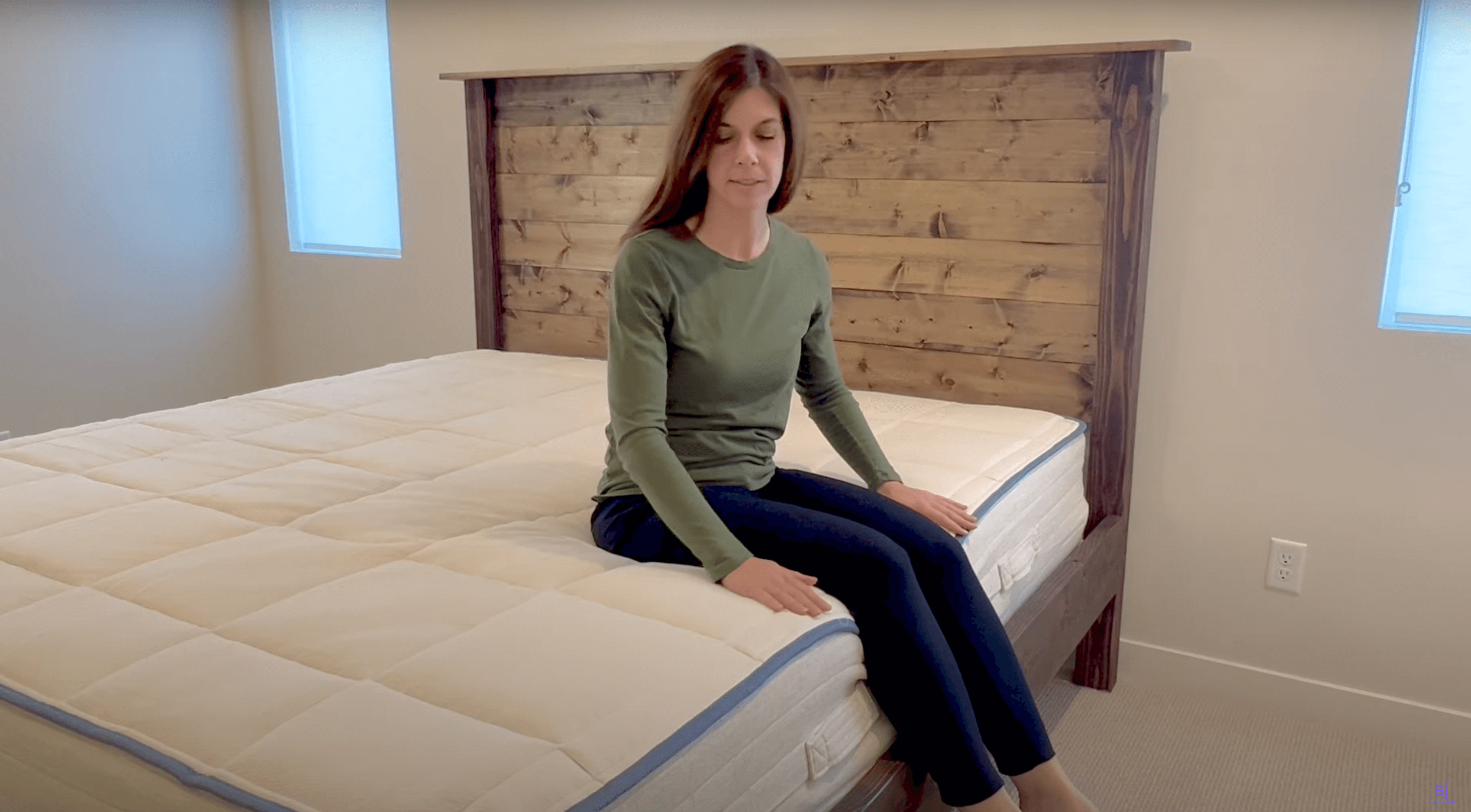
Watch Our Amerisleep Organica Mattress Video Review
The Amerisleep Organica is the latex pick because latex holds a side sleeper up in a way memory foam does not, and this build uses that to keep the hip from sinking over the course of a night. It is a 13-inch latex hybrid with a medium feel, 5 to 6 out of 10.
During testing, the Talalay latex comfort layer took my shoulder in and then pushed straight back, so there was no slow settling and no body impression to climb out of. When I lay on my side and checked my spine line, my hip stayed level with my shoulder, and it stayed level over hours rather than gradually dropping the way an all-memory-foam bed lets it.
Response time was the standout (10/10). Latex resets the instant you lift off it, so every position change reset cleanly and I never had to work my way back into alignment.
The honest limitation is the perimeter. When I sat on the edge, it compressed further than the coil-reinforced beds on this list, and sleeping right against the rail felt less secure (Edge Support 8/10, tied for the lowest here). It is the pick for a side or combination sleeper who wants a buoyant latex feel and natural materials, provided they do not sleep against the edge.
- 9 Value
- 8 Edge Support
- 9 Trial Period
- 10 Response Time
- 9 Motion Transfer
- 9 Cooling & Breathability
The Organica is the latex pick because latex holds a side sleeper up in a way memory foam does not, and this build uses that to keep the hip from sinking.
During testing, the Talalay latex comfort layer took my shoulder in and then pushed straight back, so there was no slow settling and no body impression to climb out of. When I lay on my side and checked my spine line, my hip stayed level rather than drifting below my shoulder, and it stayed level over hours instead of gradually sinking the way an all-memory-foam bed does.
Response time was the standout (10/10, the highest here alongside three others). Latex resets the instant you lift off it, so every position change reset cleanly and I never had to resettle into alignment.
The honest limitation is edge support (8/10, tied for the lowest of any pick on this page). When I sat on the perimeter, it compressed further than the coil-reinforced beds here, and sleeping right against the rail felt less secure than it did on the Nolah or the Saatva.
Best For:
- Side sleepers who want a buoyant, springy contour rather than a memory foam hug
- Combination sleepers who reposition often and want the fastest reset on the page
- Shoppers who want natural latex, organic cotton, and a wool fire barrier
Compare Instead:
- PlushBeds Signature Bliss if you want organic latex with a stronger perimeter (Edge Support 10/10)
- Amerisleep AS3 if you want a memory foam contour rather than a latex push-back
- Zoma Boost if you want a firmer surface under the hip
The Organica has a medium feel, 5 to 6 out of 10, and it behaves differently from every memory foam bed on this list. Lying on my side, the Talalay latex took my shoulder in and pushed straight back rather than settling into a hollow, so the contour was immediate but shallow.
My hip stayed level with my shoulder over hours instead of gradually dropping, which is the specific thing latex does that memory foam does not. When I checked my spine line late in a testing night, it was where it had been at the start.
Position changes reset instantly. Latex rebounds the moment the load lifts, so I never had to climb out of an impression to move (Response Time 10/10).
The perimeter is where the build gives ground. When I sat on the edge, it compressed further than the coil-reinforced beds here, and sleeping against the rail felt less secure (Edge Support 8/10). This is the pick for a side or combination sleeper who wants a buoyant latex feel and does not sleep against the edge.
The Talalay latex comfort layer is what makes this bed behave differently from every memory foam pick here. Latex takes the shoulder in and pushes straight back rather than settling, and in testing that is why the surface reset the instant I lifted off it and why response time scored 10/10.
The 3-inch latex topper is what let my shoulder press in far enough to stay comfortable on my side. It gave under the joint without the slow sink that lets the hip follow, so my spine stayed level rather than bowing at the waist.
The pocketed coil core is what held my hip up over hours. It pushed back under load rather than compressing further, which is what stops an all-latex bed feeling springy without direction.
The organic cotton cover and the wool layer underneath are why the surface did not warm the way a foam-topped bed does. The wool also serves as the fire barrier, which is why this build carries no chemical flame retardant. The cotton is GOTS certified and the latex is Rainforest Alliance certified.
Where the build shows its limits is the perimeter. The edge compressed further under my weight than the coil-reinforced picks here (Edge Support 8/10, tied for the lowest on this page), so sleeping right against the rail felt less secure than it did on the Nolah or the Saatva.
Pros:
- Response Time (10/10): the latex rebounded the instant I lifted off it, so every position change reset cleanly and I never had to work my way back into alignment.
- Side-sleeping hold: my hip stayed level with my shoulder over hours rather than gradually sinking, which is what latex does that memory foam does not.
- Natural materials with certification scope: GOTS-certified organic cotton, Rainforest Alliance-certified latex, and a wool fire barrier in place of a chemical flame retardant.
Cons:
- Edge Support (8/10): tied for the lowest on this page. The perimeter compressed further under my weight than the coil-reinforced picks here, so sleeping right against the rail felt less secure.
- The buoyant latex push-back takes adjustment if you are coming from a traditional innerspring or memory foam bed. It holds you up rather than letting you in.
- The mattress is heavy enough to need two people for setup or rotation.
The Talalay latex took my shoulder in and pushed straight back rather than settling, so my hip stayed level on my side over hours instead of gradually sinking, and the surface reset the instant I lifted off it. It is the pick for a side or combination sleeper who wants a buoyant latex feel and natural materials, provided a softer perimeter is acceptable.
10. Best Cooling Mattress:
Amerisleep AS6 Black Series

Warranty
20 Years
Sleep Trial
100 Nights
Shipping
Free
Watch Our Amerisleep AS6 Black Series Video Review
The AS6 Black Series is the cooling pick because it was the surface that took the longest to warm up in my testing, and heat is the second thing that drives a side sleeper out of position after shoulder pressure.
During testing, the CryoCool cover felt cold to the touch on first contact, not merely cool, and the surface under my shoulder and hip did not build up the warm pocket I get on standard memory foam in the first hours. It did not stay cold indefinitely, but it warmed more slowly than every other bed I compared in the same session (Cooling and Breathability 10/10).
Firmness choice is the other reason it earned this spot. The AS6 ships in Plush Soft, Luxury Firm, and Firm, which means a side sleeper who needs shoulder give and a back sleeper who needs a flatter lumbar line can both get the same cooling build. On the Luxury Firm I tested, the zoned support kept my hip level while my shoulder still pressed in.
Motion isolation scored 10/10. When I got in and out of bed, my partner did not register it, which on a tall coil bed is not a given. It is the pick for a side sleeper who runs hot, and for couples with different firmness needs who want the same build in two feels.
- 9 Value
- 9 Edge Support
- 9 Trial Period
- 9 Response Time
- 10 Motion Transfer
- 10 Cooling & Breathability
The AS6 is the cooling pick because it was the surface that took the longest to warm up in my testing, and heat is the second thing that drives a reflux sufferer out of position after pressure.
During testing, the CryoCool cover felt cold to the touch on first contact, not just cool, and the surface under my shoulder and hip did not build up the warm pocket I get on standard memory foam within the first hours. It did not stay cold indefinitely, but it warmed more slowly than every other pick I compared in the same session.
Firmness choice is the second reason. The AS6 ships in Plush Soft, Luxury Firm, and Firm, which means a side sleeper who needs shoulder give and a back sleeper who needs a flatter lumbar line can both get the same cooling build. On the Luxury Firm I tested, the zoned support kept my hip level while the shoulder still pressed in.
Motion isolation scored 10/10. When I got in and out of bed, my partner did not register it, which on a 14-inch coil bed is not a given.
Best For:
- Side sleepers who run hot and want the slowest-warming surface on this list
- Couples with different firmness needs who want the same build in two feels
- Sleepers who want a coil-backed bed with a memory foam surface
Compare Instead:
- Leesa Sapira Chill if you want a comparable cooling surface at a lower price (Cooling 10/10)
- Amerisleep AS3 if you want the same brand and feel in a thinner, lighter all-foam build
- Vaya Hybrid if the AS6’s price is the obstacle
The AS6 ships in three feels. I tested the Luxury Firm, which sits at 5 to 7 out of 10. The first thing I noticed was the CryoCool cover: it felt cold to the touch, not merely cool, before I had settled at all.
Lying on my side, the Bio-Pur layer took my shoulder in without the slow sink of traditional memory foam, and the zoned support underneath kept my hip level so my spine stayed straight. On my back, the lumbar section stayed firm rather than letting my lower back drop.
The surface releases quickly when you move. Unlike a slow memory foam bed, the AS6 did not hold an impression, so repositioning during the night did not leave me climbing out of a hollow.
Motion isolation was the other standout. When I got in and out of bed, my partner did not register it (Motion Transfer 10/10).
On temperature, the surface under my shoulder and hip did not build up the warm pocket I get on standard memory foam, and it warmed more slowly than every other bed I compared in the same session. It did warm gradually across the night rather than staying cold. This is the pick for a side sleeper who runs hot and wants to choose their firmness.
The CryoCool cover is what registered first. It felt cold to the touch rather than merely cool, and in testing the surface took longer to warm under my shoulder and hip than any other bed I compared in the same session.
The TitanAir layer is a titanium-infused memory foam, and titanium is more conductive than gel. In practice that is why the warm pocket I normally get around my shoulder on memory foam did not build up in the first hours.
The ArcticWave cooling bands run through the comfort layers and are what kept the surface from developing hot spots where I was pressing in hardest, which on a soft surface is usually exactly where heat collects.
The Bio-Pur layer is what took my shoulder in without the slow settling of traditional memory foam, and it is why the surface released when I moved rather than holding an impression.
The Affinity transition foam is what stops you feeling the coil core through the comfort layers, and the PrecisionCoil core is what held my hip level on my side and absorbed my partner’s movement before it reached me (Motion Transfer 10/10). The coils are reinforced at the perimeter, which is why the edge held when I sat on it.
The AS6 ships in Plush Soft, Luxury Firm, and Firm.
Pros:
- Cooling and Breathability (10/10): the CryoCool cover felt cold to the touch on first contact, and the surface warmed more slowly under my shoulder and hip than any other bed I compared in the same session.
- Motion Transfer (10/10): I got in and out of bed without my partner registering it, which on a tall coil bed is not a given.
- Three firmness options (Plush Soft, Luxury Firm, Firm), so two people with different support needs can get the same cooling build.
Cons:
- Weight and profile: at roughly 110 pounds in a queen, the AS6 needs two people to move and deep-pocket sheets to fit.
- Value (9/10): it is one of the highest-priced picks on this list.
- The Plush Soft option lets the hips settle further than back and stomach sleepers want, so the firmness choice at checkout matters more here than on a single-feel bed.
The CryoCool cover felt cold to the touch on first contact, and the surface under my shoulder and hip warmed more slowly than any other bed I compared in the same session. It is the pick for a side sleeper who runs hot and wants the option to choose between Plush Soft, Luxury Firm, and Firm without giving up the cooling build.
11. Best Organic Mattress:
PlushBeds Signature Bliss

Warranty
Lifetime
Sleep Trial
100 Nights
Shipping
Free
Watch Our Plushbeds Signature Bliss Video Review
The PlushBeds Signature Bliss is the organic pick because it is the only bed on this list that delivers latex support and a reinforced perimeter in a build that is GOLS certified for the latex and GOTS certified for the cotton and wool. It is a 14-inch hybrid available in Medium and Medium-Firm.
During testing, the Dunlop latex core took my shoulder in and rebounded immediately rather than settling, and my hip stayed level on my side instead of gradually dropping across the night. When I rolled onto my back, the pocketed coils held the lumbar section up rather than letting it fall.
Edge support was the standout (10/10). The perimeter held firm when I sat on it to put my shoes on, and I could sleep right against the rail without the roll-off sensation, which is not typical for a latex-topped bed.
Response time matched it (10/10). Every position change reset cleanly because the latex and coils released together rather than holding a shape. The wool layer serves as the fire barrier, which is why this build carries no chemical flame retardant. It is the pick for a side sleeper who wants certified organic materials without giving up perimeter support.
- 9 Value
- 10 Edge Support
- 10 Trial Period
- 10 Response Time
- 9 Motion Transfer
- 9 Cooling & Breathability
The Signature Bliss is the organic pick because it is the only bed here that delivers latex support and a reinforced perimeter in a GOLS and GOTS certified build.
During testing, the Dunlop latex core took my shoulder in and rebounded immediately, and my hip stayed level on my side rather than settling in over the course of the night. When I rolled onto my back, the pocketed coils held the lumbar section up rather than letting it drop, so the position change did not cost alignment.
Edge support was the standout (10/10). The perimeter held firm when I sat on it and I could sleep right against the rail without the roll-off sensation, which is not typical for a latex-topped bed.
Response time (10/10) matched it. Every time I changed position the latex and coils released together, so the surface never held a shape and I did not have to work my way back into alignment.
The wool layer serves as the fire barrier, which is why this build carries no chemical flame retardant. The mattress is GOLS certified for the latex and GOTS certified for the cotton and wool.
Best For:
- Side sleepers who want organic materials without giving up perimeter support
- Combination sleepers who need a fast, springy reset
- Shoppers who specifically want certified organic latex, cotton, and wool
Compare Instead:
- Amerisleep Organica if you want a latex build at a lower price and can accept a softer edge (8/10)
- Saatva Classic if you want an organic cotton cover on a conventional coil bed with three firmness options
- Zoma Boost if organic materials are not the priority and you want a stronger cooling build
The Signature Bliss ships in Medium and Medium-Firm. I tested the Medium, which sits at 5 out of 10. Latex feels different from memory foam the moment you lie down: it takes the shoulder in and then pushes straight back, so the contour is immediate but shallow, with none of the slow sink that leaves you in a hollow.
Lying on my side, that push-back is what kept my hip level with my shoulder rather than letting it settle across the night, and my spine held straight when I checked it late in a testing night as well as early. When I rolled onto my back, the pocketed coils held the lumbar section up rather than letting it drop.
The reset is the fastest thing about this bed. Every time I changed position, the latex and the coils released together and the surface never held a shape, so I never had to work my way back into alignment (Response Time 10/10).
When I sat on the perimeter to put my shoes on, it compressed and stopped rather than rolling away, and I could sleep right against the rail without the roll-off sensation (Edge Support 10/10). That is unusual on a latex-topped bed and it is the strongest single result this mattress produced.
On temperature, the organic cotton cover and the wool layer underneath meant the surface did not build up the warm pocket I get on a foam-topped bed, though it warmed gradually across the night rather than staying cool. This is the pick for a side sleeper who wants certified organic materials without giving up perimeter support.
The 3-inch GOLS-certified Dunlop latex core is what gives this bed its response. Latex rebounds the instant the load lifts, and in testing that is why the surface never held a body impression and why every position change reset cleanly (Response Time 10/10).
The individually wrapped coils underneath are what held my hip level on my side and what kept the lumbar section supported when I rolled onto my back. They also absorbed most of my partner’s movement before it reached me.
The perimeter is the standout. The coil system is reinforced at the edge, and when I sat on it to put my shoes on it compressed and stopped rather than rolling away (Edge Support 10/10), which is unusual on a latex-topped bed.
The organic British wool layer is what kept the surface from warming the way a foam bed does, and it doubles as the fire barrier, which is why there is no chemical flame retardant in this build. The GOTS-certified organic cotton cover is what pulls moisture off the surface.
The layers are held together with a mechanical zip rather than adhesive, which is why there is no off-gassing period after unboxing. The latex is GOLS certified; the cotton and wool are GOTS certified.
The Signature Bliss ships in Medium and Medium-Firm only, and it is heavy enough to need two people to move.
Pros:
- Edge Support (10/10): the reinforced coil perimeter compressed and stopped when I sat on it, which is unusual on a latex-topped bed.
- Response Time (10/10): the Dunlop latex rebounded the instant the load lifted, so the surface never held a body impression.
- Certified organic build: GOLS-certified latex, GOTS-certified cotton and wool, with the wool serving as the fire barrier so there is no chemical flame retardant.
Cons:
- Two firmness options only (Medium and Medium-Firm), so sleepers who want a genuinely soft or genuinely firm surface have no option within this model.
- The mattress is heavy enough that rotating it requires a second person.
- Value (9/10): an organic latex hybrid at this build quality carries a premium price.
The Dunlop latex core rebounded the instant I lifted off it, so my hip stayed level on my side rather than settling in over the night, and the reinforced perimeter held firm when I sat on it. It is the pick for a side sleeper who wants certified organic latex, cotton, and wool without giving up edge support.
12. Best Soft Mattress:
Amerisleep AS5 Hybrid

Warranty
20 Years
Sleep Trial
100 Nights
Shipping
Free
Watch Our AS5 Hybrid Video Review
The AS5 Hybrid is the soft pick because it is the deepest shoulder cradle on this page, and a broad-shouldered side sleeper who cannot get comfortable on a medium bed will feel the difference on the first night. It is a 14-inch hybrid at 3 out of 10 firmness, the softest bed on this list by a wide margin.
During testing, my shoulder sank noticeably further into the Bio-Pur layer than on any other pick, and the pressure at the shoulder joint that normally builds up over an hour of side sleeping simply did not arrive. That is the specific problem this bed solves.
The coils underneath are what keep the softness from becoming a sagging spine. My hips stayed supported even though the surface at the top gave freely, so my spine held level on my side rather than bowing at the waist.
The honest limitation is response time (8/10, tied for the lowest here). At 3 out of 10 firmness, the surface takes a beat longer to release when you move, so if you reposition often you will feel the lag. It also lets the hips settle further than back and stomach sleepers want. It is the pick for a side sleeper who finds medium beds too firm at the shoulder, and for lighter-weight sleepers who do not press deep enough into a medium surface to get relief.
- 8 Value
- 9 Edge Support
- 9 Trial Period
- 8 Response Time
- 9 Motion Transfer
- 10 Cooling & Breathability
The AS5 Hybrid is the soft pick because it is the deepest shoulder cradle on this page, and a broad-shouldered side sleeper who cannot get comfortable on a medium bed will feel the difference immediately.
During testing, my shoulder sank noticeably further into the Bio-Pur layer than on any other pick here, and the pressure at the shoulder joint that normally builds up over an hour simply did not arrive. My hips still stayed supported by the coils underneath, so the softness at the top did not translate into a sagging spine on my side.
Cooling was the other genuine strength (10/10, tied for the highest on this page). The cover felt cool on contact and the surface did not warm up as quickly as the denser all-foam beds I compared, which matters on a soft bed where you sit deeper in the surface.
The honest limitation is response time (8/10, the lowest of any pick here alongside the Zoma Start). At 3 out of 10 firmness, the surface takes a beat longer to release when you move, so if you reposition often you will feel the lag. It also allows the hips to sink further than back and stomach sleepers want.
Best For:
- Side sleepers who find medium beds too firm at the shoulder
- Lighter-weight side sleepers who do not press deep enough into a medium surface to get relief
- Hot sleepers who want a soft feel without a heat-trapping surface
Compare Instead:
- Amerisleep AS3 if you want the same brand and cooling build with a medium feel and a faster response
- Nolah Evolution if you want plush at the surface with a firmer core underneath
- Zoma Boost if you need the hips held higher than a soft bed allows
The AS5 Hybrid is 3 out of 10, the softest surface on this list. The cover felt cool on first contact, and then the Bio-Pur layer took my shoulder in further than any other bed here did.
That depth is the point. Lying on my side, the pressure at the shoulder joint that normally builds over the first hour never arrived, because the surface let the joint through instead of pressing back against it. If you have broad shoulders or a lighter frame and medium mattresses have never given you enough at the shoulder, this is what you are looking for.
The pocketed coils underneath keep the softness from becoming a problem. My hips stayed held up while my shoulder sank, so my spine stayed level rather than bowing at the waist. Back and stomach sleepers, though, will find the hips settle further than they want.
The surface releases more slowly than the coil-forward picks here. At this firmness it takes a beat to reset when you move (Response Time 8/10, tied for the lowest on this page), so a combination sleeper who repositions constantly will notice the lag.
On temperature, the surface did not warm up as quickly as the denser all-foam beds I compared (Cooling and Breathability 10/10, tied for the highest here), which matters more on a soft bed because you sit deeper into it. This is the pick for a side sleeper who finds medium beds too firm at the shoulder.
The Bio-Pur comfort layer is what makes this the softest surface on the page. At 3 out of 10 firmness, my shoulder sank noticeably further into it than on any other pick, and the pressure at the shoulder joint that normally builds over an hour of side sleeping simply did not arrive.
The Active Flex transition foam is what keeps that softness from becoming a trap. It adds pushback under the comfort layer, so when I moved the surface released rather than holding me in the hollow I had made, though at this firmness it still takes a beat longer to reset than the coil-forward picks here (Response Time 8/10, tied for the lowest on this page).
The pocketed coil core is what stopped the softness at the top from becoming a sagging spine. It held my hip up while the surface let my shoulder in, which is the whole reason a soft bed can work for a side sleeper at all. The coils are reinforced at the perimeter, which is why the edge held when I sat on it.
The cover felt cool on contact and the surface did not warm up as quickly as the denser all-foam beds I compared (Cooling and Breathability 10/10, tied for the highest here), which matters more on a soft bed because you sit deeper in the surface.
The AS5 Hybrid is built without fiberglass. Its foams are CertiPUR-US certified and tested for low VOC emissions.
Pros:
- Cooling and Breathability (10/10): tied for the highest here. The cover felt cool on contact and the surface did not warm up as quickly as the denser all-foam beds I compared, which matters more on a soft bed because you sit deeper into it.
- Deepest shoulder cradle on this page: my shoulder sank noticeably further into the Bio-Pur layer than on any other pick, and the pressure that normally builds at the shoulder joint over an hour never arrived.
- The pocketed coil core held my hip up while the surface let my shoulder in, so the softness at the top did not become a sagging spine on my side.
Cons:
- Response Time (8/10): tied for the lowest on this page. At 3 out of 10 firmness the surface takes a beat longer to release when you move, so frequent repositioning comes with a noticeable lag.
- At 3 out of 10, the surface lets the hips sink further than back and stomach sleepers want.
- The mattress is heavy and awkward to move, and the cover requires careful cleaning rather than a machine wash.
My shoulder sank further into the Bio-Pur layer than on any other bed I tested here, and the pressure at the shoulder joint that normally builds up over an hour of side sleeping never arrived, while the coils underneath still held my hip up. It is the pick for a side sleeper who finds medium mattresses too firm at the shoulder, and for lighter-weight sleepers who do not press deep enough into a medium surface to get relief.

Watch Our Westin Heavenly Bed Review
The Westin Heavenly Bed is the hotel pick because it reproduces a specific feel: a plush pillow-top surface over a coil core that pushes back. That combination is what most people are actually remembering when they say a hotel bed was comfortable.
During testing, the Fenice pillow top gave under my shoulder while the wrapped coils underneath held my hip up, so the surface felt soft on contact without letting my spine sag on my side. When I rolled onto my back, the coils pushed back against my lower back rather than letting it arch.
Response time was the standout. The coil core released instantly when I moved, so position changes took no effort and the surface never held an impression (Response Time 10/10). Edge support scored 10/10 as well: the perimeter held when I sat on it to put my shoes on.
The limitation is unavoidable and it is why this bed scores 7.7 overall rather than in the nines. There is no in-home trial (Trial Period 0/10), and shipping costs $285 on top. For anyone buying a mattress specifically to test whether a positional change helps their sleep, that is a hard tradeoff. It is the pick for a side or combination sleeper who already knows they like this exact feel.
- 8 Value
- 10 Edge Support
- 0 Trial Period
- 10 Response Time
- 9 Motion Transfer
- 9 Cooling & Breathability
The Heavenly Bed is the hotel pick because it reproduces a specific feel: a plush pillow-top surface over a coil core that pushes back, which is what most people are actually remembering when they say a hotel bed was comfortable.
During testing, the Fenice pillow top gave under my shoulder while the wrapped coils underneath held my hip up, so the surface felt soft on contact without letting my spine sag on my side. When I rolled onto my back, the coils pushed back against my lower back rather than letting it arch.
Response time was the standout (10/10). The coil core released instantly when I moved, so position changes took no effort and the surface never held an impression.
Edge support scored 10/10. The perimeter held when I sat on it to put my shoes on.
The limitation is unavoidable and it is why this bed scores 7.7 overall rather than in the nines: Trial Period 0/10. There is no in-home trial. You commit at purchase, and shipping is $285 on top. For a reflux sufferer specifically, that is a hard tradeoff, because the whole reason to buy a new mattress here is to test whether a positional change works over weeks.
Best For:
- Side and combination sleepers who want a plush hotel surface over a responsive coil core
- Sleepers who already know they like this feel from staying at a Westin
- Shoppers who are confident enough in the feel that they do not need a trial window
Compare Instead:
- Saatva Classic if you want a comparable luxury coil feel with a 365-night trial
- Nolah Evolution if you want a plush pillow top with a lifetime warranty and a 120-night trial
- Helix Midnight Luxe if you want the plush surface with a 100-night trial and stronger motion isolation
The Heavenly Bed has a medium feel, 5 to 6 out of 10. The Fenice pillow top is the first thing you feel and it is deeply plush, which is what people are describing when they remember a hotel bed as comfortable. Underneath it, the coils are firmer than the surface suggests.
Lying on my side, the pillow top gave under my shoulder while the wrapped coils held my hip up, so my spine stayed level rather than sagging at the waist. On my back, the coils pushed back against my lower back rather than letting it arch.
The coil core resets instantly. When I changed positions the surface released straight away and never held an impression, which is why response time scored 10/10 and why moving during the night took no effort at all.
When my partner moved around, the coil pockets absorbed most of it and I barely felt it under my hip, so a restless partner is not going to pull you off your side.
On temperature, the gel-infused foam and the airflow through the coil layer meant the surface did not build up the warm pocket I get on a solid foam bed, and after several hours it still felt cooler to the touch than the denser all-foam picks I compared. It warmed gradually across the night rather than staying cool. This is the pick for a side or combination sleeper who wants a plush hotel surface over a responsive coil core.
The individually wrapped coil core is what does the support work. When I lay on my side, the coils under my hip pushed back rather than letting it settle, and when I rolled onto my back they held the lumbar section up instead of letting it arch. They are also what makes this bed reset instantly when you move (Response Time 10/10).
The gel-infused foam comfort layers are what sit between you and the coils. They took my shoulder in and contoured without the slow-sink feel of traditional memory foam, and they are why I did not feel the coil pockets through the surface. The gel is why the surface did not warm as quickly as the denser foam beds I compared.
The Fenice plush pillow top is what you feel first, and it is the reason this bed reads as a hotel mattress. It is deeply tufted, and the tufting is not decorative: it holds the comfort layers in place so the surface does not shift or develop soft spots under repeated one-sided sleeping.
The reinforced perimeter held when I sat on the edge to put my shoes on (Edge Support 10/10).
At 13.25 inches the profile sits in the middle of this list, which keeps it compatible with standard deep-pocket sheets and most frames.
Pros:
- Response Time (10/10): the coil core released the instant I moved, so position changes took no effort and the surface never held an impression.
- Edge Support (10/10): the perimeter held when I sat on it to put my shoes on.
- The Fenice pillow top gave under my shoulder while the wrapped coils held my hip up, so the surface felt plush on contact without letting my spine sag on my side.
Cons:
- Trial Period (0/10): there is no in-home trial. You commit at purchase with no return window, which is the single reason this bed scores 7.7 overall rather than in the nines.
- Shipping costs $285 on top of the mattress price, and white glove delivery is mandatory.
- Built from synthetic foams and coils with no natural, organic, or certified-organic components.
The Fenice pillow top gave under my shoulder while the wrapped coils underneath held my hip up, and the coil core released the instant I moved, so position changes took no effort. It is the pick for a side or combination sleeper who already knows they like this exact hotel feel, because there is no in-home trial to test it with.
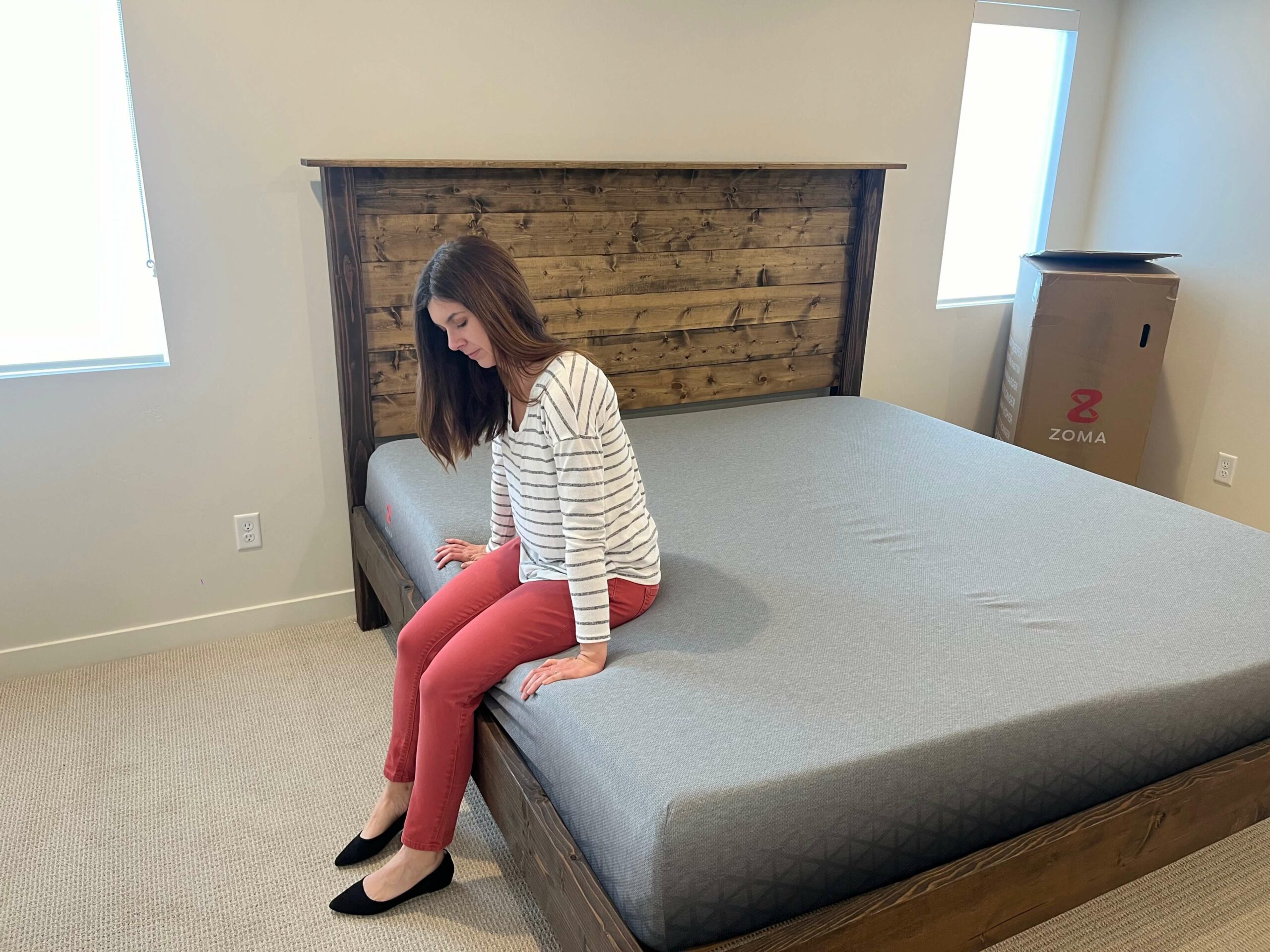
Watch Our Zoma Start Video Review
The Zoma Start is the boxed pick because at 10 inches it is the only bed on this list that sits flat on an adjustable base without the profile fighting the hinge, and head elevation of at least 6 inches is one of the most effective steps for nighttime reflux. It is an all-foam memory foam mattress with a medium feel, 6 out of 10.
During testing, the gel-infused memory foam cushioned my shoulder while the Reactiv transition layer underneath kept my hip from dropping, so the side-sleeping line held even on the thinnest mattress here. When I raised the head of an adjustable base, the Start flexed cleanly at the hinge with no bunching, which a 15-inch bed does not do.
Edge support was the surprise (10/10). The dense base foam held the perimeter when I sat on it, which is unusual for an all-foam bed at this price.
The honest limitation is response time (8/10, tied for the lowest here). The memory foam takes a beat to release when you move, so a combination sleeper who repositions frequently will feel the lag more than they would on a coil bed. It is the pick for a side sleeper pairing a mattress with head elevation, and for a budget shopper who wants a low-profile all-foam feel.
- 10 Value
- 10 Edge Support
- 9 Trial Period
- 8 Response Time
- 9 Motion Transfer
- 9 Cooling & Breathability
The Zoma Start is the boxed pick because at 10 inches it is the only bed here that will sit flat on an adjustable base without the profile fighting the hinge, and head elevation is the single most effective step for nighttime reflux.
During testing, the gel-infused memory foam cushioned my shoulder while the Reactiv transition layer underneath kept my hip from dropping, so the side-sleeping line held even on the thinnest mattress on this list. The low profile is not a compromise here, it is the reason to buy it: a 15-inch bed on an articulating base bunches at the fold, and a 10-inch all-foam bed does not.
Edge support was the surprise (10/10). The dense base foam held the perimeter when I sat on it, which is unusual for an all-foam bed at this price.
Value scored 10/10, and it is the cheapest bed here.
The honest limitation is response time (8/10, the lowest here alongside the AS5). The memory foam takes a beat to release when you move, so a combination sleeper who repositions frequently will feel the lag more than they would on a coil bed.
Best For:
- Anyone pairing a mattress with an adjustable base for head elevation
- Budget shoppers who want an all-foam feel and a low profile
- Guest rooms and second bedrooms where a boxed delivery matters
Compare Instead:
- Vaya Hybrid if you want coils and a faster response at a similar price
- Amerisleep AS3 if you want a deeper all-foam contour and stronger motion isolation
- Amerisleep AS6 Black Series if the low profile is not a requirement and you want a cooling build
The Zoma Start has a medium feel, 6 out of 10, and at 10 inches it is the thinnest bed on this list. That matters more than it sounds like it should: this is the only mattress here that flexes cleanly at the hinge on an adjustable base, and head elevation is the step reflux guidance points to most often.
Lying on my side, the gel-infused memory foam cushioned my shoulder while the Reactiv layer underneath kept my hip from dropping below my shoulder line, so the side-sleeping line held even on the thinnest surface here. My spine stayed level when I checked it.
The memory foam takes a beat to release when you move. It is not slow, but it is slower than the coil beds on this list, so a combination sleeper who repositions frequently will notice the lag (Response Time 8/10, tied for the lowest here).
When I sat on the perimeter, the dense base foam held rather than collapsing, which is unusual for an all-foam bed at this price (Edge Support 10/10).
On temperature, the ventilated AirCloth cover felt cool on first contact and the gel-infused foam did not build up the trapped warmth I get on a solid, unventilated memory foam surface. It warmed gradually across the night rather than staying cool, but it took longer to do so than the denser all-foam beds I compared. This is the pick for a side sleeper pairing a mattress with head elevation on an adjustable base.
The gel-infused memory foam comfort layer is what took my shoulder in. It contours rather than resists, and in testing that is why the shoulder joint stayed comfortable on my side rather than building up pressure over the first hour.
The Reactiv transition layer underneath is what stops that contour becoming a hollow. When I lifted off, the layer pushed the surface back rather than letting it hold my shape, though the memory foam above it still takes a beat to release (Response Time 8/10, the lowest here alongside the AS5).
The high-density base foam is what kept my hip from dropping below my shoulder over hours, and it is also what held the perimeter when I sat on the edge (Edge Support 10/10, which is unusual for an all-foam bed at this price).
The ventilated AirCloth cover is what registered on first contact. It felt cool rather than warm, and the surface did not build up the trapped heat I get on a solid, unventilated memory foam cover.
At 10 inches, the Start is the thinnest bed on this list, and that is the point: it sits flat on an adjustable base and flexes at the hinge without bunching, which a 15-inch bed does not.
Its foams are CertiPUR-US certified and tested for low VOC emissions.
Pros:
- Edge Support (10/10): the dense base foam held the perimeter when I sat on it, which is unusual for an all-foam bed at this price.
- Value (10/10): the cheapest bed on this list, and the only one whose 10-inch profile flexes cleanly at the hinge on an adjustable base without bunching.
- The gel memory foam cushioned my shoulder while the Reactiv layer underneath kept my hip from dropping, so the side-sleeping line held on the thinnest mattress here.
Cons:
- Response Time (8/10): tied for the lowest on this page. The memory foam takes a beat to release when you move, so a combination sleeper who repositions frequently will feel the lag.
- Low profile: at 10 inches, heavier sleepers may compress through to the base foam, and the bed sits low enough that some shoppers will find it hard to get out of.
- All-foam construction with no coils and no natural or organic materials.
The gel memory foam cushioned my shoulder while the Reactiv layer underneath kept my hip from dropping, and at 10 inches the Start flexed cleanly at the hinge on an adjustable base with no bunching. It is the pick for a side sleeper pairing the mattress with head elevation, and for a budget shopper who wants a low profile and an all-foam feel.
The Mattresses We Have Tested
Every mattress below was tested hands-on and on camera by me, Kristina Hindes, our lead tester. Each row links to its written review and filmed test, so you can check our work. For how we score every mattress, see How We Test Mattresses.
See the full list, with review and video links
| Mattress | Review and video |
|---|---|
| Amerisleep AS2 | Review · Video |
| Amerisleep AS3 | Review · Video |
| Amerisleep AS3 Hybrid | Review · Video |
| Amerisleep AS5 | Review (test clips inside) |
| Amerisleep AS5 Hybrid | Review · Video |
| Amerisleep AS6 Black Series | Review · Video |
| Amerisleep Organica | Review · Video |
| Amerisleep Organica Plush | Review · Video |
| Bear Original | Review · Video |
| Birch Natural | Review · Video |
| Brooklyn Bedding Aurora Luxe Hybrid | Review · Video |
| Brooklyn Bedding Plank Firm | Review · Video |
| Casper The One | Review · Video |
| Eco Terra Hybrid Latex | Review · Video |
| FORM Core | Review · Video |
| FORM Core Hybrid | Review · Video |
| FORM Prime | Review · Video |
| FORM Prime X | Review · Video |
| GhostBed Flex | Review · Video |
| Happsy Organic | Review · Video |
| Helix Dawn Luxe | Review · Video |
| Helix Midnight Luxe | Review · Video |
| Helix Sunset Luxe | Review · Video |
| Latex For Less Hybrid | Review · Video |
| Leesa Original | Review · Video |
| Leesa Sapira Chill Hybrid | Review · Video |
| Leesa Sapira Hybrid | Review · Video |
| Naturepedic Concerto | Review · Video |
| Naturepedic EOS Classic Organic | Review · Video |
| Nest Bedding Owl | Review · Video |
| Nest Bedding Puffin Kids | Review · Video |
| Nest Bedding Raven | Review · Video |
| Nest Bedding Sparrow Signature Hybrid | Review · Video |
| Nolah Evolution 15 | Review · Video |
| Nolah Natural 11 | Review · Video |
| Nolah Original Hybrid | Review · Video |
| PlushBeds Botanical Bliss | Review · Video |
| PlushBeds Luxury Bliss | Review · Video |
| PlushBeds Organic Bliss | Review · Video |
| PlushBeds Organic Kids | Review · Video |
| PlushBeds Signature Bliss | Review · Video |
| Saatva Classic | Review · Video |
| SweetNight CoolNest | Review · Video |
| SweetNight Prime | Review · Video |
| Vaya Hybrid | Review · Video |
| Vaya Mattress | Review · Video |
| Westin Heavenly Bed | Review · Video |
| Zoma Boost | Review · Video |
| Zoma Hybrid | Review · Video |
| Zoma Start | Review · Video |
Frequently Asked Questions
Here are other questions you might have about choosing the best mattress for acid reflux, indigestion, and GERD.
What is the best mattress for acid reflux?
The best mattress for acid reflux is one that makes side sleeping comfortable enough to hold for a full night, since left side sleeping keeps the lower esophageal sphincter above the stomach contents. After testing 50+ mattresses, the Amerisleep AS3 was my top pick: my shoulder settled into the Bio-Pur layer without the pressure buildup that pushes me onto my back, and my hips stayed level with my shoulders rather than dropping below them. If you plan to pair side sleeping with 6 inches of head elevation on an adjustable base, the 10-inch Zoma Start flexes cleanest at the hinge.
What is acid reflux?
Acid reflux is when stomach acid flows up to the esophagus through the lower esophageal sphincter (LES), causing irritation. When this backward flow of acid creates a burning sensation, we know it as heartburn.
There are a number of triggers for acid reflux: large meals, spicy foods, eating late at night, and coffee are a few common causes. Obesity, pregnancy, connective tissue disorders, and hiatal hernia can be significant risk factors for acid reflux as well, especially when combined with the above behavioral causes. Over 60% of Americans experience acid reflux at some point in their lives.
Chronic, severe acid reflux is known as gastroesophageal reflux disease (GERD). GERD symptoms include experiencing heartburn a few times a week, having an unpleasant taste at the back of the mouth, and respiratory problems like persistent coughing and asthma.
When stomach contents irritate the esophagus on a regular basis, serious complications may occur. Among these complications are erosion of tooth enamel, gum disease, and esophageal conditions like stricture, cancer, and inflammation (esophagitis). GERD has also been linked to obstructive sleep apnea, a condition in which people temporarily stop breathing in their sleep.
How does acid reflux affect sleep?
Acid reflux is often worse at night because once you’re lying in bed, gravity no longer helps your stomach keep acid out of the esophagus. This can make it difficult to fall asleep and stay asleep. People who sleep flat on their backs, either without a pillow or with one which doesn’t provide enough head support, are also at a higher risk for acid reflux.
Taking antacids, losing weight, wearing loose-fitting pajamas, and avoiding trigger foods can relieve nighttime acid reflux. Another solution to help you get a good night’s rest is changing your sleep position. Always go to sleep on your side or with your head elevated. Even better, sleep in an elevated position on your side for optimal results.
How can I improve my mattress for acid reflux?
When a new mattress is not in your budget, you can improve your existing mattress for acid reflux by using a wedge pillow to keep your upper body elevated. If your mattress does not offer the side support you need, a mattress topper may help by adding a layer of contouring foam.
How much should I elevate my bed for acid reflux?
The head of the bed should be at least 6 inches higher than your feet to reduce symptoms of acid reflux at night. With a slight lift, stomach bile will be less likely to travel back up the esophagus. You can achieve this lift by using a wedge pillow or an adjustable base.
Does sleeping elevated help acid reflux?
Yes, it does. When you sleep on your back, it’s easy for the stomach acid to flow back up to the esophagus. Sleeping elevated uses gravity to keep acid from irritating the esophagus. In this position, your stomach is lower than your esophagus and throat. Gravity is one of the simplest solutions for acid reflux relief.
What is the best bed for GERD?
A bed with an adjustable base is the best bed for GERD. These beds allow you to adjust their positioning either manually or with electronic controls. Keep in mind if you purchase an adjustable base bed for acid reflux, you may also need to buy a compatible mattress.
How can you choose the best mattress for acid reflux and GERD?
A good mattress for acid reflux is one that lets you sleep comfortably on your side, because side sleeping, and left side sleeping in particular, is the sleep position most consistently associated with fewer nighttime reflux episodes. Lying on your left side positions the lower esophageal sphincter above the level of the stomach contents, so gravity is working with the sphincter rather than against it and stomach acid is less likely to reach the lining of the esophagus. Lying flat on your back removes that advantage.
Every mattress ranked above held my spine level when I tested it on my side, cushioning the shoulder enough to stay comfortable without letting the hip drop out of line. That balance is what makes side sleeping sustainable for a full night rather than a couple of hours. If you are shopping outside this list, medium and medium-firm models are the safest starting point, and check that the mattress is compatible with an adjustable base if you plan to elevate the head of the bed.
If you have the budget for a new bed frame, invest in the best adjustable bed for your sleep needs. This is one of the most effective ways to reduce nighttime acid reflux. An adjustable bed base allows you to elevate your upper body by adjusting the head of your bed, which helps keep acid from flowing up to the esophagus. With an adjustable bed base, you’ll need a compatible mattress.
When purchasing a new adjustable bed base isn’t an option, a wedge pillow, which puts your upper body at an incline, can work, too. These pillows can be purchased at most home, linen, or department stores. If you can’t find them locally, they are also available on Amazon. Your head should be elevated at least 6 inches above your feet for maximum effectiveness. If your wedge pillow slips during the night, you can also try putting it between your mattress and box spring or bed base to hold it in place.
We should note that sleeping on a stack of two or three pillows does not work the same way a wedge pillow does. Sleeping like this only increases pressure on the abdomen. This pressure can cause acid reflux and GERD symptoms to become worse. It can also cause neck and shoulder pain.
Conclusion
If you have acid reflux and are shopping for a mattress, look for one which allows you to sleep comfortably on your side. Although everyone is different, this means a medium-firm mattress for most people. Medium-firm mattresses have both contouring cushion for pressure points and firm support. If you are putting your mattress on an adjustable base, look for one no more than 12 inches thick and built from foam rather than a traditional innerspring, since a thick, coil-heavy mattress will not flex cleanly at the hinge. Of the picks above, the Zoma Start (10 inches, all-foam) is the one built for this, and the Amerisleep AS3 is compatible at 12 inches.
Although changing your mattress is not the only remedy for acid reflux, it can be an effective solution to help make sure you get a good night’s sleep.
Related Reads
- I Tested 50+ Mattresses to Find the 14 Best Mattresses for Restless Legs Syndrome of 2026

- I Tested 50+ Mattresses to Find the 14 Best Mattresses for Multiple Sclerosis of 2026

- I Tested 50+ Mattresses to Find the 14 Best Mattresses for Menopause of 2026

- I Tested 50+ Mattresses to Find the 14 Best Mattresses for Piriformis Syndrome of 2026